

Commercial Countertop Deep Fryer Guide for Pizzerias
A commercial countertop deep fryer is a compact, powerful machine designed to sit right on your prep table. This little workhorse lets pizzerias and small kitchens add high-margin fried foods to their menu without a massive kitchen overhaul. It's more than just another piece of equipment; it's a strategic tool for boosting average ticket sizes and opening up new revenue streams with minimal space and upfront cost.
Why a Fryer Is Your Pizzeria's Next Best Investment
Your pizza is the star of the show—no question about it. But even the biggest star needs a strong supporting cast. Think of a commercial countertop deep fryer not as another appliance, but as a strategic partner that transforms your existing pizza prep table into a full-blown profit center. It’s the key to unlocking new revenue without the headache and expense of a major renovation.
This compact unit lets you instantly expand your menu with high-demand, high-margin items that perfectly complement your pizzas. We’re talking about crispy chicken wings, golden mozzarella sticks, loaded fries, and even fried desserts. These are the easy “add-ons” that customers love, especially for takeout and delivery orders where they are looking to build a full meal.
Maximizing Profit from Your Pizza Prep Table
A fryer’s real power is its ability to turn low-cost ingredients into high-profit menu items. The space right next to where you top your pizzas on the pizza prep table can suddenly become a station for generating serious cash flow.
Here’s how it gives your pizza business a boost:
- Increases Average Order Value: A side of wings or mozzarella sticks can easily add $8-$15 to a pizza order, significantly lifting your average ticket size with almost no extra effort.
- Diversifies Your Menu: It brings in customers who want more than just pizza, making your pizzeria the go-to choice for group orders where tastes can vary.
- Utilizes Existing Ingredients: A lot of your current ingredients, from cheese to dough from your pizza prep table, can be repurposed for new fried creations like garlic knots or fried ravioli. This cuts down on waste and sparks some real menu creativity.
This isn't just a hunch; it's a smart move backed by a growing market. The global demand for these compact units is on the rise, with the market projected to hit approximately USD 723.9 million by 2033. This growth is fueled by restaurants just like yours looking for efficient ways to meet customer demand for those craveable fried foods.
A fryer isn't about changing your identity as a pizzeria; it's about enhancing it. By adding crave-worthy appetizers and sides, you create a more complete and profitable dining experience that keeps customers coming back for both the main event and the delicious extras.
The investment doesn't have to be a major financial strain, either. Many pizzeria operators find that the initial cost is quickly covered by the new revenue it brings in. To get started without a huge capital outlay, it's worth exploring your options. Our guide on navigating restaurant equipment financing options provides a detailed look at how to fund your next smart investment.
Choosing the Right Fryer for Your Pizza Prep Table
Picking the right commercial countertop deep fryer for your pizzeria feels like a huge decision, but it doesn't have to be a stressful one. Let's cut through all the technical specs and focus on what actually matters for a busy pizza kitchen. The mission is to find a dependable workhorse that fits your space, budget, and menu without messing up your pizza-making flow.
Think about size in real-world terms, not just inches on a product page. Will this unit actually fit next to your sauce and cheese on the pizza prep table without creating a traffic jam for your staff? When you're adding new gear, every single inch of that pizza prep table is prime real estate.
This decision tree gives you a great visual for the choice pizzerias face when they want to add new menu items and boost their revenue.
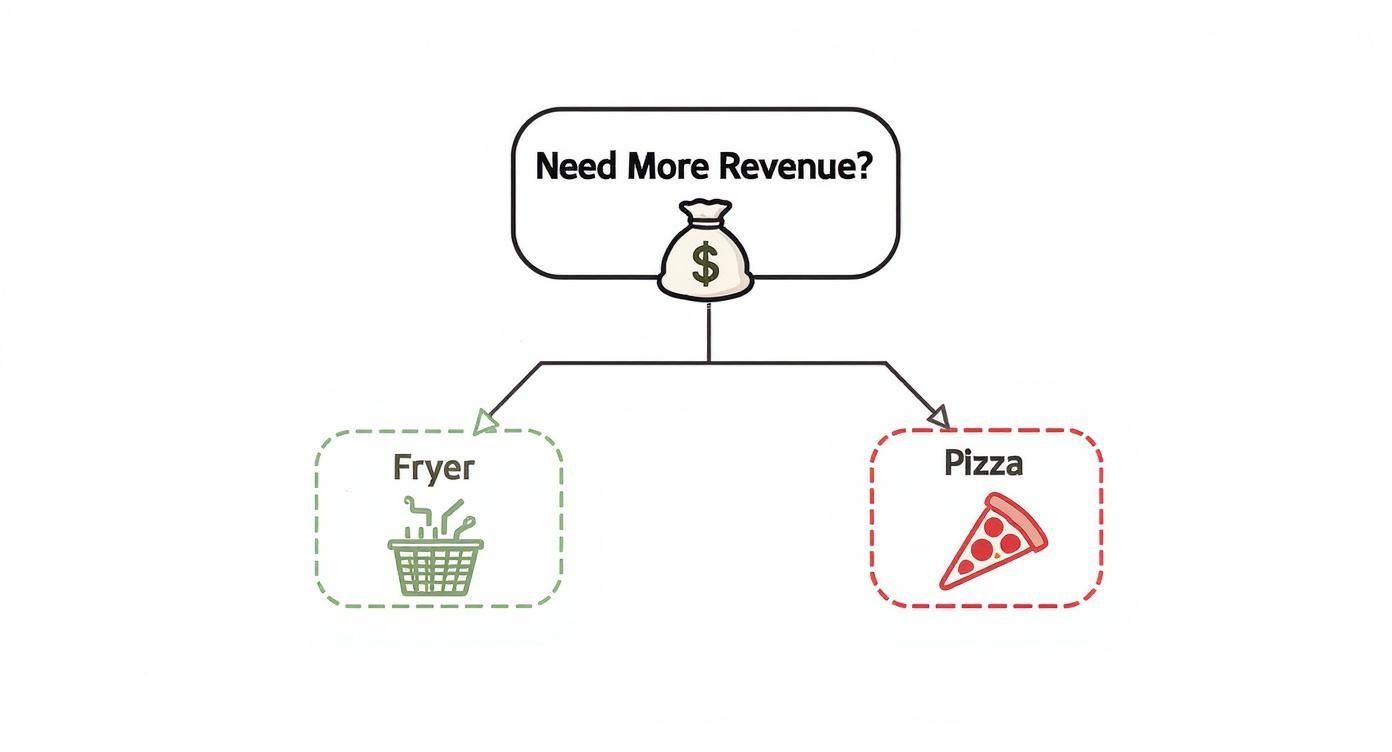
As you can see, when a pizzeria needs to bring in more cash, adding a fryer is a straight line to a more diverse menu and new profit streams that complement your core pizza sales.
Translating Specs Into Pizzeria Performance
Let's be honest, the spec sheets for fryers can make your eyes glaze over. We're going to translate that technical jargon into performance metrics that matter to you and your pizza restaurant's bottom line.
Oil capacity is the perfect example. A product page might say "10-liter" or "15-pound" capacity. For a pizzeria, that number is all about output. A 10-liter fryer (that’s about 2.5 gallons) can typically pump out around 20-30 pounds of food per hour. That’s more than enough power to keep up with wing and mozzarella stick orders during a dinner rush without getting buried. A bigger 15-pound model could get you up to 45 pounds per hour.
Don't just buy the biggest fryer you can find. A fryer that's too large for your actual volume is just a waste of energy and expensive oil. A properly sized unit keeps its heat consistent, which means every order of wings or fries comes out perfectly crispy.
To get this right, you need to know your peak demand. Just tally up your appetizer orders on a busy Friday night. That data gives you a clear picture of the production power you really need, so you won't overspend on a unit that’s too big or underspend on one that can’t keep up.
To help you connect the dots between fryer features and your pizzeria's needs, we've put together this quick-reference table. It breaks down what each key specification means for your day-to-day pizza operations.
Table: Countertop Fryer Features for Pizzerias
| Feature | What It Means for Your Pizzeria | Recommendation |
|---|---|---|
| Oil Capacity (Liters) | Determines how many pounds of food you can cook per hour. More capacity = higher output. | 10-15 liters is the sweet spot for most pizzerias serving wings, fries, and appetizers. |
| Power (Watts) | Higher wattage means faster heat-up and recovery times between batches of frozen appetizers. | Look for 3000-5000 watts to keep up during busy pizza rushes without long waits. |
| Tank Type | Single tanks are for similar items. Dual tanks prevent flavor transfer (e.g., savory vs. sweet). | Start with a single tank. Go for a dual tank if you plan a diverse fried menu. |
| Thermostat Control | Precision is key for quality. A reliable thermostat prevents greasy or burnt food. | Choose a model with a responsive, accurate thermostat. Digital controls are a plus. |
| Construction Material | Durability and ease of cleaning. Stainless steel is the industry standard for a reason. | Insist on heavy-duty stainless steel to withstand a tough pizzeria kitchen environment. |
Thinking through these features will guide you to a fryer that’s not just a piece of equipment, but a true asset to your pizzeria’s menu and workflow.
Key Features Every Pizzeria Fryer Needs
Beyond the basic specs, a few features are non-negotiable in the chaos of a pizza kitchen. These are the details that separate a reliable tool from a constant headache.
- Durable Construction: You absolutely need heavy-duty stainless steel. It’s tough enough to handle the bumps and scrapes of a busy pizzeria, it fights off corrosion from salt and cleaning chemicals, and it’s way easier to keep clean and sanitary.
- Thermostat Accuracy: Precision is everything. A fryer with a dependable thermostat holds a consistent oil temperature, which is the secret to great fried food. Wild temperature swings give you greasy, undercooked, or burnt food—and a bad reputation for your pizzeria.
- Basket Design: For your staff's safety, a well-made basket with a coated, cool-touch handle is a must. The mesh needs to be fine enough to hold smaller items like onion rings without letting them fall through, but still be tough enough for constant use.
When you're trying to figure out where a new fryer will go on your pizza prep table, checking out a good appliance sizing guide can help you visualize how it will fit into your current setup. A little planning ahead saves a lot of headaches later.
Single Tank vs. Dual Tank Fryers
One of the biggest choices you'll make is whether to get a single-tank or a dual-tank commercial countertop deep fryer.
A single-tank fryer is a fantastic starting point. It’s perfect if you’re frying similar items, like french fries and onion rings, where a little flavor crossover isn't a big deal. They are more compact and usually cost less, making them a smart choice for pizzerias just getting into the fried food game.
But a dual-tank fryer opens up a world of menu flexibility for a pizza restaurant. Picture this: you're frying savory garlic knots in one tank and sweet zeppoles for dessert in the other—at the same time. This setup completely stops flavor transfer, so your desserts won't taste like garlic. Even better, each tank has its own temperature control, letting you cook different foods at their ideal temperatures. For a pizzeria with bigger menu dreams, a dual-tank model is a smart investment that unlocks more creative and profitable options.
Decoding Fryer Power: Electric vs. Gas Models
Picking between an electric and a gas commercial countertop deep fryer is a bigger deal than you might think. This isn't just about what kind of outlet or hookup you have; it's about choosing the right performance personality for your pizzeria's unique rhythm. Think of it like picking the right engine for your kitchen.
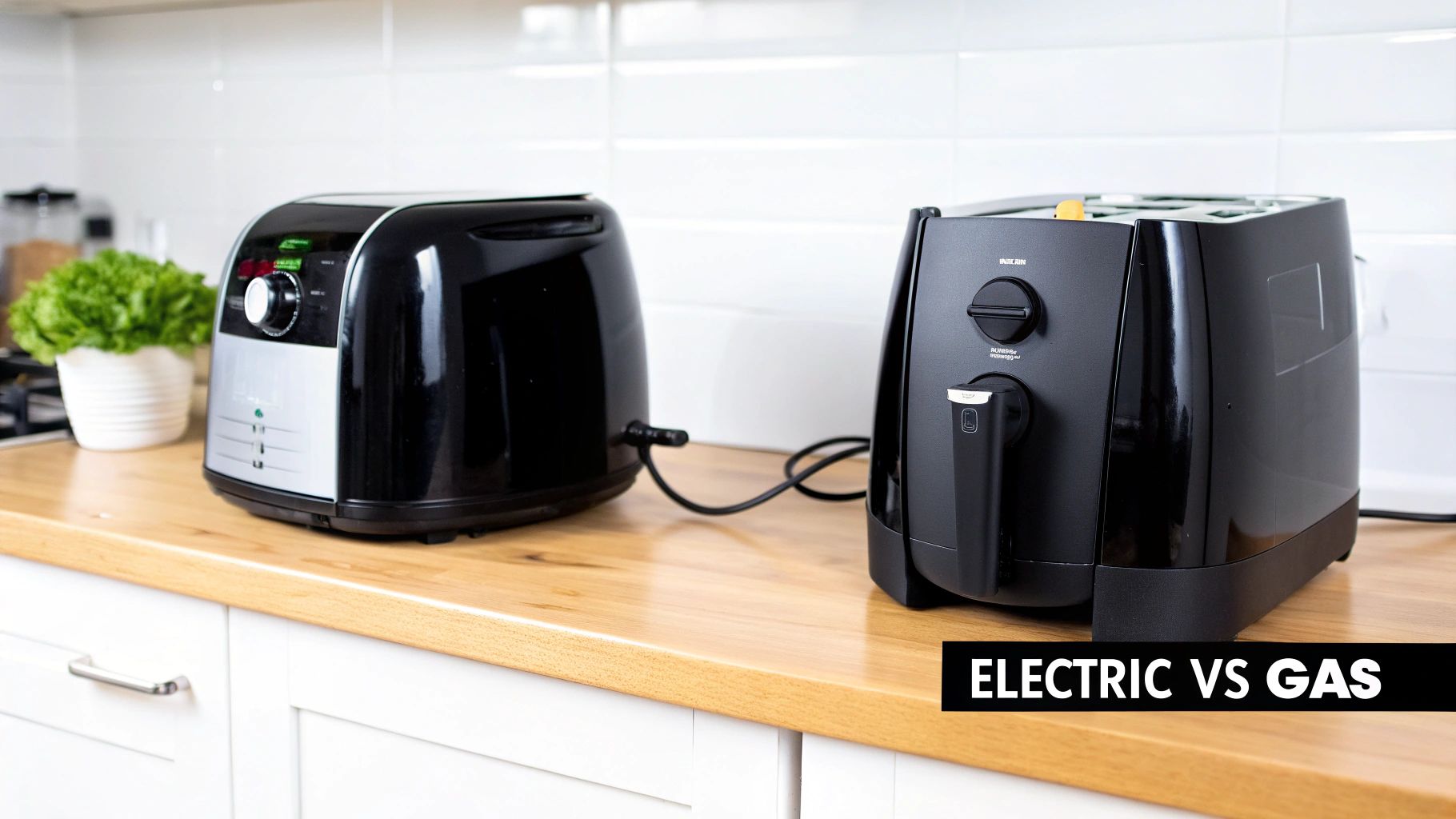
Are you firing off quick, consistent batches of mozzarella sticks and wings during a sudden lunch rush? Or do you need raw, unrelenting power to churn out fried items for hours on end during a packed dinner service? The answer will point you straight to either an electric or a gas fryer for your pizza shop.
Electric Fryers: The Nimble Performers
If you want precision and agility, electric fryers are the sports cars of the frying world. They’re known for their incredibly precise temperature control and quick heat recovery.
When you drop a basket of frozen onion rings into the hot oil, the temperature inevitably drops. In an electric fryer, the heating elements are submerged directly in the oil and respond almost instantly to bring that temperature right back up. This means every single batch comes out perfectly golden and crispy, not soggy and greasy.
For a pizzeria, that kind of consistency is gold. It means your fried appetizers will have the same quality and cook time, order after order. Installation is a breeze, too—most models are plug-and-play, fitting easily onto any pizza prep table with the right outlet. No need to call a plumber to run complex gas lines.
Of course, they have their limits. While their recovery time is fantastic, their initial heat-up can be a bit slower than a gas model. In a pizzeria with truly massive frying demands, a single electric unit might struggle to keep up with the sheer muscle of a gas-powered fryer. If you're leaning electric, take a look at our guide on how to electrify your menu with these commercial electric deep fryers.
Gas Fryers: The Powerful Workhorses
If electric fryers are the sports cars, then gas fryers are the heavy-duty pickup trucks. They are built for one thing: raw, sustained power. Fueled by natural gas or propane, these machines heat oil incredibly fast and hold high temperatures even when you're throwing basket after basket at them.
This makes gas fryers the undisputed champion for pizzerias that do a huge volume of fried food. They are the kings of raw heating power, which is measured in BTUs (British Thermal Units). A high BTU rating means your fryer won't even flinch during your busiest Saturday night, delivering the heat you need for rapid-fire orders alongside your pizzas.
But all that power comes with a trade-off. Gas fryers need professional installation to connect to a gas line, and they absolutely must be placed under a proper ventilation hood. And while modern gas fryers are getting better, they generally offer a little less pinpoint temperature accuracy compared to their electric cousins.
Which Is Right For Your Pizzeria?
So, which engine belongs in your pizza kitchen? It really just boils down to your pizzeria’s volume, your existing setup, and what you value most.
- Go with Electric if: You prioritize consistent results, have moderate-to-high volume, and want a simple, flexible installation on your pizza prep table. It's the perfect choice for guaranteeing appetizer quality.
- Go with Gas if: Your main concern is raw power for extremely high-volume frying, you already have gas hookups, and your kitchen has the necessary ventilation. It’s the workhorse for the busiest pizzerias, hands down.
Integrating a Fryer Into Your Pizzeria Workflow
Dropping a brand-new piece of equipment into a busy pizzeria kitchen can feel like throwing a wrench into a well-oiled machine. But hear me out—adding a commercial countertop deep fryer doesn't have to be a recipe for chaos. With a bit of smart planning, it can become a seamless—and seriously profitable—part of your daily grind, letting you expand your menu without messing up your pizza-making rhythm.
The whole point is to create a logical flow that helps your pizza team, not hinders them. I always tell pizzeria owners to think of it as setting up a dedicated "prep, fry, plate" station. This little hub needs to be placed strategically to cut down on wasted steps and keep your crew from bumping into each other during the Friday night rush. The sweet spot? Often, it's right on the pizza prep table, which creates a central command post for both pizzas and appetizers.
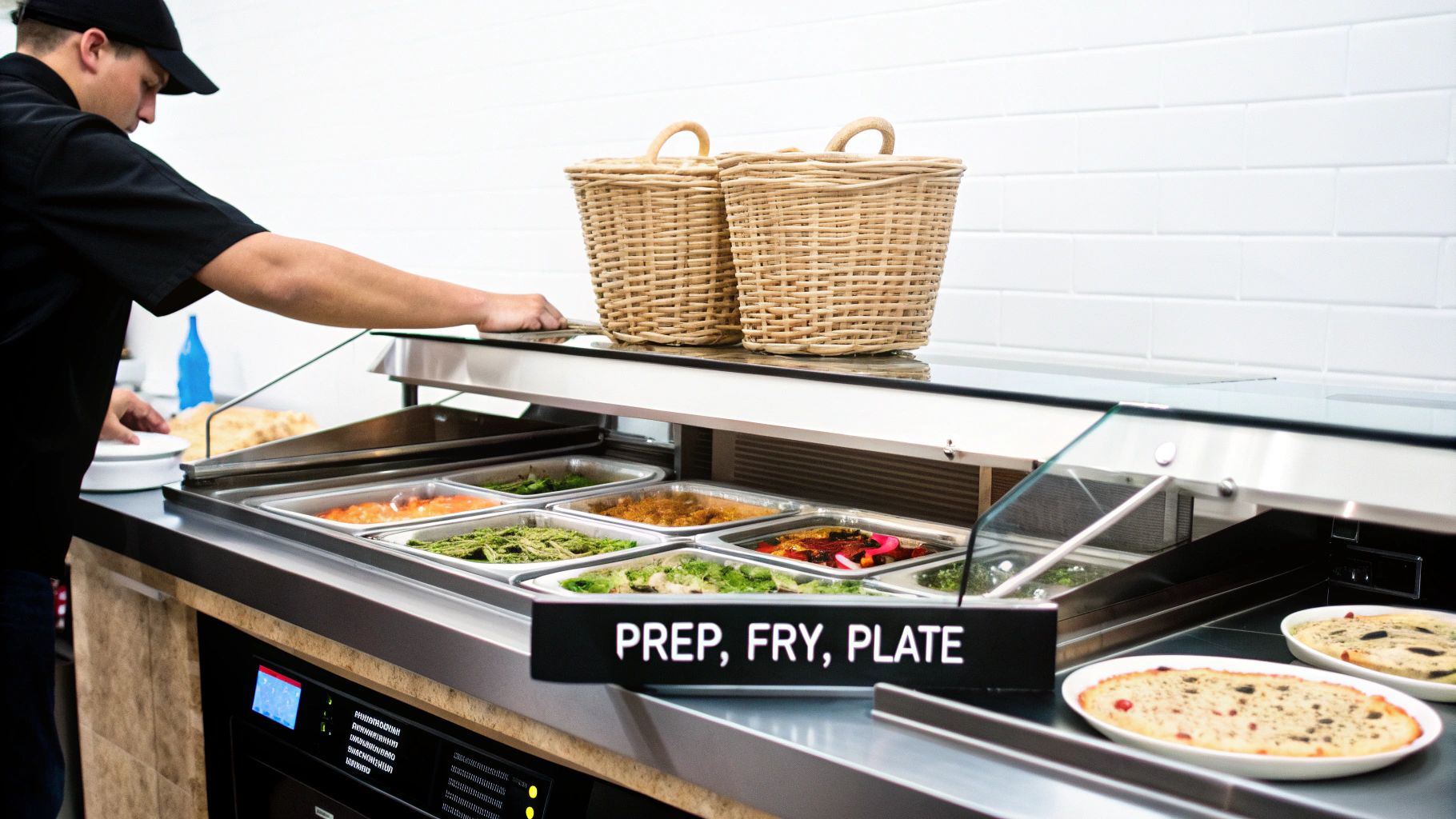
This setup puts everything within arm's reach. Your crew can be dressing a pizza, then pivot to bread some mozzarella sticks or drop a basket of wings, all without leaving their post. That's how you keep momentum going and ticket times down in a busy pizza shop.
Finding the Perfect Spot on Your Pizza Prep Line
Location, location, location. Get this wrong, and you'll create bottlenecks that slow down the entire pizzeria. The right spot is a careful balance between pure efficiency and critical safety.
Here’s what to think about when deciding where your new fryer is going to live on your pizza prep table:
- Proximity to Refrigeration: Your fry station needs to be buddies with your under-counter or walk-in cooler where frozen apps are stored. This simple step cuts down on the back-and-forth travel time, keeping your cooks focused on making pizzas and appetizers.
- A "Landing Zone": Make sure you have a dedicated, heat-proof spot right next to the fryer. This is where hot baskets land and food gets plated. This landing zone isn't just about speed; it's a huge safety factor.
- Ventilation Access: This is the big one. Your fryer must be positioned under a Type 1 ventilation hood. This is non-negotiable for handling grease-heavy vapor and keeping the fire marshal happy.
By thinking through the placement, you can design a workflow that just feels right for your team, turning the new fryer into a helper instead of a headache in your pizzeria.
Essential Safety for Your Frying Station
When you're dealing with a high-temperature appliance like a deep fryer, safety has to be your number one priority. These aren't just good ideas; they're often required by your local health and fire departments for any restaurant, especially a pizzeria.
Bringing any commercial deep fryer into your kitchen, even a small countertop model, completely changes your fire risk. This isn't just about cooking pizza anymore—it's about creating a safe environment for your staff and protecting your business.
When you install a commercial countertop deep fryer, you should seriously consider adding a dedicated kitchen fire suppression system to protect your investment and your people. These systems are designed for grease fires (Class K fires), which a standard fire extinguisher can't handle.
Beyond the hardware, training your pizza crew is everything. Every single person who will use that fryer needs to know:
- Safe Oil Handling: How to fill, filter, and drain hot oil using the right gear, like heat-resistant gloves and aprons.
- Emergency Procedures: What to do if a grease fire breaks out, including how to activate the fire suppression system and where the Class K extinguishers are.
- Proper Cleaning: How to safely clean the unit to prevent grease buildup, which is a massive fire hazard.
Smart Workflow Hacks for Pizzerias
Once your fryer is safely in place, you can start weaving it into your existing pizzeria rhythm. The trick is to use the little pockets of downtime in your pizza-making process for fryer prep.
For instance, while dough is proofing or the pizza oven is coming up to temp, a staff member can be portioning out fries, breading chicken wings, or prepping dipping sauces. This "prep-ahead" strategy means that when an appetizer order hits the printer during a rush, it's ready to go straight into the basket. This simple hack turns lulls into productive time, making sure your new frying station adds to your efficiency instead of stealing focus from your star player—the pizza.
Mastering Fryer Maintenance and Cleaning
Great fried food doesn't start when a basket hits the oil. It starts with a clean fryer. For a busy pizzeria, mastering fryer maintenance is the difference between a dreaded chore and a simple routine that protects your investment in a commercial countertop deep fryer. More importantly, it guarantees every order of mozzarella sticks comes out perfectly golden, not greasy.
Think of your cooking oil like a sponge. When it’s fresh, it crisps food beautifully. But as it breaks down from heat and food particles, it starts soaking into the food instead, leaving a greasy texture and an off-taste that can ruin a customer’s meal. Proper upkeep in a pizzeria is non-negotiable.
Your Daily Cleaning Checklist
A few minutes of cleaning each day saves you from hours of scrubbing later. These quick tasks prevent major buildup, extend the life of your oil, and should be as routine as wiping down the pizza prep table at the end of the night.
- Skim Debris: This is the easiest win. Throughout the day, use a fine-mesh skimmer to scoop out floating bits of breading and food. Every piece you remove is one less thing burning and breaking down your oil.
- Wipe Down Surfaces: At closing, give the fryer’s exterior, backsplash, and surrounding pizza prep table surfaces a good wipe-down. This stops that sticky, hard-to-clean grease film from ever forming.
- Check the Oil: Give the oil a quick look. Is it getting dark? Does it seem to be smoking more than usual? These are tell-tale signs that it’s time for a change.
The Importance of Regular Oil Filtering
If you're not filtering your oil, you're literally throwing money away. Filtering removes the microscopic food particles that skimming can’t catch—the real culprits behind rapid oil breakdown.
Filtering your oil at least once a day can extend its life by a whopping 30-50%. That’s a huge saving on one of your key consumables for your pizzeria.
A consistent filtering routine is the single most effective way to control your oil costs and protect your food quality. Clean oil makes a better product. Old, dirty oil makes greasy food that will absolutely damage your pizzeria's reputation.
The Weekly Deep Clean Boil Out
Once a week, your fryer needs a reset. This deep clean, known in the industry as a "boil out," tackles the stubborn, baked-on grease that daily wiping just can't touch.
- Drain and Discard Old Oil: Make sure the fryer is cool, then safely drain all the old oil.
- Fill with Water and Cleaner: Fill the tank with water and a commercial-grade fryer cleaning solution. Always follow the manufacturer’s instructions on the bottle.
- Bring to a Gentle Boil: Turn the fryer on and bring the solution to a slow, gentle boil for about 20 minutes. You'll see the caked-on gunk start to loosen.
- Drain and Scrub: Turn the fryer off, let it cool down, and then drain the cleaning solution. Use a long-handled brush to scrub away any lingering residue.
- Rinse and Dry Thoroughly: This last step is critical. Rinse the tank several times with clean water to get every trace of cleaner out. Then, dry it completely before adding new oil. Any water left behind will cause violent, dangerous splattering when the hot oil hits it.
This weekly ritual keeps your commercial countertop deep fryer running like new for years. It's a level of care that reflects a global trend in food service. In fact, the commercial fryer market in the Asia-Pacific region is projected to hit over USD 209.14 million by 2032, largely because kitchens are demanding more efficient and reliable equipment. Discover more insights about this growing market trend.
Answering Your Top Questions About Commercial Countertop Fryers
I get it. Even when you've done your homework, pulling the trigger on a new piece of equipment like a commercial countertop deep fryer can bring up some last-minute doubts. For pizzeria owners, it usually comes down to space, safety, and whether it will really make a difference to the bottom line. Let's tackle those nagging questions so you can move forward with confidence.
Most pizzeria operators I talk to bring up safety and compliance first. And they should. Adding any high-temperature cooking device absolutely changes the game in your kitchen.
Do I Really Need a Special Hood for This Thing?
Yes. This is one of those areas where there's zero wiggle room. In pretty much every commercial kitchen scenario, a countertop fryer has to live under a Type 1 ventilation hood, the kind that comes with its own fire suppression system. This isn't just a friendly suggestion; it's a hard-and-fast rule from local health and fire departments to handle all the grease-filled vapor that frying creates. Do yourself a favor and double-check your local codes before you even think about buying one.
Let's be clear: adding a fryer isn't just a menu decision, it's a safety commitment for your pizzeria. Getting the ventilation and fire suppression right isn't about jumping through hoops—it's about protecting your team, your customers, and the business you've poured your heart into.
How Much Money Can a Little Fryer Actually Bring In?
While no two pizzerias are the same, the potential here is huge. Fried sides like wings, fries, or mozzarella sticks are high-margin rockstars that can easily bump up your average ticket size by 15-30%. Think about it: they are the easiest possible add-on for a customer ordering pizza to say "yes" to, especially for takeout and delivery orders. That's pure profit hitting your bottom line with almost no extra sales effort.
Can I Get Away With Using One Fryer for Savory and Sweet Stuff?
Technically, you can, but you'll regret it immediately. Frying your garlic knots and then tossing in some zeppoles or fried dough in the same oil is a recipe for disaster. Flavor transfer is very real, and your sweet treats will end up with a funky, savory aftertaste nobody asked for. To keep your food tasting the way it should, dedicate a small, separate fryer just for your sweet items. It’s a tiny investment that pays off big time in quality.
What's the Real-World Advantage of a Dual-Tank Fryer?
A dual-tank model is a game-changer for getting creative and efficient, especially on a busy pizza prep table. It gives you the power to cook two completely different foods at the same time without any flavor crossover. Imagine crispy, breaded chicken tenders sizzling away in one tank while you get a perfect golden-brown on your fries in the other. You can even run each tank at a different temperature. It's like having two fryers in one compact footprint, making your pizza prep line even more versatile.
Ready to add some sizzle to your menu and your profits? Pizza Prep Table has a handpicked selection of commercial countertop deep fryers that are a perfect match for any pizzeria. Check out our models and find the right fit for your kitchen at https://pizzapreptable.com.