

Commercial Range Hood Installation Cost: A Comprehensive Guide
Why Understanding Commercial Range Hood Installation Cost Is Critical for Your Kitchen
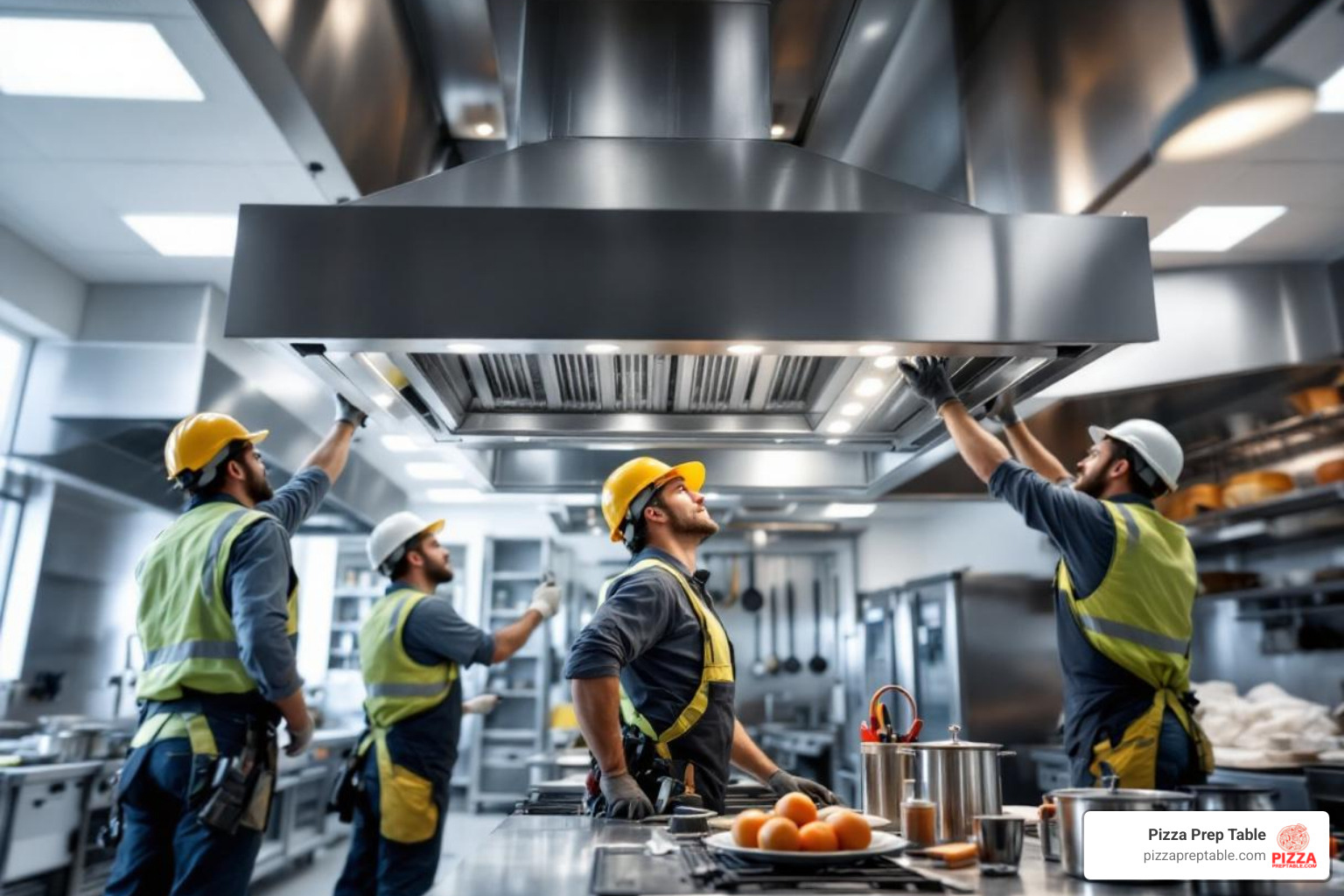
Commercial range hood installation cost typically ranges from $950 to $1,200 per linear foot for a basic setup, or $4,000 to $5,000 per linear foot for a complete turnkey system. Here's what you can expect to pay:
- Small pizzeria or cafe (6-10 ft hood): $9,000 - $14,000
- Full-service restaurant (14 ft hood): $35,000 - $55,000+
- Food truck (5 ft hood): $10,000 - $18,000
These costs include the hood unit, exhaust fan, makeup air unit, ductwork, fire suppression system, labor, and permits.
If you're opening a pizzeria or small restaurant, understanding hood installation costs is one of the most important budgeting decisions you'll make. A commercial kitchen hood isn't just a piece of equipment—it's required by law to protect your staff, customers, and building from fire hazards.
The cost can feel overwhelming at first. One contractor quotes you $12,000, another says $40,000, and you're left wondering what's actually included. That's because commercial hood installations aren't one-size-fits-all. Your total cost depends on your kitchen size, cooking equipment, building layout, and local regulations.
Many first-time restaurant owners underestimate this expense. They budget for ovens, prep tables, and refrigeration, but forget that the ventilation system can cost as much as all that equipment combined. Without proper planning, you could face project delays, failed inspections, or worse—operating without proper ventilation, which can shut down your business.
This guide breaks down every cost component so you can budget accurately and avoid surprises. We'll cover the main system parts (hood, fan, makeup air, ductwork, and fire suppression), explain what drives costs up or down, and show you where you can save money without cutting corners on safety.
I'm Sean Kearney, and I've spent years helping restaurant owners steer commercial range hood installation cost decisions, from small pizzerias to multi-location chains. My background in foodservice equipment sales has taught me that the right ventilation system isn't just about compliance—it's about creating a safe, efficient kitchen that protects your investment.
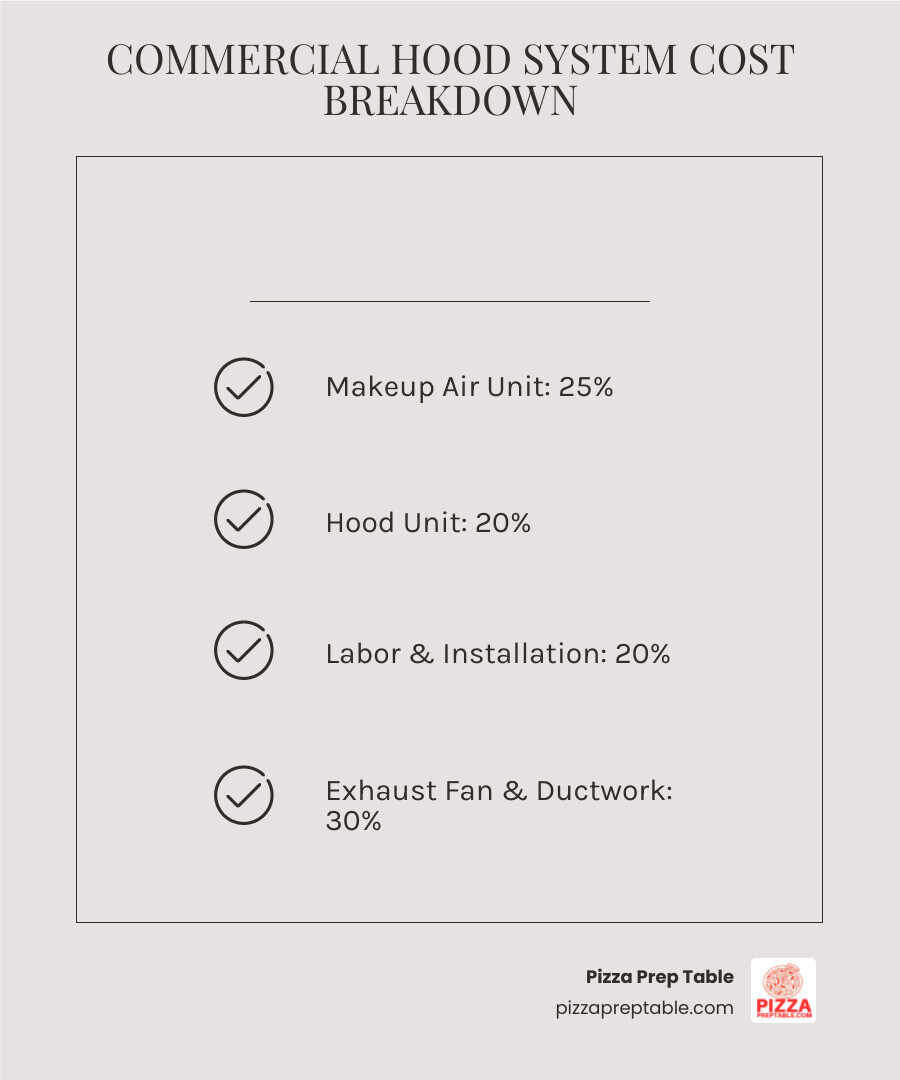
Average Commercial Range Hood Installation Cost: What to Expect
When budgeting for a new commercial kitchen, the commercial range hood installation cost is a significant line item that demands careful attention. While the intro gives you a snapshot, let's dive deeper into what these numbers mean for your business.
The initial cost of an exhaust hood system alone can typically range between $20,000 and $55,000. For the complete package, including the hood and installation, you're looking at approximately $4,000 to $5,000 per linear foot. This means a 6-foot hood system, often found in smaller establishments, could cost around $28,000 to install. For a more substantial 10-foot hood, the installation alone might run about $10,000 to $12,000, while a 12-foot long kitchen range hood might cost around $12,828 to install. Overall, installation costs for commercial hoods can range from $9,640 on the lower side to $16,436 on the higher side, depending on numerous factors.
These figures represent a significant investment, but they cover a complex system designed for safety and efficiency. To provide a clearer picture, here's a comparison of estimated total costs for different kitchen types, reflecting the varying scales and complexities:
| Kitchen Type | Hood Size (Linear Feet) | Estimated Total Cost |
|---|---|---|
| Small Cafe/Ghost Kitchen | 6-10 | $9,000 - $14,000 |
| Full-Service Restaurant | 14 | $35,000 - $55,000+ |
| Food Truck | 5 | $10,000 - $18,000 |
This table illustrates that while a basic setup might start at the lower end, a comprehensive system for a full-service restaurant can easily exceed $50,000. These costs encompass everything from the hood unit itself to the intricate ductwork, powerful exhaust fans, essential make-up air units, fire suppression systems, and, of course, the professional labor and permits required to bring it all to life.
Key Factors That Influence Your Total Cost
Understanding the average cost is a great starting point, but what truly determines your specific commercial range hood installation cost? It's a blend of several critical factors, each adding its own layer of complexity and expense.
Hood Type (Type I vs. Type II)
The type of cooking you do dictates the type of hood you need, and this is a primary cost driver.
- Type I Hoods (Grease Hoods): These are designed for heavy-duty cooking that produces grease, smoke, and vapors, like frying, grilling, or charbroiling. They require robust construction, baffle filters, and an integrated fire suppression system, making them more expensive.
- Type II Hoods (Condensate Hoods): Used for appliances that generate heat, steam, and moisture but no grease, such as dishwashers, ovens (without charbroilers), or coffee machines. These are simpler, lack grease filters, and are generally less costly to install.
Hood Size
The larger the hood, the more materials required, the larger the exhaust fan needed, and potentially more complex the ductwork. Hoods must adequately cover all cooking equipment, often with an overhang of at least 6 inches, to effectively capture contaminants. More linear feet means higher costs.
Kitchen Layout and Building Complexity
The physical space of your kitchen and the building's structure profoundly impact installation.
- Ductwork Path: A straightforward, short duct run to the outside is ideal. However, if ducts need to steer multiple turns, pass through several floors, or be insulated, costs escalate significantly. Optimizing your kitchen layout to minimize ductwork length and complexity is a smart move.
- Existing Infrastructure: Older buildings, common in cities like New York City, Chicago, or Boston, can present unique challenges. Pre-existing structures might require costly modifications, structural reinforcements, or specialized installation techniques to run ducts and install equipment without compromising the building's integrity. Historic buildings, in particular, often have strict preservation rules that can force creative—and expensive—solutions.
- Roof Access: Easy access to the roof for installing exhaust fans and duct outlets can simplify installation. Limited access or complex rooflines can add to labor hours and equipment rental costs.
Regional Labor Rates
Labor costs are a substantial part of the overall commercial range hood installation cost, and these vary by location. Highly skilled technicians, including HVAC specialists, electricians, and sheet metal fabricators, are required for a compliant installation. In major metropolitan areas like Los Angeles, San Francisco, or New York City, labor rates tend to be higher than in other cities on our list.
Ductwork and Ventilation System
This is where much of the complexity and cost reside.
- Material: Commercial kitchen ducts must be made from continuously welded, grease-tight steel to comply with fire codes. This specialized fabrication is more expensive than standard residential ductwork.
- Length and Complexity: As mentioned, longer runs, multiple bends, and the need for insulation for fire protection or temperature control increase material and labor costs.
- Exhaust Fan Sizing: The fan's power, measured in CFM (Cubic Feet per Minute), must match the cooking equipment's heat and grease output. More powerful fans are more expensive to purchase and install.
Permits and Inspections
These are non-negotiable costs for compliance.
- Mechanical Drawings: Before any physical work begins, detailed mechanical drawings by a licensed engineer are often required, costing between $4,000 and $5,000. These drawings ensure your system meets all local codes.
- Permit Fees: Local building and health departments in cities like Houston, San Diego, or Seattle require permits for commercial kitchen ventilation systems. These fees can range from $500 to $2,000, and in some areas, can even be a percentage of the total job cost plus administrative fees.
- Inspection Costs: Multiple inspections are typically required throughout the installation process, and final approval is contingent on passing all of them.
Navigating these factors requires expertise. We strongly recommend consulting with experienced professionals who understand the nuances of commercial kitchen ventilation and local regulations. For detailed guidance on the regulations that govern these systems, you can refer to the Commercial kitchen ventilation regulations.
Breaking Down the Cost of Each System Component
To truly grasp the commercial range hood installation cost, it's helpful to dissect the system into its core components. Each piece plays a vital role in ensuring a safe and efficient kitchen environment, and each comes with its own price tag.
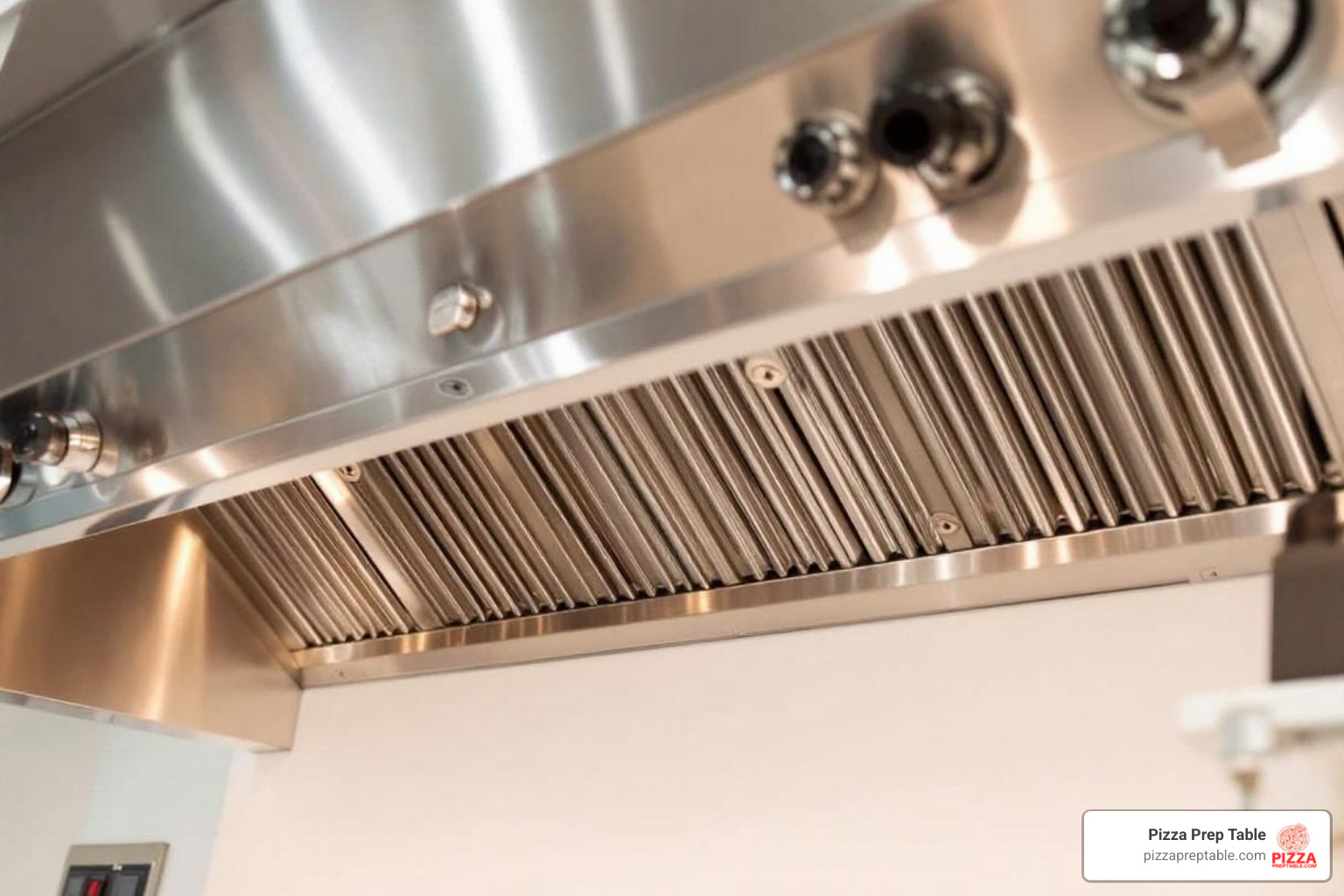
Here's a general breakdown of the estimated cost for a standard 10-foot Type I hood system, which is a common setup for many restaurants and pizzerias:
- Hood Unit (Type I): $3,000 - $6,000
- Exhaust Fan: $2,500 - $5,000
- Makeup Air Unit (MUA): $4,000 - $8,000
- Ductwork: $2,000 - $7,000+
- Fire Suppression System: $3,500 - $6,000
- Labor & Installation: $4,000 - $10,000+
- Permits & Inspections: $500 - $2,000
Let's explore each component in more detail.
The Hood Unit (Type I vs. Type II)
The hood unit itself is the visible part of your ventilation system, hanging directly above your cooking equipment. As we discussed, the type—Type I or Type II—is paramount.
- Type I Hoods: These are the workhorses for kitchens with grease-producing equipment like deep fryers, griddles (especially crucial for kitchen stoves with griddles), charbroilers, and ranges. They are constructed from heavy-gauge stainless steel to withstand high temperatures and corrosion. Their design incorporates baffle filters, which are essential for trapping grease before it enters the ductwork, significantly reducing fire hazards. The robust materials and integrated fire suppression nozzles contribute to their higher cost, typically ranging from $900 to $1,700 per linear foot.
- Type II Hoods: When your kitchen primarily deals with steam, heat, and odors from appliances like ovens (without charbroiling), dishwashers, or steam tables, a Type II hood is usually sufficient. These hoods focus on heat and moisture removal and do not require grease filters or integrated fire suppression. They are generally simpler in construction and therefore less expensive, with units costing around $1,800 or more, depending on size.
While the mounting style (wall-mounted, island, etc.) can influence complexity, for commercial applications, the Type I vs. Type II distinction is the primary cost driver. An island commercial hood, for example, will require more extensive and exposed ductwork than a wall-mounted one, adding to the overall installation effort and cost.
Exhaust Fan and Ductwork
The exhaust fan is the "lungs" of your kitchen, pulling smoke, grease, and heat out, while the ductwork is its "windpipe."
- CFM (Cubic Feet per Minute): This rating indicates how much air the fan can move per minute. The required CFM depends on the size and type of your cooking equipment, with heavy-duty, high-heat appliances demanding higher CFM ratings. A correctly sized exhaust fan is non-negotiable for effective ventilation and compliance. Exhaust fans can cost between $2,500 and $5,000.
- Fan Motor Type: Energy-efficient variable-speed fans, while potentially costing more upfront, can offer significant long-term savings on utility bills.
- Ductwork: This is where things can get complex and costly. Commercial kitchen ducts must be continuously welded, grease-tight steel to meet fire codes, unlike the lighter materials used in residential systems. The length of the duct run, the number of turns or bends, and the need for fire-rated insulation all add to the material and labor costs. A simple installation might see ductwork costs around $2,000, but a complex path can push it past $7,000. Roof penetration for the exhaust fan outlet also adds to the installation complexity and cost.
Makeup Air (MUA) Unit
An often-overlooked but absolutely crucial component, the Makeup Air (MUA) unit, ensures your kitchen maintains proper air balance. When your powerful exhaust fan pulls air out of the kitchen, it creates negative air pressure. Without an MUA unit to replace that exhausted air, you could face several issues:
- Difficult Doors: Doors might become hard to open or close.
- Drafts: Cold drafts could enter the kitchen from other parts of the building.
- Back-drafting: Dangerous fumes from gas appliances could be pulled back into the kitchen, creating a hazardous environment.
- Ineffective Hoods: The exhaust hood itself becomes less effective at capturing contaminants.
MUA units are essential for maintaining a comfortable and safe working environment. They can be untempered (bringing in outside air at ambient temperature) or tempered (heating or cooling the incoming air to match indoor temperatures). Tempered units are more expensive, ranging from $4,000 to $8,000, but they contribute significantly to energy efficiency and employee comfort, especially in extreme climates. Some advanced MUA units also offer energy recovery, further reducing operational costs.
Fire Suppression System and Permits
These elements are critical for safety, compliance, and legality, directly impacting your commercial range hood installation cost.
- Fire Suppression System: For any Type I hood, an integrated fire suppression system is mandatory. These are typically wet chemical systems that meet the UL 300 standard, designed to automatically detect and extinguish fires originating from cooking equipment. The installation and certification of these systems must be performed by licensed professionals. Expect to allocate $3,500 to $6,000 for this vital safety component.
- Permits and Inspections: Before any work begins, mechanical drawings by a licensed engineer are required to demonstrate that your system design complies with all local building and fire codes. These drawings alone can cost between $4,000 and $5,000. Following this, you'll need to obtain various permits from your local municipality. Permit fees typically range from $500 to $2,000, though in some of our operating cities like Houston or Los Angeles, they can be a percentage of the total job cost plus administrative fees. Throughout the installation, multiple inspections will be conducted by city officials to ensure adherence to the approved plans and safety standards. Passing these inspections is the final hurdle before you can legally operate your commercial kitchen.
Long-Term Costs and How to Save Money
The initial commercial range hood installation cost is just the beginning. To truly understand the financial commitment, we need to consider the total cost of ownership, which includes operational expenses, maintenance, and the lifespan of the system. Investing wisely upfront can lead to significant long-term savings and a better return on investment (ROI). Most commercial range hoods are built to last at least 10 years, often more, with proper maintenance.
Operational and Maintenance Costs
Once your commercial hood system is installed and operational, there are ongoing costs to consider:
- Professional Hood Cleaning: This is not a suggestion; it's a requirement. Commercial kitchen exhaust systems accumulate grease rapidly, posing a severe fire hazard. NFPA 96 standards mandate professional cleaning, typically quarterly or semi-annually, depending on your cooking volume. Each professional cleaning can cost between $400 and $600.
- Filter Replacement: While Type I hoods use baffle filters that are typically cleaned, other filters (like those in MUA units or for specific applications) may require periodic replacement.
- Semi-Annual Fire Suppression System Inspections: Your fire suppression system needs to be inspected and serviced by a certified professional every six months to ensure it's in working order and compliant with safety regulations.
- Utility Bills: The exhaust fan and MUA unit consume electricity. While often overlooked, choosing energy-efficient models can lead to substantial savings over the system's lifespan. Look for ENERGY STAR commercial food-service equipment to help reduce energy consumption.
Smart Ways to Reduce Your Commercial Range Hood Installation Cost
While we can't cut corners on safety or compliance, there are strategic ways to manage and even reduce your commercial range hood installation cost:
- Optimizing Kitchen Layout: Work with your kitchen designer and ventilation contractor early in the planning phase. A layout that allows for shorter, straighter duct runs will significantly reduce material and labor costs. Every bend and extra foot of ductwork adds to the expense.
- Comparing Contractor Quotes: Don't settle for the first quote you receive. Obtain detailed, line-by-line quotes from at least three reputable, licensed contractors in your area (e.g., in New York City, Los Angeles, or Dallas). Compare not just the bottom line, but also the equipment brands, labor rates, and what's included in their services. A vague, one-page quote is a red flag.
- Choosing Energy-Efficient Models: While energy-efficient exhaust fans, MUA units, and LED lighting might have a higher upfront cost, they can drastically reduce your monthly utility bills. Over the 10+ year lifespan of a commercial hood system, these savings can far outweigh the initial investment.
- Exploring Restaurant Financing Options: The significant upfront cost of a commercial hood system can strain cash flow, especially for new businesses. We at PizzaPrepTable.com understand this challenge and offer various restaurant financing options to help you acquire essential equipment without depleting your working capital.
- Consider Combining Projects: If you're undertaking a larger kitchen renovation, bundling the hood installation with other construction work might lead to better overall pricing from contractors, as they can streamline labor and project management.
- Cautious Use of Used Equipment: While buying pre-owned equipment might seem like a way to save money, it comes with significant risks. Any used hood unit or fire suppression system must be thoroughly inspected and certified to comply with current UL 300 and NFPA 96 standards. Non-compliant used equipment can lead to failed inspections and costly replacements.
Frequently Asked Questions about Commercial Hood Installation
We hear a lot of questions from new and expanding restaurant owners about commercial range hood installation cost and the process. Let's address some of the most common ones.
Can I install a commercial kitchen hood myself?
In short, absolutely not. Attempting to DIY a commercial kitchen hood installation is a colossal mistake with severe consequences. This isn't like installing a residential range hood. Commercial systems are complex, involve high-voltage electrical work, specialized sheet metal fabrication for grease-tight ductwork, and critical fire suppression integration.
Here's why professional installation is mandatory:
- Safety Risks: Incorrect installation can lead to catastrophic grease fires, putting your staff, customers, and property in extreme danger.
- Code Violations: Every city, from Chicago to San Antonio, has strict building, fire, and health codes for commercial kitchens. A DIY job will almost certainly fail inspection, leading to costly rework, delays, and fines.
- Legal Liability: Operating a non-compliant system can result in your business being shut down, legal action, and voided insurance policies.
- Expertise Required: Licensed HVAC technicians, electricians, and fire suppression specialists are needed to ensure every component meets stringent safety standards. No city inspector will ever approve a system installed by someone without the proper licenses and certifications.
The money saved by attempting a DIY installation pales in comparison to the potential costs of a failed system, fines, or a fire. Invest in qualified professionals.
What's the cost difference between a ducted vs. ductless system?
For commercial kitchens, particularly those with grease-producing equipment, a ducted system is mandatory. Ductless systems, which filter and recirculate air back into the room, are generally for residential use or very light-duty commercial applications that produce no grease (like a coffee station).
- Ducted Systems (Commercial Standard): These systems pull smoke, grease, heat, and odors out of the kitchen and vent them directly outside the building via a network of grease-tight, welded steel ducts. This is the only safe and compliant method for kitchens with fryers, griddles, and ranges. The commercial range hood installation cost for a ducted system includes the hood, exhaust fan, makeup air unit, extensive ductwork, and fire suppression, making it a significant investment.
- Ductless Systems (Not for Commercial Cooking): While less expensive to install (often $200-$400 for residential models) because they don't require external venting, they are entirely unsuitable for commercial cooking environments. They cannot effectively remove grease, smoke, or heat, and they pose a severe fire risk in a commercial setting. Local codes in all our operating cities explicitly prohibit their use over grease-producing equipment.
How long does the installation process take?
The entire process, from initial design to final inspection, is a multi-stage project. It's not just a matter of bolting a hood to the wall.
- Total Project Timeline: Expect the entire project, including system design, mechanical drawings, permit acquisition, procurement of equipment, and actual installation, to take anywhere from 3 to 8 weeks. This timeline can be longer if there are complex building modifications, permit delays, or custom fabrication needs.
- On-Site Work: The physical installation itself, where the contractors are actively working in your kitchen, typically takes 2 to 4 days. This includes mounting the hood, installing the exhaust fan and MUA unit, fabricating and connecting the ductwork, running electrical lines, and installing and testing the fire suppression system.
- Coordination: The process requires seamless coordination between multiple trades: HVAC technicians for the hood and ductwork, electricians for wiring, and fire suppression specialists. Delays in one area can impact the entire schedule.
Conclusion
Understanding the commercial range hood installation cost is more than just crunching numbers; it's about making a foundational investment in the safety, efficiency, and legal compliance of your restaurant or pizzeria. While the initial outlay can be significant, ranging from $9,000 for a small cafe to over $55,000 for a full-service restaurant, these costs are justified by the critical role these systems play.
From protecting against devastating grease fires to ensuring a comfortable and healthy environment for your staff and customers, a properly installed commercial hood system is indispensable. We've seen how factors like hood type, kitchen layout, ductwork complexity, and local regulations in cities like Phoenix, Atlanta, or Washington D.C. can influence the final price. We've also explored the essential components—the hood unit, powerful exhaust fans, vital makeup air units, robust ductwork, and mandatory fire suppression systems—each contributing to the overall cost and functionality.
Attempting to cut corners or undertake a DIY installation for commercial purposes is a dangerous and non-compliant path. Instead, focus on smart budgeting, seeking multiple quotes from licensed professionals, and exploring financing options.
At PizzaPrepTable.com, we're dedicated to helping you build a successful and safe kitchen. While we provide top-tier equipment like commercial pizza prep tables, we also believe in empowering you with the knowledge to make informed decisions about all aspects of your kitchen infrastructure.
For your next steps in equipping your kitchen, be sure to Explore our full range of pizza prep tables and other essential restaurant equipment. We're here to help you get your kitchen running safely and efficiently, from the perfect pizza prep station to the critical ventilation system above it.