

The Ultimate Guide to Food Storage Containers for Restaurants
More than your recipe, the secret to a killer pizzeria is built on speed, consistency, and freshness. For any pizza shop, the right food storage containers for restaurants aren't just plastic boxes. They're critical tools that slot directly into your pizza prep tables, making sure every topping is fresh, organized, and ready for the dinner rush. This is your complete roadmap to getting this vital system right.
The Secret Ingredient to a Flawless Pizzeria
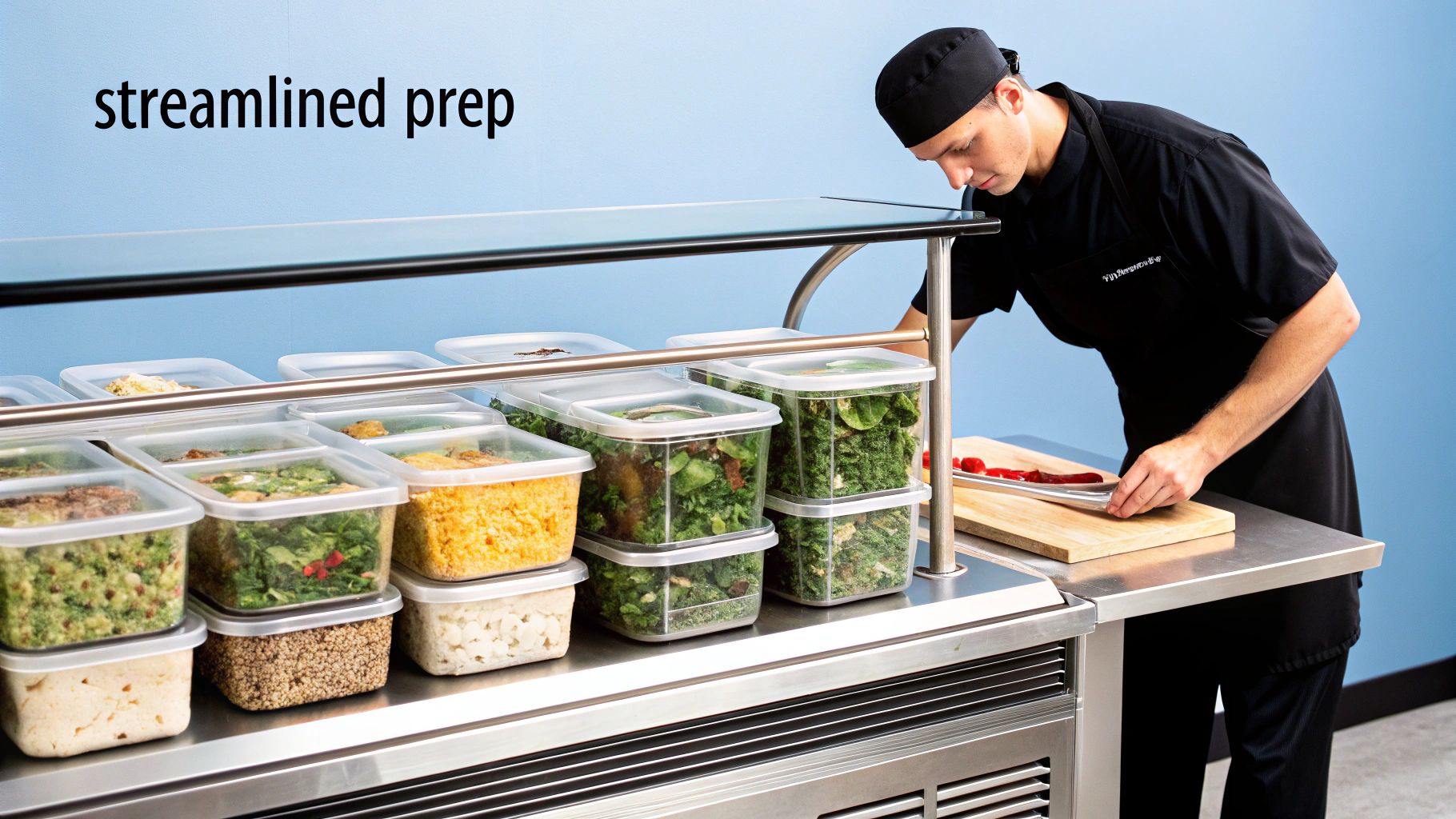
Picture a chaotic Friday night. Your pizza prep line is a jumble of mismatched containers, lids that don’t quite fit, and toppings you can barely identify. That mess costs you precious seconds on every single pizza, leads to wasted pepperoni, and kills the freshness of the pie you're so proud of.
Now, imagine a streamlined operation. Every ingredient, from mozzarella to mushrooms, sits in a perfectly sized, clear container, slotted neatly into your refrigerated pizza prep table. Your pizza makers move with precision and speed, confident that everything is exactly where it needs to be. This kind of efficiency isn't an accident; it's the result of a well-planned storage system tailored for pizzerias.
A System as Crucial as Your Oven
Your food storage containers are just as fundamental to your pizzeria's success as your pizza oven. Treating them as an afterthought is a common—and costly—mistake. Getting this system dialed in gives you a real edge that shows up on your bottom line and in your reviews.
- Boosted Efficiency: When containers fit your pizza prep table perfectly, it creates a seamless workflow. Your staff can assemble pizzas faster and more consistently, no fumbling required.
- Reduced Food Waste: Good airtight seals and smart organization extend the life of your pizza toppings, cutting down on spoilage and saving you serious money.
- Enhanced Food Safety: A dedicated container system is your first line of defense against cross-contamination, helping you maintain impeccable health standards.
For any business in the broader service industry, efficient operations are paramount. For pizzerias, that efficiency begins right at the pizza prep table.
Think of your storage system as the foundation of your pizza line's workflow. A strong foundation supports speed and quality, while a weak one leads to operational cracks that can disrupt your entire service.
This guide will walk you through building that strong foundation, step by step. We'll dive into choosing the right materials for pizza toppings, integrating containers perfectly with your pizza prep table, and mastering the food safety protocols that every thriving pizzeria needs to live by.
Choosing the Right Containers for Freshness and Efficiency
Picking the right food storage containers is the bedrock of a well-run pizzeria. This isn’t just about buying plastic boxes; it's about building a system where every pizza topping is protected, easy to spot, and perfectly placed for your team to grab. Think of it like organizing a toolbox—the right tool for the job makes everything faster and smoother.
The market for these kitchen essentials is booming for a reason. In fact, the global food storage container market is expected to hit a staggering US$199.9 billion by 2033. This isn't just a random number; it shows how critical safe, efficient, and sustainable storage has become for restaurants trying to nail quality and control costs. You can learn more about the trends shaping the food storage container market.
With so many options out there, you need to know which materials actually stand up to the heat (and cold) of a busy pizza kitchen.
The Three Key Players in Pizzeria Storage
For most pizzerias I've worked with, the best storage system isn't about finding one perfect container. It’s about creating a team of three core materials, each with a specific job, to create a seamless workflow from the walk-in cooler to the pizza prep table.
-
Polycarbonate for Visibility: These are your front-line soldiers on the pizza prep table. Crystal-clear and tough as nails, polycarbonate containers let your pizza makers see toppings like mushrooms, onions, and peppers in a heartbeat. That instant identification shaves seconds off every order and cuts down on mistakes during a chaotic rush. They also fight off stains and smells from things like tomato sauce and won't crack easily.
-
Polyethylene for Bulk Storage: Think of these as your reliable workhorses in the back. Opaque and more flexible than polycarbonate, polyethylene containers are the budget-friendly choice for your walk-in cooler. They're perfect for holding big bags of shredded cheese, flour, or pre-portioned dough balls. You can’t see through them, but their affordability makes them perfect for high-volume storage where you don't need immediate visual ID.
-
Stainless Steel for Temperature Control: These are the specialists, and they belong in the refrigerated wells of your pizza prep table. Nothing beats stainless steel for conducting and holding cold temperatures, which is critical for keeping perishables like sausage, pepperoni, and cheese in the food-safe zone. They’re incredibly durable, a breeze to sanitize, and won’t react with acidic ingredients like tomato sauce or pineapple.
To make the choice easier, here's a quick rundown of how these materials stack up against each other in a real-world pizzeria setting.
Pizza Ingredient Container Material Comparison
| Material | Best For | Pros | Cons |
|---|---|---|---|
| Polycarbonate | Front-line pizza prep table toppings (onions, peppers, olives). | Crystal-clear for quick ID, very durable, stain & odor resistant. | More expensive, can become brittle over time with harsh chemicals. |
| Polyethylene | Bulk back-of-house storage (flour, dough balls, bulk cheese). | Cost-effective, flexible, good for freezer storage. | Opaque (can't see contents), can absorb stains & odors. |
| Stainless Steel | Refrigerated pizza prep table wells (meats, cheese, sauces). | Excellent temperature control, extremely durable, easy to sanitize. | Heaviest option, most expensive, opaque. |
Each material has its place. Using them strategically means you're not overpaying for features you don't need while ensuring your most critical pizza ingredients get the protection they require.
Non-Negotiables for Any Pizzeria Kitchen
Beyond the type of plastic or metal, a few features are absolutely essential in a professional pizzeria. Cutting corners here will cause headaches with your space, your workflow, and even the health inspector.
-
NSF Certification: This is your seal of approval. The NSF (National Sanitation Foundation) mark means a container is tested and certified for commercial kitchen use. It guarantees the material is non-toxic and designed to be properly cleaned and sanitized. Don't buy anything without it for your pizza restaurant.
-
Stackable Designs: In any pizzeria, space is money. Containers designed to interlock and stack securely turn cluttered shelves into organized, vertical storage. It stops messy piles from tipping over and makes taking inventory a whole lot simpler.
-
The Right Lids for the Job: A lid isn't just a lid. You need airtight, snap-on lids for prepped veggies and meats to lock in freshness and stop cross-contamination. For proofing pizza dough, however, you'll want a looser-fitting lid or a specialized dough box that lets gases escape without letting the dough dry out.
Your container choices directly impact your cold chain—that unbroken flow of refrigeration from the walk-in to the pizza. Picking sizes that fit snugly into your pizza prep table's refrigerated rail eliminates gaps, keeping temperatures consistent and ingredients at peak freshness.
When it's all said and done, the goal is to create a system where every container has a specific purpose and place. By mixing and matching polycarbonate, polyethylene, and stainless steel—all of them NSF certified and sized for your pizza prep table—you build a foundation for speed, safety, and efficiency that pays you back with every pizza you make.
Integrating Storage with Your Pizza Prep Table
Your pizza prep table is the command center of your kitchen. It's where speed, organization, and freshness all come together to build the perfect pie. To make this station really hum, you need a system where your food storage containers and your prep table work as one cohesive unit. Think of it like a pilot's cockpit—every tool has to be perfectly placed and instantly accessible, especially during the dinner rush.
This all starts with getting the fit just right. A common mistake is using containers that don't quite fill the refrigerated wells, leaving awkward gaps. These gaps mess with temperature control and create a black hole for precious pizza toppings like shredded cheese or diced onions. It's not just wasteful; it slows your team down. The goal is a solid, uninterrupted surface of toppings right on the prep table.
Sizing Up Your Pizza Prep Table for the Perfect Fit
The secret to eliminating those costly gaps is using standardized fractional pans. These containers are sized as fractions of a full-size hotel pan, which lets you mix and match them to fill your pizza prep table wells perfectly. Before you buy a single container, grab a tape measure.
- Measure the Wells: Get the precise length and width of each refrigerated opening in your pizza prep table.
- Do the Math: The most common sizes for pizza toppings are 1/3 size pans (for high-volume items like mozzarella) and 1/6 size pans (for less-used toppings like olives or jalapeños). Two 1/6 pans fit perfectly into the space of a single 1/3 pan.
- Map It Out: Sketch your pizza prep table layout on paper first. This ensures you have the right combination of pans to fill the entire space without any gaps.
This simple act of measuring and planning transforms your pizza prep station from a collection of random bins into a single, efficient workspace.
The Over-Under System for Unstoppable Pizza Service
An optimized pizza prep station isn't just about the top rail; it uses a two-level approach called the "over-under" system. This method keeps your pizza make-line stocked and ready, even during the most intense Friday night rush. It’s all about separating your pizza ingredients into two strategic locations.
-
The "Over" Section (Refrigerated Rail): This is for your immediate-use pizza toppings. The fractional pans in the top rail of the pizza prep table hold just enough of each topping for the current service. This keeps everything fresh, ice-cold, and within arm's reach.
-
The "Under" Section (Under-Counter Storage): The refrigerated cabinet below the work surface is your backup supply. These larger containers are used to quickly refill the smaller fractional pans in the rail as they run low.
This over-under workflow is your best defense against the dreaded mid-rush scramble to the walk-in cooler. With backup toppings stored directly underneath the prep area, your team can restock in seconds, maintaining momentum and keeping ticket times low.
This methodical approach has never been more critical. The food storage container market, valued at a staggering USD 163.5 billion in 2024, is booming thanks to the explosion in online food delivery. That trend demands rugged, temperature-stable containers to guarantee freshness from your kitchen to the customer's door. For a pizzeria, an integrated storage system isn't just about internal efficiency anymore—it's about meeting the quality expectations of a massive delivery market. You can dig into more data on how e-commerce is fueling the food storage market.
This flowchart simplifies how to choose the right container material for each part of your pizzeria system, from bulk storage in the back to the front line on the pizza prep table.
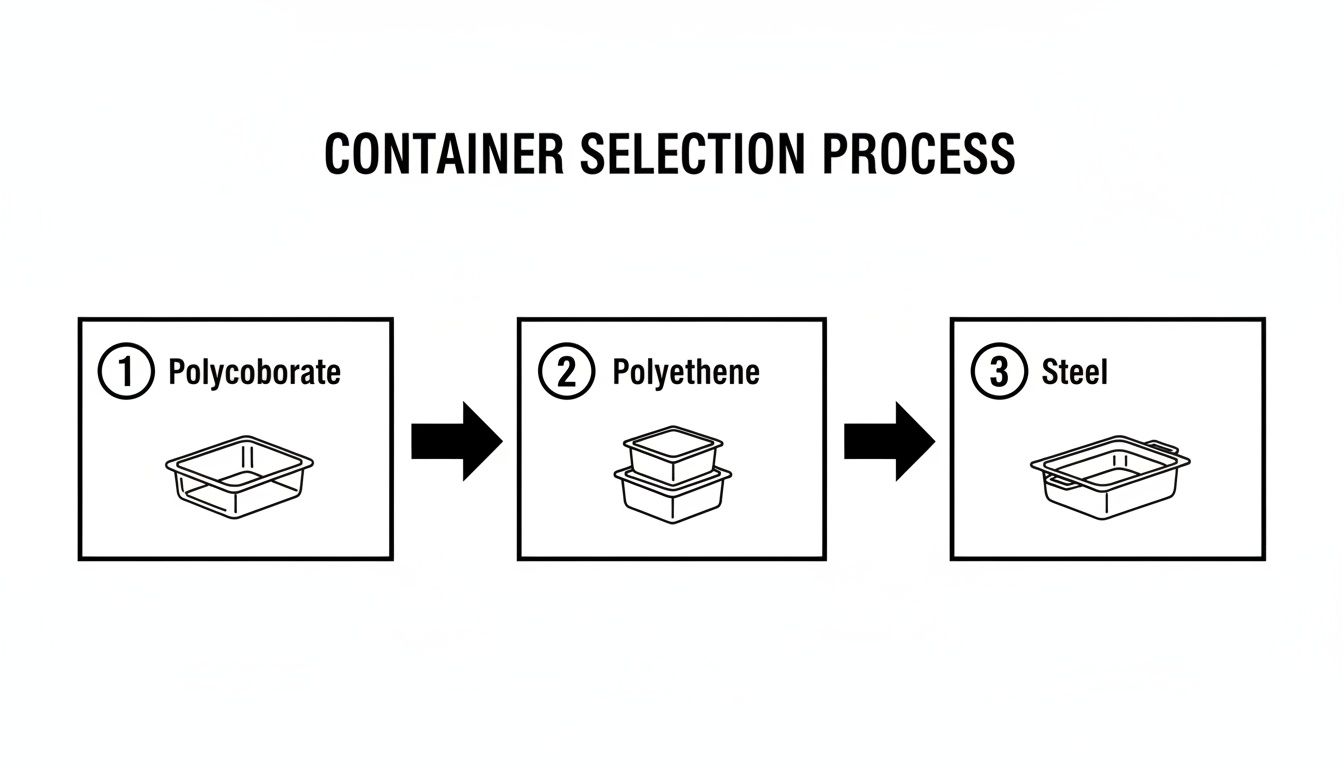
As you can see, different materials have distinct jobs: clear polycarbonate offers visibility for backup toppings, cost-effective polyethylene is great for bulk goods like flour, and temperature-retaining steel is the workhorse for the pizza prep rail.
A Pizzeria's Mise en Place Strategy
Finally, the layout of ingredients within the pizza prep rail—your mise en place—should follow the natural order of building a pizza. This is all about shaving seconds off every order. Arrange your containers logically from left to right (or right to left, whatever your kitchen's flow is).
- Start with the Base: The first container should always be your pizza sauce.
- Follow with Cheese: Next up is your cheese, the second core ingredient on virtually every pie.
- Arrange Popular Toppings: Place your most frequently ordered toppings, like pepperoni, right after the cheese for easy access.
- Group Other Toppings: Arrange the remaining vegetables and meats logically, maybe grouping similar items together to make them easy to find on the prep table.
By integrating perfectly sized containers, adopting an over-under system, and arranging your ingredients for an intuitive workflow, you turn your pizza prep table from a simple piece of equipment into the high-performance heart of your pizzeria.
Mastering Food Safety and Rotation Protocols
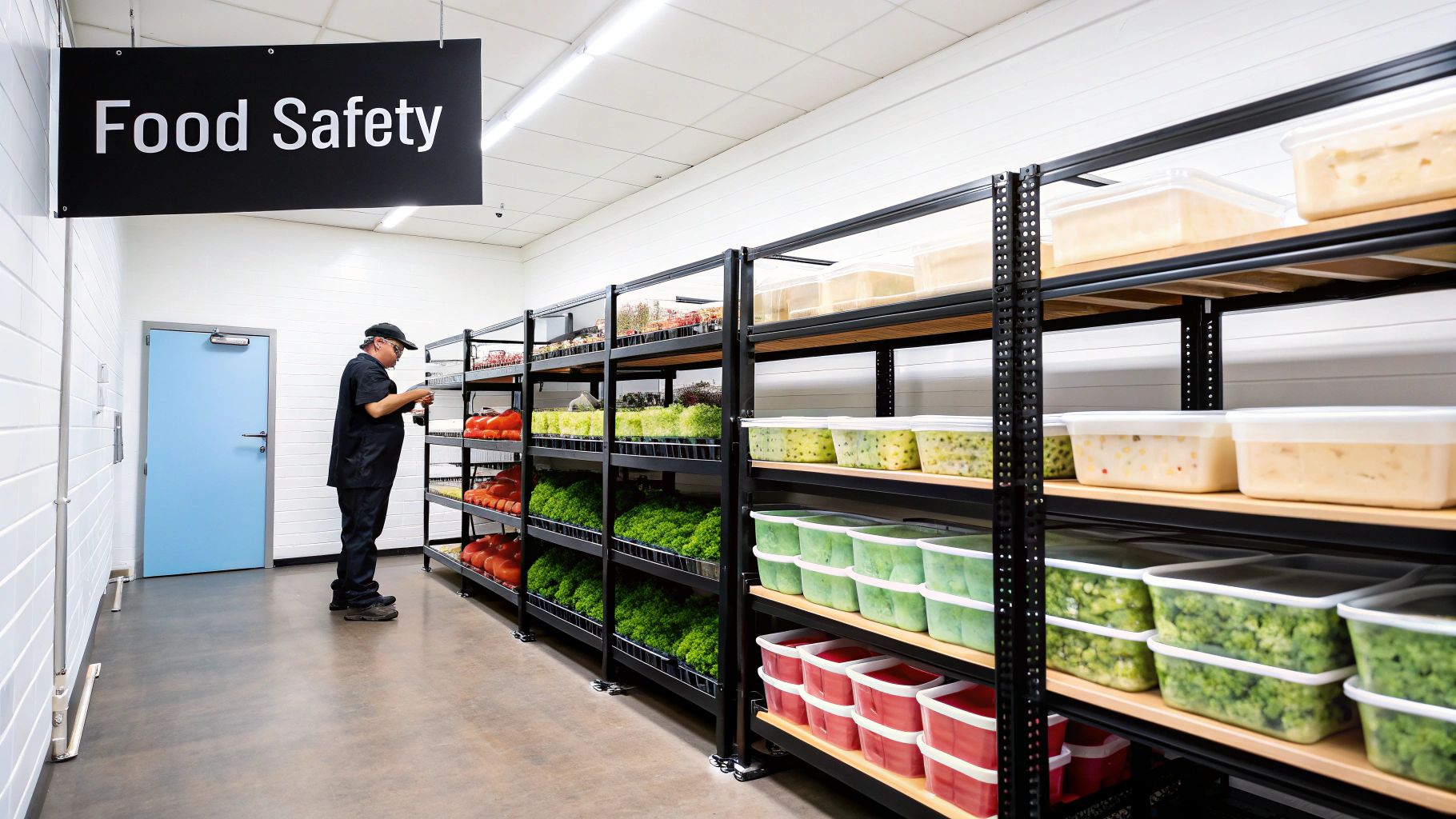
In the pizzeria business, food safety isn't just a priority; it's the foundation of your entire operation. A single mistake can put customers at risk and jeopardize the reputation you've worked so hard to build. Your food storage containers are your first line of defense in this daily battle.
Think of your safety system as your insurance policy. Building clear, repeatable protocols around your containers protects everyone—your customers, your staff, and your bottom line. The goal is to make food safety second nature in your pizza kitchen, not a complicated chore.
Nailing the FIFO Method Every Time
The absolute bedrock of pizzeria inventory management is the FIFO (First-In, First-Out) method. It's a simple idea with a huge impact: the first ingredients that come through your door should be the first ones used on the pizza line. This simple habit slashes food waste and guarantees every pie is as fresh as possible.
Imagine this: a new prep cook sees two containers of pepperoni in the walk-in. Without a system, they’ll probably grab the newest one right in front, pushing the box from two days ago to the back to be forgotten. FIFO stops that from happening.
A well-run FIFO system turns product rotation from a guessing game into a science. It's the simplest way to get a grip on food costs and ensure every single pizza that goes out the door is made with the best possible ingredients.
For FIFO to work, labeling has to be non-negotiable. Every container needs a clear, easy-to-read label with three key pieces of information:
- Item Name: (e.g., "Sliced Pepperoni")
- Prep Date: The day it was prepped or the package was opened.
- Use-By Date: The final day it can be used to ensure top quality and safety.
This simple step removes any guesswork and empowers your pizza crew to make the right call, every single time.
Using Color-Coding to Stop Cross-Contamination
One of the biggest food safety hazards in any pizzeria is cross-contamination, especially between raw meats and ready-to-eat foods like fresh veggies. A ridiculously effective way to fight this is with a color-coded system for your food storage containers for restaurants.
This visual system creates an instant, universal language for what goes where. For a pizzeria, it’s incredibly easy to put into practice. You can dig deeper into the core principles by checking out these comprehensive restaurant food storage guidelines.
- Red Containers: These are for raw meats only. Think sausage, ground beef, or chicken toppings.
- Green Containers: Reserved for fresh, washed produce like bell peppers, onions, and mushrooms.
- White or Blue Containers: Perfect for dairy products like your shredded mozzarella and ricotta.
With a system like this, it becomes almost impossible to accidentally store raw sausage in a bin meant for fresh pizza toppings, creating a powerful safety barrier.
Your Step-by-Step Sanitation Checklist
Cleaning and sanitizing your containers is the final, critical piece of the puzzle. A dirty container can quickly become a breeding ground for nasty bacteria, wiping out all your other safety efforts. Your cleaning process needs to meet—or better yet, beat—what the health department expects.
The Three-Sink Method Checklist:
- Scrape: Get all the visible food gunk off the container.
- Wash: In the first sink, scrub the container with hot water (at least 110°F) and a good detergent.
- Rinse: In the second sink, rinse it completely with clean, warm water to get all the soap off.
- Sanitize: In the third sink, let the container soak in an approved chemical sanitizer solution for the recommended time.
- Air-Dry: Place the containers upside down on a clean, sanitized rack to dry. Never use a towel—it can just put bacteria right back on.
Beyond just picking the right containers, a truly secure pizzeria combines flawless sanitation with preventative measures. This includes having a solid plan for keeping pests out of commercial spaces, as detailed in guides on effective hotel pest control strategies. When you pair meticulous cleaning with proactive pest control, you create a fortress of food safety.
Advanced Strategies to Reduce Costs and Waste
In a pizzeria, smart storage isn't just about keeping the walk-in tidy—it's a direct line to your bottom line. Once you move past basic organization, you start to see the real business impact of your container choices. Every single container you own is a tool that's either saving you money or quietly costing you.
It's tempting to grab the cheaper, generic food storage containers, but that's a classic rookie mistake that often costs more in the long run. High-quality, durable containers from professional brands are an investment, not just another line item on an invoice. They're engineered to survive the daily grind of a commercial pizza kitchen, which means you'll drastically cut down on how often you're replacing cracked or warped bins.
Calculating the Long-Term ROI
Think about it this way: a premium polycarbonate container might have a higher sticker price, but its knack for resisting stains, odors, and breakage means it could last for years. A cheaper knock-off might need to be replaced two or three times in that same period. The math is simple. Investing in durability pays for itself by slashing replacement costs and, more importantly, by protecting your expensive pizza toppings from spoilage with a much better seal.
The right container system transforms a recurring expense into a capital asset. It’s a strategic choice that boosts your bottom line by minimizing both food and material waste, directly impacting your pizzeria's profitability.
The global market for food storage containers is expected to balloon to USD 265.3 billion by 2035, a surge driven by professional kitchens demanding NSF-compliant, efficient systems. For an independent pizzeria, this trend reveals a critical insight: investing in quality storage isn't just a best practice, it's a competitive edge that elevates your entire operation. You can discover insights on the expanding food container market and see where the industry is headed.
Using Containers as Strategic Tools
Your containers can do a lot more than just hold pizza toppings; they can be active players in controlling costs and cutting waste. By putting a few smart strategies into practice, you can turn these simple boxes into powerful tools for financial health and sustainability.
-
Enforce Portion Control: Using specific, smaller container sizes for pricey toppings like prosciutto or premium cheeses is a brilliant way to enforce portion consistency. When a pizza maker can only grab from a pre-portioned 1/9 size pan, it naturally prevents overuse and keeps your food costs predictable.
-
Create a "Scrap System": Dedicate a few clearly labeled containers just for usable vegetable scraps. Bell pepper tops, onion ends, and mushroom stems can be collected and later simmered down into house-made stocks or pizza sauces. It's a simple move that turns potential trash into pure flavor.
-
Market Your Sustainability: Choosing durable, reusable containers isn't just good for your budget; it's a fantastic marketing story. Highlighting your commitment to reducing single-use plastic waste can attract eco-conscious customers who want to support businesses that share their values. For a deeper look at optimizing your space, explore our guide to commercial kitchen storage solutions.
By looking at your food storage containers for restaurants through a financial lens, you unlock new ways to run a tighter ship, slash waste, and build a more resilient and profitable pizzeria.
Bringing It All Together: Your Pizzeria's Storage Blueprint
A great pizzeria isn't just built on a killer dough recipe. Behind the scenes, it’s a machine built from smart, repeatable systems. As we've unpacked, the unsung hero of that machine is a rock-solid system of food storage containers for restaurants, working in perfect harmony with your pizza prep table. This isn't just about being tidy—it's the very foundation of your pizzeria's success.
Think about it. The right container strategy touches every part of your pizza business. It locks in the freshness and quality of your ingredients, which is what your customers taste in every single bite. It shaves seconds off your team's prep time, helping them crush the dinner rush with confidence. And most importantly, it's your first line of defense in the food safety game, protecting both your customers and your hard-earned reputation.
Your food storage system isn’t just a bunch of plastic boxes on a shelf. It's an active tool. When you get it right, it pays you back with less food waste, faster ticket times, and a healthier bottom line. It’s the physical framework that holds your entire pizza operation together.
This guide has laid out the blueprint for building that framework. From picking the right materials for your pepperoni versus your pineapple to mastering FIFO and sanitation, every piece of the puzzle is designed to create a powerful connection between your containers, your pizza prep table, and your crew.
From Knowledge to Action
Knowing this stuff is one thing; putting it into practice is what really counts. The final, most important step is to take a hard, honest look at what you’re doing right now. Use the principles we’ve covered as a checklist and give your pizzeria's storage system a full audit.
- Assess Your Containers: Are you using the right material for the job? Do you see any cracks, deep stains, or warping? Do your lids actually seal, or are they just resting on top?
- Check Prep Table Integration: Do your containers fit snugly in the refrigerated wells of your pizza prep table, or are there gaps letting cold air escape and spoiling your pizza toppings?
- Review Your Protocols: Are your labels clear and consistent, or is it a guessing game? Is your pizza crew following FIFO every single time, without exception? Is your cleaning and sanitizing process absolutely foolproof?
Answering these questions will instantly show you where you can make improvements. You now have the know-how to make small changes that will have a huge impact on your entire operation. A well-organized pizzeria is a profitable one, and it all starts with the humble container. For more ideas on getting your space in order, you might want to check out our guide on commercial kitchen shelving.
Frequently Asked Questions
When you're in the thick of a dinner rush, you don't have time for guesswork. You need straight answers to the real-world problems that pop up in the pizza kitchen every day. Here are some of the most common questions we get from pizzeria owners trying to get their container game right.
What Are the Best Food Storage Containers for Proofing Pizza Dough?
For proofing pizza dough, you really can't beat large, square, or rectangular food-grade plastic boxes with airtight lids. I always tell pizzeria owners to go with square shapes over round ones—they're just way more space-efficient in the cooler, letting you pack more dough into the same footprint.
The airtight lid is non-negotiable. It's the only thing that stops your pizza dough from drying out and forming that awful 'skin' on top. Look for containers that are at least 6-8 quarts to give the dough plenty of room to rise without spilling over. Brands like Cambro make dough boxes specifically for this, and they’re worth every penny for a serious pizza operation.
How Do I Prevent Polycarbonate Food Containers from Cracking or Clouding?
This is a big one for any pizzeria using clear pans on their prep table. To keep those clear polycarbonate pans looking good and lasting longer, ditch the harsh abrasive cleaners, steel wool, or scouring pads. They create tiny scratches that eventually lead to bigger cracks and that frustrating cloudy look. A simple soft sponge and mild detergent are all you need.
Also, be kind to them when it comes to temperature. Avoid dramatic shifts, like yanking a container straight from a scalding commercial dishwasher and tossing it into the walk-in freezer. While polycarbonate is tough, that kind of shock can make it brittle over time. And always follow the manufacturer's directions for sanitizers—using too much or the wrong kind can wreck the plastic's clarity and strength.
Can I Use the Same Type of Container for Hot and Cold Ingredients?
It really boils down to the material, especially at a pizza station. Stainless steel is the undisputed champ here; you can move those pans from a steam table with meatballs to a refrigerated pizza prep rail without a second thought. But with plastics, you have to pay attention.
Most standard polycarbonate pans are rated for temperatures from -40°F to 210°F. This makes them perfect for your cold pizza prep table and for holding warm items like cooked sausage, but don't even think about putting them in contact with boiling liquids. Always check the manufacturer’s specs, usually stamped right on the bottom of the container. A good rule of thumb is to have dedicated containers just for hot-holding to prevent warping or other damage.
At Pizza Prep Table, we know that the right tools are the foundation of any great pizzeria. From perfectly sized fractional pans to indestructible dough boxes, a solid storage system that works seamlessly with your pizza prep station is a must. Check out our selection of NSF-compliant refrigeration and storage solutions to build a kitchen that’s all about speed, safety, and profit. Find the perfect gear for your restaurant at https://pizzapreptable.com.