

how to get rust off stainless steel fridge: restoration tips for your pizzeria
It's a frustrating moment for any pizzeria owner: seeing those first tell-tale orange spots appear on your gleaming stainless steel fridge or pizza prep table. To get rust off a stainless steel fridge, you first need to understand that it's almost always a surface issue. It means the protective layer of the steel has broken down, usually from things like acidic tomato sauce spills or the wrong kind of cleaning chemicals.
The secret to fixing it lies in gentle cleaning with a non-abrasive paste and—this is crucial—always working with the grain of the steel, never against it.
Why Your Stainless Steel Fridge is Rusting
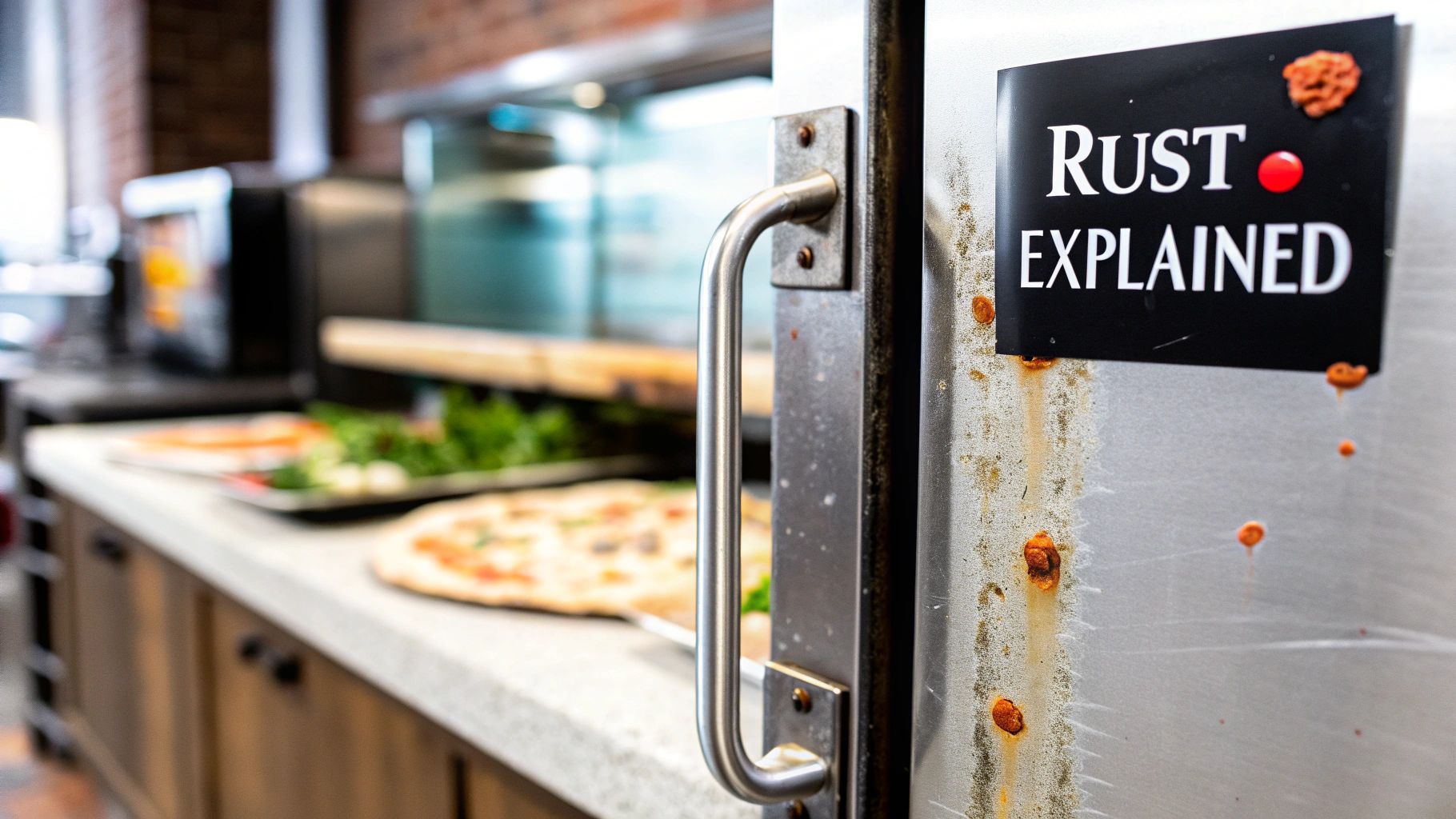
It’s one of the biggest misconceptions in the kitchen world that stainless steel is completely rust-proof. A much better way to think of it is "rust-resistant," especially in a demanding place like a pizza restaurant. The metal’s real defense is a super-thin, invisible layer of chromium oxide on its surface. When that layer is happy and intact, it keeps oxygen and moisture away from the iron in the steel, stopping rust in its tracks.
But the daily grind of a busy pizzeria puts that protective barrier to the test, day in and day out. Think about the usual suspects in your kitchen:
- Acidic Ingredients: Spills from tomato sauce, citrus marinades, or vinaigrettes are a major culprit. If left to sit, they can chemically eat away at that chromium layer.
- Salty Residues: Brine from olives, capers, or cured meats is incredibly corrosive and can compromise the steel's finish in no time.
- Harsh Chemicals: This is a big one. Using abrasive cleaners, steel wool, or any chlorine-based sanitizers can physically scratch and strip away the protective surface of your pizza prep table.
- Constant Humidity: The heat and steam pouring off a pizza oven creates a humid environment, which speeds up rust wherever the steel's defenses are down.
Understanding the Root Cause
The truth is, "stainless" steel is a bit of a misnomer; it's more like "stains less" steel. The key to its superpower is its chromium content. If that chromium oxide layer gets damaged—either from a deep scratch on a prep table or constant exposure to salt and acid—localized rust spots will pop up.
For any pizza restaurant owner, understanding these triggers is half the battle. Those small rust spots on your pizza prep fridge aren't just an eyesore; they're a clear signal that the protective barrier has failed right there. A solid maintenance routine for all your commercial stainless steel tables is your best defense against rust coming back.
Choosing The Right Food-Safe Rust Removal Method
When you're dealing with rust in a commercial kitchen, especially a pizzeria, you can't just grab the first heavy-duty cleaner you see. Anything you use on your stainless steel fridge or pizza prep table has to be food-safe, period. You need to be absolutely certain no nasty chemical residues will ever touch your dough or toppings.
The method you choose really comes down to how bad the rust is. For those little surface spots—maybe from a stray splash of tomato sauce or some olive brine on your prep table—a simple homemade paste often does the trick beautifully. But for more stubborn corrosion that feels a little rough under your fingertips, you'll probably need a specialized commercial cleaner designed to be tough on rust but gentle on the steel's delicate finish.
It's a more common problem than you'd think in busy pizzerias. Constant use, combined with acidic and salty ingredients, means even high-quality stainless steel can show rust spots. The key is catching it early and using the right technique.
Comparing Your Options
So, do you go DIY or buy a commercial product for your pizza prep station? It's really a balancing act between gentleness and power. For light rust and daily upkeep, you can't beat a simple baking soda paste. It’s completely non-toxic and perfect for any surface in a food prep area.
When you’re up against more stubborn spots on your pizza prep table that just won't budge, a product like Bar Keepers Friend provides the extra muscle you need without having to get too aggressive.
The most important piece of advice I can give any pizzeria owner is this: always start with the gentlest method first. You can always escalate to a stronger cleaner if you need to, but you can't undo deep scratches from using something too harsh right out of the gate on your prep tables.
For a deeper dive into keeping your key equipment in top shape, check out our guide on the best way to clean a stainless steel refrigerator for more pro tips.
I've put together a quick comparison table to help you make the right call in the middle of a busy shift. It breaks down exactly when to use each approach for your pizza restaurant's equipment.
Comparing Rust Removal Methods for Commercial Kitchens
This table compares two of the most common and effective rust removal solutions for a pizzeria. It highlights their ideal uses and crucial food safety notes to ensure you're cleaning both safely and effectively.
| Method | Best For | Food Safety Notes | Application Tip |
|---|---|---|---|
| Baking Soda Paste | Light surface rust and new, small spots on prep tables. | Completely food-safe and non-toxic from start to finish. | Mix baking soda with a little water to form a thick paste. Apply it, let it sit for about 30 minutes, then gently scrub with a microfiber cloth. |
| Bar Keepers Friend | Stubborn, older rust stains on equipment that don't lift with baking soda. | Becomes food-safe after a very thorough rinsing. | Apply the powder to a damp sponge, gently rub with the grain of the steel, and rinse the surface completely two or three times to remove all residue. |
Ultimately, having both a gentle DIY option and a more robust commercial cleaner on hand means you're prepared for whatever little rust spots pop up on your pizza prep stations, keeping your stainless steel looking professional and your kitchen inspection-ready.
How to Remove Rust and Restore Your Finish
Alright, let's get down to business and tackle those rust spots. Getting rust off your stainless steel pizza prep fridge is more about finesse than brute force. If you remember one thing, make it this: always work with the grain of the steel, never against it. Go against the grain, and you'll end up with a network of fine scratches that are impossible to buff out and practically invite more rust to move in.
Before you start scrubbing, give the area a quick wipe-down with a damp microfiber cloth. This gets rid of any flour, grease, or loose grime, making sure your cleaner can work directly on the rust itself. This simple prep step makes a huge difference.
The Right Scrubbing Motion
Once you've applied your cleaner—whether it's a simple baking soda paste or a commercial product—grab a clean, soft microfiber cloth or a non-abrasive sponge. Apply gentle but firm pressure and rub back and forth, following the direction of the fine lines in the steel. You’ll start to feel the rust particles breaking loose from your pizza table's surface.
This isn't just theory; it's what works in the real world of a busy pizzeria. The right technique is everything. Using a gentle hand prevents scratches that can harbor bacteria and lead to more corrosion down the line.
The infographic below breaks down the process for both the baking soda method and using a commercial cleaner on your kitchen equipment.
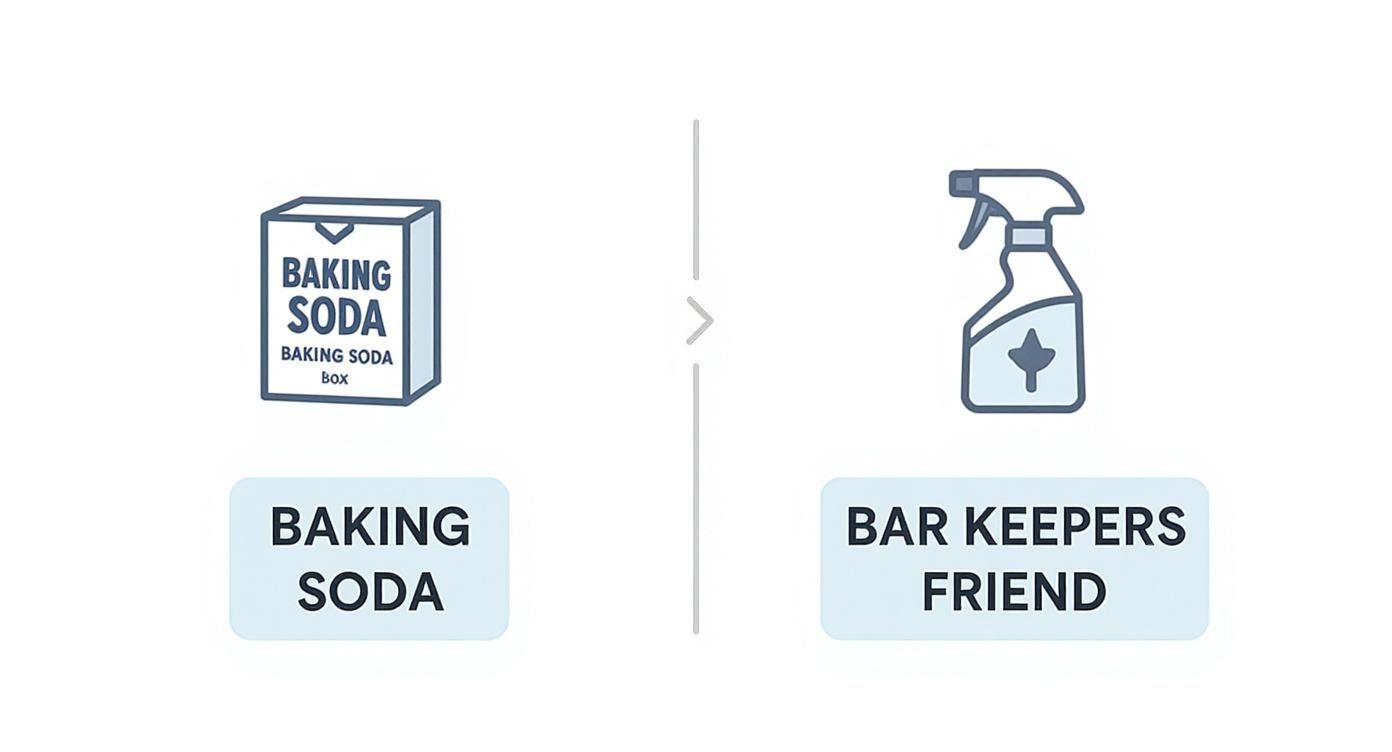
As you can see, while the cleaning agents differ, the core principles of cleaning, rinsing, and drying are identical. Both are perfectly food-safe when done right on your pizza prep surfaces.
Final Rinse and Dry Is Critical
This last part of the process is non-negotiable, so don't skip it. After you’re done scrubbing, you have to rinse the area thoroughly with a clean, water-dampened cloth. Your goal is to remove every last trace of the cleaner and the loosened rust from your prep table. Any residue left behind, especially from chemical cleaners, can be corrosive and cause problems down the road.
Finally, and this is key, immediately dry the surface completely with a fresh, dry microfiber cloth. Don't just let it air dry. Water spots contain minerals that can etch the surface and become the starting point for new rust, undoing all your hard work.
The secret to a lasting fix isn't just removing the rust; it's restoring the surface. A thorough rinse and a meticulous dry are what prevent water spots and stop rust from making a quick comeback on your pizza prep station.
Beyond just fixing rust, knowing the best general cleaning practices is what keeps your fridge and prep tables looking great. For a more detailed guide, you can learn more about how to clean your fridge. Following a solid process ensures your stainless steel stays pristine and ready for the next rush.
Common Cleaning Mistakes That Cause Rust
In the heat of a busy pizzeria, speed is everything. But the wrong cleaning shortcuts can permanently wreck your stainless steel fridge and pizza prep tables. I've seen it happen time and again—well-intentioned staff grab the wrong tool for the job, and before you know it, you're dealing with a rust problem.
Understanding what not to do is just as important as knowing the right way to clean. The goal is to protect the steel's invisible chromium oxide layer, which is its built-in defense against corrosion.
The single most destructive mistake is reaching for abrasive cleaning tools. Things like steel wool, wire brushes, or heavy-duty scouring pads should never, ever touch your stainless steel prep tables. They might seem like a quick fix for baked-on cheese or sauce, but they carve thousands of microscopic scratches into the finish.
These scratches do more than just dull the surface. They tear right through that protective chromium layer, leaving the raw steel underneath exposed and defenseless against moisture and oxygen—the two ingredients for rust.
Corrosive Cleaners and Spills
Another all-too-common disaster is using cleaners that contain chlorine, especially bleach. Chlorine is incredibly aggressive and will cause pitting corrosion, creating tiny, deep holes in the steel that are nearly impossible to fix. Always flip the bottle over and check the label on your sanitizers and cleaners. Make sure they are chloride-free and explicitly marked as safe for stainless steel.
Just as damaging are the everyday spills that are unavoidable in a pizza kitchen.
- Salty Brine: The liquid from olive, pickle, or pepperoncini jars is a rust-starter in a bottle. If left to sit, its high salt content will eat away at the steel's finish in no time.
- Acidic Foods: Tomato sauce, citrus juices from lemons, and any vinegar-based dressings are also trouble. They can chemically etch the surface if not wiped up right away.
A packed Friday night is no excuse to let spills linger on your prep table. The golden rule in any professional kitchen is simple: wipe up corrosive spills immediately with a damp cloth. This one habit stops the chemical reaction that leads to rust before it can even start.
Finally, always respect the grain. Just like wood, stainless steel has a visible grain. Scrubbing against it, even with a soft cloth, creates tiny scratches that dull the finish and trap dirt and flour. Train your crew to always wipe parallel to the grain. It's a small detail that makes a huge difference in preserving the look and integrity of your expensive pizza prep tables.
A Proactive Maintenance Plan for Your Pizzeria
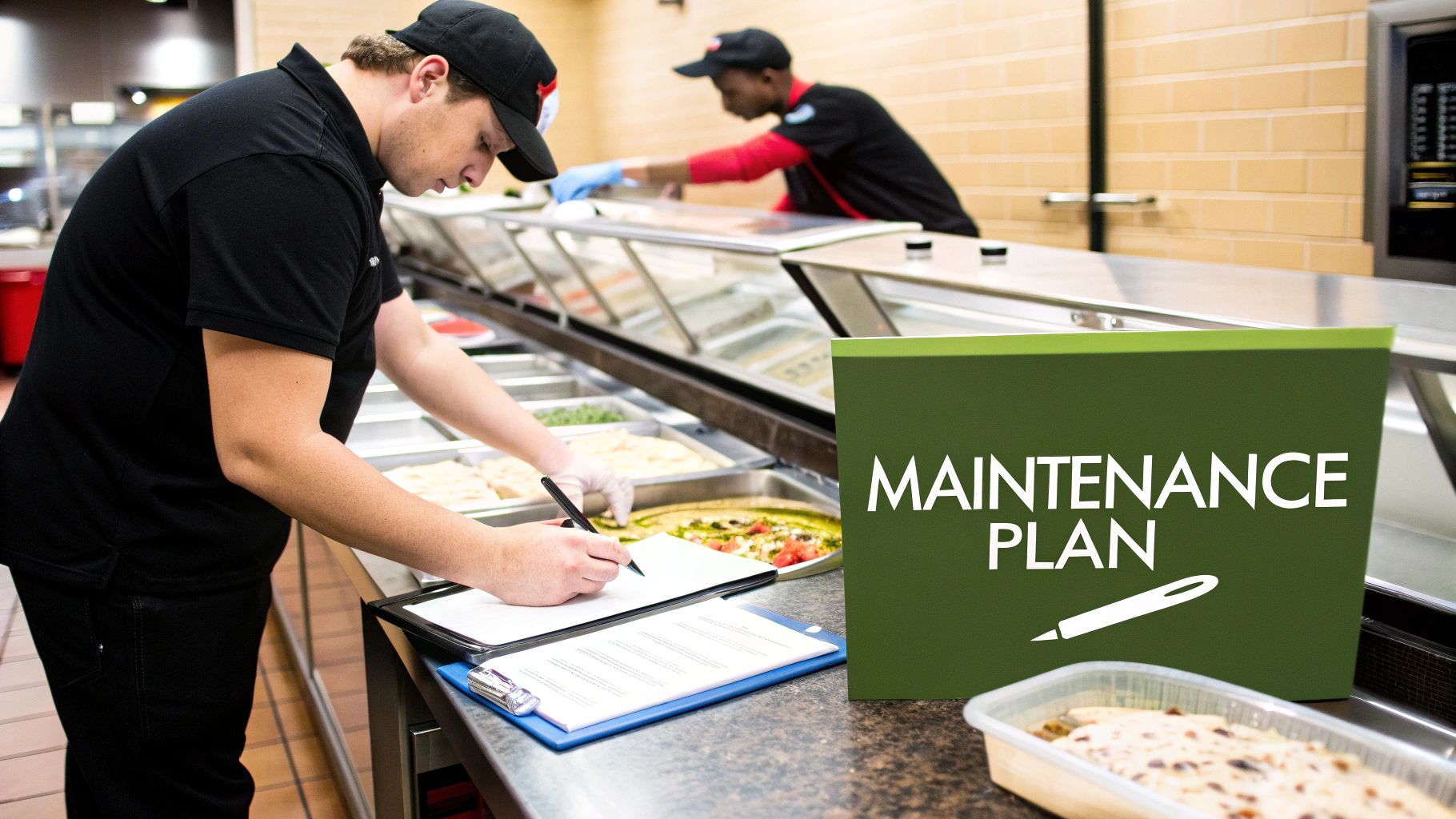
Fixing rust is a reaction; preventing it is a strategy. In a fast-paced pizzeria, your stainless steel fridge and prep tables are under constant assault from corrosive ingredients and moisture. A simple, consistent maintenance schedule is your best defense, protecting your valuable equipment and keeping your kitchen looking sharp.
This isn't about adding complicated chores to your closing routine. It's about building small, smart habits into your team's daily and weekly workflow. The goal is to preserve the steel’s protective chromium oxide layer so it never gets a chance to fail in the first place.
Daily and Weekly Cleaning Routines
The most effective maintenance plans are the ones your staff will actually follow. It all boils down to daily wipe-downs of every pizza prep table and a more thorough weekly check.
The daily routine is all about damage control. Wiping up tomato sauce, olive brine, or any acidic dressing as soon as it happens is crucial. At closing, a final wipe-down with a damp microfiber cloth, followed by a thorough drying, stops overnight corrosion from ever taking hold.
The weekly routine goes a step further:
- Inspect Hidden Areas: Pay close attention to corners, seams, and the areas around door handles on prep fridges where moisture and gunk love to collect.
- Use the Right Cleaners: Stick to non-abrasive, non-chlorinated cleaners specifically made for stainless steel. Anything else is a gamble.
- Polish to Protect: Once a week, apply a thin coat of a food-grade stainless steel polish. This isn't just for shine—it adds a real barrier against moisture and smudges.
A dedicated maintenance routine turns equipment care from an occasional headache into a daily habit. By keeping surfaces clean and dry, you're not just cleaning—you're actively extending the lifespan of your pizzeria's most critical assets.
Long-Term Equipment Health
Building a sustainable maintenance plan means making it easy to follow. A detailed yet straightforward checklist can make all the difference for your team. Our commercial kitchen cleaning checklist is a great template to get you started.
For environments that demand the absolute highest standards, like medical or research facilities, the protocols are even more intense. You can learn a lot from the practices used for stainless steel cleanroom furniture maintenance. Applying some of those principles can seriously elevate your own kitchen’s hygiene and equipment preservation game.
Common Questions About Stainless Steel Care
Even with a solid daily routine, some specific questions always come up in a busy kitchen. Let's tackle a few of the most common things I hear from pizzeria owners about getting rust off a stainless steel fridge and keeping it looking sharp.
Can I Use Steel Wool on Tough Rust Spots?
This is a hard no. In fact, it's probably the single most damaging mistake you can make on a pizza prep table.
Using steel wool, abrasive scouring pads, or wire brushes on stainless steel is a recipe for disaster. You'll permanently scratch the surface, which not only looks terrible but also scrapes away the protective chromium oxide layer. That makes the area even more likely to rust in the future. Always stick to soft materials like microfiber cloths or non-abrasive sponges.
Is Bar Keepers Friend Safe for Food Prep Surfaces?
Yes, but with one critical final step. While Bar Keepers Friend is a fantastic rust remover, its job isn't done until you've rinsed it off completely from your pizza prep table.
After you've scrubbed away the rust, you absolutely must rinse the surface thoroughly with clean water to get rid of all chemical residue. Then, as a final precaution, wipe the area down with a food-safe sanitizer and let it air dry before any dough or toppings touch it again.
This rinse-and-sanitize process is non-negotiable in a commercial kitchen. It ensures your prep table isn't just rust-free, but also completely safe for your customers and up to health code standards.
Why Does My Brand-New Pizza Prep Table Already Have Rust Spots?
I get this call a lot, and it's almost always a case of "surface contamination." It sounds bad, but it's usually an easy fix.
This happens when tiny iron particles—from the manufacturing, shipping, or installation process—settle on the steel and then rust. It doesn't mean your expensive new pizza prep fridge is defective or low-quality. Following the gentle rust removal steps we outlined earlier will almost always take care of these spots for good.
Keeping your pizzeria's centerpiece equipment in top-notch condition is crucial for both food safety and making a professional impression. For expert advice and a huge selection of durable, NSF-compliant refrigeration, check out the options at Pizza Prep Table. Find the perfect stainless steel pizza prep table for your restaurant today.