

Precision Pastry: Top Cutting Wheels for Bakers
Why Every Baker Needs a Pastry Cutting Wheel
A Pastry cutting wheel is a specialized kitchen tool designed to cut dough, pastry, and pasta with precision. Its primary uses include:
- Cutting uniform strips for lattice-top pies
- Creating decorative fluted edges
- Slicing pasta sheets for ravioli and noodles
- Scoring dough for even baking
- Portioning cookies and brownies
Key Advantages Over Knives:
- Precision: Rolling wheels create cleaner, more consistent cuts.
- Speed: Multi-wheel cutters can divide dough in seconds.
- Safety: There's less risk of slipping compared to dragging a knife.
- Decorative options: Fluted wheels add professional-looking crimped edges.
The global bakery market is projected to reach $375.1 billion by 2030. Professional bakers know that quality tools deliver uniform results that customers notice—from lattice tops to perfectly portioned sheet cakes.
For pizzeria owners and restaurant managers, a pastry cutting wheel is a versatile asset that speeds up prep work, reduces waste, and helps create consistent, attractive products. In the foodservice industry, the right Pastry cutting wheel is critical for efficiency and quality. Whether outfitting a new pizzeria or upgrading your baking tools, a quality cutter saves time and improves your finished product.
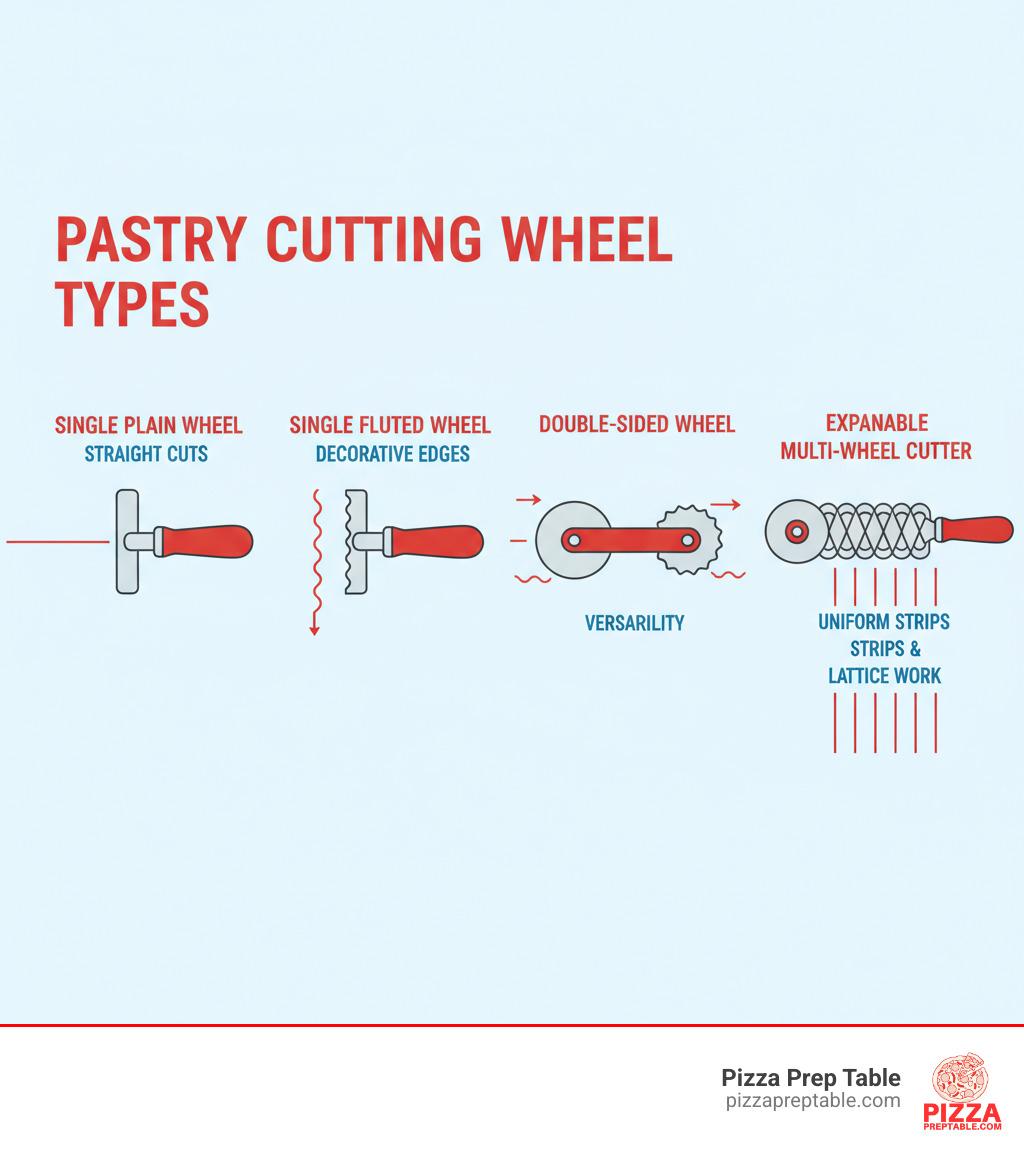
Anatomy of a Pastry Wheel: Types, Materials, and Designs
Understanding the components of a pastry cutting wheel can improve your baking. These precision instruments are designed to make your work faster and more professional.
A pastry cutting wheel is a handheld tool with a handle and one or more rotating blades. It cuts through dough, pastry, and fresh pasta with clean edges that a knife can't match. The rolling action reduces drag and tearing, making it ideal for portioning ravioli or creating lattice tops.
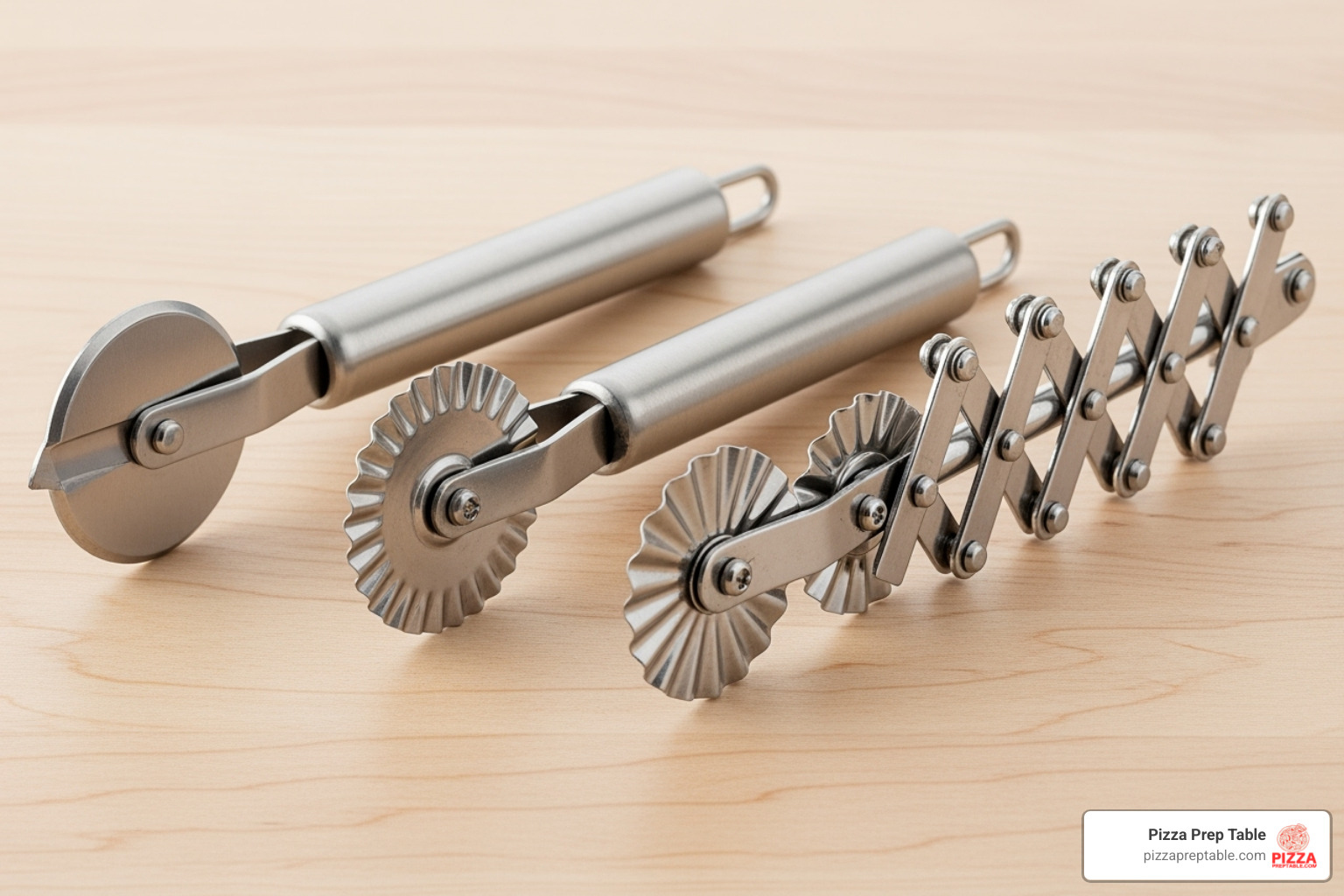
Exploring the Different Types
Professional bakeries use several types of pastry cutting wheels for specific tasks.
Single Wheel Cutters: These are the most basic type. A plain edge model works like a miniature pizza cutter for straight, clean cuts. The fluted edge version adds a decorative, crimped finish to pies and tarts. This crimping action also helps seal two layers of dough together, which is invaluable for filled pastries and ravioli.
Double-Sided Pastry Wheels: These feature both a plain and a fluted wheel on one handle, allowing you to switch between straight cuts and decorative edges without changing tools. They are a space-saving and efficient option.
Expandable Multi-Wheel Cutters: For maximum efficiency, these cutters have several wheels on an adjustable frame, letting you cut multiple parallel strips at once. The customizable spacing makes them perfect for lattice tops, brownies, or pasta sheets, dramatically reducing prep time while ensuring uniformity.
Lattice Cutters: These are designed specifically for creating intricate, woven dough tops, either by rolling across the dough or pressing a full sheet at once.
While a standard pizza cutter can handle dough, these specialized tools offer greater control and more edge options for detailed work.
Materials and Construction
The materials of your pastry cutting wheel determine its durability and performance, especially in a commercial kitchen.
Stainless steel is the professional standard. It's strong, rust-resistant, and holds a sharp edge, slicing cleanly without tearing dough. It stands up to frequent use and commercial dishwashers. Many professional multi-wheel cutters are built entirely from stainless steel for maximum stability.
| Feature | Stainless Steel Wheels | Plastic Wheels |
|---|---|---|
| Durability | Excellent; resistant to rust, corrosion, and bending. | Good for light use; can crack or dull over time. |
| Sharpness | Can be made very sharp and retain edge well. | Less sharp; edge dulls quickly, may drag dough. |
| Ease of Cleaning | Very easy to clean, often dishwasher safe. | Easy to clean, but may stain or retain odors over time. |
| Cost | Higher initial investment. | Lower initial cost. |
Polypropylene handles are often paired with stainless steel wheels, offering a comfortable, non-slip grip that is hygienic and dishwasher safe. These ergonomic grips reduce hand fatigue during large batches.
Wood handles offer a classic look but require hand-washing, making them better suited for home use.
Sharp, durable stainless steel wheels paired with comfortable, ergonomic handles provide the best control and precision. Sturdy construction ensures stability, which is critical for multi-wheel models. A quality tool is an investment that will serve your kitchen for years.
Our Top Picks: The Best Pastry Wheels for Every Task
Finding the right pastry cutting wheel can transform your dough work, turning a frustrating task into a satisfying one.
This section highlights our top choices, helping bakers find the perfect tool for their kitchen, whether for home use or a professional setting where pastries are displayed in a bakery refrigerator showcase.
Best All-Around: The Double-Sided Pastry Wheel
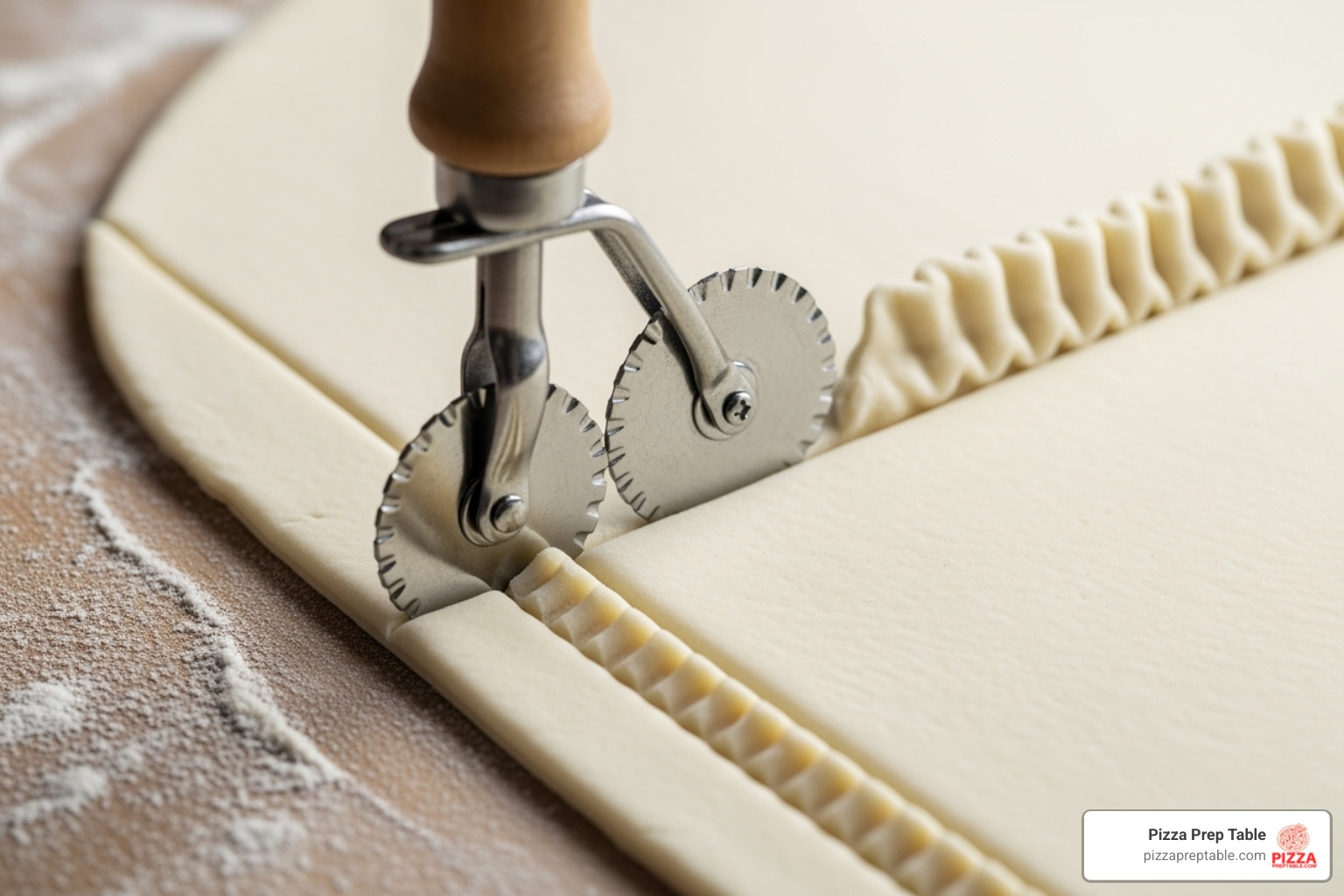
If you only buy one pastry cutting wheel, make it a double-sided model. This design features both a plain straight edge and a decorative fluted edge on one handle, combining two essential tools into one.
This design creates a seamless workflow. Trim pie dough with the straight edge, then flip the tool to crimp a beautiful border without switching tools. For a busy baker, these small efficiencies add up. Its versatility is remarkable, handling pies, cookies, pasta, and general pastries with ease. For home bakers with limited space and professionals who value efficiency, the double-sided pastry wheel is a practical, indispensable tool.
Best for Professionals: The Expandable Multi-Wheel Cutter
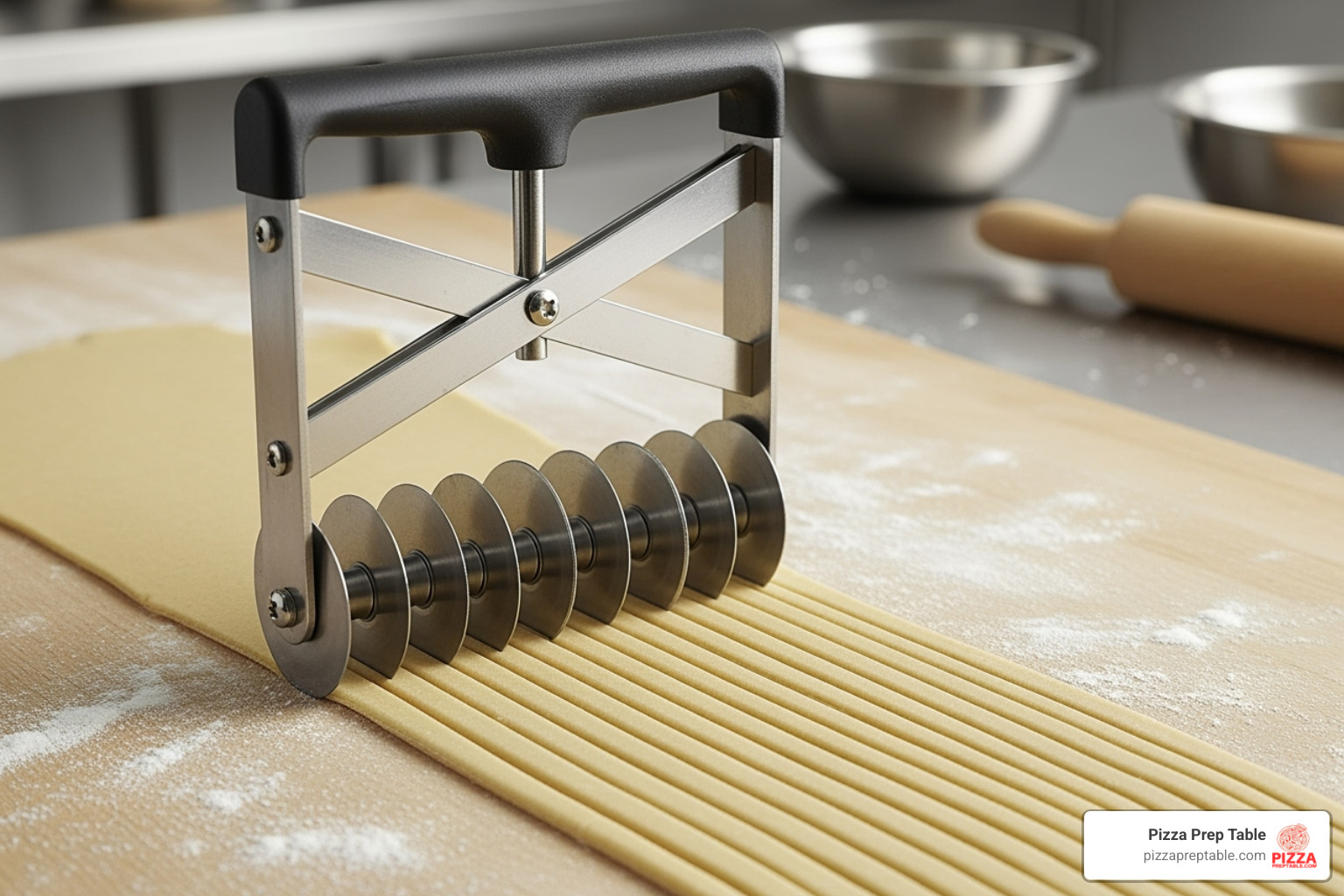
In a commercial kitchen, time is money, making the expandable multi-wheel cutter indispensable. This tool cuts multiple uniform strips of dough in a single pass, turning minutes of work into seconds.
Its adjustable width allows you to customize the spacing between wheels for any task. Quality models feature stainless steel construction that withstands the rigors of professional use. Instead of measuring and cutting individual strips for a lattice top, one roll across the dough creates multiple, perfectly spaced strips ready to weave.
The applications are extensive: slice a pan of brownies into uniform portions, prep croissants by dividing dough into consistent triangles, or create beautiful pasta sheets. The uniformity it provides ensures even baking and cooking, a detail customers appreciate. As the demand for high-volume, precision baking grows, this tool helps you meet that demand efficiently while maintaining professional quality.
Best for Decorative Edges: The Fluted Pastry Cutting Wheel

A beautifully crimped edge signals care and quality. A dedicated fluted pastry cutting wheel is the best tool for this job.
This single-purpose tool has a crimped wheel for creating decorative edges. It delivers consistent, professional results that are difficult to achieve by hand. Beyond pie crusts, use it on tarts, lattice work, and to seal and decorate hand-held ravioli, empanadas, or turnovers.
The fluted design is both functional and beautiful. The crimps press dough layers together more firmly than a straight cut, helping to prevent fillings from leaking during baking. This small investment makes a dramatic visual impact, elevating your baked goods from homemade to professionally crafted.
Best for Pasta and Ravioli: The Specialized Pastry Cutting Wheel
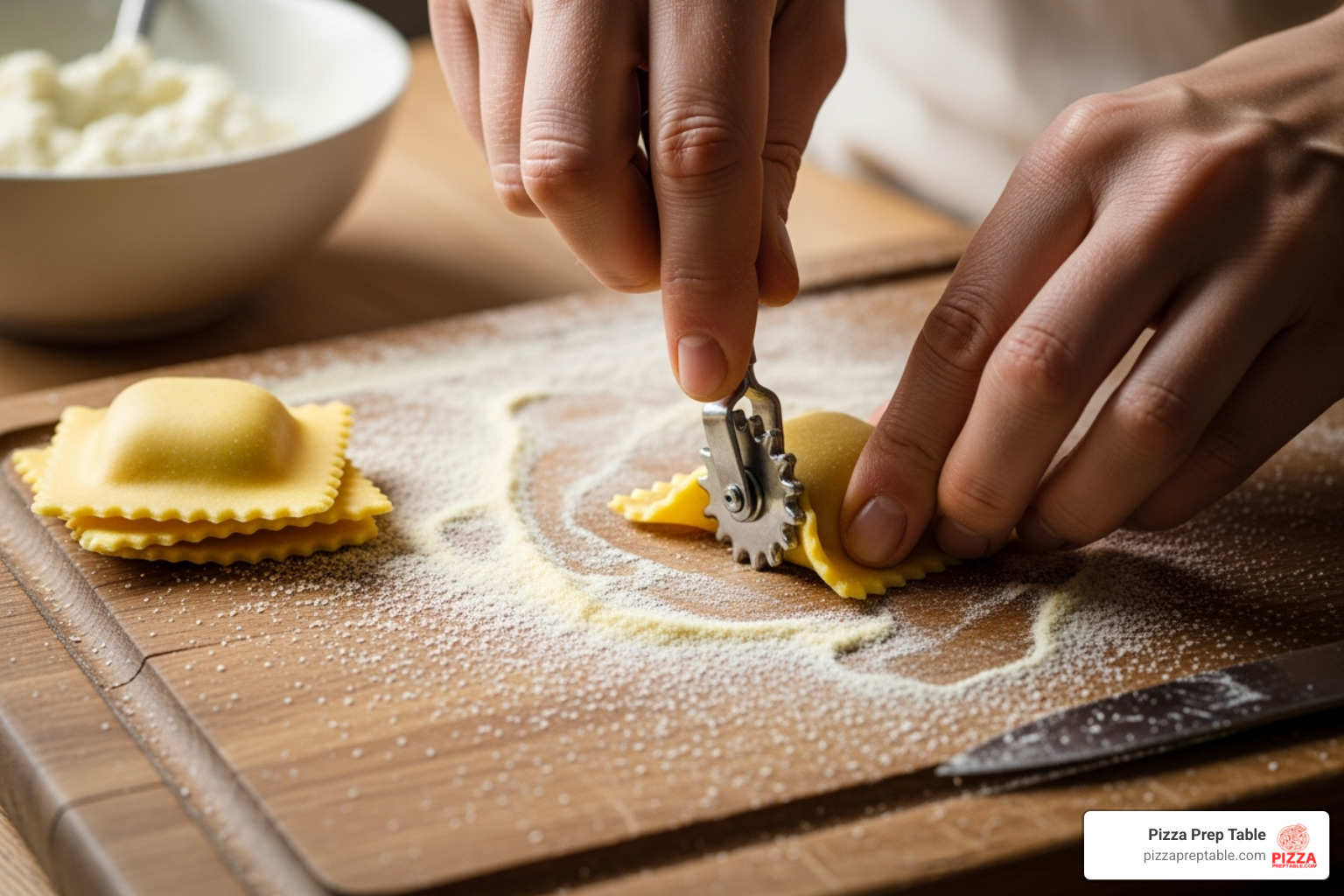
Fresh pasta requires precise cuts, and specialized wheels make a noticeable difference. These tools typically feature very sharp, thin wheels that slice through delicate pasta dough without dragging or tearing.
The fluted version excels at sealing filled pasta like ravioli. The crimped pattern creates an attractive border and a tight seal that keeps fillings from escaping during cooking. A good fluted wheel prevents ravioli from bursting in boiling water.
For cutting pasta strips, a plain-edged wheel or multi-wheel cutter creates clean, uniform pieces for fettuccine or lasagna. The clean cut prevents dough from sticking and ensures even cooking. A specialized wheel helps maintain the precision that makes your pasta look as good as it tastes. Once perfected, you might consider more on displaying your creations in glass showcases to show them off.
Buyer's Guide: How to Choose Your Perfect Tool
Picking the right pastry cutting wheel means finding a tool that fits your workflow and is built to last. This guide will help you select a high-quality cutter, which is a long-term investment for any serious baker, whether for a pizzeria kitchen or a home setup.
Key Features of a High-Quality Pastry Cutting Wheel
Look for these features to separate a quality tool from a frustrating one:
Wheel Size: Smaller wheels (around 2-2.5 inches) offer excellent control for detailed work and tight curves. Larger wheels cover more ground quickly, ideal for straight cuts on large dough sheets.
Handle Material: Polypropylene handles are durable, hygienic, dishwasher safe, and provide a secure, non-slip grip. Stainless steel handles offer extreme durability, while wood handles have a classic feel but require hand-washing.
Ergonomics: A well-designed, comfortable grip reduces hand fatigue during long prep sessions. Look for a handle that feels balanced.
Adjustability: For multi-wheel cutters, easy adjustment of wheel spacing is essential. Secure locking hardware is just as important to keep the wheels from shifting mid-cut.
Blade Sharpness: High-quality stainless steel blades cut cleanly without dragging or tearing dough. Sharp blades require less pressure, giving you better control.
Sturdy Construction: A solid connection between the handle and wheel prevents wobbling. For multi-wheel cutters, robust construction ensures all wheels track in parallel for uniform strips.
Price vs. Quality: What to Expect
Pastry cutting wheels vary widely in price, and understanding the differences helps you choose wisely.
Entry-Level (under $15): Basic single-wheel cutters, often with plastic components. They are suitable for occasional home use but may lack the durability for professional settings.
Mid-Range ($15 to $50): This range offers better materials and design, including double-sided wheels and basic multi-wheel cutters. These are perfect for serious home bakers and smaller commercial operations.
Professional-Grade ($50 and up): Built for longevity, this category is dominated by heavy-duty stainless steel expandable multi-wheel cutters. They feature precise adjustment, robust locking systems, and can handle daily commercial use.
Price differences are driven by materials (stainless steel vs. plastic), complexity (single vs. multi-wheel), construction quality, and brand reputation. Investing in a higher-quality pastry cutting wheel pays off in the long run through time savings, reduced frustration, and consistently better results.
Care and Maintenance: Ensuring Your Tool's Longevity
Proper care for your pastry cutting wheel preserves its sharpness and extends its lifespan, ensuring it remains a reliable kitchen asset. A well-maintained tool performs better and lasts longer.

Cleaning Your Pastry Wheel
For most pastry cutting wheels, hand-washing is best. Use warm, soapy water and a soft brush to gently remove dough residue from blades and crevices. This prevents buildup that can stop the wheels from spinning freely.
A small, stiff-bristled brush is invaluable for cleaning between wheels or in the grooves of fluted edges.
While some models are dishwasher safe (always check manufacturer guidelines), dishwashers can dull blades over time. If you use a dishwasher, place the tool on the top rack.
The Drying Step You Can't Skip
Drying is a crucial step. After washing, immediately and thoroughly dry your pastry wheel with a clean towel to prevent rust, even on stainless steel. A few seconds of thorough drying keeps your tool performing like new.
Preventing Rust and Keeping Things Sharp
Proper storage is key to maintaining your pastry cutting wheel. Store it in a way that protects the blades from dulling, such as in a utensil drawer with compartments or on a magnetic strip. Keep tools in a dry environment to prevent rust or material degradation.
By following these simple steps, your pastry cutting wheel will remain sharp, clean, and ready for action. For more on maintaining your equipment, check out our complete guide to refrigerated bakery cases.
Frequently Asked Questions about Pastry Wheels
Here are answers to common questions about the pastry cutting wheel to help you get the most from this essential kitchen tool.
What are the advantages of a multi-wheel pastry cutter?
A multi-wheel cutter saves significant time by making multiple, parallel cuts at once. The key benefit is uniformity. It ensures perfectly even strips for lattice work, pasta, or portioning, which is crucial for professional results and even cooking. That precision is difficult to achieve with a single wheel. For professional bakers or pizzeria owners, a multi-wheel pastry cutting wheel is an investment that pays for itself in saved labor and consistent product quality.
Can I use a pizza cutter instead of a pastry wheel?
While a pizza cutter can work for straight cuts, it lacks the versatility of a pastry cutting wheel. Pastry wheels are crafted for finesse, offering fluted options for decorative edges that pizza cutters cannot replicate. They are also typically smaller and more nimble, providing greater control for detailed work. The wheels are often sharper and thinner, designed to glide through raw dough without dragging. In short, a pizza cutter works for basic cuts, but a dedicated pastry cutting wheel is essential for versatility, decorative edges, and the finer control needed for serious pastry work.
How do I keep the dough from sticking to the wheel?
To prevent dough from sticking, lightly dust the pastry cutting wheel with flour before each roll. This creates a barrier that allows the wheel to glide smoothly. Also, keep your dough cold. Chilled, firm dough is less likely to stick or drag. If your dough warms up, return it to the refrigerator for 10-15 minutes before continuing. A lightly floured work surface and dough top also help. With these techniques, you'll achieve clean, professional cuts every time.
Conclusion: Lift Your Baking with the Right Tools
A pastry cutting wheel is an indispensable tool that offers the precision, speed, and consistency to lift your baked goods. From fluted pie crusts to uniform pasta strips, the right wheel improves your process and the final look of your creations.
By understanding the different types, materials, and features, you can choose a tool that suits your needs. Investing in a quality pastry wheel and maintaining it properly is an investment in efficiency and long-lasting performance.
For those outfitting a professional kitchen, PizzaPrepTable.com offers a wide range of high-quality baking and restaurant equipment. We believe the right tools are the foundation of exceptional culinary creations. Ready to perfect your cutting technique? Explore our essential guide to the best pizza cutters for more expert advice on dough-cutting tools.