

The Ultimate Guide to Stainless Steel Pizza Prep Tables
When you're running a busy pizzeria, your stainless steel prep table is the undisputed heart of the operation. It's so much more than just a shiny surface; it's the command center where dough gets stretched, sauce is slung, and every single pizza comes to life.
The Engine of Your Pizzeria’s Kitchen
Think of your pizza prep table as the engine driving your kitchen’s speed and quality. The right table creates a smooth, logical flow from dough to box. The wrong one? It’s a recipe for constant bottlenecks, frustrated staff, and slower ticket times. This guide goes beyond the basic spec sheets to help you make a smart investment, exploring how the right material grade and a thoughtful layout can directly boost your pizzeria’s bottom line.
Of course, getting the best gear often means looking into smart funding. Understanding the various restaurant equipment financing options is a key step in outfitting your kitchen without draining your cash flow.
We'll dig into the details that truly matter for pizza making, including:
- How material grades like 304 vs. 430 stainless steel really affect the lifespan and food safety of your pizza prep table.
- The real-world pros and cons of choosing a refrigerated pizza table versus a standard non-refrigerated one.
- How smart sizing and workflow planning can eliminate those frustrating kitchen traffic jams on a busy Friday night.
Choosing The Right Stainless Steel Grade for Pizza Prep
Not all stainless steel is created equal, and for a pizzeria, picking the right kind is a huge deal. It’s like choosing between fresh mozzarella and the pre-shredded stuff—they both have their place, but one is clearly better for the star of the show. The two grades you’ll run into most often for a stainless steel table prep station are 304 and 430.
So, What's The Difference?
For the main work surface—where dough hits sauce and toppings meet cheese—304 grade is the undisputed champion. Think of it as your frontline warrior. It has a higher nickel content, making it incredibly tough against corrosion from acidic tomato sauce, salty pepperoni, and briny olives. This means it won't pit or rust, even after years of abuse from pizza cutters and constant cleaning.
Then you have 430 grade, which I like to call the reliable support player. It's more budget-friendly and perfectly suited for parts of the table that aren't in the direct line of fire, like the legs, bracing, and undershelves. Since these areas don't face constant moisture and acidity from stray sauce splashes, you can save some money here without compromising on quality where it counts.
The table below breaks down the key differences to help you see why this choice matters for your pizzeria.
Stainless Steel Grade Comparison for Pizza Prep Tables
| Feature | 304 Grade Stainless Steel (The Premium Choice) | 430 Grade Stainless Steel (The Economy Choice) |
|---|---|---|
| Best For | Tabletops, surfaces with direct food contact | Legs, undershelves, backsplashes, non-contact areas |
| Corrosion Resistance | Excellent. Resists rust from acidic foods (tomato sauce, citrus) and salt. | Good. Vulnerable to pitting and rust with prolonged exposure to acids and salt. |
| Durability | Higher durability and longevity, especially under heavy, daily use. | Perfectly durable for structural support, but not for constant scraping and washing. |
| Cost | More expensive upfront due to higher nickel and chromium content. | More affordable, making it a smart choice for non-critical components. |
| Magnetic | Non-magnetic. | Magnetic. (An easy way to tell them apart in the wild!) |
Ultimately, the smartest move for most pizzerias is a hybrid approach: a tough 304 grade top for all the messy prep work, supported by a sturdy and cost-effective 430 grade base. It’s the best of both worlds, giving you durability where you need it most without breaking the bank.
This simple diagram shows just how central your prep table is to the whole operation. Getting this choice right directly impacts how fast you can build pizzas, the quality of your product, and your bottom line.
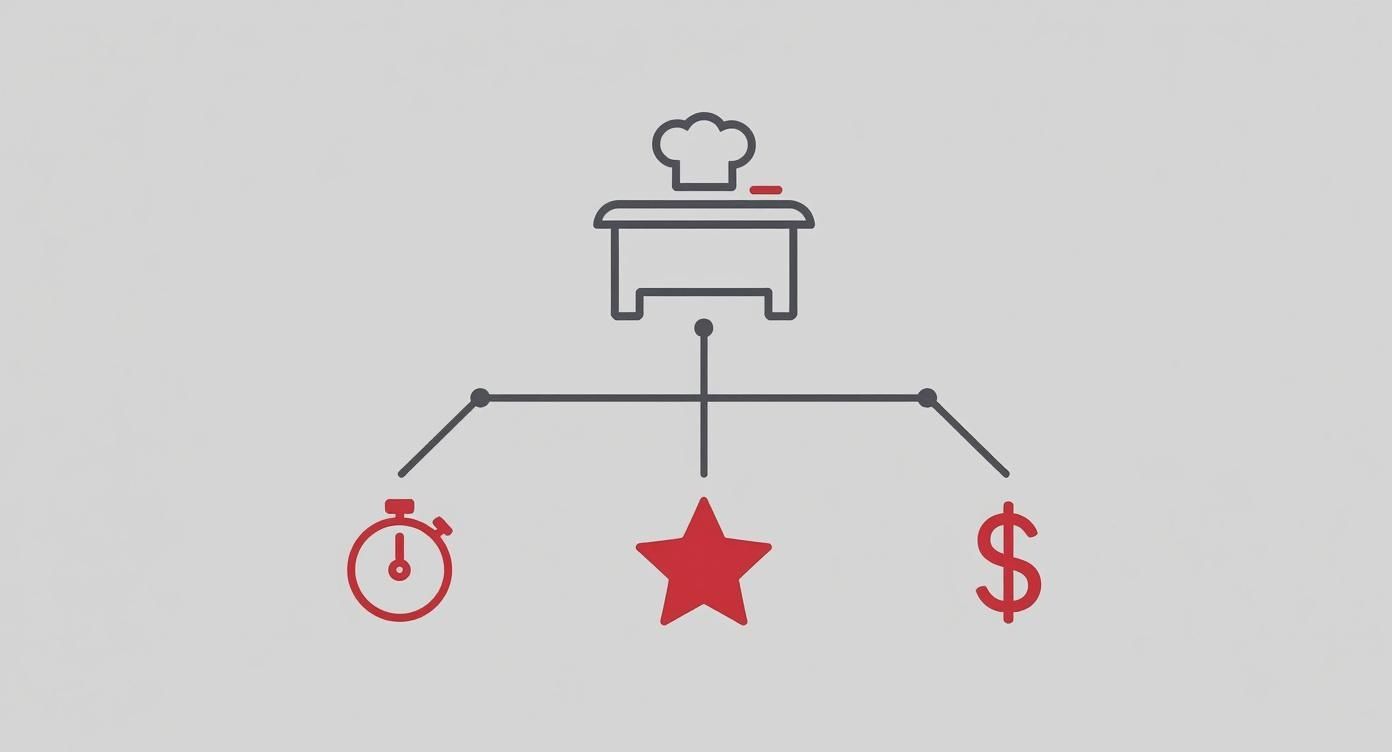
A well-chosen table really is the hub that drives your core business metrics. If you’re thinking about different materials for your prep areas, this guide to choosing the perfect kitchen countertop offers some great broader insights. And to really get into the weeds, you can explore our detailed breakdown of commercial stainless steel tables.
Refrigerated Prep Tables vs. Standard Tables for Pizza
When it comes to your main prep station, you’re looking at a fundamental choice for your pizzeria's workflow. It really boils down to a classic kitchen dilemma: do you go for the all-in-one speed of a refrigerated unit, or the flexible simplicity of a standard work table?
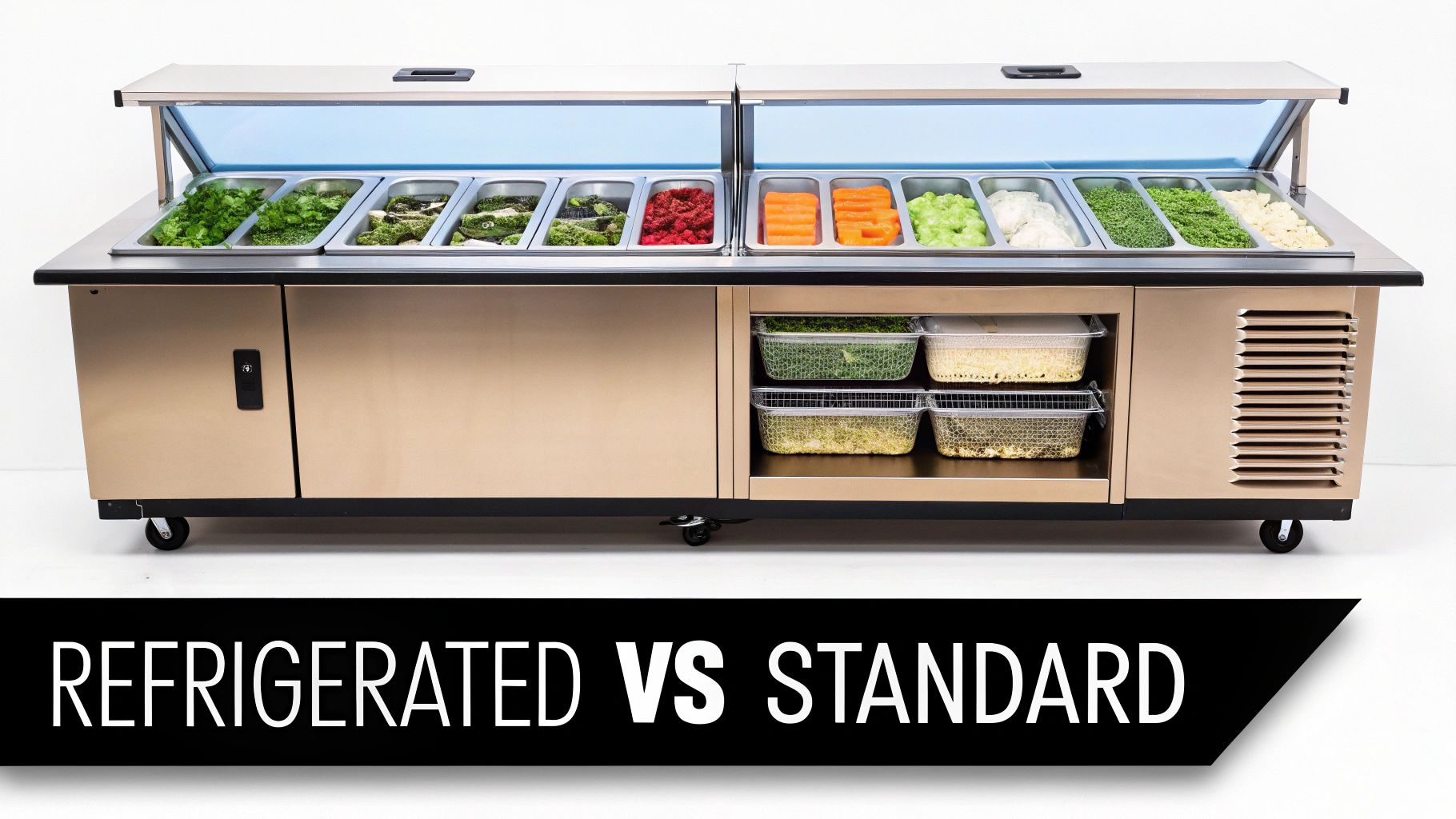
A refrigerated prep table is an efficiency machine for pizza making. It’s designed to keep every single topping, from your pepperoni to your peppers, perfectly chilled and literally inches from where you’re building pies. For any high-volume shop, this setup is a massive game-changer for both speed and food safety, killing those constant trips back and forth to a separate cooler.
On the flip side, a standard, non-refrigerated work table gives you a lower upfront cost and a lot more flexibility in how you lay out your pizza line. You can always pair it with separate undercounter coolers and configure your station exactly how you want it.
Sure, the initial investment for a refrigerated unit is higher, but it often pays for itself surprisingly fast through quicker ticket times and a serious reduction in food waste. You have to be honest about your projected volume—if you’re a smaller or lower-traffic spot, a simpler, non-refrigerated setup might be the smarter financial move right out of the gate.
Sizing Your Pizza Table to Maximize Kitchen Workflow
Picking the right size for your stainless steel prep table is really about choreographing your pizza line’s dance. Get it wrong, and you create traffic jams and frustrated pizzaiolos. Get it right, and your line flows like a well-oiled machine. You have to map out the pizza’s entire journey, from dough stretching all the way to the oven, and eliminate any bottlenecks.
Think about a busy Friday night. How many cooks are on the line? A standard 60-inch pizza prep table often hits that sweet spot for a two-person team, giving them just enough elbow room to top pizzas without getting in each other's way. The demand for these workhorses is massive; globally, production of stainless steel household articles, including prep surfaces, hit about 3.3 billion units. That number just shows how fundamental these pieces are to any kitchen. You can learn more about the global market for stainless steel products.
Depth is just as critical as width. You need enough real estate for a large pizza without forcing your staff into an awkward, back-straining reach for toppings at the back. It’s a delicate balance between having enough space and keeping every ingredient comfortably within arm's length.
Must-Have Features for Pizzeria Prep Stations
Forget thinking of a prep table as just a flat metal surface. For a pizzeria, the right stainless steel table prep station is the command center for your entire operation—a complete, self-contained workstation designed for the unique rhythm of slinging pies.
The single most critical feature? An integrated refrigerated rail. This is non-negotiable for a pizzeria. It keeps all your toppings—pepperoni, mushrooms, onions, cheese—perfectly chilled in individual pans, neatly organized and literally at your fingertips. The boost in pizza assembly speed is dramatic.
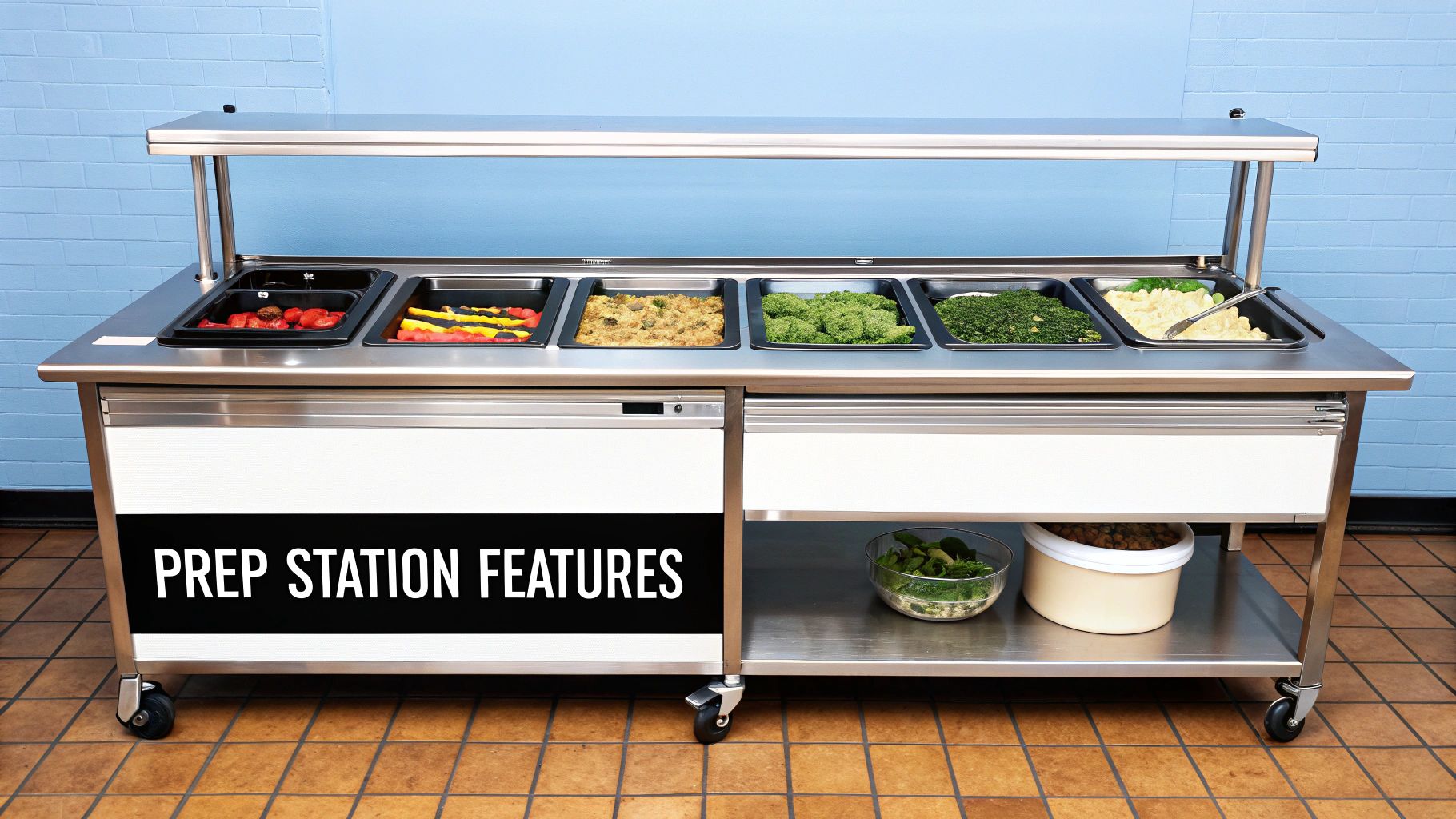
Another game-changer is a full-length cutting board. This gives you a dedicated, food-safe surface for building pizzas without scratching or damaging the steel underneath. It's a small detail that makes a huge difference in daily workflow and equipment longevity.
From there, you can add options that turn a good table into a productivity hub:
- Refrigerated bases: Essential for keeping backup ingredients and dough balls close by.
- Overshelves: Perfect for holding pizza boxes, shakers, and other small wares off your main workspace.
- Casters: These wheels make moving the entire unit for deep cleaning an absolute breeze.
These components work together to transform a simple table into the heart of your pizzeria. It's no surprise that the global trade for these kinds of kitchen articles hit $8.48 billion in 2023. They are the workhorses of the modern commercial kitchen. You can read the full market research to see just how essential they've become.
Keeping It Clean: NSF Standards and Pizza Prep Maintenance
When you see an NSF certification sticker on a pizza prep table, it’s not just for show. It’s your guarantee that the table is built for food safety. Think of it as a promise that the design has no hidden cracks, awkward crevices, or impossible-to-reach spots where bacteria could throw a party. For a pizzeria dealing with raw dough and mountains of fresh toppings, this isn't just nice—it's non-negotiable for passing health inspections.
Protecting that investment comes down to smart, consistent maintenance. A daily wipedown with warm water and a mild detergent is your first line of defense. If you've got some stubborn grime from dried sauce or cheese, a simple paste of baking soda and water, applied with a soft cloth, usually does the trick.
Here's the one rule you never, ever break with stainless steel: avoid harsh abrasives and chlorine-based cleaners like bleach. These chemicals are the kryptonite for stainless steel. They'll eat right through the protective chromium layer, leading to rust and pitting that permanently ruins the food-safe surface.
And for any table with refrigeration, don't forget about the condenser coils. Keeping them clean is critical for the unit's health and performance. We've got a full walkthrough in our guide on how to properly clean a stainless steel refrigerator.
Still Have Questions? Let's Talk Pizza Tables.
We've gone over the nuts and bolts, but I know from experience that when you're about to invest in a key piece of equipment, the real questions start to surface. Let's tackle some of the most common things pizzeria owners ask me before they pull the trigger on a new pizza prep table. My goal here is to give you the confidence to pick the perfect setup for your unique kitchen.