

The Best Griddle for Burgers: From Smash to Sizzle, Find Your Perfect Match
Why Griddle Burgers Beat Everything Else
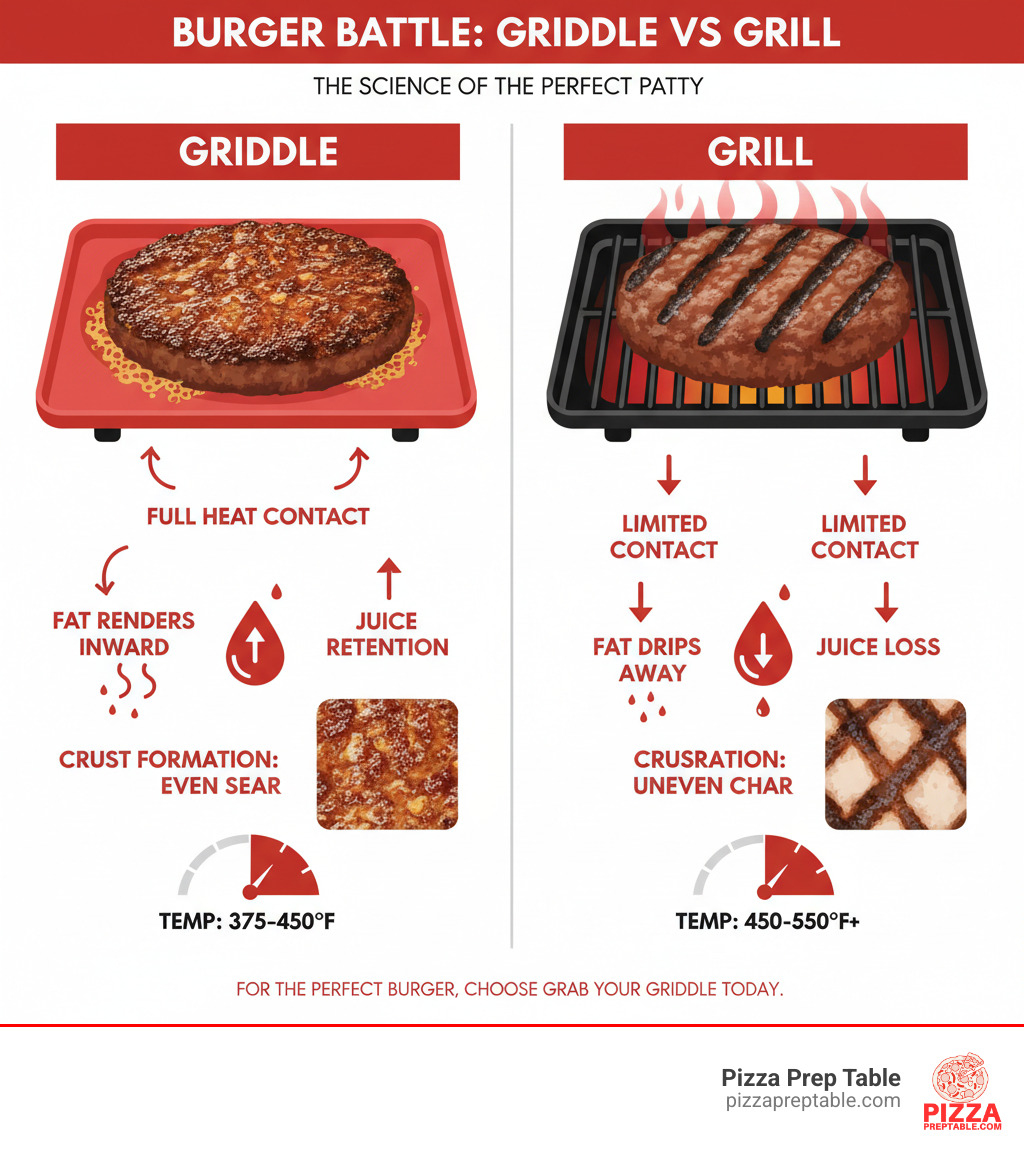
A griddle for burgers delivers what grills can't: maximum surface contact, a deeply caramelized crust, and juices that stay locked inside the patty. Here's what makes them superior:
- Even searing for a rich, crispy crust
- Better heat contact for a deeper, savory flavor via the Maillard reaction
- Fat renders into the griddle, keeping burgers juicy
- Faster cooking at 375-450°F means less moisture loss
- No flare-ups or uneven charring
That crispy exterior and juicy interior are reminiscent of old-school diners. The secret is full surface contact with a hot cooking surface, allowing the Maillard reaction to work its magic and create a deep brown crust packed with savory flavor. Unlike a grill where juices and fat drip away, a griddle keeps them on the surface, basting the burger and creating a lacy, crispy edge.
Whether you're running a diner or outfitting a food truck, understanding how to use a griddle for burgers can transform your menu. From classic smash burgers to thick pub-style patties, the right technique makes all the difference.
I'm Sean Kearney, and with years in foodservice equipment sales, I've seen how the right griddle for burgers boosts efficiency and customer satisfaction. This guide will walk you through everything from choosing the best beef to nailing that perfect sear.
Burger Foundations: Prepping for Perfection
Why a Griddle Burger is Superior
Unlike a grill where only narrow strips of meat touch the heat, a griddle for burgers provides a flat, solid surface for full contact. This triggers the Maillard reaction across the entire patty, creating a deep, savory crust. The rendered fat stays on the griddle, basting the burger to keep it juicy and concentrating flavor. While charbroilers offer a smoky flavor as detailed in our guide to everything you need to know about char broilers, a griddle is best for maximum surface contact and even searing.
Choosing the Best Beef and Seasoning
The quality of your beef is crucial. We recommend 80/20 ground chuck for a griddle for burgers. This 80% lean to 20% fat ratio is the sweet spot for flavor and moisture. The fat renders during cooking, keeping the patty moist and creating a crispy crust. Leaner beef (90/10) results in dry burgers, while fattier beef (75/25) can make the griddle too greasy. For best results, use freshly ground chuck from a butcher. Learn more about selecting high quality meat to lift your burgers.
For seasoning, a simple blend of salt, black pepper, and garlic powder is effective. Gently mix the seasoning into the ground beef, but don't overwork it, which can make burgers tough. For smash burgers, many cooks season the patties directly on the griddle after smashing to maximize flavor.
Essential Tools and Patty Forming
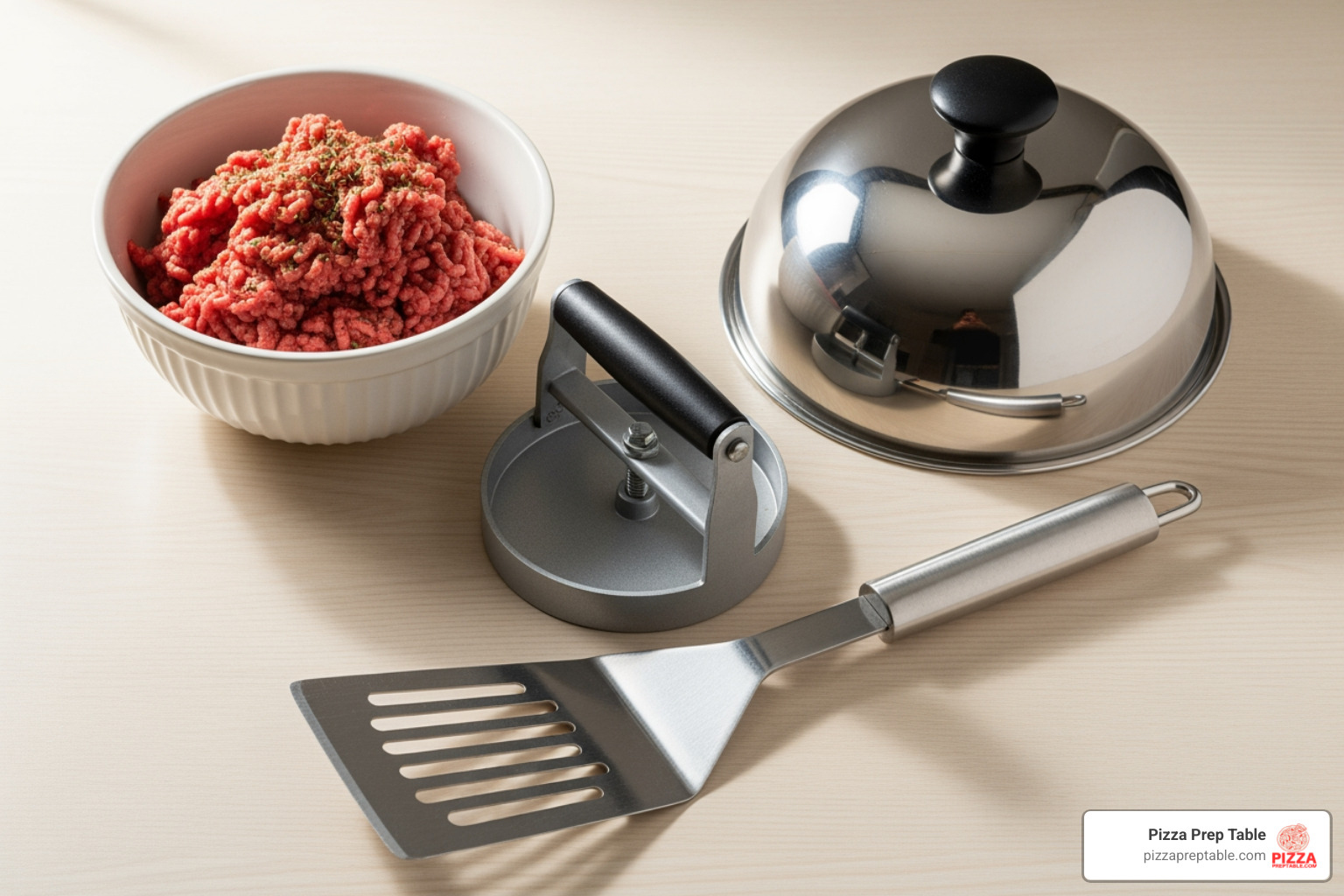
Having the right tools makes everything easier. A long-bladed, flexible griddle spatula is essential for flipping and scraping. For smash burgers, a sturdier burger press is needed to create uniform, thin patties. A melting dome is key for perfectly melted cheese; My favorite melting dome has a built-in vent. For thicker burgers, an internal probe thermometer like this instant read internal thermometer that I use eliminates guesswork.
When forming patties, consistency is key for even cooking. For traditional burgers, aim for patties about 4.5 inches in diameter and ¾ inch thick. For smash burgers, start with loose balls of ground beef (2-4 ounces). Don't pack the meat tightly; the less you work it, the more tender the final burger will be.
Mastering the Cook: Your Guide to the Perfect Griddle for Burgers
Now that our ingredients are prepped and our tools are ready, it's time to bring the heat! Mastering the cook on a griddle for burgers is where the magic truly happens.
Achieving the Ideal Temperature and Sear
Getting your griddle to the right temperature is everything. Too cool, and you'll end up steaming your burgers instead of searing them. Too hot, and you'll char the outside while leaving the inside raw. The sweet spot for a griddle for burgers is between 375 and 450 degrees Fahrenheit. When we're chasing that deeply caramelized crust, we push toward the higher end—around 450°F.
Here's the thing: patience pays off during preheating. Give your griddle a solid 10 to 15 minutes to reach its target temperature. We've seen too many rushed cooks result in pale, disappointing burgers because the surface wasn't hot enough. Your griddle needs time to heat through completely, not just on the surface.
Every griddle has its personality, with hot spots that run hotter than others. Larger outdoor flat tops and commercial units tend to be hottest in the center. Once you know your griddle's quirks, you can use these zones strategically—sear your patties over the hottest areas and toast your buns or keep finished burgers warm on the cooler edges.
When your griddle hits temperature, apply a thin layer of high-smoke-point oil like canola, grapeseed, or avocado oil across the cooking surface. This prevents sticking and helps build that crispy crust we're after. Now you're ready to lay down your patties, making sure to give each one enough space. Overcrowding is one of the fastest ways to kill your sear—it drops the temperature and creates steam instead of that beautiful browning.
Once those patties hit the griddle, resist the urge to fiddle with them. Let them sit undisturbed until a rich brown crust forms on the bottom. One flip is all you need for burger perfection.
Cooking Times for Perfect Doneness
Knowing when your burger is done is part art, part science. While experienced cooks can judge doneness by feel, an internal probe thermometer takes the guesswork out, especially for thicker patties. Here's what we've learned works best:
| Doneness | Internal Temperature | Cooking Time (per side) |
|---|---|---|
| Rare | 120-125°F | 3-4 minutes |
| Medium-Rare | 130-135°F | 4 minutes |
| Medium | 140-145°F | 4 minutes (side 1), 5 minutes (side 2) |
| Medium-Well | 150-155°F | 5 minutes |
| Well-Done | 160-165°F | 5+ minutes (until 160°F) |
These times work for standard ¾-inch thick patties cooked at around 400-425°F. Your actual cooking time will vary based on patty thickness, how hot your griddle runs, and whether your beef is coming straight from the fridge or closer to room temperature.
For food safety, ground beef should reach 160°F internally. Some burger enthusiasts prefer their patties cooked to medium or medium-rare, but this comes with increased food safety risks. If you're serving customers in a commercial setting, following local health codes is essential.
The beauty of griddle cooking is consistency. Once you dial in your timing and temperature, you can replicate perfect burgers all day long.
The Smash Burger Technique Explained
If you haven't tried a smash burger yet, you're in for a treat. This technique has exploded in popularity because it creates something special—an ultra-thin patty with crispy, lacy edges that practically crackle when you bite into them. The griddle for burgers is the perfect canvas for this style.
The smash burger method is all about timing and technique. Start by forming loose balls of ground beef, about 2 to 4 ounces each. Don't pack them tight—you want them barely holding together. This creates irregular edges that crisp up beautifully when smashed.
Get your griddle screaming hot—we're talking 450°F or even hotter. This intense heat is what creates that immediate sear. Place your beef ball on the griddle and here's where the magic happens: you have a 30-second window to smash it down. Use a sturdy spatula or burger press and apply firm, even pressure until the patty is about ¼ to ½ inch thick. Some pros use parchment paper between the press and the meat to prevent sticking.
Once smashed, season the top generously with salt and pepper. Now leave it alone. Let that patty cook undisturbed for about 2 minutes. You'll see the edges turn dark brown and crispy—those are the lacy bits everyone loves. Juices will start bubbling up through the top, which tells you it's almost time to flip.
When you flip, scrape thoroughly under the patty to get every bit of that caramelized crust. Season the other side lightly and cook for just another minute or so. If you're making cheeseburgers, add your cheese right after flipping and cover with a melting dome to trap the heat.
The total cook time for a smash burger is incredibly fast—3 to 5 minutes from start to finish. This speed is part of what makes them so popular in busy commercial kitchens. You can pump out orders quickly while delivering maximum flavor and that addictive crispy texture that keeps customers coming back.
Choosing Your Weapon: Finding the Best Griddle for Burgers
Types of Griddles for Home and Commercial Use
The world of griddles is diverse, with options for every kitchen. For home chefs, a heavy-duty cast iron skillet or griddle pan holds heat for a consistent sear. If you're cooking outdoors, outdoor flat top griddles offer large surfaces and zoned heat control. For indoor convenience, electric griddles are portable and have adjustable heat.
A griddle topper for grills, like the Oscarware Griddle Topper, can convert an existing grill into a flat-top, a great solution for home cooks in cities like Los Angeles or Houston.
For restaurants in places like New York City or Dallas, commercial griddles are the kitchen's backbone. These robust units come as countertop or freestanding models, in gas or electric. Many kitchen stoves with griddle provide a versatile station for high-volume demands. At Pizza Prep Table, we offer a wide selection of commercial-grade griddles built for durability. Carbon steel griddles are also a top commercial choice for their excellent heat conductivity.
How to Properly Clean and Maintain Your Griddle
Taking care of your griddle for burgers ensures it lasts and every burger tastes great. Clean it when it’s still warm, but not scorching.
- Scrape while warm: Use a sturdy griddle scraper to push leftover food and grease into the grease trap.
- Use water for steam: For stubborn messes, pour a small amount of water onto the warm griddle. The steam helps loosen debris, which you can then scrape away.
- Wipe it clean: Use a paper towel or a griddle cleaning pad to wipe the surface smooth.
- Re-oil (season): For cast iron or carbon steel, apply a thin layer of high-smoke-point oil (flaxseed, grapeseed, or canola). This protects from rust and maintains the non-stick surface.
- Rust prevention: Always make sure your griddle is completely dry before storing it to prevent rust.
Common Mistakes to Avoid
Learning from common mistakes is key. Here are a few pitfalls to avoid when cooking a griddle for burgers:
- Overcrowding the griddle: This drops the temperature and steams burgers instead of searing them. Cook in batches if needed.
- Pressing down on traditional patties: While key for smash burgers, pressing thicker patties squeezes out juices, leading to a dry burger.
- Flipping too often: Let the burger sit to form a crispy crust. One good flip is usually all you need.
- Using lean beef: Lean beef (like 90/10) lacks the fat for a juicy, flavorful griddle for burgers. Stick with 80/20 ground chuck.
- Not preheating enough: A cold griddle won't trigger the Maillard reaction. Preheat for 10-15 minutes to 375-450°F.
Frequently Asked Questions about Griddle Burgers
Here are answers to some of the most common inquiries we hear about cooking a griddle for burgers.
What is the ideal fat-to-meat ratio for griddle burgers?
For the best results on a griddle for burgers, use 80/20 ground chuck. The 20% fat content is crucial for flavor and moisture. As the fat renders, it creates a signature sizzle and helps build an irresistible, crispy crust. Using leaner meat can result in a dry, crumbly burger, while fattier meat can create a greasy surface. The 80/20 ratio is the perfect sweet spot.
Can I cook frozen burger patties on a griddle?
Yes, you can cook frozen patties on a griddle, but fresh is always better for achieving a perfect crust. If using frozen, make these adjustments:
- Start with a slightly lower griddle temperature to allow the patty to thaw and cook through without burning.
- Expect longer cooking times.
- Use a melting dome or lid to trap steam, which helps cook the patty more evenly.
Be aware that moisture from the frozen patty can hinder the Maillard reaction, making it harder to get a deep sear.
How do I get cheese to melt perfectly on a griddle burger?
Getting perfectly melted cheese on your griddle for burgers is simple. The trick is to trap heat and steam.
- Add cheese after flipping: Once your burger is nearly done, place a slice of cheese on top.
- Use a melting dome: Immediately cover the burger with a melting dome to trap heat and steam, which melts the cheese quickly and evenly.
- Add a splash of water (optional): For an extra-fast, gooey melt, add a teaspoon of water to the griddle next to the burger just before covering it with the dome. The instant steam works wonders.
Conclusion: Lift Your Burger Game
We've covered why a griddle for burgers is superior, from achieving the perfect sear with the Maillard reaction to keeping patties juicy. By starting with 80/20 ground chuck, using the right tools, and mastering techniques like the smash burger, you can create diner-quality results.
We've also explored different types of griddles, proper maintenance, and common mistakes to avoid. Cooking a great griddle for burgers is an art that rewards attention to detail. We encourage you to experiment with seasonings and toppings to perfect your craft.
Ready to lift your burger game at home or in your restaurant? At Pizza Prep Table, we're here to help. Explore our wide range of commercial griddles and stoves designed for any kitchen. We offer a fantastic selection and flexible financing to help you find the perfect equipment for culinary excellence. Visit our main site at pizzapreptable.com to see our full selection of restaurant equipment and kitchen appliances.