

The Ultimate Guide to 20 Cubic Foot Deep Freezers
Why a 20 Cubic Foot Deep Freezer Matters for Your Business
A 20 deep freezer is the ideal choice for pizzerias, small restaurants, and food businesses that need serious storage without taking over their entire kitchen. Here's what you need to know:
Quick Answer: Choosing a 20 cu. ft. Freezer
- Capacity: Holds approximately 700 lbs of frozen food (about 35 lbs per cubic foot)
- Best for: Pizzerias, delis, catering operations, and large families doing bulk buying
- Upright vs. Chest: Upright models offer better organization and a smaller footprint; chest freezers provide maximum energy efficiency and lower cost
- Key features to look for: Garage-ready (operates 0°F to 110°F), ENERGY STAR certified, frost-free design, adjustable shelving
- Price range: Typically $450-$1,500 for commercial-grade models
- Dimensions: Upright models average 72"H x 33"W x 30"D; chest models are wider and shorter
When you're running a pizzeria or small restaurant, every square foot of kitchen space counts. You need bulk storage for ingredients like cheese, dough, and toppings, but you can't sacrifice your prep area for a massive freezer. That's where a 20 cu. ft. deep freezer hits the sweet spot.
Unlike smaller 10-15 cu. ft. models that fill up fast, a 20 deep freezer gives you room to take advantage of bulk pricing on ingredients while keeping everything organized and accessible. Modern upright models fit into the same footprint as older 17 cu. ft. freezers but give you that extra capacity your growing business needs.
The right freezer also protects your investment in inventory. With features like power outage protection (keeping food frozen for up to two days), temperature alarms, and garage-ready operation, you won't lose hundreds of dollars in food when conditions aren't perfect.
I'm Sean Kearney, and I've spent years helping restaurant owners find the right equipment for their operations, including commercial refrigeration like 20 deep freezers that maximize storage while fitting tight kitchen spaces. My background in sales taught me that the right equipment isn't just about specs—it's about solving real problems for busy food businesses.
Why Choose a 20 Cubic Foot Deep Freezer?
For any busy kitchen, whether it's a busy pizzeria in New York City, a popular deli in Chicago, or a catering operation serving events in Los Angeles, a 20 deep freezer isn't just a luxury—it's a strategic asset. Our customers often tell us that once they upgrade to this capacity, they wonder how they ever managed without it.
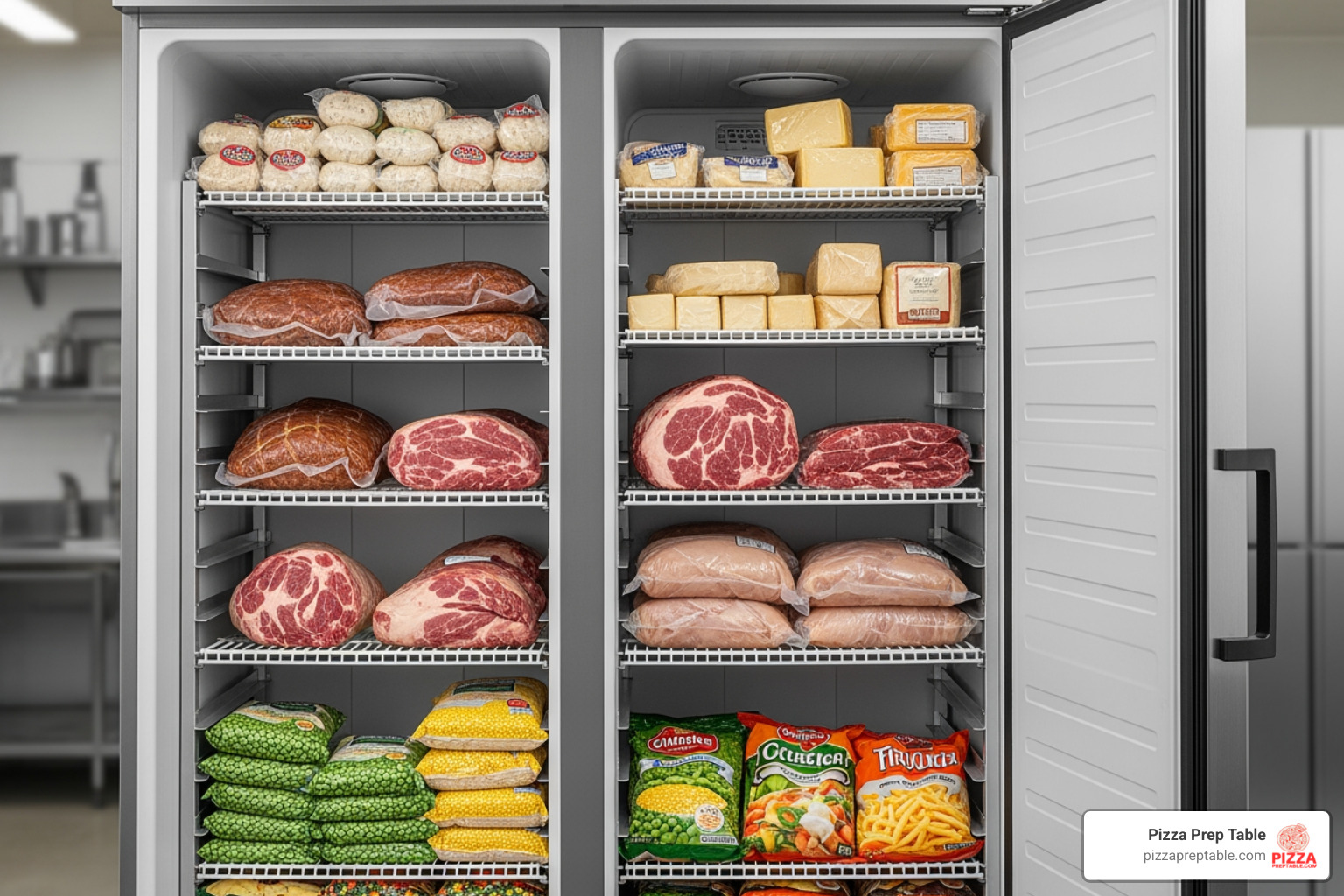
One of the primary advantages is the ability to leverage bulk buying. Imagine stocking up on mozzarella cheese, pepperoni, or frozen dough when prices are low. This isn't just for large establishments; even a small independent shop can see significant savings. A 20 deep freezer provides the ideal storage area you need for storing beef, steaks, ice cream, pre-made meals, and so much more, as highlighted by Koolmore. This means fewer trips to the supplier, less time spent shopping, and more time focusing on your customers.
For pizzerias and foodservice operations, a 20 deep freezer allows you to prepare ingredients in advance, streamline your menu planning, and maintain a consistent inventory. This reduces food waste by enabling you to freeze surplus ingredients or pre-portioned items, ensuring they stay fresh until needed. It's a game-changer for efficiency and profitability. The FDA provides comprehensive guidelines on safe freezer storage that can help you maximize both food safety and quality.
The Sweet Spot in Freezer Capacity
When comparing freezer sizes, it's easy to get lost in the numbers. While smaller 5 or 10 cu. ft. freezers might suffice for a small household's overflow, and 15 cu. ft. models offer a decent bump, the 20 deep freezer truly hits a sweet spot for both commercial and large residential use.
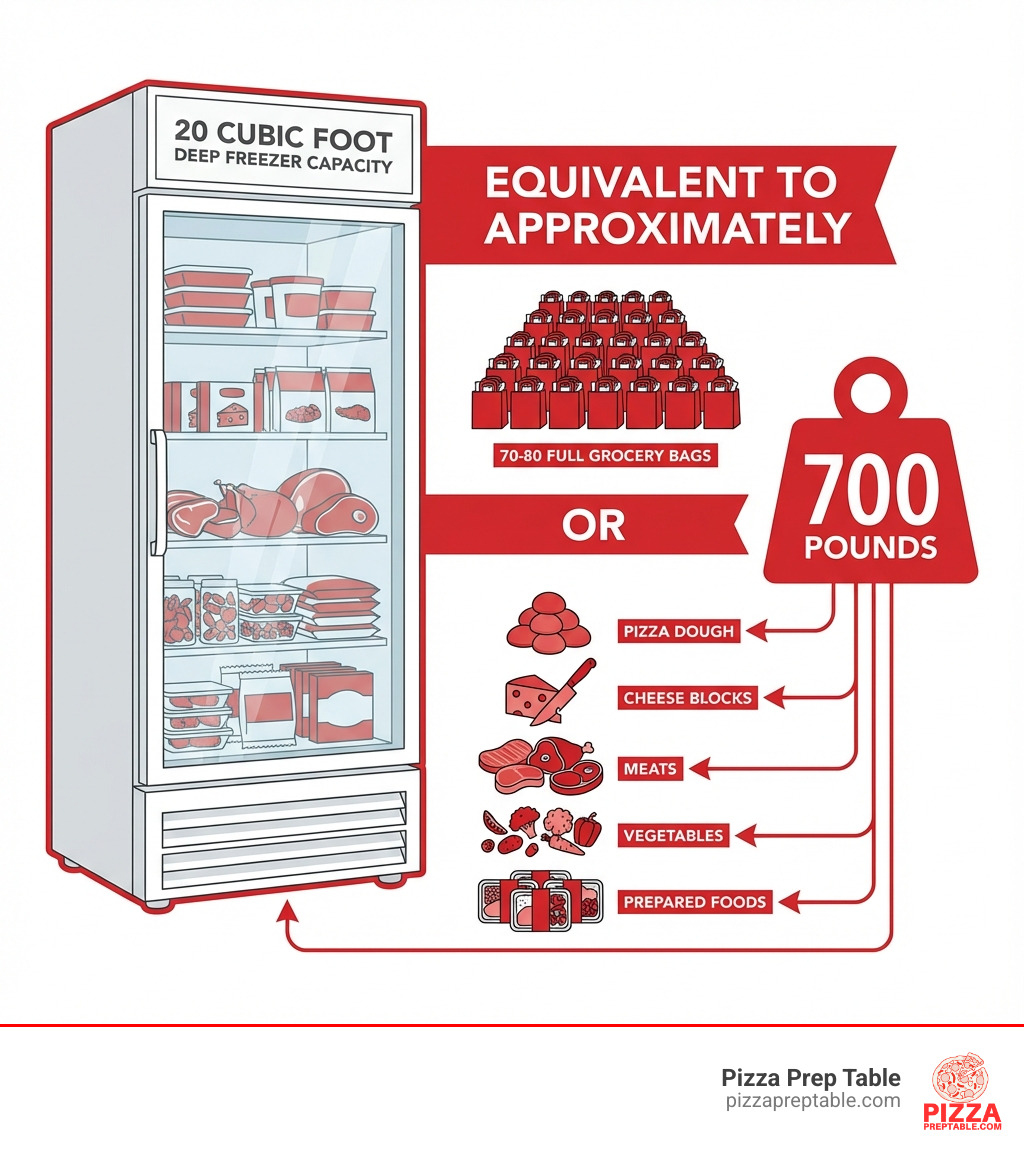
A general rule of thumb is that a cubic foot of freezer space can hold about 35 pounds of food. This means a 20 deep freezer can hold approximately 700 pounds of frozen food. That's a lot of pizza dough, sauce, and toppings for a busy week in a Philadelphia pizzeria, or enough bulk-purchased meat and vegetables for a large family in Houston. This capacity is specifically designed to meet the demanding needs of a busy kitchen or a sizable family. Many modern 20 cu. ft. upright freezers are engineered to provide this increased capacity while fitting into the same floor space as traditional 17 cu. ft. models, making them incredibly space-efficient.
Financial and Operational Benefits
Investing in a 20 deep freezer brings tangible financial and operational benefits:
- Saving Money on Bulk Purchases: As mentioned, buying ingredients in larger quantities often comes with a lower per-unit cost. This can lead to substantial savings over time, directly impacting your bottom line.
- Fewer Supply Runs: Reducing the frequency of your trips to the supplier saves on fuel costs, vehicle wear and tear, and, most importantly, your valuable time. Imagine the time saved in a busy city like Boston or Dallas.
- Improved Menu Planning and Inventory Management: With ample freezer space, you can confidently plan menus further in advance, knowing you have the ingredients on hand. This also aids in better inventory rotation and reduces the risk of running out of popular items.
- Peace of Mind with Food Security: Having a significant frozen food reserve provides a buffer against unexpected supply chain issues or price fluctuations. Moreover, superior tight seals can keep food frozen for up to two days during a power outage, protecting your inventory.
Upright vs. Chest: Which 20 Deep Freezer is Right for Your Business?
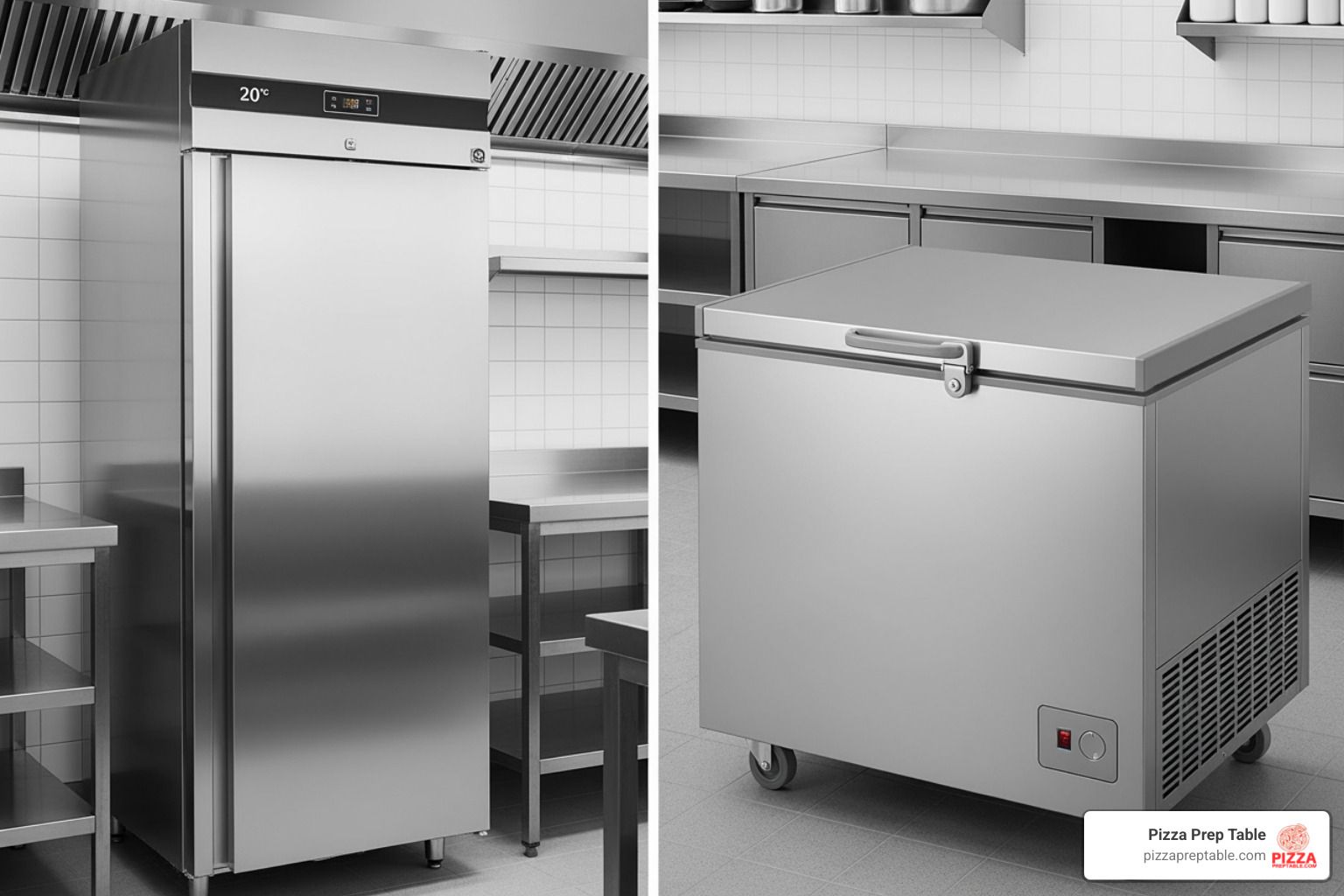
Choosing between an upright and a chest freezer for your 20 deep freezer needs is a critical decision, as each type offers distinct advantages. Both are excellent for long-term food storage, but their design impacts organization, accessibility, energy efficiency, and footprint.
The Case for Upright Freezers
Upright freezers are often favored for their organizational capabilities, making them a popular choice for commercial kitchens where quick access and clear visibility of inventory are paramount.
- Easy Organization: With multiple adjustable, full-width glass shelves, deep bottom baskets, and spacious door bins, upright models allow for systematic storage. This means less digging and more efficient retrieval of items, which is crucial in a environment.
- Smaller Floor Footprint: While offering 20 cu. ft. of capacity, many upright freezers are designed to fit into the same space as smaller models, making them ideal for kitchens in cities like San Francisco or Seattle where space is at a premium.
- Frost-Free Convenience: Many upright models come with a frost-free design, eliminating the need for manual defrosting. This saves time and labor, ensuring consistent performance without ice buildup.
- Better Visibility of Contents: The shelving and door bins mean you can see what you have at a glance, reducing the chances of food getting lost in the back and expiring.
The Case for Chest Freezers (Commercial Use)
Chest freezers are renowned for their robust storage capacity and energy efficiency, often making them a cost-effective choice for bulk storage.
- Maximum Energy Efficiency: Due to their top-opening design, cold air tends to stay inside when the lid is opened, as cold air is denser than warm air and sinks. This makes them generally more energy-efficient than upright models.
- Longer Temperature Hold During Power Outages: Their design also contributes to better insulation and less air exchange, meaning food stays frozen for longer during electrical interruptions—a critical feature for any business in a city prone to outages like Atlanta or Charlotte.
- More Usable Storage Space for Bulky Items: The open, cavernous interior of a chest freezer is perfect for storing irregularly shaped or very large items that wouldn't fit on shelves, such as large cuts of meat or industrial-sized ingredient bags.
- Often a Lower Purchase Price: Generally, chest freezers tend to have a lower upfront cost compared to upright models of similar capacity.
- Double Lid Design for Easy Access: Some models, like the Koolmore Chest Freezer, feature a double lid design that makes it easier to open up to view the entire contents and identify and access your food more quickly.
Here's a quick comparison to help you decide:
| Feature | Upright Freezers | Chest Freezers |
|---|---|---|
| Footprint | Taller, narrower; often fits in less floor space | Wider, shorter; requires more floor space |
| Organization | Excellent; shelves, drawers, door bins | Good with baskets; can be harder to organize |
| Energy Use | Generally less efficient (cold air escapes) | Generally more efficient (cold air stays in) |
| Capacity | Good for varied items; can be limited by shelves | Excellent for bulk/bulky items; open space |
| Defrosting | Often frost-free (auto-defrost) | Typically manual defrost (can be a chore) |
Must-Have Features for Your 20 cu. ft. Freezer
When selecting a 20 deep freezer for your commercial kitchen or home, certain features go beyond basic functionality to offer superior performance, efficiency, and convenience. Let's explore what makes a great freezer truly stand out.
Performance and Efficiency Features
For a commercial setting, reliability and efficiency are non-negotiable.
- Commercial-Grade, Kitchen-Ready Design: Look for freezers built to withstand the rigors of a busy kitchen. This often means durable construction, easy-to-clean surfaces, and components designed for continuous operation.
- Temperature Range (0 F to 110 F) - Garage Ready: This is a crucial feature, especially if your freezer will be located in an unconditioned space like a garage or basement in a city with varied climates like Columbus or Denver. A unit designed to perform in temperatures ranging from 0 F to 110 F ensures your food remains safely frozen, regardless of ambient conditions.
- Power Outage Protection: A superior tight seal that locks in cold air can keep food frozen for up to two days if there is a power outage. This feature can save you hundreds, if not thousands, of dollars in lost inventory.
- Advanced Cooling Systems: A cooling system that reacts quickly to temperature fluctuations and constantly circulates cold air throughout the compartment reduces freezer burn and maintains consistent temperatures. Technologies like Amana's Deepfreeze Technology, which cools to -8 degrees Fahrenheit, ensure optimal long-term storage.
- ENERGY STAR Certification: For businesses and homes alike, energy efficiency translates directly to cost savings. An ENERGY STAR certified freezer minimizes energy consumption, leading to lower electricity bills and a reduced environmental impact. Many models are designed with eco-friendly refrigerants. Learn more about ENERGY STAR certified appliances.
Convenience and Usability in a 20 deep freezer
Beyond raw performance, smart features can significantly improve the daily usability of your freezer.
- Frost-Free Design: Never waste time chipping away ice again! A frost-free design does the work for you, preventing ice buildup and ensuring maximum storage space and efficiency.
- Audible Temperature Alarms: Monitor the ideal environment for your frozen foods with an audible temperature alarm that alerts you if the door is left open or the freezer's temperature rises. This is invaluable for preventing spoilage.
- Auto-Close Doors: Avoid spoiled food and soupy ice cream with auto-close doors, which ensure your doors are never left slightly open by automatically closing once the door is ajar 5or less. This feature is a lifesaver in a busy kitchen.
- Reversible Door Hinge: For upright models, a reversible door swing option allows you to install the door to open left or right based on your space and needs, offering flexible placement in your Boston or San Diego kitchen.
- Interior LED Lighting: Bright, energy-efficient LED lighting illuminates the interior, making it easy to find items quickly, especially in a dimly lit storage area.
- Lock and Key for Security: In commercial settings, a lock and key feature provides added security for valuable inventory.
Sizing Up Your Space for a 20 deep freezer
Before you commit to a 20 deep freezer, it's crucial to measure your space accurately.
- Typical Upright Dimensions: A typical 20 cu. ft. upright freezer might have dimensions around 71.75 inches in height, 32.63 inches in width, and 28.25 inches in depth. Remember to account for the depth with the door open 90 degrees, which could be around 58 inches.
- Typical Chest Freezer Dimensions: Chest freezers of this capacity are generally shorter and wider. For example, a 20 cu. ft. chest freezer could be around 33.5 inches high, 65 inches wide, and 29.5 inches deep.
- Measuring Your Installation Space: Measure the width, depth, and height of the area where the freezer will sit.
- Required Clearance for Ventilation: Freezers need adequate airflow around them to operate efficiently and prevent overheating. Always check the manufacturer's recommendations, but typically, you'll need a few inches of clearance on the sides and back, and several inches above.
- Checking Delivery Path Dimensions: Don't forget to measure doorways, hallways, and stairwells to ensure the freezer can be moved into its intended location. A 20 cu. ft. upright can weigh around 170 lbs, so plan for proper moving equipment.
Top Brands, Models, and What to Budget
When it comes to commercial-grade 20 deep freezers, several brands stand out for their reliability, features, and overall value. Understanding the market can help you make an informed decision for your business in cities like Las Vegas or Austin.
Popular Commercial Brands and Their Strengths
- Koolmore: Known for robust construction and practical features. Their 20 cu. ft. chest freezers often come with epoxy-coated steel baskets and standing ledges for effective organization, along with double lid designs for easy access. They typically feature a white painted steel exterior with a silver aluminum interior.
- Midea: A widely recognized brand offering a range of deep freezers. While specific 20 cu. ft. commercial models weren't detailed in our research, Midea is generally known for energy-efficient and quiet operation in their smaller units, suggesting a focus on these attributes across their product lines.
- Frigidaire Commercial: Frigidaire offers various commercial freezer options, often emphasizing durability and features suitable for demanding environments. Their larger models are typically designed with robust cooling systems and flexible storage.
- Amana: The Amana Deepfreeze AZF33X20DW, for example, is a 19.6 cu. ft. (effectively 20 cu. ft.) upright freezer featuring a Free-O-Frost System, Fast Freeze, Deepfreeze Technology (cooling to -8°F), adjustable wire shelves, and door bins. It also uses insulation with a 99.9% lower global warming potential.
- Other notable brands: GE, Danby, Whirlpool, and Hisense also offer competitive deep freezer options, often with features like garage readiness and adjustable temperature controls.
What to Expect: Price and Energy Costs
The price of a 20 deep freezer can vary significantly based on brand, features, type (upright vs. chest), and whether it's commercial-grade.
- Typical Price Range for 20 cu. ft. Commercial Models: Based on our research, prices for 20 cu. ft. deep freezers can range from approximately $450 to over $1,500, and even higher for specialized commercial units. For instance, a 19.6 cu. ft. Amana upright freezer was listed around $599. Factors like advanced cooling systems, frost-free technology, digital controls, and durable commercial construction will push the price higher.
- Factors Influencing Cost: Beyond capacity and type, features such as ENERGY STAR certification, specialized insulation, advanced temperature alarms, auto-close doors, and specific brand reputation all contribute to the final price.
- Understanding the EnergyGuide Label: All new freezers come with an EnergyGuide label, which estimates the annual electricity consumption and operating cost. This is crucial for long-term budgeting, especially for a continuously running appliance in your kitchen in Phoenix or San Antonio.
- Estimated Annual Electricity Cost: While specific figures for a 20 cu. ft. model vary, choosing an ENERGY STAR certified unit can lead to significant savings. Modern deep freezers are designed to be energy-efficient, minimizing energy consumption to maintain optimal temperatures.
- Warranty Information: Most reputable brands offer a manufacturer's warranty, typically 1 Year for Parts & Labor, which is important to consider for peace of mind.
Maintaining Your Freezer for Peak Performance
A 20 deep freezer is a significant investment for your business, and proper maintenance is key to ensuring its longevity, efficiency, and the safety of your stored food. Regular care can prevent costly breakdowns and ensure your freezer runs smoothly year after year.
Cleaning and Defrosting Your Freezer
- How to Defrost a Manual-Defrost Model: For chest freezers or other manual-defrost models, defrosting is essential. First, remove all food and store it in coolers with ice packs. Turn off and unplug the freezer. Allow the ice to melt naturally, or speed up the process with bowls of hot water or a fan (never use sharp objects to chip ice!). Place towels around the base to catch water and use the drain plug if available.
- Safe Cleaning Solutions: Once defrosted, clean the interior with a solution of warm water and mild soap or a mixture of baking soda and water. Avoid harsh chemicals that could leave odors or damage surfaces.
- Cleaning Shelves and Baskets: Remove all shelves, drawers, and baskets and wash them separately in warm, soapy water. The Koolmore chest freezer, for example, comes with epoxy-coated steel baskets that are easy to clean.
- Wiping Down Door Seals: Clean the door gaskets (seals) with warm, soapy water. Ensure they are free of food debris and mold, as compromised seals can lead to cold air leaks and increased energy consumption.
- Cleaning Exterior: Wipe down the exterior with a damp cloth and mild cleaner. For stainless steel finishes, use a specialized stainless steel cleaner to maintain its appearance.
Proactive Maintenance Tips
- Checking the Temperature Regularly: Use an appliance thermometer to ensure your freezer maintains a consistent temperature of 0°F (-18°C) or colder. This is crucial for food safety. An audible temperature alarm can be a great backup.
- Organizing Food for Proper Airflow: Don't overpack your freezer. Allow space for cold air to circulate around items. The flexible interior organization systems found in many upright models, with adjustable shelves and door bins, help facilitate this.
- Cleaning Condenser Coils: For most freezers, the condenser coils are located at the back or underneath. Dust and debris can accumulate on these coils, reducing efficiency. Unplug the freezer and gently vacuum the coils once or twice a year.
- Ensuring the Unit is Level: Make sure your freezer is level. An uneven freezer can cause the door to not seal properly, leading to cold air leaks and higher energy usage. Most units have adjustable leveling legs.
Frequently Asked Questions about 20 cu. ft. Freezers
How much food can a 20 cu. ft. freezer hold?
The general rule of thumb for freezer capacity is that each cubic foot can hold approximately 35 pounds of food. Therefore, a 20 deep freezer can hold a substantial amount of food, roughly 700 pounds.
However, the actual amount of food you can store also depends on its shape, how efficiently you package it, and how well you organize your freezer. Bulkier items or irregularly shaped packages will take up more space than compact, rectangular containers. Utilizing features like adjustable shelves and deep baskets can help maximize this capacity.
Is a "kitchen-ready" or "garage-ready" freezer really necessary?
For commercial kitchens, or even for home use in areas like a garage or basement, a "kitchen-ready" or "garage-ready" freezer is absolutely necessary. Here's why:
- Temperature Swings: Commercial kitchens and storage areas, especially in places like a hot Las Vegas summer or a cold Boston winter, experience wider temperature fluctuations than indoor climate-controlled spaces. Standard freezers are designed for a narrower ambient temperature range.
- Performance in Extremes: A standard freezer might struggle to maintain its internal temperature in a very hot garage, leading to overworking the compressor, higher energy consumption, and potential premature failure. Conversely, in very cold conditions (below 32°F or 0°C), some standard freezers can mistakenly interpret the low ambient temperature as sufficient and not cycle on, causing food to thaw.
- Designed for the Environment: "Garage-ready" freezers are specifically engineered to perform optimally in a wide range of ambient temperatures, typically from 0°F to 110°F. This ensures your food remains safely frozen, and the appliance operates efficiently without unnecessary strain. For any business in one of our diverse climates, such as San Diego or Denver, this feature provides essential peace of mind.
How often should I defrost a manual-defrost freezer?
If you opt for a manual-defrost chest freezer, you should plan to defrost it when the ice buildup on the interior walls reaches about 1/4-inch thick.
The frequency of defrosting depends on several factors, including how often you open the freezer door, the humidity in your environment, and how full the freezer is. Typically, this means defrosting once or twice a year. Ignoring ice buildup can lead to several problems:
- Reduced Efficiency: A thick layer of ice acts as an insulator, forcing the compressor to work harder and longer to maintain temperature, consuming more energy.
- Decreased Storage Space: Ice takes up valuable cubic footage, reducing the usable storage area for your products.
- Food Quality: While not directly impacting safety, temperature fluctuations during ice buildup can sometimes affect food quality over very long periods.
For those who prefer to avoid this task, a frost-free upright freezer is a great alternative.
Conclusion
The 20 deep freezer stands out as an indispensable appliance for pizzerias, delis, catering businesses, and large households across cities like New York City, Houston, and Washington, D.C. Its generous capacity, approximately 700 pounds of food, allows for smart bulk purchasing, reduced food waste, and streamlined operations, directly impacting your bottom line.
When making your choice, carefully weigh the benefits of an upright versus a chest model. Upright freezers excel in organization and accessibility with their shelves and door bins, while chest freezers are champions of energy efficiency and robust storage for bulky items. Prioritizing features like "kitchen-ready" or "garage-ready" capabilities ensures your investment performs reliably in varied environments. Additionally, opting for an ENERGY STAR certified model guarantees long-term energy savings.
A 20 deep freezer is more than just extra storage; it's a smart investment in food security, operational efficiency, and financial prudence for any food business or busy home.
Ready to optimize your frozen storage? Explore commercial freezers for your business and find the perfect fit for your needs at PizzaPrepTable.com.