

Under Counter Fridge Dimensions: Your Guide to the Perfect Fit for Pizza Prep Tables
When you're outfitting a pizzeria, the standard under counter fridge dimensions are your best friend. Most units clock in at 34 to 36 inches in height, 24 inches in depth, and come in a few common widths: 15, 24, or 30 inches.
These aren't just random numbers. They're specifically designed to slide perfectly under the industry-standard 36-inch countertops of a pizza prep table, giving you that seamless, built-in look and an efficient workflow.
Finding the Right Fit for Your Pizzeria
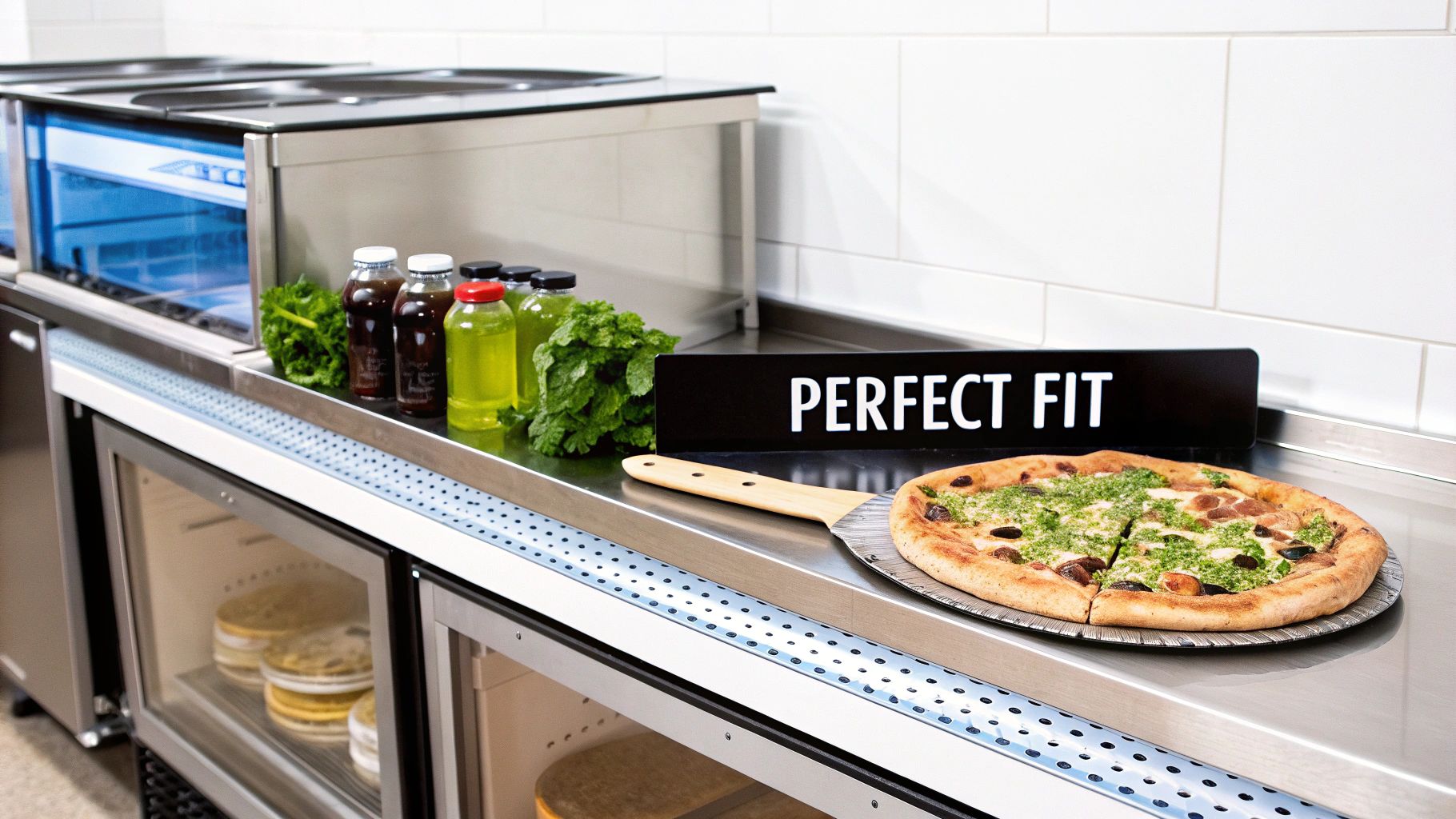
Getting your under-counter fridge dimensions right is like finding the perfect key for a lock—it just makes everything in your pizzeria's kitchen click into place. In the fast-paced world of a pizza prep line, every single inch matters. Your fridge isn't just another piece of equipment; it's the foundation of an organized, efficient, and ultimately profitable operation.
Think of your pizza prep table as the command center of your kitchen. The under-counter fridge that supports it has to be a perfect match, not an awkward afterthought. An ill-fitting unit can jam up your workflow, forcing staff to take extra steps to grab ingredients. Those wasted seconds add up fast during a busy service, hitting your ticket times and customer satisfaction where it hurts.
The Blueprint for Pizzeria Efficiency
In the controlled chaos of a commercial kitchen, especially for independent pizzerias, the standard dimensions of under-counter fridges have become the bedrock of smart design. This standardization is a massive advantage for pizzeria owners for a few key reasons:
- Predictable Layouts: You can design your pizza prep line knowing that equipment from different brands will fit together without any surprises.
- Maximized Space: Every square foot in a pizzeria costs money. Standard dimensions mean no wasted space on awkward gaps or expensive custom cabinetry around your pizza prep table.
- Simplified Replacements: When a unit eventually gives out, you can find a new model that will slide right into the same spot with minimal disruption to your service.
To give you a quick reference, here are the most common dimensions you'll encounter.
Standard Under Counter Fridge Dimensions At A Glance
This table breaks down the typical measurements for under-counter refrigerators. Think of it as your cheat sheet for quickly identifying the right size for your specific needs, from a small drink cooler to a main prep line unit under your pizza table.
| Dimension Type | Common Range | Best For |
|---|---|---|
| Height | 34 to 36 inches | Sliding perfectly under standard 36" pizza prep table countertops. |
| Depth | 24 inches | Aligning flush with the front of most pizza prep tables. |
| Width | 15, 24, or 30 inches | Fitting various space constraints and pizza topping capacity needs. |
Knowing these numbers helps you plan your pizza line layout with confidence, ensuring a perfect fit every time.
By understanding these fundamental measurements, you're not just buying a refrigerator—you're investing in a system built for speed and consistency. The correct dimensions ensure your low-moisture mozzarella, sliced pepperoni, and fresh basil are always perfectly chilled and right where you need them.
To make sure every piece of equipment integrates flawlessly into your pizzeria's layout, using dedicated kitchen design software can be a lifesaver for precise planning. This approach helps you see the entire workflow before you ever spend a dime on equipment. Mastering these basic dimensions is the first step toward building a kitchen that doesn't just work, but works for you.
Why Do All Under-Counter Fridges Look the Same Size?
Ever noticed how most under-counter fridges seem to have the exact same dimensions? It’s not a happy accident. It’s a smart, deliberate design choice that grew out of the real-world chaos of busy commercial kitchens. For a pizzeria, your pizza prep table is the center of the universe, and for everything to fit together perfectly, the blocks have to come in predictable, standard sizes.
This industry-wide agreement is a huge win for any pizzeria owner. The whole system is built around the universal 36-inch countertop height, which has become the gold standard for pizza prep tables. Everything that slides underneath, from the refrigerated base to a standalone under-counter fridge, is built to match this blueprint. The result is a seamless, efficient workspace where equipment from totally different brands can work side-by-side in perfect harmony.
For your pizzeria, this means you can map out your kitchen with total confidence. You don't have to stress about paying for expensive custom cabinets or dealing with awkward, wasted gaps between your appliances. Instead, you can put all your energy into designing the most effective workflow for your pizza-making crew.
Predictability is Your Best Friend in the Kitchen
In the restaurant business, predictability is worth its weight in gold. When you know that a standard 24-inch wide refrigerator will slide perfectly into the slot you designed for it under your pizza prep table, it makes everything easier—from your initial floor plan to replacing a unit down the road. This kind of uniformity kills the guesswork and prevents expensive mistakes.
Imagine one of your prep line fridges dies in the middle of a Friday night dinner rush. It happens. With standard sizes, you can call almost any commercial supplier and get a replacement delivered, knowing it will fit right into the existing space. This quick swap keeps downtime to a minimum and your pizza line moving without a massive operational meltdown. Without these standards, you’d be stuck hunting for a rare, specific model or facing a costly custom fix.
Standardization isn’t about killing creativity; it’s about building a reliable foundation for efficiency. It guarantees that every square inch of your kitchen is a productive asset, not a logistical nightmare waiting to happen.
This plug-and-play approach is exactly what makes modern kitchen layouts so damn effective. It allows for modular designs that can change and adapt as your business grows. You can add another pizza prep station or reconfigure your line without having to tear everything out and start from scratch.
How These Numbers Shape the Market and Your Kitchen
The sales data tells a powerful story about how these standard sizes solve real-world problems for pizzerias. The numbers show that commercial kitchen designers are voting with their wallets, where the 24-inch width is king, making up over 40% of sales worldwide. It's almost always paired with a 34-36 inch height and a 24-inch depth for that perfect, flush fit under a pizza prep counter.
This "sweet spot" size delivers about 5-7 cu ft of capacity. Meanwhile, you'll see narrow 15-inch models grabbing a 25% global share in bars and cafes that are heavy on beverages. On the other end, those beastly 48-inch units with 15 cu ft of space dominate North American commercial kitchens at 45%—they're the go-to choice for pizza prep tables that need to be stocked high with dough balls and toppings. You can dig deeper into this in a market report about the growing demand for under-counter refrigerators.
These stats show a direct link between specific sizes and specific jobs in a pizzeria. A 24-inch unit strikes the perfect balance of storage and footprint for a primary ingredient station. For a high-volume pizzeria, putting two of these side-by-side under a big prep table creates a beast of a workstation without messing up the kitchen's flow.
This blueprint also has a huge impact on energy efficiency. Manufacturers can dial in their cooling technology for these common sizes, optimizing compressors and insulation for peak performance within a known volume. This means a standard-sized unit is often more energy-efficient than a custom or odd-sized one, saving you real money on your utility bills over the life of the fridge. At the end of the day, these industry standards are more than just numbers—they're the bedrock of a well-run, profitable pizzeria.
How to Measure Your Space to Avoid Costly Mistakes
Ordering an under-counter fridge with the wrong dimensions is more than just a headache—it’s a costly, time-sucking mistake that can bring your pizzeria’s workflow to a screeching halt. Think of it like botching your dough recipe; one wrong number throws the whole operation off. This guide will walk you through a foolproof process to make sure your new unit slides into place perfectly the first time.
The first rule of measuring is to never, ever trust a single measurement. I’ve seen it a hundred times: pizzeria floors and the undersides of prep tables are rarely perfectly level, especially in older buildings. A slight dip in the floor or a subtle warp in the counter can be just enough to turn a simple installation into a nightmare.
This is exactly why you have to measure everything in at least three different spots. It’s a simple habit, but it’s your best defense against those unexpected fitment issues that can delay your opening and drain your budget.
The Triple-Check Measurement Method
Before you even start looking at models, grab a good, reliable tape measure. A little accuracy now prevents a lot of frustration later. Follow these steps precisely to get the real-world numbers you actually need.
-
Measure the Height in Three Places: Check the height of the opening on the far left, in the dead center, and on the far right. Floors can dip and counters can sag. Write down all three numbers and use the smallest measurement as your absolute maximum height. This one step will save you from the horror of trying to jam a fridge into a space that’s secretly too short.
-
Measure the Width in Three Places: Just like you did with the height, measure the width of your opening at the top, middle, and bottom. Once again, rely on the narrowest measurement. This ensures the unit will slide in smoothly without getting hung up on an unexpectedly tight spot.
-
Measure the Depth Carefully: Run your tape measure from the back wall to the front edge of your pizza prep table or cabinets. But don't stop there. Be a detective—peek into the back of the opening and look for any obstructions like water lines, gas pipes, or electrical outlets that stick out and steal precious inches from your usable depth.
This three-step process gives you a picture of the true usable space, not just the ideal dimensions on a blueprint.
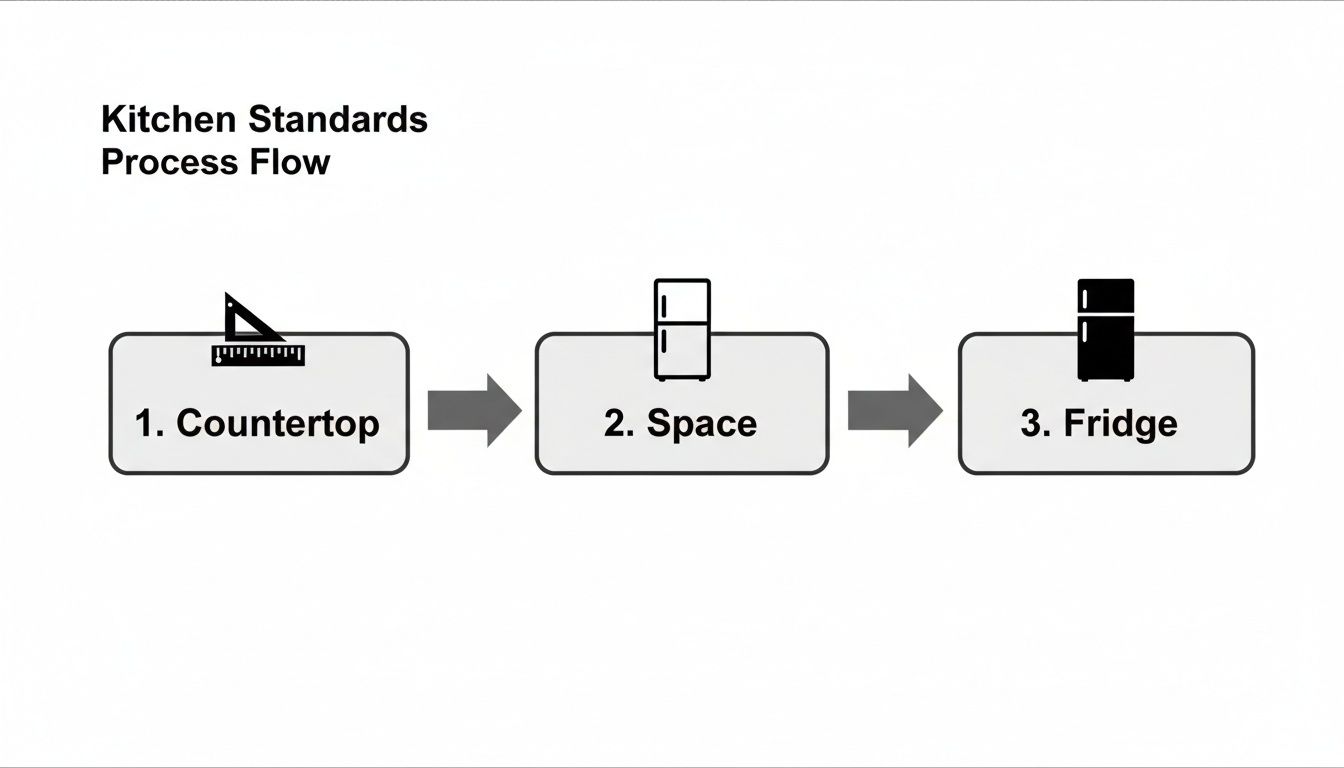
This simple flow shows how critical it is to get your measurements right before you even think about buying. A successful installation is all about careful planning upfront, not just muscle during the setup.
Don’t Forget the Breathing Room
One of the most critical—and most often forgotten—parts of measuring is accounting for ventilation clearance. This "breathing room" isn't optional; it’s absolutely essential for the health and efficiency of your refrigerator's compressor.
Think of the compressor as the engine of your fridge. If you don't give it space to vent the hot air it generates, it will be forced to work overtime. That means higher energy bills, food that isn’t held at a safe temperature, and a much, much shorter lifespan for your equipment.
For most freestanding models, you'll need to leave at least 1-2 inches of clearance on the sides and top, and sometimes up to 4 inches at the back. Built-in, front-venting models are designed for a tighter fit but still need a small air gap (often 1/8 to 1/4 inch) to prevent scratching during installation. Always, always check the manufacturer's spec sheet for the exact clearance requirements.
Final Checks Before You Order
You’ve got your triple-checked measurements and have factored in the breathing room. Before you click that "buy" button, run through this final checklist of details that are so easy to overlook.
-
Door Swing Clearance: Stand in front of the space and physically act out opening the fridge door. Will it slam into another piece of equipment, a wall, or block a busy walkway during a dinner rush?
-
Delivery Path: Measure the doorways, hallways, and any tight corners on the path from the delivery truck to your kitchen. There’s no worse feeling than having the perfect fridge that you can’t actually get into the building.
-
Electrical Outlet Location: Confirm there’s a proper electrical outlet within reach of the unit's power cord. Running extension cords for major appliances is almost always a health code violation and a serious fire hazard.
Getting these details right is just as important as the main dimensions. For a broader look at planning an efficient kitchen, our guide on how to design a restaurant kitchen dives deeper into the whole process.
Pairing Fridge Dimensions With Your Pizza Prep Table

This is where the real kitchen engineering begins. You've measured your space, and now it's time to marry your under counter fridge dimensions to the heart of your operation—the pizza prep table. This isn't just about slotting a fridge into a gap; it's about creating a seamless, high-speed workstation where every ingredient is exactly where it should be.
A perfectly paired fridge shaves precious seconds off every single order. Think of it as the ultimate pit crew for your pizza line. When your team can grab cheese, pepperoni, and sauce without taking an extra step, ticket times drop, and your kitchen finds its rhythm. The goal is a truly ergonomic setup that cuts down on wasted movement and boosts output, especially during that chaotic dinner rush.
This synergy between your prep table and refrigeration is what separates a good kitchen from a great one. A well-planned station keeps the workflow logical, prevents staff from bumping into each other, and makes the entire pizza-making process—from dough to oven—one fluid motion.
Matching Fridge Configurations to Prep Table Sizes
Pizza prep tables come in a range of standard widths, each built for a different volume of business. The trick is to match your under-counter refrigeration footprint to the table's length, creating a balanced and productive station. A small table doesn't need a massive fridge taking up valuable real estate, and a high-volume table will grind to a halt with a tiny one.
For example, a compact 44-inch or 48-inch prep table is a perfect fit for a smaller pizzeria or a secondary prep area. The ideal partner here is a single, workhorse 24-inch wide under counter fridge. This setup gives you plenty of storage for your core ingredients right below the workspace, keeping everything within immediate arm's reach for one pizzaiolo.
On the other hand, a large 93-inch prep table, built for high-volume service, demands a more robust refrigeration solution. Trying to service that much counter space with a single small fridge would create a major bottleneck.
The most effective strategy for a 93-inch table is to install two 48-inch under counter fridges side-by-side. This setup doubles your refrigerated storage capacity and creates distinct work zones, allowing two chefs to operate simultaneously without ever crossing paths to get ingredients.
This modular approach ensures your refrigeration scales perfectly with your prep surface, maintaining peak efficiency no matter the size of your operation.
From Cubic Feet to Pizza Toppings
Knowing a fridge's capacity in cubic feet is a good start, but what does that number actually mean in a busy pizzeria? The real question is, "How many topping pans can it hold?" This is how you translate abstract specs into real-world operational value. Your choice between single-door, double-door, or drawer models should be driven entirely by your menu and workflow.
-
Single-Door Models (Approx. 5-7 Cu. Ft.): A standard 24-inch single-door unit is the versatile all-rounder. It can typically hold a combination of bulk items like cheese blocks and sauce buckets on its shelves, along with a few essential topping pans. It’s an excellent choice for a station focused on just a few core pizza types.
-
Drawer Models: These are the kings of organization for topping-heavy menus. Instead of shelves, you get slide-out drawers designed to hold standard-sized food pans perfectly. This setup gives you instant, top-down access to every ingredient, making it incredibly fast to assemble complex, multi-topping pizzas. You'll find drawer units make restocking and inventory checks much faster, too.
-
Double-Door Models (Approx. 12+ Cu. Ft.): A 48-inch double-door fridge provides maximum capacity for high-volume stations. This lets you store bulk backups of high-use ingredients (like dough trays and extra mozzarella) on one side while keeping perfectly organized topping pans on the other.
To help you visualize the perfect match, the guide below pairs common prep tables with their ideal fridge configurations. For a deeper analysis of specific models, our complete guide to under counter fridge size offers additional details and recommendations.
Pizza Prep Table And Fridge Pairing Guide
This table matches common pizza prep table widths with recommended under counter fridge dimensions and configurations to optimize kitchen workflow.
| Pizza Prep Table Width | Recommended Fridge Configuration | Typical Capacity (Cu. Ft.) | Best For |
|---|---|---|---|
| 44-inch to 48-inch | Single 24-inch Fridge | 5 - 7 | Smaller pizzerias, food trucks, or a secondary prep station. |
| 60-inch to 72-inch | One 48-inch Fridge or Two 24-inch Fridges | 12 - 15 | Mid-volume restaurants needing a mix of bulk and pan storage. |
| 93-inch | Two 48-inch Fridges Side-by-Side | 24+ | High-volume pizzerias with multiple chefs on the line. |
By thoughtfully pairing your under counter fridge dimensions with your prep table, you’re not just installing equipment—you’re engineering a more profitable and less stressful kitchen.
Built-In vs. Freestanding: What's the Real Difference?
When you’re trying to nail down the right under counter fridge dimensions for your pizzeria, the conversation goes way beyond simple height, width, and depth. One of the first big forks in the road you'll hit is choosing between a built-in and a freestanding model. This decision will ripple through your kitchen's entire layout, workflow, and even how clean it looks and feels at the end of a long night.
Think of it this way: are you buying a custom-tailored suit or an off-the-rack jacket? Both will keep you warm, but one is crafted for a perfect, seamless fit, while the other gives you more flexibility. On your main pizza prep line, that distinction is everything.
A built-in under counter fridge is that custom suit. It’s specifically engineered with front-facing ventilation, usually through a grille at the bottom of the unit. This smart design means the fridge breathes out hot air from the front, allowing you to install it completely flush with your surrounding prep tables and counters. The result is a clean, professional, and totally integrated look.
The Power of an Integrated Design
For your main pizza prep table, built-in units are almost always the way to go. Their zero-clearance design creates an unbroken, smooth line that looks sharp and is incredibly practical. There are no awkward gaps for cheese, flour, and sauce to fall into, which makes cleanup faster and more sanitary—a massive win for any food business.
What you get is a workstation that feels like one cohesive piece of equipment. This integration creates a faster, more ergonomic workflow because everything is exactly where it needs to be, with zero wasted space. To get a better sense of how integrated solutions can transform a space, even outside the kitchen, it's worth exploring the benefits of built-in cabinets.
The market is catching on, too. The global undercounter refrigerator market was valued at a hefty USD 3.42 billion in 2024 and is expected to climb to USD 6.27 billion by 2033. For pizzerias, this trend is a big deal. Choosing built-in under-counter fridges can slash your kitchen footprint by 15-20% compared to freestanding models. That's a vital edge for family-owned spots often working in spaces around 800 sq ft. You can find more on this growing market on Dataintelo.com.
The Versatility of a Freestanding Unit
Now, let's talk about the off-the-rack jacket: the freestanding under counter fridge. These units are designed to ventilate from the back and sides. This means they need "breathing room"—several inches of open space all around—to keep the compressor from overheating. You can't just slide a freestanding unit into a tight, enclosed space and expect it to survive.
While this makes them a poor choice for a flush-fit installation on your main pizza prep line, their versatility and usually lower price point make them fantastic for other spots in your pizzeria.
Think of freestanding units as your utility players. They might not be the star of the main line, but they provide essential support right where you need it, without the fuss of custom cutouts.
Here’s where freestanding models really shine in a pizzeria:
- Secondary Prep Stations: Perfect for a separate area where you're putting together salads or appetizers.
- Back-of-House Storage: Ideal for holding extra blocks of cheese, backup sauces, or proofing dough.
- Bar or Beverage Areas: They slide easily under a bar counter to keep drinks, mixers, and garnishes chilled.
Their biggest advantage is flexibility. You can move them around as your kitchen layout changes, making them a smart, budget-friendly choice for a growing business or for tasks that don't demand that perfectly integrated look. The real trick is simply matching the type of fridge to the job it needs to do.
Choosing Dimensions That Drive Pizzeria Profitability
Picking the right under-counter fridge dimensions is way more than just an installation headache—it's a core business decision that hits your pizzeria's bottom line. Seriously. This isn't about making sure a unit slides neatly into a cabinet opening. It's about engineering a kitchen that cranks out more revenue with less waste, and getting the fit right is the foundation of that entire strategy.
Every choice, from the width of the fridge to its capacity, is directly tied to your operational success. A setup that’s dialed in improves workflow speed, letting your crew sling pizzas faster during the dinner rush. That means more orders flying out the door and happier customers who actually come back. It's about looking past the price tag to see the real-world value a well-chosen piece of equipment delivers every single day.
The Direct Link Between Dimensions and Daily Profits
The right under-counter fridge dimensions create a ripple effect that touches every part of your pizzeria's financial health. A perfectly matched fridge slashes ingredient waste by holding consistent, food-safe temperatures, making sure your cheese, meats, and veggies stay fresh longer. It also drives down energy costs, because a properly ventilated unit with an efficient compressor doesn't have to work overtime just to keep up.
By maximizing every square inch of your kitchen, you are making a direct investment in long-term profitability. The correct dimensions minimize staff movement, reduce ticket times, and cut down on spoilage—all of which are critical variables in your operational costs.
This strategic approach to equipment is what separates the pizzerias that struggle from the ones that thrive. When your kitchen has a logical flow, your team is less stressed, more productive, and can handle a high-volume rush without sacrificing quality.
Ultimately, seeing how dimensions influence your day-to-day is the key to financial success. To see how these small efficiencies really add up, it helps to use a tool that connects what's happening on the prep line to your overall financial picture. You can play with the numbers and see how equipment choices impact your bottom line with a detailed restaurant profit margin calculator. It’s the final step that connects the dots between a well-designed kitchen and a healthy, profitable business.
Got Questions About Fridge Dimensions? We've Got Answers.
Even after you’ve measured twice, a few nagging questions about under-counter fridge dimensions can pop up. Getting them sorted out now is the difference between a smart, long-term investment and a costly headache down the road.
Think of this as the final check before you commit. We're going to tackle the most common questions pizzeria owners ask, so you can finalize your purchase with total confidence.
What Happens If I Don't Leave Enough Ventilation Space?
This is easily one of the most common—and damaging—installation mistakes I see. For most freestanding models, you absolutely need to leave 1-2 inches of clearance on the sides and top for the unit to breathe.
Forgetting this simple step forces the compressor to work overtime trying to shed heat. That extra strain leads to a few things you definitely don't want: skyrocketing energy bills, a much shorter lifespan for your fridge, and—worst of all—unstable internal temperatures that put your ingredients at risk of spoiling.
Can I Just Use a Residential Under-Counter Fridge in My Pizzeria?
Putting a residential fridge in a commercial kitchen is a recipe for disaster. I can't stress this enough: don't do it. Commercial-grade refrigerators are built like tanks for a reason, with heavy-duty components designed to handle the constant abuse of a busy pizza prep line. They're also NSF-certified, which is a non-negotiable for passing health inspections in most places.
A residential fridge simply isn't designed for the relentless door openings and heavy use of a pizzeria. It will fail—quickly. It won't hold safe food temperatures, and it will violate health codes, putting your entire business on the line.
How Do I Figure Out the Right Capacity for My Pizzeria?
Nailing down the right capacity comes down to knowing your menu and your daily volume inside and out. The best way to start is by listing out every single refrigerated ingredient you need on the line, from cheese and sauce to every topping you offer. Try to think in terms of how many standard food pans (like 1/6 size pans) you need to keep chilled and ready to go.
Here’s a quick guide to get you in the right ballpark:
- Low-Volume Shops: A 5-7 cubic foot unit, which is usually a 24-inch wide model, is a great place to start.
- High-Volume Pizzerias: You’ll be looking at 12-15 cubic feet or more of under-counter storage. This often means a larger 48-inch model or even placing two smaller units side-by-side to eliminate restocking bottlenecks during a crazy dinner rush.
Ready to build the perfect prep line for your pizzeria? Pizza Prep Table offers a wide selection of commercial-grade under-counter refrigerators designed for performance and reliability. Explore our collection to find the perfect fit for your kitchen.