

Uncorking Your Bar Startup Costs: A Pizza Restaurant Owner's Guide
Adding a bar to your pizza restaurant is one of the smartest ways to boost your bottom line, but it's an investment that needs a clear-eyed budget. You should plan on adding at least $100,000 or more to your startup costs to do it right. This isn't just about pouring drinks; it's about transforming your pizza joint into a go-to destination.
Budgeting for Your Pizza Restaurant's Bar Expansion
Think of adding a bar not as starting a second business from scratch, but as bolting a high-performance engine onto a restaurant you've already built. It’s a powerful strategy for driving up revenue and keeping customers in their seats longer, especially since alcoholic beverages have fantastic profit margins.
The best part? You can lean on the infrastructure you already have. Your kitchen's workflow, and even some of your equipment, can pull double duty. That versatile Pizza Prep Table, for instance, is perfect. The refrigerated wells can hold cocktail garnishes like lemons, limes, and olives just as easily as pepperoni, creating a shared, efficient workspace that saves you both space and cash.
Understanding the Financial Scope
Let’s be realistic: opening a full-service bar from the ground up is a serious financial undertaking. Industry veterans will tell you the startup costs for a standalone bar can range anywhere from $250,000 to $1 million, sometimes even more.
For a pizza restaurant owner, the math is much more favorable. You’ll want to budget an extra 20-30% on top of your baseline pizza shop financial model to cover the bar, which usually lands you around that $100,000 mark. Many first-time bar owners fail because they underestimate these costs, but with smart planning, you can avoid those pitfalls. Making savvy purchasing decisions, like using lease-to-own options for NSF-compliant coolers and pizza prep tables, can shave 10-15% off your initial equipment spend by turning a huge upfront cost into manageable payments. You can discover more insights about pizzeria financial models and learn how to plan effectively.
This chart really puts the numbers into perspective, showing just how much more attainable adding a bar is compared to a full build-out.
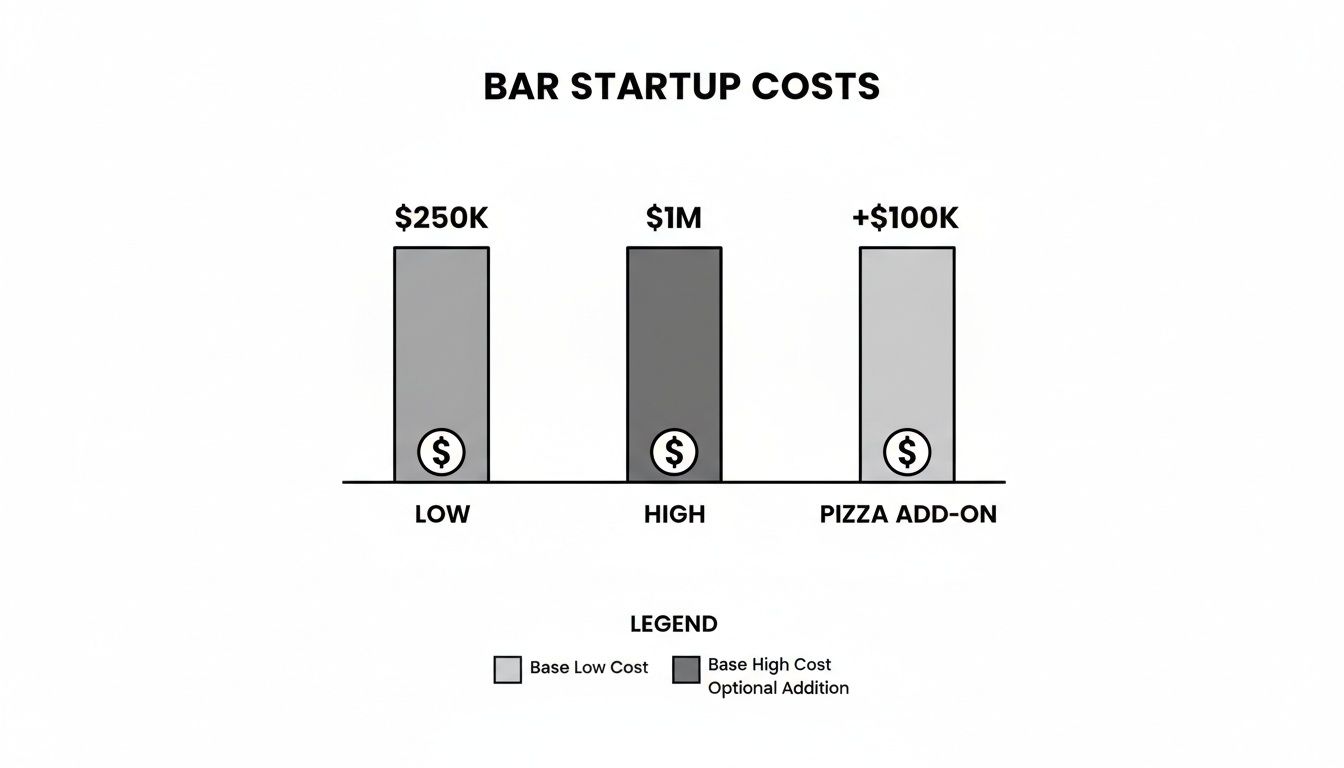
As you can see, bolting a bar onto your existing pizza restaurant is a far more cost-effective way to get into the beverage game. You get to tap into a high-margin revenue stream for a fraction of what it would cost to start from zero.
To help you get a handle on where your money will go, the table below breaks down the key spending areas when adding a bar to your pizza restaurant.
Bar Startup Cost Estimates for Pizza Restaurants
This table provides a high-level summary of the primary cost categories involved in adding a bar to a new or existing pizza restaurant.
| Cost Category | Estimated Percentage of Total Budget | Key Expenses Included |
|---|---|---|
| Build-Out & Renovation | 35-45% | Plumbing, electrical, bar construction, flooring, lighting |
| Permits & Licensing | 10-20% | Liquor license application, health permits, legal fees |
| Bar Equipment | 20-30% | Draft systems, refrigeration, glasswashers, ice machines, POS |
| Initial Inventory | 10-15% | Spirits, wine, beer, mixers, garnishes |
| Staffing & Training | 5-10% | Hiring bartenders, server training, payroll setup |
| Marketing & Grand Opening | 3-5% | Signage, menu printing, promotional events |
While these percentages are a solid starting point, remember that your final costs will depend on your specific location, concept, and scale.
Key Cost Categories for Your Bar Add-On
To build a realistic budget, you need to break down the big number into smaller, more manageable chunks. While every project has its own quirks, your investment will almost always fall into these main categories:
- Build-Out and Renovation: This is the physical work. It covers everything from running new plumbing and electrical lines for the bar to installing countertops and lighting to create the right vibe.
- Permits and Licensing: Getting your liquor license is often the most time-consuming and expensive part of the process. The fees and legal hoops can vary wildly depending on your city and state.
- Bar Equipment: This is all the hardware you need to serve drinks efficiently. We’re talking draft beer systems, glasswashers, and especially the essential refrigeration needed to keep every beer and white wine perfectly chilled. This is also where your existing assets, like your pizza prep table, can be leveraged.
- Initial Inventory: Your first big stock order is a major upfront hit. You’ll need to carefully plan your initial purchase of spirits, wine, beer, and all the necessary mixers to get started.
Decoding Your Upfront Investment Costs
Before a single pizza gets sliced or a cocktail is shaken, you're going to face a wave of one-time costs. These upfront investments are the bedrock of your new bar, and getting the numbers right from the get-go is everything. Think of it as mixing the concrete for your foundation—any mistakes here will be a massive headache to fix later on.
These are your fixed costs, the big-ticket items you pay for once to get the doors open. They don't fluctuate month-to-month like your booze inventory or the electric bill. This initial phase is all about turning an empty shell of a space into a functional, inviting, and legally compliant bar within your pizza restaurant.
The Build-Out: The Bones of Your Bar
Get ready, because the biggest chunk of your bar startup costs will almost certainly be the physical construction, or build-out. This isn't just about picking out cool bar stools and paint colors; it's the foundational work that actually makes your bar operational.
There's a huge gap between a simple cosmetic update and the real structural work a bar needs. A cosmetic facelift might just be a new coat of paint and some trendy light fixtures. A proper bar build-out, on the other hand, is much more involved.
- Plumbing: You'll be installing multiple sinks (handwashing, a three-compartment for washing glassware, and dump sinks), running lines for ice machines and glasswashers, and putting in crucial floor drains.
- Electrical: This means adding dedicated circuits that can handle the heavy load from commercial refrigeration, powerful blenders, and your POS systems without tripping a breaker mid-rush.
- Bar Construction: This is the fun part—building the physical bar die, the back bar, and installing countertops. It's where your vision for the pizza restaurant and bar really starts to take shape.
Here's a pro tip: finding a "second-generation" space—a spot that was previously a restaurant or bar—can slash these costs dramatically. Much of that essential plumbing and electrical infrastructure might already be in place. All in, build-out expenses for adding a bar can run anywhere from $75,000 to over $300,000, depending on the scope of the project.
Navigating Permits and Licensing
Once the construction dust settles, your next big hurdle is the bureaucratic maze of permits and licenses. This part of the process is often underestimated, both in time and money. It's not just one fee; it’s a whole series of applications, inspections, and legal consultations.
The liquor license is the star of this particular show, and its cost can vary wildly. Depending on your state and city, a full liquor license can cost a few thousand dollars or soar well over $100,000. Some areas have a limited number of licenses available, creating a competitive market where you might have to buy one from another business owner.
For many new bar owners, the liquor license becomes the single biggest and most unpredictable line item in their budget. Delays are common, so it's critical to start the application process early and budget extra time and capital to navigate the red tape.
Beyond just the booze, you'll need a handful of other permits to operate legally.
- Health Department Permit: This ensures your bar meets all food and beverage safety standards.
- Building Permits: You'll need these for any significant construction or renovation work.
- Signage Permit: This governs the size and placement of your signs outside.
- Music Licensing: These are fees paid to organizations like ASCAP and BMI so you can legally play music.
When you're mapping out your bar startup costs, it’s smart to talk to a local attorney or consultant who specializes in hospitality licensing. They'll give you a realistic picture of the requirements and timelines in your area. Properly accounting for these expenses is crucial. As you get a handle on your upfront investments, it’s also helpful to understand pre-trading expenditure for companies to make sure you’re maximizing your tax relief right from day one.
Equipping Your Bar for Maximum Profitability
Think of your bar's equipment as the engine driving your business. Just like a perfectly tuned pizza oven is non-negotiable for a pizza restaurant, the right bar setup ensures every drink gets served quickly, correctly, and at the perfect temperature. This isn't just about making a shopping list; it's a strategic investment in the long-term health and profitability of your bar.
This is absolutely not the place to cut corners. Going cheap on your gear might save a few bucks upfront, but it’s a recipe for disaster. When that budget ice machine dies in the middle of a packed Saturday night, you’re not just losing sales—you’re torching your reputation. You wouldn’t try to run your pizza restaurant with a home oven, so don't even think about using residential-grade coolers for a professional bar.
Core Equipment Your Bar Cannot Live Without
When you're mapping out your bar, some pieces of equipment are simply non-negotiable. These are the workhorses your team will depend on shift after shift to pour drinks and ring up sales. Make sure these items are at the top of your budget priority list to guarantee a smooth opening.
Here’s a look at the absolute must-haves:
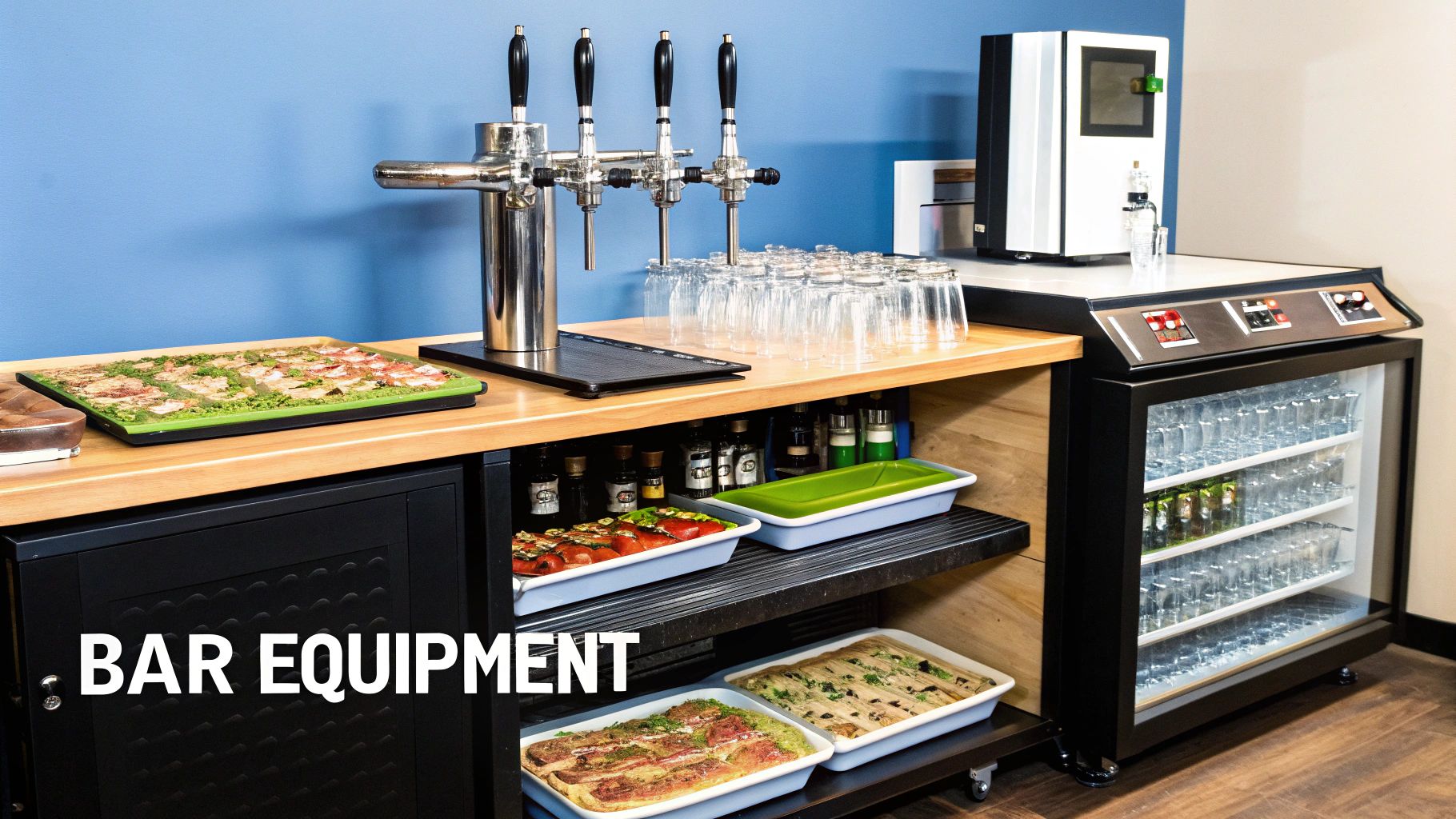
- Refrigeration: This is the heart of your operation. You'll need back-bar coolers for showing off bottled beers, under-counter refrigerators for juices and mixers, and maybe even a dedicated wine cooler. Pay close attention to energy efficiency here, as refrigeration can be a huge chunk of your utility bill.
- Draft Beer System: A well-run draft system is a massive profit center. This setup includes the tower and taps, glycol chiller lines to keep beer frosty from keg to glass, and the kegerator or walk-in cooler that houses the kegs.
- Ice Machine: A commercial-grade ice machine is a must. You will burn through hundreds of pounds of ice on a busy night, and running out is simply not an option.
- Glassware & Glasswasher: Stock up on a healthy supply of different glass types—pint, rocks, wine, martini, you name it. A high-temperature commercial glasswasher is critical to keep that glassware sparkling clean and properly sanitized.
- POS System: A modern Point of Sale system built for the bar environment is essential for managing tabs, tracking every drop of inventory, and processing payments without a hitch.
Essential Bar Equipment Checklist and Estimated Costs
Budgeting for equipment can feel like hitting a moving target. To give you a clearer picture, we've broken down the essential items and their typical cost ranges for new equipment. This checklist will help you start building a realistic budget and ensure you don't miss any critical pieces.
| Equipment Category | Essential Items | Estimated Cost Range (New) |
|---|---|---|
| Refrigeration | Back-Bar Coolers, Under-Counter Fridges, Kegerator/Walk-In, Wine Chiller | $5,000 - $25,000+ |
| Draft Beer System | Taps, Tower, Glycol Chiller, CO2 Regulators, Keg Couplers | $3,000 - $30,000+ |
| Ice & Water | Commercial Ice Machine, Water Filtration System, Soda Gun System | $2,500 - $10,000 |
| Service & POS | POS System (Terminals, Printers), Cash Drawers | $1,500 - $8,000 |
| Washing | 3-Compartment Sink, Hand Sinks, Commercial Glasswasher | $2,000 - $9,000 |
| Bar Tools | Shakers, Jiggers, Strainers, Bar Spoons, Muddlers, Bottle Openers | $500 - $2,000 |
| Glassware | Pint, Wine, Rocks, Highball, Martini, Coupe Glasses (by the case) | $1,000 - $5,000 |
Remember, these figures are estimates for new equipment. Your final costs will depend on the brands you choose, the size of your operation, and whether you opt for new or used items for certain categories.
Leveraging Your Pizzeria Assets
For pizza restaurant owners, you have a secret weapon that can slash your initial bar startup costs and make your bar more efficient: your pizza prep table. The refrigerated rails, perfectly designed for holding pizza toppings, are also ideal for cocktail garnishes like sliced lemons, limes, cherries, and olives.
This is a brilliant dual-use strategy. It saves valuable real estate behind the bar and creates a super-efficient workflow. Your bartender has fresh, chilled garnishes right at their fingertips, which speeds up drink service and keeps every cocktail consistent. Instead of buying a separate, small cooler just for garnishes, you get more value out of an asset you already own. You can dive deeper into how a shallow beverage refrigerator can optimize your space even more.
Equipment and refrigeration are the heavy hitters in any bar startup budget, easily eating up 20-30% of your total funds. For a typical bar, this can mean a $75,000-$150,000 price tag, with essentials like $20,000 for under-counter fridges and $30,000 for a draft beer system. A family pizza restaurant can create an incredibly efficient setup by pairing an $8,000 93-inch pizza prep table with $5,000 in bar chillers.
New vs. Used and Smart Financing Options
One of the biggest calls you'll have to make is buying new versus used equipment. Used gear can save you a bundle upfront, but it's a gamble—it comes with a shorter lifespan and zero warranty. A solid rule of thumb is to buy new for anything with a compressor, like refrigeration and ice machines. Their reliability is just too important. For things like stainless steel sinks or shelving, buying used is often a safe and smart bet.
To get your bar kitted out with all the essential appliances, securing the right restaurant equipment financing is key to managing these big upfront investments. Options like equipment loans or lease-to-own programs let you get high-quality, new equipment without wiping out your working capital. This approach spreads the cost out over time, making it much easier for a new bar to get the reliable tools it needs to hit the ground running.
Keeping the Bar Running: Your Ongoing Operational Costs
Once the doors are open and the last construction invoice is paid, your focus has to shift. Now it's all about managing the month-to-month expenses that keep the lights on and the drinks flowing. Think of it less like building a car and more like keeping it fueled, tuned up, and running smoothly every single day.
Unlike the one-time hit of buying equipment, these operational costs are the recurring expenses that make or break your profitability. Nail these, and you'll have a healthy cash flow. Fumble them, and you'll be in trouble fast. Your first major hurdle right after opening? Stocking those brand new shelves.
Nailing Your Initial Inventory
That first big liquor order is a tough pill to swallow. It's a huge cash outlay that happens before you’ve even made your first dollar. The trick is finding that sweet spot—you need enough variety to look credible, but you can’t afford to have thousands of dollars tied up in fancy bottles that just sit there collecting dust.
The smart move is to start with a lean, focused, high-margin menu that perfectly complements your pizza.
- The Workhorses: Start with the basics: vodka, gin, rum, tequila, and whiskey. You don't need five brands of each. Pick one or two quality, well-known names to get started.
- Go Local: Partnering with local craft breweries is a win-win. You get unique products that people are excited about, and you support other local businesses. It's a huge draw for a pizza restaurant.
- Pizza-Friendly Wines: You don’t need a novel-length wine list. A few versatile, crowd-pleasing options are all it takes. Think a solid Chianti, a crisp Pinot Grigio, and maybe a dry Rosé.
Starting small lets you see what your actual customers are buying. You can then expand your offerings based on real sales data, not just guessing what might be popular. It protects your cash and cuts down on waste.
Staffing Your Pizza Restaurant and Bar
Get ready, because your staff will almost always be your single largest ongoing expense. But here's where being a pizza restaurant owner gives you a massive advantage. In a standalone bar, labor costs can easily eat up 30-35% of all revenue. With mixologists earning $15-$22 per hour, a 10-person staff can quickly run you $150,000-$250,000 a year.
Pizza restaurants usually see labor costs in the 23-28% range, but adding a bar can push that number closer to 35% if you're not careful. The secret weapon to control this is cross-training.
Train your seasoned pizza crew or kitchen staff to handle basic bar support tasks—bussing tables, washing glassware, or restocking beer coolers. This creates a flexible team that can jump in wherever they're needed. It’s a strategy that can trim your overall labor costs by as much as 10% and ensures you’re never caught short-staffed during a surprise rush.
Other Monthly Bills You Can't Ignore
Beyond stocking the bar and paying your team, a few other recurring costs are absolutely critical to your budget. Ignoring these can land you in serious hot water, financially and legally.
Insurance is not a "nice to have"—it's a non-negotiable cost of doing business. You are legally required to carry specific policies to protect your business, your staff, and your customers. Skipping it is a gamble you can't afford to take.
Here are the other operational costs you need to have locked into your monthly budget:
- Insurance: General liability is the baseline. But you will also need liquor liability insurance, which is specifically designed to protect you from incidents related to serving alcohol. Don't forget property insurance and workers' compensation, either.
- Marketing and Promotion: This isn't just a one-time thing. You need a consistent monthly budget for everything from printing new menus and running social media ads to funding your happy hour specials. This is what keeps new people walking in and regulars coming back.
- Utilities: Get ready for a jump in your power bill. All that bar refrigeration, the ice machines, and specialty lighting add up. The single best way to keep these costs from getting out of hand is to perform regular maintenance on your equipment. To see just how much of an impact this can have, check out our guide on energy-efficient commercial refrigeration.
- Music Licensing: If you plan on playing any music at all—whether it's a live band or a Spotify playlist—you have to pay for it. This means annual fees to performance rights organizations like ASCAP, BMI, and SESAC. The fees depend on your bar's size and how you use the music, and they are not optional.
Smart Financing and Cost-Saving Strategies
Figuring out your bar startup costs is one thing, but actually paying for them? That’s the real mountain to climb. Securing the right funding and making every single dollar count is what separates a dream from a profitable reality, especially when you're adding a bar to your existing pizza restaurant. This playbook will walk you through smart financing options that keep your cash flow healthy and share some proven strategies to get your bar up and running without breaking the bank.
Think of your startup capital as the fuel in your tank. You don’t just need enough to get the engine started; you need enough to keep it running until your bar starts generating its own profit. Running out of cash too early is one of the top reasons new ventures sputter out and fail, so let's talk about how to fill that tank the smart way.
Funding Your Vision
When it comes to financing your bar, there's no magic bullet. The best approach is almost always a cocktail of different funding types, with each one serving a specific purpose. This strategy lets you match the right kind of money to the right kind of expense, protecting your precious working capital for the day-to-day stuff like payroll and buying inventory.
Here are the most common paths pizza restaurant owners take:
- Traditional Bank Loans: These are your classic loans from local or national banks, and they usually come with competitive interest rates. They’re a great fit for big, one-time expenses like the initial build-out. Just be ready for a pretty rigorous application process that demands a rock-solid business plan and a strong credit history.
- SBA Loans: Backed by the Small Business Administration, these loans can often be a bit easier to get your hands on than a traditional bank loan. They typically come with favorable terms and can be used for a whole range of startup costs, from construction all the way to working capital.
- Equipment Financing: This is a loan designed specifically to buy equipment—think refrigeration, draft systems, or even that shiny new pizza prep table. The cool part is that the equipment itself acts as the collateral, which often makes these loans easier to secure than a general business loan.
Securing the right financing isn't about finding one giant check. It's about building a smart financial structure. By mixing and matching different loan types, you can cover your major upfront costs without draining the cash you'll desperately need for your grand opening and the months that follow.
Taking the time to explore these options is a non-negotiable step in your financial planning. You can get a much deeper understanding of the process by reading our guide on financing restaurant equipment.
Lean and Smart Cost-Saving Tactics
Beyond just getting the money, being resourceful with how you spend it is your greatest superpower. Smart, strategic decisions made early in the planning phase can save you thousands of dollars, freeing up that cash for what truly matters—crafting an incredible customer experience. The good news? Your pizza restaurant already gives you a massive head start.
For instance, your existing pizza prep table is a secret weapon for efficiency. Those refrigerated wells are perfect for holding cocktail garnishes like sliced lemons, limes, and olives, keeping them perfectly chilled and organized right where the action is. This simple trick saves you from buying a dedicated bar garnish station, cuts down on clutter, and makes the workflow between your kitchen and the new bar seamless.
Here are a few more battle-tested strategies to keep your bar startup costs in check:
- Design a Multi-Functional Space: Plan your bar layout with an obsession for efficiency. A well-designed space means fewer steps for your bartenders, which allows them to serve more drinks with less effort. That translates to running a slammed service with a leaner, more effective team.
- Start with a Focused Menu: Don't try to launch with a drink menu the size of a novel. Kick things off with a curated list of high-margin classics, a few local craft beers on tap, and some signature cocktails that pair beautifully with your pizza. This keeps your initial inventory costs way down and minimizes waste.
- Leverage Supplier Relationships: You already have relationships with food and beverage suppliers for your pizza restaurant. It's time to cash in on that loyalty. Talk to them about your bar expansion. They can often hook you up with better pricing, promotional support, or even free glassware in exchange for featuring their products. Your existing business with them is a powerful negotiating tool.
Your Path to a Profitable Pizza Restaurant and Bar
Let's bring it all home. The leap from running a great pizza restaurant to a thriving one with a bar isn’t a sprint; it’s a marathon of smart financial planning. We’ve broken down the major costs you’ll face, from the big upfront hits like the build-out and licensing to the gear you can’t live without and the daily rhythm of operational expenses. Every single line item matters when you’re figuring out your total bar startup costs.
But the real story here isn't just a spreadsheet full of numbers. It’s about understanding how a well-run bar completely changes the DNA of your pizza restaurant.
More Than Just Drinks
Your new bar is about to become the buzzing, vibrant heart of your business. It’s the thing that transforms your spot from a quick, 20-minute pizza pickup joint into a neighborhood destination where people want to hang out. Suddenly, customers have a reason to stick around for hours, order another round, and bring their friends along next time. That’s how you see your average checks climb and watch regulars start showing up more often.
A bar injects a powerful social energy into your pizza restaurant, taking the customer experience to a whole new level. This is how you build real loyalty and become the go-to spot in the neighborhood.
Think about it this way: your pizza prep table can pull double duty, holding fresh cocktail garnishes right next to the pepperoni and mushrooms. That kind of synergy is a perfect picture of your new business model—two great offerings working together to create something bigger and better.
Now that you have a handle on the costs and the potential, you’re ready to move forward. You’ve got the blueprint to make smart, strategic moves that will fuel your growth for years, turning that vision of a profitable pizza restaurant and bar into a delicious reality.
Got Questions? We’ve Got Answers.
When you're knee-deep in planning a bar for your pizza restaurant, the details can get overwhelming. Here are some straight-up answers to the questions we hear all the time from owners just like you. Think of this as a quick chat to clear up the confusion and help you budget with confidence.
How Much Working Capital Do I Need Set Aside for a New Bar?
Think of working capital as your financial safety net. A smart move is to have three to six months of your bar's total operating expenses tucked away. For most pizza restaurants adding a bar, this usually lands somewhere between $30,000 and $75,000.
This isn't just "extra" money; it's what gets you through a slow opening month or covers an unexpected repair without breaking a sweat. It ensures your staff and suppliers get paid on time while you're still building up a steady stream of regulars.
Can I Really Use My Pizza Prep Table for the Bar?
Absolutely, and it's one of the best ways to get more mileage out of your existing equipment. A good refrigerated pizza prep table is perfect for holding and prepping cocktail garnishes—think sliced lemons, limes, olives, and fresh mint.
By doing this, you create a super-efficient shared workspace between the kitchen and the bar. You save a ton of space and ensure your drink ingredients are just as fresh as your pizza toppings, which helps with both quality and speed.
The one cost that catches nearly everyone by surprise is the initial inventory. Fully stocking a new bar with a solid selection of spirits, wines, beers, mixers, and garnishes can easily run you $20,000 to $40,000, sometimes more. Budgeting for this accurately is critical to avoiding a cash-flow crunch right out of the gate.
What’s the Biggest Hidden Cost When Starting a Bar?
Besides that initial inventory hit, the biggest budget-buster is often the MEP—that’s mechanical, electrical, and plumbing. You might have a number in your head for the visible construction, but the work behind the walls can be a shock.
Running new drain lines for sinks, adding dedicated electrical circuits for heavy-duty refrigerators, and making sure your ventilation is up to code can tack on thousands you didn't see coming. Always get detailed quotes from your contractors for this stuff.
Do I Need a Different POS System for My Bar?
More than likely, you’ll need to at least upgrade your current system to handle the specific demands of a bar. Many modern restaurant POS systems are modular, so you might just need to add a new software package rather than replacing the whole thing.
Here are the non-negotiable features you'll need:
- Managing Open Tabs: Letting customers run a tab is standard practice for any bar.
- Precise Liquor Tracking: You need to track inventory by the ounce to keep your profits in check.
- Complex Order Handling: The system has to handle custom cocktail modifiers ("easy on the simple syrup," "extra olives") without a hitch.
If your current POS is just built for pizza orders, an upgrade isn't optional—it's a necessary investment.
Building a profitable bar starts with the right foundation, and that includes reliable, efficient equipment. From versatile pizza prep tables that pull double duty to the essential back-bar coolers that keep your beverages perfectly chilled, Pizza Prep Table has the NSF-compliant gear you need to succeed. Explore our selection and financing options today at https://pizzapreptable.com.