
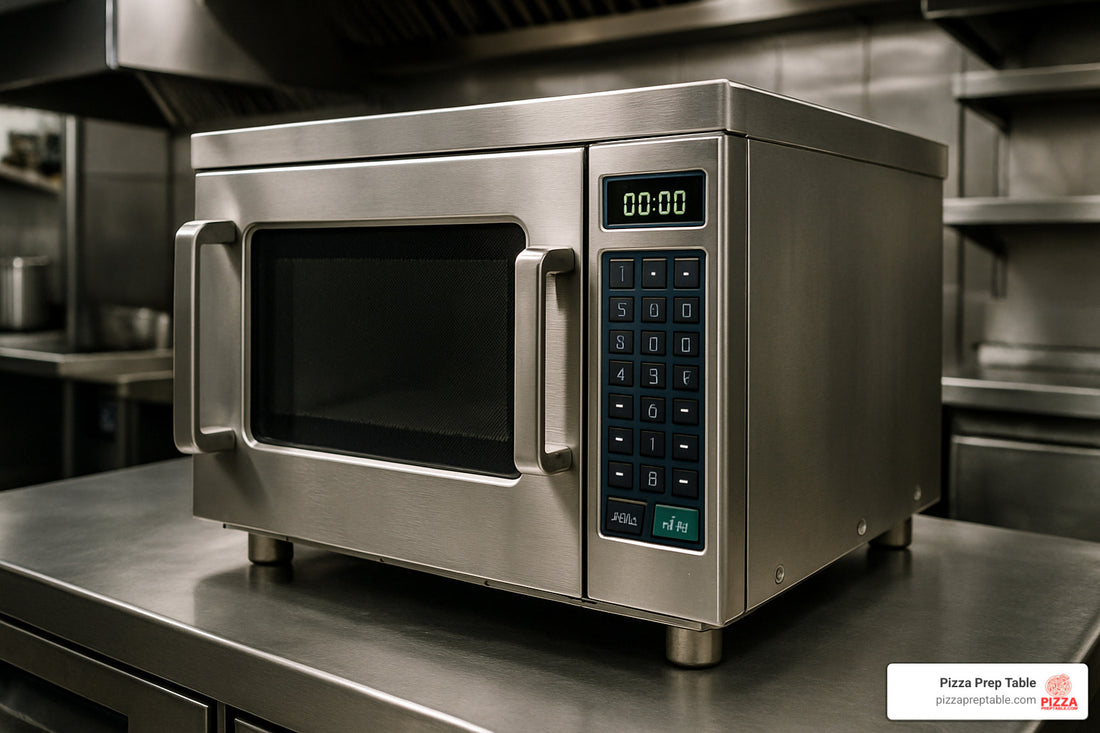
Cheat Sheet to Comparing Commercial Microwave Ovens
Why Commercial Microwave Ovens Are Game-Changers for Your Kitchen
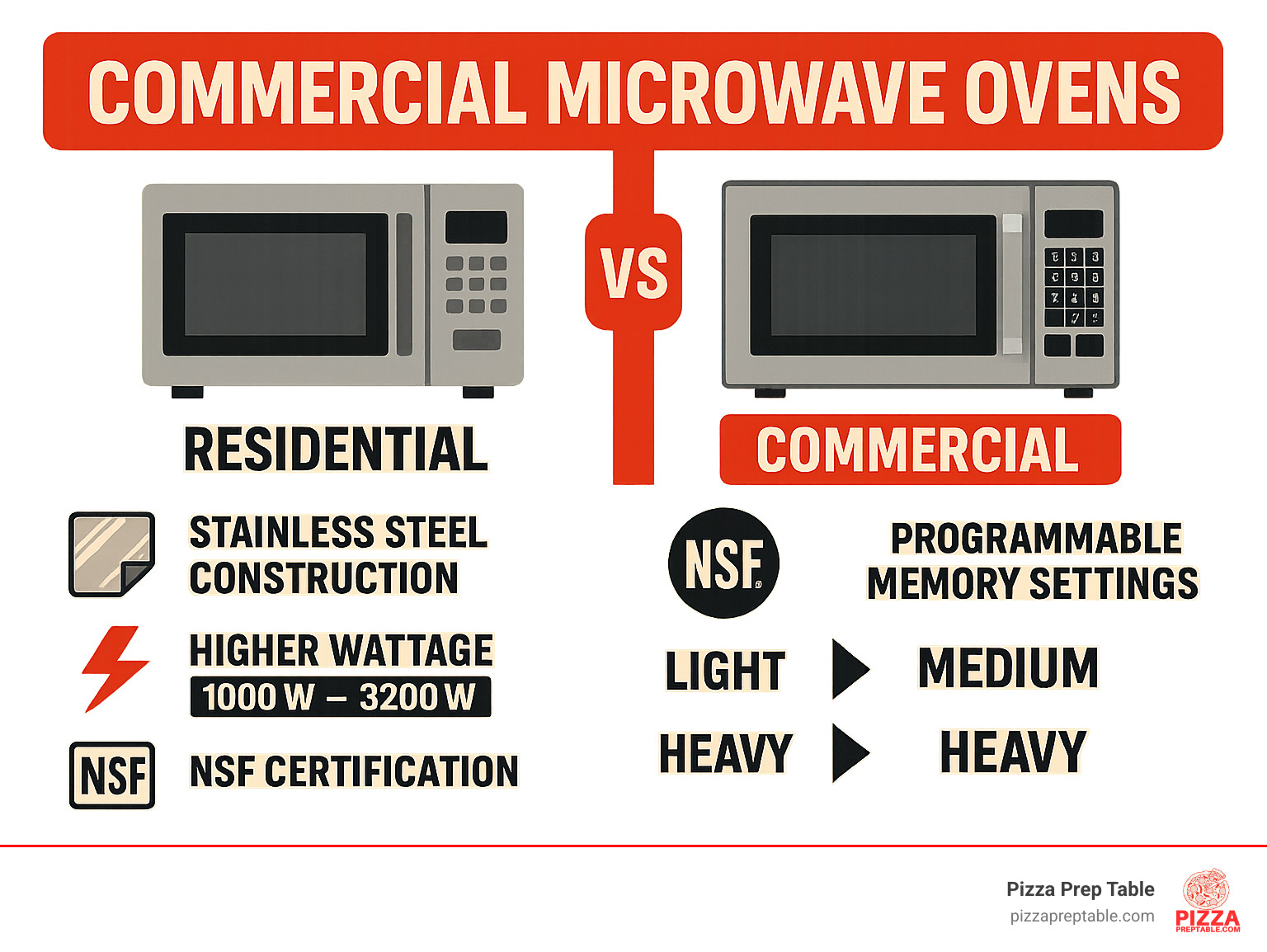
If you run any kind of food-service operation, commercial microwave ovens are the silent partners that keep tickets moving. Trying to get by with a residential model is a common but costly mistake. They aren't built for the relentless pace of a professional kitchen, leading to frequent breakdowns, inconsistent heating, and service bottlenecks that frustrate both your staff and your customers. A commercial unit is an investment in reliability and efficiency. Built for speed and stamina, they blow past residential models in every performance category:
- Wattage: 1,000 - 3,200 W (home units top out around 1,200 W).
- Duty Levels: Light (~50 cycles/day), Medium (~150), Heavy (200 +).
- Construction: All-stainless shells and interiors clean fast and shrug off abuse.
- Compliance: NSF, UL and FCC listings keep inspectors happy.
- Workflow: Stackable cabinets, memory pads and multi-stage cooking shave minutes off every order.
Popular examples include the 1,000 W Panasonic NE-1054F for cafes, the 1,000 W Sharp R21LVF for mid-size kitchens, and Amana's 2,200 W AXP22T hybrid for high-volume lines.
The improvement is dramatic. One Chicago operator told us, "Our old home microwave took minutes to heat a baked potato-our NE-17521 does it in seconds."
I'm Sean Kearney from PizzaPrepTable.com, and I've seen first-hand how the right microwave turns backed-up tickets into smooth service. Let's find yours.
Simple glossary:
Decoding Duty Levels: Which Microwave Fits Your Kitchen's Pace?
Duty level is just a fancy way of saying, "How many times will your staff slam that door today?" Grab a rough count during a busy shift, multiply by operating days, and you'll know exactly where you land.
Restaurant Microwaves That Mean Business offers a deeper dive, but here's the cheat sheet:
Light-Duty (<= 50 uses/day)
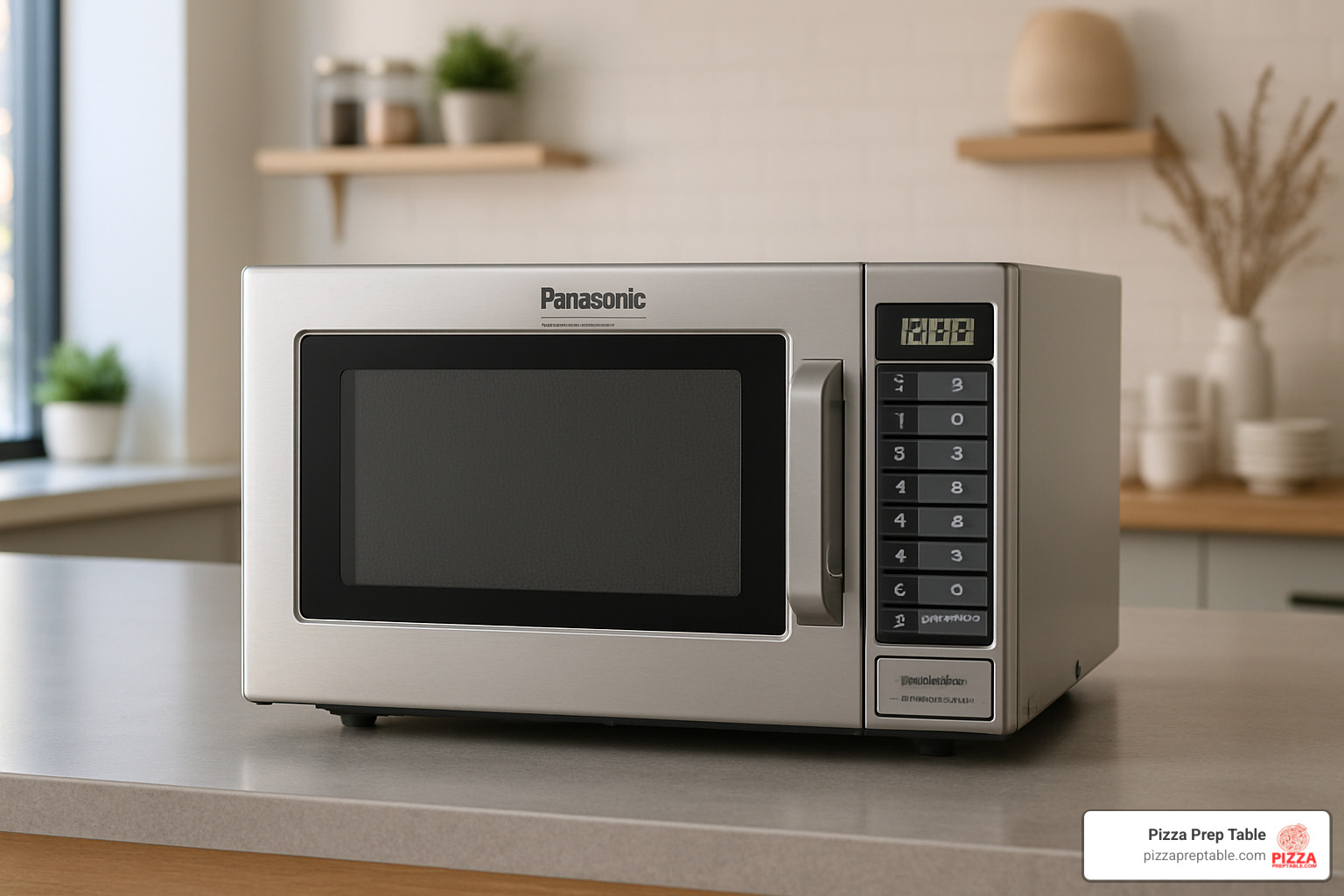
- Power: ~1,000 W
- Hero model: Panasonic NE-1054F
- Perfect for: wait-staff stations, break rooms, food trucks.
Light-duty units excel at quick, repetitive tasks - melting butter, warming pastries, softening cream cheese - without hogging counter space. For mobile operators, they're gold. See our guide, Rolling Kitchens 101, for layout tips.
Medium-Duty (<= 150 uses/day)
- Power: 1,000 - 1,800 W
- Hero model: Sharp R21LVF
- Perfect for: cafes, small restaurants, convenience stores.
Medium-duty is the sweet spot - enough muscle for steady lunch rushes without jumping to 240 V service. Sharp's rugged latch handle is purpose-built to survive thousands of daily pulls.
Heavy-Duty (200 + uses/day)
- Power: 1,800 - 3,200 W
- Hero models: Blizzard BCM2100, Amana HDC & AXP series
- Perfect for: fast-food lines, large cafeterias, busy pizza kitchens.
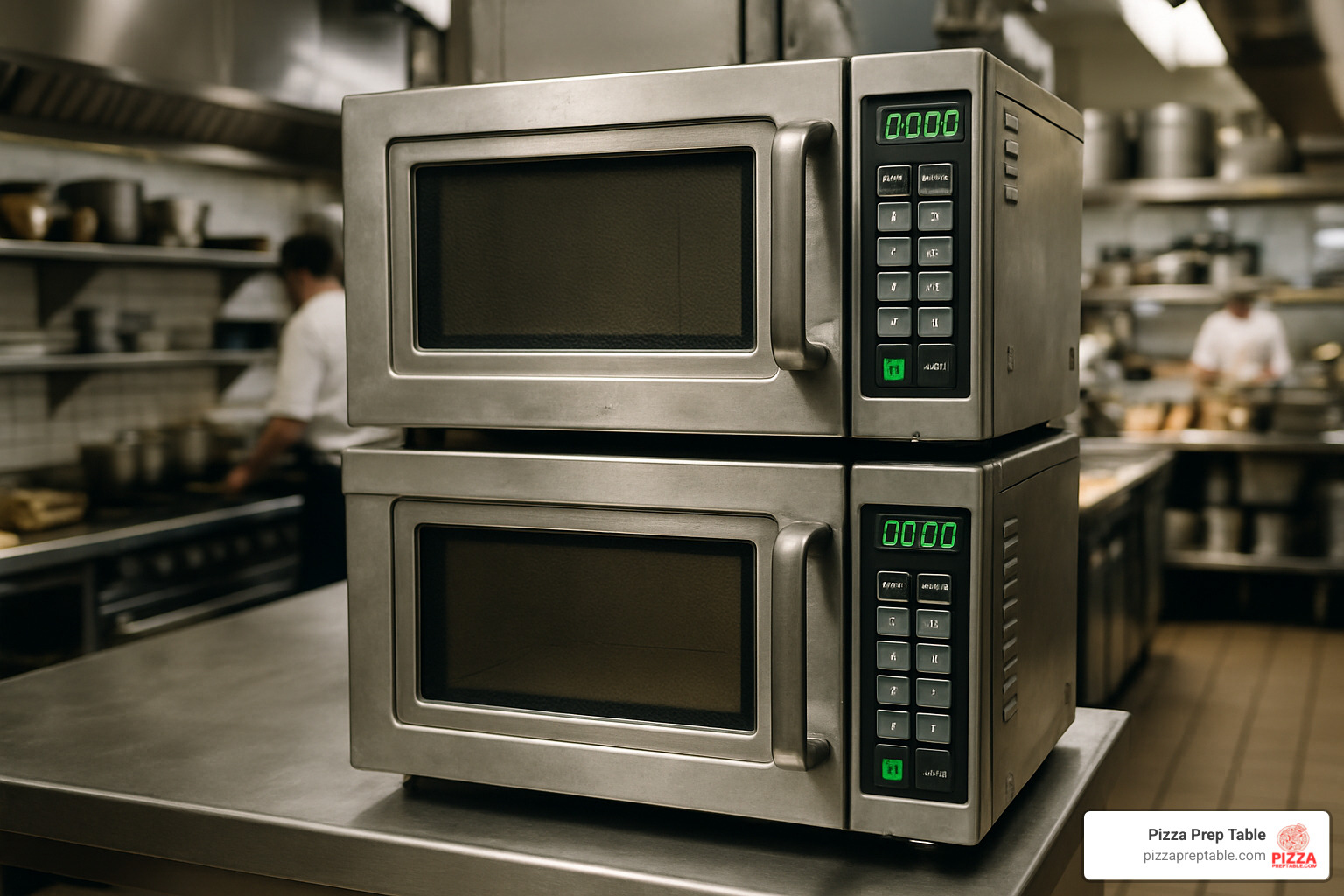
These machines are built to be punched, prodded and endlessly programmed - then do it all again tomorrow. Stack two and you've got a mini finishing station that keeps up with any dinner rush.
The Ultimate Checklist: Key Features for Your Commercial Microwave Oven
You don't need a 50-page spec sheet - just five key categories to compare to find the perfect model for your kitchen's needs.
1. Power & Wattage
Commercial units span 1,000 - 3,200 W. Higher wattage doesn't just mean faster; it means more effective and thorough cooking, especially for dense items like frozen entrees or large portions of soup. Bottom or dual energy feeds (magnetrons) are crucial because they distribute microwave energy from both the top and bottom, ensuring food heats evenly without cold spots and eliminating the need for constant rotation. Most models offer 5-15 power levels so you can boil soup or gently melt chocolate from the same keypad.
2. Capacity & Footprint
Interior capacity ranges from 0.6 to 1.6 cu ft. Think in terms of your most common dishes. Will you be heating single 12-inch plates, or do you need to fit a half-size hotel pan for batch heating sauces? Measure your counter space carefully, but stackable designs are a game-changer for tight kitchens in places like New York City or Chicago, effectively doubling your output without sacrificing precious prep area.
3. Controls & Programmability
Dial controls are simple and bullet-proof, but touch pads open up a world of efficiency with 10-360 memory slots and multistage cooking. Program a complex sequence once (e.g., defrost for 60 seconds at 30% power, then cook for 90 seconds at full power), assign it to a single button, and new hires can crank out perfect portions on day one. Many modern units also feature USB ports, allowing you to program one microwave and then quickly upload the same settings to your entire fleet.
4. Construction & Materials
Look for all-stainless steel exteriors and interiors, fixed ceramic shelves, and reinforced handles. These features signal a unit built for years of trouble-free service in a demanding environment. The smooth, non-porous surface of stainless steel and ceramic resists food buildup and makes daily sanitation quick and effective - a critical factor for passing health inspections. A see-through door is another small but vital feature, letting staff check progress without stopping the timer and losing heat.
5. Electrical Needs
Light-duty gear often runs on a standard 120 V / NEMA 5-15P outlet. However, most medium and heavy-duty models jump to 208/240 V with NEMA 6-15P or 6-20P plugs. This requires a dedicated breaker and professional installation. This isn't a suggestion; it's a requirement for safe operation and to prevent electrical fires or damage to the unit. Always confirm your kitchen's electrical capacity with a licensed electrician before purchase.
For a deeper spec breakdown, see Industrial Microwave 101.
Top Brands and Models: A Head-to-Head Look
Years of field feedback narrow the commercial microwave arena to three consistently reliable names - Panasonic, Amana, and Sharp - plus a handful of budget newcomers.
Panasonic: Set-It-and-Forget-It Workhorses
- NE-1054F: 1,000 W, 0.8 cu ft, 20 memories. Bottom energy feed cooks evenly and the self-diagnostic system flags issues before they cost you.
- NE-17521 / NE-21521: 1,700 - 2,100 W, 90 memory pads, stackable design and energy-saving LED lighting for busier lines.
Restaurant feedback: "Bullet-proof after 16 months of non-stop use - still looks new."
Amana: Combination-Cooking Innovators
- AXP22T: 2,200 W microwave + 2,000 W convection + 3,000 W infrared. 360 memories, color touch screen, removable air filter and NSF/UL listings - all in a footprint barely larger than a standard microwave.
Perfect when one appliance has to replace two or three.
Sharp: Medium-Duty Specialists
- R21LVF: 1,000 W, 1 cu ft, 10 memories and Sharp's reinforced latch handle that eliminates the most common failure point.
Great for convenience stores, employee dining and small kitchens that need dependability over brute power.
Quick Comparison
| Model | Duty | Watts | Capacity | Controls | Best For |
|---|---|---|---|---|---|
| Panasonic NE-1054F | Light | 1,000 | 0.8 cu ft | Touch | Cafes, trucks |
| Sharp R21LVF | Medium | 1,000 | 1.0 cu ft | Touch | C-stores, break rooms |
| Amana AXP22T | Heavy | 2,200+ | 1.38 cu ft | LCD | High-volume, combo cooking |
| Panasonic NE-17521 | Medium | 1,700 | 0.6 cu ft | LCD | Fast-casual lines |
| Blizzard BCM2100 | Heavy | 2,000 | 34 L | Touch | Cafeterias, pizza kitchens |
Beyond the Basics: High-Speed Ovens & Smart Accessories
Traditional microwaves heat fast but can't brown or crisp. For that, you need a high-speed oven. These hybrid units - like Amana's AXP22T - layer microwave energy with convection and infrared heat. Imagine toasting a panini, baking a fresh-dough pizza, or roasting vegetables to perfection in under two minutes. This technology allows you to serve flaky pastries and crispy pizza slices in a fraction of traditional oven time.
That speed upgrade costs more up front, but it can replace multiple pieces of equipment (like a toaster, convection oven, and microwave) and slash ticket times by up to 75%. This allows you to expand your menu offerings without investing in a full-size conveyor oven, making it ideal for operations with limited space.
Must-have add-ons:
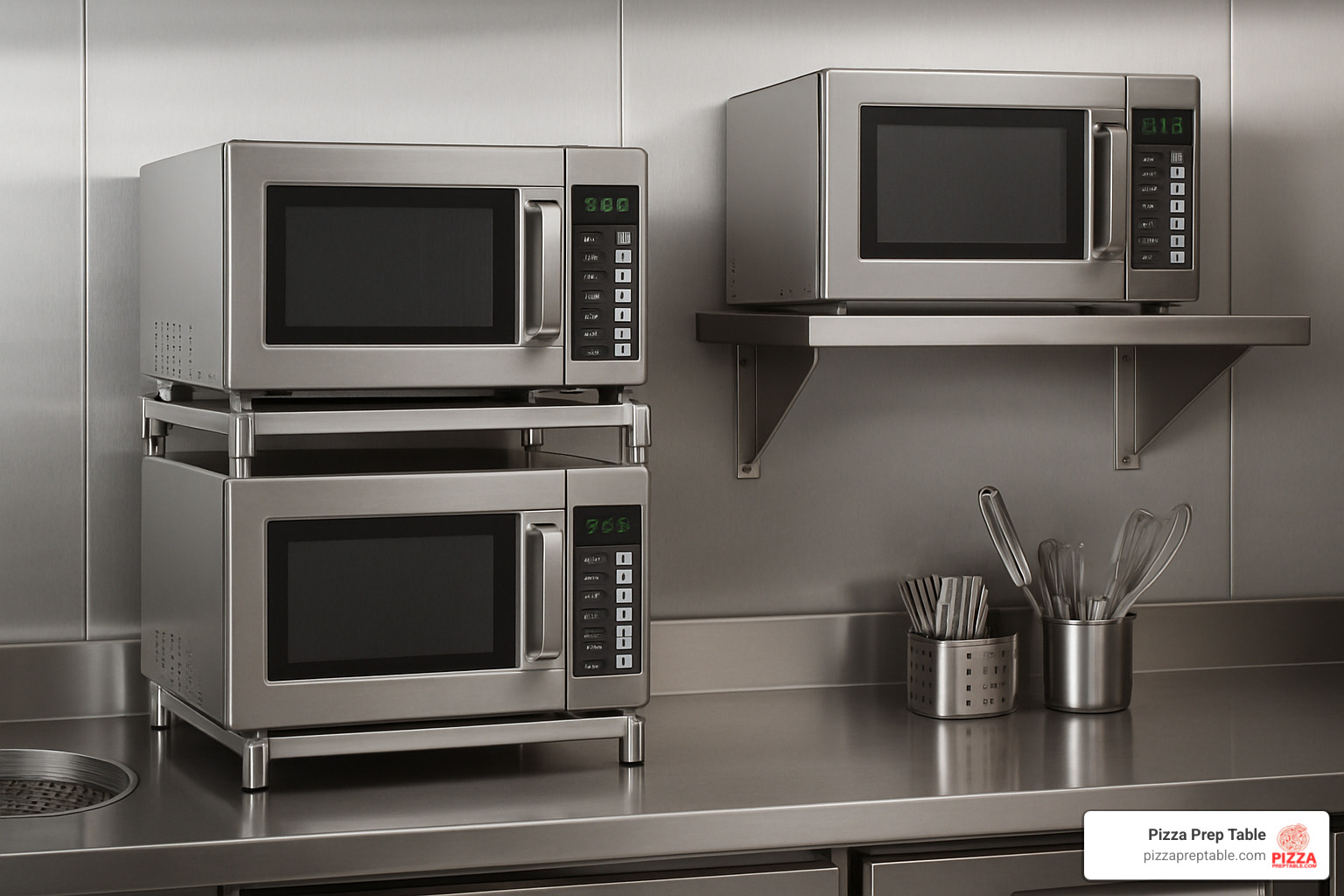
- Stacking kits: Double your cooking capacity on the same footprint, a must for high-volume lines.
- Microwave shelves: Wall-mounted shelves keep utensils, plates, and pans within arm's reach, optimizing workflow.
- Non-stick liners & oven shields: These make cleanup effortless. Simply wipe them down or toss them, saving valuable labor time.
- Specialized Cleaners: Formulated for commercial ovens, these cleaners cut through baked-on grease without damaging stainless steel or internal components.
- Self-diagnostics & cool-down fans: Built-in features like these extend the service life of your microwave and can alert you to potential issues before they cause a shutdown, cutting down on emergency repair calls.
For a full kitchen-wide equipment plan, check our Commercial Food Prep Equipment guide.
Frequently Asked Questions
How should I clean a commercial microwave?
- Wipe the exterior daily with mild detergent and a soft cloth.
- Remove ceramic shelves, wash in the sink, then clean the interior with warm, soapy water.
- Once a week, polish stainless surfaces and rinse removable air filters.
- Schedule a pro inspection yearly - cheap insurance against costly downtime.
Can I use metal pans inside?
No. Metal causes arcing, ruins the magnetron and voids your warranty. Use ceramic, glass or microwave-rated plastics.
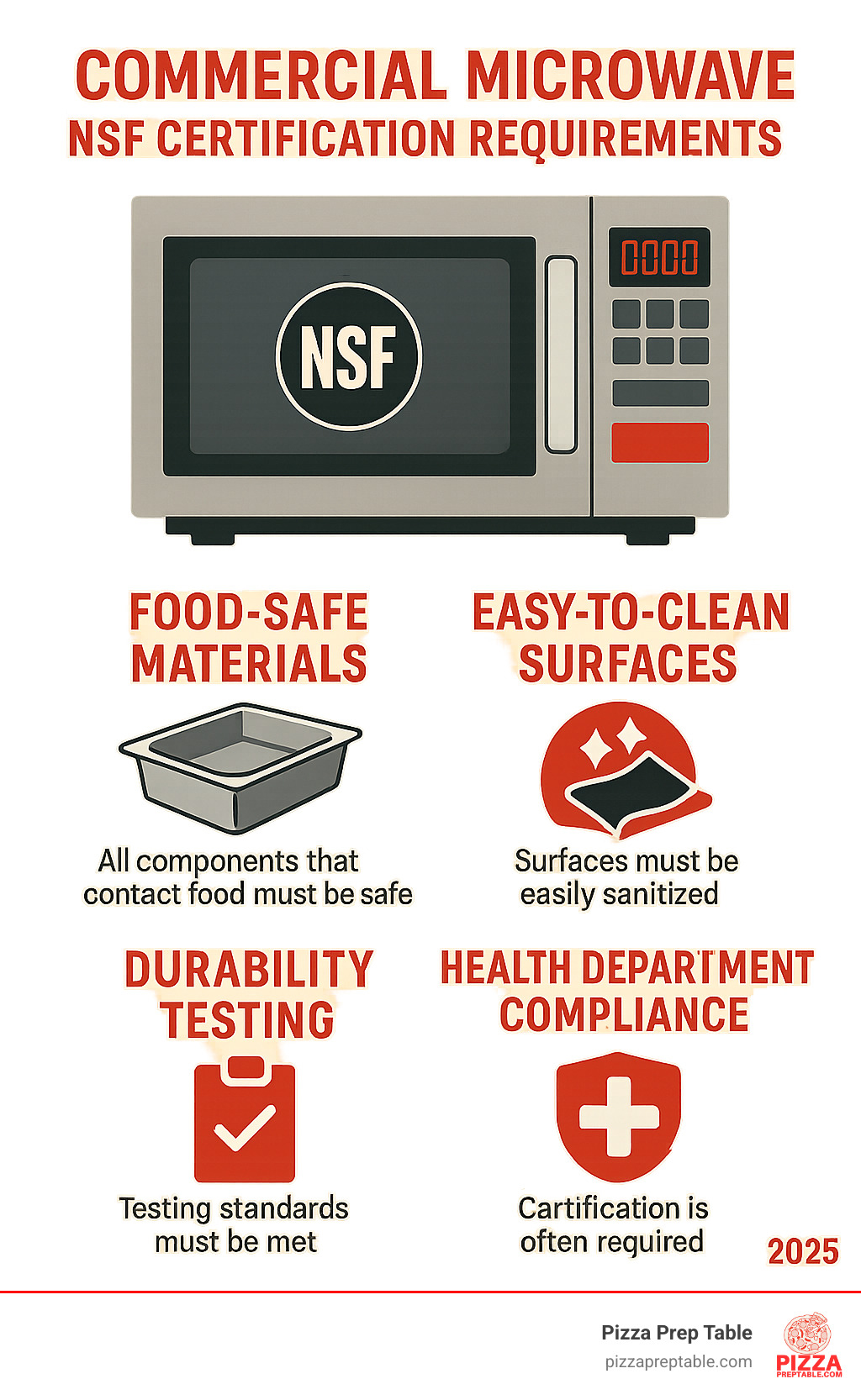
What does NSF certification guarantee?
NSF-marked microwaves meet strict standards for food-safe materials, easy-to-clean design and long-term durability - requirements many health departments enforce.
Conclusion: Choose Once, Cry Never
Start with an honest door-count - 50, 150 or 200 + cycles a day? Match that number to a duty class, then choose the wattage and features that keep pace with your busiest hour.
Remember:
- Higher wattage shrinks ticket times.
- Programmable memories lock in consistency.
- All-stainless builds pay for themselves in longevity.
At PizzaPrepTable.com we stock everything from light-duty 1,000 W models to high-speed hybrids, all with financing that lets you stretch payments, not your cash flow. Whether you're slinging slices in New York or opening a new spot in Austin, we've got a microwave that works as hard as you do.
Ready to level-up your line? Browse our full catalog of commercial kitchen equipment and let's keep those tickets moving.