

Boost Your Pizzeria with a Commercial Convection Oven
A commercial convection oven is your secret weapon for speed and consistency in a busy pizzeria, capable of cooking pizzas up to 25% faster than a standard oven. Think of it like this: a regular oven is like a calm, warm day, while a convection oven is like a powerful, circulating wind. A built-in fan shoves hot air into every nook and cranny, wiping out the hot and cold spots that plague traditional ovens.
The result? Every single pizza gets a perfectly crispy crust and evenly melted cheese, no matter where you stick it on the rack.
Why Your Pizza Shop Needs a Commercial Convection Oven
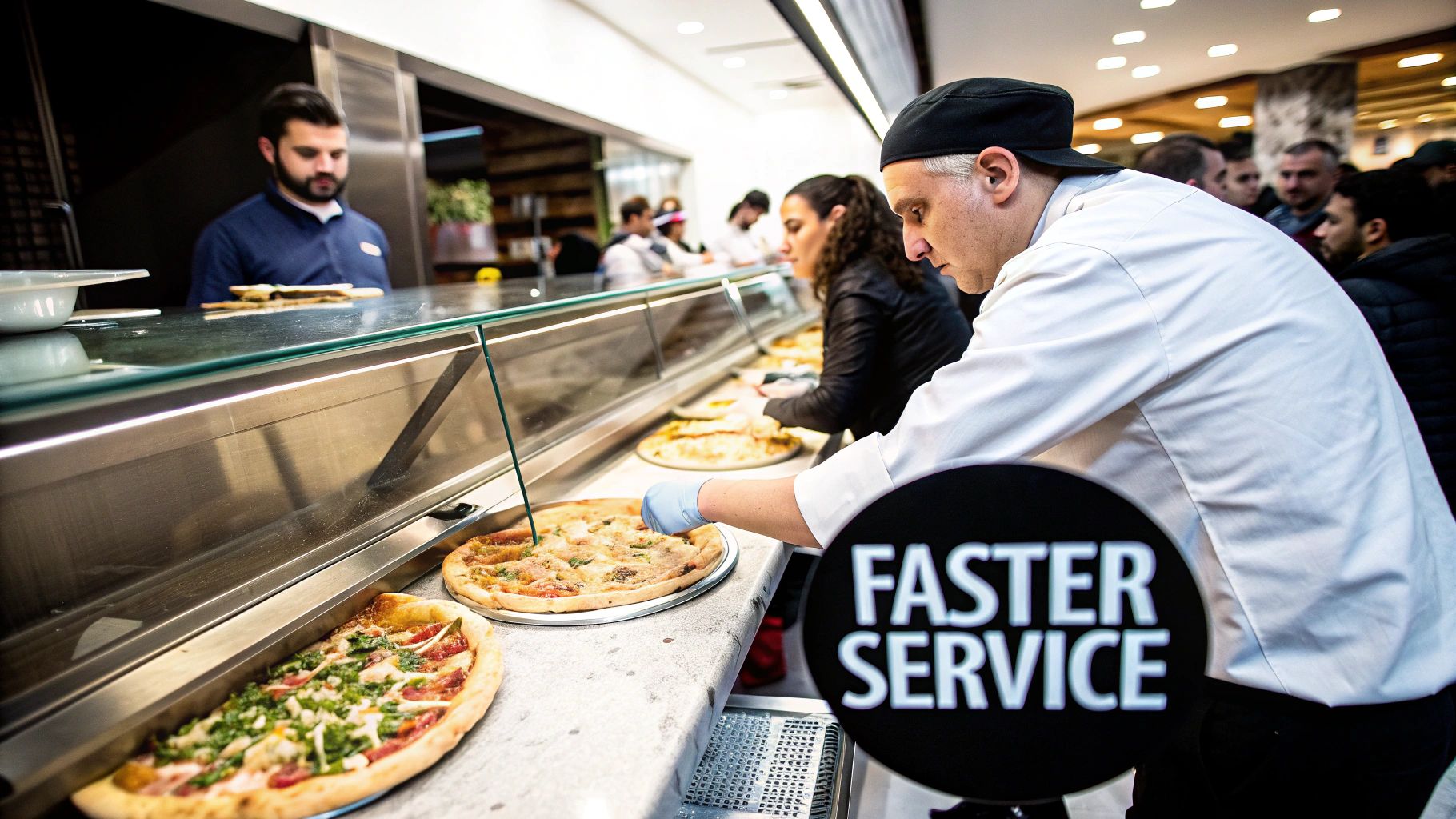
It’s Friday night. Orders are piling up, the pizza prep table is working at full capacity, and your old oven has become the bottleneck holding up the entire kitchen. This is the exact moment where a commercial convection oven proves it's not just a piece of equipment—it's a game-changer for any pizza joint. It directly attacks the biggest headaches pizzerias face, from uneven bakes to frustrating kitchen gridlock.
The magic is all in that fan-forced, circulating air. This constantly moving heat literally strips away the cool air bubble that insulates the dough, letting the heat penetrate faster and more evenly. This one simple process solves a handful of critical problems that directly impact your bottom line and your customers' happiness.
Solving Common Pizzeria Problems
By keeping that hot air moving, a convection oven delivers a uniform temperature from front to back and top to bottom. That means you can finally say goodbye to pizzas with burnt edges and soupy, undercooked centers. Every pizza comes out with that perfect, consistent, golden-brown finish, which boosts your quality and slashes food waste.
This kind of reliability is the foundation of a well-run pizzeria. It creates a seamless flow from the pizza prep table to the oven, ensuring every order is perfect.
On top of that, faster cooking times mean higher output. Shaving even a few minutes off each order lets you serve more customers during your peak hours, which means more revenue and shorter wait times. This efficiency is absolutely vital when your prep team is working at full tilt to keep up with demand.
A convection oven’s ability to cook multiple pizzas perfectly at once is its greatest strength. It turns your oven from a potential bottleneck into the powerful engine of your entire kitchen workflow.
A Growing Market for Efficiency
It’s not just you; the demand for this kind of efficiency is exploding across the entire foodservice industry, especially in pizzerias. The global commercial convection oven market was recently valued at around USD 1.2 billion and is on track to hit USD 1.9 billion. What's driving this? Pizzeria owners everywhere are hunting for faster, more energy-efficient solutions to keep up with demand. This trend highlights a massive shift toward smarter, more productive kitchen technology.
Of course, while we're singing the praises of convection, it's worth remembering that many shops have historically relied on other methods, like traditional wood-fired pizza ovens. These ovens offer a distinct, smoky flavor but often can't match the speed and scalability needed for high-volume operations. For any modern pizzeria focused on consistency and output, a commercial convection oven isn't just a good idea—it's an essential investment.
How Convection Technology Creates the Perfect Pizza
To really get why a commercial convection oven is a pizzeria's secret weapon, you have to think beyond just heat and focus on the air. A regular oven cooks with static, radiant heat—kind of like the sun warming up a sidewalk. A convection oven, on the other hand, kicks on a powerful, circulating "wind" that completely changes the game for pizza making.
Inside, a fan and exhaust system work together to create a constant storm of superheated air. This moving air is the key to unlocking insane speed and consistency. It actively blows away the tiny pocket of cool, moist air that naturally surrounds food, letting the heat attack the pizza dough and toppings directly and aggressively.
That’s what makes this technology so clutch for pizzerias trying to pump out top-quality pies during a relentless dinner rush. It all boils down to super-efficient heat transfer.
Mastering Heat for a Superior Crust
The single biggest win from all this circulating air is its power to kill hot and cold spots. In a standard oven, the spots closest to the heating elements get blasted, while other areas stay cooler. This leads to that classic pizzeria nightmare: pizzas with burnt edges and a sad, doughy center.
A commercial convection oven fixes this by making sure every square inch of the oven stays at a uniform temperature. This evenness is a game-changer for hitting two critical pizza-making milestones.
- Superior Oven Spring: When the dough gets hit with intense, consistent heat from all sides, the yeast goes into overdrive. It releases gases that cause the dough to puff up in a big way, creating a much lighter, airier crust.
- The Maillard Reaction: This is the beautiful chemical reaction that gives you that delicious browning and complex flavor on your crust and cheese. The dry, moving air supercharges this process, delivering a perfectly golden-brown pizza with beautifully caramelized toppings, every single time.
Think of it like this: standing in still, warm air is one thing, but standing in a warm, steady breeze makes you feel the heat way more intensely and evenly. The same thing is happening to your pizza, resulting in a bake that isn't just faster, but fundamentally better.
The "oven wind" in a convection oven doesn't just cook the pizza; it actively manages moisture and heat to create a crispier crust, perfectly melted cheese, and a consistently delicious final product from the center to the edge.
From Raw Dough to Perfect Pie Faster
This efficiency plugs directly into your kitchen's workflow, especially when you pair it with a well-organized pizza prep table. Because the oven cooks so much faster—often cutting bake times by up to 25%—your crew can get pizzas from the prep line to the customer in record time.
That speed is priceless during peak hours. A faster oven means you can push more orders, slash ticket times, and keep your customers happy. The consistency also means less time spent rotating pans or fussing over where to place the pizza in the oven, freeing up your staff to focus on the next order. The technology works so well, it's even been adapted for home kitchens. For more tips on getting that perfect pizza texture, even when reheating, you can explore guides on reheating pizza in an air fryer, which uses similar convection principles.
At the end of the day, the science of convection is simple: moving air transfers heat better. For a pizzeria, that simple truth means faster service, higher quality, and a more reliable product that your customers will absolutely love.
Choosing The Right Commercial Convection Oven
Alright, you've seen the magic a convection oven can bring to your pizzas. Now comes the fun part: picking the right one. This isn't just about buying a piece of equipment; it's about choosing the engine that will power your pizzeria through every Friday night rush.
Getting this decision right hinges on the real-world realities of your kitchen. We're talking about everything from the physical space you have to work with to the specific demands of your menu. A well-chosen oven feels like a natural extension of your workflow, working in perfect sync with your pizza prep table to pump out consistently amazing pizzas.
This simple decision tree nails the core difference—it's all about that airflow.
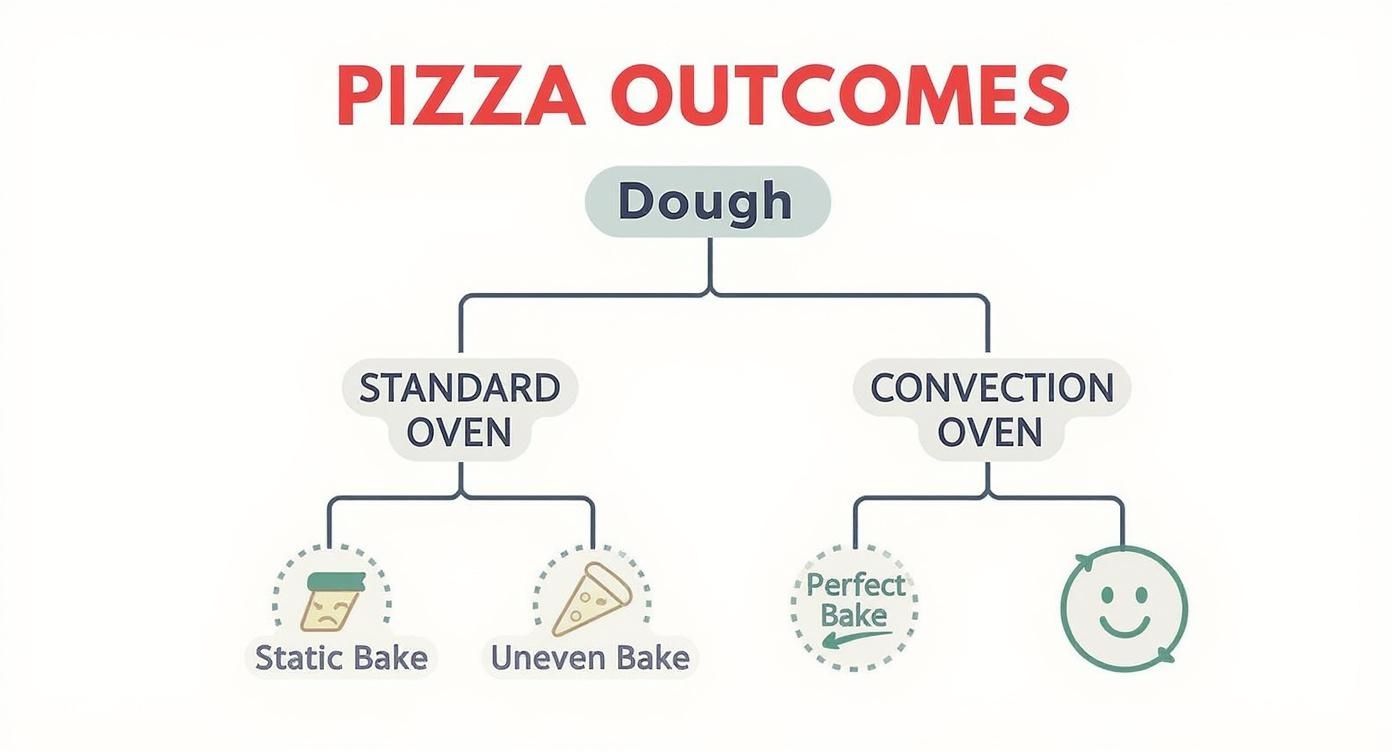
As you can see, that circulating air is the secret sauce, turning good dough into a perfectly, evenly baked pizza every single time.
Gas vs. Electric Commercial Convection Ovens for Pizzerias
One of the first big decisions you'll make is whether to go with a gas or an electric model. Each has its own personality, and the right choice often comes down to your kitchen's existing setup and what you're paying for utilities.
Here’s a quick breakdown to help you see how they stack up for a pizzeria.
| Feature | Gas Convection Ovens | Electric Convection Ovens |
|---|---|---|
| Preheat Time | Very fast. Gets up to temperature quickly, which is great for opening. | Slower to preheat, but excellent insulation holds temperature well. |
| Heat Type | Tends to be a "moister" heat, preferred by some for dough texture. | Provides a very dry, consistent heat. |
| Temperature Control | Good, but can have slight fluctuations. | Extremely precise. Invaluable for replicating recipes perfectly. |
| Installation | Requires a dedicated gas line and proper ventilation, which can add cost. | Simpler installation; just needs the correct electrical hookup. |
| Operating Cost | Often cheaper to run if natural gas prices are low in your area. | Can be more expensive to operate depending on local electricity rates. |
| Best For | Pizzerias needing rapid recovery and a specific crust texture. | Kitchens demanding pinpoint accuracy and recipe consistency. |
Ultimately, there's no single "best" answer. A gas oven is a beast for high-volume pizzerias that need to get hot fast, while an electric oven offers surgical precision that's tough to beat for specialty pies.
Finding The Right Size And Capacity
Next up is figuring out the oven's footprint and how many pizzas it can handle. This is a balancing act between your kitchen's layout and your peak order volume. You're basically choosing between the big floor-standing workhorses and their smaller, more nimble countertop cousins.
-
Full-Size Floor Models: These are the undisputed champs for high-volume pizzerias. They're built to hold multiple sheet pans, letting you cook a dozen or more pizzas at once. If you've got the space and the orders to justify it, a single or double-stacked floor model is your best friend.
-
Countertop Models: Don't sleep on these smaller units. For kitchens where every square inch counts, a commercial countertop convection oven is a brilliant solution. They're also perfect for handling specific jobs—like baking wings, garlic knots, or toasted sandwiches—which frees up your main oven to focus purely on pizzas. You can dive deeper into these versatile ovens in our guide to commercial countertop pizza ovens.
Pizza-Centric Features You Cannot Ignore
Beyond the basics of size and power, modern convection ovens come loaded with features designed for the chaos of a busy pizzeria. These aren't just flashy extras; they are practical tools that boost consistency, cut down on labor, and make your final product better.
One of the most critical features for any pizzeria is fast temperature recovery. Think about it: every time that oven door opens to load or unload pizzas, precious heat escapes. An oven with a powerful heating element and an efficient fan snaps back to the set temperature almost instantly, ensuring the next batch cooks just as perfectly as the last.
Look for models with programmable controls that let you save recipes. Imagine setting the exact time and temperature for your signature thin-crust, deep-dish, and gluten-free pies with a single button press. This guarantees every pizza is consistent, no matter who is running the oven.
Cook-and-hold functions are another lifesaver for managing rushes, letting you keep finished pizzas perfectly warm without turning them into cardboard. And for those artisanal shops, a steam injection feature can be a game-changer, helping create that beautiful, crackly crust with a light, airy crumb.
Optimizing Your Kitchen for Maximum Efficiency
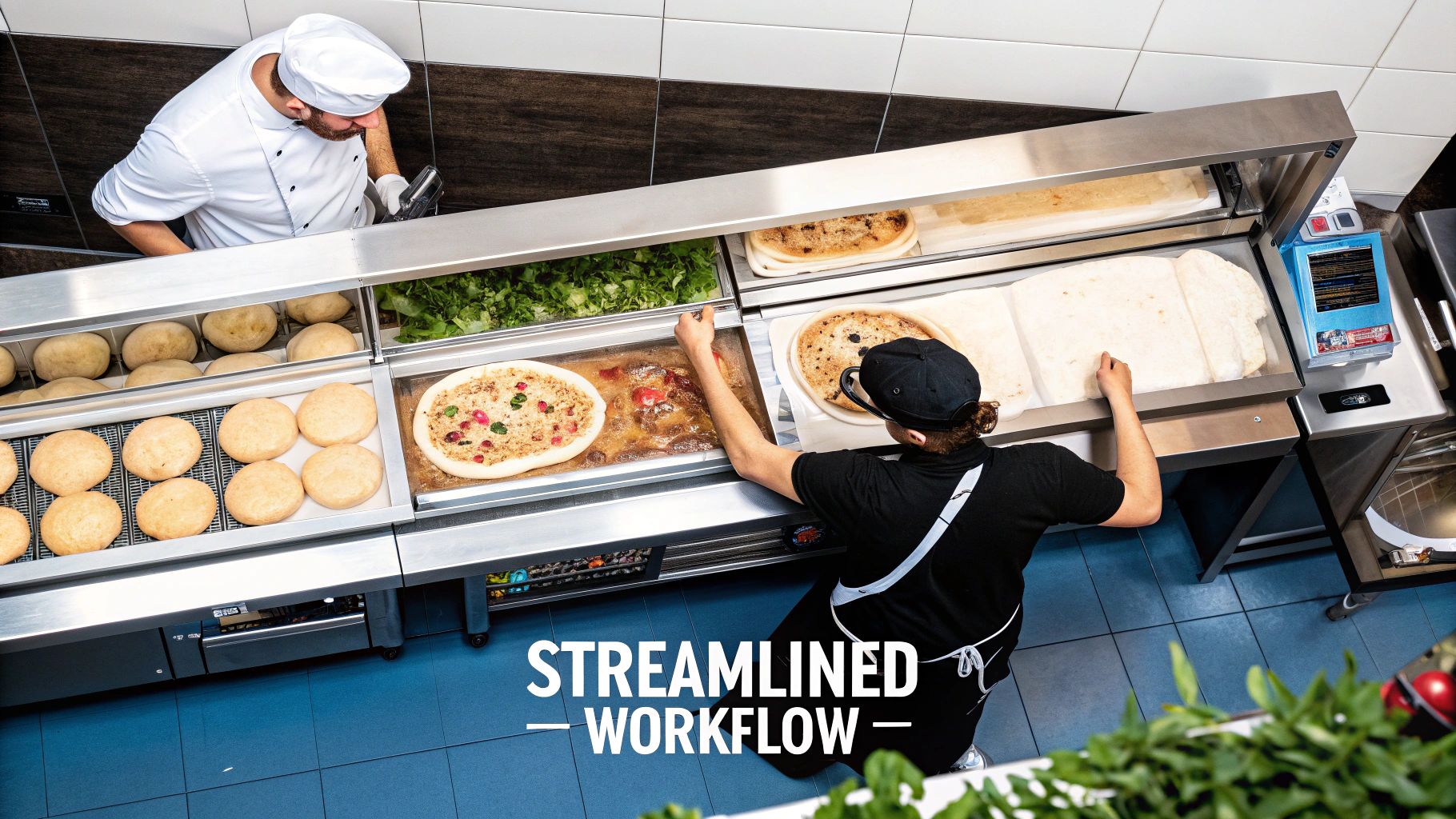
A powerful commercial convection oven is a fantastic piece of kit, but its real magic is only unlocked when it’s part of a smart, well-designed kitchen workflow. Think of your oven as the engine and your pizza prep table as the chassis—they have to work together perfectly to win the race against the dinner rush.
The secret to maximizing your pizzeria’s speed and output is creating a seamless production line. You want a setup where your equipment works in harmony, cutting down the number of steps your staff takes from building a pizza to pulling it hot and fresh from the oven. This thoughtful layout turns your kitchen from a collection of stations into a high-performance pizza machine. Every second you save adds up to more pizzas out the door and happier customers.
Designing a Seamless Pizza Production Line
The physical relationship between your pizza prep table and your convection oven is the most critical piece of the puzzle. The goal is simple: create a straight, clear path from one to the other. Your pizza makers should be able to turn and take just a step or two to load the oven. Anything more is wasted motion.
It all comes down to the "golden triangle" of pizza making: ingredients, assembly, and cooking. These three points need to be as close as possible without making the workspace feel cramped or chaotic.
- Prep Table Proximity: Position the end of your pizza prep line so it points directly at the oven door. This creates a natural, forward-moving flow that just makes sense.
- Clear Pathways: Keep the route between the prep station and the oven wide and free of junk. No one should have to dodge equipment or other people on their way to the heat.
- Landing Zone: Designate a clear, heat-resistant countertop right next to the oven. This is where finished pizzas will land before they get cut and boxed.
This logical flow reduces the physical and mental strain on your team, letting them work faster and more accurately, even when the tickets are flying.
Ergonomics and Staff Well-Being
An efficient kitchen is an ergonomic one. It’s that simple. Taking care of your staff's physical comfort isn't just a nice thing to do—it directly impacts your productivity and cuts down on the risk of costly injuries. And believe it or not, where you place your commercial convection oven plays a huge role in this.
Stacking ovens is a great way to save space, but you have to do it right. The main oven, the one you use most often, should be positioned so its center rack is at chest or waist level for your average employee. This simple adjustment eliminates a ton of bending and reaching, which can lead to serious back strain over a long shift.
A well-designed kitchen layout is an investment in your people. When staff can move efficiently and comfortably, they produce higher quality work at a faster pace, reducing burnout and turnover.
This attention to detail also applies to your ventilation. Good airflow isn't just a rule you have to follow; it’s essential for creating a safe and comfortable place to work. You can learn more about commercial kitchen ventilation requirements to make sure your setup is both compliant and pleasant for your team.
Syncing Your Prep with Faster Oven Output
A commercial convection oven cooks pizzas in a fraction of the time of a standard oven. That's great news, but it means your prep station has to keep up with the new pace. The refrigerated rail on your pizza prep table suddenly becomes ground zero for this high-speed operation.
To keep pace, you have to organize your ingredients logically. It’s all about creating an assembly line. Arrange your toppings based on popularity and the order they go on the pizza. For instance, put pepperoni, sausage, and mushrooms—your heavy hitters—within easy reach. Lighter items that go on last, like fresh basil or a post-bake drizzle, should be at the far end of the line.
This approach ensures that as one pizza slides into the oven, the next one is already built and waiting in the wings. By syncing your prep speed with your oven’s cooking speed, you create a continuous, uninterrupted flow of production that can dramatically boost how many pizzas you sell per hour. Your whole operation becomes a well-oiled system.
Keeping Your Oven in Fighting Shape
Think of your commercial convection oven as the engine of your pizzeria. It's a serious investment, and just like a high-performance car, it needs regular tune-ups to keep running at peak power for years. A simple, consistent maintenance plan is your best defense against surprise breakdowns and the dreaded unevenly cooked pizza.
The secret to a long-lasting oven is breaking tasks down into a daily, weekly, and monthly routine. This isn't just about looking clean; it's about protecting your food quality, keeping your staff safe, and saving money. In a pizza kitchen, you're dealing with melted cheese, grease, and a constant dusting of flour—a perfect storm for gumming up the works if you let it slide.
The Daily & Weekly Grind
Consistency is king in the pizza world, and that starts with a clean oven. A few minutes at the end of each day can stop small messes from turning into big, expensive problems.
Daily Tasks (After Cooldown):
- Wipe Down the Interior: After the oven cools, grab a soft cloth and a cleaner approved by the manufacturer. Get rid of any cheese drips, sauce splatters, or crumbs.
- Clean the Door Glass: A clear view lets your team check on pizzas without opening the door, which keeps the heat in and your energy bills down.
- Sweep Out the Bottom: Brush out any flour and fallen toppings. This stuff can burn, creating smoke and off-flavors you don't want anywhere near your pizza.
Weekly Tasks:
- Give the Racks a Deep Clean: Pull the racks out and let them soak in a good degreasing solution. Scrub away all that baked-on gunk that can mess with proper airflow.
- Inspect and Clean the Fan: Make sure the oven is completely cool and unplugged first. Carefully wipe down the fan blades. Grease buildup can throw the fan off balance, making it work harder and blow air unevenly.
Monthly Upkeep and Smart Habits
Going a little deeper once a month helps you spot trouble before it turns into a costly repair call. These steps are vital for the oven's core performance.
Regular maintenance is more than just cleaning—it's a direct investment in your utility bills and the consistency of your pizza. A tight door seal, for example, prevents major heat loss, which you'll see reflected in your energy costs.
How your team uses the oven matters just as much as how they clean it. A little training on smart habits can prevent a ton of unnecessary wear and tear.
- Load Racks Properly: Never cram the oven full. You need space between pizzas for the hot air to do its job. Blocked airflow is the #1 reason for pizzas that are burnt on one side and raw on the other.
- Always Preheat: Don't rush it. Tossing pizzas into a cold oven leads to soggy crusts and messes up your cooking times. Let it get fully up to temperature first.
- Calibrate Your Thermostat: At least twice a year, check if your oven's temperature is accurate. A faulty thermostat is a fast track to undercooked or burnt pizzas, which means wasted food and unhappy customers.
Sticking to these practices ensures you get every bit of performance and value out of your oven. Taking great care of your oven means it will take great care of your pizzas, which is the foundation of a successful pizzeria.
Answering Your Top Convection Oven Questions
Making the leap to a convection oven can feel like a big step, especially when your reputation is on the line with every pizza you pull. It's totally normal to wonder how a commercial convection oven will mesh with your current setup, especially if you're used to more traditional methods.
We get these questions all the time from pizzeria owners. This section is here to give you straight, practical answers about how these ovens perform in a real, busy pizza kitchen—from juggling different pizza styles to understanding the long-term payoff.
Can I Really Cook Deep-Dish and Thin-Crust in the Same Oven?
Absolutely. In fact, this is one of the biggest reasons modern convection ovens are so popular. You don't have to choose between styles; you get a single machine that can master both. The secret is all in how you adjust your temperature and time.
Think of the circulating air as a tool you have complete control over.
-
For Thin-Crust Pizza: You’ll crank the heat high for a quick, intense bake. The fan-driven heat blasts the toppings, melts the cheese perfectly, and gives the crust that beautiful, crisp finish without drying it out. The name of the game is speed and crispness.
-
For Deep-Dish Pizza: Here, you flip the script. You’ll bring the temperature down and extend the cooking time quite a bit. That fan becomes your best friend, pushing heat all the way to the center of that thick, dense pie so it cooks through long before the top gets too dark or burns.
Many of today's convection ovens have programmable controls, letting you save the exact settings for each pizza style. This means any cook on your team can nail a perfect deep-dish or thin-crust with the push of a button, ensuring total consistency.
This kind of adaptability turns a single oven into a menu-expanding powerhouse. You can cater to more customers, from those who love a classic Neapolitan-style margherita to die-hard Chicago-style fans, all from one piece of equipment.
How Does a Convection Oven Stack Up Against a Deck Oven for Pizza?
This is the classic pizza debate, and honestly, both are fantastic tools. They just shine in different ways. A deck oven is the traditionalist's go-to, while a convection oven is the pragmatist's workhorse. The right choice really comes down to your pizzeria's volume, menu, and priorities.
A classic deck oven cooks with conductive heat—the pizza bakes right on a hot stone or steel deck. That direct contact is what creates the iconic char and slight blistering you see on famous New York or Neapolitan-style pies. But, deck ovens often need longer to preheat, require a skilled hand to manage hot spots, and mean you're constantly rotating pies to get an even bake.
A commercial convection oven, on the other hand, is the undisputed champ of speed, volume, and consistency.
| Feature | Deck Oven | Commercial Convection Oven |
|---|---|---|
| Cooking Method | Conductive heat from a hot surface. | Convective heat from circulating hot air. |
| Best For | A classic, charred crust. | High-volume, consistent, and fast output. |
| Consistency | Needs skill to manage hot spots. | Excellent consistency across multiple pizzas. |
| Speed | Slower cooking and recovery times. | Up to 25% faster cooking and quick recovery. |
| Volume | Lower capacity per bake. | High capacity with multi-rack cooking. |
While a convection oven might not give you the exact char of a deck oven, it delivers a level of reliability that’s hard to beat in a busy, modern pizzeria. It’s the perfect solution for kitchens that need to get a lot of pies out the door quickly without ever compromising on an even bake.
Which Is More Energy-Efficient: Gas or Electric?
The efficiency debate usually boils down to your local utility rates. Both gas and electric convection ovens can be incredibly efficient these days, but they have different strengths and operating costs.
Gas convection ovens are famous for preheating incredibly fast and often cost less to run if natural gas is cheap in your area. Some chefs also swear by the "moist" heat produced by gas combustion, believing it helps with dough texture.
Electric convection ovens, on the other hand, offer amazingly precise and stable temperature control, which is a huge win for consistency. They might take a bit longer to preheat, but their superior insulation often makes them more efficient during long hours of continuous use. In fact, an ENERGY STAR® certified electric model can be far more efficient than a standard one.
Your choice should line up with your kitchen's needs. If rapid preheating and quick recovery between batches are critical, gas is probably your winner. But if your recipes demand absolute temperature precision for perfect, repeatable results every time, an electric model is likely the smarter investment. The best first step? Check your local utility rates to see which energy source will give you more bang for your buck.
At Pizza Prep Table, we know the right oven is the heart of any great pizzeria. That's why we offer a carefully selected range of commercial convection ovens built to handle the demands of any kitchen. Explore our equipment and find the perfect engine to drive your business forward at https://pizzapreptable.com.