

Unlock Your Culinary Dreams: Finding the Perfect Commercial Kitchen in Atlanta
Why Commercial Kitchen Atlanta is Your Gateway to Food Business Success
Commercial kitchen Atlanta spaces offer food entrepreneurs a fast, affordable way to launch or scale their culinary ventures without the million-dollar investment of a traditional restaurant. Whether you're a first-time pizzeria owner, caterer, food truck operator, or delivery-only brand, renting a commercial kitchen lets you focus on your food while keeping overhead low and compliance simple.
Quick Answer: Where to Rent a Commercial Kitchen in Atlanta
- Shared-Use Kitchens: Leaven Kitchen (13 stations, $flexible hourly), J's Kitchen Culinary Incubator (5 workstations), Atlanta Shared Kitchen (low-cost, full-service)
- Private Kitchens: PREP® Atlanta (950-1,300 sq ft, permit-ready, 24/7 access)
- Ghost Kitchens: CloudKitchens (delivery-only, start at $30k, 6-8 week launch)
- Food Truck Commissaries: PREP® ATL South (60 dedicated spaces, 24/7 access)
Atlanta's culinary scene is rich, vibrant, and hungry for new options. The city's booming food industry—part of Texas's 42,000+ restaurant establishments—creates massive opportunity for entrepreneurs who want to test concepts, scale operations, or simply avoid the financial risk of building out a brick-and-mortar location. Commercial kitchens make this possible by providing turnkey, licensed spaces with professional equipment, flexible terms, and built-in support systems.
I'm Sean Kearney, and I've spent years helping food entrepreneurs find the right equipment and spaces to bring their culinary visions to life, including countless conversations about commercial kitchen Atlanta options that fit tight budgets and maximize efficiency. Let me walk you through everything you need to know to find your perfect kitchen match.
Why Rent a Commercial Kitchen in Atlanta?
Atlanta's dynamic food scene is a hotbed for culinary innovation, but the path to opening a traditional restaurant can be fraught with immense costs and complex regulations. This is where a commercial kitchen Atlanta rental truly shines, offering a smart, strategic alternative for aspiring and growing food businesses. The benefits are numerous and compelling, providing a foundation for success without the typical headaches.
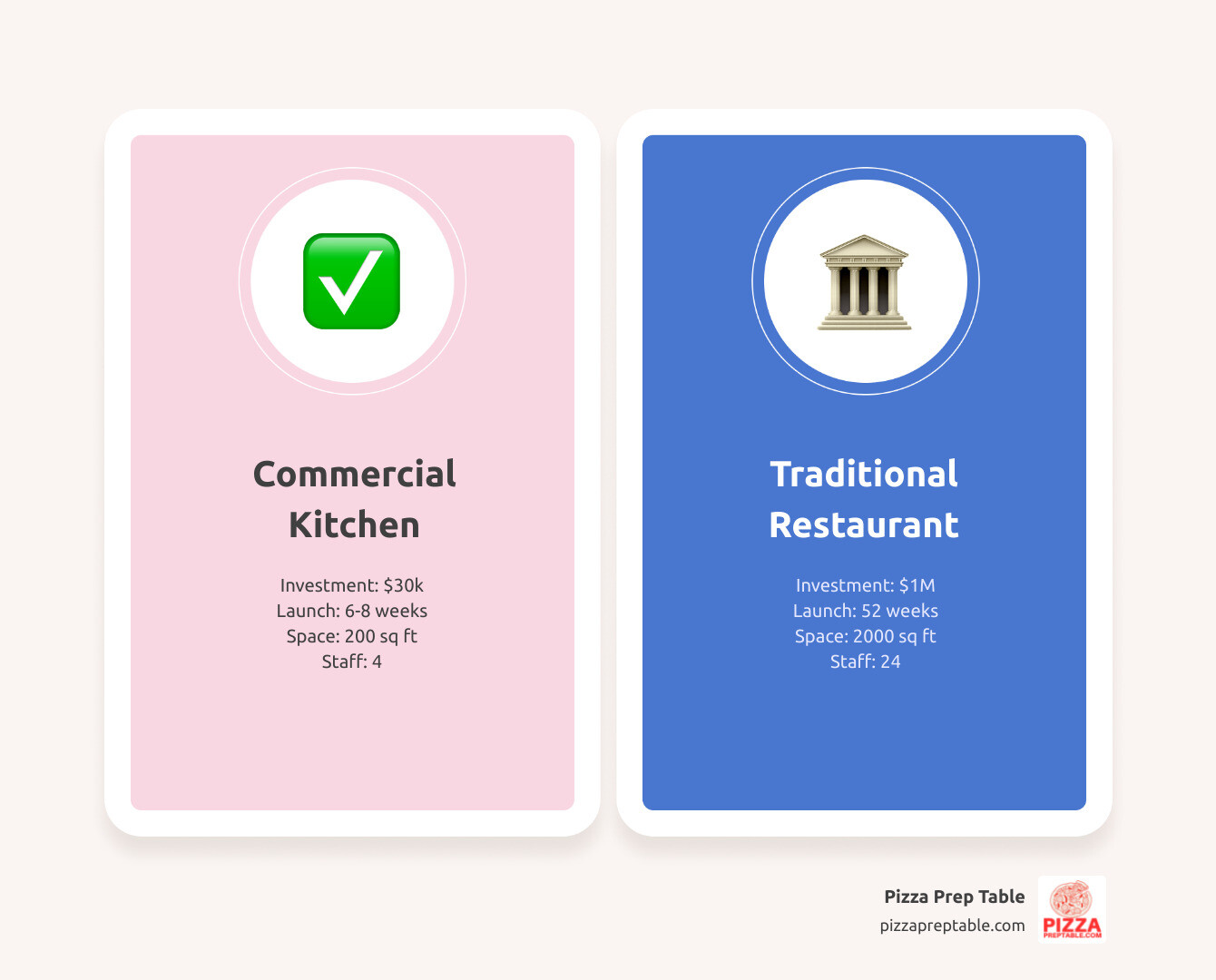
Firstly, let's talk about cost savings. Imagine launching your dream food concept with an investment as low as $30,000, rather than the average $1 million required for a traditional brick-and-mortar restaurant. This dramatic reduction in upfront capital frees up resources for what truly matters: your ingredients, your recipes, and your marketing. Commercial kitchens allow us to bypass the exorbitant costs of real estate acquisition, extensive renovations, and purchasing a full suite of commercial equipment from scratch. This reduced overhead means we can achieve profitability much faster, sometimes in as little as six months compared to five years for a traditional restaurant.
Next up is flexibility. The culinary world moves fast, and commercial kitchens are designed to keep pace. Whether you need a kitchen for a few hours a week, a dedicated daily station, or a private space, the options are custom to fit various business models and growth stages. This flexibility extends to market testing; we can experiment with new menu items, catering concepts, or delivery-only brands without committing to long-term leases or massive investments. If a concept doesn't hit the mark, we can pivot quickly and with minimal financial fallout.
Scalability is another huge advantage. As our business grows, a commercial kitchen can grow with us. We can start small, perhaps with an hourly shared station, and then transition to a dedicated private kitchen as demand increases. This gradual scaling allows us to manage growth effectively, avoiding the feast-or-famine cycles often associated with rapid expansion in traditional settings.
Perhaps one of the most critical benefits is licensing compliance. Operating any food business requires navigating a maze of health codes, permits, and certifications. Commercial kitchens are already built and licensed to meet these stringent requirements, saving us countless hours and potential legal pitfalls. We simply need to ensure our individual business obtains the necessary permits and certifications, often with guidance and support from the kitchen facility itself. This commercially-licensed space means we can create and focus on our business without the overhead of getting our own kitchen. You can learn more about the critical reasons to use such facilities in this guide on Top 5 Reasons to use a Shared-Use or Commissary Kitchen.
Finally, the sense of community and networking found within these spaces is invaluable. Facilities like PREP® Atlanta and Leaven Kitchen foster environments where culinary entrepreneurs can connect, share insights, and even collaborate. This supportive ecosystem provides access to mentorship, workshops, and shared resources, which can be particularly beneficial for new ventures. It’s like having a built-in support group of fellow foodies!

Decoding the Types of Commercial Kitchen Atlanta Spaces
Atlanta's vibrant food scene is a melting pot of culinary innovation, supporting a diverse array of food business models, from caterers whipping up gourmet meals for events to bakers crafting artisanal breads, food trucks serving up street-side delights, and delivery-only brands reaching customers at home. To cater to these varied needs, the commercial kitchen Atlanta landscape offers several distinct types of spaces, each with its own advantages.
Shared-Use Kitchens & Culinary Incubators
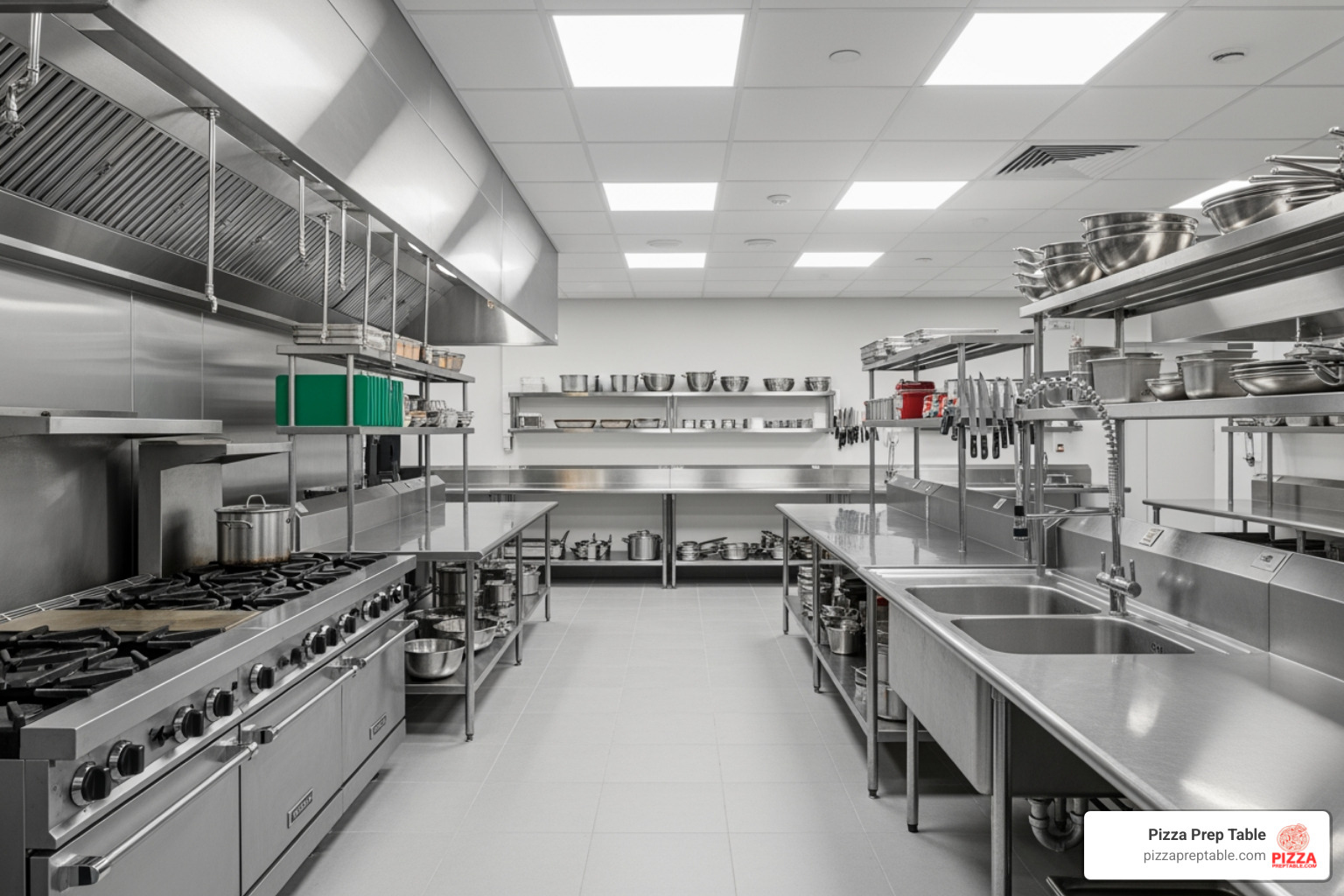
Shared-use kitchens, often referred to as commissary kitchens or culinary incubators, are the perfect starting point for many food entrepreneurs. These facilities offer access to a fully equipped, licensed commercial kitchen on a flexible basis.
- Hourly rental and membership plans are common, allowing us to book kitchen time as needed. This model significantly reduces financial risk, making it ideal for startups, small-batch producers, or businesses with fluctuating demand.
- Leaven Kitchen in Decatur, GA, stands out as a collaborative kitchen providing inclusive, flexible, and affordable shared-use commercial kitchen space. With 13 flexible kitchen stations in an 11,000+ square foot facility, Leaven has nurtured over 150 businesses, focusing on supporting communities of color and LGBTQIA+ individuals. They are Department of Agriculture certified and connect members with resources and specialty equipment.
- J's Kitchen Culinary Incubator is another excellent option, offering 5 workstations and comprehensive support beyond just space. They provide operational business services, business development, cooking agent representation, and access to a network of professionals, even assisting with necessary certifications and insurance.
- Atlanta Shared Kitchen is touted as a low-cost, low-risk, full-service culinary commissary kitchen that supports artisans. However, it's important to note they do not accept memberships for catering, food trucks, or food trailers.
These spaces are cost-effective for startups because they eliminate the need to purchase expensive equipment or pay for a full-time lease. The flexible scheduling ensures we only pay for the time we use. Many facilities, like PREP®, offer online scheduling tools to manage bookings efficiently. You can often check availability and book your slots through systems like the PREP® Shared Kitchen Scheduler.
Private & Dedicated Kitchens
For businesses that require more consistent access, greater control, or higher volume production, private and dedicated commercial kitchens offer an ideal solution.
- These spaces provide exclusive use of a kitchen area, often with 24/7 access, giving us the freedom to operate on our own schedule without sharing equipment or counter space. This is crucial for businesses with complex production schedules, sensitive recipes, or a need for proprietary processes.
- PREP® Atlanta is a leading provider in this segment, offering fully permit-ready dedicated commercial kitchen facilities. Their private kitchens range from 950 sq. ft. to 1300 sq. ft., designed to accelerate food businesses, provide expansion for those already established, and serve as commissaries for multi-location restaurants. These are perfect for scaling businesses that have outgrown shared spaces and require their own domain.
- With larger space and dedicated equipment, these kitchens are ideal for high-volume production, allowing us to streamline operations and maximize output. You can dig deeper into the benefits of such exclusive spaces here: Learn More Private Commercial Kitchens.
Ghost Kitchens & Delivery Kitchens
The rise of food delivery apps has spurred a new category of commercial kitchens: ghost kitchens, also known as dark kitchens or delivery kitchens. These facilities are specifically designed for the delivery-only model, with no dine-in area.
- Providers like CloudKitchens have strategically placed their dark kitchens in densely populated areas of Atlanta, including Buckhead, Old Fourth Ward, Midtown, Downtown, and West End, to maximize reach to online customers. This ensures our food gets to hungry patrons efficiently.
- The primary appeal is the significantly lower investment. We can get a delivery kitchen up and running with an investment as low as $30,000, compared to the $1 million average for a traditional restaurant. This means we can launch in weeks, not months or years, often within 6-8 weeks.
- Ghost kitchens are optimized for online orders, often providing a single tablet to manage orders from multiple delivery platforms. They allow us to build multiple food concepts from a single kitchen, maximizing our output and market penetration. CloudKitchens, for example, handles logistics, delivery hand-off, maintenance, and janitorial duties, allowing us to focus purely on cooking.
- This model provides access to more customers by tapping into the booming delivery market, which is the fastest-growing segment of the food industry. For a deeper dive into delivery-focused operations, check out: Learn More Commercial Delivery Kitchens.
The Nitty-Gritty: Costs, Equipment, and Regulations
Navigating commercial kitchen Atlanta rentals means understanding the financial commitments, the equipment at our disposal, and the all-important regulatory problems. Let's break down these essential elements.
| Kitchen Type | Typical Costs | Space (Approx.) | Ideal User |
|---|---|---|---|
| Shared-Use Kitchens | Hourly ($20-$50+), Monthly Membership ($300-$1500+) | Varies | Startups, caterers, bakers, small-batch producers, market testers |
| Private/Dedicated Kitchens | Monthly ($2,000-$10,000+) | 300-1300 sq ft+ | Growing businesses, high-volume production, multi-location commissaries, chefs needing exclusive access |
| Ghost/Delivery Kitchens | Monthly ($1,500-$5,000+), Startup ($30,000) | 200 sq ft | Delivery-only brands, virtual restaurants, existing restaurants expanding delivery |
What are the Costs of a commercial kitchen Atlanta rental?
The cost of renting a commercial kitchen Atlanta space varies significantly depending on the type of kitchen, the amount of time needed, and the services included.
- Hourly rates are common for shared-use kitchens, typically ranging from $20 to $50 or more per hour, often with minimum booking requirements. This is perfect for those who only need occasional access.
- Monthly memberships offer more consistent access to shared facilities, with prices that can range from a few hundred dollars to over a thousand, depending on the number of hours included and additional perks.
- All-inclusive pricing might be offered by some private or ghost kitchen providers, bundling rent, utilities, and even some operational support into a single fee.
- For ghost kitchens, as mentioned, the initial investment can be remarkably low, often starting around $30,000 with providers like CloudKitchens, compared to the average $1 million for a traditional restaurant. This covers the setup and initial operating costs, making it accessible for many entrepreneurs.
- Always factor in security deposits and potential additional fees for storage, cleaning services, or specialized equipment use. It's crucial to understand the full financial picture when budgeting for your business.
Standard Amenities vs. Specialized Equipment
One of the greatest advantages of a commercial kitchen Atlanta is access to professional-grade equipment that would be prohibitively expensive to buy ourselves.
- Standard amenities typically include NSF-certified equipment (meeting public health standards), commercial-grade ranges, convection ovens, powerful mixers, large walk-in coolers and freezers, and essential sanitation stations like three-compartment sinks and handwashing sinks. Adequate storage space (dry, refrigerated, and frozen) is also a staple. PREP® Atlanta, for instance, provides state-of-the-art shared commercial kitchen spaces with NSF certified commercial equipment and lockable dry, refrigerator, and freezer storage.
- However, our specific culinary venture might require specialized equipment. For example, a pizzeria won't get far without a high-quality pizza oven and a dedicated prep area. While many commercial kitchens are well-equipped, for unique or highly specialized needs, we may need to supply our own equipment like a True Pizza Prep Table from a trusted supplier like Pizza Prep Table. These specialized pieces ensure efficiency and quality custom to our exact production requirements.
Licensing and Permits Made Simple
Operating a food business in Atlanta, even from a rented commercial kitchen, requires adherence to local and state regulations. The good news is that the kitchen facilities themselves are compliant, simplifying our part of the process.
- We will need a food service permit from the Georgia Department of Public Health to operate. This involves passing health inspections specific to our business's operations within the commercial kitchen.
- A business license from the City of Atlanta is also mandatory.
- Individual food handlers will need a ServSafe Certification, demonstrating knowledge of food safety practices. J's Kitchen Culinary Incubator, for example, emphasizes the importance of ServSafe and even offers assistance with obtaining certifications.
- Crucially, food liability insurance is required to protect our business in case of any issues.
- For food trucks and mobile food vendors, a commissary agreement with a licensed commercial kitchen is a non-negotiable requirement for health department compliance. This agreement ensures a legal, sanitary base for food preparation, storage, and vehicle servicing.
While the process can seem daunting, many commercial kitchen providers offer guidance and support to help us steer these requirements, making the journey much smoother.
Finding Your Culinary Home: Top Atlanta Kitchens & How to Choose
Choosing the right commercial kitchen Atlanta space is a pivotal decision that can significantly impact our business's success. It's about finding a partner that aligns with our specific needs, budget, and growth aspirations.
Leading Commercial Kitchen Providers in Atlanta
Atlanta is home to a robust selection of commercial kitchen facilities, each with its unique strengths. Here are some of the most prominent:
- PREP® Atlanta: As the country's largest provider of dedicated commercial kitchens and shared co-working spaces, PREP® offers a comprehensive ecosystem. They provide shared co-working kitchens, private commercial kitchens (950-1300 sq ft), delivery & ghost kitchens, and food truck commissaries (PREP® ATL South has 60 dedicated spaces). They emphasize turnkey facilities, community, business development resources, and even lead generation support.
- CloudKitchens: Specializing in ghost kitchens for delivery-only operations, CloudKitchens offers a rapid and cost-effective entry into the delivery market. Located in high-demand areas like Buckhead, Midtown, and West End, they provide operational support, technology for order management, and the ability to run multiple concepts from a single kitchen.
- Leaven Kitchen: Located in Decatur, GA, Leaven is known for its inclusive, flexible, and affordable shared-use commercial kitchen space. With 13 flexible kitchen stations, they prioritize supporting diverse communities and fostering a collaborative environment for growing food businesses.
- J's Kitchen Culinary Incubator: This facility in Atlanta offers 5 workstations and positions itself as a culinary incubator, providing extensive business services, professional networking, and assistance with certifications in addition to kitchen rental.
- Atlanta Shared Kitchen: A full-service culinary commissary kitchen that focuses on supporting artisans with a low-cost, low-risk model. It's important to remember they do not accept memberships for catering, food trucks, or food trailers.
- ChefShirleyKitchen LLC: Another option for commercial kitchen rental in Atlanta, available via sharedkitchenlocator.com.
How to Find the Right commercial kitchen Atlanta for Your Needs
Selecting the perfect commercial kitchen Atlanta involves careful consideration of several factors. It's not just about space; it's about fit.
- Location Analysis: Think about where our customers are, or where our delivery radius needs to be. Ghost kitchens like CloudKitchens strategically locate in densely populated areas for optimal delivery. For food trucks, proximity to vending locations and easy access for vehicle maintenance is key. PREP® ATL South, for instance, is less than 7 miles from downtown Atlanta and minutes from the airport, offering excellent access.
- Budget Evaluation: Clearly define our budget. Are we looking for hourly rates, a monthly membership, or a dedicated private space? Consider the long-term costs, not just the upfront fees. Some providers offer all-inclusive pricing, while others might charge extra for storage or specific equipment.
- Equipment Checklist: List all the essential equipment we need. Does the kitchen provide everything, or will we need to bring specialized items (like our own pizza prep table)? Ensure the available equipment is NSF-certified and well-maintained.
- Community Culture: Do we thrive in a collaborative environment, or prefer a more independent setup? Shared kitchens like Leaven Kitchen pride themselves on their supportive communities. PREP® also emphasizes networking and business development.
- Scalability Options: Consider our growth trajectory. Can the kitchen accommodate our needs as we expand? A facility that offers a progression from shared to private spaces, like PREP®, can be a significant advantage.
- Scheduling a Tour: Always, always schedule a tour! This is crucial for seeing the facility firsthand, meeting the staff, and asking detailed questions. It's the best way to get a feel for the space and ensure it meets our operational needs. You can schedule a tour directly with many providers, for example: SCHEDULE A TOUR.
Frequently Asked Questions about Commercial Kitchens in Atlanta
How do commercial kitchens in Atlanta support food trucks?
For food trucks and mobile food vendors, commercial kitchen Atlanta facilities serve a critical role as a licensed commissary. Health regulations in Georgia require food trucks to operate from an approved commissary kitchen. These facilities provide a clean, licensed space for:
- Food preparation: Where ingredients are prepped and dishes are cooked before being loaded onto the truck.
- Storage: Safe and sanitary storage for food, ingredients, and supplies (dry, refrigerated, and frozen).
- Cleaning and maintenance: Facilities for washing and sanitizing equipment, disposing of wastewater, and replenishing fresh water.
Facilities like PREP® ATL South are specifically designed with food trucks in mind, offering 60 dedicated food truck commissary kitchens. These are fully equipped and licensed spaces with amenities like hand sinks, 3-compartment sinks, prep sinks, coolers, freezers, and often offer 24/7 access, controlled access parking, waste disposal, and water services, ensuring compliance with health regulations and facilitating efficient food service.
What is the main difference between a commercial kitchen and a traditional restaurant space?
The core difference between a commercial kitchen Atlanta and a traditional restaurant space lies in their function and public accessibility.
- A commercial kitchen (or commissary, ghost kitchen, shared kitchen) is a licensed, professional-grade facility dedicated solely to food production. It typically does not have a public dining area. This model significantly reduces overhead and startup costs because it eliminates the need for expensive front-of-house build-out, decor, and a large dining staff. Our focus is entirely on cooking and preparation.
- A traditional restaurant space, conversely, includes both a professional kitchen and a front-of-house dining area for customers. This requires a much larger investment in real estate, interior design, furniture, and a substantial staff (servers, hosts, bartenders, etc.) to manage the customer experience. The startup investment for a traditional restaurant can average $1 million, take up to 52 weeks to launch, require around 2000 sq ft of space, and about 24 staff members. In contrast, a commercial ghost kitchen might cost as little as $30,000, launch in 6-8 weeks, occupy 200 sq ft, and need only about 4 staff members.
Can I really start a food business with a low investment using a ghost kitchen?
Yes, absolutely! The ghost kitchen model is specifically designed for low-risk market entry and rapid scalability, making it an excellent way for aspiring food entrepreneurs in Atlanta to start or grow their businesses with minimal capital.
With providers like CloudKitchens, the initial investment can indeed be as low as $30,000. This is a game-changer compared to the average $1 million required for a traditional brick-and-mortar restaurant. This low barrier to entry allows us to:
- Test concepts: Experiment with new menu ideas or virtual brands without significant financial commitment.
- Launch quickly: Get our business up and running in as little as 6 to 8 weeks, rather than waiting months or even a year.
- Focus on product: Concentrate on refining our food and building our brand, while the kitchen provider handles the operational logistics.
- Scale efficiently: Easily expand by adding more ghost kitchen units or even transitioning to a larger private kitchen as our delivery volume grows.
This model is a powerful tool for leveraging commercial kitchens to bring culinary dreams to life in Atlanta's competitive market.
Conclusion
Atlanta's vibrant food scene offers an exciting landscape for culinary entrepreneurs, and commercial kitchen Atlanta facilities are the ultimate launchpad for success. By providing cost-effective, flexible, and fully compliant spaces, these kitchens empower us to turn our culinary visions into thriving businesses without the daunting financial and logistical problems of traditional restaurants.
Whether we're just starting with a shared-use kitchen, scaling up with a private facility, or tapping into the booming delivery market with a ghost kitchen, the right space is out there. The benefits of reduced overhead, accelerated launch times, and access to a supportive community are undeniable. The right kitchen space is a critical first step for any food business, but so is the right equipment. To learn more about outfitting your new space, explore our guide on the commercial pizza prep table.