

A Guide to Commercial Stainless Steel Countertops for Pizzerias
In the controlled chaos of a busy pizzeria, your prep surfaces are ground zero. This is where the magic happens, and one material stands as the undisputed champion: commercial stainless steel. It’s not just a popular choice; it’s the backbone of nearly every serious pizza-making operation, from the corner shop to the high-volume chain.
Why Stainless Steel Is a Pizzeria's Best Friend
Think of your stainless steel countertop as the most reliable member of your kitchen crew. It’s the silent workhorse that shows up every day, handles the relentless pressure of a dinner rush, and never complains. It provides the clean, consistent, and durable surface you need to craft the perfect pie, time after time.
A pizzeria prep line is a battleground of flour, sauce, cheese, and dough. This is where stainless steel proves its worth. Its single greatest advantage is its completely non-porous surface. Unlike wood, which can soak up moisture and become a breeding ground for bacteria, or stone that can stain from tomato sauce, stainless steel forms an impermeable shield.
This one feature delivers a ton of practical benefits for making pizza:
- Flawless Dough Handling: Dough glides across the cool, smooth surface without sticking. This makes it way easier for your team to stretch and shape crusts consistently, which is key for quality control.
- Cleanup in Seconds: Spilled sauce, stray flour, and melted cheese wipe away effortlessly. A quick swipe keeps the line moving without bogging down your workflow with heavy scrubbing.
- Unbeatable Food Safety: Because nothing can soak in, the surface naturally resists the growth of bacteria, mold, and other nasty stuff. This is non-negotiable when you’re handling raw dough, meats, and fresh veggies all in the same area.
The Bedrock of a Safe, Efficient Pizzeria
Beyond making the job easier, these countertops are the foundation of good kitchen hygiene and long-term durability. The intense focus on cleanliness and resilience in commercial kitchens, seen in projects like the Wild Wings Cafe renovations, is exactly why stainless steel is the default choice for any professional food-service spot. A well-kept stainless surface is your best insurance for passing health inspections with flying colors.
A well-chosen stainless steel prep table isn't just a piece of equipment; it's a long-term investment in your pizzeria's speed, safety, and reputation. It ensures every pizza begins its journey on a surface as clean and professional as the final product you serve.
Now that we've covered the why, let's get into the what. In the sections ahead, we’ll dive into the critical details you need to know before you buy, from steel grades and thickness to the certifications that really matter. This guide will give you a clear roadmap to picking the perfect countertops for your pizzeria.
Choosing the Right Stainless Steel Grade for Pizza Prep
Picking the right stainless steel for your pizzeria is a lot like choosing the perfect flour for your dough. It’s a decision that directly impacts the quality and longevity of your final product. Get it right, and you’ve built a foundation for success; get it wrong, and you’ll be dealing with headaches like rust and contamination down the road.
Think of steel grades this way: Type 304 is your premium ‘00’ flour—it's the versatile, high-performance champion you can trust for just about everything. Then you have Type 430, which is more like a reliable all-purpose flour. It’s fantastic for certain jobs, but you wouldn’t use it for your most delicate Neapolitan pie.
The All-Around Champion for Pizza Tables: Type 304
When it comes to commercial kitchens, Type 304 stainless steel is the undisputed king, and for good reason. It’s packed with chromium and nickel, giving it a nearly bulletproof defense against rust and corrosion. For any surface that will regularly see moisture, this isn't a recommendation—it's a requirement.
In a pizzeria, this means any area where water, acidic tomato sauce, or harsh cleaning chemicals will be present absolutely requires Type 304 steel. We’re talking about your main pizza prep tables, integrated sinks, and dishwashing stations.
Its incredible durability means it can take the daily abuse of a slammed pizza line—the scraping of dough boxes, the endless wiping, the constant contact with acidic ingredients—without breaking a sweat. Investing in Type 304 for your primary food-contact surfaces isn't just a purchase; it's a long-term strategy for hygiene and durability.
The Smart Budget Choice for Dry Areas: Type 430
So, where does the more budget-friendly Type 430 fit into a busy pizzeria? Think of it as the smart, cost-effective choice for areas that stay high and dry. Because it has less nickel, it’s more likely to develop rust if it’s constantly exposed to moisture.
However, its magnetic properties and lower price point make it a perfect fit for specific, non-critical applications in your kitchen:
- Equipment Stands: It’s the ideal material for holding heavy mixers, ovens, or other equipment in dry storage areas.
- Dry Storage Shelving: Use it to store your bags of flour, canned goods, and boxes away from the main prep line and splash zones.
- Wall Paneling: It provides a clean, professional look for walls that are well away from sinks and dish pits.
By strategically using Type 430 in these dry zones, you can free up more of your budget for top-tier Type 304 right where it counts the most. This balanced approach lets you maximize both performance and value. For a deeper dive, our guide to commercial stainless steel tables offers more tips on outfitting your kitchen intelligently.
Let’s break down the key differences to make your decision crystal clear.
Comparing Steel Grades 304 vs. 430 for Your Pizzeria
| Feature | Type 304 Stainless Steel (The All-Around Workhorse) | Type 430 Stainless Steel (The Smart Budget Choice) |
|---|---|---|
| Corrosion Resistance | Excellent. Resists rust from water, acids (tomato sauce!), and salts. | Fair. Can rust if exposed to moisture or harsh cleaners over time. |
| Best Pizzeria Use | Pizza prep tables, integrated sinks, dish stations, any food-contact surface. | Equipment stands, dry storage shelving, wall panels in non-wet areas. |
| Durability | Extremely high. Withstands constant cleaning and heavy daily use. | Good. Durable enough for static loads and dry environments. |
| Cost | Higher initial investment, but lasts much longer in wet areas. | More budget-friendly, offering significant cost savings for dry applications. |
| Magnetic? | No. | Yes. This property can be useful for magnetic knife strips or tool holders. |
| The Bottom Line | The non-negotiable choice for sanitation, longevity, and peace of mind on the pizza line. | A practical way to save money where corrosion isn't a primary concern. |
Seeing the comparison side-by-side really highlights how each grade has a specific role to play in building a smart, efficient pizzeria.
This decision tree infographic can help you visualize the questions to ask when outfitting your pizza kitchen.
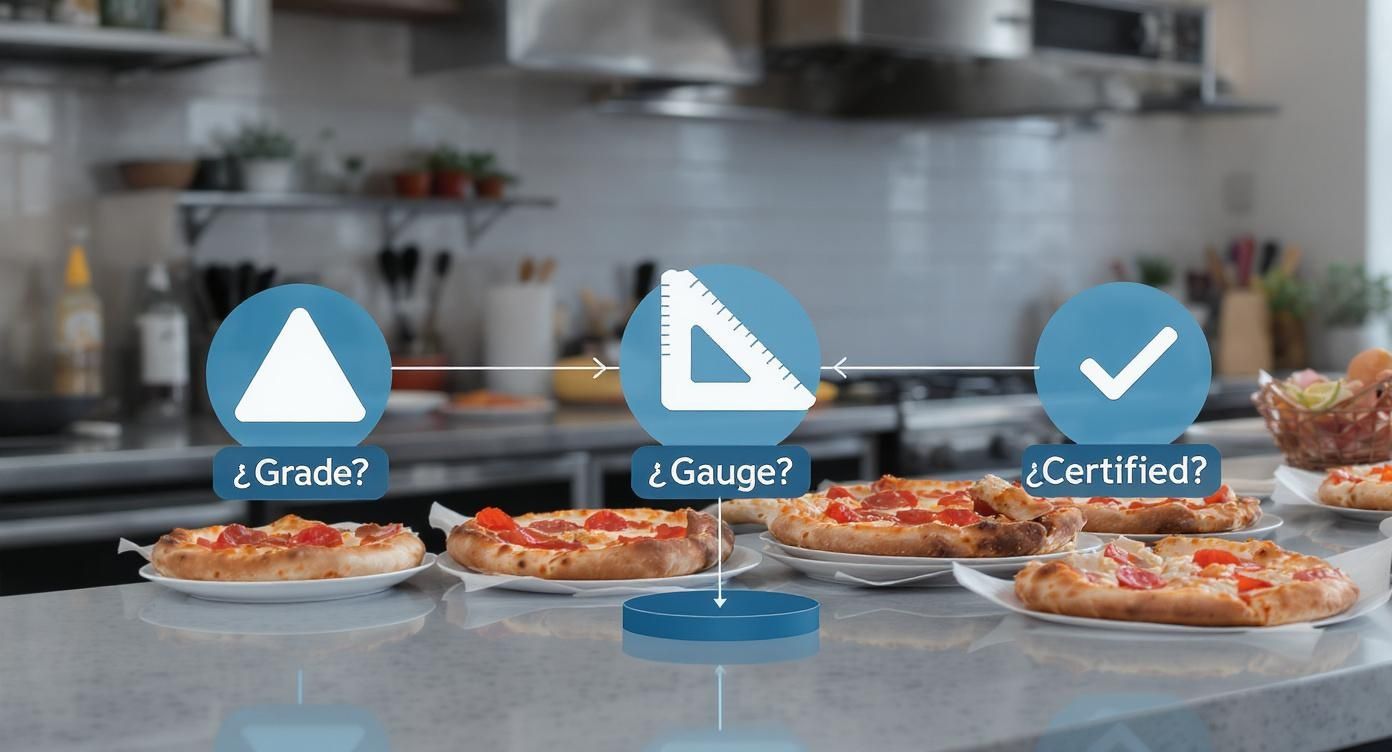
As you can see, choosing the right grade is the first critical step, leading to decisions on thickness and certification to ensure you get a countertop perfectly suited for the intense demands of a pizzeria.
Making The Final Call for Your Pizza Prep Table
Ultimately, your choice between Type 304 and Type 430 boils down to one simple question: What is this surface going to be doing all day?
For any prep table, sink, or surface that will come into direct contact with food, moisture, and cleaning agents, Type 304 is the only answer. Its superior corrosion resistance is your best defense against rust, pitting, and contamination, ensuring your kitchen stays clean and compliant with health codes.
For secondary applications like equipment stands or dry storage shelving, Type 430 offers a practical way to manage costs without compromising where it matters. By matching the steel grade to its specific job in your pizzeria, you create a kitchen that is both highly functional and economically sound—built to handle years of busy service.
Thickness and Finish: Building a Battle-Ready Pizza Prep Table
Once you’ve settled on the right grade of steel, the next big decisions are thickness and finish. These two choices have a huge impact on how your commercial stainless steel countertops will hold up to the daily abuse of a busy pizzeria. Get it right, and your prep tables will be loyal workhorses for years. Get it wrong, and you’ll be dealing with dents, warping, and a surface that’s a nightmare to keep clean.
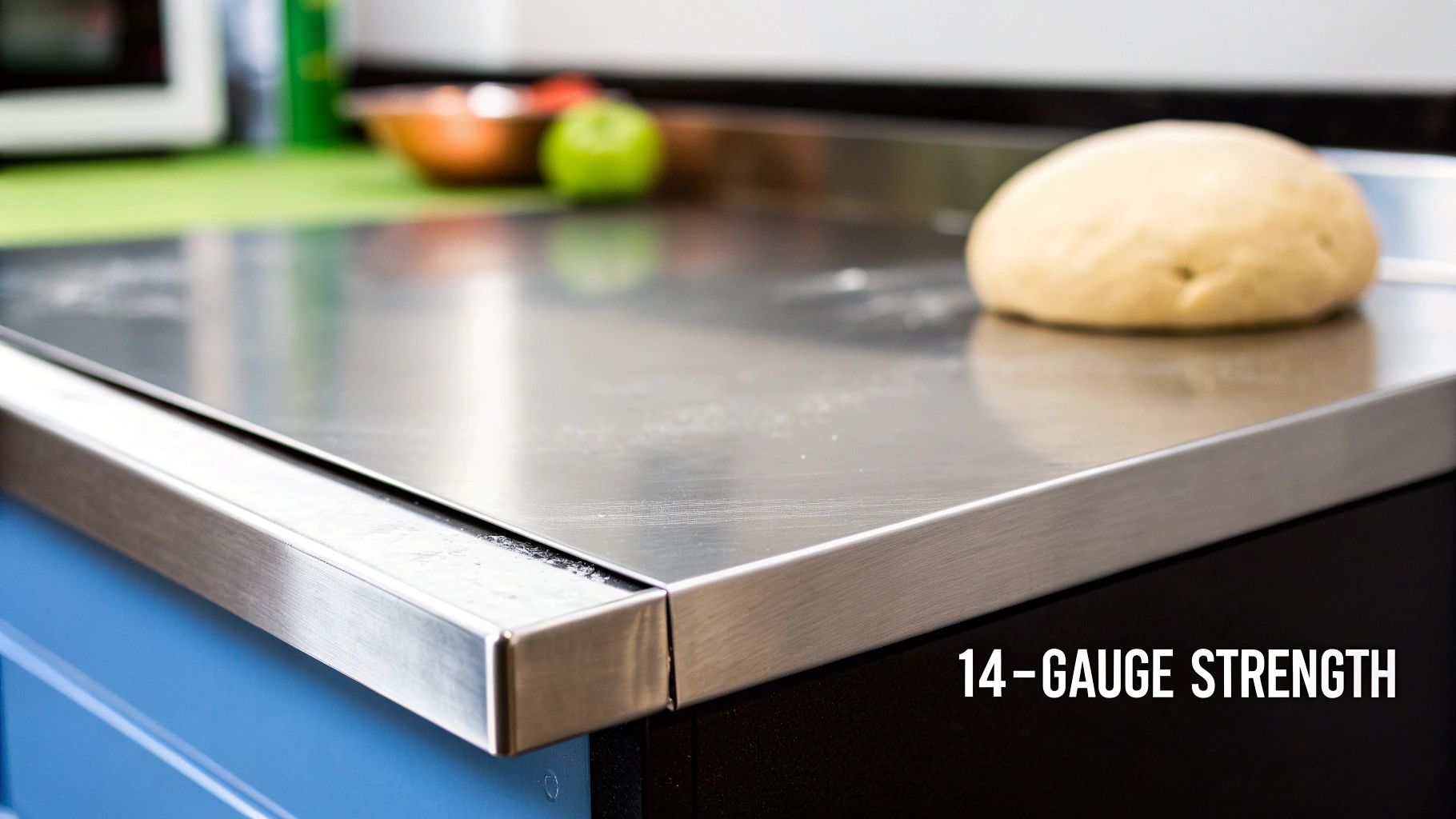
Think of steel thickness—what we call gauge—like a pizza crust. A thin crust is light and delicate, but a thick, deep-dish crust is built to handle a mountain of toppings. With stainless steel, the gauge number is backward: the lower the number, the thicker and stronger the steel.
Decoding the Gauge for Pizza Prep Tables
In a high-volume pizza kitchen, countertops take a constant beating from pounding dough, scraping tools, and heavy equipment. Thickness isn't a luxury; it's the key to the structural integrity and longevity of your most important workspace.
Here's how gauge breaks down for a pizzeria's real-world needs:
- 14-Gauge (The Heavy-Duty Champion): This is the thickest, toughest option out there and the gold standard for your main pizza prep line. A 14-gauge top can handle a pizzaiolo slapping down dough balls all day long and won't even flinch under the weight of a heavy commercial mixer.
- 16-Gauge (The Versatile Workhorse): A bit thinner and more budget-friendly, 16-gauge steel still offers fantastic durability. It's the perfect choice for secondary prep areas, like your topping station or a salad prep table, where the physical demands are less intense.
Investing in a 14-gauge top for your primary dough prep table is one of the smartest moves a pizzeria owner can make. It’s your frontline defense against dents and damage, guaranteeing a smooth, flat surface for perfect pizza making year after year.
Choosing the Best Finish for a Pizzeria
The finish on your countertop is about much more than just looks—it’s about practicality and maintenance. In a pizza kitchen filled with sharp tools and abrasive flour, the right finish makes all the difference.
For pizzerias, there’s really only one choice that makes sense: the #4 brushed finish. This is the classic look you see in nearly every commercial kitchen, with a pattern of fine, uniform lines all running in the same direction.
That simple detail is incredibly practical. The grain of the brushed finish is a master of disguise, hiding the minor scratches and scuffs that are inevitable from pizza cutters, dough scrapers, and sliding sheet pans. It keeps the surface looking clean and professional, even after months of hard use.
On the other hand, you should run from a mirror or polished finish for any prep area. Sure, it looks incredible when it’s brand new, but it's a maintenance disaster in a working kitchen. Every single fingerprint, water spot, and tiny scratch will stand out, demanding constant polishing to look even remotely presentable. For a busy pizza prep table, it's the least practical option you can find.
By choosing a durable 14-gauge thickness and a forgiving #4 brushed finish, you're setting your kitchen up for maximum efficiency and longevity.
Understanding NSF Certification and Sanitation for Pizza Kitchens
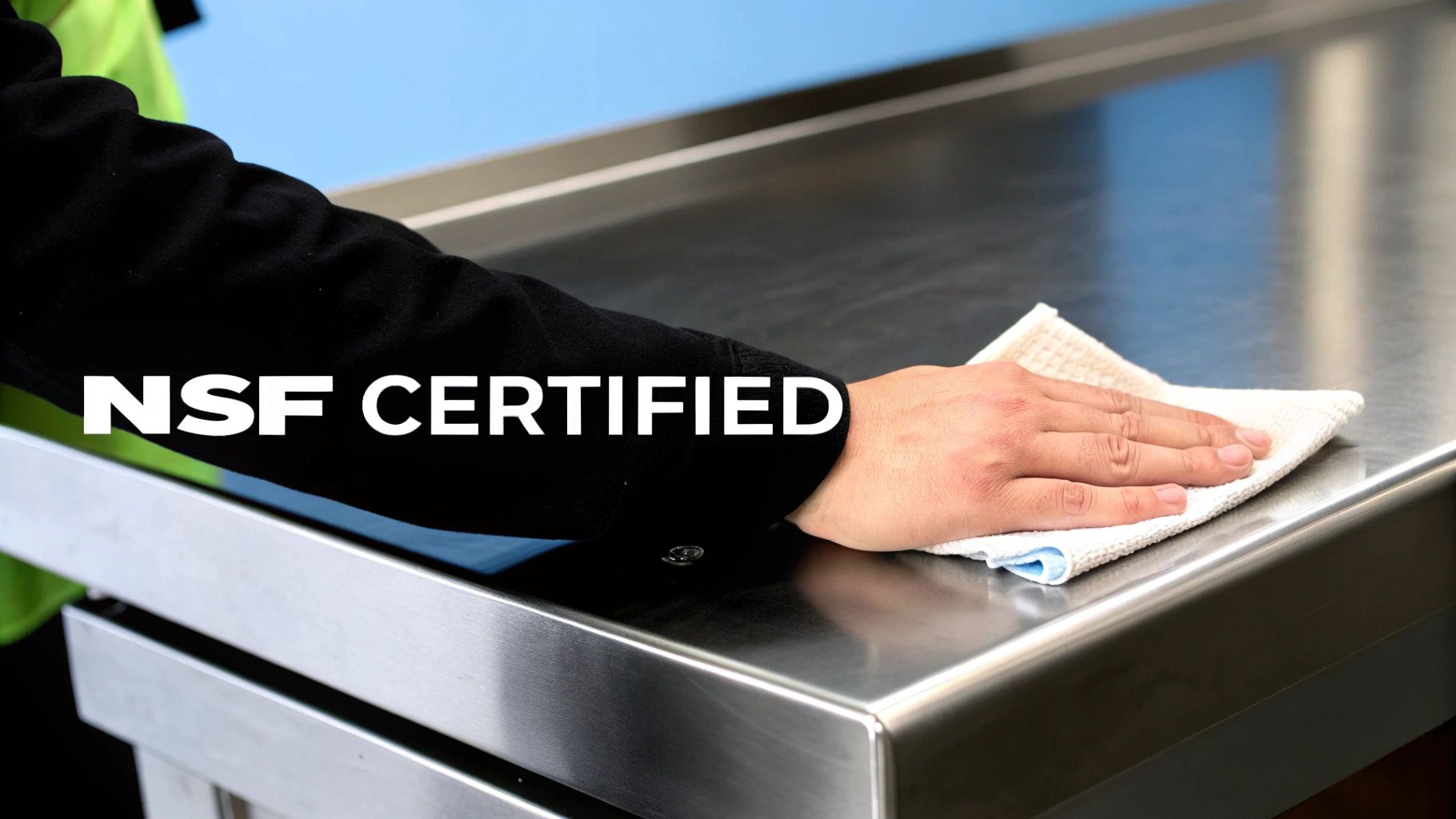
When you're outfitting your pizzeria, you'll see the letters NSF stamped on just about every quality piece of equipment. This isn't just a brand name or a fancy sticker; it's your proof that the gear—especially your commercial stainless steel countertops—meets tough standards for public health and safety.
Think of NSF certification as a health inspector's seal of approval, earned before the equipment even rolls into your kitchen.
For a pizzeria owner, that seal is a promise. It promises that your prep surfaces are designed from the ground up for maximum hygiene and dead-simple cleaning. Every inch of that countertop, from the steel it's made of to the way it's put together, has been tested to make sure it won't harbor bacteria or other nasty stuff. This is a huge deal when you’re constantly dealing with loose flour, bits of cheese, and splashes of sauce.
Why NSF Design Matters for Pizza Prep Tables
An NSF-certified countertop is engineered to get rid of all the little hiding spots where germs and old food particles love to hang out. It’s about more than just a smooth surface. It's a specific style of construction that makes sanitation a breeze, saving your crew precious time and effort during cleanup.
Two of the most important features you'll find in an NSF design are seamless welds and coved corners. These aren't just for looks; they're functional necessities for any serious pizza kitchen.
-
Seamless Welds: On a cheap, non-certified table, the seams where two pieces of steel meet can have tiny gaps or rough spots. Those crevices are the perfect home for old dough and moisture, creating a breeding ground for bacteria. NSF standards require all welds to be ground down and polished until they’re perfectly smooth, creating one solid, uninterrupted surface.
-
Coved Corners: Sharp, 90-degree corners, like you’d find in an integrated sink or along a backsplash, are a nightmare to clean properly. Coved corners are rounded and curved, eliminating those tight angles completely. A cleaning cloth can now wipe the entire surface in one smooth motion, leaving nowhere for old food to get trapped.
Investing in an NSF-certified pizza prep table isn't just about passing inspections. It's a proactive move to build a safer, more efficient kitchen that protects your customers, your staff, and your restaurant's reputation from day one.
The Practical Payoff of Superior Sanitation
Choosing NSF-certified commercial stainless steel countertops gives you real, tangible benefits you'll appreciate every single day. First off, a properly designed surface makes daily cleanup faster and more thorough. That means your staff spends less time scrubbing and more time making pizzas.
This superior cleanability is also a huge advantage when the health inspector shows up. You can be confident your surfaces are up to code.
Better yet, keeping these countertops in top shape is simple. The same cleaning methods you use for other stainless steel appliances in your kitchen work perfectly here. For some great pointers, check out our guide on the best ways to clean a stainless steel refrigerator; the tips apply just as well to your prep surfaces.
Ultimately, a clean and sanitary prep line prevents cross-contamination, cuts down the risk of foodborne illness, and ensures the fresh, delicious taste of your pizzas is never compromised. It’s a foundational investment in the quality and safety of everything you serve.
Designing an Efficient Pizza Prep Line
Picking the right grade and gauge for your stainless steel countertops is a huge first step, but their real magic happens when you build a smart workflow around them. For any pizzeria, the prep line is the heart of the whole operation. A well-designed line, built on a foundation of seamless stainless steel, can turn controlled chaos into a high-speed, money-making assembly line.
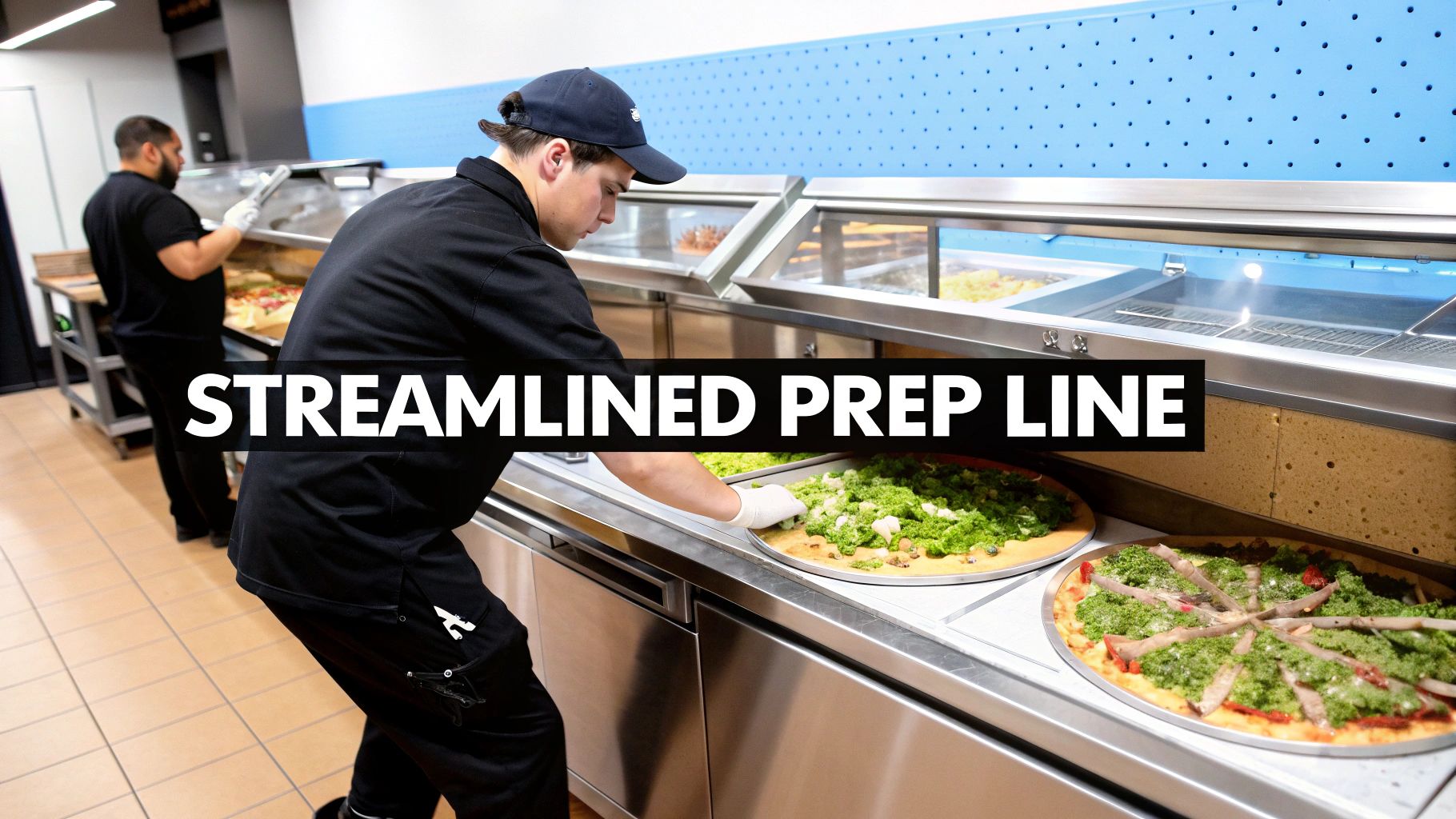
The goal here is simple: create one long, uninterrupted surface. This lets a pizza glide from one station to the next with your staff barely having to move. Shaving even a few seconds off every single order adds up fast, dramatically boosting how many pizzas you can crank out during your busiest hours. This is where custom stainless steel stops being a cost and starts becoming a powerful tool for efficiency.
Streamlining Operations with Custom Features for Pizza Making
Sure, standard prep tables are fine. But custom-fabricated countertops? They unlock a completely different level of productivity. By building essential equipment right into the work surface, you kill wasted steps and keep everything your pizza makers need just an arm's length away.
Think about these game-changing customizations for your pizza line:
- Integrated Topping Rails: This is a big one. Refrigerated topping rails get recessed directly into the countertop, keeping your cheese, pepperoni, and veggies perfectly chilled and ready to go. No more turning around or walking to a separate cooler for every topping.
- Built-in Under-Counter Refrigeration: Imagine a seamless countertop flowing perfectly over your under-counter fridges. This creates dedicated spots for backup ingredients or pre-portioned dough, right where you need them most.
- Custom Cutouts: A fabricator can create precise cutouts for things like dough trays or even chutes for waste disposal. This keeps the prep surface clear and organized, which means less clutter and much faster cleanup.
This kind of strategic thinking is fundamental to kitchen efficiency. If you want to dive deeper into maximizing your space, check out our detailed guide on commercial kitchen layout design.
A Real-World Pizza Line in Action
Picture a pizza moving down a single, continuous stainless steel surface. It starts at the dough station, where a pizzaiolo stretches the dough on the smooth, flour-dusted steel. From there, it slides just a couple of feet down the line to the topping station. Another team member sauces and tops it, pulling ingredients from the refrigerated rail that's built right in.
Finally, the finished pizza slides to the end of the line, landing right next to the oven. It gets launched without anyone taking more than a step or two.
This linear, ergonomic workflow is the secret sauce for high-volume pizza kitchens. By minimizing movement and keeping the process fluid, you shave precious seconds off every order. That's what lets your kitchen handle the dinner rush with speed and precision.
It’s no surprise that the demand for these efficient setups is growing. The global countertop market was recently valued at USD 131.42 billion and is expected to grow significantly, with commercial kitchens being a huge part of that expansion. You can see more about this growing market trend on congruencemarketinsights.com. This data just confirms that investing in well-designed stainless steel countertops isn't just a practical choice—it’s a smart business decision.
Budgeting for Your Pizzeria's Stainless Steel Countertops
Think of high-quality commercial stainless steel countertops not as just another line item on your equipment list, but as a foundational asset for your pizzeria. The initial price tag might seem higher than other materials, but that doesn't tell the whole story. This isn't an expense—it's a smart, one-time investment in the future efficiency and hygiene of your kitchen.
It’s all about looking at the total cost of ownership. Cheaper materials might save you a few bucks upfront, but they often kick off a painful cycle of costly repairs, constant maintenance, and eventual replacement. A well-chosen stainless steel prep table, on the other hand, is built to take decades of abuse from dough scrapers, hot pans, and constant cleaning without warping, staining, or falling apart.
Breaking Down the Key Cost Drivers for a Pizza Prep Table
The final number on your invoice is shaped by a few critical factors. Every choice you make, from the type of steel to the complexity of the design, will nudge your budget up or down. Once you get a handle on these variables, you can make informed decisions that match both your kitchen's needs and your bank account.
The biggest things that impact your cost are:
- Steel Grade and Gauge: Like we've covered, Type 304 steel is more expensive but absolutely essential for wet areas like your main pizza prep line. Going for a heavier 14-gauge thickness for maximum durability will also cost more than a 16-gauge alternative.
- Customization Complexity: A simple rectangular table will cost way less than a fully customized prep line with integrated refrigerated rails, welded-in sinks, and custom cutouts for dough trays. Every single weld and unique feature adds to the labor and fabrication costs.
- Installation: Don't forget about getting it in the door and set up. The complexity of the installation, site access, and whether you need professional fabricators for seamless on-site welds will all factor into the total price.
Understanding Price Ranges and Making Smart Investments
To budget effectively, it helps to know what things actually cost out in the real world. Stainless steel is a premium option, with prices generally running from USD 70 to USD 225 per square foot, which includes both the materials and professional installation. Custom countertops for a pizzeria’s specific workflow usually land in the higher end of that spectrum.
For a typical commercial kitchen, the average total cost comes in around USD 4,500, with most projects falling somewhere between USD 2,500 and USD 6,750. You can get a better sense of these cost breakdowns on angi.com.
The upfront cost of commercial stainless steel countertops is paid back over years of uninterrupted service. Their incredible durability and minimal maintenance needs prevent the costly downtime and replacement expenses that plague lesser materials, making them a financially sound choice for any serious pizzeria.
When you're mapping out your budget, it's a good idea to play around with tools like commercial construction cost calculators to get a more complete picture of what you might be spending.
Ultimately, the investment in stainless steel pays you back every single day. The time your staff saves on cleanup, the peace of mind that comes with superior sanitation, and the sheer longevity of the material add up to a huge return. It ensures your pizza prep line remains a reliable, high-performance asset for the entire life of your kitchen.
Pizzeria Countertop FAQs: Your Top Questions Answered
When you're running a busy pizzeria, the last thing you have time for is worrying about your prep surfaces. You just need them to work. Here are some quick, no-nonsense answers to the questions we hear most often from operators about their stainless steel pizza prep tables and workstations.
Can I Put a Hot Pizza Pan Directly on the Countertop?
Go for it. That's one of the biggest perks of having commercial-grade stainless steel in your kitchen. This stuff is built to take the heat. You can slide a pan straight from a 500°F deck oven onto the counter, and the steel won’t scorch, melt, or warp.
Sure, the spot where the pan was will get hot to the touch for a minute—it's steel, after all. But the surface itself will be completely unfazed. It’s a huge advantage in a fast-paced kitchen where you don't have time to hunt for a trivet or cooling rack.
How Do I Clean and Get Scratches Out of My Pizza Prep Table?
For the daily grime, just keep it simple: warm water, a little mild soap, and a soft cloth are all you need. The most important trick is to always wipe in the same direction as the brushed grain. This keeps the finish looking sharp and helps hide minor wear and tear. If you've got stubborn, crusted-on cheese or sauce, a plastic scraper will pop it right off without damaging the steel.
For those inevitable light scratches, a non-abrasive cleaner like Bar Keepers Friend is your best friend. Sprinkle a little on, and gently rub with the grain until the scratch starts to blend in.
Whatever you do, never use steel wool, abrasive scouring pads, or gritty cleansers. They’ll just dig deeper, permanent scratches into the surface, ruining the professional look of your pizza prep table for good.
What’s the Difference Between a Welded and a Mechanical Seam on a Prep Table?
This is a huge deal for both cleanliness and durability, so pay close attention. A welded seam is what you want—it's the gold standard for any food prep surface. This is where two pieces of steel are literally fused together, then ground down and polished until the seam is perfectly smooth and invisible. It’s the only way to get an NSF certification because it leaves absolutely zero cracks or crevices for bacteria and food gunk to hide in.
A mechanical seam, on the other hand, is just two pieces of metal butted up against each other, often with a bead of silicone sealant in the gap. Over time, that sealant will crack, peel, and become a magnet for grime. For any surface where you're making pizza or prepping food, you have to insist on fully welded and polished seams. It's non-negotiable for keeping your kitchen sanitary and making cleanup easy.
Ready to build a prep line that’s as tough and efficient as your crew? Check out our full lineup of NSF-certified refrigerated pizza prep tables and workstations at Pizza Prep Table. We carry the best brands and have the expertise to help you design a kitchen that’s built for the long haul. Find the perfect pizza prep table for your restaurant today!