

Commercial Upright Fridges for Sale: Find Your Perfect Match
Why Your Commercial Kitchen Needs the Right Upright Fridge

A commercial upright fridge is a vertical refrigeration unit designed for high-volume food storage in restaurants, cafes, and other foodservice businesses. These units provide organized, easily accessible cold storage while maximizing limited floor space—making them essential for busy commercial kitchens.
Quick Guide to Shopping for Commercial Upright Fridges:
| Feature | What to Look For |
|---|---|
| Capacity | 25-74 cu. ft. depending on kitchen size |
| Door Type | Solid doors (energy efficient) or glass doors (merchandising) |
| Temperature Range | 32°F - 46°F for food safety compliance |
| Construction | Stainless steel (AISI 304) for durability |
| Energy Rating | ENERGY STAR certified models preferred |
| Compressor | Top-mount (easier maintenance) or bottom-mount (heat management) |
When you're opening your first pizzeria or managing a small restaurant, choosing the right refrigeration can feel overwhelming. You're juggling a tight budget, limited kitchen space, and the critical need to keep ingredients fresh while meeting food safety standards. Commercial upright fridges solve these challenges by providing reliable cold storage in a space-saving vertical design.
Unlike residential units, commercial upright fridges are built for the demands of a busy kitchen—they recover temperature quickly after frequent door openings, feature heavy-duty construction, and comply with NSF food safety standards. Whether you need a single-door reach-in for a compact kitchen or a glass door merchandiser to display grab-and-go items, there's a model designed for your specific needs.
The market offers various options, from basic solid-door reach-in refrigerators (starting around 25 cu. ft.) to larger multi-door units (up to 74 cu. ft.) and specialized models like pass-thru designs for connecting prep and service areas. Modern units also feature energy-efficient LED lighting, digital temperature controls, and eco-friendly refrigerants like R290.
I'm Sean Kearney, and I've spent years helping restaurant owners find equipment that matches their operational needs and budget constraints. My experience in sales and deep understanding of the foodservice industry has shown me how the right commercial upright fridge can dramatically improve kitchen efficiency and food preservation.
Why an Upright Fridge is Essential for Your Commercial Kitchen
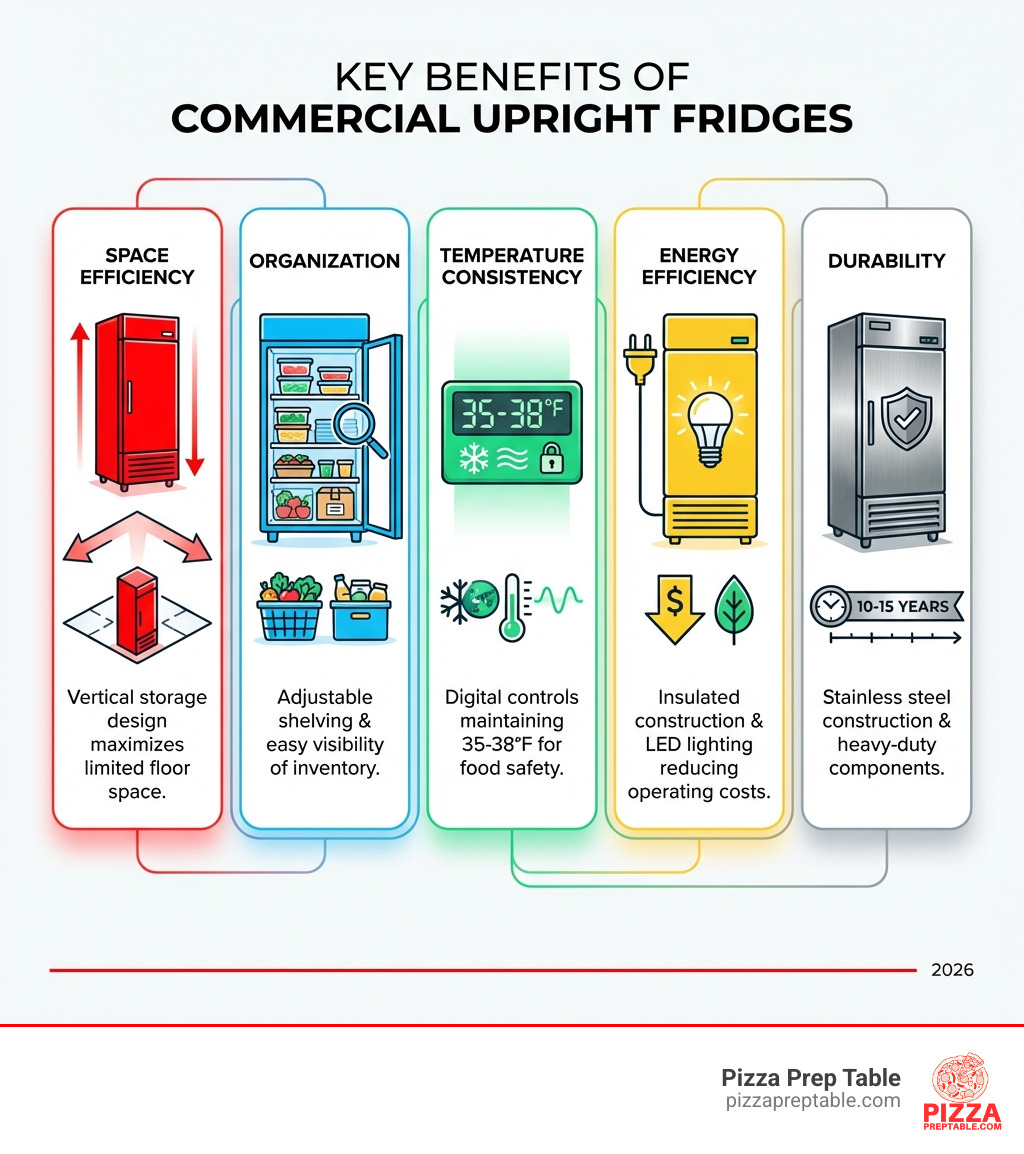
In the world of foodservice, every inch of kitchen space counts. That's where a commercial upright fridge truly shines. Its vertical design is a masterclass in space optimization, allowing us to store a significant volume of ingredients without sprawling across valuable floor area. Imagine the difference this makes in a compact kitchen in New York City or a busy restaurant in Los Angeles, where square footage is always at a premium.
This vertical storage isn't just about saving space; it's about smart organization and easy access. With adjustable shelving, we can arrange ingredients systematically, ensuring that everything from fresh produce to prepared sauces is visible and within easy reach. This streamlines our workflow, cutting down on the time staff spend searching for items and ultimately boosting overall kitchen efficiency. For an extensive guide on optimizing your kitchen, check out our insights on Commercial Fridge Shopping Made Easy and Cool.
Compared to other refrigeration options, a commercial upright fridge offers distinct advantages. While chest freezers might be good for bulk, long-term storage, they often lead to a "digging" expedition for items at the bottom, disrupting organization and wasting precious time. Undercounter units are excellent for specific workstations, like a sandwich prep line, but their limited capacity means they can't handle the bulk storage needs of a busy kitchen. A commercial upright fridge, however, acts as the central hub for most perishable ingredients, providing ample, organized storage that supports a constant flow of service.
These units are ideal for a wide array of commercial settings. Restaurants rely on them for daily ingredient storage, keeping everything from meats to dairy fresh. Cafes use them to hold milk, pastries, and grab-and-go items. For pizzerias, they're indispensable for storing cheeses, sauces, and fresh toppings. Bakeries find them perfect for chilling doughs, creams, and finished products. In any commercial setting where food safety, efficient operations, and maximum storage in a minimal footprint are paramount, the commercial upright fridge is an essential piece of equipment. You can find more information on selecting the best refrigeration for your business in our guide to the Best Commercial Fridge and in general industry resources like the Commercial Refrigerator overview.
Key Features to Look for in a Commercial Upright Fridge
When investing in a commercial upright fridge, we're not just buying an appliance; we're making a long-term commitment to our business's efficiency, food safety, and bottom line. The right choice can provide immense value, while a hasty decision can lead to operational headaches and unexpected costs. So, what should we look for to ensure we find the perfect match for our unique business needs and kitchen layout?

Choosing the Right Capacity and Shelving for Your Needs
Capacity is perhaps the most immediate consideration. Commercial upright fridges come in a range of sizes, typically measured in cubic feet (cu. ft.) or liters. We'll find single-door units, often around 23-25 cu. ft., which are perfect for smaller operations or as supplementary storage. Double-door units, ranging from 49 cu. ft. to 74 cu. ft., offer significantly more space and are a common choice for medium to large kitchens. Some specialized models even offer triple-door configurations for maximum storage.
Before making a decision, consider your kitchen's footprint and how the fridge will fit into your existing layout. Will a wider double-door unit impede traffic flow, or would multiple single-door units be more practical? Think about not just your current needs but also your anticipated growth.
Beyond sheer volume, the interior configuration is crucial. Look for commercial upright fridges with adjustable shelves. This flexibility allows us to customize the interior to accommodate various ingredient sizes, from tall beverage bottles to large food pans. Wire shelving is standard, offering good air circulation, but some units may also support pan slides, which are excellent for organizing ingredients in standard food pans. Regardless of the type, ensure the shelving is heavy-duty and designed to withstand the weight of commercial use. For food safety, we always recommend units that boast NSF certification, ensuring they meet strict public health standards.
Temperature Control, Humidity, and Food Preservation
Maintaining precise and consistent temperatures is non-negotiable in commercial food storage. A high-quality commercial upright fridge will feature a digital thermostat, allowing for accurate temperature setting and monitoring. The ideal temperature range for most perishable foods in a commercial fridge is between 35°F and 38°F (approximately 2°C to 8°C). This range is critical for adhering to food safety standards and keeping food out of the "danger zone" (40°F - 140°F), where bacteria multiply rapidly.
Our research highlights models with temperature ranges from 32-50°F (0-10°C) for refrigeration areas and even down to ≤5°F (≤-15°C) for freezing, underscoring the importance of precise control. Some units can maintain temperatures between 28°F and 46°F. It's vital to choose a unit that can consistently hold these temperatures, even with frequent door openings. The FDA provides comprehensive guidelines on food safety, emphasizing proper temperature control for businesses. You can access Scientific research on Food Safety for Businesses to deepen your understanding, or refer to this detailed Food Safety Chart from the U.S. Food & Drug Administration.
Humidity management and effective air circulation also play a significant role in food preservation. Good air circulation prevents hot spots and ensures even cooling throughout the cabinet, which is especially important for delicate items. While specialized crisper drawers are more common in residential units, some commercial models may offer features that help manage humidity to extend the shelf life of fresh produce or prevent items from drying out.
Energy Efficiency and Operating Costs
In today's economic climate, operating costs are a major concern for any business owner. An energy-efficient commercial upright fridge can lead to substantial savings over its lifespan. We always recommend looking for models with an ENERGY STAR rating, which signifies that the unit meets strict energy efficiency guidelines set by the EPA. For more information on how these ratings benefit your business, explore More info about ENERGY STAR Commercial Refrigerators.
Key factors contributing to energy efficiency include the compressor's efficiency, the quality of insulation (some models boast 50mm high-density insulation), and the integrity of gasket seals around the doors. Even small details like LED lighting inside the fridge contribute to energy savings, as LEDs produce less heat and consume less power than traditional bulbs. We've seen that features like a 1/2 split door system can lower yearly running costs by up to 30%, which is a significant saving for any busy kitchen.
Considering that commercial upright fridges are often one of the largest energy consumers in a commercial kitchen, prioritizing energy efficiency is a smart financial decision. If you're looking to upgrade your equipment and need assistance with the initial investment, we offer various solutions for More info about our financing options.
Compressor Location: Top-Mount vs. Bottom-Mount
The location of the compressor in a commercial upright fridge might seem like a minor detail, but it has significant implications for performance, maintenance, and even ergonomics in your kitchen.
Top-mount compressors are situated on top of the unit. This placement keeps them away from floor-level dust and debris, which can clog condenser coils and reduce efficiency. They tend to draw in cooler air from higher up in the kitchen, which can be beneficial in hot environments like a busy kitchen in Houston or Phoenix. However, cleaning the condenser coils can be more challenging, often requiring a step stool.
Bottom-mount compressors, on the other hand, are located at the bottom of the unit. This position makes them easier to access for cleaning and maintenance, as the coils are closer to the ground. They also allow for the bottom shelf inside the fridge to be at a more ergonomic height, reducing bending for staff. However, they are more susceptible to drawing in floor-level dust and grease, which means more frequent cleaning is necessary to maintain efficiency. In very hot kitchens, they might also work harder as they draw in warmer air.
Choosing between the two often comes down to your kitchen's specific conditions and your maintenance philosophy.
| Feature | Top-Mount Compressor | Bottom-Mount Compressor |
|---|---|---|
| Air Intake | Draws cooler air from higher up | Draws warmer air from floor level |
| Maintenance Access | More challenging to reach for cleaning | Easier to reach for cleaning |
| Dust/Debris | Less susceptible to floor dust | More susceptible to floor dust/grease |
| Ergonomics | Bottom shelf lower, more bending | Bottom shelf higher, less bending |
| Heat Impact | Less affected by floor-level heat | Can be more affected by floor-level heat |
Innovations in Commercial Upright Fridge Technology
The world of commercial refrigeration isn't static; it's constantly evolving with new technologies aimed at improving efficiency, convenience, and food safety. Modern commercial upright fridges are integrating smart features that allow for remote temperature monitoring, giving us peace of mind even when we're not physically in the kitchen. Imagine getting an alert on your phone if the temperature in your Chicago pizzeria's fridge starts to rise.
Self-cleaning condensers are another fantastic innovation, reducing the frequency of manual cleaning and ensuring the unit operates at peak efficiency. This can save valuable labor time and extend the lifespan of the equipment.
The industry is also moving towards more eco-friendly options, particularly with refrigerants. Many new commercial upright fridges use hydrocarbon refrigerants like R290, which are highlighted in our research as environmentally friendly. These refrigerants have a much lower global warming potential compared to older HFC refrigerants, aligning with our commitment to sustainability. For a broader overview of this refrigerant type, see the background on Propane (R290) refrigerant.
Furthermore, we're seeing the rise of IoT connectivity in kitchen equipment, allowing for data collection on performance, energy consumption, and predictive maintenance. While not yet ubiquitous, these trends promise an even smarter, more efficient future for commercial kitchens.
Types of Commercial Upright Fridges
Just as every kitchen has its unique needs, there's a specific type of commercial upright fridge designed to meet them. Understanding these different categories helps us choose the right tools to optimize our kitchen workflow and customer experience. Whether it's for back-of-house storage or front-of-house display, there's a perfect match waiting.
Reach-In Refrigerators
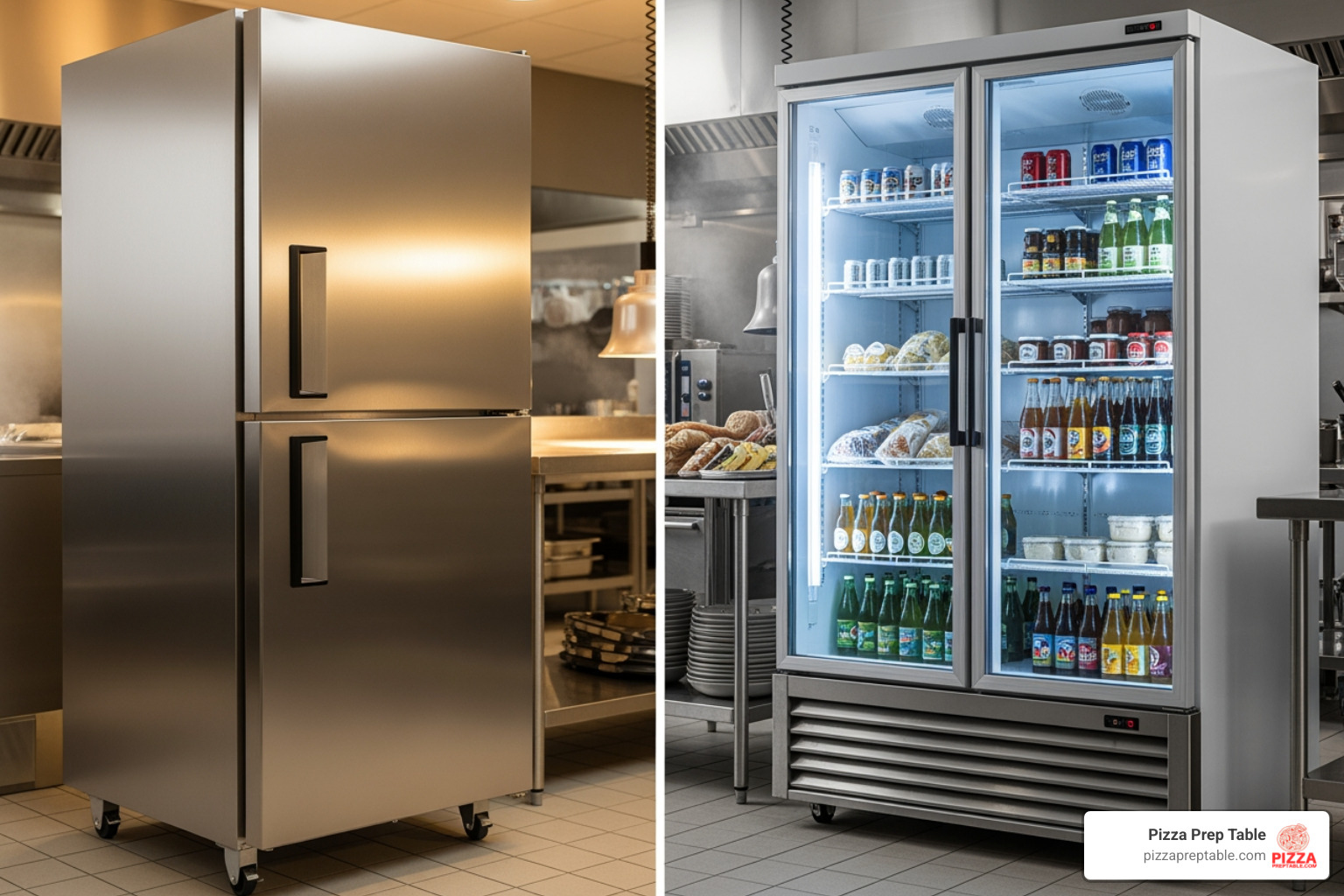
These are the workhorses of any commercial kitchen, found in the back-of-house areas of restaurants, pizzerias, and catering operations across cities like Atlanta and Dallas. Reach-in refrigerators are primarily designed for efficient, large-volume storage of ingredients. They typically feature solid doors, which offer superior insulation and energy efficiency compared to their glass-doored counterparts.
Their construction is built for durability, often utilizing high-grade stainless steel (like AISI 304) for both interior and exterior surfaces. This material is not only robust and easy to clean but also resistant to corrosion, standing up to the demanding environment of a busy kitchen. With various sizes available, we can find single-door units (e.g., 23 cu. ft. or 25 cu. ft.), double-door units (e.g., 49 cu. ft.), and even larger multi-door models (e.g., 74 cu. ft.). These capacities ensure that whether you're running a small cafe in San Francisco or a large restaurant in Washington, D.C., you have ample space to keep your ingredients fresh and organized along your food prep lines.
Glass Door Merchandisers
When the goal is to showcase products and encourage impulse buys, a commercial upright fridge with glass doors, known as a merchandiser, is the ideal choice. These units are designed for front-of-house display and customer self-service, commonly found in convenience stores, cafes, and grab-and-go sections in places like Boston and Seattle.
Key features of glass door merchandisers include bright interior LED lighting to make products visually appealing, and often anti-fog glass to ensure clear visibility even in humid environments. Some even come with customizable illuminated signage on top, offering an excellent opportunity for branding or advertising daily specials. These units are perfect for displaying beverages, pre-packaged meals, salads, and desserts, turning your refrigeration into a silent salesperson.
Pass-Thru and Roll-In Models
For kitchens that prioritize extreme efficiency and seamless workflow, specialized commercial upright fridges like pass-thru and roll-in models are game-changers.
Pass-thru refrigerators offer dual-sided access, meaning they can be loaded from one side (e.g., the prep area) and unloaded from the other (e.g., the service line). This design minimizes traffic congestion in busy kitchens and connects different work zones efficiently. Imagine a chef in Las Vegas loading fresh ingredients into a pass-thru unit from the prep station, and the line cooks retrieving them directly from the other side, without ever crossing paths.
Roll-in models are designed to accommodate rolling racks of food, which can be wheeled directly from a blast chiller or oven into the refrigerator. This feature is particularly valuable for high-volume operations such as large institutions, catering companies, or bakeries in Philadelphia that produce large batches of items like sheet cakes or proofed dough. The U-Line 35.8 cu ft Roll-Thru Commercial Refrigerator, for example, highlights its "roll-thru" design for efficient workflow by enabling access from both sides, enhancing kitchen efficiency. These models save significant time and labor by eliminating the need to transfer individual items.
Maintenance and Cleaning Best Practices
A commercial upright fridge is a significant investment, and like any critical piece of equipment, its longevity and optimal performance depend heavily on proper maintenance and cleaning. Neglecting these practices not only shortens the unit's lifespan but can also lead to costly breakdowns, higher energy bills, and, most importantly, compromises in food safety. Keeping your fridge pristine is crucial for passing health inspections and ensuring the quality of your ingredients.
Daily, Weekly, and Monthly Cleaning Checklist
We've found that a consistent cleaning schedule is the best defense against grime and inefficiency. Here’s a checklist we recommend for maintaining your commercial upright fridge:
-
Daily:
- Wipe down all interior surfaces and shelves with a food-safe sanitizer.
- Clean the exterior, especially door handles, to remove fingerprints and spills.
- Check and empty the drip tray if it's accessible and needs it.
- Verify that the fridge temperature is within the safe range (35°F - 38°F) and log it.
-
Weekly:
- Perform a more thorough interior cleaning, removing all items and scrubbing shelves, walls, and the floor of the unit.
- Clean door gaskets with warm, soapy water to remove food debris and ensure a tight seal. A damaged or dirty gasket can lead to cold air leaks and increased energy consumption.
- Polish stainless steel exteriors to maintain their appearance.
-
Monthly (or as needed):
- Empty and clean the drain pan thoroughly to prevent mold and odors.
- Inspect the power cord for any damage or fraying.
- Check the door hinges and latches for proper function and tighten if necessary.
For more detailed tips on keeping all your kitchen equipment in top shape, visit our comprehensive guide to More info about equipment maintenance.
Essential Technical Maintenance
Beyond routine cleaning, certain technical maintenance tasks are crucial for the long-term health of your commercial upright fridge. These are often overlooked but are vital for preventing breakdowns and ensuring energy efficiency.
One of the most critical tasks is condenser coil cleaning. These coils, whether top-mounted or bottom-mounted, accumulate dust, grease, and debris from the kitchen air. When clogged, the compressor has to work harder, consuming more energy and risking overheating. We recommend cleaning the condenser coils every 1 to 3 months, depending on the kitchen environment. A stiff brush or vacuum cleaner can effectively remove buildup.
Regularly inspecting fan blades (both evaporator and condenser fans) for any obstructions or signs of wear is also important. Properly functioning fans ensure adequate airflow for cooling. We also check refrigerant levels periodically, although this typically requires a qualified technician. Low refrigerant can indicate a leak, leading to inefficient cooling and potential compressor damage. Finally, door seal replacement is necessary if gaskets become cracked, torn, or lose their elasticity, as this directly impacts temperature maintenance and energy use. Establishing a professional servicing schedule with a reputable refrigeration technician for annual or semi-annual check-ups can catch minor issues before they become major problems.
Frequently Asked Questions about Commercial Upright Fridges
We often hear similar questions from our clients in cities like San Diego, Austin, and Denver when they're looking for the perfect commercial upright fridge. Let's address some of the most common ones.
What temperature should a commercial upright fridge be?
For optimal food safety and preservation, a commercial upright fridge should consistently maintain an internal temperature between 35°F and 38°F (approximately 1.7°C to 3.3°C). This range is crucial because it keeps perishable foods out of the "danger zone," which is between 40°F and 140°F (4.4°C and 60°C). Within this danger zone, bacteria can multiply rapidly, making food unsafe to consume.
The FDA provides strict guidelines on cold holding temperatures for foodservice establishments. We recommend using a reliable thermometer to monitor the internal temperature daily and keeping a temperature log. Many modern commercial upright fridges come with digital thermostats that allow for precise temperature setting and display, making monitoring easier.
What is the difference between a commercial and a residential refrigerator?
While both types of appliances cool food, the differences between a commercial upright fridge and a residential one are vast, reflecting their intended use:
- Durability and Construction: Commercial fridges are built to withstand the rigorous demands of a busy kitchen. They feature heavy-duty components, robust stainless steel construction (like AISI 304), and reinforced hinges, designed for constant opening and closing. Residential fridges use lighter materials for home use.
- Cooling Power and Recovery Time: Commercial units have more powerful compressors and larger evaporators to handle frequent door openings and maintain consistent temperatures, even when heavily loaded. They recover temperature much faster than residential units.
- Capacity: Commercial fridges offer significantly greater storage capacity, with sizes ranging from 23 cu. ft. to over 74 cu. ft., designed to hold large quantities of bulk ingredients and standard food pans.
- Food Safety Standards: Commercial upright fridges must meet strict health and safety standards, such as NSF/ANSI Standard 7 compliance, which residential units do not. This certification ensures the materials, design, and performance are suitable for safe food storage in a commercial setting.
- Energy Consumption: While commercial units are more powerful, many modern models are designed to be energy-efficient (e.g., ENERGY STAR certified) to manage higher operating costs. However, their energy consumption will generally be higher than a small residential fridge due to their size and cooling demands.
- Cost: Due to their specialized construction, improved cooling capabilities, and compliance requirements, commercial fridges are significantly more expensive than residential models.
How long do commercial refrigerators last?
A well-maintained commercial upright fridge can be a long-term asset for your business. On average, commercial refrigerators are designed to last between 10 to 15 years. However, several factors can significantly impact this lifespan:
- Brand Quality: Reputable brands known for commercial-grade equipment often produce units with longer lifespans due to superior materials and engineering.
- Maintenance Impact: Regular and proper maintenance is perhaps the most crucial factor. Diligent cleaning of condenser coils, checking door seals, and timely professional servicing can add years to a unit's life. Neglect can cut its lifespan in half.
- Usage Intensity: A fridge in a high-volume restaurant in New York City that sees constant opening and closing will naturally experience more wear and tear than one in a smaller, less busy cafe.
- Warranty: A strong warranty (some hydrocarbon units offer 7 years on labor, parts, and compressor) can provide peace of mind and protect your investment against premature failure.
- Signs of Failure: Watch out for consistent temperature fluctuations, unusual noises, excessive energy consumption, or frequent breakdowns. These are often signs that your fridge is nearing the end of its useful life and may need replacement.
Conclusion
Choosing the right commercial upright fridge is a pivotal decision for any foodservice operation, from a busy pizzeria in Philadelphia to a gourmet cafe in San Antonio. We've explored the essential features, diverse types, and critical maintenance practices that ensure your investment delivers long-term benefits. From maximizing precious kitchen space and streamlining workflow to rigorously maintaining food safety standards and managing energy costs, the right upright fridge is more than just a cooling unit—it's a cornerstone of your operational success.
Understanding factors like capacity, shelving, precise temperature control, energy efficiency, and compressor location empowers us to make an informed choice that aligns perfectly with our business needs. And with innovations like eco-friendly refrigerants and smart monitoring, these essential appliances are only getting better.
At PizzaPrepTable.com, we understand the unique challenges and demands of the restaurant industry. We're here to provide expert advice and quality equipment, whether you're outfitting a new kitchen or upgrading existing appliances. We offer a wide selection of pizza prep tables and other restaurant equipment, and we're committed to helping businesses thrive. Don't hesitate to Contact us for personalized recommendations to find your perfect match.