

Equipment Financing for Your Pizza Restaurant
Every sizzling pizza that slides out of your oven and onto a customer's plate starts with reliable equipment. For any pizzeria owner, equipment financing isn't just a loan; it's a strategic tool for growth. It lets you get your hands on a high-performance pizza prep table or deck oven without completely draining your cash reserves. Think of it as the smart way to build the pizza kitchen of your dreams from day one.
Why Smart Equipment Financing is a Pizzeria's Secret Ingredient
Let's be real: starting or expanding a pizza restaurant is a capital-intensive venture. The right gear—from the mixer that perfects your dough to the refrigerated pizza prep table keeping ingredients fresh—is the engine of your entire operation. But pouring all your cash into these assets can leave you dangerously exposed, with little left for payroll, pizza boxes, or the inevitable surprise repair.
This is where smart equipment financing for your pizza restaurant becomes one of the most important decisions you'll make. It’s a growth lever, not a liability. By financing big-ticket items like a pizza prep table, you protect your most valuable resource: working capital. That cash can then go toward marketing your grand opening, hiring a great team, or just giving you a safety net for that unexpectedly slow Tuesday night.
Building an Efficient and Competitive Pizzeria
A well-equipped pizza kitchen has a direct impact on your bottom line. It’s simple. An efficient pizza prep table, for instance, streamlines your workflow, letting your team crank out pies faster during the dinner rush. That boost in productivity means more orders filled, happier customers, and more money in the bank.
Financing gives you immediate access to this top-tier gear, handing you a competitive edge right out of the gate. Instead of settling for an older, less reliable pizza oven that might break down at the worst possible moment, you can invest in new, warrantied machinery that just works.
This approach helps you:
- Improve Pizza Quality: Consistent oven temperatures and reliable refrigeration in your pizza prep table lead to a better, more consistent final product. Customers notice.
- Increase Operational Speed: A well-designed pizza prep station can seriously cut down on ticket times.
- Reduce Long-Term Costs: Newer equipment is almost always more energy-efficient, which means lower monthly utility bills for your pizzeria.
"Financing empowers pizzeria owners to think bigger. It transforms a massive upfront expense into a manageable monthly payment, aligning the cost of the equipment with the revenue it generates over its lifespan."
The demand for modern kitchen tech isn't slowing down. The global restaurant equipment market hit around USD 92.89 billion in 2024 and is projected to climb to USD 206.07 billion by 2035. That's a clear signal that the industry is committed to upgrading. With a typical replacement cycle of 5 to 7 years for heavy-use items like pizza prep tables, financing becomes a sustainable way to keep your kitchen current.
Ultimately, choosing the right equipment financing for your pizza restaurant is as fundamental as choosing the right flour for your dough. It’s a foundational decision that gives your pizzeria the stability it needs to scale, adapt, and become that beloved neighborhood spot. For a deeper look into the specifics, check out our guide on restaurant equipment financing for more details.
Navigating Your Pizzeria Financing Options
When that old deck oven finally gives up the ghost or you realize a new pizza prep table is the only way to survive Friday night rushes, you’ll find yourself looking at financing options. It can feel a little overwhelming, like a menu with too many choices, but it really boils down to a handful of paths. Each one impacts your cash flow and long-term goals differently, so understanding them is key to making a smart investment in your pizza kitchen.
And you're not alone. The demand for better gear is heating up. The global foodservice equipment market is expected to jump from USD 46 billion in 2025 to a whopping USD 73 billion by 2035. That growth is being driven by pizza restaurants just like yours needing modern, efficient tools to keep up. This makes finding the right financing more critical than ever. You can dig into the numbers in the full report on the foodservice equipment market.
The Classic Route: Equipment Loans
A traditional equipment loan is about as straightforward as it gets. You borrow a lump sum from a bank or online lender to buy your pizza equipment outright, then pay it back in fixed monthly installments. Simple.
From day one, that pizza prep table is yours. It’s an asset on your books, which is great for building equity and lets you claim depreciation on your taxes. This path is perfect for established pizzerias with solid credit who are in it for the long haul. The catch? You’ll likely need a down payment and have to go through a more rigorous application process.
This little decision tree shows the first fork in the road you'll face when you know you need new equipment for your pizzeria.
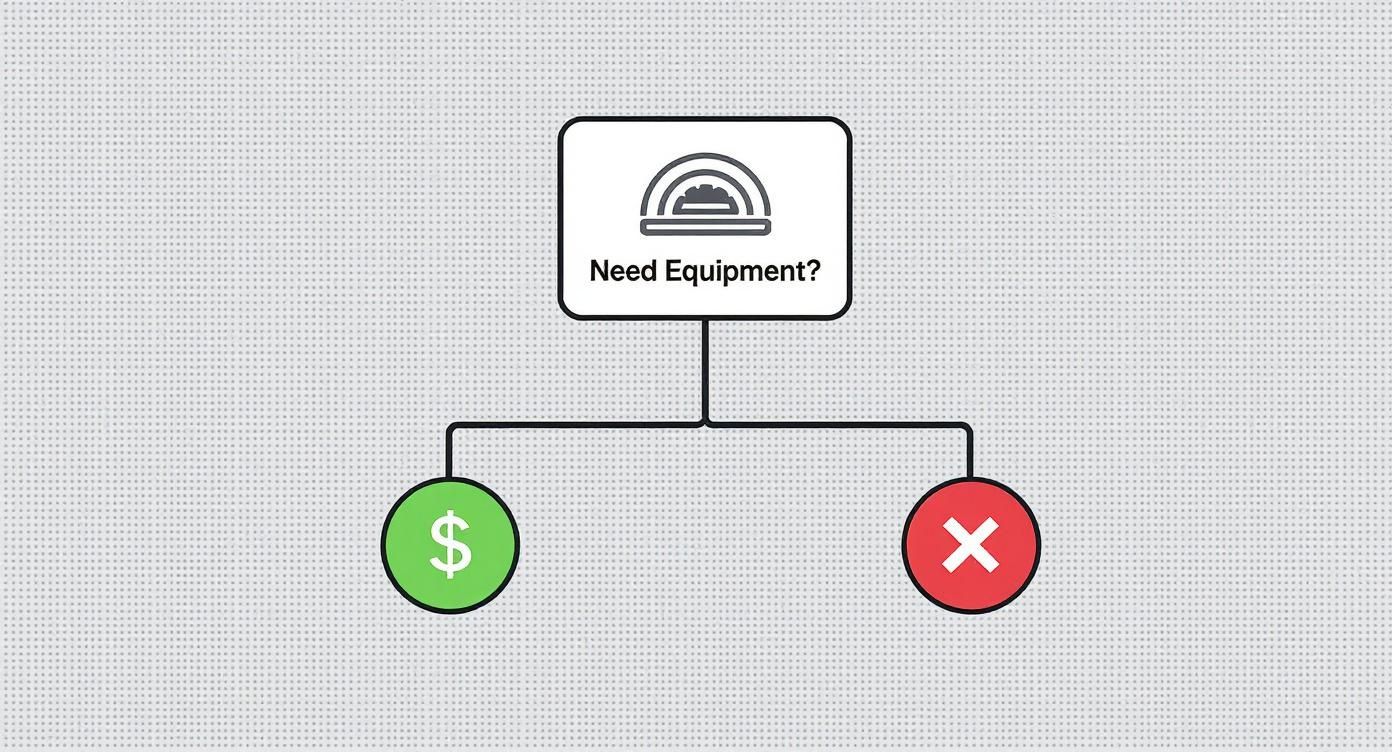
Once you decide "yes," the next immediate step is figuring out how to pay for it.
Understanding the World of Leasing
If you'd rather keep your cash in hand and avoid a big upfront cost, leasing is a fantastic option for your pizzeria. It gives you a lot more flexibility than a loan. Think of it less like buying a house and more like a long-term rental with some serious perks. You'll mainly run into two types.
Operating Leases
This is a true rental. You use the pizza prep table for a set term—say, 36 months—and make regular payments. When the lease is up, you can return the equipment, renew the lease, or sometimes buy it at its current market value.
It's a great fit for pizzerias that want to keep their equipment up-to-date and sidestep the headaches of ownership and repairs. Plus, it keeps the asset off your balance sheet, which can be a nice accounting advantage.
Capital Leases (Lease-to-Own)
This one feels like a rental but is really a path to ownership. The payments are usually a little higher than an operating lease, but at the end of the term, you can buy the pizza prep table for a symbolic amount—often just $1.
This is a popular middle-ground solution, especially for new pizzerias or anyone who wants the tax benefits of ownership without the steep entry cost of a loan.
For a new pizzeria, a capital lease on a 93-inch pizza prep table is a game-changer. It turns a potential $8,000 cash expense into a manageable monthly payment of a few hundred dollars, freeing up critical capital for inventory and marketing during the crucial launch phase.
Specialized Financing Avenues
Beyond the standard loans and leases, there are a couple of other powerful options that are tailored for specific situations. If you know where to look and how to qualify, these can offer some unique advantages for your pizza restaurant.
SBA Loans
Backed by the U.S. Small Business Administration, SBA loans are known for their great terms, like lower interest rates and longer repayment periods. They're a fantastic tool for major purchases, like a full pizzeria kitchen build-out.
But here’s the trade-off: the application process is famously tough. You'll need a detailed business plan, strong credit, and a good deal of patience. They aren't a quick fix, but for a well-prepared pizzeria owner, the amazing terms can be more than worth the effort.
Vendor Financing
Sometimes the simplest path is the most direct. Many equipment suppliers—including us here at Pizza Prep Table—offer their own in-house financing or lease-to-own programs. This is often the fastest way to get approved because the vendor already understands the value of the asset you're financing, like a specific pizza prep table.
The terms can be very competitive, and the process is typically much simpler than dealing with a traditional bank. It's an excellent choice when you've already picked out a specific brand of pizza prep table and just want to get it into your kitchen fast.
Comparing Pizzeria Equipment Financing Options
To help you see how these options stack up, we've put together a quick comparison table. Think of this as your cheat sheet for figuring out which financing route best fits your pizzeria's immediate needs and long-term vision.
| Financing Type | Ownership at End of Term | Typical Upfront Cost | Best For | Example Scenario |
|---|---|---|---|---|
| Equipment Loan | Yes | 10-20% down payment | Established pizzerias with strong credit wanting to build equity. | An 8-year-old pizzeria with good cash flow buys a $15,000 deck oven to own it for the next decade. |
| Operating Lease | No | First and last month's payment | Pizzerias wanting low monthly payments and the ability to upgrade equipment every few years. | A trendy pizzeria leases a high-tech conveyor oven, planning to swap it for a newer model in 3 years. |
| Capital Lease (Lease-to-Own) | Yes (for $1) | First and last month's payment | New pizzerias or those wanting ownership benefits with minimal upfront cash. | A brand-new shop gets a $7,000 pizza prep table for a low monthly fee, owning it after 48 months. |
| SBA Loan | Yes | Can be as low as 0-10% | Major investments like a full pizzeria kitchen build-out, for those who can handle the long application process. | A growing pizzeria secures an SBA loan to fund a $100,000 expansion, including all new equipment. |
| Vendor/In-House Financing | Varies (often lease-to-own) | Often just the first payment | Pizzerias that need equipment quickly and prefer a simplified, direct approval process. | A pizzeria owner picks out a prep table and gets approved for financing directly through the supplier same-day. |
Ultimately, there’s no single "best" option—only the one that’s best for your pizzeria. A new shop prioritizing cash flow will have very different needs than an established restaurant focused on building assets. Use this table to start the conversation and weigh what matters most for your business right now.
Preparing an Application Lenders Will Approve
Getting a "yes" on that equipment loan isn't just about filling out forms. It’s about convincing a lender that your pizzeria is a smart, low-risk investment. A well-organized, compelling application is often the difference between getting denied and landing a great low rate on that new pizza prep table.
Think of it this way: you're creating a mini business plan for a single piece of pizza equipment. You need to tell a clear story backed by solid numbers that proves this purchase will make you more money. It has to be professional, thorough, and convincing.
Gathering Your Essential Documents
Before you even pick up the phone to call a lender, get your financial house in order. Walking in with everything ready to go shows you’re a serious pizzeria operator, which builds immediate trust.
Lenders need to see a detailed financial history. Getting your documents lined up can be a pain, but tools for converting bank statements to Excel can make organizing the numbers a lot easier.
Here's the core checklist of what you'll need:
- Business Plan: This doesn't have to be a novel. A one-page summary covering your pizzeria's concept, target market, and what makes your pizza special will do the trick.
- Financial Statements: Be ready with at least two years of profit and loss (P&L) statements and balance sheets. If you're a startup, you'll need detailed financial projections instead.
- Tax Returns: Two to three years of both personal and business tax returns are standard.
- Bank Statements: Most lenders want to see the last three to six months of business bank statements to get a real-world look at your cash flow.
- Equipment Quote: You'll need a formal quote from the supplier for the specific pizza prep table or oven you want to finance.
Building a Narrative Beyond the Numbers
While the documents are non-negotiable, lenders are also investing in you. They need to believe you're an operator who can turn this new pizza prep table into revenue. This is your chance to build a case that goes beyond the raw data.
Your credit score is a big piece of the puzzle. A personal score of 650 is often the minimum to even get in the door, but a score closer to 700 will unlock much better terms for your pizzeria. Don't panic if your score isn't perfect; a strong story and solid business case can help make up for it. Be prepared to talk about your experience in the pizza industry and highlight your past successes.
Lenders are much more likely to approve a loan for a new pizza prep table if you can show them exactly how it will increase output. Try this: "Adding a 93-inch table will let us put a second pizzaiolo on the line during peak hours. That means we can handle 50 more pizzas a night, boosting revenue by an estimated $1,200 a week."
Creating a Compelling Business Case for Your Pizza Prep Table
This is where you connect the dots for the lender. Don't just tell them you need a new pizza prep table—show them why and how it will directly make your pizzeria more profitable. Get specific.
Your business case should lay out a clear problem-solution-impact story:
- The Problem: "Our current 48-inch prep table is a bottleneck. On Friday nights, our ticket times are hitting 20 minutes, and we're turning away takeout pizza orders because we can't keep up."
- The Solution: "A new 93-inch, three-door pizza prep table will double our prep space, letting us streamline pizza assembly and handle a much higher volume of orders at the same time."
- The Financial Impact: "We project this new efficiency will cut ticket times by 30%, boost our pizza order capacity by 25%, and generate an additional $4,800 in monthly revenue."
This level of detail turns your application from a simple request into a well-reasoned investment proposal. It proves you've thought this through and have a clear plan to generate a return on the pizza prep table—which is exactly what every lender wants to see.
Real-World Pizzeria Financing Scenarios
Theory is one thing, but seeing how financing works in a real pizzeria kitchen is where it all clicks. Abstract terms like "capital lease" or "SBA loan" make a lot more sense when you see them in action. Let's walk through a couple of common situations that pizzeria owners face to see how different financing choices play out.
These stories aren't just hypotheticals—they reflect the kind of decision-making you'll use for your own pizzeria, whether you're building a kitchen from scratch or getting ready to expand. Each scenario has different goals, different pizza equipment, and, ultimately, a different financing solution.
Scenario One: The Startup's Complete Pizzeria Kitchen
Meet Maria. She’s a first-time pizzeria owner with a killer sourdough crust recipe and a freshly signed lease. Her mission? Outfit an entire kitchen from the ground up, which is a massive investment. Her shopping list includes two big deck ovens, a commercial mixer, and a high-capacity 93-inch pizza prep table.
The total equipment cost hits $45,000. Maria has great personal credit and has saved up a decent nest egg, but not nearly enough to cover this huge upfront cost while still keeping cash on hand for inventory, payroll, and a grand opening marketing blitz for her pizzeria.
She decides to use a blended financing approach to protect her working capital.
- For the Big-Ticket Items ($40,000): For the pizza ovens and mixer, Maria goes after an SBA 7(a) loan. The low interest rates and long repayment terms—often up to 10 years for equipment—will keep her monthly payments manageable during that critical first year. The application is a beast, requiring a detailed business plan and financial projections, but the incredible terms make it worth the effort for these core, long-lasting assets.
- For the Specialized Gear ($5,000): While the SBA loan is processing, she stumbles upon a specialized dough sheeter that would be a huge time-saver. To get it in the door fast, she opts for vendor financing directly from the equipment supplier. The approval is lightning-fast—under 48 hours—and the paperwork is minimal. Sure, the interest rate is a bit higher than the SBA loan, but the speed and simplicity are exactly what she needs for this smaller, targeted purchase.
This hybrid strategy gives Maria the best of both worlds. She locks in fantastic long-term financing for her core kitchen while using a quicker, more flexible option for a key piece of prep equipment. Getting a handle on all these moving parts is key, and you can dive deeper with our guide that covers the typical pizza restaurant startup costs breakdown.
Maria’s success came from matching the financing type to the equipment's role and her timeline. By not trying to force everything into one loan, she protected her cash flow and built out her pizzeria kitchen without hitting any unnecessary roadblocks.
Scenario Two: The Established Pizzeria's Prep Table Upgrade
Now, let's check in with Leo, the owner of "Leo's Pizza," a neighborhood favorite for a decade. Business is booming, especially with online delivery orders. The problem is, his two old, undersized pizza prep tables have become a major bottleneck during the dinner rush, causing ticket times to creep up and customers to get antsy.
He needs to replace them with two new, larger, more efficient 72-inch pizza prep tables. The upgrade will run him about $12,000. Leo has strong business credit and consistent revenue, so he has several great options. His main goal is to figure out the smartest financial path for acquiring these long-term assets for his pizzeria.
He boils it down to two solid contenders: an equipment loan versus a capital lease.
| Feature Comparison | Equipment Loan | Capital Lease (Lease-to-Own) |
|---|---|---|
| Upfront Cost | Typically a 10-20% down payment ($1,200 - $2,400) | Often just the first and last month's payment (around $600) |
| Ownership | Immediate ownership; asset is on the balance sheet from day one. | Ownership transfers for a nominal fee (e.g., $1) at the end of the term. |
| Tax Implications | Can deduct interest payments and equipment depreciation (Section 179). | The entire lease payment can often be deducted as an operating expense. |
| Monthly Payment | Slightly higher due to shorter term (e.g., 36 months). | Slightly lower due to longer term (e.g., 48 months). |
After weighing his options, Leo goes with the equipment loan. Even though the upfront down payment is higher, he prefers owning the pizza prep tables outright from day one. As an established, profitable pizzeria, being able to claim depreciation on the assets this tax year is a huge plus. He has the cash flow to handle the slightly higher monthly payments and sees the value in building equity in his kitchen. For his situation, straightforward ownership and the tax perks of depreciation made the loan the clear winner.
Choosing Your Equipment: New vs. Used and Leasing
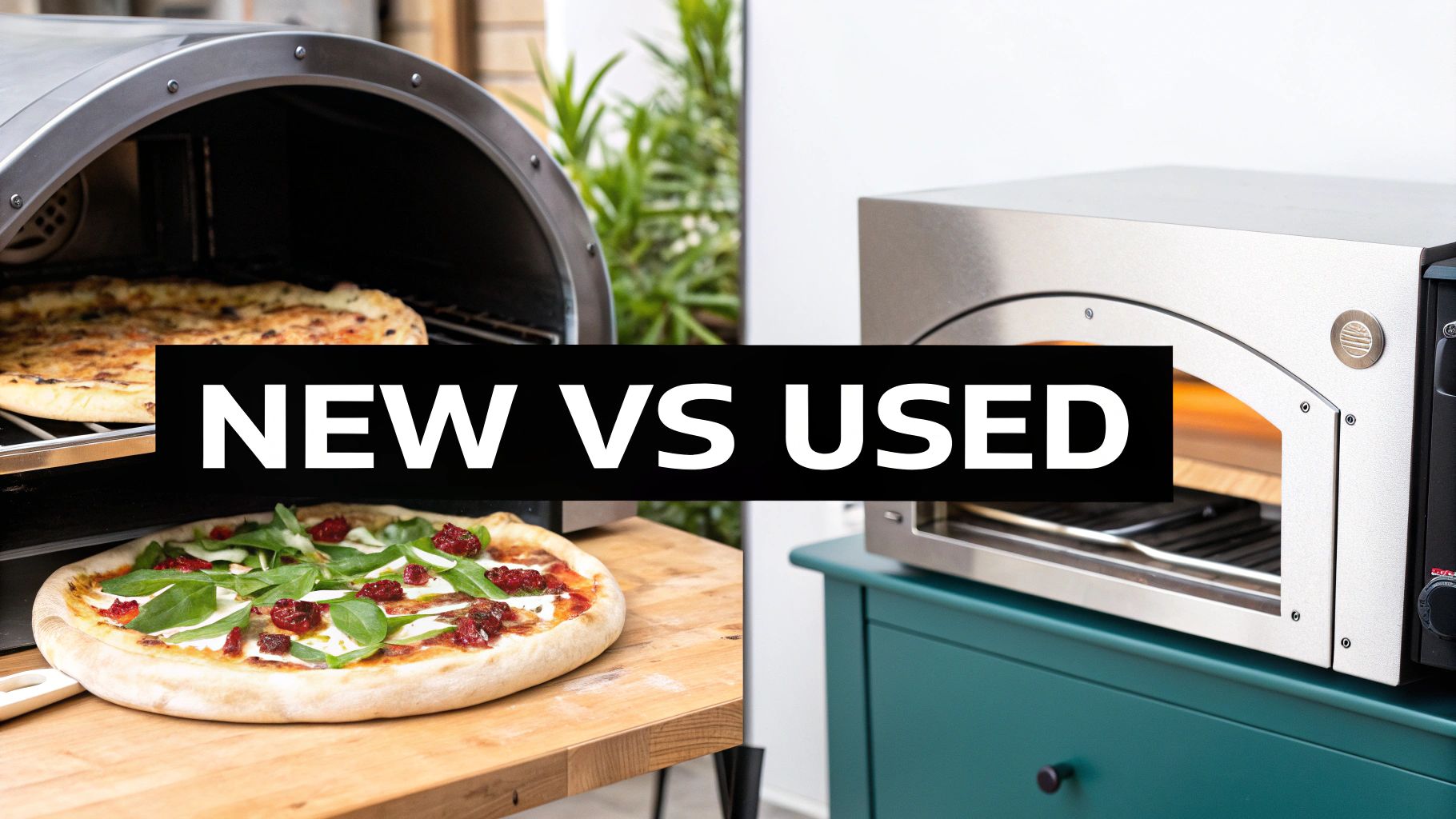
The financing you secure and the equipment you choose are two sides of the same coin. Landing a great loan for the wrong pizza prep table is still a bad business move. This is where you have to make a big call: do you go for the immediate savings of used equipment or the long-term reliability of buying new?
Both paths have real advantages that will hit your cash flow, your pizzeria's rhythm, and your bottom line in different ways.
A used deck oven might save you thousands upfront, but you're rolling the dice. On the flip side, a brand-new, energy-efficient pizza prep table comes with a warranty and peace of mind, but it also comes with a higher price tag. The secret is to look past the initial price and figure out the total cost of ownership.
This means doing the math on potential maintenance, unexpected repairs, energy bills, and how long you realistically expect the gear to last. A cheaper used pizza prep table that’s constantly breaking down or sucking up electricity can quickly become a bigger money pit than its shiny new counterpart.
The Case for New Pizza Prep Tables
Investing in a new pizza prep table is about more than just that gleaming stainless steel. It’s an investment in day-one reliability and efficiency. If you want to avoid unexpected downtime—a true killer during a Friday night pizza rush—new equipment is your safest bet.
Here’s why buying new often makes sense for a pizzeria:
- Warranty Protection: This is the big one. If something goes wrong with your pizza prep table in the first year or two, you’re covered for parts and labor. No surprise repair bills draining your bank account.
- Peak Energy Efficiency: Modern kitchen equipment is built to be greener. A new ENERGY STAR-rated prep table can easily cut your electricity costs by hundreds of dollars a year.
- Latest Technology: New pizza prep table models often come with smarter features, better insulation, and more ergonomic designs that can genuinely speed up your workflow.
A new pizza prep table is a predictable asset. You know its history (or lack thereof), you have a warranty, and you can accurately budget for its operational costs without sweating about surprise breakdowns.
When Used Equipment Makes Sense for Pizzerias
For a startup pizzeria watching every single penny, used equipment can be a lifeline. The upfront savings are massive, often 40-60% less than buying new. That frees up critical cash for marketing, pizza ingredients, or just surviving those first few slow months.
But buying a used pizza prep table demands more homework. You're taking on the risk of the unknown, so a thorough, in-person inspection is non-negotiable.
Tips for Buying Used:
- Inspect in Person: Never, ever buy a major appliance like a pizza oven or prep table sight-unseen. You need to check for rust, listen to the compressor hum, and test every single function.
- Check the History: If possible, ask for maintenance records. Was it run into the ground at a high-volume pizza chain or gently used in a small café?
- Prioritize Reputable Resellers: Buying from a trusted used equipment dealer often gives you some level of assurance or even a limited warranty, which is far better than buying from a random seller online.
Leasing as the Smart Middle Ground
So what if you want the reliability of new equipment without that huge upfront cost? This is where lease-to-own programs become a game-changer for pizzeria owners. Leasing bridges the gap perfectly, giving you access to top-tier, brand-new pizza prep tables with predictable, manageable monthly payments.
Lease-to-own financing is especially powerful for core items like pizza prep tables. You get a modern, efficient, warrantied unit in your kitchen right away, preserving your cash for other critical business needs. At the end of the term, you can own it for a small fee, making it a strategic path to ownership. To get a better sense of how it works, you can explore the benefits of a lease-to-own restaurant equipment program.
Ultimately, exploring how B2B leasing solutions can boost profits and operational efficiency is a smart move for any pizzeria owner. It aligns your equipment costs directly with the pizza revenue it helps generate, creating a much more sustainable financial model for long-term growth.
Pizzeria Equipment Financing: Your Questions Answered
When you're in the thick of running a pizzeria, trying to figure out financing for a new prep table can feel like one more complicated thing on an endless to-do list. I get it. So, let's cut through the noise.
Here are the most common questions I hear from pizzeria owners, with straight-up, no-fluff answers to help you make the right call, fast.
What Credit Score Do I Need for Pizzeria Equipment Financing?
This is usually the first thing on everyone's mind. While every lender is a bit different, a personal credit score of 650 is a good benchmark to have in your back pocket. It'll open the door to most traditional loans and leases for your pizza prep table.
If your score is a little south of that, don't panic. Some alternative lenders might still work with you, but be prepared for higher interest rates. For the really great terms, especially with something like an SBA loan, lenders love to see a score closer to the 680-700 range.
But here's the thing to remember: your score is just one part of the story. Lenders look at the whole picture—your pizzeria's cash flow, how long you've been slinging pies, and your overall financial health are just as important.
Can I Finance a Used Pizza Prep Table?
You bet. Financing used equipment is a savvy move, especially when you're trying to keep startup or replacement costs down. Plenty of lenders are happy to finance a pre-owned pizza prep table, but the terms will probably look a little different than for a brand-new unit.
Since there's a bit more perceived risk with used gear, you might run into:
- Shorter loan terms: They'll likely want you to pay it off quicker.
- A bigger down payment: You might need to have more cash on hand upfront.
- More questions: Be ready to share details on the pizza prep table's age, condition, and what it's worth today.
Financing used is a great strategy, just make sure the equipment is solid enough to be a worthwhile investment for your pizzeria.
The core difference between an equipment loan and a capital lease boils down to ownership timing. With a loan, the pizza prep table is yours from day one. With a capital lease, it becomes yours for a nominal fee at the very end. Both are strategic paths to ownership.
What Is the Difference Between an Equipment Loan and a Capital Lease?
This one comes down to one key thing: ownership.
With a standard equipment loan, that pizza prep table is yours the moment you get it. It goes right onto your balance sheet as an asset, and you can start depreciating it for tax benefits immediately.
A capital lease, which you'll often hear called a lease-to-own agreement, works a bit differently. It feels like you're renting the pizza prep table during the lease term, but it's set up so you can buy it for a token amount—sometimes just $1—when the lease is up. From a tax perspective, it's often treated just like a purchase, letting you take deductions. It's different from an operating lease, which is a true rental with no option to own at the end.
How Long Does Approval for Pizzeria Equipment Financing Take?
The timeline can be all over the map, and it really depends on where you go for the money. When your main pizza prep table dies mid-shift, speed is everything.
For smaller financing amounts, especially through online lenders or the financing we offer directly for our pizza prep tables, you can sometimes get an approval in as little as 24 to 48 hours. It’s perfect for those emergency situations.
On the other hand, traditional bank loans and SBA loans are more of a marathon than a sprint. They involve a deep dive into your pizzeria's business and can take several weeks, or even a couple of months, to get funded. My best piece of advice? Get all your documents—business plan, financial statements, tax returns—lined up before you even start applying. It’s the single best way to speed things up.
Ready to get the perfect pizza prep table for your kitchen without the massive upfront cost? At Pizza Prep Table, we offer flexible lease-to-own financing on a wide range of new and used models to fit any pizzeria's budget. Explore our selection and get a free quote today.