

Top Fixes for a Pizza Prep Table Making Loud Noise
When your pizza prep table suddenly starts making a racket, it’s almost always pointing to a problem with the condenser fan, evaporator fan, or a compressor that's working way too hard. These sounds, whether it's grinding, buzzing, or rattling, are more than just annoying—they're a clear signal your unit is struggling. Left unchecked, this can lead to skyrocketing energy bills or, even worse, a complete system failure right in the middle of a dinner rush.
Translating the Noises from Your Pizza Prep Table
That constant grinding or buzzing coming from your pizza prep table isn't just background noise; it’s your equipment trying to send you a message. Learning to decode what these sounds mean is the first, and most important, step in diagnosing a problem. It helps you figure out if you're dealing with a simple fix or a major failure that's about to spoil a few hundred dollars worth of cheese and pepperoni.
This isn’t about turning you into a refrigeration tech overnight. It’s about empowering you to make a smart call.
For instance, a rattling noise coming from your Atosa unit might be something as simple as a loose side panel that you can tighten with a screwdriver in two minutes. On the other hand, a loud, non-stop buzzing from your trusted True prep table could signal a dying compressor—a much more serious, and expensive, issue. Knowing the difference puts you back in control.
Common Pizza Prep Table Noises and What They Mean
To make it easier, I've put together a quick cheat sheet. Use this table to match the sound you're hearing with its most likely cause. It’s a great starting point for figuring out what’s going on under the hood of your pizza prep table.
| Noise Type | Likely Source | What It Sounds Like | Urgency Level |
|---|---|---|---|
| Grinding or Squealing | Failing Fan Motor | A high-pitched, metallic screech or a deep, rough grinding. | High - A seized fan can cause overheating. |
| Loud, Constant Buzzing | Compressor Issues | A deep, electrical hum that's much louder than normal and doesn't cycle off. | Critical - Could be a sign of imminent failure. Call a pro. |
| Rattling or Clanking | Loose Parts / Debris | A metallic vibration, like a screw is loose or something is hitting the fan blades. | Medium - Investigate soon. Often an easy fix, but can worsen. |
| Clicking | Relay or Thermostat | A distinct "click-click-click" as the unit tries (and fails) to start. | Medium - Usually not an emergency, but the unit won't cool properly. |
| Gurgling or Hissing | Normal Refrigerant Flow | A quiet, liquid-like sound, especially after the compressor kicks on or off. | Low - This is usually a normal operational sound. |
Think of this table as your first-line diagnostic tool. It won't solve every problem, but it will definitely point you in the right direction and help you decide whether to grab a screwdriver or your phone to call for backup.
Normal vs. Problematic Sounds
Look, every commercial refrigerator makes noise. That gentle hum when the compressor kicks on or the soft whir of fans pushing cold air around is totally normal. It’s the new, sudden, or harsh sounds that should get your attention.
Here’s a pro tip: Get to know your equipment’s "happy sounds." When your pizza prep table is running perfectly, pay attention to its normal hums and clicks. This creates a baseline in your head, making it way easier to spot a new, alarming noise that signals something’s wrong.
While we'd all love a silent pizzeria, commercial units are built for power, not stealth. A typical fridge might sit around 50 dBA, but a hard-working compressor can easily hit 60-70 dBA. This is a real issue for smaller pizzerias. One industry survey found that 28% of small foodservice operators named refrigeration noise as a major headache, which often went hand-in-hand with 15% higher energy bills from struggling components.
Why Your Pizza Prep Table is Different
Pizza prep tables live a harder life than your average reach-in, and that leads to some unique noises. Their open-top design is constantly battling the hot kitchen air, forcing the compressor and fans to work overtime.
Here are the most common culprits for a loud pizza prep table:
- Ingredient Debris: Stray flour, shredded cheese, and bits of pepperoni are the natural enemies of your condenser fan. When they get sucked in, they cause rattling and block airflow, making the fan scream for help.
- Intensive Use: Think about how many times those drawers and lids get slammed open and shut during a rush. This puts a ton of stress on the whole system, leading to faster wear and tear on fan motors and gaskets.
- Heat Exposure: These tables are usually parked right on the cook line, often next to a blistering 800°F pizza oven. That constant external heat forces the cooling system into overdrive just to keep up.
Keeping these factors in mind will help you track down the source of a noise much faster. And if you're thinking about an upgrade, checking out a guide on the top-rated commercial refrigerators can give you some great insights into which models are known for being both quiet and reliable.
A Practical Diagnostic Checklist for Your Noisy Pizza Prep Table
When your pizza prep table starts making a racket in the middle of a dinner rush, the first instinct is usually to panic. But hold off on that emergency service call for just a minute. More often than not, a little methodical detective work can point you to a simple, fixable issue. This is your guide to quickly and safely figuring out what all that noise is about.
Think of it like this: you’re gathering clues to find the culprit. Is it a vibrating panel on your under-counter unit or a fan struggling inside your main prep table? A few minutes of investigation can save you from a random guess and a repair bill for a problem you don't even have.
First Steps: Isolate the Noise
The first thing to do is figure out where the sound is coming from. A loud pizza prep table noise almost always originates from one of three main zones, and each one points to a different set of parts.
- From the Bottom/Rear: Noises down here usually mean something's up in the "engine room"—the compressor, the condenser fan, or maybe just a loose drain pan rattling around.
- From Inside the Unit: If the sound is coming from inside the cold part of the table, your prime suspect is the evaporator fan.
- From the Frame/Panels: A general rattle or vibration that seems to come from the whole unit could be as simple as a loose screw or a panel that needs tightening.
Get down on the floor, listen near the back, open the drawer or door. Does the sound change or get louder? These simple observations are your best diagnostic tools.
Performing Basic Safety Checks
Before you touch a single thing, safety comes first. Always unplug the pizza prep table from the wall before you try to inspect or clean any components. Commercial units pack a serious electrical punch, and mixing that with water from condensation is a recipe for disaster.
With the unit unplugged, let's start with the most common and easiest things to check.
- Is the Unit Level? A prep table that's even slightly off-kilter can cause the whole frame to vibrate when the compressor kicks on. Grab a level and adjust the feet until it’s rock solid.
- Are Panels and Screws Tight? The constant slamming of drawers during a busy service can work screws loose. Run your hand along the sides and back, feeling for any vibrating access panels, and tighten anything that feels loose.
- Is There Enough Breathing Room? These units need to breathe to get rid of heat. Make sure there are at least a few inches of clearance between the back of the prep table and the wall. Shoving it up too close can make normal sounds seem much louder and even cause overheating.
For a deeper dive into diagnosing common equipment issues, this detailed appliance troubleshooting guide is a great resource. The principles of tracking down a problem are surprisingly similar across different types of machinery.
This flowchart can help you tell the difference between a normal hum and a noise that spells trouble.
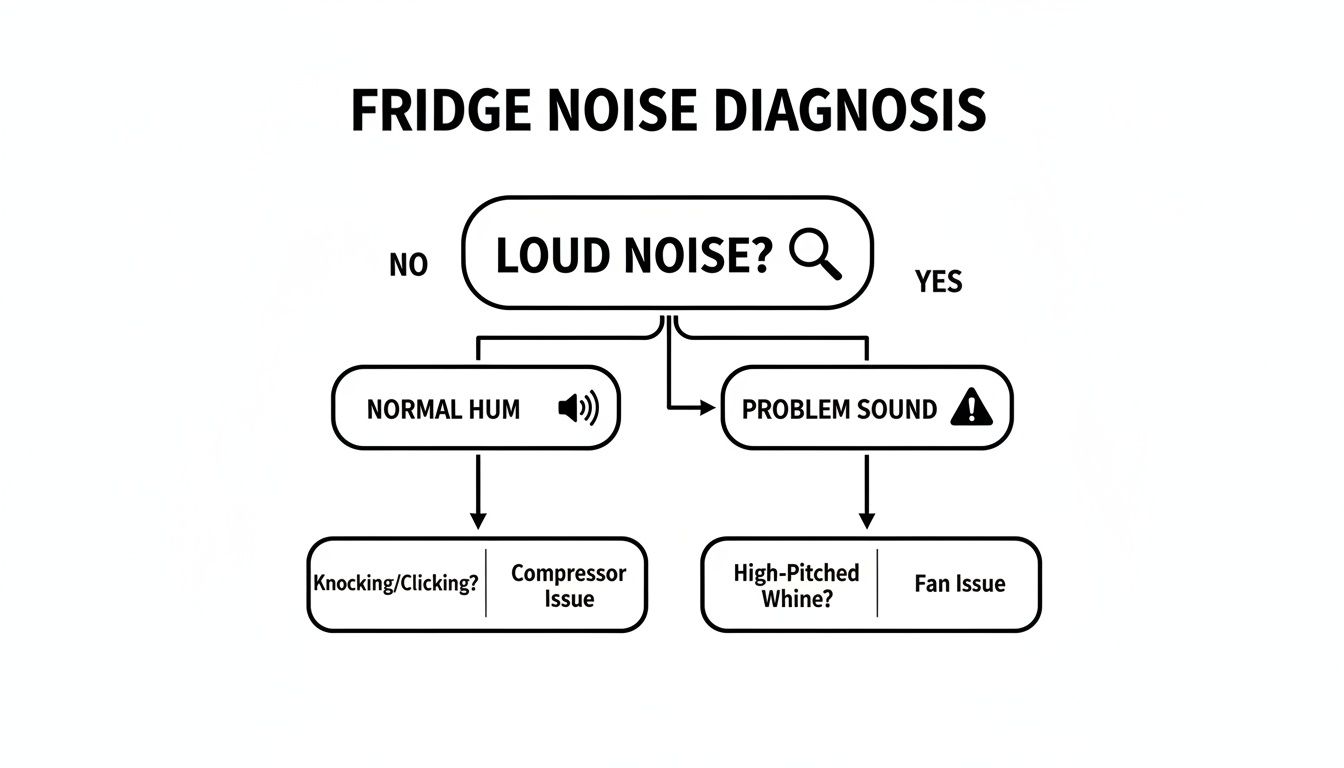
The bottom line? Not every sound is a crisis. But if you hear something unusual like grinding or a loud buzz, you need to pay attention before it turns into a major failure.
Real-World Pizza Restaurant Scenarios
Let's put this into practice. Imagine your pizza prep table starts a loud rattling sound, but it only happens for about an hour, once or twice a day. That timing is your biggest clue.
That kind of pattern almost always points to the defrost cycle. During this cycle, a small heater melts frost off the evaporator coils. Sometimes, the expansion and contraction of metal parts or ice breaking up can cause a temporary rattle. If it’s a loud, metallic clanking, though, it could be the evaporator fan blade hitting a chunk of ice that’s built up from a faulty defrost system.
Expert Insight: Here’s a quick test for the evaporator fan. While the prep table is running, find and press the door switch (the little button that turns the interior light on and off). This also kills power to the evaporator fan. If the noise stops the second you press that button, you’ve just confirmed the fan is your problem.
By following a simple checklist like this, you can go from a vague "my pizza prep table is making a loud noise" to a specific diagnosis like "the evaporator fan inside my prep table is rattling." That level of detail is gold, whether you plan to fix it yourself or need to give a technician a clear picture of the problem. For more tips on keeping your equipment running smoothly, check out our guide: prep fridges 101 cool tips for cooler kitchens.
DIY Fixes for Common Pizza Prep Table Noises
Alright, you've done the detective work and have a good idea where that racket is coming from. Time to roll up your sleeves. The good news is that many of the most common reasons a pizza prep table starts making a loud noise are surprisingly easy to fix yourself. With a few basic tools and a bit of patience, you can often silence that annoying rattle or buzz during a slow period, saving yourself an emergency service call right in the middle of the dinner rush.
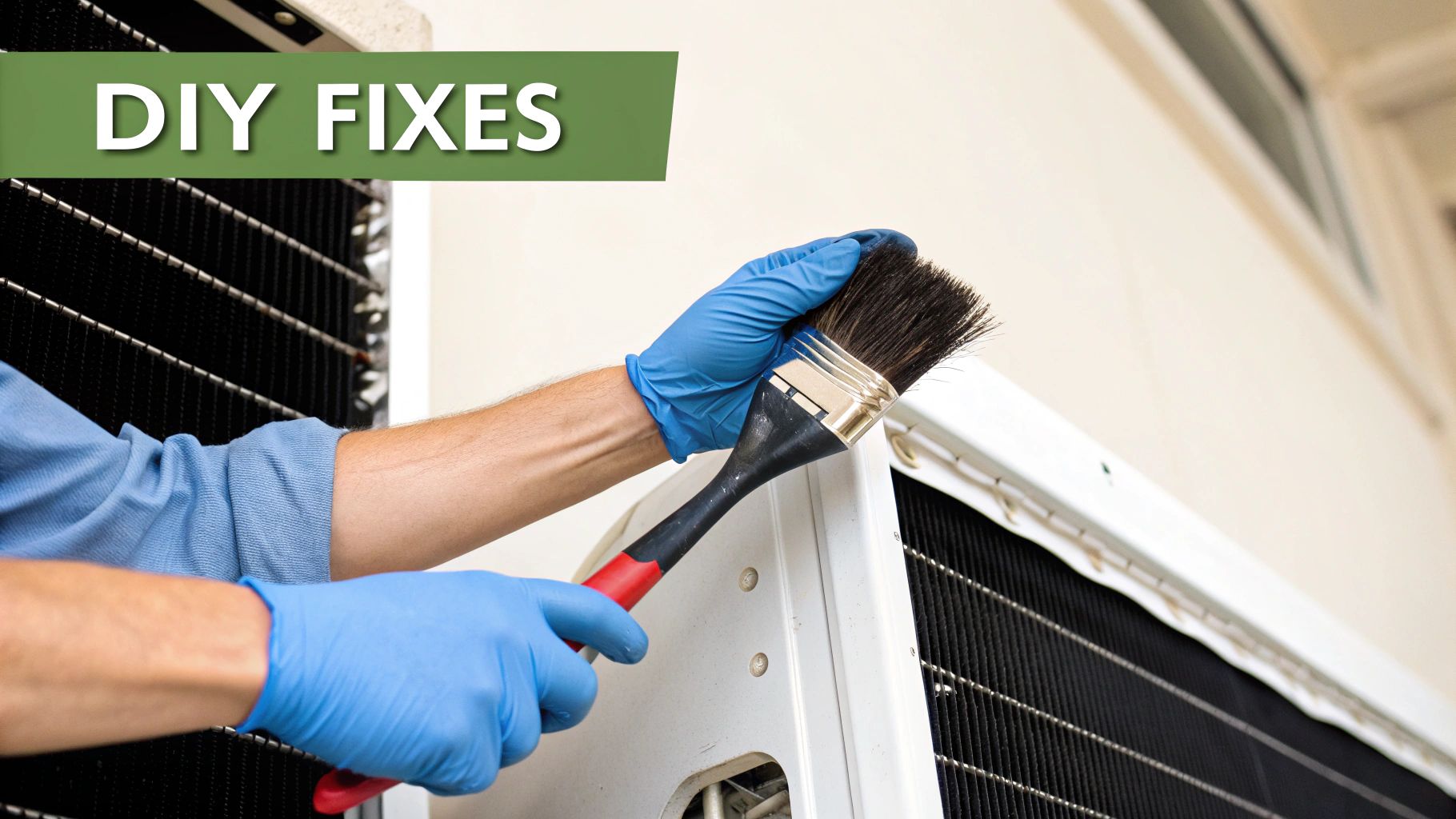
Before you touch a single screw, let's talk about the single most important step: safety. I can't stress this enough. Always, without exception, unplug the prep table from the wall outlet before you remove any panels or touch any mechanical parts. These commercial units pack a serious electrical punch, and taking a shortcut is never, ever worth the risk.
Quieting the Rattling Condenser Fan
A rattling condenser fan is probably one of the top noise complaints I hear from pizzeria owners. This fan, usually found at the back or bottom of your unit, is responsible for pulling air over the condenser coils to get rid of heat. Unfortunately, its location makes it a magnet for all the debris floating around a busy pizza kitchen.
Often, the culprit is something ridiculously simple that got sucked into the fan guard—a stray piece of pepperoni, a dusting of flour, or even a crumpled receipt. Over time, this gunk builds up until the fan blades start smacking against it as they spin.
Here’s the game plan:
- Get Access to the Fan: After unplugging the unit, you'll probably need to remove a rear access panel. It's usually just held on by a few screws.
- Inspect and Clean: Take a close look at the fan blades and the whole area around the motor. A vacuum with a brush attachment is your best friend here for clearing away loose dust and flour. If you've got stubborn grime, a soft brush will do the trick.
- Check for Tightness: While you're in there, gently wiggle the fan blades. If they feel loose on the motor shaft, find the small set screw that holds them in place and give it a tighten. Also, double-check that the fan motor's mounting bolts are snug.
A clean, tight fan doesn't just run quieter—it runs more efficiently, which can actually help lower your energy bills. This is a simple 15-minute task that can eliminate some of the most persistent rattling sounds you'll encounter.
Silencing the Interior Evaporator Fan
If the noise is coming from inside the refrigerated compartment, your prime suspect is the evaporator fan. This is the fan that circulates cold air to keep your cheese, sauce, and toppings at a safe temperature. Its number one enemy? Ice buildup.
When a defrost system isn't working at 100%, ice can form on the evaporator coils. Eventually, that ice creeps far enough to obstruct the fan blades, creating a loud buzzing or scraping sound as the blades literally hit the ice.
Pro Tip: If you think ice is the problem, you can confirm it with a manual defrost. Unplug the unit, move all your food to a backup cooler, and just leave the doors and lids open for a few hours until every last bit of ice has melted. Once it's dry, plug it back in. If the noise is gone, you've found your problem.
Just remember, a manual defrost is only a temporary fix. If that ice comes back quickly, it's a clear sign you have a deeper issue with the defrost timer or heater, and that's usually when it's time to call in a professional.
The Overlooked Fix: Cleaning Condenser Coils
I've seen it a hundred times: dirty condenser coils are the silent killer of efficiency that eventually leads to some very loud noises. When those coils get caked in grease, flour, and dust from the kitchen air, your pizza prep table can't release heat properly. This forces the compressor to work way harder and run much longer, resulting in a loud, strained buzzing sound that screams "I'm overworked!"
Cleaning your coils is fundamental maintenance.
- Find the Coils: They're almost always located at the bottom or back of your prep table.
- Use the Right Tools: A stiff-bristled coil brush is designed specifically to get between the delicate fins without bending them. Follow that with a vacuum to suck up all the dislodged crud.
- Be Thorough: You want to clean the entire surface of the coils until you can see the shiny metal fins again. For a busy pizzeria, this needs to be on your cleaning schedule every 30-60 days.
This fix doesn't just silence an overworked compressor; it can seriously cut down your electricity bill. A quieter kitchen is also a less stressful kitchen. While a prep table normally hums along at about 50 dBA, a strained one can easily jump to 60-85 dBA. In a high-pressure environment, that extra noise really matters. You can learn more about how common noise levels impact workspaces to see just how much of a difference it makes.
Dealing with Gurgling Blocked Drains
Hearing a gurgling or dripping sound? That almost always points to a clogged defrost drain line. This little tube's job is to carry water from the melted frost on the evaporator coils down to a drain pan, where it can evaporate. But when it gets clogged with food particles or slime, water backs up, freezes, and causes all sorts of strange noises.
Clearing the drain is usually pretty straightforward:
- Find the Drain Hole: Look inside the unit, usually at the bottom of the refrigerated compartment, right below the evaporator coil cover.
- Clear the Blockage: A simple pipe cleaner or a piece of stiff wire can be used to gently poke through whatever is causing the clog.
- Flush the Line: Pour a mix of warm water and a little bit of bleach or vinegar down the drain. This will kill any algae or mold that's been building up and make sure the line is completely clear.
This quick cleaning can stop those annoying gurgling sounds and, more importantly, prevent water from leaking out onto your kitchen floor—a major safety hazard nobody has time for.
DIY Fix vs Professional Repair Cost and Time Savings
Tackling some of these issues yourself can save you a surprising amount of money and prevent operational downtime. Here’s a quick breakdown of what you can realistically handle versus when to call in the cavalry.
| Problem (Noise Source) | DIY Feasibility | Estimated DIY Time | Potential Savings vs Pro |
|---|---|---|---|
| Dirty Condenser Coils | High | 20-30 minutes | $150 - $250 |
| Obstructed Condenser Fan | High | 15-25 minutes | $175 - $300 |
| Clogged Drain Line | High | 10-15 minutes | $125 - $200 |
| Ice on Evaporator Fan | Medium | 1-3 hours (for defrost) | $200 - $350 |
| Loose Panels/Vibration | High | 5-10 minutes | $100 - $150 |
| Failing Fan Motor | Low | Requires part + expertise | Call a Pro |
| Faulty Compressor | Very Low | Sealed system repair | Call a Pro |
| Defrost System Failure | Very Low | Electrical diagnostics | Call a Pro |
As you can see, the most common noise culprits—dirt, debris, and clogs—are well within the reach of a DIY fix. Taking 30 minutes to clean your coils can easily save you a $200 service call and prevent the much larger expense of a compressor replacement down the line. It's time well spent.
Knowing When to Call a Professional Technician
Look, I get it. You've tightened the panels, scrubbed the condenser coils clean, and maybe even tackled a manual defrost. But sometimes, even after all that hard work, the prep table is still screaming at you. This is the moment to put down the wrench and pick up the phone. Some noises are more than just an annoyance; they're red flags for serious mechanical or electrical problems that are genuinely dangerous for anyone but a certified pro to handle.
In a fast-paced pizzeria, equipment uptime is everything. Trying to be a hero and attempting a repair that's over your head can turn a fixable issue into a complete disaster. You could sideline your pizza prep table for days, costing you thousands in lost pizza sales. Knowing when to stop is just as crucial as knowing how to clean a fan blade.
Sounds That Mean Stop and Call for Help
While a simple rattle might be a loose screw, some noises are clear signs of a major failure that needs professional tools and real expertise. If you hear any of these, do yourself a favor: unplug the unit and get a technician on the line right away.
- Loud Metallic Grinding or Screeching: This isn't just a vibration. A harsh, metal-on-metal grinding sound often means a failing compressor or seized motor bearings. These are the heart and lungs of your prep table. Letting it run will cause permanent, expensive damage.
- Persistent High-Pitched Whine or Squeal: A constant, sharp squealing can indicate dangerously high pressure building up inside the sealed system. It could also be an electrical part, like a relay, that's about to give up the ghost.
- Loud Buzzing Paired with a Burning Smell: This is the big one. An electrical buzz plus that nasty smell of burning plastic is your number one warning sign. It points to a serious electrical short, a bad capacitor, or a compressor that's overheating. This is a fire hazard. Unplug it immediately.
Here's a solid rule of thumb for any pizzeria: if a weird noise comes with a strange smell, poor cooling, or keeps tripping the breaker, it's out of your hands. Those are symptoms of a bigger, systemic failure that requires a professional.
Refrigerant Leaks and Electrical Faults
Beyond the scary sounds, there are other, more subtle clues that demand a pro. A hissing or gurgling noise that's suddenly much louder than usual can point to a refrigerant leak. These sealed systems are complex, and by law, only a certified technician can handle refrigerants. If you suspect a leak, it's time for professional refrigerant leak detection and repair.
Likewise, any problem involving the defrost timer, thermostat, or relays is well beyond a simple mechanical fix. Diagnosing electrical faults requires specialized knowledge and tools like a multimeter. Messing around with electrical parts is a great way to fry the main control board or, worse, create a huge safety risk for you and your staff.
Finding a Qualified Technician for Your Pizza Prep Table
Not all techs are the same, especially when you're talking about commercial pizza equipment. You need someone who gets the pressure and demands of a pizzeria kitchen.
When you make that call, be ready to give them the right information. This helps them show up prepared, maybe even with the right part already in the van, which gets you back up and running faster.
Have this info ready:
- The Unit's Make and Model: Be specific. "It's a 93-inch Atosa pizza prep table, model..."
- A Clear Description of the Noise: Don't just say "it's loud." Try something like, "There's a loud metallic grinding coming from the bottom right side."
- When the Noise Happens: Let them know if it’s constant, only when the compressor starts, or during the defrost cycle.
Giving them these details helps the technician diagnose the problem before they even arrive, cutting down your downtime and getting your pizzeria back to 100% before the next rush hits.
Preventive Maintenance to Keep Your Pizzeria Quiet
The best way to fix a noisy pizza prep table is to make sure it never gets loud in the first place. For a busy pizzeria, where dead equipment means lost money, being proactive isn't just a nice idea—it's a core part of your business strategy. A simple, consistent maintenance schedule for your pizza prep tables can silence future problems, trim your energy bills, and stop those frantic emergency repair calls during a Friday night rush.
Think about it this way: you wouldn’t drive your delivery car for a year without changing the oil. Your prep tables work just as hard, if not harder, and they deserve the same attention. A few minutes of care each week will add years to your equipment's life and keep your pizzeria humming along quietly and efficiently.
This isn't about becoming a certified technician. It's about building easy, effective habits into your existing cleaning routines.
Your Weekly Quiet-Kitchen Checklist
The key to making this work is consistency. Set aside a specific time each week—maybe a slow Tuesday morning—and knock out this short checklist. It covers all the usual suspects for noise and poor performance.
- Deep Clean the Condenser Coils: We've talked about cleaning coils to fix a problem, but doing it preventively is where the real magic happens. Pizzeria air is a nasty mix of grease and flour, which sticks to your condenser coils like a thick, insulating blanket. Grab a stiff brush and a vacuum and give them a good cleaning every single week. Clean coils can slash compressor strain by up to 30%.
- Inspect and Clear Fan Blades: Take a look at both the condenser fan (usually in the back) and the evaporator fan (inside the unit). A piece of stray plastic wrap or a buildup of flour can throw a blade off balance, causing that annoying rattling sound.
- Wipe Down Door Gaskets: Spilled sauce and cheese can make your door gaskets sticky or hard, ruining the seal. When a gasket leaks, cold air pours out, and the compressor has to run constantly just to keep up. A quick wipe with warm, soapy water is all it takes to ensure a tight seal.
- Check for Levelness: All the opening and closing of drawers can make a heavy prep table shift over time. Toss a level on top and adjust the feet if it’s off. An unlevel unit can make the whole frame vibrate whenever the compressor kicks on.
A well-maintained unit doesn't just run quieter—it uses less electricity. Stick to a regular maintenance schedule, and you'll actually see a drop in your monthly energy bills. For owners focused on the bottom line, exploring energy-efficient commercial refrigeration is a smart long-term move for serious cost savings.
Monthly and Quarterly Tasks for Long-Term Health
Some jobs don't need weekly attention but are absolutely vital for keeping your pizza prep table reliable for the long haul.
Monthly Checks:
- Clear the Defrost Drain Line: That gurgling sound is often a clogged drain line. To stop it before it starts, pour a mix of warm water and a bit of vinegar down the drain tube inside the unit. This will clear out any gunk before it turns into a real blockage and a puddle on your floor.
- Check and Tighten Hardware: The constant vibration of a commercial kitchen can loosen things over time. Give the door hinges, drawer slides, and any visible screws on access panels a quick check and tighten them up if needed. It’s a simple fix for mysterious rattles.
Quarterly Deep Dive:
- Calibrate Thermostats: Use a separate, reliable thermometer to check the inside temp against what the unit's display says. If it's off by more than a couple of degrees, the thermostat might need to be recalibrated by a pro. An inaccurate thermostat can make the unit work way harder than it needs to.
- Inspect Electrical Cords: Give the power cord a once-over. Look for any signs of fraying or damage, which is a major fire hazard in any kitchen. Make sure it isn't getting pinched between the unit and the wall.
This proactive mindset turns equipment care from a stressful emergency into a simple, manageable routine. A quiet, efficient pizzeria is a more profitable one, and it all starts by giving your hardest-working gear the attention it deserves.
Answering Your Top Questions About Noisy Pizza Prep Tables
Even the best-maintained equipment can throw you a curveball. When a new or strange sound pops up in a busy pizzeria, you don't have time for guesswork. This section tackles the most common questions we hear from restaurant owners when their pizza prep table starts making a racket, giving you quick answers to figure out what's wrong and what to do next.
We’ve pulled together the real-world questions we get from pizzeria owners just like you, focusing on the situations you actually face every day.
Is It Normal for a Brand New Pizza Prep Table to Be Loud?
Honestly, yes—for a little while. A brand-new commercial unit can be surprisingly loud for the first 24-48 hours. It's working overtime to bring the entire insulated cabinet from room temperature down to food-safe levels, and that's a heavy lift. During this initial cool-down, expect the compressor to run almost constantly. You might also hear some gurgling as refrigerant settles into the system. This is all part of the normal break-in period.
However, any sharp metallic grinding, aggressive buzzing, or violent rattling right out of the box is a huge red flag. Before you call for service, do a quick check: make sure the unit is perfectly level and that every last bit of shipping material—especially any brackets or blocks securing the compressor for transit—has been removed. If a nasty noise persists after two days, get on the phone with your supplier immediately. It could be shipping damage or a factory defect that should be covered under warranty.
How Can I Tell if the Noise Is the Compressor or a Fan?
Figuring out where the sound is coming from is half the battle. Your compressor is that big, black, tank-like component in the "engine room" at the bottom of the unit. A failing compressor usually makes a deep, strained buzzing or a humming sound that seems to vibrate through the floor.
Fan noises are different—think rattling, whirring, or a light scraping sound. You have two fans to investigate:
- The condenser fan is right by the compressor, pulling air across the coils.
- The evaporator fan is inside the refrigerated cabinet, circulating the cold air.
Here’s a simple trick from the field: While the unit is running and making the noise, open the door or drawer and find the small button or switch that it presses when it closes (this controls the interior light and fan). Press it with your finger. This cuts power to the evaporator fan. If the noise stops instantly, you've found your culprit. The problem is with the evaporator fan.
Will a Loud Pizza Prep Table Increase My Electricity Bill?
Absolutely. A noisy pizza prep table is almost always an inefficient one, and inefficiency hits you right in the wallet. Those sounds are symptoms of a system that's struggling, which means it's drawing more power to do its job.
Think of it this way: if the condenser coils are caked with flour and dust, your compressor has to run longer and hotter just to get rid of heat. That’s a direct drain on your electricity. A rattling fan with a bad motor isn't moving air properly, forcing the entire cooling system to run longer to catch up. Fixing the noise isn't just about getting some peace and quiet back; it's one of the fastest ways to lower your pizzeria's monthly utility bills.
Can I Put Sound Dampening Materials Around My Pizza Prep Table?
This is a question we hear a lot, but the answer is a hard no. You should never, ever block the ventilation areas on a commercial pizza prep table. These units generate a massive amount of heat and are designed to have constant, unobstructed airflow around the compressor and condenser coils to dissipate it safely.
Boxing it in with sound-dampening panels or shoving it flush against a wall will trap all that heat. This is a recipe for disaster. The compressor will quickly overheat, leading to a catastrophic failure—which happens to be one of the most expensive repairs you can possibly face. Your focus should always be on fixing the mechanical issue causing the sound, not trying to muffle it.
At Pizza Prep Table, we understand that reliable equipment is the backbone of your pizzeria. If you're tired of battling noisy, inefficient units, explore our curated selection of high-performance pizza prep tables from top brands designed for the demands of a busy kitchen. Find your perfect, quiet, and efficient model today at https://pizzapreptable.com.