

Choosing Kitchen Stainless Steel Work Tables for Your Pizzeria
In a pizzeria, the stainless steel work table isn't just a place to put things—it's the heart of the entire operation. This is ground zero. It's where every single pizza springs to life, from the first stretch of fresh dough to the final sprinkle of cheese before hitting the oven.
Why Stainless Steel is Every Pizza Maker's Best Friend
When you're churning out pies at a rapid pace, your choice of work surface is a huge deal. It directly affects how fast you work, how safe your food is, and frankly, how good your final product tastes. While you could technically use other materials, stainless steel has become the undisputed champ in pizzerias for some very good reasons.
The biggest win? It’s non-porous. That means messy stuff like olive oil, tomato sauce, and moisture can't seep in. This makes cleanup and sanitizing incredibly simple, which is a lifesaver when flour, stray toppings, and sauce splatters are flying around all day.
Think about the alternatives. Wood can trap bacteria in its grain, and plastic scratches easily, creating tiny hiding spots for germs. Stainless steel, on the other hand, gives you a smooth, tough surface that acts as a fortress against cross-contamination. This isn't just about looking clean; it’s about confidently nailing every health inspection and protecting your customers and your reputation.
A well-chosen stainless steel table isn’t just an expense; it’s a long-term investment in the backbone of your pizzeria. It’s got to be sturdy enough for a cook to lean into kneading dough and clean enough to assemble hundreds of pizzas during a chaotic dinner rush.
The Foundation of a Killer Pizza Prep Line
Your pizza prep line is an assembly line, and it needs to be fast, logical, and seamless. The stainless steel work table is the foundation that makes it all possible. It’s tough enough to handle the constant scraping of pizza peels, the weight of a 50-pound bag of flour, and the general abuse of a busy kitchen. That kind of resilience means it will last for years, giving you a solid return on your investment.
This isn't just an opinion; the industry stats back it up. Over 80% of professional kitchens in developed markets count on stainless steel for their prep surfaces. Here in the United States, the commercial kitchen equipment market is valued at over USD 10 billion, and stainless steel tables make up nearly 40% of all kitchen furniture sales. You can get a deeper look at these numbers in the global stainless steel report.
Ultimately, picking the right pizza prep table sets you up for success. It lets your team work faster, cleaner, and with more consistency. In this guide, we’ll break down exactly how to find a work table that not only fits your space but makes every step of your pizza-making process better.
Breaking Down Steel Grades and Gauges
Picking the right stainless steel work table for your pizzeria is a lot like choosing the right flour for your dough. The little details make a huge difference in the final product. Just like a baker knows the difference between "00" and all-purpose flour, a smart shop owner needs to understand steel grades and gauges. These aren't just technical jargon; they determine how your table will hold up to the nightly abuse of a busy kitchen.
Let's start with gauge. Think of it like the thickness of your pizza crust. Here's the slightly weird part you need to remember: with steel, a lower gauge number means a thicker, stronger, and more durable table. A higher number means the steel is thinner and better suited for lighter work. Getting this right is crucial in a pizza shop where tables take a constant beating.
This is the first big decision you'll make. Are you pounding dough or just holding sauce containers? The answer determines the gauge you need.
Match the Gauge to the Job
You don't need the thickest, most expensive steel for every single spot in your pizzeria. That would be like using premium San Marzano tomatoes for staff meals—overkill. The real pro move is to match the gauge to the table's specific job. This way, you get the performance you need without blowing your budget.
-
14 Gauge (The Heavyweight): This is your workhorse. A 14-gauge table is what you want for the really tough jobs, like pounding and kneading massive batches of dough day in and day out. It's also the only choice for supporting heavy equipment like a 60-quart planetary mixer or a hefty dough sheeter. It won't buckle or dent under pressure.
-
16 Gauge (The All-Rounder): This is the sweet spot for most pizzerias. 16-gauge steel offers a fantastic balance of strength and cost, making it the go-to for general pizza prep stations. It can easily handle chopping ingredients, assembling pies, and the general chaos of a busy line without warping.
-
18 Gauge (The Light-Duty Player): This is the thinnest steel you should consider for a commercial kitchen. An 18-gauge table is perfect for lighter tasks where it won't face constant impact. Think holding ingredient bins, plating up finished pizzas, or as a utility surface for dry storage.
This flowchart helps visualize how these choices aren't just about the table itself—they connect directly to how efficiently your pizzeria runs and how easily you'll pass that next health inspection.

As you can see, every piece of equipment, right down to the steel, is a strategic choice. It's all about making the workflow smoother and keeping the health inspector happy.
What Steel Grades Really Mean for a Pizza Shop
Beyond thickness, the grade of the steel tells you what it's made of and—most importantly—how well it fights off rust and corrosion. In a pizzeria, with acidic tomato sauce, briny olives, and constant moisture, this is a big deal. The right grade is non-negotiable for longevity and food safety.
The two grades you'll see everywhere are 304 and 430. The key difference is in their chemical makeup, which changes how they react to things like acidic foods and moisture.
To make an informed choice, it helps to see how these common options stack up for different tasks in a pizza kitchen.
Comparing Stainless Steel Gauge and Grade for Pizza Prep
This table breaks down the best uses for the most common steel specifications you'll find.
| Specification | 14 Gauge | 16 Gauge | 18 Gauge | 304 Grade | 430 Grade |
|---|---|---|---|---|---|
| Best For | Heavy dough work, supporting mixers | General pizza prep, chopping | Plating, holding ingredient bins | All food contact surfaces | Equipment stands, dry storage |
| Durability | Highest | High | Medium | Excellent corrosion resistance | Good, but less rust-proof |
| Cost | Highest | Moderate | Lowest | Higher | Lower |
| Typical Use | Main dough prep station | Pizza assembly line | Service counter, utility table | Tabletop surfaces | Undershelves, table legs |
This side-by-side view makes it clear: you mix and match based on the job. You wouldn't use a light-duty steel for your main prep area, and you don't need to pay a premium for a top-grade surface on an undershelf that only holds dry goods.
304 Grade stainless steel is the undisputed champion for food prep. It has more chromium and nickel, which creates a tough, non-reactive barrier against rust. This is exactly what you want for any surface that touches food, especially acidic ingredients. A 304-grade pizza prep table won't have a chemical reaction with your tomato sauce, which means no weird metallic taste gets transferred to your pies. For a deeper dive into materials, our guide on commercial stainless steel tables has you covered.
430 Grade stainless steel, on the other hand, is the budget-friendly cousin. It has less nickel, making it less corrosion-resistant (and, fun fact, magnetic). You definitely don't want it for direct contact with wet or acidic foods, but it’s a perfectly smart and cost-effective choice for equipment stands, the undershelves on your prep tables, or any work surface in a dry part of the kitchen.
It all boils down to a simple, effective strategy. Use the premium 304 grade for any surface that touches food to guarantee safety and durability. Then, pick your gauge based on how much weight and abuse that station will take.
Designing Your Pizzeria's Workflow
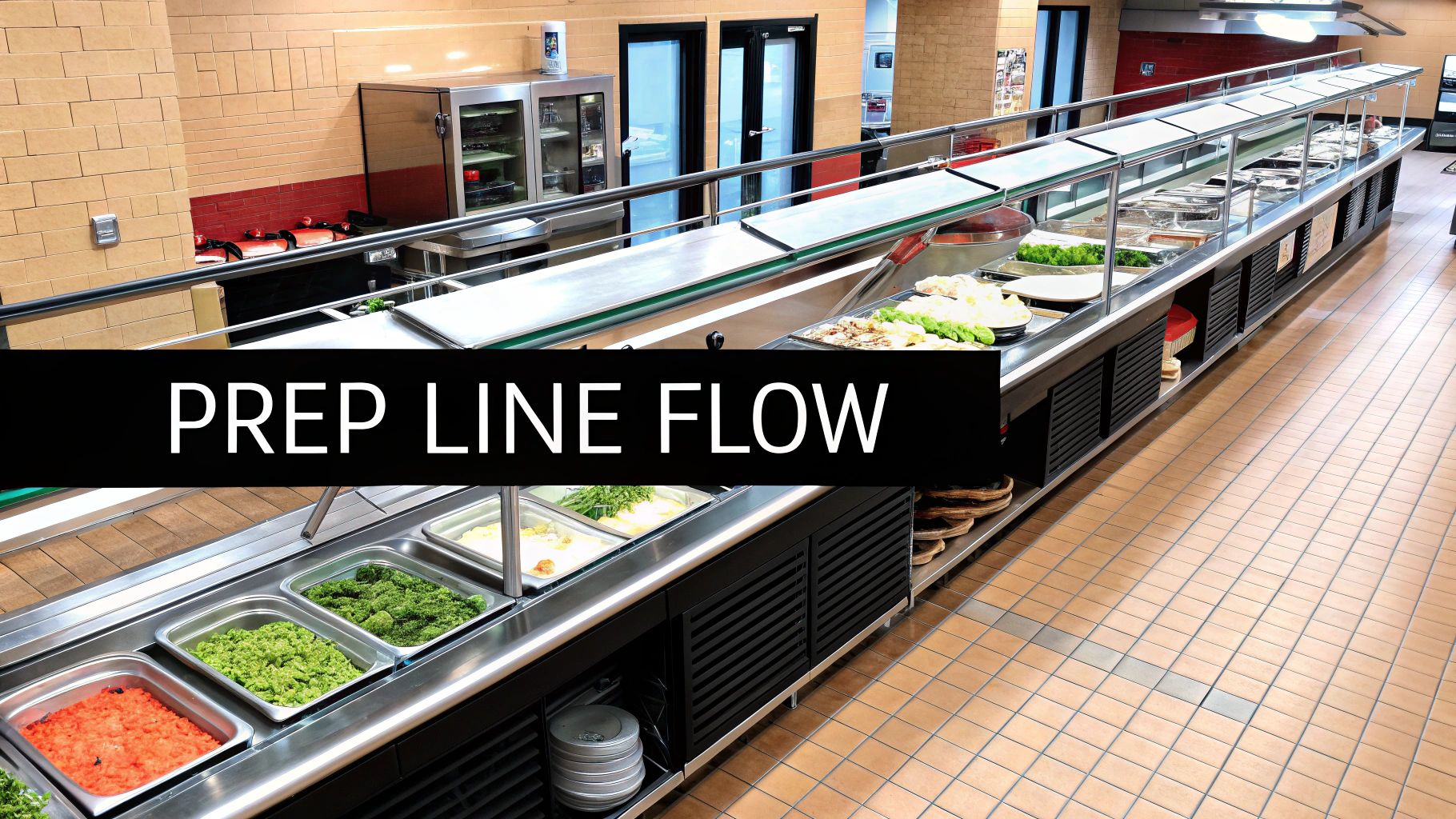
A great pizza prep table is so much more than a sturdy surface. It's the heart of your operation—the tool that sets the pace and rhythm for your entire kitchen. In a pizzeria, where speed and consistency are the name of the game, the layout of your prep line is everything.
The right kitchen stainless steel work tables can take a chaotic space and turn it into a humming, high-efficiency assembly line. This isn't just about looking professional; it's about cutting down on staff fatigue and cranking out orders faster during that dinner rush.
Think of your pizza prep line like a relay race. The baton is the pizza order, and it needs to move seamlessly from dough, to sauce, to toppings, and finally into the oven. If a team member has to take even a few extra steps, the whole process grinds to a halt. The goal is to create a straight, logical path that just makes sense.
It all starts with mapping out your space. Your work tables have to fit your kitchen's unique footprint, but crucially, they also need to leave enough room for people to move around safely.
Sizing Your Tables for Maximum Efficiency
Choosing the right size is a delicate balance. You want to maximize your workspace, but you can’t create a traffic jam in the process. Before you even think about buying, get out the tape measure. Measure your available area, then immediately subtract the clearance you need for walkways.
One of the most common mistakes I see is someone buying the biggest table they can possibly fit, only to realize they've created bottlenecks that slow everyone down.
Health and safety codes are pretty clear on this: you need a minimum of 36 to 48 inches for main kitchen walkways. This gives staff enough room to move without bumping into each other, especially when they’re carrying hot pans or heavy boxes. For the smaller gaps between pieces of equipment, you can get away with 30 inches, but no less.
A well-planned workflow isn't just faster—it's safer. Giving your team proper aisle clearance drastically cuts down on collisions, spills, and injuries, which is non-negotiable for keeping a kitchen productive and happy.
When you plan your layout with these clearances in mind from the start, you can pick tables that give you plenty of prep surface without killing your mobility. This is how you get that smooth flow from the walk-in, to the prep line, and over to the ovens.
Essential Configurations for a Pizzeria
Beyond just the dimensions, a few key features can turn a standard table into an absolute powerhouse for making pizzas. These aren't just bells and whistles; they're designed to solve the real, everyday problems that every pizzeria owner faces, from messy sauce splatters to the constant scramble for storage.
Here are the non-negotiable features you should look for on any pizza-focused kitchen stainless steel work table:
-
Integrated Backsplashes: A backsplash is that simple raised edge along the back of the table, and in a pizzeria, it’s a game-changer. It stops tomato sauce, olive oil, and runaway toppings from hitting the wall. This one feature will save you a ton of cleaning time and helps keep your whole prep area more hygienic.
-
Undershelves for Storage: Space is always at a premium in a commercial kitchen. An undershelf literally doubles your storage capacity without taking up an inch more of floor space. It’s the perfect home for those 50-pound bags of flour, stacks of dough boxes, and big containers of sauce—keeping them off the floor and right where you need them.
-
Casters for Mobility: Adding locking casters (wheels) to your tables gives you incredible flexibility. You can easily roll a table out of the way for deep cleaning or completely reconfigure your kitchen layout if your menu changes. Just make sure they are heavy-duty locking casters so the table stays rock-solid when you’re kneading dough.
When you thoughtfully pick the right size and insist on these key features, you’re not just buying furniture. You’re investing in the central hub of an efficient, organized, and highly profitable pizza operation. It's this kind of strategic thinking that gets every pizza from the ticket machine to the customer as quickly as humanly possible.
Meeting Health Codes with NSF Certified Tables
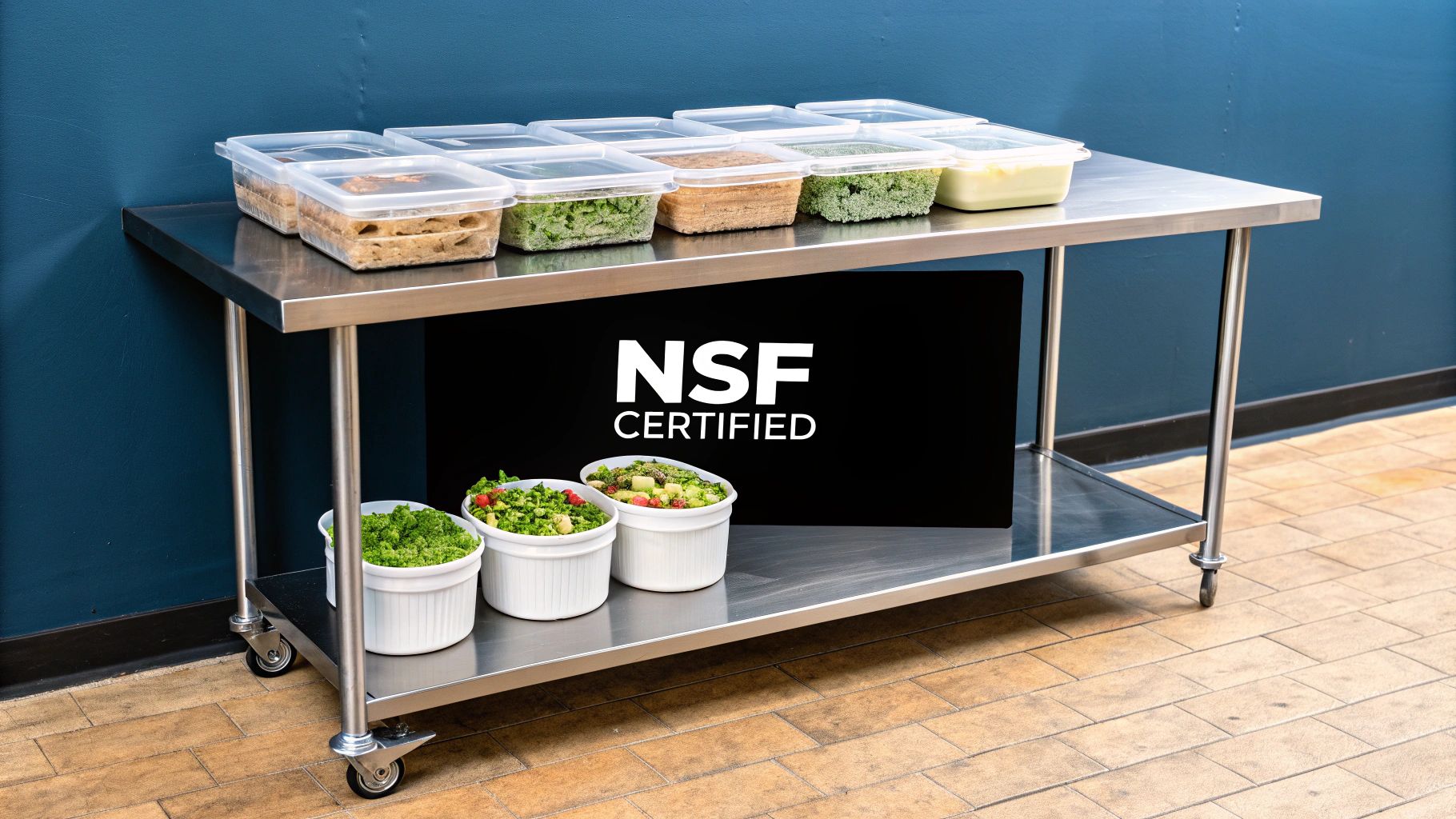
In a pizzeria, food safety isn't just a talking point—it's everything. When the health inspector shows up unannounced, one of the first things they’ll scan for is that small, circular blue seal from NSF International on your equipment. That little mark is your golden ticket, proving your kitchen stainless steel work tables are built to the highest possible standard for public health.
Don’t mistake an NSF (National Sanitation Foundation) certification for a simple sticker. It’s a rock-solid guarantee that a table has been put through the wringer—tested and verified to be safe for food, a breeze to clean, and tough against bacterial growth. For a busy pizza shop where flour dust, stray cheese, and tomato sauce get into every nook and cranny, this is non-negotiable.
Sure, you might save a few bucks upfront on a non-certified table. But that decision can open a Pandora's box of failed inspections, hefty fines, and the nightmare scenario of a foodborne illness outbreak. An inspector can spot a non-compliant table from across the room, and it immediately sends up a red flag that food safety might be getting overlooked.
What Makes a Table NSF Certified?
So, what exactly is a health inspector looking for in an NSF-certified table? It all boils down to one simple idea: eliminate any place for bacteria to hide. The philosophy is straightforward: no cracks, no crevices, no problems.
NSF standards demand specific manufacturing details that make a surface perfectly smooth and easy to sanitize. Here’s what that looks like in practice:
- Seamless Welds: All joints and corners are welded so smoothly that there are no gaps or pits for food particles to get trapped.
- Coved Corners: Instead of a sharp 90-degree angle where the tabletop meets a backsplash, certified tables have a rounded, "coved" corner. This design lets you wipe down the entire surface in one clean, effective motion.
- Non-Porous Surfaces: The stainless steel itself must be a quality grade that won’t absorb liquids or corrode from acidic foods like tomato sauce.
An NSF-certified table is engineered with cleaning in mind from the very start. Every curve, weld, and edge is designed to stop bacterial buildup before it starts, giving you a hygienic prep space with minimal effort. This smart design is your first and best line of defense in food safety.
Specialized Tables for Peak Pizza Performance
Beyond your standard prep surfaces, NSF certification also applies to the specialized kitchen stainless steel work tables that are the lifeblood of a pizzeria's workflow. The most critical of these is the refrigerated pizza prep table.
These units are a masterclass in efficiency, combining a durable stainless steel work surface with built-in, refrigerated ingredient rails. This setup keeps crucial toppings like cheese, pepperoni, and veggies chilled to a food-safe temperature while keeping them just an arm's length away from the pizza maker.
This fusion of cold storage and prep space ensures your ingredients stay fresh and well out of the temperature "danger zone" (40°F to 140°F), where bacteria multiply like crazy. You can learn more by checking out our food safety guidelines for restaurants.
Of course, keeping your kitchen safe goes beyond just your equipment. It means taking a holistic approach, which includes following a top fire safety inspection checklist to prevent other hazards. At the end of the day, investing in NSF-certified equipment isn't just an expense; it's an investment in your business's reputation and its future.
Keeping Your Stainless Steel in Top Condition
Your stainless steel work tables aren't just furniture; they're a serious investment in your pizzeria's future. The secret to making that investment last a lifetime is proper, consistent care. This keeps the surface hygienic, looking sharp, and ready for the daily grind of a busy pizza prep line.
The good news is, maintaining stainless steel is refreshingly simple. You don't need a cabinet full of expensive, specialized chemicals. All it takes is a straightforward, disciplined routine to protect the steel’s finish, prevent damage, and make sure you’re always up to health code.
Think of the surface of your stainless steel table as having an invisible shield. This layer, called chromium oxide, is what stops rust and corrosion in their tracks. As long as you keep it clean and avoid harsh chemicals or abrasive scrubbers, it will constantly self-heal and protect the metal underneath.
Creating a Simple and Effective Cleaning Routine
Consistency is everything. A few minutes of cleaning each day will save you from major headaches down the road. In a pizzeria, where you're constantly dealing with acidic tomato sauce, grease, and flour, this daily upkeep is absolutely non-negotiable.
Here’s a practical playbook for keeping your tables in pristine shape:
- Daily Wipe-Down: At the end of every single shift, your tables need a thorough cleaning. Grab a soft cloth or sponge, warm water, and a mild, food-safe detergent. This is your first line of defense to get rid of food particles before they have a chance to dry and harden.
- Weekly Deep Clean: Once a week, set aside a few minutes to tackle any tougher spots. For that baked-on grease or stubborn food residue, a simple paste of baking soda and water works wonders. It's a fantastic non-abrasive solution. Just apply the paste, let it sit for a few minutes, and gently scrub it away.
- Immediate Spill Response: Don't let spills sit around. Acidic stuff like tomato sauce, lemon juice, or vinegar can start to eat away at that protective layer if left for too long. Wipe them up right away with a damp cloth to prevent any potential etching or staining.
The cleaning techniques you use are just as important as the routine itself. This same logic applies to all the other stainless steel equipment in your kitchen. For a complete overview, check out our guide on the best way to clean a stainless steel refrigerator (https://pizzapreptable.com/blogs/pizza/best-to-clean-stainless-steel-refrigerator).
The Pro-Tip: Always Clean with the Grain
Here's one of the most important things to remember: always clean "with the grain." If you look closely at your tabletop, you’ll notice very faint lines or a brushed pattern in the steel. Wiping and scrubbing in the same direction as these lines helps prevent tiny scratches that can dull the finish over time.
Cleaning against the grain is like sanding wood the wrong way—it creates small scratches that not only look bad but can also trap microscopic food particles, making the surface harder to sanitize effectively over time.
To wrap up your cleaning routine and really make those tables shine, a simple rinse and dry is the final, crucial step. After you've wiped everything down with detergent, go over the surface again with a clean, damp cloth to remove any soap residue. Then, immediately dry it with a soft, dry towel. This simple action prevents those annoying water spots from hard water, which can leave mineral deposits and make the surface look dull.
By sticking to this straightforward maintenance plan, your kitchen stainless steel work tables will stay hygienic, reliable, and a visually appealing centerpiece of your pizzeria for years and years.
How to Budget and Buy the Right Table
Alright, let's talk money. Investing in the right kitchen stainless steel work tables isn't about finding the cheapest option; it's about making a smart investment in your pizzeria's future. The price tag you see is a direct reflection of size, the quality of the steel, and any special features that will make your kitchen run smoother.
Understanding what drives the cost is the first step to buying with confidence. A big, beefy 14-gauge table is naturally going to cost more than a smaller 18-gauge utility table. Likewise, a table built with premium 304-grade stainless steel will have a higher price than one using 430-grade steel for its undershelf and legs—and for good reason.
Little extras add up, too. Heavy-duty locking casters that let you roll the table out for deep cleaning, an integrated backsplash to keep your walls pristine, or a refrigerated base for toppings will all nudge the final price. The trick is to create a detailed spec list before you start shopping. That way, you can get accurate quotes and avoid paying for bells and whistles you’ll never use.
New Versus Used Equipment
When you're just starting out, the temptation to score a deal on used equipment is huge. And while you can find some absolute gems, this path is full of potential pitfalls. A pre-owned pizza prep table might look like a bargain, but hidden problems can quickly turn into a nightmare of costly repairs or, even worse, health code violations.
Buying used is a calculated risk. A great find can save you a bundle, but a bad purchase can become a recurring headache of failed inspections and unexpected repair bills. You absolutely have to inspect every single inch of a used table before you even think about handing over cash.
If you’re kicking the tires on a used pizza prep table, treat this checklist like your bible:
- Check for Warping: Lay a level or a straight edge across the tabletop. If you see any major dips or bows, it's a sign the table has been overloaded or damaged.
- Inspect the Welds: Get up close and personal with every joint and corner. Look for cracks, rust, or signs of repair. A broken weld isn't just a stability issue; it's a perfect hiding spot for bacteria.
- Look for Dents and Scratches: A few minor scratches are just battle scars from a busy kitchen. But deep gouges are a red flag for health inspectors because they’re nearly impossible to sanitize properly.
- Give It a Good Shake: Grab the table and try to wobble it. A shaky frame is a major safety hazard, especially when your team is kneading dough or chopping ingredients at full speed.
Financing and Leasing Options
For most startups, dropping thousands of dollars on brand-new equipment just isn't in the cards. That's where financing and leasing come in, making top-tier kitchen stainless steel work tables much more attainable. Leasing, in particular, lets you get the equipment you need now with lower monthly payments, which keeps your cash free for other essentials like payroll, inventory, and marketing.
This isn't a niche market, either. The demand for durable, hygienic work surfaces is exploding. Projections show the global market for kitchen stainless steel work tables is set to climb from USD 1.2 billion to USD 1.8 billion by 2033. You can dig into more steel table market trends on Accio.com to see for yourself. This growth is great news for you, as it means there’s a wide variety of purchasing and financing options out there to fit any pizzeria's budget, big or small.
Frequently Asked Questions
When you're outfitting a pizzeria, a few questions about stainless steel work tables pop up again and again. These aren't just minor details; getting the right answers here helps you invest with confidence, making sure your prep line is built to last.
Let's tackle the most common questions head-on. Think of this as the advice you'd get from someone who's seen it all in countless kitchens.
Common Questions About Pizza Prep Tables
Should I get a work table with wheels (casters)?
Mobility is a huge plus. Casters make it a breeze to clean underneath the table or shuffle your layout around. But for your main dough station—where you're putting your weight into kneading—fixed legs are your best bet for rock-solid stability.
If you absolutely need the flexibility of wheels on your primary prep table, make sure you get heavy-duty locking casters. They're designed to keep the table firmly in place, even when you're working hard.
Can I use a wood top table for making pizza dough?
While a classic butcher block has that traditional feel, it’s a non-starter for most commercial kitchens. Wood is porous, meaning it soaks up moisture and can become a breeding ground for bacteria. That makes it a sanitation nightmare and a red flag for health inspectors.
Stainless steel, on the other hand, is non-porous, a snap to clean, and the required standard for food safety in virtually every professional pizzeria.
Here's the bottom line: Food safety is everything. Health inspectors love the smooth, impenetrable surface of stainless steel. Wood's natural grain introduces sanitation risks that just aren't worth it in a commercial kitchen.
What's the difference between a solid and a wire undershelf?
This really comes down to what you’re storing. A solid undershelf is perfect for keeping bags of flour, sugar, or smaller containers from falling through. It’s a clean, stable surface.
A wire (or slatted) undershelf is great for promoting air circulation, which can be a real benefit in a humid kitchen. It also makes cleaning the floor underneath the table much easier since crumbs and spills fall right through.
Ready to build the ultimate pizza prep line? At Pizza Prep Table, we specialize in providing top-tier, NSF-certified kitchen stainless steel work tables designed to meet the unique demands of pizzerias. Explore our collection and find the perfect foundation for your kitchen today at https://pizzapreptable.com.