

Natural Gas vs Propane for Your Pizzeria
Deciding between natural gas and propane isn't just a technical detail for your pizzeria—it's a core business decision that hits your wallet and affects how your pizzas cook. There’s no single right answer, but it often boils down to your location. For most pizzerias in cities or suburbs with utility access, natural gas is the clear winner for cost and convenience. But for anyone operating off the grid—think rural spots, food trucks, or kitchens needing serious heat for specialty ovens—propane is the high-octane fuel that makes it all possible.
Choosing the Right Fuel for Your Pizza Restaurant
When you're equipping a pizzeria, the natural gas vs. propane debate is about more than just hooking up a line. It's a strategic choice that impacts your startup costs, your monthly bills, and even the final crisp on your crust. The decision really comes down to three things: where you're located, how much heat you need for your pizza ovens, and what you're willing to spend upfront versus long-term.
If a municipal gas line already runs to your building, natural gas is almost always the path of least resistance. It's reliable, cheap, and you never have to worry about running out of fuel while firing pizzas mid-service.
On the other hand, if you're setting up a countryside pizzeria or a mobile pizza truck, propane gives you total freedom. It's a portable powerhouse you can set up anywhere, freeing your business from the constraints of public infrastructure. This is why it's the go-to fuel for entrepreneurs taking their Neapolitan pizza ovens to festivals, farmers' markets, or remote foodie destinations.
Fueling Your Pizzeria’s Success
Beyond your address, the specific equipment in your kitchen—from high-temp deck ovens to heated compartments in your pizza prep tables—has its own demands. Getting familiar with what each fuel brings to the table helps you make a smart decision that lines up with your menu and your business plan. You can find some interesting perspectives by comparing different gas fuels for installations, even when the context is different.
The right fuel choice is a foundational business decision. It directly influences your startup costs, ongoing operational expenses, and even the consistency of the final product you serve your customers.
To make this crucial choice a little easier, here’s a quick breakdown of the key differences to keep in mind for a pizza restaurant.
| Feature | Natural Gas | Propane |
|---|---|---|
| Availability | Limited to areas with established utility pipelines. | Available anywhere; delivered and stored in on-site tanks. |
| Energy Output | Lower energy density (approx. 1,030 BTUs per cubic foot). | Higher energy density (approx. 2,490 BTUs per cubic foot). |
| Installation | Requires connection to a municipal gas line. | Requires on-site storage tank installation. |
| Supply | Continuous and uninterrupted from the utility provider. | Requires scheduled deliveries and inventory management. |
| Ideal For | Urban pizzerias, high-volume kitchens with stable utility access. | Rural locations, food trucks, specialty high-heat pizza ovens. |
Core Differences Between Natural Gas and Propane
To make the right call for your pizzeria, you have to get a feel for how natural gas and propane actually behave in a real kitchen. This isn’t about some complex chemistry lesson; it’s about how each fuel source acts when you're firing up your main pizza oven or keeping your pizza prep table's holding units warm. The biggest divide comes down to how they're supplied, which directly shapes your daily operations.
Natural gas, which is mostly methane, is a utility. It flows straight to your restaurant through a network of underground pipes, just like tap water. It's always there when you need it. This means you’ll never have to schedule a delivery or stress about running out of fuel during a chaotic Friday night pizza rush.
Propane, on the other hand, is a self-contained energy source. A supplier delivers it to your property, where it's stored under pressure in liquid form inside dedicated tanks. This setup gives you energy independence but adds a critical task to your plate: inventory management.
Supply Chain and On-Site Logistics
The most practical difference is simply how you get the fuel. Natural gas is managed by a utility company that handles all the infrastructure right up to your meter. Once you're hooked up, the supply is seamless and doesn't require any active management from you or your team.
Propane puts you in the driver's seat, and that comes with a few responsibilities. You'll need to keep an eye on your tank levels and schedule refills to avoid an unexpected shutdown. While most suppliers offer automatic delivery services that track your usage, the ultimate responsibility for maintaining a steady supply still falls on the restaurant owner. This logistical piece is a major factor in the natural gas vs. propane debate for any busy pizzeria.
For a pizzeria owner, the choice really boils down to convenience versus control. Natural gas gives you a 'set-it-and-forget-it' utility, while propane offers off-grid capability at the cost of having to actively manage your fuel.
Energy Density and Performance Implications
Another critical distinction is energy density. To put it simply, propane packs a bigger punch. A cubic foot of propane delivers more than twice the heat—measured in British Thermal Units (BTUs)—as the same amount of natural gas (2,490 BTUs vs. 1,030 BTUs).
What does that mean for your pizza kitchen? Propane-fueled equipment, especially pizza ovens, can often heat up faster and hold high temperatures more consistently. This is a massive advantage for high-volume pizzerias that need rapid temperature recovery between pies. This performance edge is why you often see propane used for mobile pizza trucks or specialty Neapolitan ovens that need intense, unwavering heat.
For a deeper dive into propane's real-world applications, looking at how it powers equipment like Briggs and Stratton propane generators can offer some practical insights. Seeing how it performs under different demands highlights its reliability—an essential trait for any power source in a restaurant. This foundational knowledge is key to making the right choice for your pizzeria.
Comparing Pizza Oven Performance and Heat Output
The oven is the soul of any pizzeria. The fuel you choose directly impacts how your pizzas cook, from the quiet lunch hour to the chaotic dinner rush. When you're debating natural gas vs. propane, you're not just picking a utility—you're deciding how quickly your pizza oven preheats and how your crust will turn out.
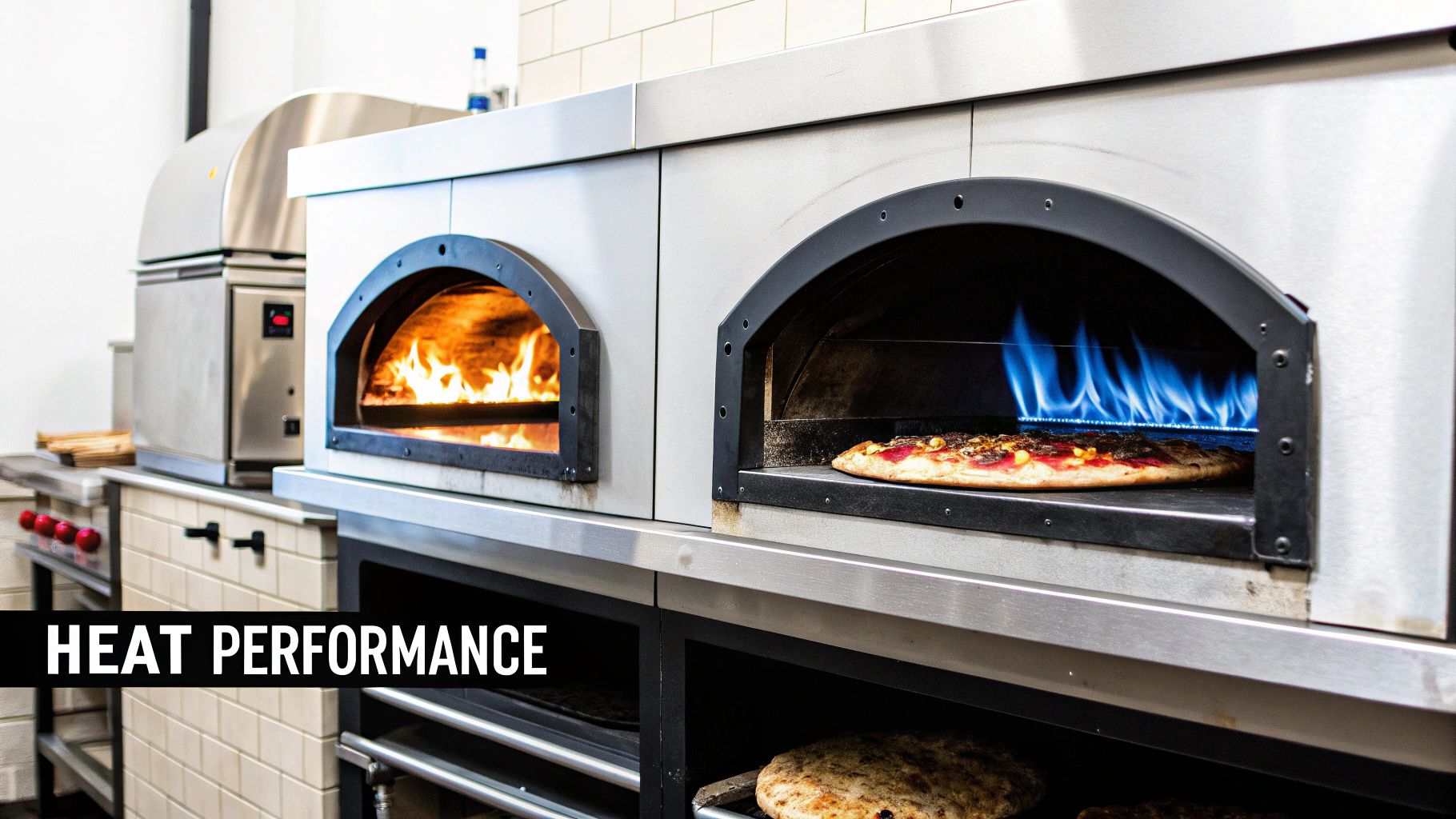
At the heart of this decision is a simple measurement: the British Thermal Unit (BTU). Think of a BTU as the amount of energy needed to heat one pound of water by one degree Fahrenheit. While it sounds technical, its effect on your pizza kitchen is incredibly practical.
Understanding BTUs and Heat Density
The biggest performance difference between these fuels comes down to energy density. Simply put, propane packs a much bigger punch in the same amount of space, which has huge implications for a busy pizzeria.
- Propane: Delivers a hefty 2,500 BTUs per cubic foot. This high heat output means propane-fueled pizza ovens can preheat faster and, more importantly, recover their temperature more quickly after you open the door to load another pizza.
- Natural Gas: Provides around 1,000 BTUs per cubic foot. While it's less dense, natural gas offers a remarkably consistent and steady flame that's perfect for conveyor or deck ovens that need to maintain a set temperature for hours.
This isn't just a number on a spec sheet; it translates directly to your kitchen's workflow. Imagine a Friday night rush where you're firing dozens of pizzas back-to-back. Every time you open that oven door, heat escapes and the temperature drops. A high-BTU propane oven bounces back to its optimal cooking temperature almost instantly, preventing delays and ensuring every pizza cooks just as quickly as the last.
For a high-volume pizzeria, the rapid temperature recovery of a propane oven can be a game-changer. It keeps the kitchen moving and guarantees a consistent product even during the most intense dinner rush.
But this doesn't automatically make propane the winner for every pizzeria. For a restaurant using a conveyor oven that needs unwavering, even heat to pump out hundreds of identical pizzas, the steady, reliable flame of natural gas is often the better fit. It excels at maintaining a stable temperature for hours on end, which is crucial for consistency.
Real-World Pizza Cooking Scenarios
The best fuel often depends on the type of pizza oven you're using and the style of pizza you’re making. Choosing the right appliance is the critical first step; you can explore your options in our ultimate guide to choosing the best pizza oven to see how different models work with each fuel.
Let's break down how this plays out in a couple of common pizzeria setups.
1. The Artisanal Brick Oven
For chefs crafting Neapolitan or other artisanal styles, controlling the flame is everything. They need to create that iconic "live flame" that rolls across the oven dome to cook the top of the pizza while the deck bakes the crust to perfection.
- Propane's Advantage: Its high heat output creates a powerful, vibrant flame that can hit the 900°F+ temperatures needed for a 60-second bake. Many pizzaiolos feel the propane flame is more responsive, allowing for quick adjustments to get that perfect leopard-spotted char.
- Natural Gas's Role: It can absolutely power a brick oven, but it might take a bit longer to reach those ultra-high temperatures. However, its steady burn is often praised for creating a consistent "soaking heat" in the oven's thermal mass, which is fantastic for baking other things like bread or calzones.
2. The High-Volume Deck or Conveyor Oven
In pizzerias focused on getting a lot of pies out the door consistently, like those serving American-style pizza, the priorities shift. It's less about intense, variable heat and more about stable, predictable cooking.
- Natural Gas's Advantage: This is where natural gas really shines. Its continuous, stable supply ensures that a conveyor oven maintains its exact temperature setting for hours. This eliminates variables and guarantees that the first pizza of the day is cooked identically to the last.
- Propane's Role: Propane can certainly power these ovens, and its quick preheating is always a plus. The main thing to watch is making sure your fuel delivery system can keep up with the constant demand of a multi-deck or long conveyor oven during peak hours without any pressure drops.
Ultimately, the choice between natural gas and propane for your pizza oven is a strategic one. You have to weigh the need for raw power and rapid recovery against the demand for unwavering stability and consistency.
Analyzing the Total Cost of Ownership
Choosing your fuel source is a huge financial decision, one that will echo through your pizzeria's budget for years. It's not just about the price per unit; you have to look at the Total Cost of Ownership (TCO). This means adding up everything from one-time installation fees to the monthly bills that will become a fixed part of your operational costs.

Getting this financial picture right is a critical piece of your business plan. As we break down in our guide to restaurant startup costs breakdown, your energy infrastructure is a major line item you can't afford to miscalculate.
Initial Installation and Setup Costs
First up, you have to get the fuel to your equipment. With natural gas, you’re tapping into the local utility grid. If your pizzeria already has a gas line, the cost is pretty manageable—think permits, a meter installation, and the interior plumbing. But if you need the utility company to extend a new line to your restaurant, the price can jump into the thousands, depending on how far they have to dig.
Propane is a different story altogether. Installation is all about on-site storage, which means buying or leasing a big propane tank. Leasing might seem cheaper upfront, but you're often locked into a contract with one supplier. Buying the tank gives you the freedom to shop around for the best propane prices, but it’s a much bigger check to write at the start.
The decision between a one-time utility connection fee and the ongoing logistics of tank leasing or purchasing is the first major financial fork in the road. Your restaurant's location—whether it's on a main street or a country road—will likely make this choice for you.
Ongoing Fuel Expenses and Price Volatility
Once you're up and running, the fuel itself becomes your main ongoing expense. Natural gas is usually priced per therm or cubic foot and is known for its relatively stable costs. Because it's piped directly to you, the price isn't as prone to the wild swings that affect fuels delivered by truck.
Propane, sold by the gallon, is a bit more of a rollercoaster. Its price is tied to crude oil markets, seasonal demand (it spikes in winter), and local supply chains. This means a pizzeria owner on propane has to be a savvy budgeter, watching for price swings and timing fuel deliveries to avoid getting hit with premium rates.
The stability of natural gas is a huge selling point for budget-conscious pizzeria owners. With U.S. production expected to average a robust 107.3 billion cubic feet (Bcf) per day through August 2025, the supply is there to keep costs predictable for businesses.
Let's break down how these costs might look for a typical pizza restaurant.
Natural Gas vs Propane Cost Comparison for a Pizza Restaurant
This table breaks down the typical costs associated with using natural gas and propane, helping pizzeria owners estimate their total investment and operational expenses.
| Cost Factor | Natural Gas | Propane |
|---|---|---|
| Installation | $500 - $5,000+ (highly variable) | $1,000 - $3,000 (tank purchase) or leasing fee |
| Fuel Unit | Therm or CCF (100 cubic feet) | Gallon |
| Average Unit Cost | $1.00 - $2.00 per therm | $2.50 - $4.00 per gallon |
| Price Stability | High (regulated, pipeline delivery) | Low to Medium (market-driven, seasonal) |
| Delivery Fees | None (included in utility bill) | Yes, unless included in per-gallon price |
| Tank Rental/Lease | N/A | $50 - $200 annually (if leasing) |
While propane might have a lower installation cost in some remote areas, natural gas almost always wins on long-term operational expense due to its lower unit cost and price stability.
Equipment and Maintenance Costs
The final piece of the puzzle is your equipment, from your main deck oven to your heated pizza prep tables. The vast majority of commercial pizzeria appliances are built to run on natural gas right out of the box.
If you choose propane, your gear will need a conversion kit installed by a certified technician. These kits are essential for adjusting the orifices and pressure regulators to safely handle propane's higher energy output, ensuring your pizza ovens and other appliances run efficiently.
The conversion kit itself isn't a huge expense, but it's another cost—and another technician visit—to factor into your setup. Long-term, maintenance costs for both fuel types are pretty similar, as long as everything is installed correctly. The key is making sure your appliances are properly calibrated for the fuel you’re using to maximize efficiency and avoid unnecessary wear and tear.
Navigating Installation and Infrastructure Logistics
Getting fuel to your pizza ovens and other appliances isn’t as simple as flipping a switch. Your choice between natural gas and propane sends you down two completely different paths, each with its own set of timelines, costs, and headaches. You absolutely need to understand these infrastructure demands before you get too far into planning your pizzeria's opening.
If you’re leaning toward natural gas, your journey starts with the local utility provider. This means tapping into an existing municipal pipeline, a project that demands a whole lot of coordination and even more patience. Your first move is a service inquiry to make sure there's even a main line close enough to your pizzeria.
From there, get ready for some administrative hurdles. You'll be swimming in permit applications, site inspections, and scheduling headaches with utility crews. The whole process can take anywhere from a few weeks to several agonizing months, depending on how fast your local bureaucracy moves and how complex the job is.
The Natural Gas Connection Process
Getting a new natural gas service line hooked up involves several key stages, and trust me, it's rarely a quick job. Pizzeria owners need to bake these steps into their construction timeline to sidestep delays that can kill your opening schedule.
- Application and Site Survey: You’ll start by submitting an application to the utility company. They'll send someone out to eyeball your property and figure out the best route to run the new line.
- Permitting and Approval: This is often the longest part of the wait. The utility and your contractor have to get all the right municipal permits for digging up streets and installing the line.
- Trenching and Installation: Once you get the green light, crews will start trenching from the main line to your building, then install the service line and meter.
- Inspection and Activation: Before you can fire up that pizza oven, a final inspection from both the utility and a local inspector is mandatory. Only then will they turn on the gas.
Managing On-Site Propane Storage
Choosing propane shifts the whole logistical puzzle from public utilities to your own private management. The heart of a propane setup is your on-site storage tank, and picking the right size is a decision that will directly affect whether you stay open or shut down mid-service.
To figure out the right tank size, you have to calculate the total BTU load of every single gas-powered piece of equipment you own. We're not just talking about your high-demand pizza ovens; you need to include fryers, griddles, water heaters, and even those little heated holding cabinets in your pizza prep tables. A good propane supplier can do this load calculation for you and recommend a tank—usually 500 or 1,000 gallons for a commercial kitchen—that will get you through the busiest rushes without needing constant refills.
For propane users, that tank isn't just storage; it's your private fuel reserve. Sizing it and placing it correctly aren't just suggestions—they're non-negotiable for keeping the doors open and staying on the right side of safety codes.
Tank placement is a big deal, governed by strict rules about how far it has to be from buildings, property lines, and anything that could spark a fire. The installation also has to meet local fire codes, which almost always tie into your kitchen's ventilation requirements. Keeping your pizzeria's air moving correctly is critical, and you can get the full rundown by checking out our guide on commercial kitchen ventilation requirements.
The day-to-day reality of propane is all about managing your supply. You have to keep an eye on fuel levels and schedule deliveries to avoid a nightmare scenario where you run out of fuel during a packed dinner service. While many suppliers offer automatic delivery services based on your typical usage, things can get unpredictable. For example, a nasty cold snap in January 2025 pushed U.S. propane consumption to 1.48 million barrels per day, the highest it had been for a January since 2005. This squeezed supply and caused prices to creep up, a trend you can learn more about on EIA.gov. It just goes to show how vital it is to have a reliable supplier and always keep a buffer in your tank so you’re ready for anything.
Making the Final Decision for Your Pizzeria
We've dug into the nitty-gritty of the natural gas vs propane debate for pizzerias, from BTUs for your oven to installation costs. Now, it's time to land the plane. The best fuel for your pizzeria isn't about finding a one-size-fits-all answer; it's about picking the one that perfectly fits your business, your building, and the kind of pizza you want to sling.
More often than not, this decision really comes down to one simple question: do you have access to a municipal gas line? Once you know that, the path forward gets a lot clearer.
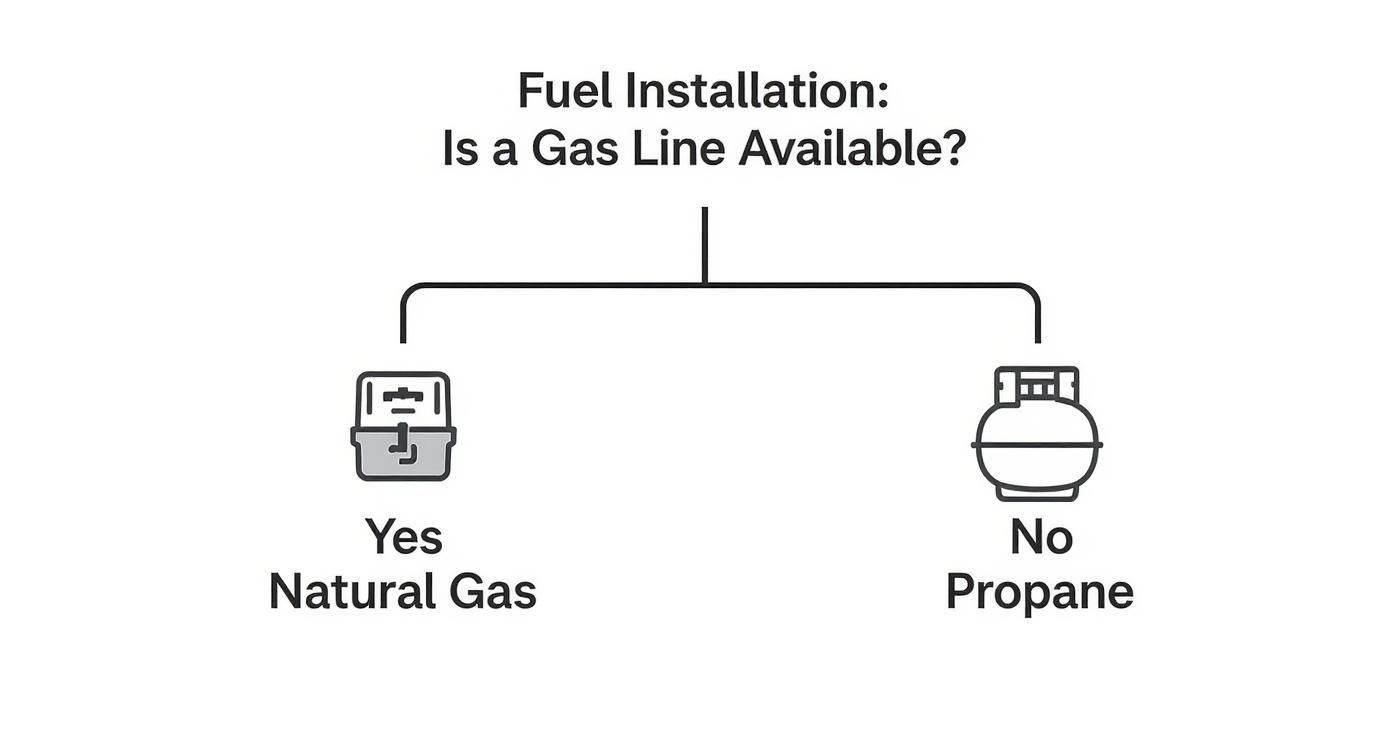
As you can see, your pizzeria's address often makes the choice for you. It determines whether you can hook into a steady utility supply or if you need to manage your own self-contained fuel source.
Choosing Your Pizzeria’s Fuel Source
To make your final call with confidence, let's break it down into a couple of straightforward scenarios. Find the one that sounds most like your pizzeria, and you'll have your answer.
Choose Natural Gas if…
Your top priority is keeping long-term operating costs down and avoiding the hassle of fuel management. If your pizzeria is in a city or suburb with existing gas lines, this is your play. Natural gas gives you a reliable, uninterrupted supply for everything from your deck oven to the heated compartments in your pizza prep table, locking in predictable monthly bills.
Choose Propane if…
You're all about operational freedom, setting up shop off the grid, or you need the absolute highest heat output possible. Propane is the only choice for restaurants in rural locations or for the food truck slinging pies at festivals. It's also the go-to for chefs whose specialty ovens demand the scorching BTUs needed for that perfect Neapolitan char, delivering raw power and quick temperature recovery that natural gas can sometimes struggle to match.
Your fuel choice is a long-term investment in your pizzeria’s future. Align it perfectly with your location, budget, and culinary ambitions to build a foundation for sustained success and profitability.
At the end of the day, picking between natural gas and propane is a strategic move that will define your kitchen's workflow and your restaurant's bottom line for years. By weighing your specific situation against these real-world scenarios, you can choose the fuel source that will not only fire up your ovens but also power your business's success. Whether you go for the steady, low-cost reliability of natural gas or the high-octane flexibility of propane, making a well-informed choice is your first ingredient for a killer pizzeria.
Frequently Asked Questions
When you're deep in the weeds of planning a pizzeria, a few key questions about natural gas and propane always pop up. Let's tackle the common ones, especially how your fuel choice affects crucial gear like your pizza prep tables.
Can My Pizza Prep Table Use Either Fuel?
Here’s the short answer: yes, almost always. Most commercial kitchen equipment, including any heated sections in pizza prep tables, rolls off the factory line set up for natural gas. It's the default.
But converting to propane is a standard procedure. It involves a conversion kit that a certified technician uses to swap out specific parts, like orifices and pressure regulators. This isn't a DIY job—the components need to be adjusted to handle propane's higher energy density safely. Trying to do it yourself will void your warranty and, more importantly, create a serious safety risk.
Is One Fuel Safer Than the Other for a Pizzeria?
Both fuels are perfectly safe when you have them installed and maintained by a professional in your pizzeria. The real safety difference comes down to simple physics: their density.
- Natural Gas: It's lighter than air. If a leak happens, the gas will rise and dissipate, ideally finding its way out through your kitchen's ventilation system.
- Propane: This one's heavier than air. In a leak, it will sink and can pool in low-lying spots like basements or along the floor, which creates a more concentrated ignition risk.
No matter which you choose, proper ventilation and a certified installation are completely non-negotiable for a safe pizzeria kitchen.
The choice between natural gas and propane often comes down to accessibility first and cost second. If a gas line is available, it's typically the more economical long-term choice. If not, propane offers powerful, reliable energy anywhere.
Does Fuel Choice Affect Insurance or Permitting?
Absolutely. Your fuel choice sends ripples through your insurance policies and permitting process for your pizzeria. Insurance carriers will demand proof that every piece of gas equipment—from the main pizza oven down to the prep tables—was installed by a licensed pro and meets all local codes. Propane often gets extra scrutiny, with strict rules about where tanks can be placed relative to buildings and property lines.
Permitting is a similar story. For natural gas, you'll work with your local utility and municipality to get connected. Propane requires its own set of permits for the tank and the lines running to your pizzeria, a process your supplier should help you handle. Cutting corners here is a recipe for disaster; you could face fines, shutdowns, or a denied insurance claim right when you need it most. A professional installation is a critical investment in your restaurant's future.
For all your pizzeria needs, from high-efficiency ovens to the perfect refrigerated workstation, Pizza Prep Table has the equipment to build your ideal kitchen. Explore our selection of Pizza Prep Table models and get a free quote today.