

What Mixing Bowl to Choose for Your Next Pizza Masterpiece?
Why Your Pizza Dough Mixing Bowl Matters More Than You Think

A pizza dough mixing bowl isn't just any containerit's where your pizza magic begins. Here's what makes the right bowl essential:
Quick Answer: Best Pizza Dough Mixing Bowl Features
- Size: 4-6 quarts minimum to allow dough to double or triple during fermentation
- Material: Stainless steel (professional choice), glass (visual monitoring), or food-safe plastic (budget-friendly)
- Features: Wide base for stability, high sides to contain rising dough, smooth non-porous interior
- Lid: Airtight cover prevents dough from drying out during long fermentation
- Durability: Must withstand repeated use, kneading, and cleaning without scratching
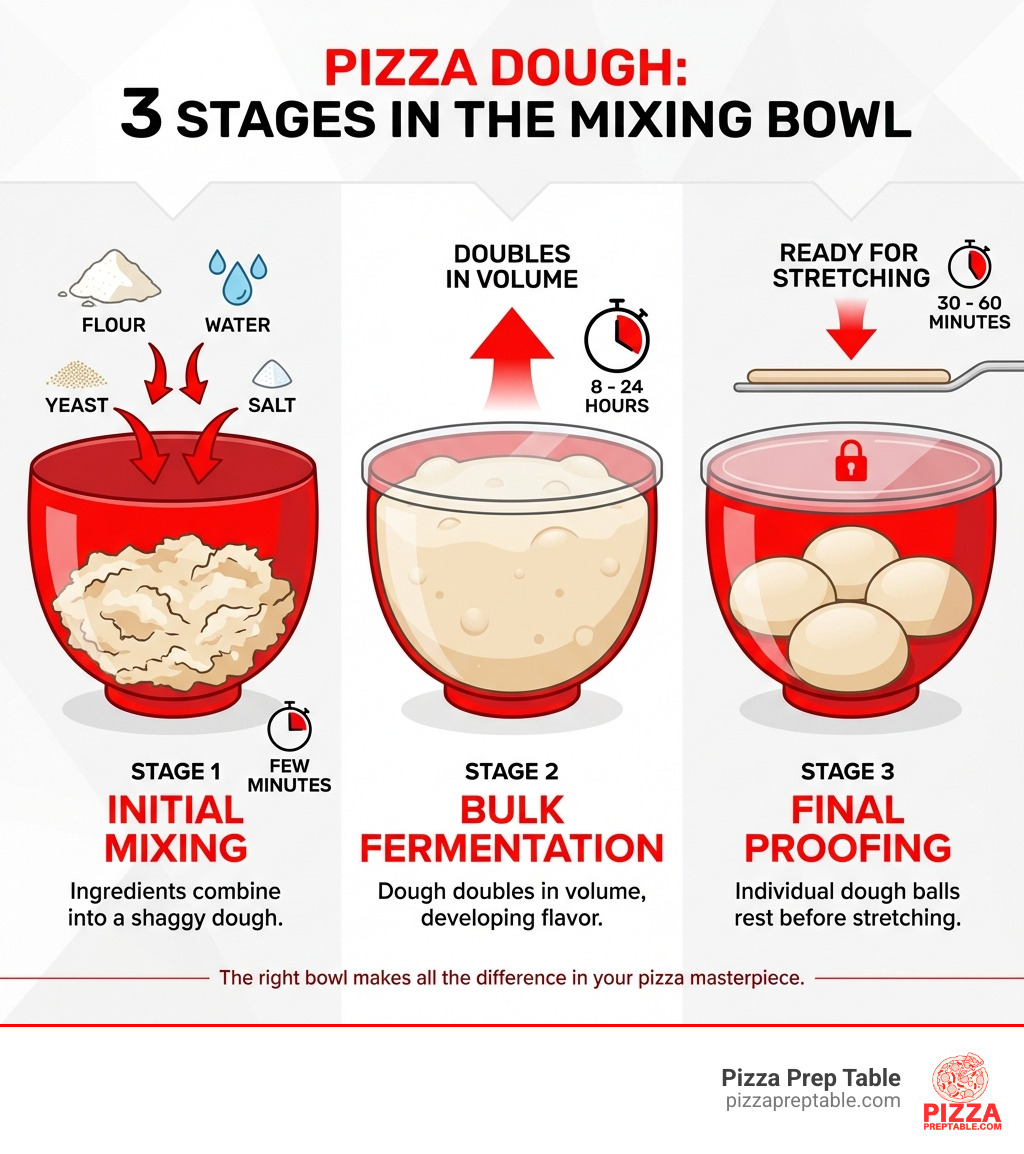
The mixing bowl you choose plays three critical roles in your pizza-making process. First, it's where you combine your ingredientsflour, water, yeast, and saltinto a cohesive dough. Second, it becomes the fermentation chamber where your dough develops flavor and texture over hours or even days. Third, it provides the space for gluten development, whether you're hand-kneading, using a stand mixer, or letting time do the work through autolyse.
Experienced bakers and professional pizza recipes consistently call for a large mixing bowl. This isn't just a suggestionit's foundational to creating consistent, high-quality dough. If you want a deeper dive into how fermentation changes dough structure, the overview of yeast breads is a helpful technical background.
Many new pizzeria owners underestimate the importance of this basic tool. They focus on ovens and prep tables (rightfully so), but overlook the vessel where their dough spends most of its life. A bowl that's too small leads to overflow and mess. One made from reactive materials can affect flavor. A bowl without proper coverage results in dried-out, crusty dough surfaces that ruin texture.
The right bowl also affects your workflow and food safety compliance. Stainless steel bowls are standard in commercial kitchens because they're non-reactive, easy to sanitize, and durable enough for daily use. Glass bowls let you monitor fermentation visually, which is invaluable when you're learning dough behavior. Even food-safe plastic bowls have their place when budget and weight are priorities.
I'm Sean Kearney, and through my years working with restaurant equipment suppliers and helping pizzeria owners outfit their kitchens, I've seen how the right pizza dough mixing bowl impacts both efficiency and final product quality. Whether you're mixing dough by hand or using a commercial spiral mixer, the bowl you choose sets the foundation for everything that follows.
Must-know pizza dough mixing bowl terms:
Essential Features of the Perfect Pizza Dough Mixing Bowl
Selecting the perfect pizza dough mixing bowl goes beyond aesthetics. It's about functionality, durability, and how it contributes to the success of your dough. Here are the essential features we always recommend looking for:
- Size and Capacity: This is perhaps the most critical feature. Your dough needs ample room to expand, often doubling or even tripling in volume during its bulk fermentation. A bowl that's too small is a recipe for a sticky, messy overflow.
- Wide, Stable Base: A wide base prevents the bowl from tipping over, especially when you're vigorously mixing ingredients or kneading by hand. Stability is key for safety and efficiency.
- High Sides to Contain Dough: As your dough rises, it will climb the sides of the bowl. High sides ensure it stays contained, preventing it from drying out prematurely on exposed surfaces and keeping your workspace clean.
- Smooth, Non-Porous Interior: A smooth surface prevents dough from sticking excessively, making it easier to transfer and clean. Non-porous materials are crucial for hygiene, as they don't harbor bacteria or absorb odors from previous uses.
- Durability for Repeated Use: Pizza dough making is a regular activity for us, and our bowls see frequent action. They need to withstand repeated mixing, rising, and cleaning cycles without warping, cracking, or showing excessive wear.
- Weight Considerations: The weight of the bowl impacts its stability and ease of handling. A heavier bowl offers more stability during mixing, while a lighter one is easier to move, especially when full of dough. We'll dive into this more when discussing materials.
How does bowl size affect the pizza dough process?
The size of your pizza dough mixing bowl isn't just about avoiding a mess; it's fundamental to the entire dough-making process. Think of it as a home for your dough during its most transformative stages.
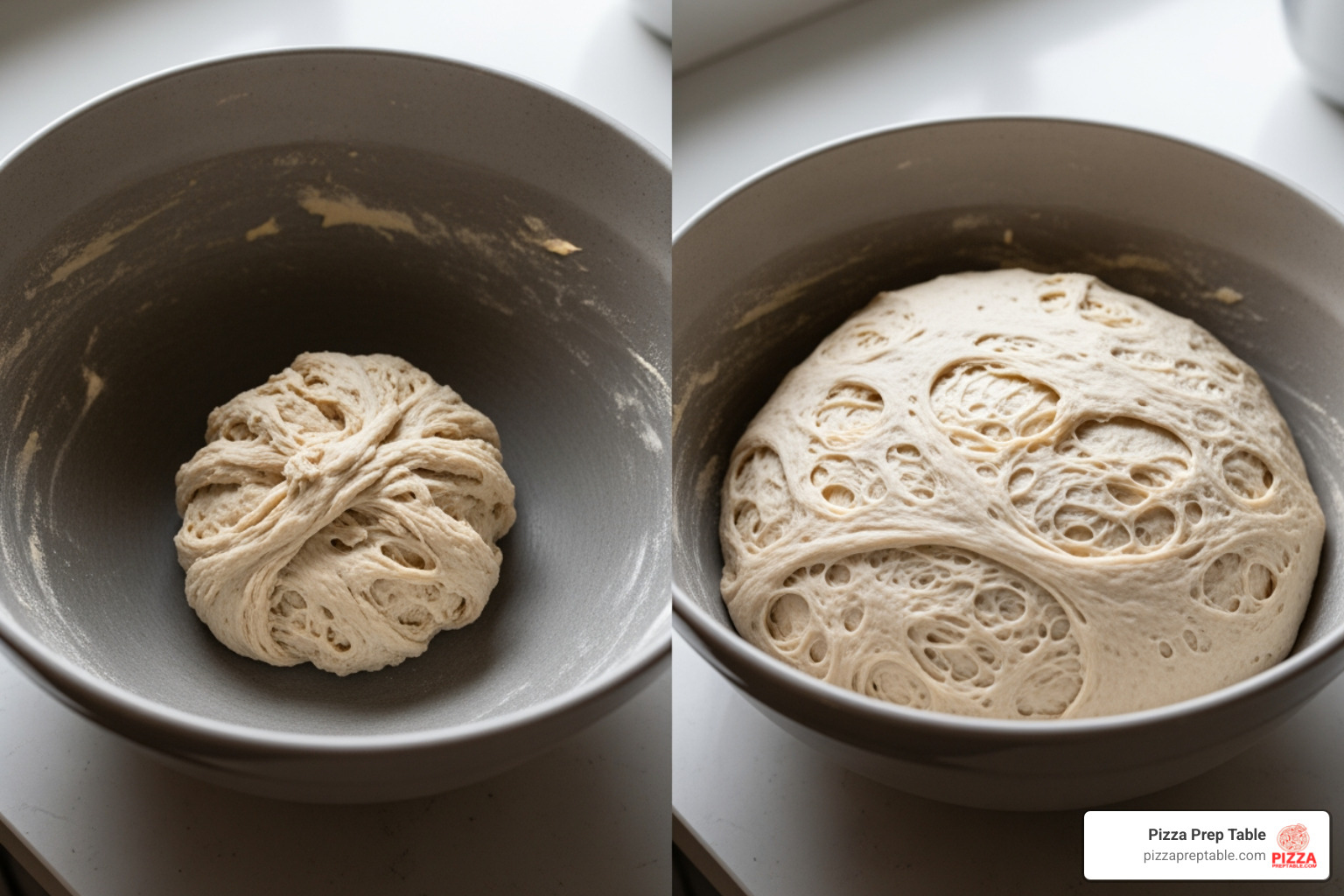
- Allowing Dough to Double or Triple: Yeast is a living organism, and as it ferments, it produces gases that cause your dough to rise. If your bowl is too small, the dough will quickly outgrow its container, leading to uneven rising and potentially deflating due to lack of space. A good rule of thumb is to choose a bowl that can comfortably hold at least twice, preferably three times, the initial volume of your mixed dough.
- Preventing Overflow: This is the most obvious benefit. Nobody wants to come back to a kitchen covered in overflowing dough. A generously sized bowl ensures your dough can expand without spilling over the edges.
- Ensuring Even Temperature: Larger bowls allow for better air circulation around the dough, which helps maintain a more consistent temperature throughout the mass. This is vital for even fermentation and flavor development.
- Ease of Mixing and Folding: A larger bowl provides more workspace, making it easier to incorporate ingredients thoroughly without spilling. If you're doing stretch-and-folds or other manual kneading techniques, the extra space is invaluable. You won't feel cramped, and your movements will be more fluid and effective.
- Standard Recipe Needs 4-6 Quarts: For most home pizza recipes making 1-2 standard pizzas, a 4-6 quart (or liter) bowl is an excellent starting point. For larger batches or if you're making several pizzas for a family gathering, you might even consider a 7-8 quart bowl. Many bakers suggest a large bowl (metal or ceramic) for hand mixing, implying the need for significant volume.
How to clean and maintain your bowl
Proper cleaning and maintenance extend the life of your pizza dough mixing bowl and ensure optimal food safety. Dough can be sticky, and if not cleaned correctly, residue can harbor bacteria or affect future batches.
-
Material-Specific Cleaning:
- Stainless Steel: Generally dishwasher safe and very easy to clean. Hot soapy water and a sponge usually suffice. For stubborn, dried-on dough, a soak in warm water will loosen it up.
- Glass: Also typically dishwasher safe. Avoid extreme temperature changes (e.g., hot bowl into cold water) to prevent thermal shock and cracking.
- Plastic: Many are dishwasher safe, but check manufacturer instructions. Handwashing can help prevent etching or clouding over time.
- Dishwasher Safety: Always check the manufacturer's recommendations. While many metal and glass bowls are dishwasher safe, some plastics may warp or degrade in high heat.
- Avoiding Abrasive Scrubbers: Rough scrubbers, steel wool, or harsh chemicals can scratch the interior surface of your bowl, regardless of material. These scratches can become breeding grounds for bacteria and make subsequent dough batches stick more.
- Preventing Scratches that Harbor Bacteria: This is a crucial food safety point, especially in commercial settings. A smooth, unblemished surface is easier to sanitize.
- Ensuring the Bowl is Completely Dry Before Storage: Moisture encourages mold and mildew growth. Always air dry or thoroughly towel dry your bowls before stacking or storing them.
Material Matters: Choosing the Right Bowl for Your Dough
The material of your pizza dough mixing bowl profoundly influences its performance, durability, and how it interacts with your dough. Each material brings its own set of advantages and disadvantages.
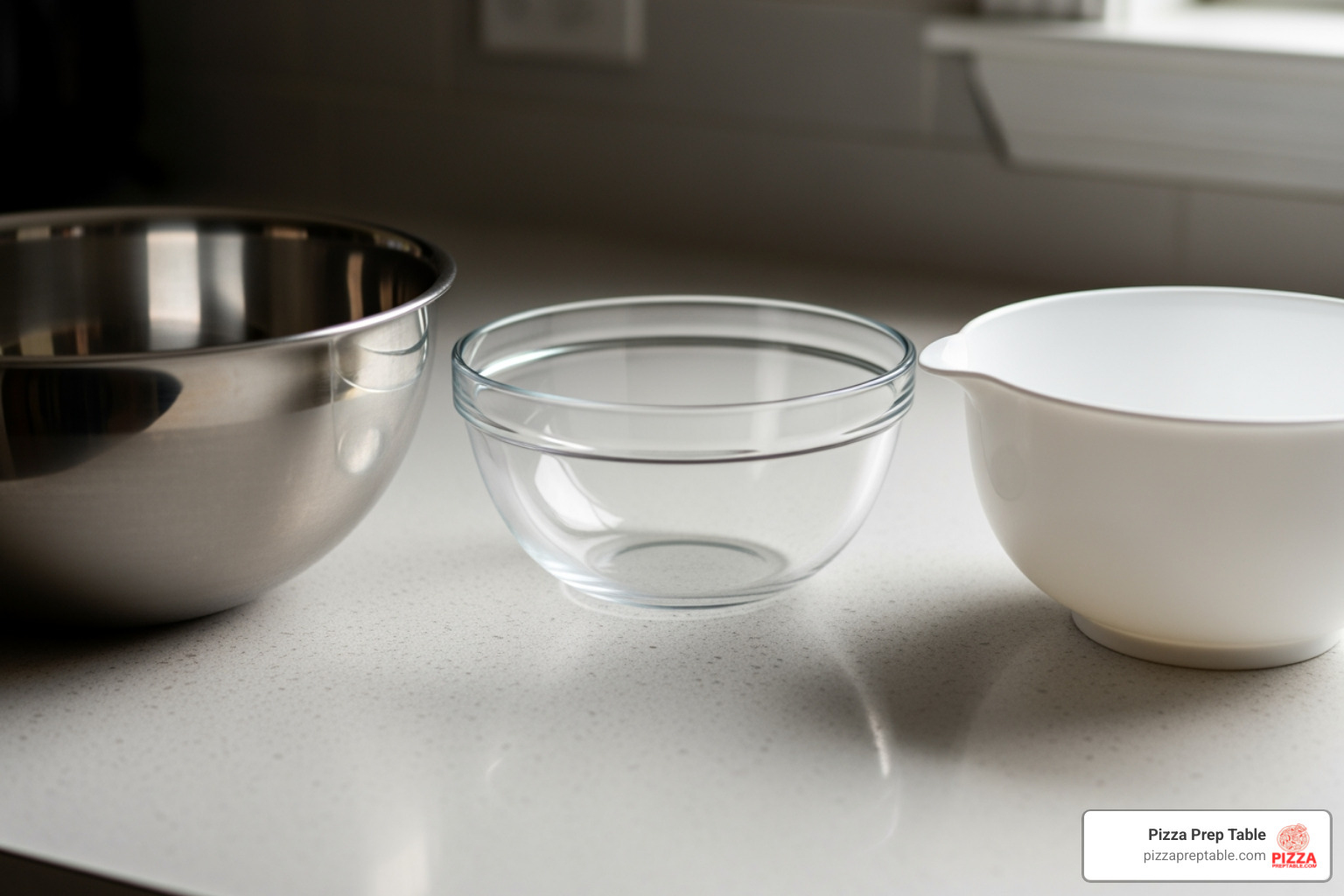
| Material | Heat Retention | Durability | Non-Reactivity | Weight | Price |
|---|---|---|---|---|---|
| Stainless Steel | Moderate (fast to heat/cool) | Excellent | Yes | Lightweight | Mid-Range |
| Glass | Excellent | Good (can break) | Yes | Heavy | Mid-Range |
| Food-Safe Plastic | Poor | Good (can scratch) | Yes | Very Lightweight | Low |
Stainless Steel: The Professional's Choice
Stainless steel bowls are a staple in both home and commercial kitchens, and for good reason. They are the workhorses of the culinary world.
- Lightweight: Despite their robust feel, stainless steel bowls are surprisingly lightweight, making them easy to handle, especially when full of heavy dough. They are also often stackable and easy to clean.
- Extremely Durable: They can take a beating. Dropping a stainless steel bowl might dent it, but it's unlikely to shatter, making it a long-term investment. This durability is essential in busy commercial environments like those found in Los Angeles or New York City pizzerias.
- Non-Reactive: This is critical for dough. Stainless steel doesn't leach flavors or react with acidic ingredients, ensuring the pure taste of your pizza dough.
- Conducts Temperature Quickly: While this means they don't retain heat as well as glass, it also means they respond quickly to environmental temperature changes. If you want to warm your dough slightly, placing the bowl in a warm water bath will transfer heat efficiently. Conversely, placing it in a cooler environment will cool it down faster.
- Easy to Clean: Their smooth, non-porous surface makes them incredibly easy to clean and sanitize, a non-negotiable in any professional kitchen.
- Common in Commercial Kitchens and Pizza Prep Environments: From the smallest pizzeria in Austin to large-scale operations in Chicago, you'll find stainless steel bowls everywhere. They are a reliable choice for any serious pizza maker.
Glass: The Visual Advantage
Glass bowls offer a unique benefit, especially for those who love to observe the magic of dough development.
- Excellent Heat Retention: Glass holds temperature well, which can be beneficial for maintaining a consistent dough temperature during longer fermentation periods.
- Non-Reactive: Like stainless steel, glass is completely non-reactive, ensuring no unwanted flavors are imparted to your dough.
- Allows You to Monitor Rising from All Angles: This is the primary visual advantage. You can see the air bubbles forming, the gluten structure developing, and the exact moment your dough has doubled—without disturbing it. This is particularly satisfying for home bakers, and many online tutorials use glass bowls for this exact reason.
- Heavy: This can be both a pro and a con. The weight provides excellent stability during mixing, but can make the bowl cumbersome to move, especially larger sizes.
- Can Break: The obvious downside. Glass is susceptible to shattering if dropped or exposed to extreme temperature shocks.
- Great for Home Bakers Who Want to Keep an Eye on Their Dough: For us home pizza enthusiasts, the transparency of glass offers an invaluable learning experience, allowing us to understand our dough's behavior better. Pyrex 4-quart bowls are a popular choice for this, with one source mentioning, "I love these 4-quart Pyrex bowls because they are perfect for mixing your dough, letting it rise, and storing it at room temperature or in the fridge thanks to the lid."
Food-Safe Plastic: The Lightweight Option
Food-safe plastic bowls are often overlooked but can be a practical choice, especially for budget-conscious bakers or specific uses.
- Inexpensive: Plastic bowls are typically the most affordable option, making them accessible for beginners or for stocking multiple bowls without a significant investment.
- Lightweight: They are very light, making them easy to handle and move around the kitchen.
- Often Comes with Lids: Many plastic mixing bowls are sold with accompanying lids, which, as we'll discuss, are incredibly useful for dough.
- Can Stain or Retain Odors: This is a common drawback. Strong-colored ingredients like tomato sauce or pungent ones like garlic can stain plastic or leave lingering odors.
- Potential for Scratching: Plastic surfaces are softer than metal or glass and can scratch more easily. As mentioned earlier, scratches can harbor bacteria and make cleaning more challenging.
- Look for BPA-Free, Food-Grade Options: If choosing plastic, always prioritize bowls labeled "BPA-free" and "food-grade" to ensure they are safe for food contact and won't leach harmful chemicals into your dough.
Beyond the Basic Bowl: Lids, Mixers, and Proofing Boxes
While a good basic mixing bowl is essential, pizza dough tools extends further, offering specialized equipment that can lift your dough-making game, especially for those of us in commercial settings.
The Importance of a Lid or Cover
We cannot overstate the importance of a lid or cover for your pizza dough mixing bowl. It's not just a convenience; it's a necessity for successful dough development.
- Airtight Seal: An airtight seal is the gold standard. It locks in moisture and prevents evaporation, creating a consistent microclimate for your dough. This uniform environment is crucial for steady fermentation and prevents the dough from drying out unevenly.
- Prevents a Dry "Skin" from Forming: This is the most critical function. Exposed dough surfaces quickly form a dry, leathery "skin." This skin inhibits further rising, can lead to a tough crust, and makes the dough much harder to work with. A lid prevents this entirely.
- Maintains Humidity and Temperature: A lid helps regulate the humidity level around the dough, which is vital for yeast activity. It also helps maintain a more stable temperature, protecting the dough from drafts or sudden temperature fluctuations that can shock the yeast.
-
Cover Options:
- Dedicated Lids: Many bowls, especially plastic and some glass ones, come with custom-fit lids. These are often the best option for an airtight seal.
- Plastic Wrap: A common and effective alternative. Ensure it's pressed directly onto the bowl's rim to create a tight seal.
- Damp Tea Towel: While traditional, a damp tea towel is generally not recommended for long fermentation periods. The biggest problem with a damp tea towel is that it is simply not airtight. While it does a decent job of keeping the dough from drying out in the short term, over long rises (especially in the fridge), the dough will inevitably form a crust. This crust can ruin the texture of your final pizza.
Using Your Stand Mixer's Bowl
For many home bakers and smaller pizzerias, the stand mixer's bowl is the primary vessel for mixing and initial fermentation.
- Convenience for Mixing and Kneading: The stand mixer bowl integrates seamlessly into the mixing process. You add ingredients, attach the dough hook (as recommended by Alton Brown and Sally's Baking Addiction), and let the machine do the hard work of kneading. This saves significant manual effort and ensures consistent dough development. We've published guides on "Mixing It Up: Mastering Pizza Dough Kneading in Your Stand Mixer" and "Knead to Know Basis: Choosing the Best Stand Mixer for Pizza Dough."
- Heavy-Duty Construction: Stand mixer bowls are designed to withstand the stress of kneading thick doughs. They are typically made from sturdy stainless steel or occasionally glass.
- Often Stainless Steel: Most stand mixer bowls are stainless steel, offering the benefits of durability, non-reactivity, and easy cleaning.
- Many Pizza Prep Tables and Commercial Kitchens Use Stand Mixer Bowls for Efficiency: While large commercial operations might use dedicated spiral mixers, many smaller establishments, especially those in busy cities like Seattle or Philadelphia, rely on heavy-duty stand mixers and their accompanying bowls for daily dough production.
Commercial Solutions: Dough Trays and Proofing Boxes
When you're scaling up from a few pizzas to dozens or hundreds, dedicated commercial solutions become indispensable. This is where Pizza Prep Table shines, offering equipment designed for efficiency and consistency.
- Stackable Design for Space Efficiency: Commercial kitchens, whether in a busy restaurant in Houston or a small-batch bakery in Boston, often have limited space. Dough trays and proofing boxes are designed to stack neatly, maximizing vertical storage in refrigerators or proofing cabinets.
- Temperature and Humidity Control: Professional proofing boxes provide a controlled environment for your dough, regulating both temperature and humidity. This precision is crucial for consistent dough development, especially for specific styles like Neapolitan pizza, which often requires long, precise proofing times. Some high-end models even include features like pressure release valves and temperature gauges for maximum control.
- Ideal for High Volume or Cold Fermentation: For pizzerias making large quantities of dough or employing cold fermentation techniques (which develop deeper flavors), these solutions are game-changers. They allow dough balls to be portioned and proofed individually, ready for use. These containers are roomy, stackable, and provide all the protection your dough needs.
- Pizza Prep Table Offers Commercial-Grade Dough Trays and Proofing Boxes for Serious Pizza Makers: We understand the demands of a professional kitchen. Our selection includes durable, food-safe options designed to optimize your dough's journey from mixing to oven. You can explore our range of dough mixing machines to further improve your operations.
Frequently Asked Questions about Pizza Dough Bowls
We often get asked specific questions about choosing and using pizza dough mixing bowls. Here are some of the most common queries and our expert answers.
What material is best for a pizza dough mixing bowl?
There's no single "best" answer, as the ideal material depends on your priorities and baking style.
- Stainless steel is the professional's choice due to its durability, lightweight nature, non-reactivity, and ease of cleaning. It's excellent for all-around use.
- Glass excels if you value visual monitoring of your dough's rise and excellent heat retention. It's non-reactive but heavier and more fragile.
- Food-safe plastic is a great budget-friendly and lightweight option, often coming with convenient lids. However, it can stain, retain odors, and scratch more easily.
We recommend considering your typical batch size, frequency of use, and whether visual monitoring is important to you.
Can I use a regular mixing bowl for pizza dough?
Absolutely! For most home pizza makers, a regular mixing bowl will work perfectly well. Specialized pizza dough mixing bowls are not strictly necessary, especially when you're just starting out.
The most important factor is size. Ensure the bowl is large enough for your dough to at least double, and ideally triple, in volume without overflowing. For a typical batch of pizza dough for 1-2 pizzas, a 4-quart (or 4-liter) bowl is a good starting point. This provides enough headroom for the yeast to work its magic. Alton Brown's recipe, yielding three 10-inch pizzas, implicitly uses a stand mixer bowl that would likely be in this range.
How important is a lid for a pizza dough mixing bowl?
A lid is very important, especially for longer fermentation periods. Its primary function is to create an airtight seal that prevents the dough surface from drying out.
Without a lid, the exposed dough will form a tough, dry "skin." This skin can:
- Inhibit the rise: The dry surface makes it harder for the dough to expand evenly.
- Create tough bits in your final crust: Dried-out dough won't bake up soft and airy.
- Make the dough harder to handle: It becomes less pliable and more prone to tearing during shaping.
An airtight lid maintains the necessary humidity around the dough, promoting a consistent and healthy rise, and ensuring a tender, flavorful crust. A lid prevents the dough from drying out, forming a crust, and ensures a sealed environment for proper proofing.
Conclusion: Choose Your Champion for Perfect Pizza
The journey to a perfect pizza begins long before it hits the oven, and the humble pizza dough mixing bowl plays a starring role. We've explored the essential features that make a bowl great—adequate size, a stable base, high sides, and a smooth, non-porous interior. We've digd into the pros and cons of stainless steel, glass, and food-safe plastic, understanding how each material brings unique benefits to your dough-making process. And we've highlighted the critical importance of a lid in maintaining the ideal environment for fermentation.
The right bowl is a simple but crucial investment in your pizza quality. It's a foundational tool that supports gluten development, allows for proper fermentation, and ultimately contributes to the flavor and texture of your finished crust. As your passion grows, your equipment can too, evolving from a basic mixing bowl to specialized proofing boxes.
For those ready to scale up from a single bowl to a full-scale operation, whether you're starting a new pizzeria in Dallas or expanding an existing one in Denver, Pizza Prep Table has the commercial-grade equipment to take your pizza to the next level. We offer a wide selection of commercial dough mixers, pizza prep tables, and accessories designed for efficiency and durability in demanding foodservice environments.