

From Bosch to Marraforni: Finding Your Perfect Commercial Dough Mixer
Why Commercial Dough Mixers Matter for Your Pizzeria
Dough mixers are essential for any pizzeria or bakery needing to produce consistent, high-quality dough at scale. Here's what you need to know:
Types of Commercial Dough Mixers:
- Planetary Mixers - Versatile all-purpose mixers with rotating attachments, ideal for batters, frostings, and varied dough types
- Spiral Mixers - Specialized for pizza and bread dough, with a rotating bowl and stationary spiral hook that minimizes heat buildup
- Vertical Cutter Mixers - High-speed mixers for bulk production, chopping, and pureeing
Key Considerations:
- Capacity: Ranges from 5 quarts (countertop) to 100+ quarts (floor models)
- Power: Measured in HP or watts; higher power handles stiffer, denser doughs
- Drive System: Belt-driven (easier maintenance) vs. gear-driven (more durable)
- Price Range: From $50 for basic home models to $1,000+ for commercial equipment
While hand-kneading works for home baking, it's impractical for a pizzeria. Kneading dozens of batches daily by hand is inefficient and labor-intensive. Commercial dough mixers solve this by delivering consistent gluten development, proper texture, and the volume needed to meet customer demand.
It's not just about speed; it's about consistency. Hand-kneading introduces variations that affect the final product. Customers expect the same great pizza every time, which starts with perfectly consistent dough. A quality commercial mixer ensures every batch is identical, from the first to the last.
Choosing the right mixer involves balancing capacity, power, and versatility with your space and budget. A 5-quart countertop model may suit a ghost kitchen, but a busy pizzeria serving 200+ customers needs a robust 60-quart spiral mixer to handle high-volume, high-hydration dough.
The main types of commercial mixers each serve different purposes. Planetary mixers use a stationary bowl with a rotating attachment that moves in a planetary pattern, making them versatile for everything from cookie dough to whipped cream. Spiral mixers feature a rotating bowl and stationary spiral hook, specifically designed to develop gluten structure in bread and pizza dough without generating excessive heat. Vertical cutter mixers offer high-speed chopping and mixing for bulk production environments.
I'm Sean Kearney, and I've spent years helping pizzeria owners select the right dough mixers for their budget and production needs. The best equipment isn't always the most expensive; it's the one that matches your specific workflow and volume.
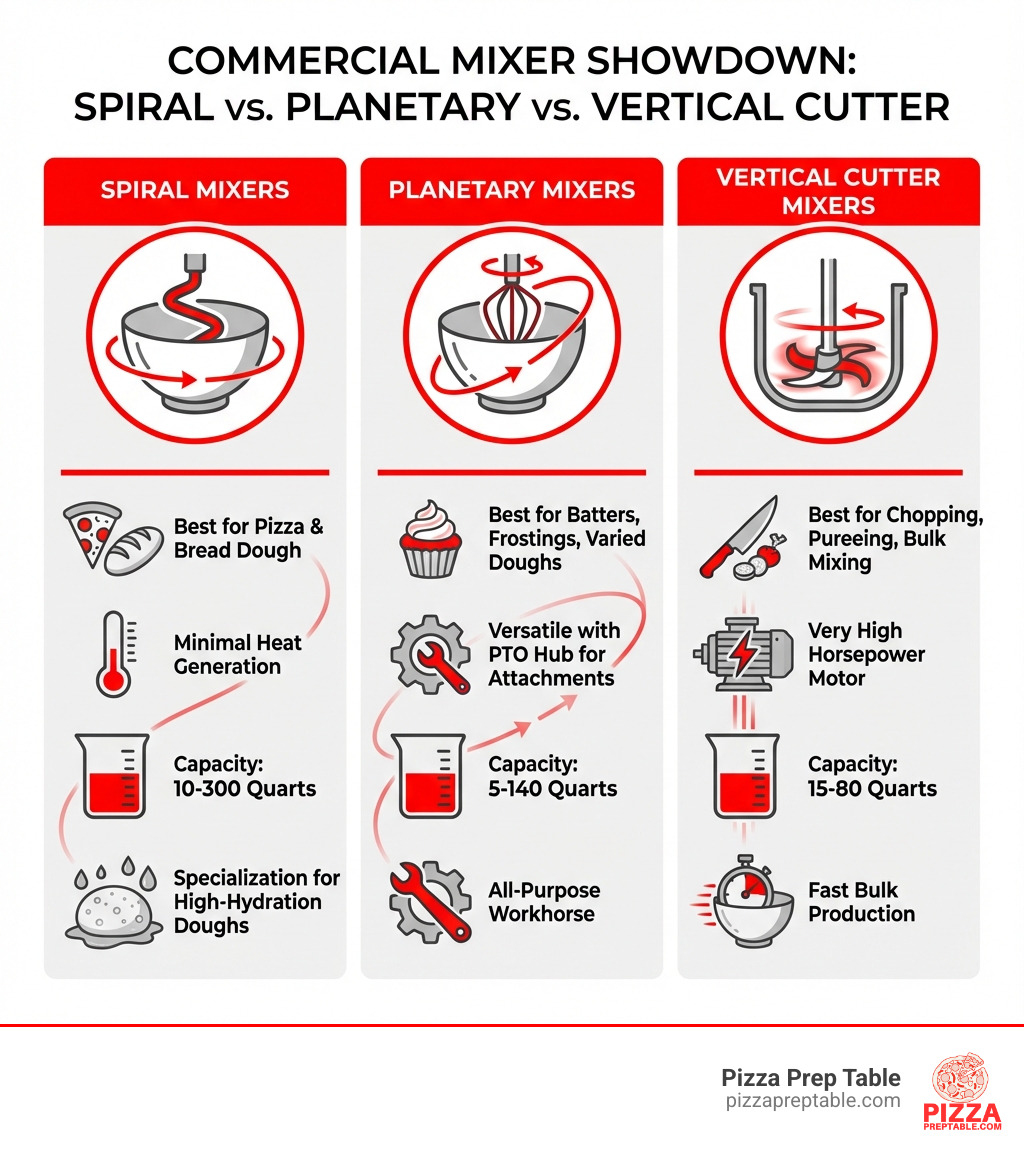
Quick look at dough mixers:
Mixer Showdown: Planetary vs. Spiral Dough Mixers
When selecting a commercial dough mixer, the choice often comes down to planetary and spiral mixers. While both mix ingredients efficiently, their mechanisms and ideal uses differ significantly. Understanding these differences is crucial for making an informed investment that benefits your operation.
Planetary Mixers: The All-Purpose Workhorse
Planetary mixers are a recognizable type of stand mixer. They feature a stationary bowl and a rotating attachment that moves in an orbital, or "planetary," pattern. This planetary action ensures the attachment reaches all areas of the bowl for thorough mixing, making these mixers highly versatile.
A key feature of many planetary mixers is the Power Take-Off (PTO) hub. This hub allows you to connect various interchangeable attachments, turning a single machine into a multi-tasking powerhouse. Beyond the standard dough hook, flat beater, and wire whip, you can attach meat grinders, vegetable slicers, and pasta makers. This makes planetary mixers incredibly valuable for kitchens that perform a wide range of food prep tasks.
Planetary mixers are best for batters, creams, and varied dough types that aren't excessively stiff. They excel at whipping meringues, mixing cake batters, and creaming butter and sugar. For a deeper dive into these versatile machines, check out our guide on Industrial Planetary Mixers That Are Out of This World.
Spiral Mixers: The Pizza Dough Specialist
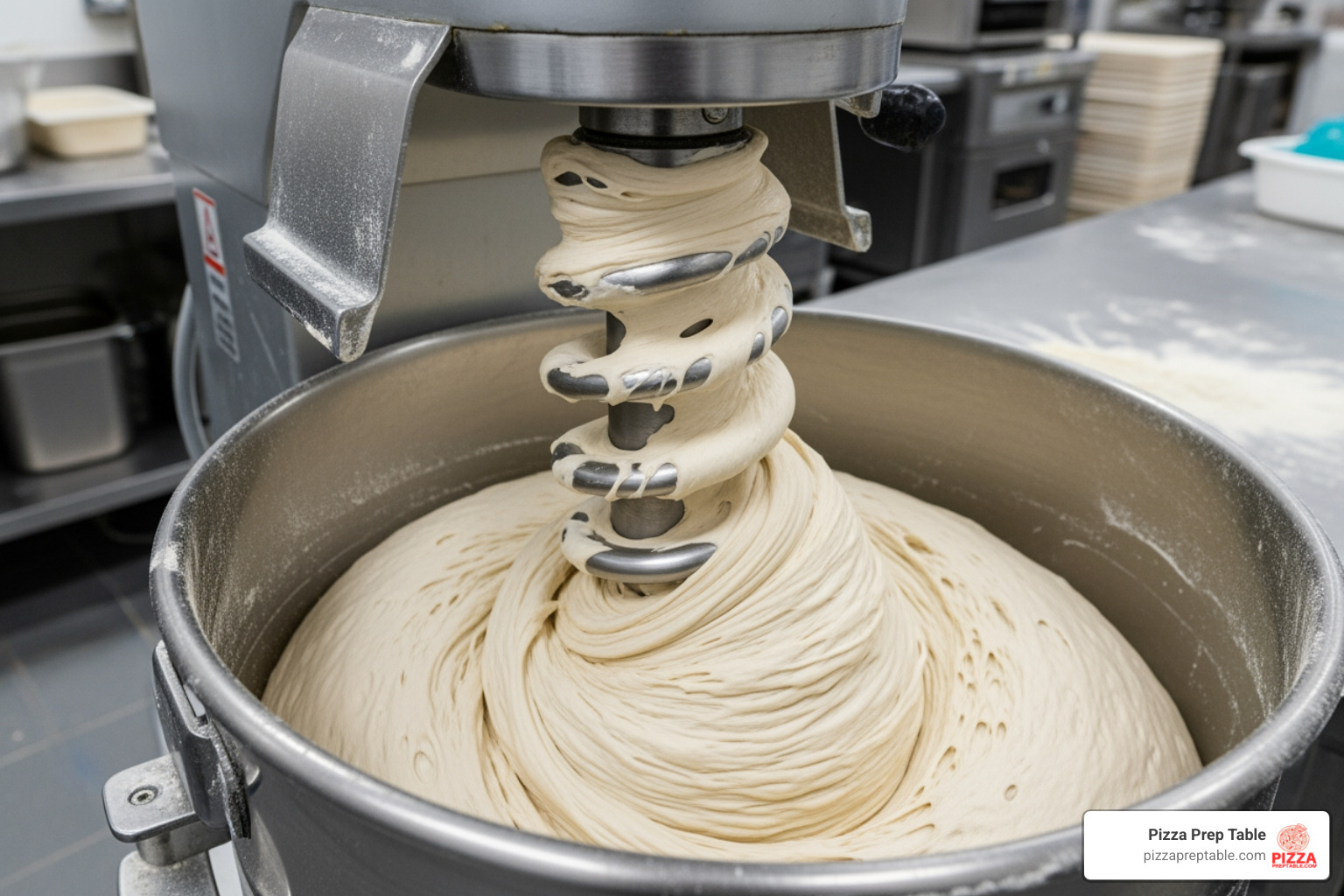
If your primary goal is producing large quantities of pizza or bread dough, a spiral mixer is your best choice. Unlike planetary models, they feature a rotating bowl and a stationary spiral hook. As the bowl turns, the hook gently kneads the dough, mimicking hand-kneading to develop strong gluten structures.
One of the most significant advantages of spiral mixers is their low friction mixing. Because the dough is worked gently, there's minimal heat transfer. This is crucial for high-hydration doughs, as excessive heat can negatively impact gluten development and the final crust texture. Spiral mixers are designed to produce a cool, smooth, and elastic dough ready for optimal proofing. For more on these specialized machines, read Mixing It Up: Finding the Perfect Spiral Dough Mixer for Your Business.
Spiral mixers are ideal for large-scale operations where high volumes of consistent pizza dough are a daily necessity. They are workhorses built to handle heavy, sticky doughs with ease.
Here's a comparison to help you weigh your options:
| Attribute | Planetary Mixer | Spiral Mixer |
|---|---|---|
| Best For | Batters, creams, cookies, varied dough types | Pizza dough, bread dough, high-hydration doughs |
| Mixing Action | Rotating attachment, stationary bowl | Stationary spiral hook, rotating bowl |
| Heat Generation | Higher friction, can warm dough | Lower friction, minimal heat transfer to dough |
| Dough Capacity | Good for medium batches, less efficient for very large, stiff doughs | Excellent for large batches of heavy dough |
| Versatility | High (multiple attachments, PTO hub) | Specialized (primarily for dough) |
Key Factors in Choosing Commercial Dough Mixers
Beyond choosing between planetary and spiral, other critical factors ensure your dough mixer meets operational demands. Details like dough hydration and mixer mechanics significantly impact daily operations. For a commercial-grade focus, see our guide on How to Choose a Large Mixer That Fits Your Kitchen and Your Needs. A general Mixer Buying Guide from Consumer Reports is also available.
A crucial factor is the Absorption Ratio (AR) of your dough (pounds of water divided by pounds of flour). This ratio determines dough stiffness. High-hydration (high AR) doughs are stickier and require different mixing than low-hydration doughs. Knowing your AR helps you choose the right mixer power and type.
The mixer's drive system is also vital. The two main types are:
- Gear-driven mixers: These use gears to transfer power, making them durable and powerful for heavy-duty, continuous use. They prevent belt slips but can be more expensive to repair if a gear breaks.
- Belt-driven mixers: These use belts to transmit power, making them quieter and less expensive. Repairs are typically easier and cheaper. However, belts can slip under heavy loads or wear out, leading to less consistent power delivery.
NSF Certification is non-negotiable for commercial kitchens. It ensures the equipment meets strict public health and safety standards for materials and cleanability, helping you comply with health codes.
Understanding Power and Capacity for Different Dough Mixers
For commercial mixers, motor horsepower (HP) is a better power metric than wattage. A home mixer might have 325 watts, while a commercial model has a 1.3 HP motor. Wattage is not the whole story; the motor's ability to maintain torque under load is what matters for stiff doughs. While 500+ watts can handle home bread dough, commercial applications with dense doughs require focusing on HP ratings and overall construction.
Bowl capacity is measured in quarts and dictates how much you can mix in one batch. However, you should also consider dough capacity in pounds, not just bowl volume. A 10-quart bowl won't necessarily handle 10 pounds of dense dough. Manufacturers provide specific dough capacities, which is a more practical metric. For example, the KitchenAid 8-quart commercial mixer handles over eight pounds of dough.
Matching mixer size to batch production is critical. A mixer that's too small creates a bottleneck, while one that's too large is an unnecessary expense and wastes space. Evaluate your peak production needs to choose a mixer that can handle the volume without strain. For scaling businesses, see our guide: From Small Batches to Big Business: The Best Dough Mixing Machines for Commercial Use.
Attachments and Accessories
The right attachments transform a mixer into a versatile tool. Understanding standard and optional accessories for your dough mixer is key to maximizing your investment.
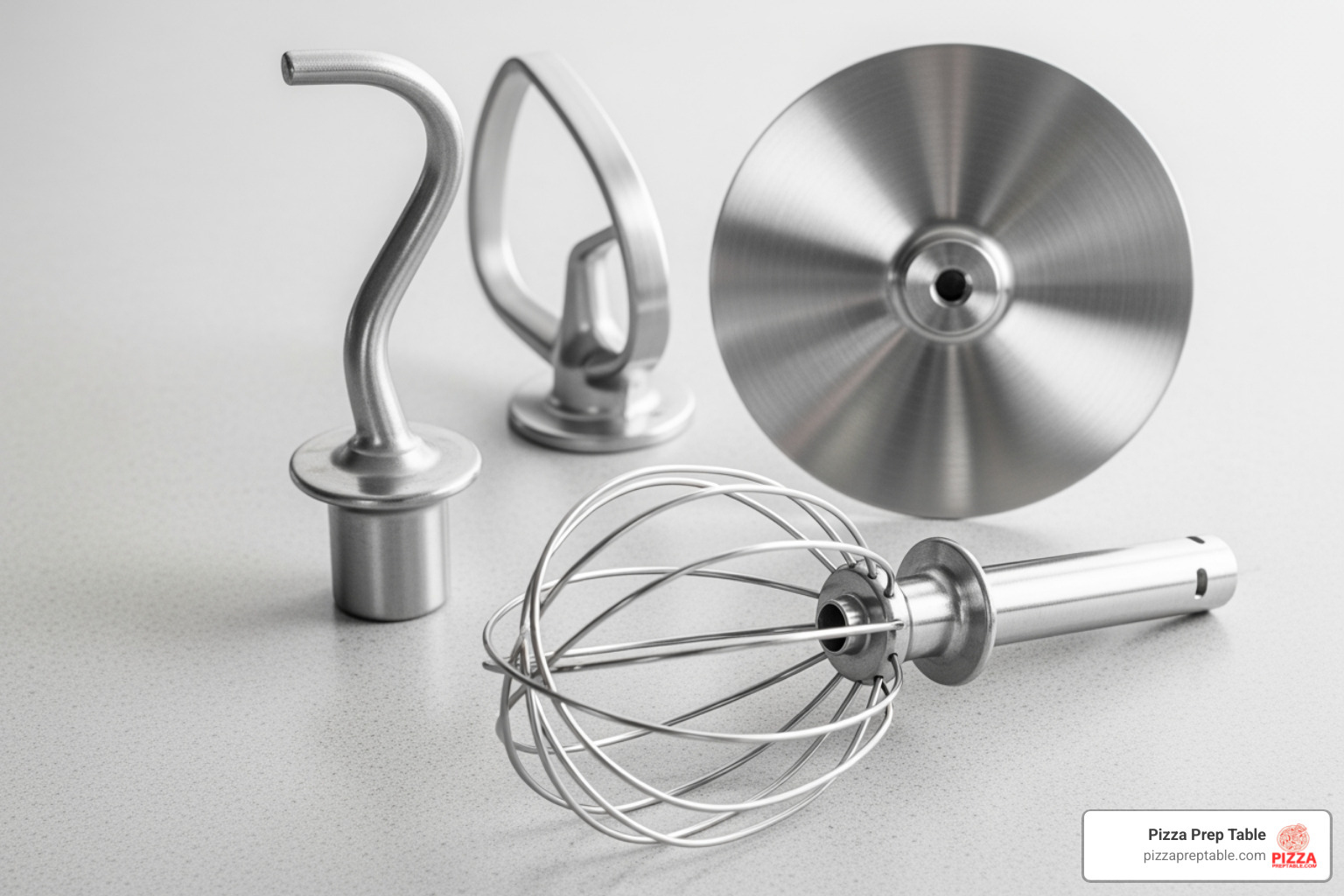
Here are the primary attachments:
- Dough Hook: Used for kneading yeast doughs. Planetary mixers use a C-hook (pushes dough to the side) or a Spiral hook (more efficient kneading). The goal is to develop gluten by replicating hand-kneading.
- Flat Beater (or Paddle Attachment): A versatile tool for general mixing tasks like creaming butter and sugar, mixing batters and cookie dough, or mashing potatoes. It ensures thorough incorporation without over-aerating.
- Wire Whip (or Balloon Whisk): Incorporates air for light, fluffy results. Essential for whipping egg whites, making whipped cream, and preparing light batters.
- Pastry Knife: A less common attachment that helps blend fat into flour for flaky pie crusts or biscuits.
Many planetary mixers feature a Power Take-Off (PTO) hub for specialized accessories that expand functionality. These PTO hub attachments can include grinders, slicers/shredders, and pasta makers, which can significantly reduce prep time and labor costs.
Top Brands for Commercial Kitchens
While brands like Bosch and Ankarsrum are great for home bakers, commercial kitchens have different demands. Home mixers lack the capacity, motor strength, and durability for continuous, heavy-duty work and can quickly burn out in a commercial setting. Our focus is on professional-grade equipment.
KitchenAid Commercial Series
KitchenAid's commercial series offers a robust option for smaller establishments. The KitchenAid 8-Quart Commercial Stand Mixer is built for demands that overwhelm residential models. It features a powerful 1.3 HP motor capable of handling over eight pounds of dough, a significant upgrade from typical home mixers.
This series uses PowerCore® Technology for consistent power with less heat buildup, crucial for durability and preventing motor strain. As it's NSF-Certified, it meets professional health and safety standards.
While its 8-quart capacity may not suit a high-volume pizzeria, it's a great entry-point for small cafes or ghost kitchens. It allows for efficient mixing of smaller batches without compromising on quality.
Marra Forni
Marra Forni stands out for pizzerias that need specialized equipment. The brand is synonymous with high-quality, heavy-duty commercial dough mixers designed for the art of pizza making, understanding the nuances of dough development.
Marra Forni offers both Spiral and Forked mixers. Spiral mixers are ideal for gently kneading high-hydration doughs, while forked mixers use a more traditional action. These mixers are characterized by their heavy-duty construction, built to withstand a demanding pizzeria environment.
Their focus is on high capacity for large-scale dough production, enabling pizzerias to efficiently produce consistent, high-quality dough for any pizza style.
Maintenance, Troubleshooting, and Innovations
A commercial dough mixer is a significant investment that requires proper care for longevity and performance. Routine maintenance, troubleshooting, and awareness of innovations will maximize your mixer's lifespan and efficiency.
A frequent issue is motor strain or overheating, often from using an undersized mixer or running it continuously. This highlights the importance of matching capacity and power to your needs. Pushing any machine beyond its limits will cause problems. Signs of strain include unusual noises, a hot motor housing, or decreased efficiency.
The industry is seeing exciting innovations in mixer technology, including:
- Smart mixers: Models like the GE Profile Smart Stand Mixer offer app and voice control for streamlined workflows.
- Built-in scales: These streamline measurement, reducing errors and saving time.
- Improved diagnostics: Sensors monitor motor health and alert you to potential issues.
- Improved material science: New materials improve durability, hygiene, and longevity.
These innovations aim to make kitchens more efficient, precise, and user-friendly.
Maintenance and Cleaning for Your Dough Mixers
Proper maintenance starts with cleaning. For dough mixers, hygiene is paramount. Follow these steps:
- Unplug before cleaning: Always disconnect the mixer from power first for safety.
- Daily cleaning: Clean attachments and the bowl after each use. Check if components are dishwasher-safe or require hand-washing.
- Sanitize the main unit: Wipe the mixer body with a damp cloth and food-grade sanitizer. Never submerge it in water.
- Lubrication: Periodically lubricate the attachment shaft with food-grade oil to ensure smooth operation.
- Follow capacity guidelines: Consistently overloading the mixer strains the motor and gears, leading to premature failure. Adhering to manufacturer guidelines is the best way to prevent costly repairs and downtime.
Frequently Asked Questions about Dough Mixers
We often get asked common questions about dough mixers from pizzeria owners and restaurateurs looking to optimize their operations. Here are some of the most frequent inquiries we address:
What size mixer do I need for my pizzeria?
The answer depends on your production volume and dough type. Consider:
- Batch size: How much dough do you need per run?
- Dough type: Stiffer, low-hydration doughs require more power and may reduce a mixer's effective capacity.
- Flour capacity: Check the manufacturer's specified maximum flour capacity.
A 60-quart mixer is a common starting point for many pizzerias, but needs vary. A small pizzeria might use a 20-30 quart model, while a high-volume operation could need an 80-100 quart spiral mixer. Always base your decision on peak demand.
Can you over-knead dough in a commercial mixer?
Yes, you can over-knead dough, especially with planetary mixers. Signs of over-kneading include dough that tears easily, becomes too warm, or loses its elasticity and becomes slack. Spiral mixers, with their gentle, low-friction action, reduce this risk, but you should still monitor the dough and stop mixing once the desired consistency is reached.
How long does a commercial stand mixer last?
A mixer's lifespan depends on build quality, maintenance, and adherence to usage guidelines. Daily cleaning, proper lubrication, and avoiding overload are key.
- Belt-driven mixers may need periodic, inexpensive belt replacements.
- Gear-driven mixers are more durable but can be costlier to repair.
With proper care, a quality commercial mixer can last 15-20 years or more, making it a long-term investment.
Find the Right Mixer to Power Your Business
Choosing the perfect commercial dough mixer is a cornerstone decision for any pizzeria or bakery. We've explored the distinct advantages of planetary mixers for versatility and spiral mixers for specialized dough production, digd into crucial factors like power, capacity, absorption ratio, and drive systems, and highlighted top commercial brands like KitchenAid Commercial and Marra Forni.
The right mixer isn't just a piece of equipment; it's an investment in the consistency, efficiency, and quality that defines your brand. Whether you're a budding ghost kitchen in Denver or a well-established pizzeria in Phoenix, having the right mixer ensures every batch of dough meets your high standards and keeps your customers coming back for more.
At PizzaPrepTable.com, we understand these critical needs. We offer a wide range of commercial mixers designed to fit operations of all sizes, along with flexible financing options to help you get the equipment you need without straining your budget. Let us help you find the perfect match to lift your kitchen's capabilities.
Explore our full collection of commercial pizza prep tables and equipment