

From Small Batches to Big Business: The Best Dough Mixing Machines for Commercial Use
Understanding the Core Types: Spiral vs. Planetary Mixers
Dough mixing machines are specialized commercial kitchen appliances designed to knead large quantities of dough efficiently and consistently. For commercial use, your main options are:
- Spiral Mixers: Best for pizza and bread dough, with a rotating spiral hook and stationary bowl.
- Planetary Mixers: All-purpose machines with interchangeable attachments for various batters and doughs.
- Capacity & Price: Models range from small 5-quart countertop units under $1,000 to massive 80+ quart industrial machines costing over $5,000.
- Key Features: Look for motor power (HP or watts), bowl capacity, speed controls, and safety guards.
For any pizzeria or bakery, a commercial dough mixer is essential for consistency and efficiency. Manual kneading is time-consuming and produces inconsistent results. A quality dough mixer saves labor, maintains consistent dough temperature, and produces uniform batches. A stand mixer can knead dough in 5-10 minutes versus 15-20 minutes by hand, and commercial spiral mixers work even faster on larger batches.
The right choice depends on your production volume, kitchen space, and budget. A small pizzeria has very different needs than a high-volume bakery. This guide will help you explore what makes a great commercial mixer and which models deliver the best value for your business.

Choosing the right dough mixing machine starts with understanding the two main types: spiral and planetary mixers. While both mix ingredients, their mechanics and ideal uses differ significantly. For a neutral technical overview of mixer designs and how they work, see stand mixer.
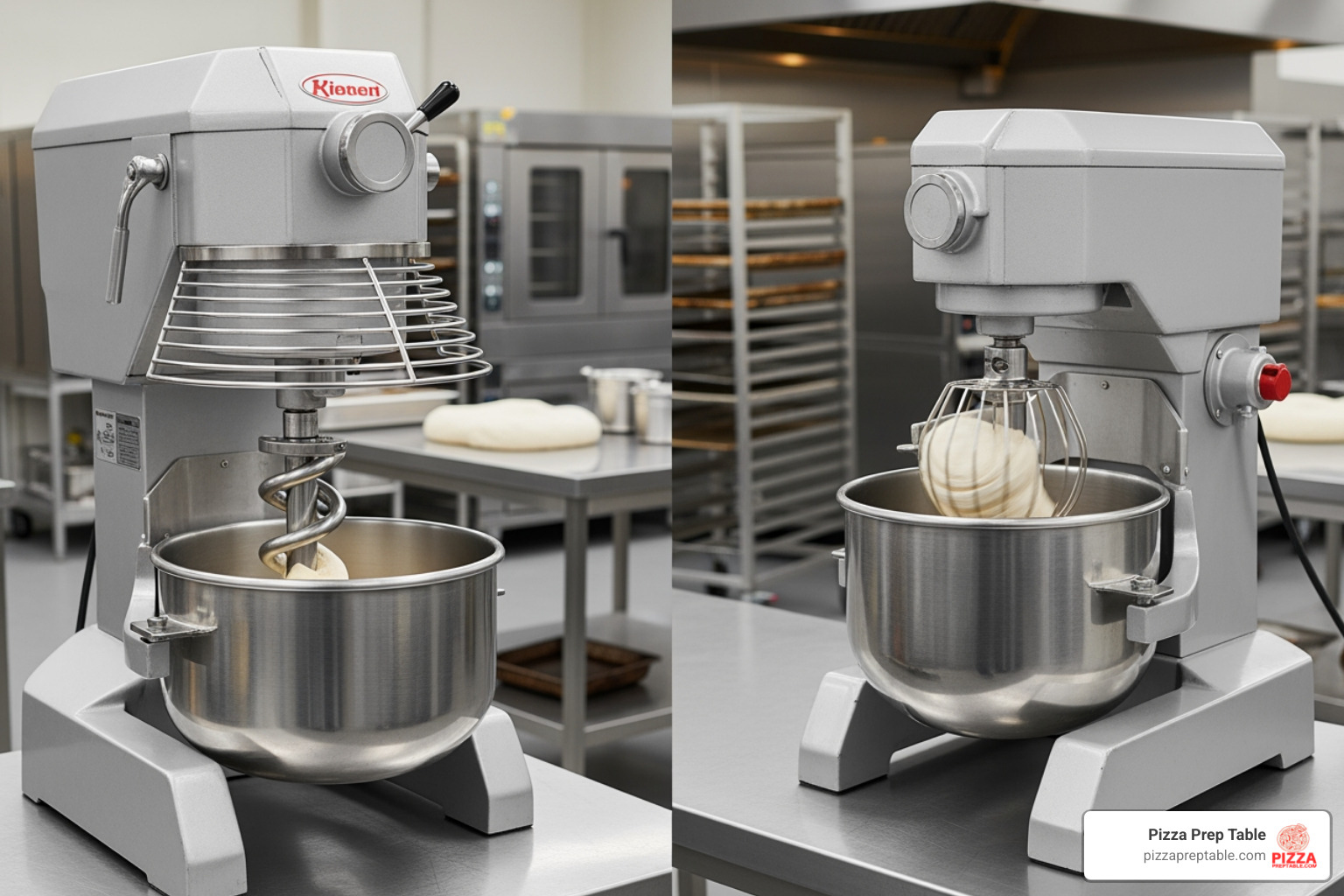
Spiral Mixers: The Dough Specialist
In a spiral mixer, a spiral-shaped agitator stays in place while the bowl revolves around it. This motion allows the hook to knead only a portion of the dough at a time. This gentle action is ideal for developing gluten in bread and pizza dough without overworking it or creating excess heat.
Spiral mixers are the champions for bread and pizza. Their design ensures lower oxidation, which preserves the dough's flavor and color for a higher-quality product. By kneading smaller portions at once, they also maintain a consistent dough temperature, which is critical for perfect fermentation. For high-volume production, they prepare dough more quickly and efficiently than planetary mixers. To learn more, check out our guide on how to mix it up finding the perfect spiral dough mixer for your business.
Planetary Mixers: The All-Purpose Workhorse
In a planetary mixer, the attachment rotates on its own axis while also moving around the stationary bowl, much like a planet orbiting the sun. This comprehensive action ensures all ingredients are thoroughly incorporated.
The strength of planetary mixers is their versatility. They come with interchangeable attachments:
- Dough Hook: For lighter doughs, like those for some pastries and soft breads.
- Whisk: For whipping creams, meringues, and light batters.
- Paddle/Flat Beater: For mixing cookie dough, heavy batters, and general-purpose tasks.
This makes planetary mixers a fantastic all-rounder for kitchens that produce a diverse range of goods. For a deeper dive into these adaptable machines, explore the ultimate guide to comparing planetary mixers and find why industrial planetary mixers are out of this world.
Key Features to Consider When Buying a Commercial Dough Mixing Machine
When investing in a commercial dough mixing machine, it's crucial to look beyond the surface and focus on the features that drive performance and longevity. The right choice depends on your specific kitchen needs.
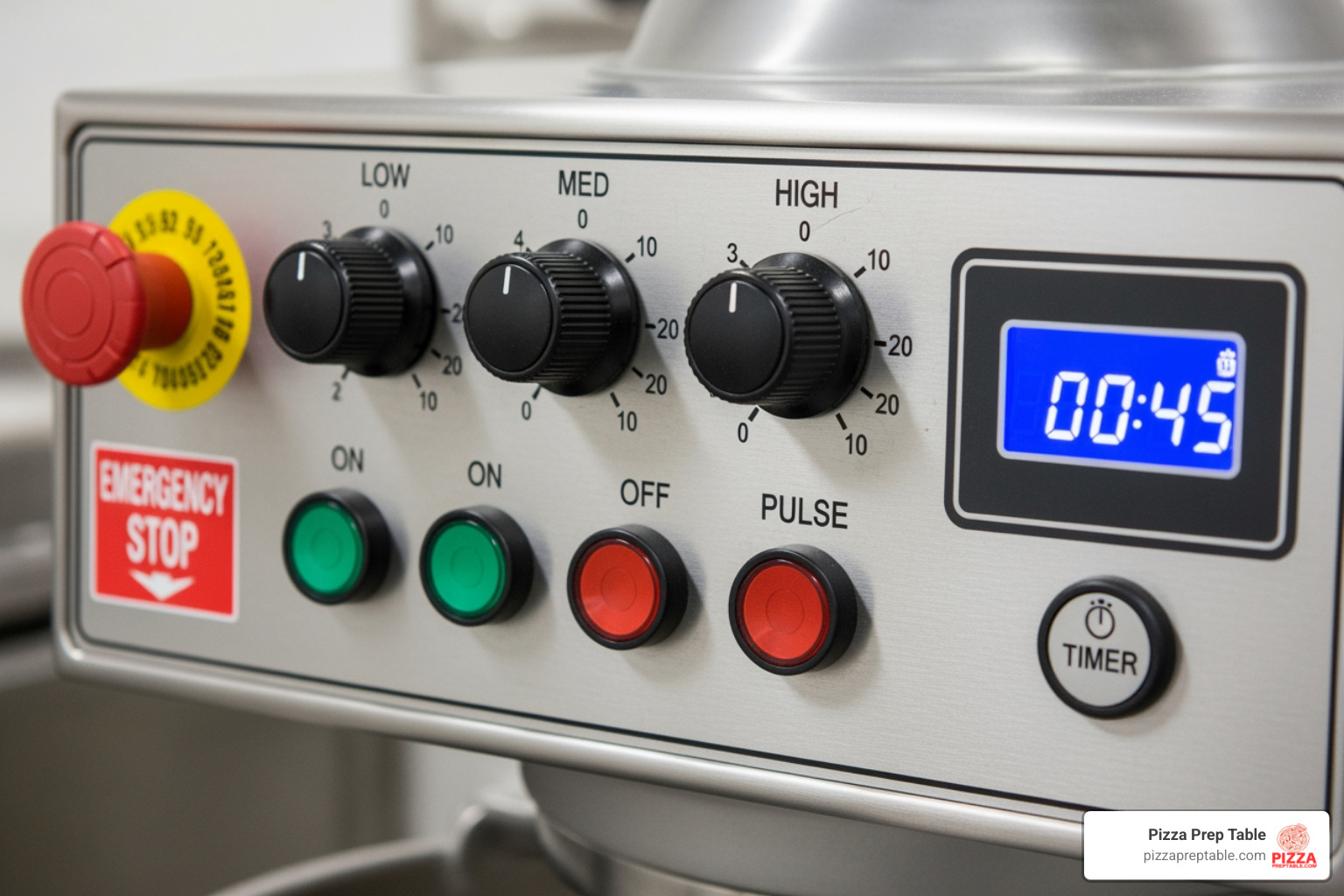
Motor Power: Measured in horsepower (HP) or watts, this determines the mixer's ability to handle tough, dense dough. For bagels or stiff pizza dough, a stronger motor (1 HP or higher) is essential to prevent strain and ensure consistent performance.
Bowl Capacity: Listed in quarts or liters, this dictates your batch size. Capacities range from small 7-quart models to massive 80+ quart industrial units. Match the capacity to your production needs to maximize efficiency.
Speed Controls: Different recipes require different speeds. Spiral mixers often have two speeds—one for incorporating ingredients and a second for developing gluten. Planetary mixers typically offer more options (3 to 10+ speeds) for greater versatility with batters, creams, and doughs.
Build Material: Stainless steel is the industry standard for bowls and attachments because it's durable, non-reactive with acidic ingredients, and easy to clean, ensuring it meets health code standards.
Safety Features: Non-negotiable features include a sturdy bowl guard to prevent contact with moving parts and an emergency stop button for immediate shutdown. Automatic shut-off sensors that activate when the guard is lifted are also critical for protecting your staff.
How to Choose the Right Size Dough Mixing Machine
Choosing the right size is a common challenge. Too small, and you'll waste time running multiple batches. Too large, and you'll waste valuable kitchen space and capital.
First, calculate your typical batch sizes. Flour capacity and finished dough capacity are different. A mixer rated for 20 kg of flour will produce a much larger volume of dough. Also, consider future growth. Buying a mixer that can handle a projected increase in production will save you from needing to upgrade too soon.
Finally, measure your kitchen footprint. Before choosing a large floor model, ensure you have the dedicated space. A countertop mixer might be a better fit for a smaller kitchen. Our guide on how to choose a large mixer that fits your kitchen and your needs offers more detailed advice on space planning.
Essential Safety and Durability Features
Safety and durability are the foundation of a smart investment. A commercial dough mixing machine must be reliable and safe.
Bowl Guards and Interlocks: Ensure the bowl guard is robust and that the mixer has an automatic shut-off feature that stops operation if the guard is opened.
NSF Certification: This mark indicates the equipment meets strict public health standards for design and construction, which is crucial for passing health inspections.
Heavy-Duty Construction: Look for equipment with cast iron frames, thick stainless steel components, and robust gear and transmission systems. These features ensure the mixer can withstand the daily demands of a commercial kitchen.
For a deeper dive into what makes a mixer truly professional-grade, check out our whip it good the ultimate professional mixer buying guide.
Our Top Commercial Dough Mixer Picks for 2024
After researching hundreds of models, we've narrowed down our recommendations for 2024. Finding the right dough mixing machine comes down to matching your specific needs with the right features and budget.
Commercial mixers span a wide price range. Entry-level models ($500-$1,500) work well for smaller operations. Mid-range options ($1,500-$5,000) offer more capacity and durability for growing businesses. High-end industrial mixers ($5,000+) are designed for serious production volumes. The price reflects capacity, motor power, build quality, and advanced features.
Best for High-Volume Pizzerias
For a high-volume pizzeria, consistency is everything. The key is a heavy-duty spiral mixer designed specifically for pizza dough. For operations churning out hundreds of pizzas daily, you need a mixer with serious muscle.
Look for these features:
- Large Capacity Bowls: 50 liters or more to handle 40-50 pounds of flour per batch.
- Heavy-Duty Motor: 3 HP or greater to power through stiff, low-hydration pizza dough without strain.
- Dough-Specific Engineering: A spiral action mimics hand kneading, developing gluten gently while minimizing friction heat. This produces a superior texture and makes the dough easier to work with.
- Durability: All-steel construction and robust gear systems are essential for a machine that runs multiple shifts daily. A reliable mixer is the cornerstone of an efficient production line, pairing perfectly with equipment like the Dukes DPP-70 Pizza Prep Table.
Best Value Spiral Mixer
Not every business needs a top-tier industrial mixer. For growing pizzerias and bakeries, a value-oriented spiral mixer can provide professional results without a massive upfront investment. These mixers bring the benefits of spiral technology—gentle kneading and superior gluten development—to a more accessible price point.
When looking for a great value, focus on core functionality. Seek out models with multiple speed options to control the mixing process from initial incorporation to final kneading. A built-in timer is another valuable feature that ensures consistency from batch to batch. Finally, ensure it includes essential safety features like a bowl guard and is constructed with a stainless steel bowl for durability and easy cleaning.
Best All-Purpose Planetary Mixer
If your kitchen needs versatility more than specialization, a robust planetary mixer is the ideal choice. These machines are perfect for businesses that make pizza dough, whip meringues for desserts, and mix cookie dough all in the same day.
When choosing an all-purpose mixer, consider these points:
- Sufficient Capacity: Look for a bowl capacity of 8 quarts or more, which provides enough volume for small to mid-sized commercial batches.
- Variable Speed Control: Multiple speeds (10 or more) give you the precision needed for a wide range of tasks, from slowly incorporating flour to vigorously whipping cream.
- Powerful Motor: A motor of at least 600W ensures the machine can handle tough doughs without bogging down.
- Easy Cleanup: Dishwasher-safe attachments (dough hook, flat beater, wire whip) are a huge time-saver in a busy kitchen.
For more tips on choosing a stand mixer, see our guide on the knead to know basis choosing the best stand mixer for pizza dough.
Proper Care: Maintenance and Safety Tips
A commercial dough mixing machine is a significant investment. To ensure it runs smoothly and safely for years, proper maintenance is essential. Neglecting it can lead to breakdowns and poor dough quality.
Daily cleaning is your first line of defense. After each shift, thoroughly clean the bowl, agitator, and any removable parts. Always check the manufacturer's instructions, as many stainless steel components are dishwasher safe. Wipe down the machine's exterior to prevent flour and dough buildup.
Crucially, always unplug your mixer before cleaning or performing any maintenance. This simple step prevents serious accidents. During cleaning, inspect parts for wear, such as cracks or damage on the dough hook, whisk, or bowl. Replace worn parts immediately to avoid machine damage or dough contamination.
Regularly check that safety guards and interlocks are functioning correctly; the mixer should not operate if a guard is open. Finally, follow the lubrication schedule in your owner's manual. Proper greasing of gears and moving parts prevents friction and extends the life of your machine.
What to Look for in a Pizza Dough Mixing Machine
When selecting a dough mixing machine specifically for pizza, certain features are critical. Pizza dough is often stiff and requires a mixer that can handle the load without overheating.
- High-Torque Motor: This provides the sustained power needed to knead dense dough without straining the machine.
- Low RPM for Gentle Kneading: Slower speeds are better for pizza dough, as they develop gluten gently, prevent over-oxidation, and result in a better crust texture. Spiral mixers excel at this.
- Durability for Daily Use: Look for workhorse machines with cast iron gears, heavy-duty motors, and solid stainless steel construction that can withstand constant use.
For more tips, see our guide on mixing it up mastering pizza dough kneading in your stand mixer.
Our Top Pick: The All-Around Best Dough Mixing Machine
While the "best" dough mixing machine depends on your specific needs, the ideal choice for most commercial pizza and bakery businesses is a heavy-duty spiral mixer. Their design is superior for dough, handling large capacities with ease and developing gluten perfectly with minimal heat buildup.
A spiral mixer embodies the key traits of a professional machine: efficiency, consistency, quality, and durability. It will be your most valuable kitchen asset for producing high-quality dough. For more detailed recommendations, explore our guides on rise to the occasion with these pizza dough kneading machines and the ultimate guide to choosing the best pizza dough mixers.
Frequently Asked Questions about Dough Mixers
Here are answers to some of the most common questions we receive about choosing the right dough mixing machine for a commercial kitchen.
What are the advantages of a dough mixer with a ferment function?
A dough mixing machine with a built-in ferment function combines kneading and proofing in a single appliance. This feature is most common in smaller, non-industrial models.
The primary advantage is consistent temperature control. The machine maintains the ideal temperature for fermentation, eliminating guesswork and ensuring a reliable rise. This is also a space-saving design, as it removes the need for a separate proofing box, which is beneficial for smaller kitchens or for developing test batches.
However, these models are not typically designed for high-volume commercial production. They are best suited for small-batch specialty items where precise environmental control is key.
Can I use a commercial dough mixer for small batches?
While you technically can, it's generally not efficient. Commercial mixers are designed for volume. Using a large mixer for a very small batch often results in poor mixing, as the attachments can't properly engage with the ingredients. This leads to unevenly mixed dough.
Most manufacturers specify a minimum capacity for this reason. Operating below this threshold can also cause unnecessary strain on the motor. For kitchens that need to produce both large and small batches, a planetary mixer is often more versatile than a spiral mixer, as its design and multiple attachment options can sometimes better accommodate varied batch sizes.
Our advice is to match your mixer to your most common batch size for the best results.
How much does a good commercial dough mixer cost?
The cost of a commercial dough mixing machine varies widely based on capacity, power, brand, and features.
Entry-Level ($500 - $1,500): This range typically includes smaller countertop planetary or spiral mixers (5-20 quarts) suitable for light-duty use in cafes or small bakeries.
Mid-Range ($1,500 - $5,000): Here you'll find larger, more durable planetary and spiral mixers (20-60 quarts) built for the demands of a growing pizzeria or bakery with moderate production needs.
High-End Industrial ($5,000+): This category includes large-capacity floor models designed for continuous, high-volume operations in central kitchens and large-scale bakeries. Prices can climb significantly for machines with advanced features and massive capacities.
A higher upfront cost often translates to greater durability, better efficiency, and lower long-term operating costs.
Conclusion
Choosing the right dough mixing machine is a critical investment in your kitchen's production line. The right mixer is the heartbeat of your operation, ensuring consistency and quality from the first batch to the last.
As we've covered, spiral mixers are specialists for bread and pizza dough, while planetary mixers offer all-purpose versatility. Key features like motor power, capacity, and safety are what truly define a great machine. A quality commercial mixer saves time, improves product quality through consistent gluten development, and increases efficiency, allowing your team to focus on creating great food.
Your mixer should be a reliable team member, ready for every shift. Whether you're just starting out or scaling up, the right dough mixing machine makes every batch count.
At Pizza Prep Table, we understand what commercial kitchens need. We offer a wide selection of commercial mixers and restaurant equipment, backed by real expertise. We know that investing in quality equipment is a big step, which is why we provide flexible Pizza restaurant financing options to help you get the tools you need.
Ready to find the perfect mixer for your business? Explore our guides, like how to find the perfect spiral dough mixer for your business, or browse our full range of commercial kitchen solutions. We're here to help you make the right choice.