

Rack for Trays: The Pizza Kitchen's Guide to Racks (rack for trays)
A good rack for trays is one of those foundational pieces of equipment that can either make a pizzeria’s rush feel like a well-oiled machine or a complete nightmare. It’s not just a place to store stuff; it's a dynamic tool that organizes everything from proofing dough balls to portioned ingredients, turning any pizza prep table into a command center.
The Secret Ingredient To A Faster Pizza Prep Line
Think about your busiest Friday night. Orders are flying in, and the prep line is just a blur of dough, sauce, and toppings. The difference between chaos and calm efficiency isn't just about moving faster—it's about having a smarter, more organized workflow. This is where a dedicated rack for trays becomes your pizzeria's most valuable player.
It's the silent partner that keeps the whole show running smoothly, the secret ingredient that unlocks real speed and consistency. This simple piece of gear transforms your prep table into a hub of perfect mise en place. Instead of stacking ingredient containers and hoping for the best or hunting for the right tray of dough, everything has a designated home. That systematic approach is absolutely critical when you're making pizza at high volume.
Creating An Assembly Line Mentality
A strategically placed tray rack instantly brings an assembly line mentality to your kitchen. Every component you need is organized, within arm's reach, and ready to go. This setup encourages a logical flow from one task to the next, slashing wasted motion and saving precious seconds on every single order.
Here’s how that plays out in the real world:
- Dough Management: Proofed dough balls, resting in their trays, can slide right into the rack. They stay at the perfect temperature and are always within immediate reach for the person stretching dough.
- Ingredient Organization: Smaller trays or pans holding your portioned cheese, pepperoni, veggies, and other toppings can be neatly arranged, letting your crew build pizzas with speed and precision.
- Workflow Continuity: As one pizza heads down the line to the oven, the next set of ingredients is already queued up and ready. This creates a continuous, unbroken production cycle that keeps orders moving.
By keeping every component organized and accessible, a well-chosen tray rack eliminates wasted motion, cuts down prep time significantly, and ensures a perfectly consistent pizza every single time. It directly impacts your kitchen's throughput and profitability.
A tray rack brings a whole new level of organization that goes beyond just speed—it’s a huge boost for quality control. When ingredients are properly portioned and stored, every pizza gets the right amount of toppings, which means your customers get the same great product every time they order. This systematic approach is the bedrock of all truly efficient pizza prep stations, turning a good kitchen into a great one. A simple rack for trays is the first step toward achieving that elite level of operational excellence.
Now, let's break down exactly how a simple piece of metal can completely change the game for your prep station. It's often the small, smart investments that have the biggest impact on your daily grind and, ultimately, your bottom line.
How A Tray Rack Transforms Your Pizza Prep Workflow
| Area of Impact | Without a Tray Rack (The Problem) | With a Tray Rack (The Solution) |
|---|---|---|
| Pizza Prep Table | Chaotic, with containers stacked wherever they fit. | Organized, with a designated spot for every tray. |
| Ingredient Access | Staff wastes time searching for the right ingredient. | Key ingredients are always visible and within arm's reach. |
| Workflow | Disjointed; frequent stops and starts to find supplies. | A smooth, continuous flow from dough to toppings. |
| Speed & Efficiency | Prep time is slow and inconsistent. | Drastically reduced prep time and increased output. |
| Consistency | Topping amounts vary, leading to inconsistent pizzas. | Easier to maintain portion control for a consistent product. |
| Food Safety | Higher risk of cross-contamination from messy stacks. | Ingredients are separated, reducing contamination risks. |
As you can see, the difference is night and day. Moving from a cluttered, disorganized prep area to one supported by a proper tray rack system isn't just a minor upgrade—it's a fundamental shift in how your kitchen operates. It’s one of the simplest ways to reduce stress on your team and improve the quality of your product.
Choosing Your Perfect Pizza Prep Partner
Not all tray racks are built the same, especially when they have to survive the chaos of a busy pizza kitchen. Picking the right rack for trays isn't just about finding a place to stick your pans; it's about choosing a strategic partner that melts right into your pizza prep table and workflow. A mismatched rack becomes a clumsy obstacle, but the right one feels like a natural extension of your prep line.
Think of it like building a pit crew for a race car. Each member has a specific, vital job that contributes to the car's overall speed and performance. In a pizzeria, your "pit crew" of racks makes sure that every component—from dough to toppings—is exactly where you need it, right when you need it.
This simple decision tree gets to the heart of it: do you need to make your process faster and smoother? If the answer is yes, a dedicated rack is the first step toward creating order out of chaos.
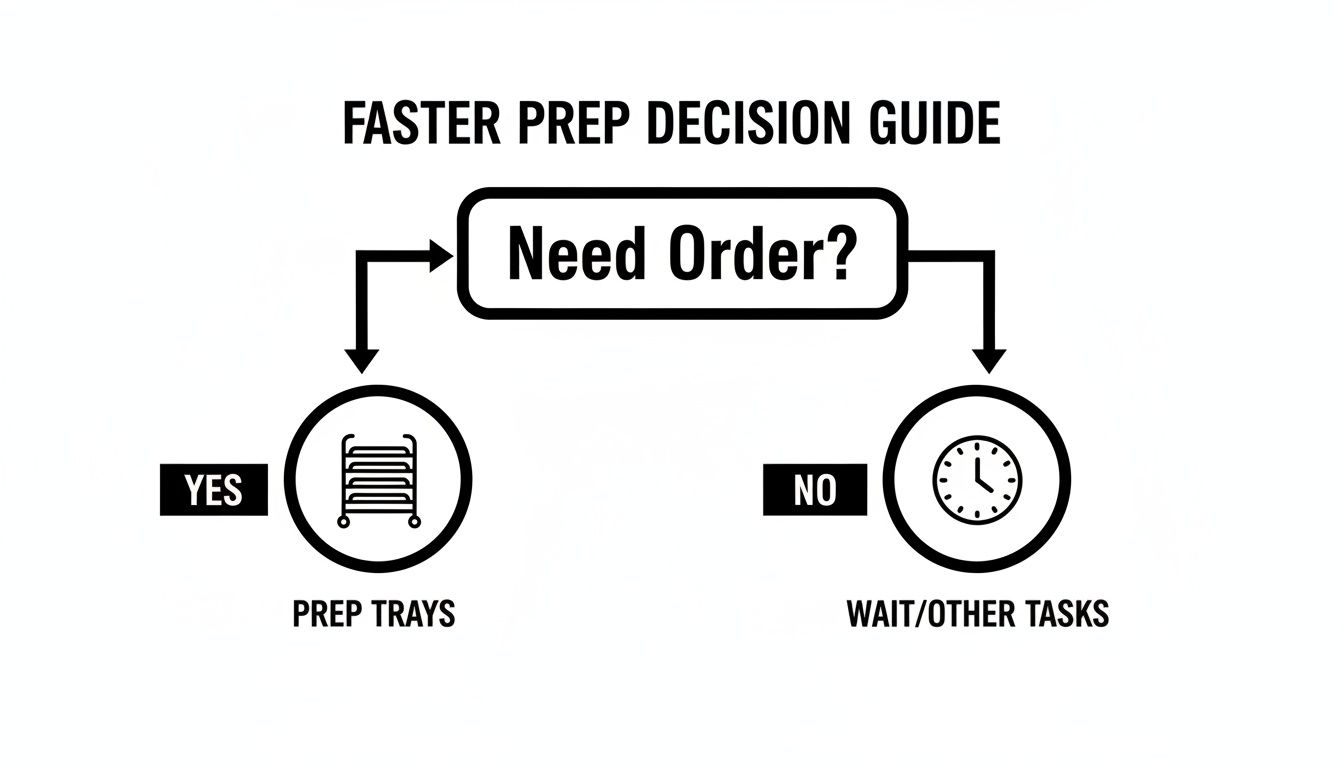
As the flowchart shows, the direct path to faster prep is through a more organized system, and that system starts with a dedicated tray rack.
Under-Counter Racks: The Space Savers
In most pizzerias, floor space is gold. Under-counter racks are the unsung heroes of kitchen efficiency, designed to reclaim that valuable, often-wasted real estate right beneath your pizza prep table. These low-profile units are perfect for holding stacks of dough proofing boxes, keeping them chilled and ready for the next rush.
Imagine your main prep station. Instead of dough boxes stacked on the floor or a shelf across the room, they're neatly tucked away right under the work surface. This means your pizza maker can grab a fresh dough ball in one fluid motion, without taking more than a single step. It's a small tweak that shaves countless seconds off every single pizza you make.
A pizzeria in Austin told us they saw a 15% reduction in pizza assembly time just by installing under-counter racks for their dough boxes. This simple change eliminated the "dough run"—the constant trips staff made to the walk-in cooler, which used to throw the whole prep line's rhythm off.
When you're choosing an under-counter rack, grab a tape measure. Measurement is everything. You have to account for:
- Height: Make sure there's enough clearance between the top of the rack and the bottom of the prep table.
- Depth: The rack shouldn't jut out and become a tripping hazard for your crew.
- Width: Match it to the space you have and how many stacks of dough boxes you need to keep on hand.
Countertop Racks: For Mise en Place Mastery
While under-counter racks handle the bulk storage, countertop racks bring serious order to the immediate workspace. These are the smaller, often angled racks designed to hold portion cups and small ingredient pans. They create a tiered, organized system for toppings like pepperoni, mushrooms, olives, and pre-portioned cheese, turning a flat, cluttered surface into an efficient, multi-level command center.
This level of organization is absolutely critical for consistency. When every single topping has its designated spot, your team can build pizzas using muscle memory, ensuring accurate portions and lightning-fast assembly. It’s the very essence of mise en place—everything in its place for maximum speed.
Mobile Pan Racks: The Kitchen Transporters
Finally, you have mobile pan racks. These are the workhorses that connect the different zones of your kitchen. Tall and on wheels, these units are essential for moving big batches of product seamlessly from one area to another. Their role is dynamic and changes throughout the day.
Just think about a typical rush:
- Prep to Cooler: After prepping dozens of pizzas on sheet pans, you can load them onto a mobile rack and roll the entire batch into the walk-in to hold for dinner service.
- Cooler to Oven: When orders start flying in, that rack can be wheeled right next to the oven, creating a perfect staging area for pizzas ready to bake.
- Post-Bake Holding: In some kitchens, another rack is used to hold finished pizzas just before they're boxed, which keeps the oven area clear and organized.
The right mobile rack for trays ties your entire production chain together. It cuts down on manual carrying, minimizes the risk of dropped trays, and creates a much safer and more efficient kitchen. By choosing the perfect combination of these three rack types, you build a complete system that supports every single step of making a great pizza.
Materials And Construction Built For The Kitchen Battlefield
A pizzeria is a demanding environment. Let's be honest, it’s a chaotic mix of intense heat blasting from the ovens, constant moisture from sinks and cleaning, and acidic ingredients like tomato sauce and vinaigrettes that can eat away at lesser equipment. Your rack for trays has to be built to withstand this daily assault, otherwise you'll be replacing it far sooner than you'd like.
Investing in a well-built rack isn't just about storage; it's about choosing a reliable partner that won't fail you during a Friday night rush. The material and construction are the two most critical factors that determine its lifespan and performance in a high-volume kitchen.
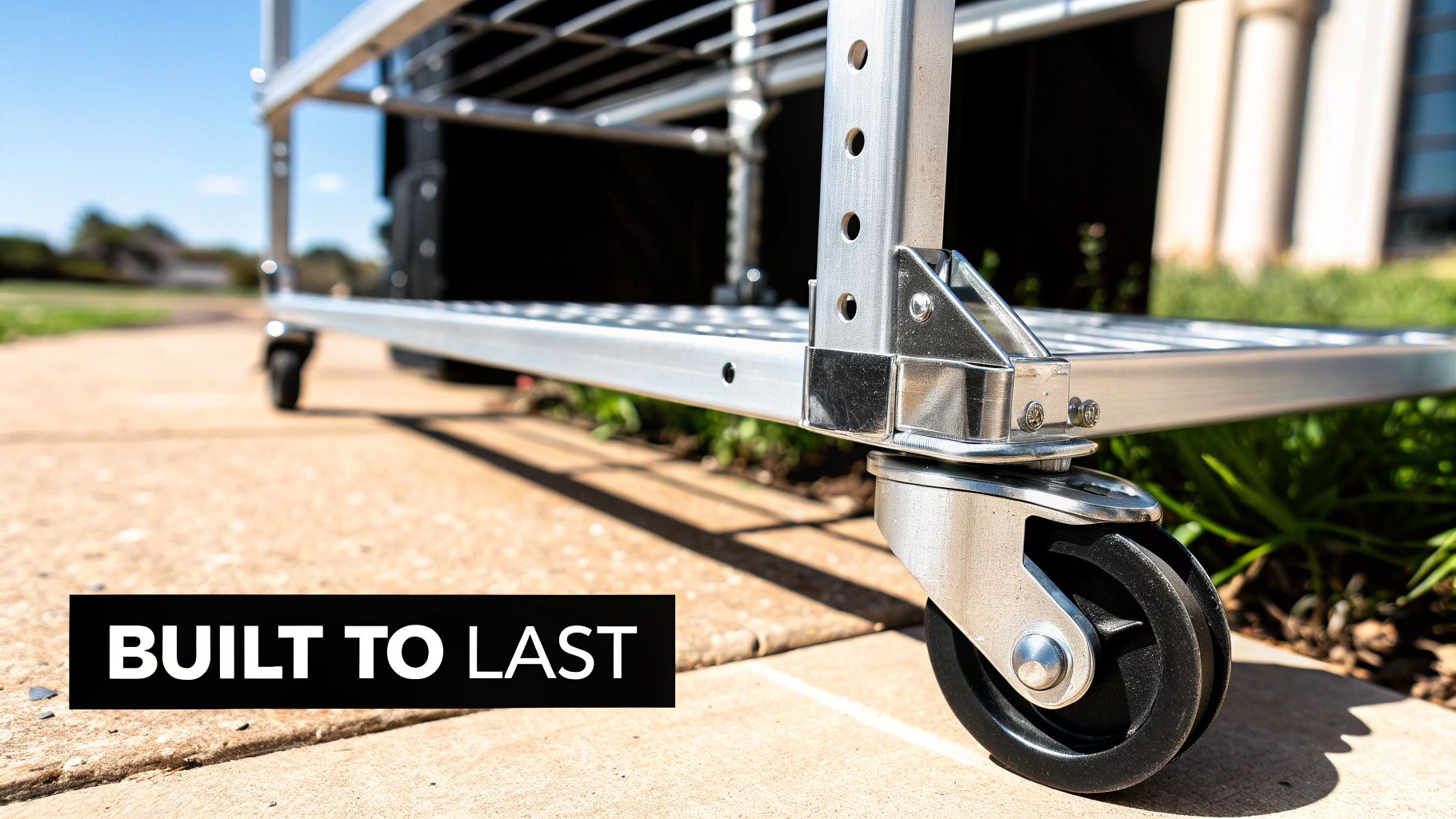
This is where you need to understand the fundamental choice between the two titans of commercial kitchen equipment: aluminum and stainless steel. Each has distinct advantages tailored for specific jobs within a pizzeria's workflow.
Aluminum The Lightweight Champion
Aluminum is a popular choice for mobile tray racks for several very practical reasons. Its biggest advantage is its weight. An aluminum rack is far easier to maneuver around a busy kitchen, making it perfect for zipping trays of prepped pizzas from the make-line to the oven or rolling dough boxes out of the walk-in.
This lightweight nature reduces strain on your staff and makes navigating tight corners a lot simpler. On top of that, aluminum is generally more cost-effective, which is a huge plus for new pizzerias or anyone working with a tight budget. The trade-off? It's softer than steel and can be more susceptible to dents and scratches over time.
Stainless Steel The Durable Workhorse
When durability is your top priority, stainless steel is the undisputed king. It offers superior strength and is highly resistant to corrosion and rust—a crucial feature in the humid, steamy environment of a commercial kitchen. This makes it an ideal choice for stationary racks parked near dish pits or in high-moisture walk-in coolers.
While stainless steel racks are heavier and carry a higher price tag, their longevity often makes them a much better long-term investment. They can withstand the daily grind of heavy loads and frequent cleaning with harsh chemicals without degrading. A stainless steel rack for trays is built for the long haul.
A rack is not just a frame; it’s an active part of your production line. A wobbly, unstable rack is a safety hazard and an efficiency killer. Investing in a fully welded frame ensures the structure remains rigid and secure, even when fully loaded with heavy dough trays and moving across uneven kitchen floors.
Beyond the base material, several construction details separate a high-quality rack from a flimsy one that you’ll end up regretting.
Critical Features To Look For
When you’re inspecting a potential rack, pay close attention to the details. These small features often make the biggest difference in daily use and can predict how long the rack will actually last in your pizzeria.
-
Frame Construction: Always, always opt for a fully welded frame over a bolted one. Welded joints provide far greater strength and rigidity, preventing the rack from twisting or wobbling under a heavy load. Bolted racks can—and will—loosen over time, becoming unstable and requiring constant tightening.
-
High-Quality Casters: For mobile racks, the wheels are everything. Look for heavy-duty casters that swivel smoothly, and make sure at least two of them have reliable locking brakes. This is a non-negotiable safety feature. It prevents the rack from rolling away while you're loading or unloading it, especially next to a blazing hot oven.
-
Proper Rail Spacing: This is vital for pizzerias that proof dough directly on the rack. The spacing between the tray slides, or rails, must allow for adequate airflow around each tray. This is key to ensuring your dough proofs evenly. If the rails are too close together, you risk inconsistent proofing and can easily damage the dough when sliding trays in and out.
Maximizing Your Pizzeria's Space And Capacity
In the tight quarters of a commercial kitchen, every square inch is prime real estate. Space is the one thing you can't make more of, and the wrong rack for trays can quickly go from being a helpful tool to a bulky, workflow-killing obstacle. Thinking strategically about space isn't just about cramming in more gear; it's about designing a smarter, more productive kitchen around your pizza prep table.
The whole process kicks off with an honest look at what your pizzeria actually needs. You can't just guess. You need to know your peak demand. How many dough trays do you absolutely need ready to go during that chaotic Friday night dinner rush? That single number will guide every decision that comes next.
Calculating Your True Tray Capacity
To find your magic number, you need to play detective for a couple of weekends. Track your busiest two-hour window and count exactly how many pizzas you're slinging and how many full dough trays you burn through. This isn't just busywork; it's the data that gives you a rock-solid baseline for the minimum holding capacity you need.
Let's say you sell 100 pizzas during your peak, and each of your dough trays holds 12 dough balls. A little quick math shows you'll need at least nine trays ready to grab. But you always need a buffer for that unexpected bus tour or online order surge, so a rack that can comfortably hold 12-15 dough trays becomes your real target.
It’s a classic mistake: buying a rack based only on its footprint, without ever calculating the actual tray volume needed for a peak service. This oversight almost always leads to a rack that’s either too small, creating a major bottleneck, or way too big, eating up precious floor space that could be used for something else.
Once you have your capacity number, you can finally match it to a rack with the right dimensions, making sure you get all the storage you need without cluttering up the kitchen.
Leveraging Vertical and Horizontal Space
With your capacity figured out, the next step is to look at the space you actually have. Most pizzeria kitchens are squeezed for horizontal room but have plenty of open air above. This is exactly where a tall, narrow rack for trays becomes one of your most valuable players.
-
Go Vertical: A tall, end-load rack can hold 20 or more full-size sheet pans while only taking up a footprint of about 20 by 26 inches. It's an incredibly efficient way to store prepped pizzas, proofing dough, or hold ingredients without hogging valuable floor space.
-
Go Horizontal: When it comes to dough boxes, under-counter racks are the perfect answer. They slide right under your pizza prep table, instantly turning that dead space into prime, refrigerated-adjacent storage. This keeps your dough at the perfect temperature and literally within arm's reach of the pizza maker.
Thinking in three dimensions is how you make every nook and cranny work for you. To really get the most out of your pizzeria's layout, it's worth diving into some comprehensive guides on commercial kitchen storage solutions to find even more ways to make your space work smarter, not harder.
Designing A Lean Workflow
The final piece of this puzzle is placement. Where you put your tray rack has a direct impact on your kitchen's speed and efficiency. The goal is simple: create a lean production line that minimizes footsteps and cuts out any wasted motion.
Your main dough rack should live right next to where the prep line starts. As a pizza is made, it should move logically down the line toward the oven. A mobile "ready" rack waiting at the end to stage pizzas for baking is a game-changer. To truly maximize your pizzeria's space and capacity, think about how different mobile solutions, including mobile roll cage trolleys, can revolutionize both your workflow and storage flexibility.
This kind of setup creates a seamless, one-way flow from prep to oven, which stops staff from tripping over each other and creating traffic jams. By carefully planning your capacity, footprint, and placement, your humble rack for trays becomes the central hub of a seriously efficient, high-volume pizza operation.
Sanitation And Safety: The Non-Negotiable Standards
In the controlled chaos of a busy pizzeria, cleanliness isn't just a goal—it's the law. A dirty kitchen can destroy your reputation in the time it takes to post one bad photo online. That’s why every single piece of gear, especially your workhorse rack for trays, has to meet strict sanitation and safety standards. You're not just protecting your business; you're protecting your customers and your team.
Cutting corners here simply isn't an option. Health inspectors are trained pros who can spot violations from across the room. A little rust, a wobbly frame, or a hard-to-clean corner on a tray rack might seem minor to you, but to them, it's a red flag. These small issues can lead to failed inspections, fines, or even a temporary shutdown. Sanitation has to be a non-negotiable part of your daily grind.
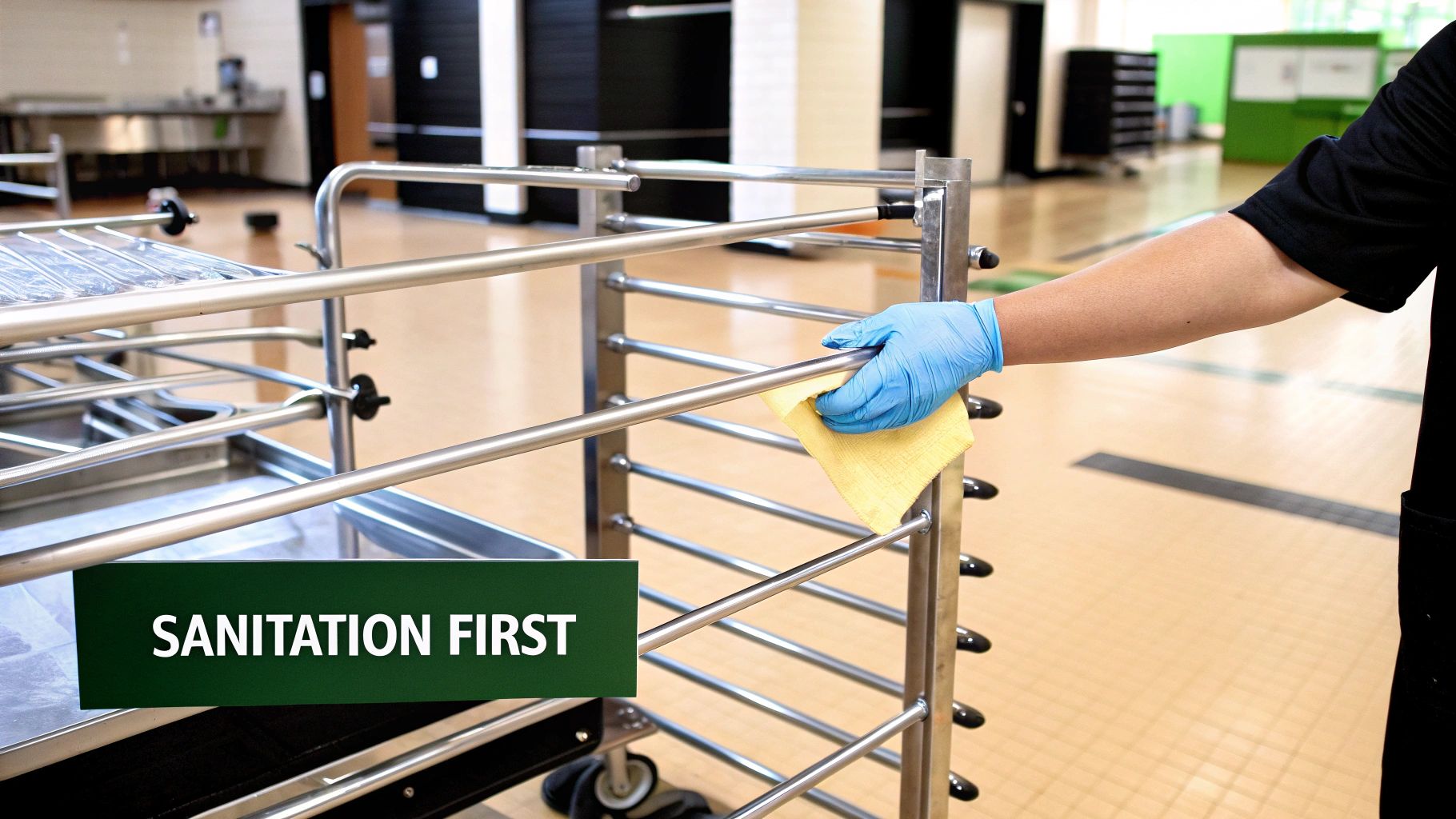
Decoding NSF Certification For Pizzerias
When you’re shopping for a new rack, you’ll see the NSF (National Sanitation Foundation) logo everywhere. This isn't just a fancy sticker. It’s your guarantee that the equipment has been put through the wringer and certified as safe for a commercial food environment. For any serious pizzeria, an NSF-certified rack isn't a luxury—it's a smart investment.
So, what does that little blue logo actually get you in your day-to-day workflow?
- Designed for Easy Cleaning: An NSF rack is built with smooth, non-porous surfaces. There are no tiny cracks or crevices where flour, cheese, and bacteria can set up camp, making your daily wipe-downs and deep cleans way more effective.
- Built from Food-Safe Materials: The certification ensures the materials—usually specific grades of stainless steel or aluminum—won't leach nasty chemicals into your dough or toppings.
- Promotes Food Safety: The entire design is about preventing contamination. You won't find flaking paint or bits of rust that could fall onto a perfectly proofed dough ball.
Choosing an NSF-certified rack is one of the easiest ways to show you’re serious about food safety. It’s a clear signal to health inspectors, and even your customers, that you've invested in doing things the right way.
Cleaning Protocols And Maintenance Routines
Having the right gear is only half the story. Keeping it clean is just as critical. A solid cleaning schedule is your best defense, ensuring your tray racks stay sanitary and ready to pass inspection at a moment's notice. This means you need clear, easy-to-follow rules for your team.
Your daily routine should be simple: wipe down all surfaces with a food-safe cleaner to get rid of loose flour and stray toppings. For the deeper clean, it’s all about using the right chemicals. Knowing the difference between cleaners and sanitizers is essential, and our guide on the 3 types of sanitizer solutions gives your team the exact knowledge they need to get it right.
Creating A Culture Of Safety
Beyond just being clean, your kitchen has to be safe. A fully loaded mobile rack can be a beast—heavy, awkward, and a real hazard if not handled properly. This is where good training and clear safety rules become absolutely essential to preventing accidents.
Here are a few key practices to drill into your team:
- Always Use Wheel Locks: Train everyone to hit the caster brakes the second a rack is parked, especially when loading or unloading near a hot oven.
- Teach Safe Loading Techniques: Heavier trays always go on the bottom shelves. This lowers the rack's center of gravity and makes it much more stable. And never, ever overload a rack beyond its weight limit.
- Ensure Racks Are Stable: Make it a habit to check for wobbly frames or loose bolts on any non-welded models. A structurally weak rack is a serious accident waiting to happen.
To keep everything on the up and up, think about using a regular workplace inspection checklist. This is a proactive move that helps you spot potential problems before they turn into dangerous, costly ones. It’s about protecting your team and your bottom line.
Calculating The ROI On Your Tray Rack Investment
A quality rack for trays isn't just another piece of kitchen furniture; it's a direct investment in your pizzeria's future. It's easy to get fixated on the price tag, weighing a budget aluminum model against a premium stainless steel unit. But the real value shines through when you stop looking at the cost and start looking at the return it generates over the long haul.
That return isn't some vague promise of "being more organized." It's about real, measurable gains—less money spent on labor, less food in the trash, and more pizzas out the door. When you frame it that way, the right rack stops being an expense and becomes a powerful tool that can pay for itself many times over.
Quantifying The Return Through Time Savings
During a dinner rush, time is your most valuable asset. Picture a disorganized prep table where a cook wastes just 10 seconds per pizza fumbling for the right ingredient tray or walking to grab a fresh dough box. It doesn't sound like much, but those seconds add up fast.
If your shop cranks out 200 pizzas on a busy night, that tiny delay snowballs into over 33 minutes of wasted labor every single shift. Over a year, you’re looking at more than 200 hours of paid time spent on needless movement instead of making and selling more pies. A well-placed rack for trays can wipe out that wasted motion completely.
The true cost of disorganization isn't the mess; it's the cumulative loss of productive minutes that directly eats into your labor budget and service speed. Organizing your pizza prep table is one of the fastest ways to reclaim those lost profits.
By keeping ingredients and dough perfectly organized, your team builds pizzas faster. Faster builds mean more orders processed per hour, which is a direct return on what you spent on that rack.
Reducing Food Waste And Improving Consistency
A chaotic prep station is a recipe for throwing money away. When ingredients are scattered, it’s far too easy to over-portion cheese or accidentally knock over a container of sliced mushrooms. A few spilled olives might seem trivial, but those small losses accumulate into a serious financial drain over a year. In fact, studies have shown that better organization can slash food waste by up to 10%.
Beyond that, a dedicated rack for trays encourages better portion control. When every ingredient has its home, your team works with muscle memory, ensuring each pizza gets a consistent amount of toppings. This not only keeps your food costs in check but also delivers a reliable product to your customers, boosting satisfaction and bringing them back for more.
The Lifetime Value Of A Quality Rack
Finally, think about the total cost of ownership. Sure, a cheap, bolted aluminum rack might save you a few bucks today, but if you have to replace it in two years, was it really a good deal?
On the other hand, a durable, welded stainless steel rack could easily last for a decade or more. It will outlive its cheaper counterparts many times over, providing a much better long-term ROI. The right rack for trays isn't just about getting through the next rush; it's about building a more efficient, profitable pizzeria for years to come.
Answering Your Top Questions About Pizza Tray Racks
When you're in the market for a new rack for trays, a few questions always pop up, especially for a busy pizzeria. Getting the right answers means you'll end up with equipment that actually speeds up your workflow at the pizza prep table instead of getting in the way. Let's tackle some of the most common questions I hear from shop owners.
What Is The Best Material For A Pizza Dough Proofing Rack?
This one really comes down to where and how you’ll be using the rack. For racks that are constantly on the move, aluminum is almost always the winner. It’s incredibly lightweight, making it a breeze to wheel from the walk-in to the prep line. Plus, it’s easier on the budget.
But if you’re looking for a stationary rack, especially one that might live near a high-moisture spot like the dish pit, stainless steel is a much smarter long-term play. It's built like a tank and laughs off rust and corrosion, so it'll stand up to the humidity and daily abuse of a kitchen for years.
The simple rule is to match the metal to the mission. Go with lightweight aluminum for mobility and stainless steel for anywhere moisture and heavy use are part of the daily grind.
How Do I Match A Rack To My Pizza Pans Or Dough Boxes?
Making sure your pans and racks are compatible is non-negotiable for a smooth kitchen flow. It all starts with a tape measure. First, get the exact dimensions of the pans or dough boxes you use day in and day out—for example, your standard 18"x26" full-size sheet pans.
Next, you need to check the rack's specs, but pay close attention to two numbers: the shelf size and the slide spacing (that's the vertical gap between each shelf). You have to make sure there's enough clearance to slide your trays in and out without them getting stuck, snagged, or tipping over. It sounds simple, but getting this wrong is a daily headache.
Can I Use A Standard Pan Rack For Pizza Screens?
Technically, you might be able to slide a few thin pizza screens onto a standard pan rack, but it’s usually a bad fit. Most general-purpose racks have wide slide spacing designed to hold deeper pans like hotel pans or sheet pans.
That extra space is a problem for thin, flimsy screens or even solid disks. They can easily fall through the gaps or sit at a weird angle, which risks damaging them. A dedicated rack for trays built with narrower spacing holds them securely, protects them from getting bent, and lets you store way more screens in the same amount of space.
Ready to build a faster, more organized pizza prep line? Explore our complete collection of commercial-grade racks and equipment at Pizza Prep Table. Find the perfect fit for your kitchen today at https://pizzapreptable.com.