
Unlock Capital: Equipment Financing Solutions for San Diego Businesses
Fueling San Diego's Business Engine with Smart Financing

San Diego equipment financing is the strategic solution that allows businesses to acquire essential equipment without draining their working capital. Here's what you need to know:
Quick Answer: San Diego Equipment Financing at a Glance
- Funding Amounts: From $150,000 (simple one-page application) up to $5,000,000 (with financial disclosure)
- Approval Speed: 5 minutes to 2 hours for most applications; some lenders approve requests up to $200,000 in just a couple of hours
- Funding Timeline: Same-day to 24-hour funding available from multiple San Diego-area providers
- Typical Terms: 3-7 years (36-84 months) with flexible payment structures
- Down Payment: Often 0% down with 100% financing available
- Credit Requirements: Minimum 600-640 credit score for most programs; startup-friendly options available
San Diego County's 2.8 million residents power one of California's most dynamic business ecosystems. California consistently ranks among the largest economies in the world when compared to countries by gross domestic product, reflecting its substantial economic output and diverse industry base. You can learn more about the scale of California's economy on Wikipedia's California page.
San Diego businesses across construction, healthcare, manufacturing, and hospitality need equipment to compete and grow.
But here's the challenge: purchasing equipment outright depletes the working capital you need for payroll, inventory, and daily operations. Equipment financing solves this problem by spreading costs over time while you use the equipment to generate revenue.
Whether you're a pizzeria owner needing a commercial refrigerator, a contractor requiring heavy machinery, or a medical practice upgrading diagnostic equipment, financing preserves your cash flow while giving you immediate access to the tools that drive revenue.
I'm Sean Kearney, and through my years in sales and the foodservice industry—from building customer relationships at Amazon.com to helping restaurants source the right equipment—I've guided countless business owners through San Diego equipment financing decisions. My experience has shown me that the right financing structure can be the difference between a business that survives and one that thrives.
Why Equipment Financing is a Strategic Move for San Diego Businesses
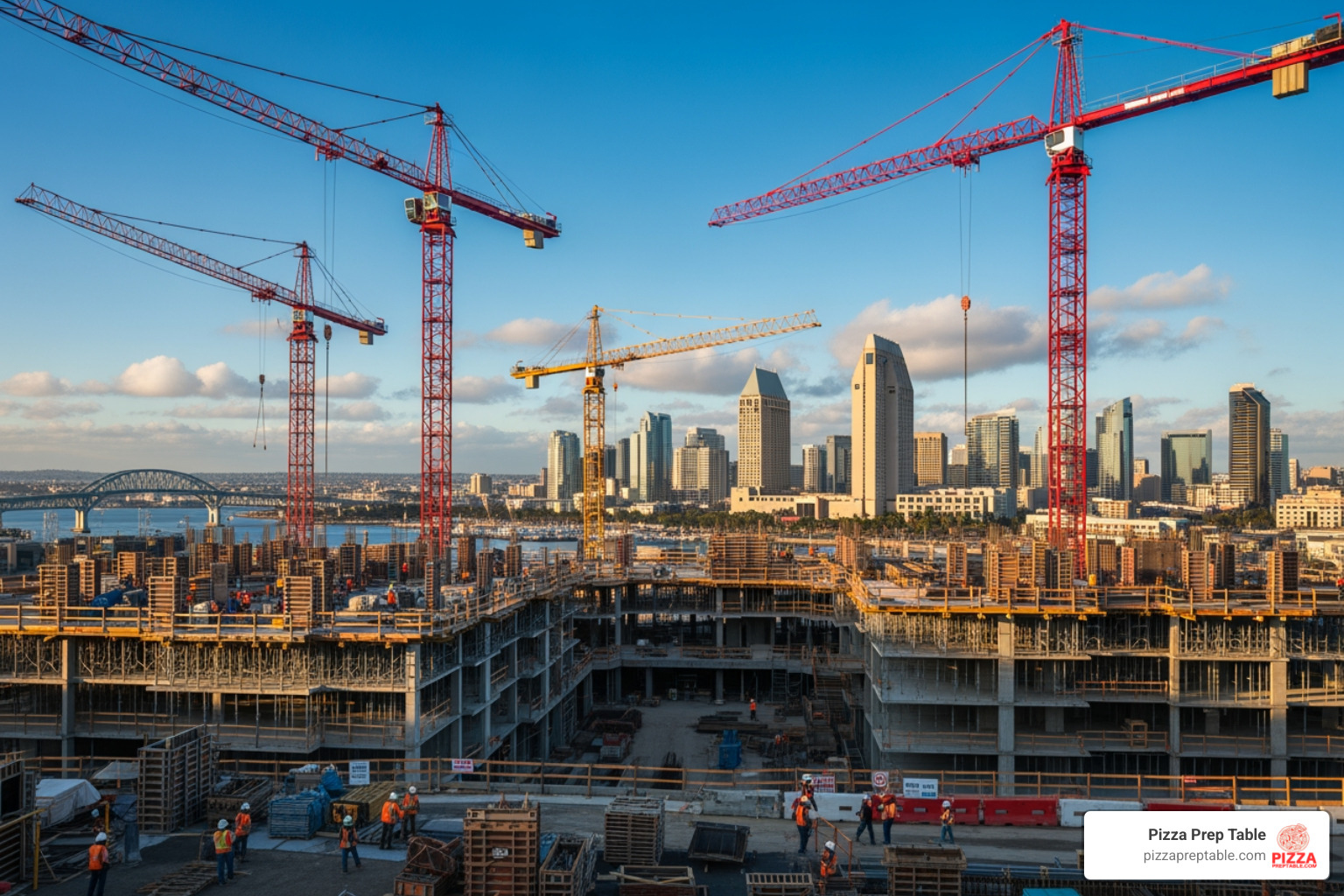
San Diego is a hub of innovation and enterprise, and to stay competitive, our businesses constantly need to acquire or upgrade essential equipment. From the busy kitchens of Little Italy to the advanced manufacturing facilities in Sorrento Valley, modern machinery is the backbone of operational success. This is precisely where San Diego equipment financing becomes a game-changer.
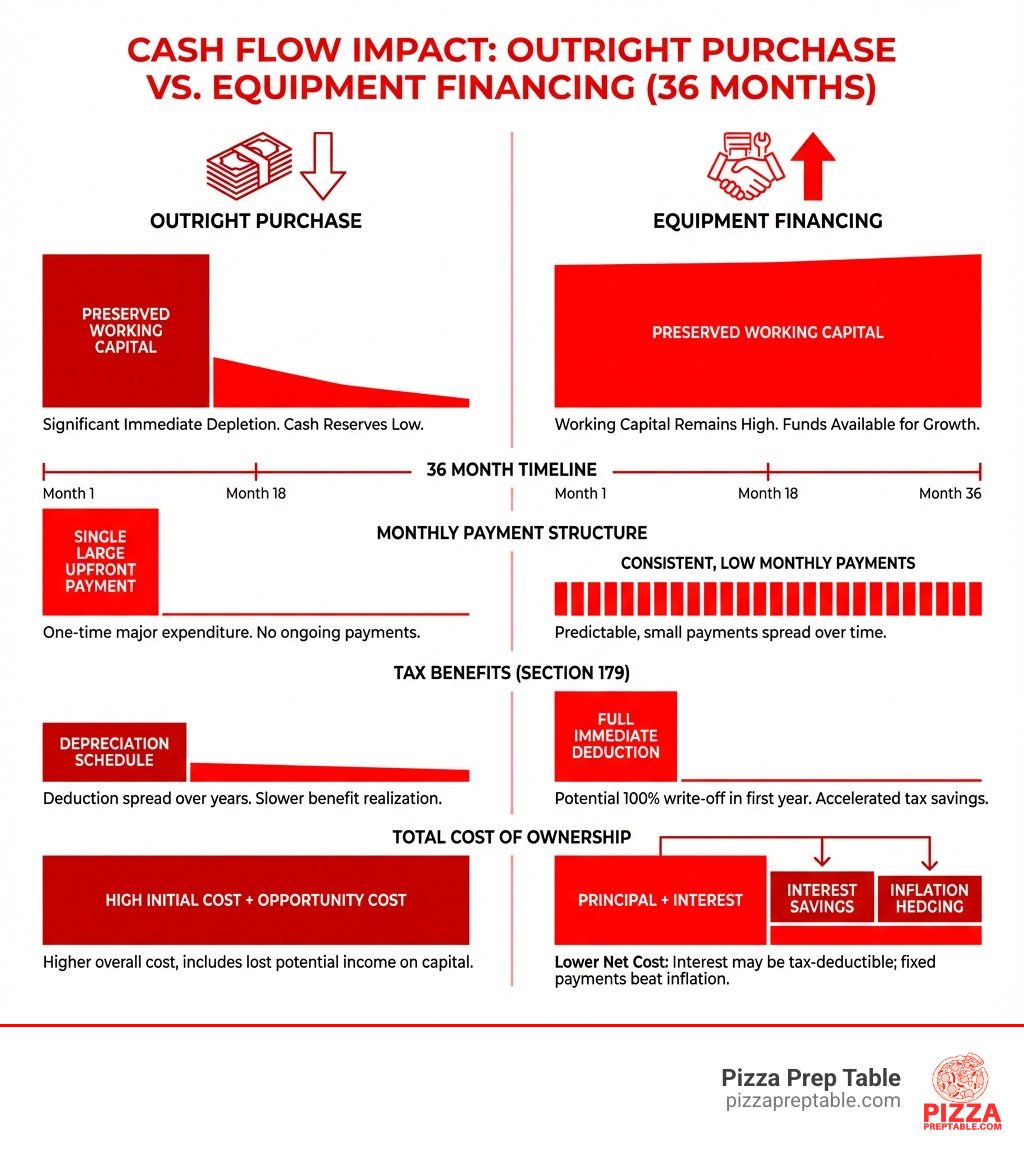
Equipment financing is a strategic move that helps businesses in San Diego manage cash flow and capital effectively (Q2). Instead of making a large, upfront capital expenditure that could strain your bank account, financing allows you to spread the cost over time. This preserves your precious working capital for daily operational needs like payroll, inventory, and marketing. Imagine having to choose between a new pizza prep table and paying your staff – with financing, you don't have to!
By preserving capital, you maintain a healthy cash flow, which is crucial for handling unexpected expenses or seizing new opportunities. This financial agility gives you a significant competitive advantage, enabling you to acquire state-of-the-art technology and increase your production capacity without delay. This supports business expansion and operational growth (Q13), allowing you to take on larger projects and expand your service offerings with confidence. Many financing solutions even offer 100% financing, meaning you can often acquire the equipment you need with little to no down payment.
Leasing vs. Outright Purchase: A Financial Breakdown
When considering acquiring equipment, the age-old question arises: buy or lease? For many San Diego businesses, especially those looking to grow, leasing often presents compelling benefits over purchasing outright (Q3).
One of the primary advantages of leasing is preserving working capital. As we've discussed, large purchases can deplete your cash reserves. Leasing, with its low or no down payment options, keeps your capital liquid for other critical business functions. This is particularly beneficial for small businesses and startups.
Leasing also typically results in lower monthly payments compared to an equipment loan for the same asset. This helps maintain a predictable and manageable cash flow, making budgeting a breeze. Think of it as paying for the use of the equipment as it generates revenue for you, rather than owning it outright from day one.
Another key benefit is avoiding obsolescence. Technology evolves rapidly, and what's cutting-edge today might be outdated tomorrow. Leasing allows you to use equipment for a set period and then upgrade to newer models without the hassle of selling depreciated assets. Some providers, like Trust Capital, even offer "FLEXLEASE" options that allow you to trade up to newer technology during your contract term, ensuring you always have the most efficient tools.
Furthermore, equipment leasing can act as a hedge against inflation. Lease payments are fixed, meaning you'll be paying with "cheaper dollars" over time as inflation erodes purchasing power. This can lead to potential interest savings on an after-tax cost of ownership.
Finally, certain types of leases, specifically operating leases, don't appear as a liability on your balance sheet. This can improve your financial ratios, making your business more attractive to investors or for securing future credit.
To dive deeper into the strategic advantages of leasing for your business, explore our guide on Lease to Own Restaurant Equipment.
Supporting Growth and Scaling Operations
For ambitious San Diego businesses, equipment financing is more than just a way to acquire tools; it's a catalyst for growth. Whether you're a startup looking to make your mark or an established enterprise aiming for the next level, financing provides the means to:
- Acquire state-of-the-art technology: Stay ahead of the curve by investing in the latest equipment that boosts efficiency, quality, and competitiveness.
- Increase production capacity: Need to handle more orders? Financing allows you to get the extra machinery required to scale up operations without missing a beat.
- Take on larger projects: With the right heavy equipment, a construction company can bid on bigger jobs. For a restaurant, a high-capacity oven means catering larger events.
- Expand service offerings: New equipment can open up new revenue streams, allowing you to diversify your services and capture more market share.
Navigating Your San Diego Equipment Financing Options
When it comes to San Diego equipment financing, businesses have a variety of robust options to choose from (Q1). Each type offers distinct advantages depending on your business's financial situation, tax strategy, and long-term goals for the equipment.
The primary types of equipment financing available include:
- Equipment Loans: Similar to traditional loans, you own the equipment from day one, and the equipment itself often serves as collateral.
- Equipment Leasing: You pay to use the equipment for a set period, with various options at the end of the term (purchase, return, renew).
- Sale-Leaseback Programs: You sell equipment you already own to a financing company and then lease it back, freeing up capital.
- Equipment Finance Agreements (EFAs): A structured financing tool that combines elements of both loans and leases.
Many reputable national and local providers, like Trust Capital, offer these diverse options.
Understanding Equipment Leases
Leasing is often a flexible and attractive option for businesses, particularly when managing cash flow is a priority. The differences between operating leases and finance leases are crucial to understand in the context of San Diego businesses (Q12), as they have significant accounting and tax implications.
| Feature | Operating Lease | Finance Lease (Capital Lease) |
|---|---|---|
| Ownership | Lessor retains ownership | Lessee effectively owns for accounting/tax purposes |
| Balance Sheet | Off-balance sheet (for GAAP compliance) | On-balance sheet (asset & liability recorded) |
| Tax Treatment | Payments are tax-deductible operating expenses | Lessee can depreciate the asset and deduct interest expenses |
| Lease Term | Shorter, usually less than 75% of asset's life | Longer, usually covers most of the asset's economic life |
| End of Term | Return, renew, or purchase at Fair Market Value | Purchase for $1 or nominal amount, or return (less common) |
| Risk of Obsolescence | Lower for lessee, easier to upgrade | Higher for lessee, responsible for asset's residual value |
Let's break down some common lease structures:
- Fair Market Value (FMV) Buyout: Common with operating leases, this option allows you to purchase the equipment at its fair market value at the end of the lease term. If you don't want to buy it, you can simply return it or renew the lease. This is great for equipment that depreciates quickly or when you anticipate needing upgrades.
- $1 Buyout Lease (Capital Lease): Also known as a nominal or dollar-buyout lease, this is a type of finance lease. At the end of the lease term, you can purchase the equipment for a nominal price, typically $1. This option is ideal when you intend to own the equipment long-term and want to benefit from depreciation deductions.
- TRAC Lease (Terminal Rental Adjustment Clause): Specifically designed for vehicles, but sometimes applied to other equipment, a TRAC lease allows the lessee to establish the residual value of the asset upfront. At the end of the lease, you can buy the equipment for the predetermined TRAC value or return it.
- Off-balance sheet financing: Achieved through GAAP operating leases, this means the lease obligation does not appear as debt on your company's balance sheet, which can be advantageous for maintaining favorable financial ratios.
Securing an Equipment Loan
For businesses that prioritize ownership and building equity, an equipment loan is often the preferred route. With an equipment loan, you own the equipment from the moment of purchase, and the loan is typically secured by the equipment itself. This means if you default, the lender can repossess the equipment.
Equipment loans come with fixed monthly payments, making it easy to budget. Over the loan term, you're building equity in the asset, and once the loan is paid off, the equipment is yours free and clear. This is particularly appealing for long-lasting assets that retain value.
A significant advantage of equipment loans is the ability to finance both new and used equipment (Q10). Companies like Trident Fund, LLC and Trust Capital offer flexible programs for both, allowing San Diego businesses to acquire the tools they need, whether brand new or gently used, to optimize their operations. This flexibility is crucial for businesses with varying budget constraints or those seeking specific, hard-to-find machinery.
For those in the restaurant industry, understanding the nuances of equipment loans is essential. We've compiled a detailed guide to help you steer your options: From Fryers to Funds: Navigating Restaurant Equipment Financing Options.
The A-to-Z Application Process: From Inquiry to Funding
Applying for San Diego equipment financing might sound daunting, but many lenders have streamlined the process to be remarkably quick and straightforward. Our goal is to get you the equipment you need with minimal fuss, so you can focus on what you do best: running your business.
The application process typically starts with a simple inquiry and moves quickly to approval and funding. Many providers, like Trust Capital and Trident Fund, pride themselves on speed and efficiency, understanding that time is money for San Diego businesses.
What Lenders Need: Preparing Your Documentation
One of the key questions we often hear is, "What documentation is typically required for San Diego businesses seeking equipment financing?" (Q6). The good news is that for smaller amounts, the requirements are surprisingly minimal.
Here's a general list of what lenders might need:
- Basic Company Information: Legal business name, address, phone number, EIN.
- Owner Principal Information: Names, addresses, and Social Security numbers of key owners (often for a personal guarantee, especially for startups).
- Equipment Type & Price: A quote or invoice for the specific equipment you wish to finance.
- Equipment Location: Where the equipment will be primarily used.
- Your Signature Authorization: To process the application.
- Business License or Active Business Entity Registration: For startups, this is essential.
For financing requests up to $200,000 to $300,000, a simple one-page application is often all that's required. For larger amounts, say over $500,000 or up to $5,000,000, lenders might ask for financial disclosures, such as bank statements or tax returns, to assess your business's financial health more thoroughly.
Typical Terms for San Diego Equipment Financing
Understanding the typical terms and conditions for equipment financing in San Diego is essential for making an informed decision (Q5). These generally include loan duration, interest rates, and down payment requirements.
- Loan Duration: Most equipment financing agreements range from 3 to 7 years (36 to 84 months). The exact term will depend on the equipment's lifespan, its cost, and your business's cash flow preferences. Longer terms typically mean lower monthly payments but may incur more overall interest.
- Interest Rates: Interest rates for equipment financing are not one-size-fits-all. They can be indexed to a benchmark rate (like the term swap rate, as mentioned by Western Alliance) with a required spread based on your credit rating. Lenders like Cardiff boast low rates on secured financing, starting from 5.99%. Your credit score, time in business, and the type of equipment will all influence the final rate.
- Down Payment Requirements: Many financing options, especially for well-qualified businesses, offer low or even no down payment, providing up to 100% financing. This is a huge benefit for preserving working capital.
- Soft Costs Inclusion: Don't forget the "soft costs" associated with acquiring equipment. Many financing agreements allow you to roll in expenses like installation, shipping, training, and even sales taxes into the total financed amount. This means you truly get 100% financing for the entire acquisition cost, not just the equipment itself.
How Quickly Can You Get Funded?
One of the most appealing aspects of modern equipment financing in San Diego is the speed of the approval and funding process (Q7). Businesses simply can't afford to wait weeks for capital when an opportunity arises or a critical piece of equipment breaks down.
Many providers offer incredibly fast turnaround times:
- 5-minute approvals and same-day funds are offered by some lenders, demonstrating the industry's commitment to speed. While some national lenders offer this, companies like Trust Capital and Trident Fund in the San Diego market are also known for their rapid responses.
- Trident Fund, LLC typically approves requests for up to $200,000 in a couple of hours from a simple one-page credit application.
- Trust Capital offers same-day approvals in 2 hours for industrial equipment financing, and next-day funding, with pre-funding available for approved vendors. They can fund up to $300,000 with a simple one-page application for industrial equipment and up to $150,000 for startup equipment. For larger needs, they can go up to $500,000 with basic information and up to $5,000,000 with financial disclosure.
This means you can often get the funds you need within 24 hours of approval, sometimes even the same day!
Key Industries, Tax Benefits, and Special Programs
San Diego's diverse economy means that businesses across a wide spectrum of sectors benefit immensely from equipment financing. Beyond simply acquiring assets, smart financing strategies can open up significant tax advantages and cater to the unique needs of startups and small businesses.
Common Industries Utilizing San Diego Equipment Financing
What industries in San Diego commonly use equipment financing? (Q4) The answer is, quite broadly, any business that relies on tangible assets to operate and generate revenue. We see a strong demand from:
- Construction: Heavy machinery, vehicles, specialized tools.
- Healthcare (Medical, Dental, Veterinary): Diagnostic equipment, surgical instruments, office technology.
- Manufacturing: Production lines, CNC machines, material handling equipment.
- Restaurants & Hospitality: Commercial kitchen equipment (ovens, refrigerators, pizza prep tables!), point-of-sale systems, furniture.
- Transportation & Trucking: Commercial trucks, trailers, fleet vehicles.
- Agriculture: Tractors, harvesting equipment.
- Auto Body / Auto Repair: Lifts, diagnostic tools.
- Landscaping: Mowers, trimmers, utility vehicles.
- IT: Servers, networking equipment, software licenses.
At PizzaPrepTable.com, we frequently work with pizzerias and other foodservice businesses seeking financing for their essential kitchen equipment. Explore more about how we help our customers with their needs through our dedicated page on Restaurant Equipment Financing.
Maximizing Your Return with Section 179
One of the most powerful incentives for businesses utilizing San Diego equipment financing is the Section 179 Deduction (Q11). This IRS tax code allows businesses to deduct the full purchase price of qualifying equipment and/or off-the-shelf software purchased or financed during the tax year. Instead of depreciating the asset over several years, you can expense it immediately.
Here's how it works:
- Immediate Expensing: Businesses can deduct the entire cost of qualifying new or used equipment from their net income in the first year it's used.
- Tax Savings Calculation: For instance, if you finance $10,000 in restaurant equipment and your business is in a 35% tax bracket, the Section 179 deduction could result in a $3,500 tax savings, effectively reducing the true cost of the equipment to $6,500. It's like getting a discount just for investing in your business!
- New and Used Equipment Eligibility: Both new and used equipment qualify for the Section 179 deduction, as long as it's purchased or financed and put into service during the tax year.
This deduction is particularly beneficial for small and medium-sized businesses. For the 2020 tax year (as an example from our research), any business financing less than $1,000,000 in restaurant equipment should qualify. Always consult with a tax professional to ensure your specific situation meets the current IRS guidelines.
Finding the Right Lender: Local vs. National
When seeking San Diego equipment financing, businesses often weigh the advantages of working with local providers versus national ones (Q9). Both have their merits, and the best choice depends on your specific needs and preferences.
Advantages of working with local San Diego equipment financing providers:
- Personalized Service: Local lenders often prioritize building long-term relationships. They might offer more personalized service and a deeper understanding of the local market dynamics.
- Faster Decisions: With direct access to decision-makers, local providers can sometimes offer quicker approvals and more flexible terms custom to your unique situation.
- Community Connection: Supporting local businesses strengthens the San Diego economy.
Advantages of national lenders:
- Broader Product Offerings: National companies might have a wider range of financing products and larger funding capacities.
- Streamlined Processes: Many national lenders have highly automated processes, which can lead to very fast approvals (e.g., 5-minute approvals and same-day funding, as seen with some industry leaders).
Regardless of whether you choose local or national, it's crucial to vet your financing partners. Look for transparent terms, responsive customer service, and a proven track record.
It's also important to consider the potential risks or downsides of equipment financing (Q15). These can include:
- Interest Rates: While financing spreads out costs, interest adds to the total amount paid over time. Ensure you understand the full cost.
- Debt Accumulation: Taking on too much financing can strain your business if revenue doesn't meet projections.
- Impact on Credit: If payments are missed, your business credit score can suffer.
- Understanding Terms: Always read the fine print. Lease agreements, for example, can have various end-of-term options with different financial implications.
Frequently Asked Questions about San Diego Equipment Financing
We understand that navigating equipment financing can raise many questions. Here, we address some of the most common inquiries from San Diego businesses.
What are the primary types of equipment financing available in San Diego?
(Q1) San Diego businesses have access to several primary types of equipment financing to suit various needs:
- Equipment Loans: You own the equipment, and the loan is secured by the asset itself. This is ideal for long-term ownership and building equity.
- Capital Leases ($1 Buyout): These are essentially loans structured as leases, allowing you to purchase the equipment for a nominal fee (often $1) at the end of the term. You typically claim depreciation benefits.
- Operating Leases (Fair Market Value): You pay for the use of the equipment for a set period, with options to return, renew, or purchase at fair market value at the end of the lease. These can often be kept off your balance sheet.
- Sale-Leaseback Agreements: You sell existing equipment to a financing company and then lease it back, converting an asset into working capital.
- Equipment Finance Agreements (EFAs): A flexible financing structure that can combine features of both leases and loans, often allowing for customized terms.
How long does the approval process for equipment financing usually take in San Diego?
(Q7) The approval process for San Diego equipment financing is remarkably quick, designed to meet the needs of businesses. For amounts up to $200,000 to $300,000, many lenders, such as Trident Fund and Trust Capital, can provide approvals within a couple of hours, often from a simple one-page application. Some in the industry even boast 5-minute approvals and same-day funding for qualified applicants. While actual funding can sometimes take 24 hours, the initial credit decision is typically very fast.
Can I finance both new and used equipment?
(Q10) Absolutely! Most financing companies in the San Diego area, including Trident Fund, LLC and Trust Capital, offer flexible programs that cover both new and used equipment. This is a significant advantage, as it allows businesses to acquire cost-effective used machinery or invest in brand-new, high-tech equipment based on their budget and operational needs. Trust Capital, for instance, explicitly states they have no age restrictions on the equipment they finance, as long as it's in good working order.
Conclusion: Equip Your San Diego Business for Success
The vibrant economy of San Diego demands that businesses remain agile, efficient, and well-equipped. San Diego equipment financing is not just a necessity; it's a powerful strategic tool that enables growth, preserves vital cash flow, and provides a competitive edge.
From understanding the nuances of leases versus loans to leveraging tax benefits like Section 179, the options are designed to empower businesses of all sizes, from innovative startups to established enterprises. By choosing the right financing partner, you can acquire the essential equipment you need, manage your capital effectively, and position your business for sustained success in this dynamic Southern California market.
At PizzaPrepTable.com, we understand the critical role that quality equipment plays in your business. We're passionate about helping our customers, whether a busy downtown pizzeria or a new food truck venture, get the tools they need to thrive. That's why we offer comprehensive financing options for our commercial pizza prep tables and other restaurant equipment.
Don't let equipment costs hold your San Diego business back. Equip yourself for success and release your full potential.