

Mastering Under Counter Fridge Sizes for Your Pizza Prep Table
Choosing the right under counter fridge size is the foundation of a high-speed pizza prep line. Think of a standard one-door unit as a compact 27 inches wide, a busy two-door model stretching from 48 to 60 inches, and a massive three-door workstation hitting 72 to 93 inches wide. These numbers aren't just specs; they directly shape your pizzeria's workflow and how many pies you can pump out on a Friday night.
Matching Fridge Size to Your Pizzeria's Needs
In a bustling pizzeria, an under counter fridge isn't just a place to keep things cold—it's the engine of your assembly line. The right size determines how fast your team can build pizzas, how fresh your ingredients stay, and whether your kitchen flows or flounders during the dinner rush. Getting the dimensions right for your pizza prep table setup is a make-or-break decision that touches everything from staff ergonomics to your bottom line.
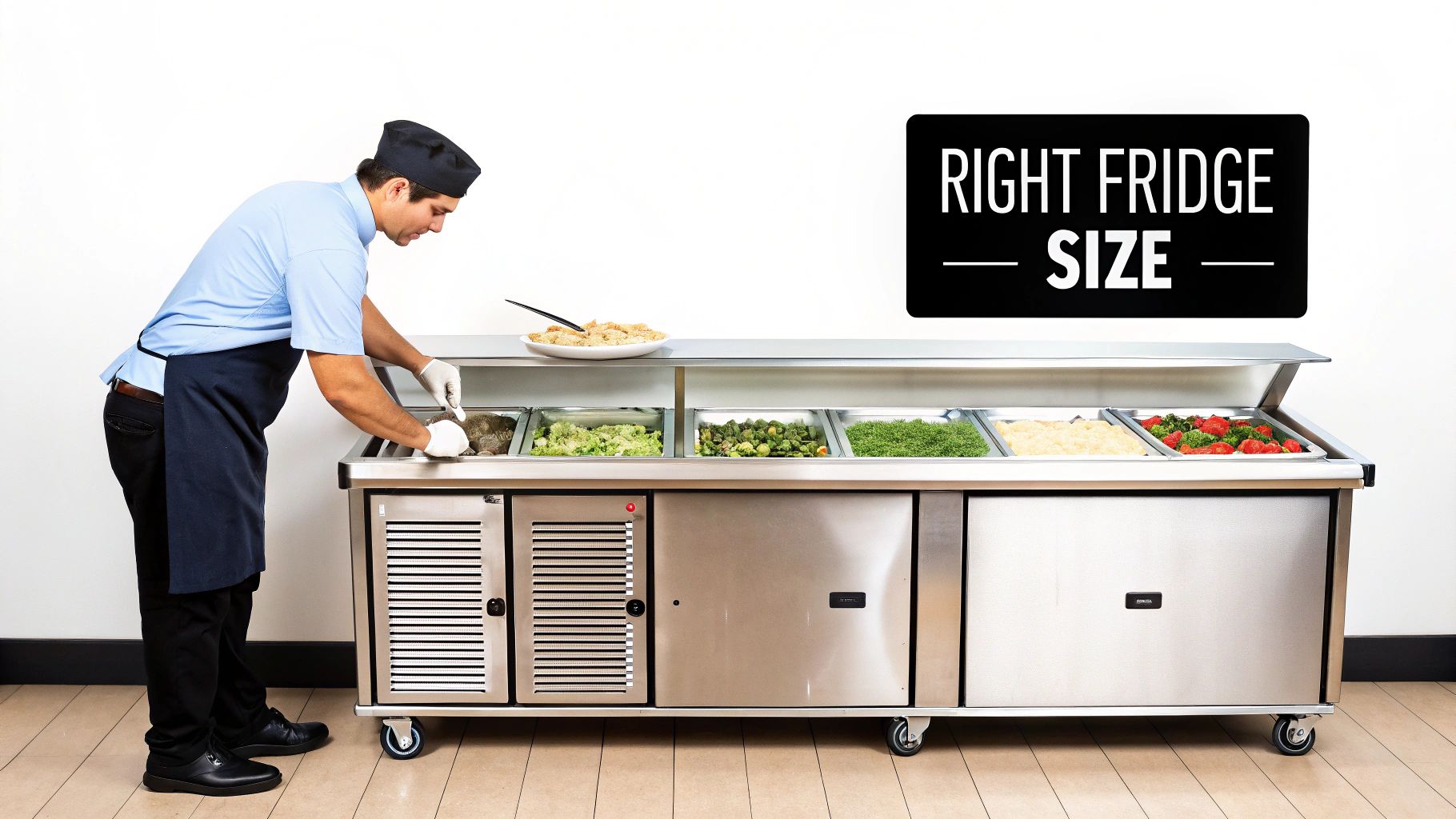
This vital role is exactly why these units have become so essential for space-conscious pizzerias. In fact, the global market for commercial undercounter refrigerators and freezers just hit USD 2.5 billion. It’s on track to climb to USD 4.0 billion within the next decade, fueled by a steady 4.8% annual growth rate as more kitchens rely on this workhorse technology. You can explore more market data about commercial refrigeration trends and see how they're shaping modern kitchens.
Why Size Matters for Pizza Prep
The size of your under counter fridge is directly tied to your operational speed. A unit that’s too small creates frustrating bottlenecks, forcing your crew to constantly run to the walk-in for more cheese or pepperoni. On the flip side, a fridge that’s too big is just an expensive, energy-guzzling obstacle taking up precious floor space under your pizza prep table.
The perfect fit delivers on three key fronts:
- Optimal Workflow: Every essential topping, from mozzarella to mushrooms, is chilled and right within arm's reach. This simple change drastically cuts down on wasted movement and shaves seconds off every order.
- Ingredient Capacity: The internal volume is large enough to hold everything you need to survive the peak dinner rush without frantic mid-service restocking trips.
- Ergonomic Design: When slid under a pizza prep table, the fridge creates a seamless, unified workstation. It's a small detail that reduces physical strain on your pizza makers over a long shift.
A perfectly sized under counter fridge is the cornerstone of a flawless pizza assembly line. It transforms your prep station from a simple counter into a high-performance command center where quality and speed meet.
Ultimately, thinking about fridge sizes is less about inches and feet and more about matching the equipment to your restaurant's unique rhythm. It's about building a system that empowers your team to handle any rush with total confidence.
Here’s a quick reference to help you visualize how width translates to real-world pizzeria use.
Quick Guide to Common Under Counter Fridge Sizes
This table breaks down the most common widths and connects them to the type of pizzeria they serve best, giving you a better feel for what you might need.
| Width (Inches) | Best For | Typical Capacity (Cu. Ft.) | Example Use |
|---|---|---|---|
| 27" | Small pizzerias, food trucks, or prep stations | 6-8 | A small shop with a limited menu, where this unit holds just the essentials like cheese, sauce, and pepperoni. |
| 48" | Medium-volume neighborhood pizzerias | 12-14 | A popular local spot that needs to stock 5-7 core toppings plus backups for a steady dinner service. |
| 60" | Busy restaurants with a diverse pizza menu | 16-18 | The go-to size for handling a wider variety of fresh veggies, meats, and multiple cheese blends. |
| 72" | High-volume pizzerias or dual-purpose lines | 20-22 | A powerhouse for kitchens that need to support multiple pizza makers or a dedicated gluten-free prep area. |
| 93" | Very high-volume or large-scale operations | 28-30 | Found in kitchens that serve hundreds of pizzas a night, requiring massive ingredient storage at the line. |
Remember, these are just starting points. The real magic happens when you measure your space, analyze your menu, and choose the fridge that will become the backbone of your pizza prep table.
How to Measure Your Kitchen Space Accurately
Before you even think about buying a new under-counter fridge for your pizza prep table, grab a tape measure. Seriously. Think of it like a tailor measuring for a custom suit—a few minutes of precision now saves you from a world of headaches later. We're talking costly installation problems, delivery guys refusing to bring it in, and a workflow nightmare during your dinner rush.
Getting the dimensions right isn't just about making sure the unit slides into place. It’s also about giving it the "breathing room" it needs to work efficiently without overheating. An improperly measured space can mean your shiny new fridge won't fit, runs hot all the time, or turns a critical walkway into a bottleneck on a busy Friday night.
The Three Critical Measurements
Every single under-counter refrigerator is defined by three simple numbers: its width, depth, and height. In a pizzeria, each one of these plays a huge role in how smoothly your prep line runs. Getting fluent in this "language of dimensions" is the first step. For a much deeper look at how these numbers affect different models, you can check out our complete guide on under counter refrigerator dimensions.
- Width: This is your side-to-side measurement. It directly impacts how much prep surface you have and how many ingredient pans you can cram in. Common commercial widths like 48", 60", and 72" are no accident—they're made to line up perfectly with standard pizza prep tables.
- Depth: This is the front-to-back number, and it's absolutely critical for aisle space. A unit that juts out too far can instantly create a traffic jam for your staff, especially when they're hustling.
- Height: The vertical measurement from floor to top. This ensures the unit fits cleanly under your existing pizza prep table, creating a seamless and comfortable workstation for your team.
Step-by-Step Measuring Walkthrough
Here’s a pro tip to avoid common mistakes: measure your available space in three different spots for both width and height—at the bottom, middle, and top. Why? Because floors and countertops are almost never perfectly level. Always, always use the smallest measurement of the three for your final number.
- Measure the Height: Get the vertical distance from the floor to the bottom of your countertop. Do this on the left side, in the middle, and on the right. Write down the lowest number.
- Measure the Width: Check the horizontal space between your cabinets. Measure at the back of the opening, in the middle, and at the front. Use the narrowest figure.
- Measure the Depth: Run your tape measure from the back wall to the front edge of the cabinets next to the opening. Be sure to look for any outlets, pipes, or other hookups that stick out from the wall and reduce your usable depth.
Don't forget about ventilation! Even the front-breathing models need a little space to work properly. Plan for at least a 1/8 to 1/4 inch gap on each side and the top to allow for proper airflow and prevent the compressor from working itself to death.
When you start looking at specific models, you'll see widths ranging from 24 to 96 inches, but the real sweet spot for most pizzerias is in that 48-72 inch range. This size typically gives you 10-20 cubic feet of storage and is what the vast majority of pizza kitchens buy.
Translating Cubic Feet into Real-World Pizza Toppings
The spec sheet for an under-counter fridge might boast 12 cubic feet of space, but what does that number actually mean when you’re slammed during a Friday night dinner rush? Let’s be honest: for a pizzeria owner, abstract volume is useless. You need to know how many dough trays, third-size pans of pepperoni, or blocks of mozzarella will fit inside.
Thinking in terms of ingredients, not just some generic capacity number, is the secret to choosing the right size unit for your pizza prep table.
Getting this right helps you sidestep two common—and costly—mistakes. The first is buying a unit that’s too small, which forces your pizza makers to constantly interrupt their flow with trips to the walk-in. The second is buying one that’s too large, which just wastes precious energy and eats up your kitchen’s valuable footprint.
This diagram helps visualize the core measurements you'll use to figure out if a unit will physically fit in your kitchen.
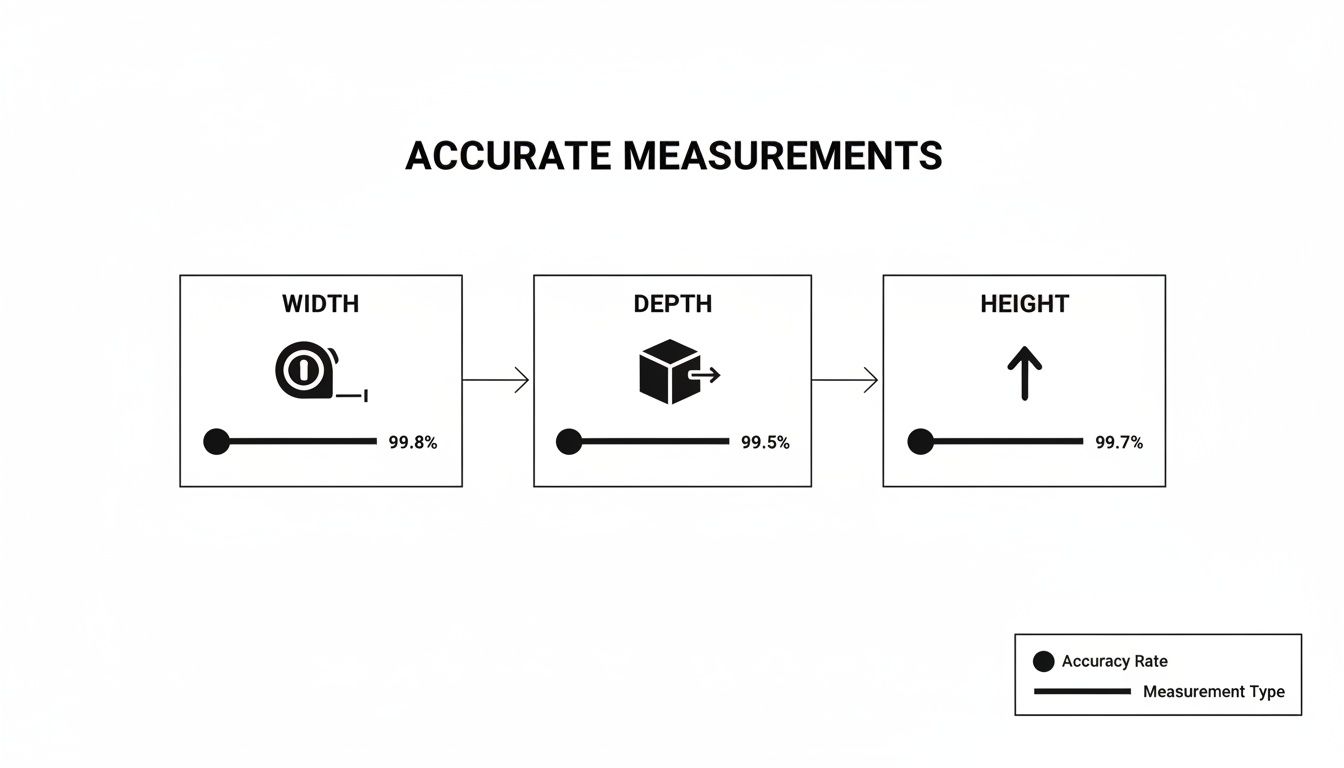
As you can see, accurately measuring the width, depth, and height of your available space is step one. You have to nail this before you can even think about what goes inside.
From Cubic Feet to Pizza Pans
Okay, let's make this tangible. A standard 48-inch, two-door under-counter fridge with around 12 cubic feet of space is a popular workhorse for a reason. But how does that translate to actual toppings and dough?
Here’s a practical rule of thumb for what you can expect to store in a unit this size:
- Dough Boxes: It can typically hold 4 to 6 standard-sized (18" x 26") dough proofing boxes. For a small-to-medium volume shop, that’s often enough to power through the busiest hours.
- Third-Size Food Pans: The internal shelving is usually designed to hold 12 to 16 third-size (1/3) food pans, each 6 inches deep. This gives you an organized layout for all your core toppings—pepperoni, mushrooms, onions, peppers, and sausage.
- Bulk Ingredients: You’ll also have room for the bigger stuff, like large bags of shredded mozzarella, buckets of sauce, and backup containers of high-volume ingredients.
A well-organized 12 cubic foot unit should empower a pizza maker to assemble dozens of pizzas without ever needing to step away from the prep line. It’s not just storage; it’s a self-contained workstation.
Calculating Your Pizzeria’s True Needs
The perfect under-counter fridge size depends entirely on your unique operation. You need to take a hard look at your menu, how fast you burn through ingredients, and what your peak service really looks like.
Ask yourself these critical questions to land on the perfect capacity for your kitchen:
- How complex is your menu? A simple cheese-and-pepperoni menu requires far less refrigerated space than a gourmet spot with 20+ fresh vegetable and meat options.
- What’s your ingredient turnover? A high-volume shop that gets daily deliveries can get by with a smaller prep line fridge. If your deliveries are less frequent, you’ll need more capacity to hold stock.
- What’s your peak volume? How many pizzas are you launching during your busiest hour? Track your sales data. If you’re pushing out 50+ pizzas an hour, you need a larger unit (like a 60" or 72" model) to keep from running out of key ingredients mid-rush.
Finding the Best Configuration of Doors and Drawers for Your Pizza Prep Table
Picking the right size for an under-counter fridge is just the start. The real secret to a lightning-fast pizza line is nailing the layout of its doors and drawers. This single choice can make the difference between a smooth, profitable dinner rush and a chaotic scramble for ingredients.
Solid swing doors have long been the go-to in pizzerias. They're built like tanks and their superior insulation is great for keeping temperatures steady and energy bills down. The catch? In a tight kitchen, a swinging door can instantly block a walkway, creating a traffic jam right in the middle of your prep line.
Glass doors, on the other hand, offer one huge advantage: you can see what you have at a glance. A quick look is all it takes to know if you're running low on cheese or pepperoni, preventing those dreaded mid-rush stock-outs. The trade-off is that they’re usually less energy-efficient and need constant wiping down to look clean and professional.
The Rise of Refrigerated Drawers in Pizzerias
For organizing portioned ingredients, drawers are an absolute game-changer for a pizza prep table. Think of them as high-speed access points for the stuff you use constantly.
Instead of opening a door, crouching down, and digging around on a shelf, your pizza maker just pulls out a drawer with perfectly organized pans of sliced meats, cheeses, and sauces. It’s an incredibly ergonomic setup that shaves precious seconds off every single order.
This obsession with workflow is a huge driver in the commercial refrigeration world.
The market dynamics tell the story: commercial under-counter and worktop refrigeration is a multi-billion dollar industry. Undercounter models alone are seeing consistent year-over-year growth of 5-7%. You can dig into more insights about the growth of the refrigeration market on credenceresearch.com.
This growth isn't just about selling more boxes; it's about the industry's shift toward smarter, faster equipment for pizza prep. Our guide on the top pizza prep table drawers dives deep into how these setups can completely transform your kitchen's organization.
Finding the Perfect Hybrid Model
For many pizzerias, the sweet spot is a hybrid model. A popular setup for a 60-inch unit might feature one solid door next to two or four refrigerated drawers.
This lets you store your bulk items—like dough boxes and big buckets of sauce—behind the door, while your prepped, high-turnover toppings are in the easy-access drawers. This approach lets you tailor your refrigeration to the unique rhythm of your kitchen, from the main pizza line to a secondary prep station.
Integrating Your Fridge with a Pizza Prep Table
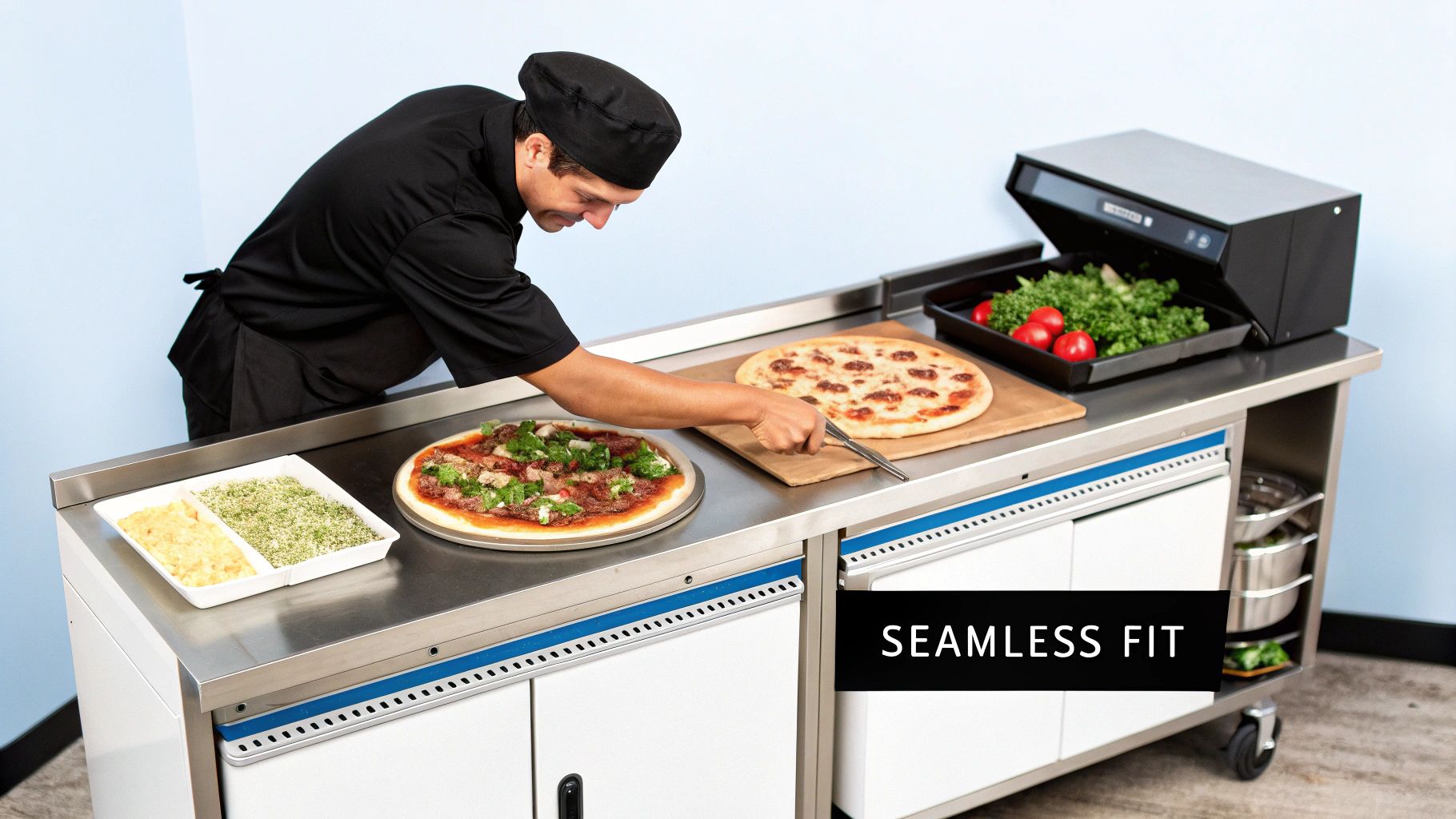
In a high-speed pizzeria, your under-counter fridge is so much more than just a cold box. Think of it as the foundation of your most important workstation—the pizza prep table. The real goal is to create a single, seamless unit where every topping is perfectly chilled and literally within arm’s reach.
This integration transforms a simple counter into a high-performance command center. Get the combination right, and your team will build pizzas faster, maintain impeccable ingredient quality, and cut down on the physical strain that comes from a clunky, poorly designed workspace. It all starts with matching the under-counter fridge size to the prep table itself.
Key Compatibility Points to Consider
Achieving this seamless fit means paying attention to a few critical details. The width of the fridge has to line up perfectly with the prep table’s cutting board and refrigerated rail to create a stable, unified surface. An improperly sized fridge can lead to a wobbly setup, create gaps where food gets trapped, or result in an uneven work area that slows your pizza makers down.
Beyond just the physical fit, you have to nail these crucial points:
- Height Alignment: The fridge must be the correct height to sit flush under the prep table's work surface. This creates an ergonomic station that prevents chefs from bending or reaching awkwardly all shift long.
- Cooling System Synergy: The fridge’s cooling system needs to be powerful enough to maintain its internal temperature, especially when it's also supporting a refrigerated topping rail right above it.
- Depth Coordination: The depth of the fridge should match the prep table. You don't want it jutting out into busy walkways or sitting so far back that it's a pain to access ingredients.
All-in-One Unit vs. a Custom Combination
When setting up your line, you’ll face a big decision: buy an all-in-one pizza prep table, or piece together a separate under-counter fridge with a compatible worktop? Each path has its own advantages, depending on your kitchen's needs and budget.
Choosing between an integrated unit and a custom setup is a strategic decision that impacts workflow, cost, and future flexibility. There’s no single right answer—only the best answer for your specific operation.
An all-in-one unit is often the most straightforward solution. It’s designed by the manufacturer for perfect compatibility, meaning everything from the refrigerated rail to the under-counter storage is engineered to work together flawlessly. However, combining a separate fridge and worktop can offer more customization. For a deep dive into different setups, our guide on choosing a commercial pizza prep table is a great resource.
This modular approach might let you pick a specific door-and-drawer configuration for your base or choose a worktop with unique features. While it requires more careful measurement and planning, the payoff can be a highly personalized and efficient pizza-making command center, tailored precisely to your menu and workflow.
To help you visualize how these pieces fit together, here's a look at how standard pizza prep table sizes correspond to their built-in under-counter storage capacities.
Pizza Prep Table and Fridge Size Compatibility
| Pizza Prep Table Size (e.g., 44", 60", 72", 93") | Typical Under Counter Capacity (Cu. Ft.) | Ingredient Pan Capacity (1/3 Size Pans) | Ideal For (Pizzas Per Hour) |
|---|---|---|---|
| 44" | 10-12 | 6 | Small pizzeria, food truck (20-40) |
| 60" | 15-18 | 8 | Small to mid-size shop (40-60) |
| 72" | 19-22 | 9 | Busy deli, mid-volume pizzeria (60-80) |
| 93" | 27-30 | 12 | High-volume pizzeria (80+) |
As you can see, the larger the prep table, the more refrigerated storage you get underneath. Matching your expected output to the table's capacity ensures you have enough chilled backup ingredients to get through the busiest rushes without constantly running to the walk-in.
Putting It All Together: Real-World Pizzeria Scenarios
Theory is one thing, but how does this play out in a real kitchen? The right under-counter fridge for your pizza prep table really boils down to your business model. A ghost kitchen hammering out delivery orders has a completely different set of needs than a bustling Italian restaurant with a massive menu.
To get a feel for this, let's walk through three common pizzeria setups. Think of these as blueprints to help you visualize which sizes and configurations will actually support your workflow, both today and as your business grows.
The Compact Food Truck or Ghost Kitchen
In a food truck or a tight ghost kitchen, every single inch is prime real estate. You can't afford to waste a bit of it. Efficiency is the name of the game.
The undisputed champion here is a narrow 27-inch under-counter fridge as part of a smaller pizza prep table. This little workhorse gives you just enough cold storage for your essential, high-turnover ingredients without eating up your entire footprint. For a food truck, a model with drawers is a no-brainer—they keep your toppings from sliding all over the place when you hit a pothole.
- Size Recommendation: 27-inch width
- Configuration: Two or three drawers for stability and quick-grab access.
- Why it Works: It crams maximum cold storage into a minimal space, keeping your core toppings organized, secure, and ready to go.
The Mid-Sized Neighborhood Pizzeria
This is your classic local spot. You've got a steady stream of dine-in customers, a healthy takeout business, and a popular menu that's busy but manageable. The goal here is to balance capacity with a smooth workflow on the pizza line.
A 60-inch, two-door unit hits that sweet spot perfectly. It has enough capacity to get you through a slammed weekend rush without having to constantly run to the walk-in. I’m a big fan of a hybrid configuration here: one door and two drawers. It gives you the best of both worlds.
You can stash bulk items like dough boxes and backup sauce behind the door, while your perfectly portioned toppings are organized in the drawers for lightning-fast pizza making.
- Size Recommendation: 60-inch width
- Configuration: One door and two or four drawers.
- Why it Works: This setup can handle a more diverse menu and higher volume, turning your prep table into a powerful, self-contained station for one or two pizza makers.
The Large-Scale Italian Restaurant
This place is a high-volume machine. We're talking an extensive menu with gourmet pizzas, salads, sandwiches—the whole nine yards. This requires a prep line that can support multiple chefs working side-by-side without tripping over each other.
For a scenario like this, a beast of a 93-inch, three-door under-counter model is non-negotiable. This size provides the massive capacity you need to store a huge variety of fresh ingredients right on the line. With three separate doors, several chefs can grab what they need without getting in each other's way, keeping the entire line moving like a well-oiled machine, even during the most chaotic dinner service.
Answering Your Top Questions About Under Counter Fridge Sizes
When you're mapping out your pizza prep line, a few common questions about under-counter fridges always pop up. Getting the details right isn't just about making things fit; it's about building a workflow that's efficient, safe, and built to last. Let's break down the questions I hear most often from pizzeria owners.
One of the first things people ask is about ventilation. In a packed kitchen, every inch of space is prime real estate. So, do these fridges really need room to breathe? Absolutely, but how much depends on the design. Front-venting units are the heroes of tight spaces, engineered to be installed nearly flush under a counter. They typically only need a sliver of clearance—think 1/8 to 1/4 inch on the sides and top—to keep the compressor from overheating.
Nailing the Height and Holding the Temp
Another question I get all the time is about height. Do you go with a standard height unit (around 34 inches) or a low-profile, ADA-compliant model (32 inches)? For most pizza prep tables, the standard height is the way to go. It creates a smooth, ergonomic work surface that flows perfectly with the rest of your line. That said, an ADA-compliant unit can be a smart move for custom stations or to make sure your kitchen is accessible for every member of your team.
In the middle of a chaotic dinner rush, holding the perfect temperature is non-negotiable. For food safety and freshness, the sweet spot for a fridge holding your pizza toppings is right between 35°F and 38°F. This range is key to slowing bacterial growth and keeping your ingredients tasting their best.
Finally, everyone wants to know about energy costs. While the exact numbers vary by model, a great rule of thumb is to look for an ENERGY STAR® certified unit. On average, they're about 15% more energy-efficient than their standard counterparts, which adds up to real savings on your utility bills over time. Don't forget that good maintenance habits, like cleaning the condenser coils regularly, are just as important for keeping your fridge running efficiently for years.
Ready to build the perfect pizza prep line? Pizza Prep Table offers a wide selection of under-counter refrigerators and integrated prep tables designed for the demands of a busy pizzeria. Find your ideal fit at https://pizzapreptable.com.