

What Oil Is Best for Frying in Your Pizzeria
For a busy pizzeria, the best frying oils usually come down to three workhorses: Canola, Soybean, and Palm oil. The right choice is always a balancing act between heat stability, neutral flavor, and cost, making sure every fried appetizer from mozzarella sticks to calamari comes out perfectly crispy.
Finding The Right Frying Oil for Your Pizzeria
Choosing the best oil for frying is about so much more than just the price tag on a giant jug. Think of your deep fryer as a critical piece of your kitchen's engine, and the oil is its fuel. Picking the wrong one can lead to greasy food, off-flavors, and operational costs that spiral out of control from constant oil changes. A pizzeria needs an oil that can perform under pressure, batch after batch.
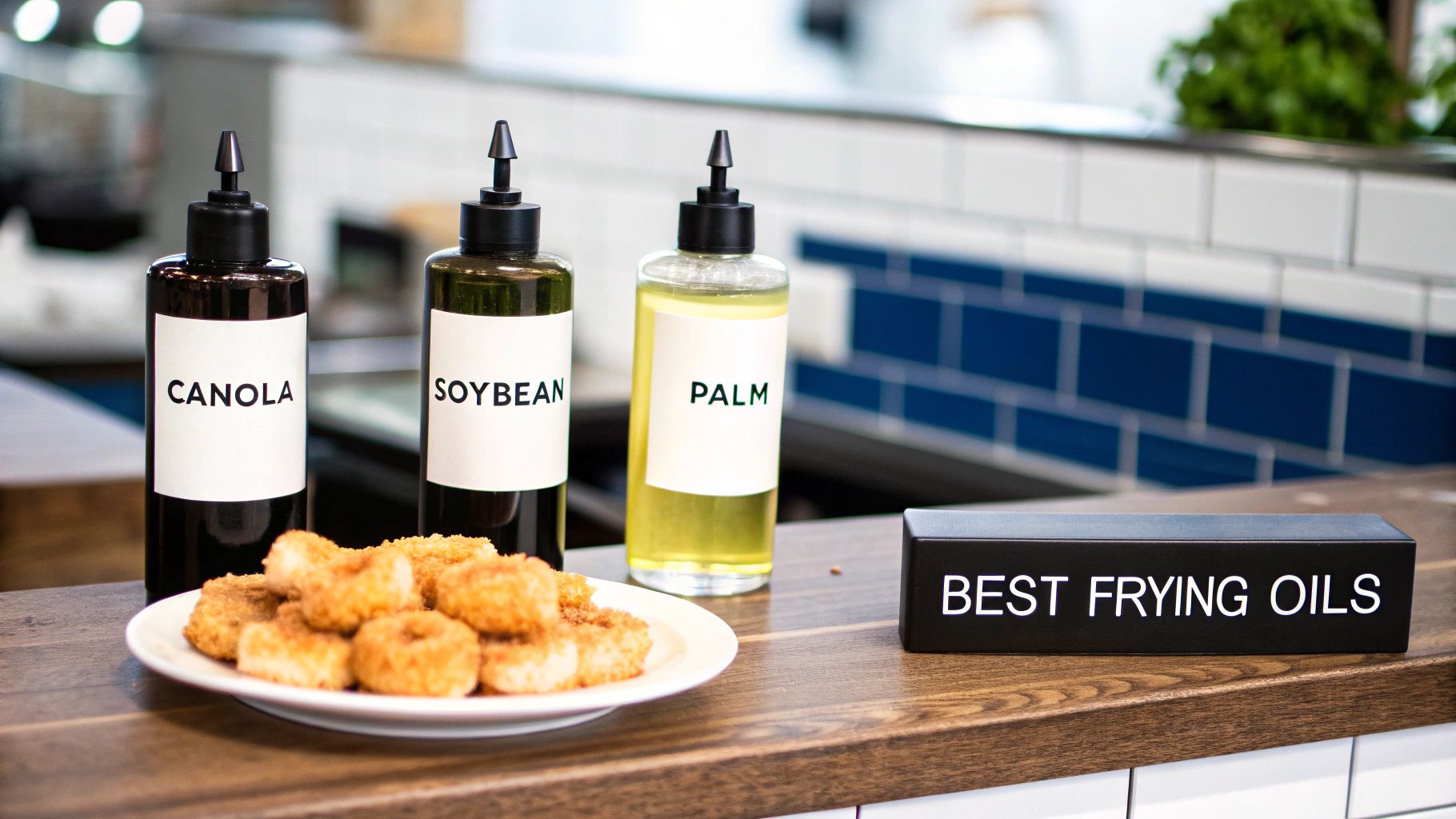
When your menu includes a variety of fried appetizers—like garlic knots, wings, calamari, and arancini—the stakes get even higher. You absolutely need an oil that won’t transfer flavors. The last thing any customer wants is a hint of last night's calamari on their sweet zeppoles. This is where understanding oil properties becomes a serious business decision, not just a culinary one. The right oil ensures every item, from the fryer to the customer's plate, is consistent and delicious.
Key Factors for Pizzerias
When you're picking a frying oil for your commercial kitchen, three things really matter:
- Heat Stability (Smoke Point): This is the temperature where an oil starts to break down and smoke, which gives food a burnt, acrid taste. For a commercial deep fryer, a high smoke point is completely non-negotiable.
- Flavor Neutrality: Your oil should be a silent partner. It needs to let the natural taste of your food shine through without adding its own personality to the mix.
- Cost-Effectiveness: This isn't just about the upfront price. A more stable oil that you can filter and reuse saves you a ton of money on replacement and labor costs over time.
Comparing Top Frying Oils for Your Pizzeria
To make things simple, here's a quick look at the most common oils you'll find in a pizzeria kitchen. This table should help you zero in on the best choice for your operation.
| Oil Type | Best For | Key Benefit |
|---|---|---|
| Canola Oil | All-purpose deep frying & pan-frying | Very neutral flavor and high smoke point |
| Soybean Oil | High-volume deep frying | Extremely cost-effective and versatile |
| Palm Oil | Heavy-duty, high-heat commercial fryers | Incredible stability for long-term use |
Ultimately, the goal is to find an oil that delivers a consistent, high-quality product that keeps customers coming back while protecting your bottom line. It's a smart investment in both your food's quality and your pizzeria's profitability. As you'll see in our complete guide to deep fryers, pairing the right equipment with the right oil is the secret to a winning combination.
Why Smoke Point and Stability Matter
When you’re picking a frying oil for your pizzeria, you’re doing more than just choosing a cooking medium—it's about how that oil performs under fire. Think of it like the engine oil in a race car. It has to take intense heat and pressure without breaking down. For frying oil, the two most important performance stats are its smoke point and its oxidative stability.
Imagine you’ve got a pan on the stove. You see the oil shimmer, then a wisp of smoke appears. That’s the smoke point. It’s the exact temperature where the oil gives up, starts to break down, and sends a chemical red flag that you’re in the danger zone.
Once an oil goes past its smoke point, it’s all downhill. It starts creating nasty, burnt flavors that will absolutely ruin a batch of mozzarella sticks or calamari. Given that commercial deep fryers typically run between 350-400°F, a high smoke point isn’t just a “nice to have”—it’s a non-negotiable.
Understanding Smoke Point in Your Kitchen
Your oil's smoke point is its operational limit. It's the redline. Pushing an oil past this point doesn’t just wreck the flavor of your food; it also torches the oil itself, forcing you to change it out more often and driving up your costs.
To make sure your oil can handle the heat of a busy kitchen, you need to understand what makes the best oil for high heat cooking. Starting with an oil that has a high smoke point is step one for consistent, high-quality fried foods.
Stability: The Secret to Long-Lasting Oil
If smoke point is about handling the heat of the moment, oxidative stability is all about endurance. Think of it as the oil’s lifespan. Every single time you drop a basket of wings into the fryer, you're exposing the oil to its enemies: oxygen, heat, and moisture. This triple threat causes the oil to break down over time.
A stable oil is one that stands up to this abuse for much longer.
Oxidative stability directly impacts your bottom line. An oil with high stability can handle more frying cycles before it needs to be replaced, saving you significant money on oil purchasing and labor over time.
This resilience comes down to the oil’s fatty acid structure. Oils high in saturated and monounsaturated fats, like palm oil or high-oleic canola oil, are tough. They hold their chemical structure together under the stress of continuous frying.
On the flip side, oils rich in polyunsaturated fats are more fragile. They break down much faster when you heat them repeatedly. Choosing a stable oil means fewer oil changes and a more consistent, better-tasting product for your customers. That’s a win-win for any pizzeria.
A Head to Head Comparison of Top Frying Oils
Now that we've covered the science behind frying, let's put the three big players in commercial frying oil under the microscope: Canola, Soybean, and Palm. Each one has its own personality in the fryer, and picking the right one means matching its strengths to your menu, your volume, and your budget. This isn't just about finding a good oil; it's about finding the right oil for your pizzeria's fried appetizers.
We're going to break down each contender based on what really matters in a busy kitchen. This head-to-head comparison will give you a clear, no-nonsense look at their pros and cons.
This chart cuts right to the chase, showing the two most critical metrics for any frying oil: its smoke point and its stability under fire.
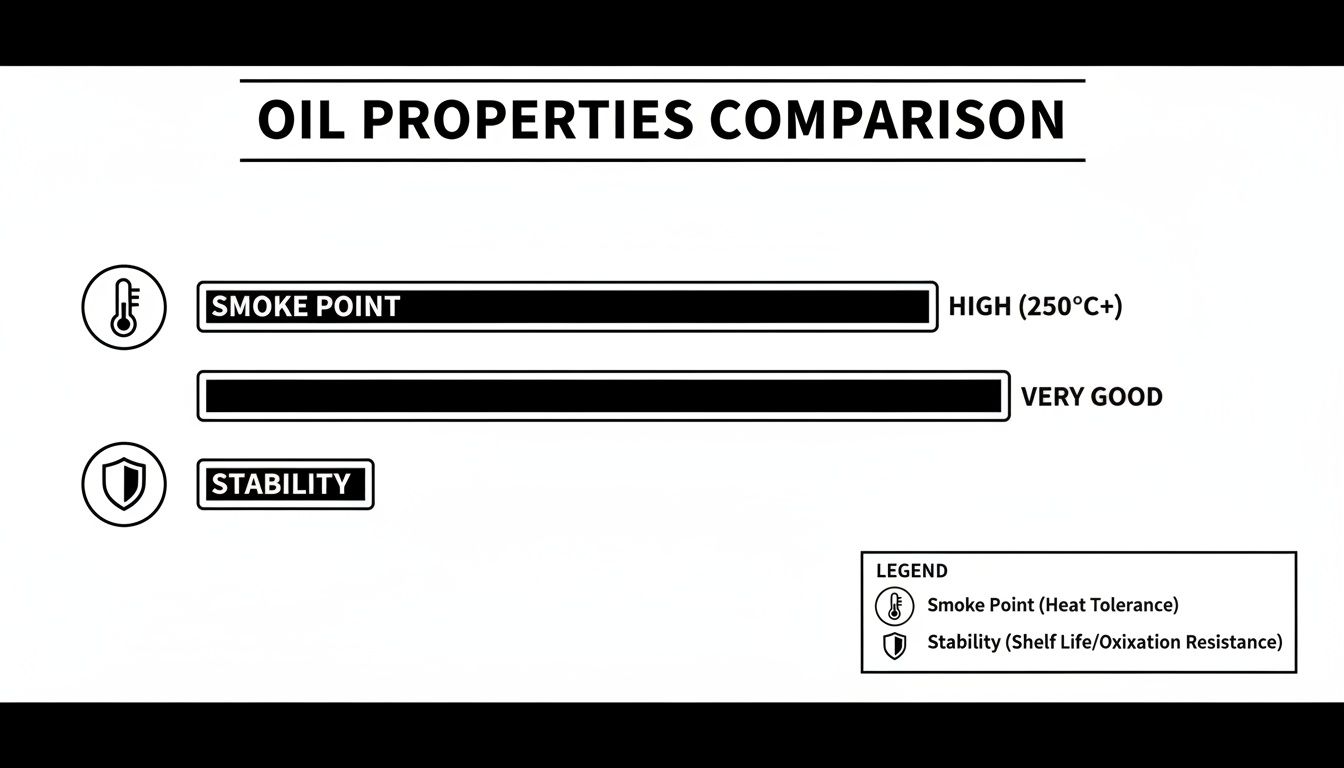
As you can see, the ideal oil can take the heat without breaking down and holds up over multiple frying cycles, saving you money and hassle.
Canola Oil: The Clean All-Rounder
Think of canola oil as the jack-of-all-trades in your kitchen. It's widely praised for its clean, neutral flavor and incredible versatility. Its light taste is a huge advantage, ensuring the flavor of your crispy mozzarella sticks won't bleed into an order of fried dough. For any pizzeria with a diverse appetizer menu, that's a critical win.
In the fast-paced world of commercial kitchens, canola has become a top choice because it holds up beautifully at high temperatures. Most restaurant deep fryers operate between 350 and 400 degrees Fahrenheit, and canola really shines in this range. It maintains its structure without breaking down quickly, which means fewer oil changes and more money in your pocket. This stability comes from its balanced fatty acid profile and a high smoke point right around 400°F, making it a reliable choice for everything from calamari to onion rings.
Key Takeaway: Canola is the go-to for kitchens that need to protect the individual flavors of different menu items and want a reliable, high-performance oil that just works.
Soybean Oil: The Dependable Workhorse
If your pizzeria is cranking out a high volume of fried food and you're keeping a close eye on the bottom line, soybean oil is your guy. It’s the dependable, budget-friendly workhorse of the commercial frying world. While its flavor isn't quite as neutral as canola's, modern refining has made it a solid performer for most jobs.
Its biggest selling point is its unbeatable cost-effectiveness and the fact that you can find it anywhere. That simplifies sourcing and keeps your inventory management easy. For pizzerias where fried appetizers are a menu staple but margins are tight, soybean oil delivers consistent results without breaking the bank. It offers a respectable smoke point and good stability for its price point.
Palm Oil: The Champion of Crispiness
When the perfect, shatteringly crisp texture is non-negotiable, palm oil steps into the ring. It’s famous for its exceptional stability, thanks to a high concentration of saturated fats. This chemical structure makes it incredibly durable, allowing it to withstand long hours of high-heat frying with very little breakdown.
This stability translates directly into a better final product. It creates an unmatched crispiness and a beautiful golden-brown color on foods like chicken wings or breaded ravioli. When you're looking for that perfect crunch, it's worth digging into specific uses, like finding the absolute best oil to fry chicken. The only catch? It’s important to consider the source. Smart operators look for suppliers committed to sustainable harvesting to align with what modern customers care about.
Finding the Sweet Spot Between Cost and Quality
Choosing the right frying oil for a bustling pizzeria kitchen is a business decision, plain and simple. It’s tempting to just grab the cheapest oil on the shelf, but that’s rarely the most cost-effective move in the long run. You're really playing a balancing act: weighing the upfront cost per gallon against how that oil actually performs and holds up in your deep fryer day after day.
Think about it this way: a low-cost soybean oil might look like a bargain at first. But if it breaks down quickly and has you filtering constantly or doing a full oil change sooner than a slightly pricier, more stable canola oil, those initial savings are gone. The real cost isn't just the sticker price; it includes the oil, the labor your team spends on fryer maintenance, and the risk of serving inconsistent food.
Flavor Neutrality Is Non-Negotiable
For a pizzeria frying a diverse menu—and most do—a neutral-flavored oil is an absolute must. One minute you're frying savory garlic knots and spicy wings, and the next, you're dropping in sweet fried dough or zeppoles. The last thing any operator wants is flavor crossover, where a customer’s dessert tastes faintly of garlic from the last batch.
A neutral oil acts like a blank canvas, ensuring each fried item tastes exactly as it should. This protects your brand's reputation and guarantees a consistent customer experience, which is priceless.
This is where oils like canola and refined soybean really pull their weight. They let the distinct flavors of your ingredients and seasonings be the star of the show, without adding any of their own personality to the mix.
Analyzing the Total Cost of Ownership
Let's run a quick, real-world scenario. A pizzeria owner is looking at a premium, high-stability frying oil that costs 15% more upfront than their usual commodity oil. That initial purchase might sting a little, but the premium oil’s stability means it lasts significantly longer between changes.
When you zoom out, this is where the real savings kick in:
- Reduced Oil Consumption: Fewer oil changes over the year can easily wipe out that higher initial price tag.
- Lower Labor Costs: Less time spent filtering, topping off, and swapping out old oil frees up your staff to do more valuable things, like prepping toppings on the pizza prep table.
- Consistent Food Quality: A stable oil produces a better, more consistent product, which means less waste from batches that just don't turn out right.
When it comes to high-volume frying, soybean oil often comes out on top for a reason. As of 2023, it holds the largest market share in the global cooking oil sector, and that's not an accident. It's incredibly versatile for frying, baking, and even for use on your pizza prep table. Refined soybean oil has a smoke point over 450°F, which is perfect for commercial deep fryers churning out everything from arancini to fried calzones. You can learn more about the global cooking oil market and its trends. This market dominance translates to real savings for restaurants where every penny counts.
How to Make Your Frying Oil Last Longer
Constantly swapping out used frying oil feels like pouring your hard-earned profits right down the drain. Choosing the right oil is only half the battle; knowing how to manage it is what really hits your bottom line. A few smart strategies can dramatically extend the life of your oil, slash waste, and keep your food tasting consistently great.
It all boils down to three simple pillars: precise temperature control, consistent filtration, and proper fryer maintenance. Master these habits, and you won’t just save money—you’ll guarantee the perfectly crispy fried appetizers that keep customers coming back for more.
Control Your Temperature
Think of your deep fryer’s thermostat as its most valuable feature. Keeping your oil parked in that sweet spot—usually between 350°F and 375°F—is the single best thing you can do to stop it from breaking down too soon. When oil gets too hot, it scorches and degrades in a flash, giving your food a nasty burnt taste.
On the flip side, oil that isn't hot enough leads to greasy, soggy food because it soaks up excess oil instead of crisping up on contact. A well-calibrated fryer is your first line of defense against oil waste and unhappy customers. This is especially true for mobile kitchens; you can learn more about managing your supply on the go with these food truck fryer oil storage tips.
Filter Your Oil Consistently
Those tiny bits of food and breading left floating in the fryer are your oil's worst enemy. They act like tiny sponges, continuously burning and accelerating the oil's breakdown. For this reason, consistent filtration is completely non-negotiable.
By filtering your oil daily, you can extend its lifespan by up to 50%. That's a massive reduction in your annual oil costs, all while ensuring every single batch of food tastes fresh and clean.
Putting a strict filtration schedule in place is key. Skim any floating debris off the top every 30 minutes during a busy rush, and then do a full, thorough filtration at the end of each day. This simple routine pulls out all those contaminants before they have a chance to do any real damage.
Daily and Weekly Oil Care Checklist
A simple checklist is the best way to make sure your kitchen staff follows best practices every single day.
-
Daily Tasks:
- Skim the fryer surface often to get rid of any floating particles.
- Filter the oil at the end of the day once it has cooled down a bit.
- Wipe down the fryer's exterior to prevent grease from building up.
-
Weekly Tasks:
- Perform a "boil-out" to give the fryer vats a deep clean.
- Check and clean all the fryer components, including the baskets and heating elements.
- Test the oil quality with testing strips to know for sure when it's time for a replacement.
By turning these steps into daily habits, you're doing more than just maintenance. You're protecting your investment, saving money, and serving a much better product.
Sometimes you need to call in a specialist. Your workhorse oils like canola and soybean are fantastic for handling the daily grind of a busy kitchen, but certain menu items demand something extra to really make them pop.
This isn't about overhauling your entire fryer setup. It's a strategic move—a way to elevate specific dishes, turning a simple appetizer into a signature item that justifies a higher price point. Think of it as an advanced play that can set your menu apart from the competition.
For example, you could dedicate a fryer to peanut oil just for your chicken wings. Its high smoke point and distinct, nutty flavor create a truly premium product. Now you can market them as "Gourmet Peanut Oil-Fried Wings," and customers will happily pay a little more for that special touch. Or maybe you switch to a high-oleic sunflower oil, giving you a trans-fat-free option to win over health-conscious diners.
Expanding Your Frying Options
This strategy isn't just limited to deep fryers. You might keep cost-effective canola in your main fryers but use a beautiful olive oil blend on the flat-top griddle for pan-frying delicate items like shrimp or halloumi cheese.
Using a specialty oil for one or two key dishes is a powerful marketing tool. It signals a commitment to quality and gives customers a compelling reason to choose that specific item.
Palm oil is another fantastic player in this specialty role. It’s cost-effective and creates an incredible, almost shatteringly crisp texture on foods like french fries or calamari. It performs beautifully at typical fryer temperatures of 350-375°F and boasts a high smoke point of 455°F. Its stability is off the charts; in fact, fully hydrogenated versions show 50% less oxidation over an eight-hour shift compared to standard soybean oil. For a deeper dive, you can find more insights on the global frying oil market on datainsightsmarket.com.
Frying Oil Questions We Hear All the Time
Even when you've got your frying game down, questions pop up in the heat of a busy service. We've compiled the most common ones we get from pizzeria owners to give you quick, clear answers that will help you make the right call for your kitchen.
Can I Mix Different Types of Frying Oils?
It's tempting, especially when you're trying to use up the last bit of an old jug, but it's generally a bad idea. Every oil has its own smoke point and lifespan. When you mix them, the less stable oil starts breaking down first, and it drags the higher-quality oil down with it.
You'll just end up shortening the life of the entire batch and hurting the quality of your food. Stick to one type of oil in your fryer at a time.
How Do I Know When It’s Time to Change My Oil?
Your senses are your best first line of defense. Look for the classic signs that your oil is past its prime: it’s gotten unusually dark, it's smoking at normal cooking temperatures, it’s foaming up more than usual, or it's giving off a funky, fishy smell.
If you see any of these, it's time for a change. For a more scientific approach, you can use oil test strips. They take the guesswork out of the equation and give you a clear, data-driven answer on the spot.
Key Takeaway: Bad oil doesn't just make for bad-tasting food. It can tank your kitchen's air quality and, over time, even clog up your drainage system. Getting rid of old oil properly is just as important as choosing the right oil to begin with.
What Is the Best Way to Dispose of Used Oil?
Whatever you do, never pour used cooking oil down the drain. It seems like a liquid, but once it cools, it will solidify and create serious—and seriously expensive—plumbing blockages.
The right way is to let the oil cool down completely, then pour it into a sealable container. From there, get in touch with a local grease recycling service. These companies often provide you with collection bins and schedule regular pickups, making the whole process easy and environmentally friendly. Managing your waste oil is a critical part of running an efficient kitchen, just like figuring out your grease trap sizing requirements.
At Pizza Prep Table, we get that a killer pizzeria is about more than just a great oven. From high-performance deep fryers that deliver crispy results every time to the refrigerated prep tables that keep your ingredients perfectly fresh, we provide the durable, NSF-compliant equipment you need to shine. Check out our lineup of commercial kitchen solutions today at https://pizzapreptable.com.