

What's the Deal with 24-Inch Refrigerators? Everything You Need to Know
Why Space-Saving Refrigeration Matters
A 24 refrigerator is a compact refrigeration unit that measures 24 inches wide—perfect for small kitchens, bars, or commercial prep areas where every inch counts. Here's what you need to know:
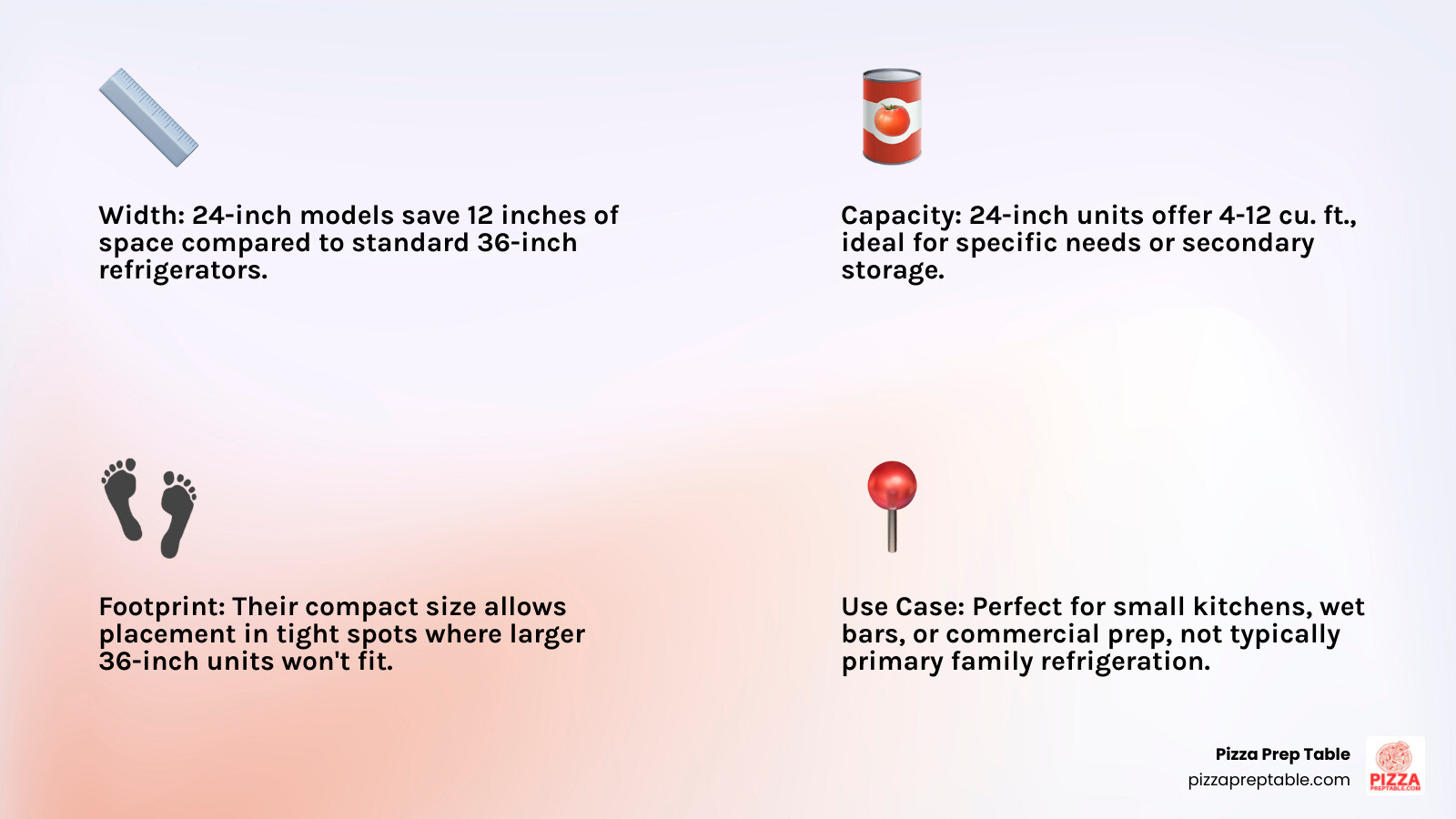
- Width: Exactly 24 inches (compared to standard 36-inch models)
- Capacity: Typically 4 to 12 cubic feet, holding 50-200 cans or bottles
- Types: Built-in, freestanding, counter-depth, drawer-style, and freezerless
- Best for: Small apartments, wet bars, outdoor kitchens, food trucks, cafes, and prep stations
- Price range: $500 to $4,000+ depending on features and brand
If you're running a pizzeria or small restaurant with limited kitchen space, a 24 refrigerator can be a game-changer. These compact units fit under counters or into tight spots while still offering serious storage capacity—some models hold up to 194 cans or 117 bottles in just 5.4 cubic feet of space.
The beauty of a 24-inch refrigerator lies in its versatility. Whether you need extra cold storage for your prep station, a beverage cooler for your bar area, or a space-saving solution for a food truck, these units deliver full-size features in a compact footprint. Many commercial models include adjustable shelving, digital temperature controls, and even ice makers—all designed to maximize efficiency without eating up valuable floor space.
I'm Sean Kearney, and I've spent years helping restaurant owners find equipment that fits their space and budget. I've seen how the right 24 refrigerator can transform a cramped kitchen into an efficient workspace, and I'm here to share what I've learned.
Decoding the Types: Built-in, Freestanding, and More
Shopping for a 24 refrigerator isn't as simple as picking a color and calling it done. These compact units come in several installation styles and configurations, each with its own personality and purpose. Think of it like choosing between a sports car and an SUV—they both get you where you're going, but the journey looks pretty different.
The installation style you choose affects everything from how your kitchen looks to how much work goes into setting up your unit. And the configuration? That determines whether you're storing craft beer, prepping ingredients, or keeping leftovers fresh for the week. Let's break down your options so you can find the perfect match for your space. For more ideas on creating a cohesive kitchen design, check out Integration in the Kitchen: Appliances Designed to Blend In.
Built-in vs. Freestanding vs. Counter-Depth
The first big decision is how your 24 refrigerator will fit into your space. This choice impacts both aesthetics and flexibility.
Built-in models are the chameleons of the refrigerator world. They're designed to nestle directly into your existing cabinetry, creating that seamless, high-end look where everything flows together. Many feature hidden hinges and can even accept custom panels that match your cabinets perfectly—models like the JennAir JUCFP242HX or the Fisher & Paykel Series 9 24 Inch Panel Ready do this beautifully. You get an unbroken visual line with no exposed hinges, which is exactly what you want in upscale kitchens or custom commercial setups where appearance matters as much as function.
Freestanding units are the independent spirits of the bunch. These 24 refrigerators are finished on all sides and can stand anywhere you need them. Want to rearrange your kitchen layout next year? No problem. Need to move it to a different room? Go for it. They don't offer that built-in seamlessness, but they make up for it with versatility and easier installation. They're perfect for garages, breakrooms, or anywhere you need cold storage without the commitment of custom cabinetry. The Smeg 24 Inch Freestanding Bottom Mount Refrigerator is a great example of this style.
Counter-depth designs give you the best of both worlds in many ways. These units align with your countertop depth—usually around 24 to 26 inches—creating a flush, streamlined look without requiring full cabinet integration. While many built-in models are naturally counter-depth, you'll also find freestanding options like the Sharp 24 in 11.5 cu. ft. Counter Depth Bottom Freezer Refrigerator or the Blomberg 24 Inch Counter Depth Bottom-Freezer Refrigerator. They help maximize your walkway space and give you that clean, modern appearance without the custom price tag.
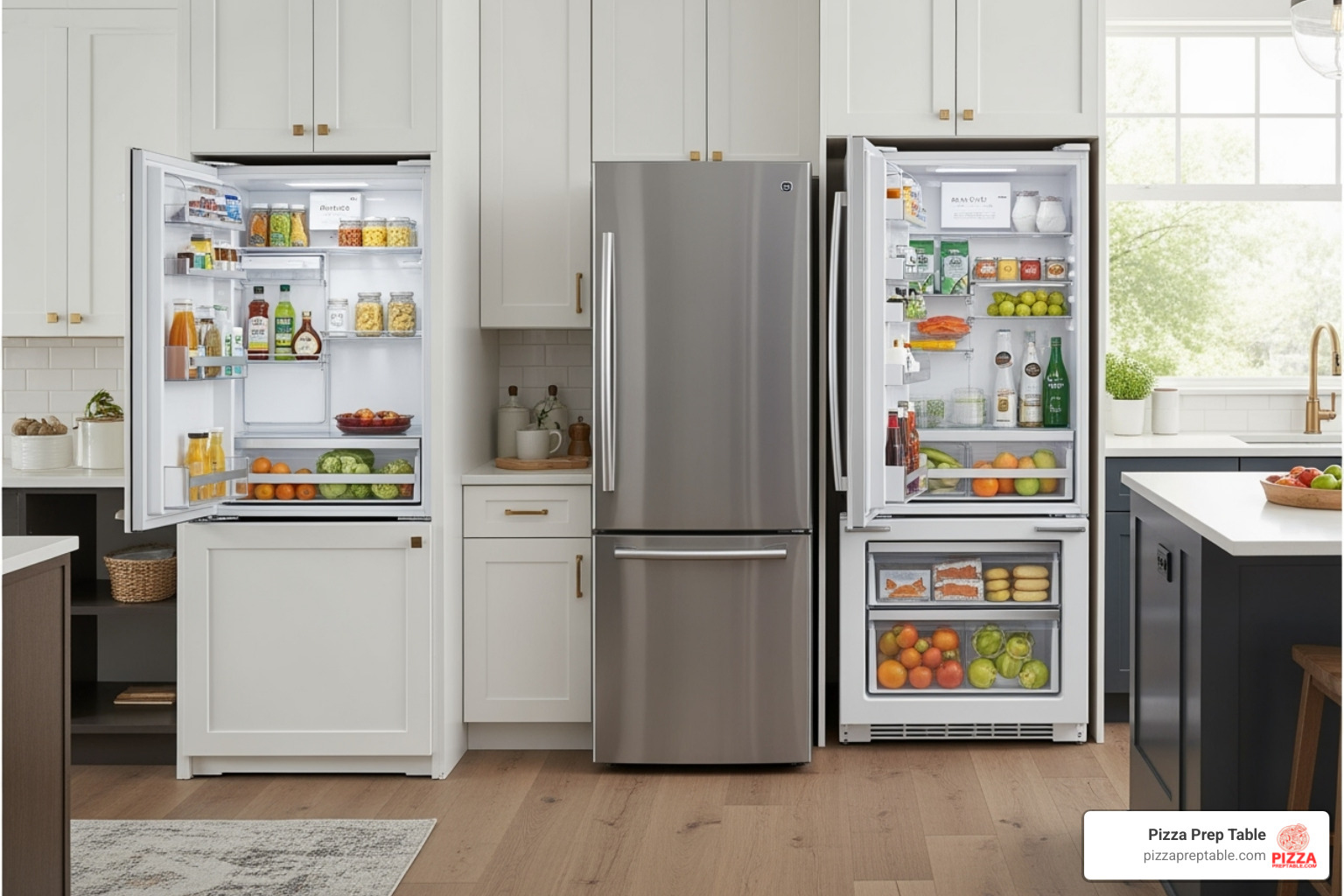
No matter which style catches your eye, especially for undercounter installations, make sure to check the Under Counter Refrigerator Dimensions to ensure everything fits like a glove.
Common Configurations
Once you've nailed down the installation style, it's time to think about what goes inside. 24 refrigerators come in several configurations, each designed for specific storage needs.
Refrigerator drawers are game-changers for ergonomics and accessibility. Instead of bending down to peer into a door-style unit, you pull out a drawer and see everything at once. This makes them perfect for prep areas where you're constantly grabbing ingredients, or entertainment zones where guests are helping themselves to drinks. The JennAir JUCFP242HX Panel-Ready 24" Double Drawer Refrigerator/Freezer offers 4.7 cu. ft. of capacity with independent temperature zones for each drawer—meaning you can keep one drawer at regular refrigerator temps and the other at freezer temps, or even dial in specialized temperatures for soft serve or spirits. Thor Kitchen also makes a 24 in. 5.4 cu. ft. Double Drawer Refrigerator that's worth a look.
Freezerless refrigerators take a "more is more" approach to fresh food storage. By ditching the freezer compartment entirely, these units maximize space for produce, beverages, and fresh ingredients. They're ideal if you already have a separate freezer or if your business focuses mainly on fresh prep work. The Danby Designer 24 in. W 11.0 cu. ft. Freezerless Refrigerator gives you a surprising amount of cold storage in that compact 24-inch width.
Beverage centers are specialists built for one job: keeping your drinks perfectly chilled. These 24 refrigerators typically feature glass doors so you can see your inventory at a glance, specialized shelving designed for bottles and cans, and precise temperature controls. The U-Line ORE124 24" Refrigerator is a beverage center superstar with 5.4 cu. ft. of space that can hold up to 117 bottles (12 oz) or 194 cans (12 oz)—perfect for bars, tasting rooms, or anywhere drinks are the main event. For commercial applications, our Glass Door Fridge selection offers even more options.
Refrigerator-freezer combos give you the best of both worlds in one compact package. These versatile units come in several arrangements: top-freezer models like the LG 24 in. 11 cu. ft. Top Mount Freezer Refrigerator, bottom-freezer designs like the Bosch 800 Series 24 in. 12.8 cu. ft. Bottom Freezer Refrigerator, or even dual-drawer configurations where you control each compartment independently. They're the Swiss Army knives of compact refrigeration. If you're looking at undercounter options specifically, our Undercounter Refrigerator-Freezer Combo collection has you covered.
Key Features and Benefits of a 24 Refrigerator
Don't let their compact size fool you—modern 24 refrigerators are packed with impressive features that rival their full-sized cousins. I've seen restaurant owners light up when they realize how much these units can actually hold and how smart they've become. From clever storage solutions to energy-saving technology, these refrigerators prove that good things really do come in small packages.

Storage Capacity and Layout
The first question I always hear is: "How much can it really hold?" The answer might surprise you. While a 24 refrigerator is definitely smaller than a standard model, smart engineering makes every cubic inch count.
Capacity varies quite a bit depending on the configuration you choose. Compact drawer models like the JennAir start around 4.7 cubic feet, which is perfect for a wet bar or prep station. But if you need more space, tall bottom-freezer units like the Bosch 800 Series pack in an impressive 12.8 cubic feet. The GE 11.9 cu. ft. Bottom Freezer Refrigerator and the Frigidaire 12 cu. ft. Garage Ready Bottom Freezer Refrigerator show that you can get serious storage capacity within that 24-inch width.
For beverage-focused units, the numbers get even more interesting. The U-Line ORE124 offers 5.4 cubic feet and can hold up to 117 bottles or 194 cans—that's a lot of cold drinks in a compact footprint. The Twin Eagles Dometic 24" Refrigerator provides similar capacity at 5.3 cubic feet.
Inside these units, every detail matters. Most quality models feature adjustable glass or stainless steel shelves that you can move up or down to fit tall bottles, pizza boxes, or whatever else you need to store. I particularly appreciate models with customizable drawer dividers—they help keep prep ingredients organized and easy to grab during a busy dinner rush.
Even compact 24 refrigerators include dedicated crisper drawers that maintain the right humidity for fruits and vegetables. Door bins are thoughtfully designed to hold bottles, jars, and condiments without wasting precious shelf space. It's all about making the most of what you've got.
If you're considering an undercounter installation, understanding Energy Efficient Commercial Refrigeration principles can help you maximize both space and savings.
Energy Efficiency and Smart Technology
Here's where 24 refrigerators really shine—they're not just space-savers, they're energy-savers too. Running a smaller unit naturally costs less, but modern technology takes efficiency to the next level.
Energy Star certification is something I always recommend looking for. Many 24-inch models meet these strict EPA guidelines, which means lower electricity bills and a smaller environmental footprint. The Twin Eagles Dometic 24" Refrigerator carries this certification, and when you look at actual numbers, the savings add up. The U-Line ORE124, for example, consumes just 240 kWh per year—that's remarkably efficient for a commercial-grade unit.
LED lighting has become standard in quality models, and for good reason. These bright lights illuminate every corner of your refrigerator without generating heat or wasting energy. Combined with digital temperature controls, you can maintain the perfect cooling environment for your ingredients or beverages.
Some 24 refrigerators are getting smarter, literally. Wi-Fi connectivity is appearing in more models, letting you monitor and adjust temperatures from your phone. It's convenient when you're managing multiple locations or just want peace of mind when you're away from the kitchen.
Door alarms are a feature I wish every refrigerator had. They sound when a door stays open too long, preventing food spoilage and energy waste. The JennAir JUCFP242HX takes this seriously with a drawer open alarm that activates after 5 minutes, plus an over-temperature alarm if things start warming up. These features might seem small, but they can save you from costly food loss.
For observant households and businesses, Sabbath mode is available on certain models like those from U-Line, which are Star K Certified. This mode disables lights and alarms in accordance with religious observances—a thoughtful feature that matters to many of our customers.
The combination of precise controls, efficient operation, and smart features makes today's 24-inch refrigerators far more capable than you might expect. Whether you're running a busy pizzeria or setting up a compact home kitchen, these units deliver professional performance without the professional-sized footprint.
Pros, Cons, and Ideal Use Cases
Choosing a 24 refrigerator isn't just about the measurements—it's about understanding whether this compact powerhouse fits your specific situation. Let's explore when these units shine and when you might need something different. For additional insights on compact cooling solutions, check out our guide on Small Undercounter Refrigerator options, or explore the versatility of Compact Undercounter Freezers: Tiny Footprint, Massive Versatility.
Advantages and Disadvantages vs. Standard Refrigerators
When you're comparing a 24 refrigerator to a standard 36-inch model, you're really weighing two different philosophies of kitchen design. The compact unit excels at space efficiency—it fits where a full-size refrigerator simply can't. Whether you're installing it in a narrow galley kitchen, a basement bar, or a food truck, that 24-inch width opens up possibilities that weren't there before.
The financial benefits are tangible too. A 24 refrigerator typically costs less upfront than a full-size model, with prices ranging from around $500 for basic units to $4,000+ for premium built-in models. Your energy bills will thank you as well—units like the U-Line ORE124 consume just 240 kWh annually, and many models carry Energy Star certification. That's real money saved month after month.
But let's be honest about the trade-offs. Storage capacity is the obvious limitation. While models like the Bosch 800 Series offer a respectable 12.8 cubic feet, that's still significantly less than a standard refrigerator. If you're cooking for a family of five every night, you'll feel that constraint. Basic models may also lack features like ice makers, smart connectivity, or advanced humidity controls that have become standard on larger units.
The reality is that a 24 refrigerator works brilliantly as a primary appliance for one or two people, or as secondary storage for larger households. It's not about being "less than" a standard refrigerator—it's about being exactly right for specific situations. Think of it as the difference between a sports car and an SUV: both are excellent vehicles, but they serve different purposes.
Who Needs a 24-Inch Refrigerator?
The beauty of a 24 refrigerator lies in its versatility across so many different settings. In a studio apartment or tiny home, a model like the Sharp 24-inch counter-depth unit or the LG 11 cubic foot top-mount becomes your full kitchen solution without overwhelming the space. ADU dwellers have found these units perfect for creating complete, functional kitchenettes in converted garages or backyard studios.
Entertainment spaces are where these refrigerators really shine. Picture a wet bar stocked with the U-Line ORE124, holding 194 cans or 117 bottles in just over 5 cubic feet. Your home office becomes more functional with a Danby Designer freezerless model keeping lunch fresh without a trip to the main kitchen. Outdoor kitchens benefit from weather-resistant options like the Twin Eagles Dometic, which is Energy Star certified and built for the elements.
Commercial applications are equally compelling. Small cafes and bakeries use models like the Koolmore 24-inch glass door display refrigerator to showcase beverages and desserts. Office breakrooms get upgraded with compact units like the Frigidaire garage-ready bottom freezer, which handles temperature fluctuations with ease. Food service operators appreciate the JennAir double-drawer configuration for prep stations where quick access to ingredients matters. And for mobile businesses, Food Truck Fridges: Your Top Picks for Mobile Cooling explores how compact refrigeration fits into tight commercial spaces.
The common thread? Anywhere space is at a premium but proper refrigeration isn't negotiable, a 24 refrigerator delivers. Whether you're outfitting a mother-in-law suite, upgrading your game room, or equipping a commercial kitchen, these units prove that great things really do come in small packages.