

Guide: 3 Compartment Sink Temperature Essentials for Pizzerias
Getting the 3 compartment sink temperature right is non-negotiable for food safety. Your wash sink needs to be at least 110°F to cut through grease from pepperoni and cheese, and if you're using heat to sanitize, that final rinse has to hit a blistering 171°F. For any pizzeria, these aren't just suggestions from the health department—they're the foundation of a safe kitchen that can handle the aftermath of a Friday night rush.
Why Sink Temperature Is Your Pizzeria's First Line of Defense
Think of your 3-compartment sink as the unsung hero of your pizzeria. It’s where greasy pizza pans, dough-caked mixers, and sauce-covered utensils from your pizza prep table get a new lease on life, ready for the next order. But this whole process falls apart if the water isn't hot enough.
I like to think of it as a cleaning assembly line for your pizza-making tools. Each sink has one specific job to do, and if one station fails—especially because the temperature is off—the whole system breaks down. That’s when you run a serious risk of cross-contamination, where bacteria from raw toppings can hitch a ride onto "clean" pizza cutters and put your customers' health on the line.
For pizzeria owners, getting the 3 compartment sink temperature right is about more than just passing an inspection. It's about protecting the people who eat your food and safeguarding the reputation you've worked so hard to build one pizza at a time.
The Problem with Dropping Temperatures
Keeping that water hot is a constant battle in a busy pizzeria kitchen. The FDA requires a minimum of 110°F in the wash sink for a reason: it’s what you need to break down the grease and baked-on cheese common on every pizza pan.
But here’s the reality: a sink that starts at a perfect 110°F can quickly become a lukewarm, hazardous mess after a stack of greasy pans. Research from Hobart, a name we all know in kitchen equipment, showed that a wash sink can plummet a shocking 45°F below the minimum by the end of a shift, even with a few top-offs. This turns your wash water into a breeding ground for bacteria. You can read more about Hobart's findings on their blog.
When the temperature drops, your detergent stops working effectively. For a pizzeria, that means:
- Grease Buildup: Cold water simply can't dissolve the oils from cheese and pepperoni. This leaves a greasy film on your pans that can ruin the taste and texture of your next pizza.
- Food Debris: That dried sauce and caked-on flour on your prep tools and pizza prep table inserts won't budge without hot water to loosen them up before the sanitizing step.
- Compliance Failure: An inspector’s thermometer doesn't lie. A quick dip will reveal a non-compliant sink and land you with a violation.
Before we dive into the specifics of how to maintain these temperatures, let's get a clear picture of what each sink needs to do.
Quick Guide to Sink Compartment Temperatures
Here’s a simple breakdown of the temperatures you need to hit for each compartment in your manual warewashing station. Keep this handy as a quick reference for training new staff or for a daily spot-check.
| Sink Compartment | Primary Purpose | Required Minimum Temperature |
|---|---|---|
| Wash Sink | To scrub away grease, baked-on cheese, and food particles from pizza pans and tools. | 110°F (43°C) |
| Rinse Sink | To flush away all the soap suds and loosened debris from the wash sink. | 110°F (43°C) - Warm, clean water is ideal. |
| Sanitize Sink | To kill remaining bacteria using either hot water immersion or an approved chemical. | 171°F (77°C) for hot water sanitizing, or 75°F (24°C) for most chemical sanitizers. |
Getting these temperatures right isn't just about following rules; it's about making sure your pizza pans and prep tools are genuinely clean and safe for your customers. Now, let's break down the two main ways to get that final, critical sanitizing step done.
Mastering the Three Stages of Manual Warewashing
Think about the journey of a dirty pizza pan, caked with burnt cheese and that stubborn pepperoni grease, as it makes its way through your three-compartment sink. It’s not just a random dunk and scrub; it’s a systematic process. Each stage is designed to build on the last, guaranteeing that the pan coming out the other side is not just visibly clean but genuinely safe for the next customer's order.
This methodical flow is the absolute core of manual warewashing. Once you and your team truly understand the distinct job of each basin, you can execute the process flawlessly every single time, even when the dinner rush feels completely overwhelming.
The Wash Basin
The first stop for that greasy pizza pan is the Wash basin. This is where the real muscle work happens. Your first sink needs to be filled with hot water and the right amount of detergent to cut through the mess. According to the FDA Food Code, the water here must stay at a minimum of 110°F (43°C).
This specific 3 compartment sink temperature is non-negotiable, especially in a pizzeria. That heat is what works with the soap to break down and lift away the oily, baked-on residue from cheese and meat. Without it, you’re just pushing grease around the pan instead of actually removing it.
The Rinse Basin
Once all the visible crud is gone, the pan slides over to the second compartment: the Rinse basin. The job here is simple but absolutely critical—to wash away every last trace of detergent and any loosened food particles. Using clean, warm water is key to making sure no soapy film gets left behind on your pizza screens or pans.
Why does this matter so much? A soapy residue can completely sabotage the final, most important step. If soap gets carried over into your sanitizer, it can neutralize the chemicals, rendering them useless. You'll be left with dangerous pathogens on a surface you thought was perfectly clean.
The Sanitize Basin
The final destination is the Sanitize basin, the place where you eliminate all the invisible threats. This is where you kill any lingering bacteria that managed to survive the wash and rinse. For this make-or-break step, pizzerias have two main paths to choose from, each with a different temperature rulebook.
The sanitizing stage is your last line of defense in food safety. It's the step that transforms a clean-looking pizza pan or pizza prep table insert into a genuinely safe piece of equipment, ready for direct contact with fresh pizza dough.
You can go one of two ways:
- High-Heat Sanitizing: This old-school method involves submerging the pan in water heated to at least 171°F (77°C) for a solid 30 seconds. Here, pure heat is what does the killing.
- Chemical Sanitizing: The more common approach is to submerge the pan in a solution of cool water and an approved chemical sanitizer, like chlorine or quat. The water temperature is much lower, usually around 75°F (24°C), but you must confirm the chemical concentration is correct with test strips.
This visual breaks down the simple, effective flow of the wash, rinse, and sanitize process perfectly.
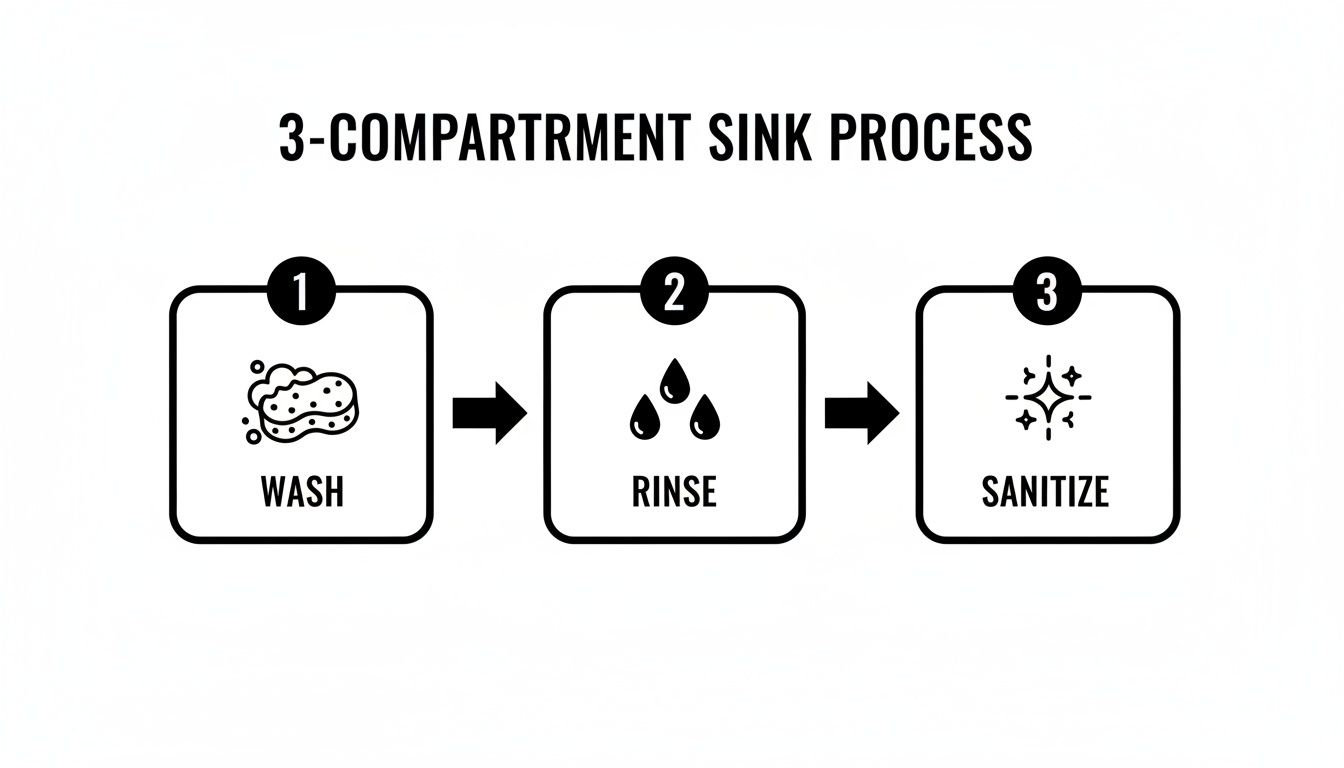
As the diagram shows, each step logically follows the last, ensuring nothing gets missed. Following this order and keeping your temps right is also vital for keeping your pipes clear; for a deeper dive on that, check out our guide on managing a 3 compartment sink drain. No matter which sanitizing method you land on, the final, hands-off step is always to let items air-dry on a clean rack to prevent any recontamination.
Choosing Your Sanitizing Method: Hot Water vs. Chemical
Every pizzeria owner hits a fork in the road when setting up their dish pit: sanitize with scalding hot water or use a chemical solution? This isn't just a minor detail; your choice directly shapes your pizzeria's workflow, your budget, and your day-to-day operations.
There’s no single right answer here. It’s a classic battle between heat and chemistry. One method uses raw temperature to obliterate pathogens, while the other uses a precisely measured chemical solution to get the job done at much cooler, safer temperatures for your team.
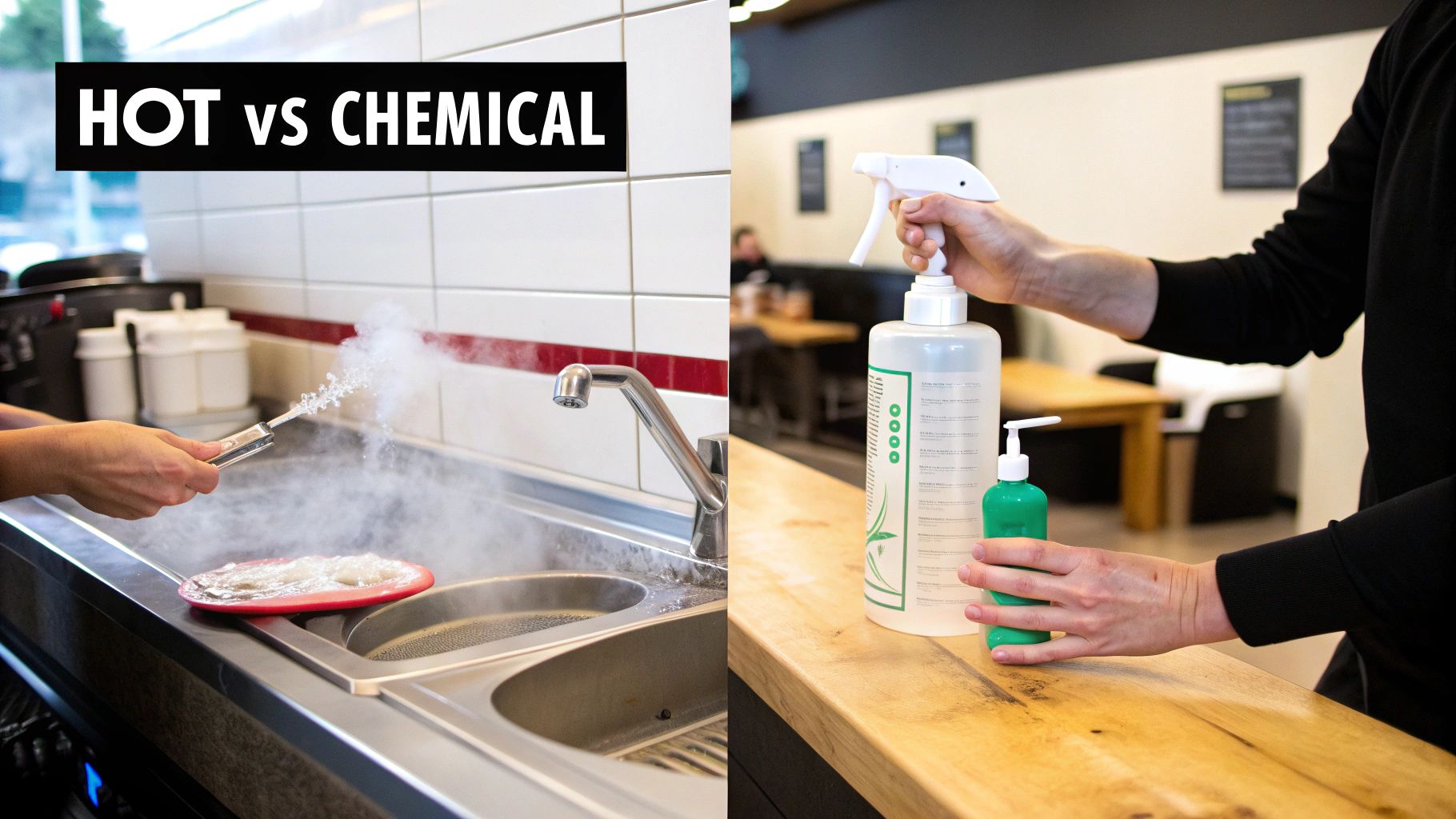
The Hot Water Sanitizing Method
The high-heat route is as simple as it sounds. You dunk items like pizza cutters and dough pans in water heated to a blistering 171°F (77°C) for at least 30 seconds. The sheer heat kills bacteria dead, leaving zero chemical residue behind. That's a huge plus for anything that touches your dough, like dough boxes or pizza prep table inserts.
But this method has some serious operational hurdles. Your standard commercial water heater can't get water that hot, which means you have to install a pricey booster heater dedicated just to that sanitizing sink. This adds to your upfront equipment costs and your monthly utility bills. On top of that, handling water at this temperature poses a serious burn risk for your dish crew, demanding strict safety protocols and training.
The Chemical Sanitizing Method
The alternative—and far more common choice for pizzerias—is chemical sanitizing. This approach uses an EPA-approved sanitizer like chlorine, quaternary ammonium (quat), or iodine mixed into water that's usually around a much more comfortable 75°F (24°C). It's way safer for your team's hands and slashes your energy consumption.
The trade-off here is precision. You can't just eyeball the mix; you have to use test strips to make sure the concentration is at the right parts per million (PPM) to be effective. When you're choosing a chemical, it's crucial to understand the specifics of what you're using, like the properties of sodium hypochlorite solutions (the active ingredient in bleach). If you want a full breakdown of your options, check out our guide on the 3 types of sanitizer solutions you'll find in most kitchens.
Core health regulations demand a 110°F minimum in the wash basin for manual warewashing, rising to 171°F for the sanitizing compartment to kill pathogens like E. coli on pizza cutters and pans. While some large-scale operations use mechanical washers, three-compartment sink setups dominate 60% of small pizzerias for their cost-effectiveness.
Which Method Is Right for Your Pizzeria?
So, how do you decide? The best way is to see how these two methods stack up on the factors that really matter in a busy pizzeria kitchen.
To help you visualize the trade-offs, here's a side-by-side comparison.
Comparing Hot Water and Chemical Sanitizing Methods
| Feature | Hot Water Sanitizing | Chemical Sanitizing |
|---|---|---|
| Temperature Required | 171°F (77°C) | ~75°F (24°C) |
| Upfront Cost | High (Requires a booster heater) | Low (Only need sanitizer & test strips) |
| Operating Cost | High (Increased energy usage) | Low (Saves on energy bills) |
| Staff Safety | Higher burn risk for employees | Safer and gentler on hands |
| Daily Process | Simple: submerge and time | Requires precise measuring and testing |
| Residue Risk | None; ideal for dough boxes and pizza prep table inserts | Low; must air-dry completely to avoid any taste transfer |
For most independent pizzerias, the verdict is pretty clear. The chemical sanitizing method strikes the best balance of safety, cost, and effectiveness. The money you save by skipping a booster heater, combined with lower daily energy bills, makes a compelling case—as long as you train your crew to use those test strips properly.
How to Maintain and Troubleshoot Sink Temperatures
Knowing the rules for your 3 compartment sink temperature is one thing. Actually keeping those numbers steady during a chaotic Friday night pizza rush? That’s a whole different beast.
The reality of any busy pizzeria is that hot wash water cools down and sanitizer gets diluted with every rack of pizza pans. Staying compliant isn’t about reacting to problems; it's about having a proactive game plan.
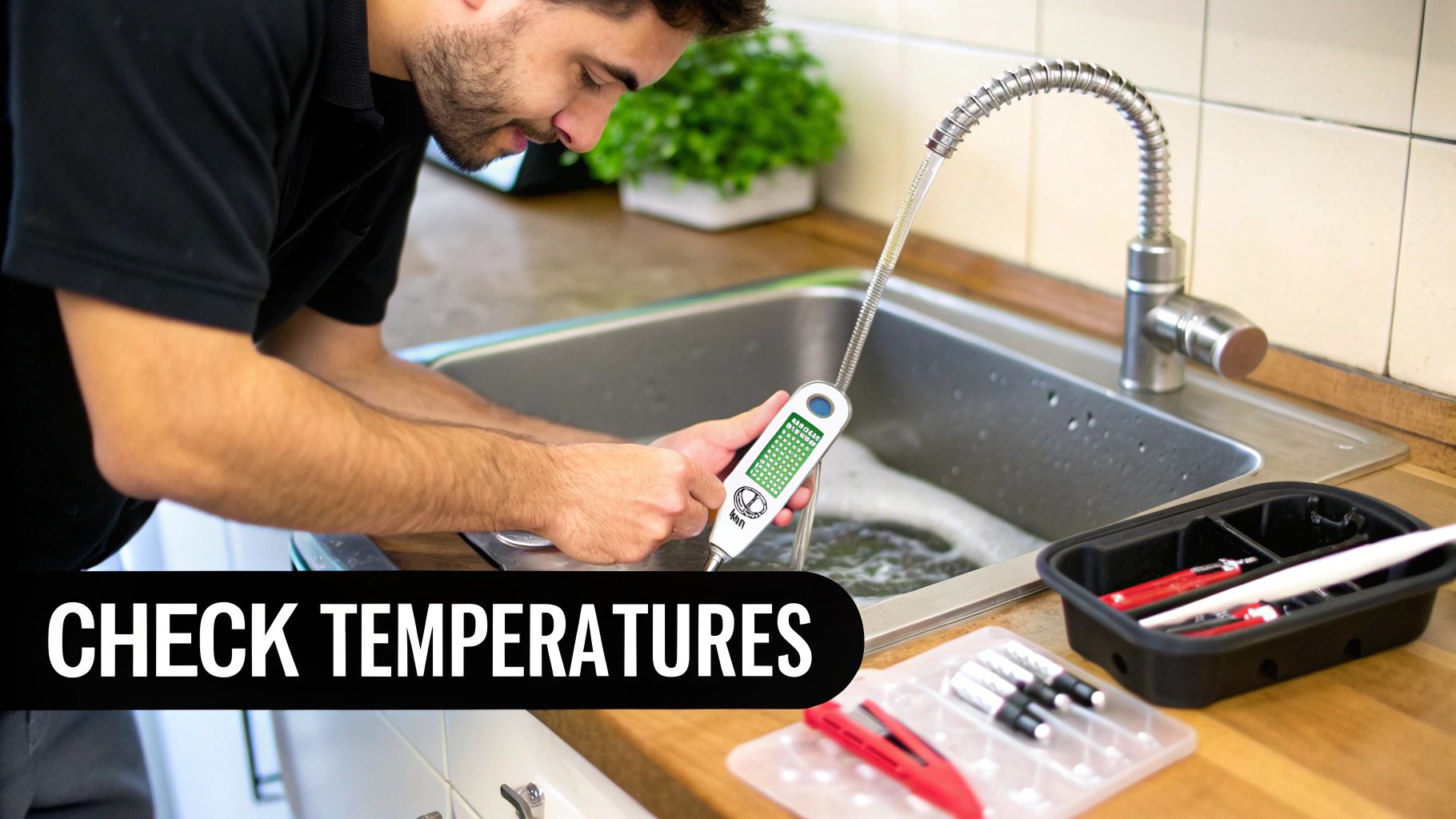
Your single most important tool is a calibrated, waterproof digital thermometer. Forget those flimsy paper temperature strips—they’re just not reliable for checking water. Guessing is a direct path to a health code violation. Your team should be trained to check the wash and sanitize sinks at least once every hour, and even more often when you're slammed with pizza orders.
For chemical sanitizers, being precise is just as critical. Chemical test strips are non-negotiable. Teach your crew the simple dip-and-compare method: dip the strip, check it against the color chart on the vial, and adjust the sanitizer concentration as needed. This simple, two-second check is what stands between you and a failed inspection.
Troubleshooting Common Pizzeria Sink Problems
Even with the best procedures, things go wrong. When your temperatures start to wander, running through a quick diagnostic checklist can save you a ton of stress (and potential fines). Here are the most common headaches pizzerias run into and how to tackle them.
-
Problem: Your wash water gets cold way too fast after washing a few stacks of greasy pizza pans.
- Solution: Your main water heater is the usual suspect. First, check that its thermostat is set to at least 120°F (49°C). If the setting is right but the water at the tap still isn't hot enough, you could have sediment buildup in the tank, which basically insulates the heating element and makes it less effective.
-
Problem: The hot water sanitizer sink never reaches that magic 171°F (77°C).
- Solution: A standard commercial water heater just can't get you there on its own. You absolutely must have a dedicated booster heater for the sanitizing sink. If you have one and it’s not performing, check its power supply and thermostat before you call for service.
-
Problem: The chemical test strips show a weak or non-existent sanitizer concentration.
- Solution: This is almost always caused by soap getting carried over from the rinse sink. Make sure your rinse water is clean and totally free of suds, especially after washing heavily sauced items from the pizza prep table. Detergent residue neutralizes most chemical sanitizers on contact.
When to Call in the Professionals
While you can handle plenty of minor issues in-house, some problems need an expert. Making sure your water heater is properly maintained is critical, especially for hitting and holding the high temps required for hot water sanitization. It’s worth exploring professional water heater services to keep your system running at peak efficiency, particularly if you suspect sediment buildup or a faulty thermostat is holding you back.
Your water heater is the heart of your warewashing station. Regular service doesn't just keep you compliant; it extends the life of your equipment and prevents a catastrophic failure right in the middle of a dinner rush.
Never underestimate the power of consistent checks and routine maintenance. By giving your team the right tools and knowledge, you can turn your three-compartment sink from a potential liability into a reliable pillar of your pizzeria's food safety program. It's that proactive mindset that protects your customers, your reputation, and your bottom line.
Passing Your Health Inspection: What Inspectors Actually Look For
Let's pull back the curtain on health inspections by putting you right in the inspector's shoes. When they walk into your pizzeria's dish area, their eyes immediately lock onto one thing: your 3-compartment sink. To them, this isn't just a place to wash dishes; it’s a critical control point for food safety, and they've got a mental checklist based directly on the FDA Food Code.
Understanding what they’re looking for shifts you from reactive worry to proactive confidence. The inspector's job is to verify that your system for cleaning and sanitizing everything that touches food—from pizza pans to prep table utensils—is both effective and consistent.
The Inspector's Primary Checkpoints
First, they’ll pull out a calibrated thermometer. The initial test is your wash water in the first basin. They’re looking for a temperature of at least 110°F. Anything less, and they know your detergent won't be able to properly cut through the stubborn grease and melted cheese residue caked onto your equipment.
Next, their attention shifts to the last sink, your sanitizing station. How they test this depends entirely on your method:
- Hot Water Sanitizing: If you're using heat to kill germs, they'll immerse their thermometer for a full 30 seconds. They need to see a steady, unwavering reading of 171°F or higher.
- Chemical Sanitizing: If you use chemicals, they'll ask to see your test strips. Then, they’ll watch you or a team member test the water right in front of them to confirm the sanitizer concentration falls within the required parts per million (PPM) range.
An inspector's core mission is verification. They don't just take your word for it; they check temperatures, test sanitizer levels, and observe your team's procedures to ensure every step aligns with food safety regulations.
Beyond the Basins: What Else Is on Their Radar?
An inspector's review doesn't stop at the water itself. They're also hunting for supporting evidence that proves your system is working correctly. They will check for the physical presence of sanitizer test strips, making sure they aren't expired and are the correct type for the specific chemical you use.
They also observe the overall cleanliness of the area, scanning for grime buildup in the sinks or on the drainboards. Don't be surprised if an inspector also checks the temperature of the nearby handwashing sink.
While kitchen staff can handle hotter water than the general public, safety regulations still apply. Since 2013, some health boards have allowed kitchen hand sinks to reach 120°F, but the updated FDA Food Code sets a minimum of 85°F for handwashing stations. It’s a crucial standard, especially when sanitation lapses are a major contributor to foodborne illnesses. You can learn more about specific hand sink temperature policies.
Being prepared simply means having a solid, repeatable system in place. To get fully ready and cover all your bases, use our comprehensive restaurant health inspection checklist.
Answering Your Pizzeria Sink Questions
We’ve walked through the rules, the methods, and the troubleshooting for getting your three-compartment sink dialed in. But in the real world, questions come up in the middle of a chaotic pizza rush. Let's tackle the practical, everyday stuff you'll actually face.
How Often Should We Change the Water in Our Sinks?
During a busy service, that water isn't going to last long. The official answer is to change it whenever it becomes visibly cloudy with grease and food bits. For a pizzeria dealing with tons of cheese and tomato sauce, that usually means every 2 to 4 hours.
Your wash sink is the main offender and will need the most attention. It gets dirty fastest, and the soap breaks down, but just as importantly, the temperature will dip below that mandatory 110°F. When it's time, drain it completely, give it a quick scrub, and refill. Never just top it off with hot water—that’s just adding clean water to a dirty sink.
Do I Still Need a 3-Compartment Sink If I Have a Dishwasher?
Yes. In nearly every situation, the health department will still require you to have a three-compartment sink. Your high-temp commercial dishwasher is a workhorse for plates, utensils, and standard pizza pans, but it can't handle the big, awkward stuff.
Think about it—where else are you going to wash these items?
- Those giant commercial dough mixer bowls
- Oversized sheet pans and dough boxes that won't fit the rack
- Long-handled pizza peels and oven brushes
- Parts from your pizza prep table or other large equipment
It's also your most important backup plan. When your dishwasher inevitably goes down on a Saturday night, that sink is the only thing standing between you and a complete shutdown.
Your three-compartment sink is your pizzeria's insurance policy. It handles the big stuff a machine can’t and saves your service when equipment decides to take a night off.
What Is the Correct Way to Test My Sanitizer?
The only way to do this right—and the only way that satisfies a health inspector—is to use chemical test strips made for your specific sanitizer, whether it's chlorine, quat, or iodine. The process is simple, but you have to do it by the book.
Dip the test strip into your sanitizing sink for the time listed on the vial, which is usually just a couple of seconds. Pull it out without shaking it and give it a moment for the color to develop. Now, compare that color to the chart on the side of the container to get your reading in parts per million (PPM). This is a non-negotiable step; inspectors will ask you to demonstrate it.
Why Is My Sanitizing Sink Not Reaching 171 Degrees?
This is a huge one for kitchens using the hot water sanitizing method. Your building's main water heater is almost never enough to get the job done. Most are set to a max of 120°F to 140°F to keep people from getting scalded at the handwashing sinks.
To hit that required 171°F, you need a dedicated booster heater. This is a separate unit installed on the water line that feeds only your sanitizing sink, giving the water that final "boost" in temperature right before it hits the basin.
If you already have a booster heater but are still coming up short, start with the simple stuff: check that it has power and that the thermostat is set correctly. If both look good, you might have a bigger issue, like mineral scale buildup on the heating element. At that point, it’s time to call in a pro.
At Pizza Prep Table, we get that running a great pizzeria means nailing every detail, from perfecting your dough recipe to keeping the dish pit compliant. Having the right gear is step one. Check out our selection of durable, NSF-compliant sinks and pizza prep tables built for the grind of a busy pizzeria. Find the perfect equipment for your kitchen at Pizza Prep Table.