

A Pizzeria Owner's Guide to 3 Compartment Sink Temperatures
In a packed pizzeria, that three-compartment sink is the unsung hero keeping your customers safe. Getting the 3 compartment sink temperatures right isn't just about passing a health inspection; it's about making sure every greasy pizza pan and dough-caked prep tool is perfectly clean and ready for the next rush.
The Foundation of Pizzeria Food Safety
Picture a chaotic Friday night, with sauce-covered utensils, dough trays, and cheesy pans piling up faster than you can count. This is where your sink protocol becomes the frontline defense against foodborne illness. Getting the temperatures right in each compartment transforms a daily chore into a powerful food safety system, protecting your pizzeria's reputation with every slice you serve.
Proper sink procedures are a big deal for any commercial kitchen, but they're especially crucial for pizzerias where grease, dough remnants, and acidic tomato sauce create unique cleaning headaches. Dropping the ball here doesn't just risk a health code violation; it risks the trust of your customers who expect a clean slice from a clean kitchen.
A well-managed three-compartment sink is more than a piece of equipment; it's a commitment to quality and safety that defines a professional kitchen. It ensures that the first step in your food safety plan is also one of the strongest.
The FDA Food Code lays it all out pretty clearly. The wash compartment needs to be at least 110°F (43°C) to really start breaking down all that grease from pepperoni and cheese. The rinse water should be even hotter, around 120°F (49°C). But the real heavy lifting happens in the final compartment: the sanitizing rinse requires water at a blistering 171°F (77°C) for at least 30 seconds to kill off any lingering bacteria. This whole process is a cornerstone of kitchen hygiene, and understanding the role your commercial prep sink plays is the first step toward getting it right every single time.
Breaking Down The Wash Rinse Sanitize Process
Let's get into the nitty-gritty of what actually happens at each station of your three-compartment sink. This isn't just about dunking pizza pans; it's a precise, sequential process that turns a daily chore into a powerful food safety system. Each sink has a distinct job, and each step perfectly sets up the next one to make sure every pizza pan, cutter, and spatula from your pizza prep table is safe for your customers.
To really nail this process, you have to understand the difference between cleaning and sanitizing. Cleaning is about removing the stuff you can see—grease, baked-on cheese, sauce splatters. Sanitizing is about killing the invisible bacteria that can make people sick. You simply can't sanitize a dirty surface, which is why the wash-rinse-sanitize order is non-negotiable for every item, from dough boxes to serving utensils.
The First Compartment: Wash
Think of your first sink as the heavy lifter. This is where the real work happens. Its only job is to get all that gunk off your equipment—the stubborn, baked-on mozzarella, the grease from pepperoni, and the dried tomato sauce on your pizza prep table tools. You need hot, soapy water to break down those tough food soils and lift them off the surface.
The FDA Food Code gives us a clear target here: a minimum water temperature of 110°F (43°C). This is the sweet spot. It's hot enough to activate your detergent and melt away grease from pizza pans, but not so scorching that it creates an immediate burn hazard for your staff in the middle of a chaotic dinner rush.
The Second Compartment: Rinse
The second sink is the crucial bridge between washing and sanitizing. Its purpose is simple but vital: rinse away every trace of detergent and any leftover food bits that were loosened up in the first sink. If you leave soap suds on a pizza pan, they'll completely neutralize the sanitizer in the next step, making the whole process useless.
Clean, clear water is the name of the game here. Keeping the rinse water warm is a good pro-tip, as it helps cut through any remaining soap film and ensures the surface of your pizza pans and prep tools is perfectly prepped for the final, critical step.
The Third Compartment: Sanitize
This final sink is your last line of defense against foodborne illness. After an item is physically clean, this is where you eliminate dangerous microorganisms like E. coli and Salmonella. For a pizzeria, this is especially critical for tools like pizza cutters and serving spatulas that touch the finished, ready-to-eat product right before it goes to a customer.
This quick visual guide breaks down the temperature goals for each stage of the game.
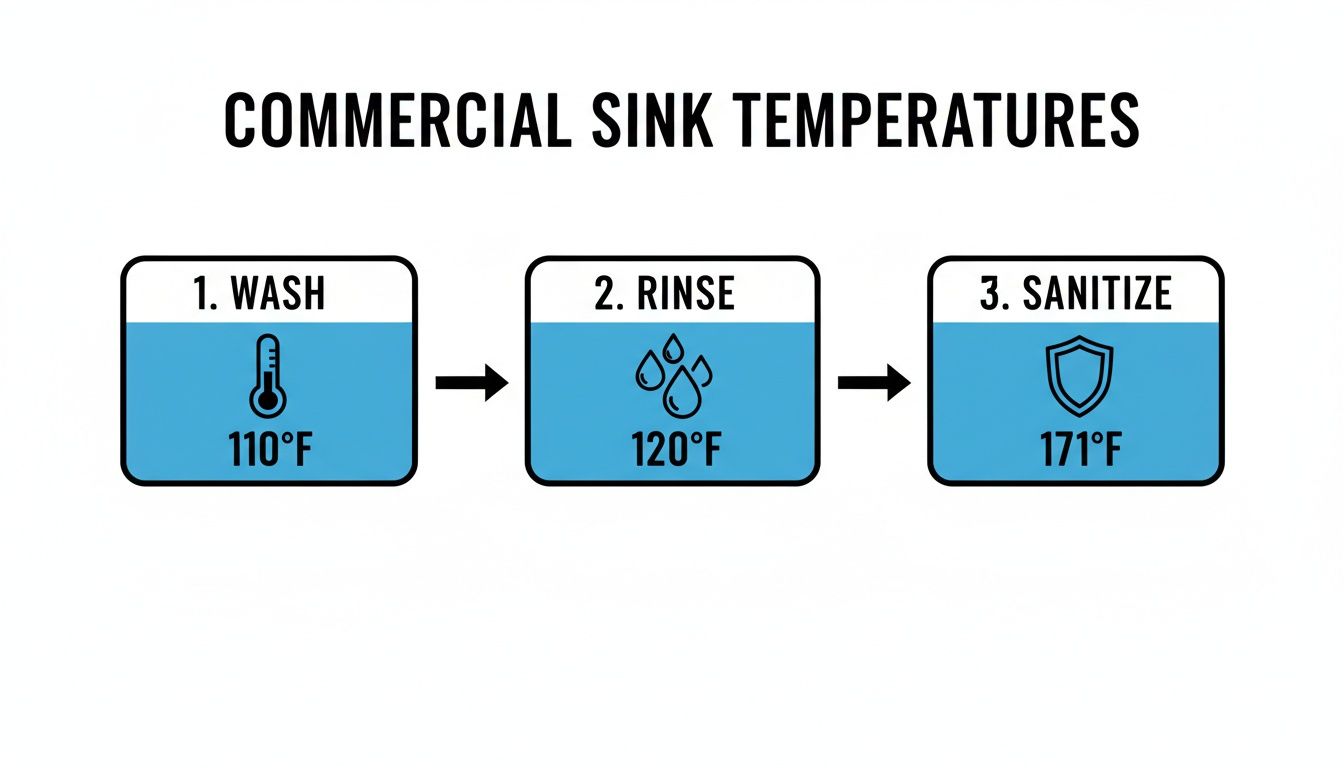
As you can see, hitting these specific temperatures is what makes your cleaning protocol both compliant and effective. For this last step, you've got two main paths to choose from:
- Hot Water Sanitizing: Immerse your equipment for at least 30 seconds in water that’s kept at a blistering 171°F (77°C).
- Chemical Sanitizing: Submerge items in a chemical solution (like chlorine, quat, or iodine) that's mixed to the right concentration. The water for this method is typically much cooler, usually around 75°F (24°C).
Here's a quick cheat sheet to keep all the key numbers straight for both methods.
Three Compartment Sink Temperature Requirements
| Compartment | Purpose | Hot Water Method Temperature | Chemical Method Temperature | Key Tip for Pizzerias |
|---|---|---|---|---|
| Sink 1 | Wash with Soap | 110°F minimum | 110°F minimum | Use a good degreaser to cut through cheese and sauce residue. |
| Sink 2 | Rinse with Clean Water | 120°F or warm | 120°F or warm | Ensure no soap suds are visible before moving to sink 3. |
| Sink 3 | Sanitize (Heat or Chemical) | 171°F minimum | 75°F-120°F | For pizza cutters, verify sanitizer contact on the entire wheel. |
This table puts it all in one place, making it easy to train your team and double-check your setup during a busy shift.
Understanding the specific role of each compartment—and the temperatures that make them work—is what elevates this task from a simple chore to a rock-solid food safety protocol. Properly cleaned pans and tools from your pizza prep table are the first step to a perfect pizza.
Choosing Between Hot Water and Chemical Sanitizing
When you get to that final, critical step in your three-compartment sink, you’re faced with a big decision: sanitize with scorching hot water, or use chemicals? As a pizzeria owner, the right choice usually comes down to your kitchen's current setup, what you're willing to spend on utilities, and how well you can train your team on precise protocols—especially when you’re dealing with greasy pizza pans and messy pizza prep tables day in and day out.
It’s the classic trade-off. Each method has its own temperature requirements and rules, pitting higher energy bills against the need for careful chemical handling.
The Hot Water Sanitizing Method
Let's be clear: the hot water method is brutally effective. It's simple, powerful, and leaves nothing behind. By submerging your pans, peels, and utensils from the pizza prep table in water that’s kept at 171°F (77°C) for at least 30 seconds, you’re killing pathogens with pure heat. No chemicals, no residue, no chance of an aftertaste on your pizza stones.
But that kind of heat doesn't come cheap. Most standard commercial water heaters just can't keep up, which means you'll almost certainly need to install a booster heater dedicated to that third sink. That's an upfront equipment cost plus a guaranteed bump in your monthly energy bills. To do it right, it helps to understand what temperature kills viruses and other pathogens you're targeting.
The Chemical Sanitizing Method
The alternative is to use an approved chemical sanitizer like chlorine, iodine, or quaternary ammonium—you’ll often hear these called "quats." This approach works its magic in much cooler water, usually around 75°F (24°C), which makes it way more energy-efficient. You can forget about that expensive booster heater.
The greatest challenge with chemical sanitizing isn't the temperature, but the precision. Success hinges entirely on maintaining the exact chemical concentration specified by the manufacturer, which demands diligent staff training and consistent testing on everything from pizza pans to prep table tools.
This method gives you a lot of flexibility. Modern, effective chemical sanitizers are a big reason why temperature rules have evolved, offering a reliable, low-energy alternative to the old high-heat-only approach.
Ultimately, the best path for your pizzeria comes down to what you’d rather manage: higher energy costs for the simplicity of hot water, or the strict protocols and testing required for chemicals to keep your pizza prep table and tools safe.
Essential Tools for Temperature Mastery
Guesswork has absolutely no place in a professional kitchen, especially when it comes to food safety. To make sure your 3 compartment sink temperatures are always on the money, you need the right tools and a solid routine. This isn't about just "feeling" if the water is hot enough; it's about precision, especially when you're battling greasy pizza pans and dough-caked tools from your pizza prep table.
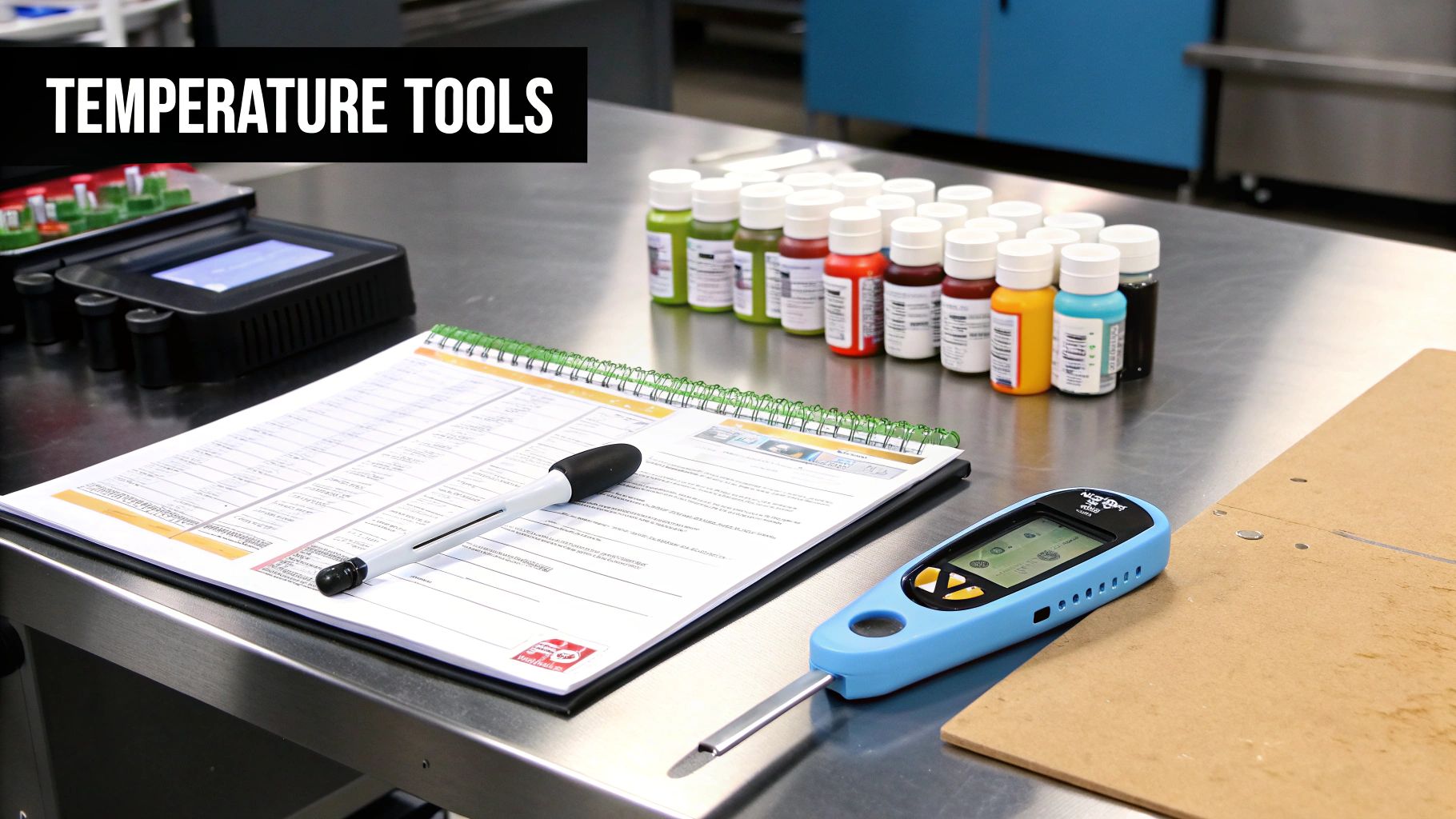
Your two best friends in this process are a calibrated, waterproof stem thermometer for checking water heat and chemical test strips for verifying your sanitizer solution. An inaccurate thermometer is just as useless as no thermometer at all, which is why calibration is a non-negotiable first step.
Accuracy is the cornerstone of compliance. A simple daily check using the ice-point method ensures your thermometer provides trustworthy readings, turning a potential health code violation into a verified safety measure.
Calibrating Your Thermometer
Making sure your thermometer is accurate is dead simple. The ice-point method is a reliable way to get it done daily.
- Prep the Ice Bath: Grab a glass and fill it to the brim with crushed ice. Then, add cold water until the glass is completely full.
- Insert the Thermometer: Submerge the thermometer stem at least two inches into the ice water. Just be careful it doesn't touch the sides or bottom of the glass.
- Wait and Check: Give it at least 30 seconds for the reading to settle. It should land on exactly 32°F (0°C).
- Adjust if Needed: If the reading is off, use the calibration nut on the back of the thermometer to adjust it until it hits that 32°F mark.
This quick process guarantees your temperature logs for the wash, rinse, and sanitize sinks are precise. For chemical sanitizing, always use the correct test strips to confirm the solution is at the proper parts per million (PPM) concentration—another critical step for keeping your pizzeria safe and compliant.
Avoiding Common Sink Compliance Pitfalls
Even the sharpest pizzeria operators can run into trouble with their three-compartment sinks, especially when the dinner rush hits full tilt. Knowing the common tripwires is the best way to stay ahead of health inspectors and keep the kitchen humming. The biggest culprit? Letting water temperatures dive when things get chaotic and greasy pizza pans are stacked high.
When your kitchen is slammed, the constant demand for hot water can easily overwhelm your heater. A 2025 SMC Health guide points out that commercial kitchens often need up to 70 gallons per hour during peak pizza rushes. Your water heater's capacity is a huge deal; in fact, a staggering 50% of violations in 2024 NYC audits were tied to rinse water dropping below 120°F, carrying an average fine of $750. You can dig into the specifics in this guide on water heater sizing for commercial kitchens.
Troubleshooting Frequent Sink Issues
Another easy mistake is letting the wash water get dirty and greasy from cheese and sauce residue. Once that happens, your detergent and sanitizer are basically useless. Similarly, getting the sanitizer dilution wrong—either too weak to kill germs or too strong to be food-safe—is a frequent slip-up. Finally, rushing the process and not allowing the full 30-second contact time for sanitizing is a common error, especially for quick-turnaround items like pizza cutters and serving tools from the pizza prep table.
To head off these problems, put some simple, direct fixes in place:
- Temperature Drops: Keep an eye on your booster heater’s recovery rate. If it can't keep pace with the demand from washing endless pizza pans, it might be time to think about a bigger unit.
- Dirty Water: Set a timer or a house rule to change out the sink water every two hours during your busiest times.
- Sanitizer Levels: Use foolproof visual aids, like marked lines on a measuring cup, to guarantee perfect chemical measurements every time for cleaning your pizza prep table tools.
By planning for these common fails, you build a much stronger, more compliant system. For more on what inspectors are looking for, check out our complete restaurant health inspection checklist.
Got Questions About Your Pizzeria's Sinks? We've Got Answers.
Even with the best system in place, questions pop up in the heat of a dinner rush. Let's tackle some of the most common ones we hear from pizzeria owners and their crews about keeping those 3-compartment sink temperatures and procedures on point.
How Often Should We Be Changing The Sink Water?
During a hectic pizza rush, you need to be changing the water in all three sink bays every two to four hours, minimum. A better rule of thumb? Change it the moment it gets visibly greasy or cloudy with food debris from pizza toppings. The wash water is your biggest priority here—as soon as it's full of grime, that detergent isn't doing its job anymore.
My advice is to make it part of your routine. Drain and refill your sinks before the rush hits, once during a lull in the middle of service, and again after you close up. This is the only way to guarantee your water temps and sanitizer levels stay effective against that endless stream of greasy pizza pans and dough-caked utensils from the pizza prep table.
Can We Use The 3-Compartment Sink For Food Prep Or Handwashing?
That’s a hard no. It's one of the fastest ways to get hit with a major health code violation, and for good reason—it’s a huge cross-contamination risk. That three-compartment sink is a dedicated "warewashing station" and must be used exclusively for washing, rinsing, and sanitizing your gear. Think pizza pans, cutters, spatulas, and tools from your pizza prep table.
Your three-compartment sink is holy ground for cleaning equipment. Using it for anything else, like thawing chicken wings for a side order or washing hands, completely undermines its purpose and puts your customers' health on the line.
Every commercial kitchen is required to have separate, dedicated sinks for handwashing and for food prep tasks like rinsing vegetables for salads. Keeping these jobs separate isn't just a suggestion; it's a fundamental food safety rule that health inspectors will look for every single time they walk through your door.
What If My Water Heater Can't Hit 171 Degrees?
This is a really common problem, especially in older buildings. If your main water heater just can't push out water at a consistent 171°F for sanitizing, your best bet is to install a booster heater. These are smaller, dedicated units that connect right to your sanitizing bay and give the water that final "boost" it needs to reach the required temperature. It's a standard and effective fix in the restaurant world.
If a booster heater isn't in the budget, you can always switch over to a chemical sanitizing method. Instead of relying on scorching hot water, you'll use an approved chemical sanitizer (like chlorine or quat) mixed into lukewarm water, usually around 75°F. It's definitely more energy-efficient, but it comes with a trade-off: you have to be precise with your mixing and constantly check the concentration with chemical test strips to make sure it's strong enough to do its job on your pizza pans and prep table tools.
At Pizza Prep Table, we know that great equipment is the backbone of any safe and successful pizzeria. From NSF-compliant prep tables to the sinks that keep your operation sparkling, we provide the tools you need to do what you do best. Check out our full lineup of commercial kitchen solutions at https://pizzapreptable.com.