

Your Ultimate Commercial Prep Sink Guide for Pizzerias
Behind every fantastic pizza is a silent partner that keeps the whole operation running without a hitch: the commercial prep sink. It’s so much more than a basin for rinsing vegetables; it’s the central command for food safety and kitchen workflow, working hand-in-glove with your pizza prep table. This guide will show you why the prep sink is truly the 'pit crew station' for your kitchen.
The Unsung Hero of Your Pizzeria Kitchen
Picture a chaotic Friday night service. Dough is being tossed, cheese is flying, and fresh basil needs a quick rinse. While the pizza oven gets all the attention and glory, the commercial prep sink is the real unsung hero—the critical starting point for every single pie that leaves your kitchen. It’s where your fresh, vibrant ingredients begin their journey, safely prepped and ready for action.
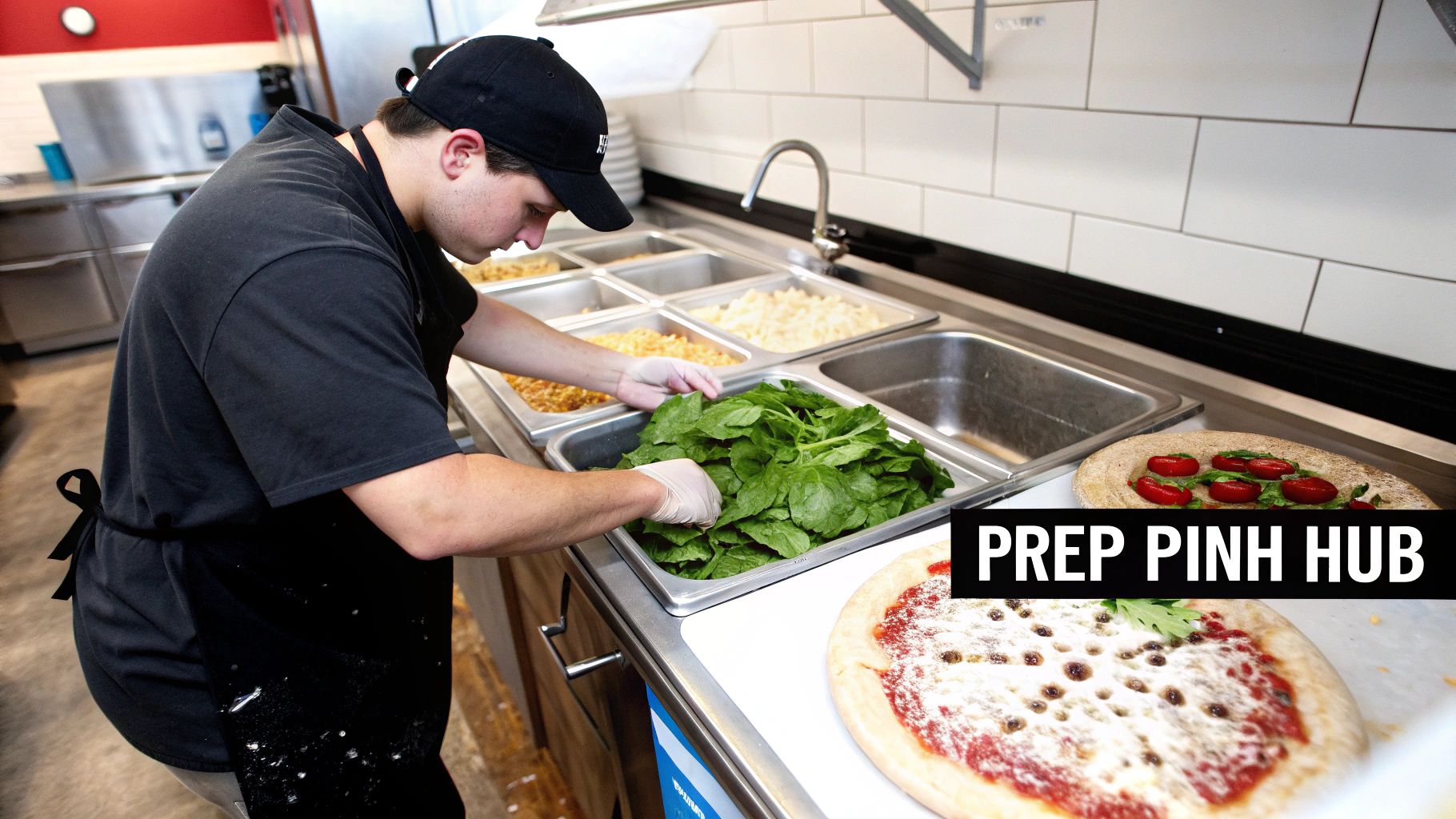
Think of it as the pit crew station in a high-stakes race. Just like a race car needs meticulously prepared tires and fuel to win, your pizza prep table needs a constant, steady supply of perfectly washed produce, properly thawed meats, and clean tools. The prep sink is where all this essential work gets done, directly impacting your pizzeria's speed, consistency, and—most importantly—food safety.
Why Your Prep Sink Is a Critical Business Decision
Picking the right sink isn't just a plumbing decision; it's a strategic move that directly affects your bottom line. An undersized or poorly placed sink creates immediate bottlenecks, forcing your staff to take extra steps, cross paths, and slow down the entire prep line. That little bit of inefficiency is often the difference between a smooth, profitable service and a stressful, chaotic one.
The demand for solid kitchen equipment speaks for itself. In the fast-paced world of foodservice, the commercial sink market has seen incredible growth, valued at USD 915.7 million in 2024 and on track to hit USD 1,404.38 million by 2033. This boom mirrors the growth in our industry, which is especially relevant for independent pizzeria owners who live and die by their prep equipment's durability. Stainless steel is king, holding about 65% of the market share thanks to its unmatched corrosion resistance and how easy it is to sanitize—both non-negotiables for high-volume pizza prep. You can learn more about these commercial sink market findings and how they impact the industry.
A well-chosen commercial prep sink acts as a force multiplier for your pizza prep table. It ensures every component—from washed basil to sanitized pizza cutters—is ready precisely when needed, preventing delays and upholding quality.
Getting into the details, from the number of basins to the grade of the steel, is absolutely vital. A sink that can stand up to acidic tomato sauce without pitting or handle the impact of a heavy dough bowl isn't a luxury; it's a necessity. It’s your front-line defense for meeting health codes, protecting your customers, and empowering your team to create amazing pizzas with zero compromises. Nailing this choice from the start builds the foundation for a more efficient, safer, and more profitable pizzeria.
Choosing the Right Number of Sink Basins
Picking the right number of basins for your prep sink is probably the first big decision you'll make, and it sets the rhythm for your entire kitchen. This isn't just about how much space you have; it's about building a seamless workflow from your raw ingredients to your pizza prep table, all while keeping the health inspector happy. The right setup prevents bottlenecks and makes sure you pass inspections without breaking a sweat.
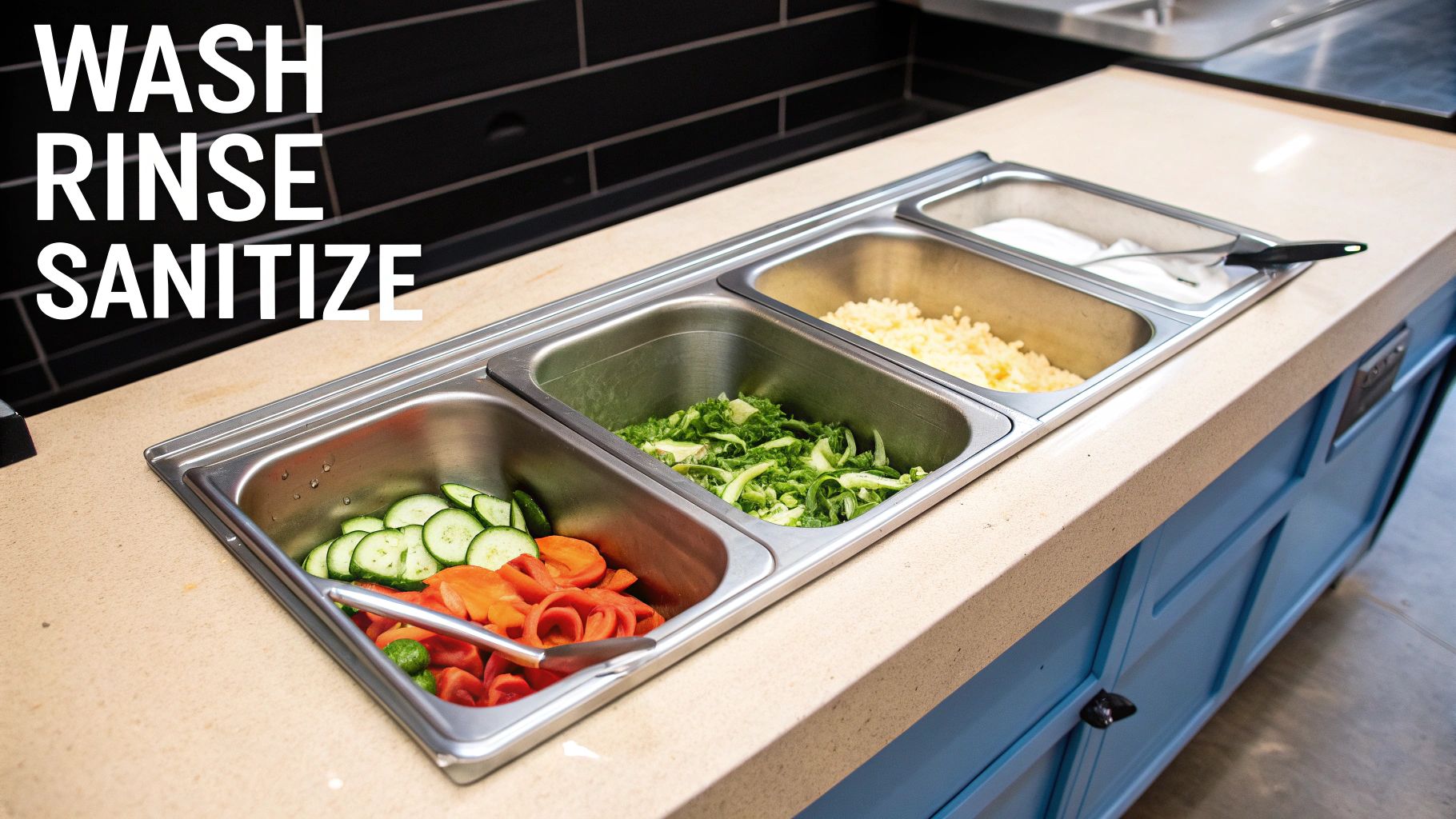
Think of each basin as its own dedicated workstation. You wouldn't toss raw dough and sliced pepperoni in the same bin on your prep table, right? For the exact same reason—avoiding cross-contamination—you need separate sink compartments for different jobs. This separation is the cornerstone of food safety and something health inspectors zero in on.
To help you visualize the best fit for your pizzeria, here’s a quick breakdown of how each sink configuration typically works in a real-world kitchen setting.
Pizza Prep Sink Basin Configuration Guide
| Basin Type | Primary Pizzeria Use Case | Pros | Cons |
|---|---|---|---|
| 1-Compartment | Dedicated food prep like washing produce or thawing ingredients. | Great for a single, high-volume task. Prevents tying up the main warewashing sink. | Cannot be used for washing dishes. Very limited, specialized role. |
| 2-Compartment | A simple wash-and-rinse sequence for pre-cleaning before a dishwasher. | More versatile than a single basin. Good for separating soaking from rinsing. | Not compliant for full manual warewashing in most jurisdictions. Risky as a primary sink. |
| 3-Compartment | The standard for manual warewashing: Wash, Rinse, Sanitize. | The only configuration universally approved by health departments for manual dishwashing. | Takes up more space. Can create a bottleneck if not sized correctly for your largest pans. |
Ultimately, your choice will hinge on your kitchen's layout and what your local health code demands, but for nearly every pizzeria, one of these setups will be the clear winner.
The One-Compartment Sink: A Specialized Role
A single-basin prep sink has a very specific, and frankly, limited role in a pizzeria. Let's be clear: this is not your primary dishwashing station. It shines as a dedicated food prep tool, perfect for jobs like washing a massive batch of romaine for salads or thawing frozen items under cold running water.
For a pizza shop, its best use is as a "wet station" right next to your main pizza prep table. Imagine rinsing a big colander of fresh basil or draining canned olives without holding up the dish pit. This dedicated space keeps your workflow humming and ensures raw produce never comes close to dirty dishes.
The Two-Compartment Sink: A Step Up in Versatility
A two-compartment sink gives you a bit more flexibility, letting you create a simple wash-and-rinse flow. This setup can work if—and it's a big "if"—you have a separate, high-temperature commercial dishwasher that handles all the actual sanitizing. In that case, one basin can be for pre-soaking sauce-caked pizza pans while the other is for rinsing produce.
But trying to use a two-basin sink for all your manual washing is a dangerous game. Most health departments will flag this immediately, as it doesn't accommodate the required three-step wash-rinse-sanitize process for utensils, mixing bowls, and pizza pans. It’s a functional middle ground but almost always falls short of full compliance for manual warewashing.
The most common reason for failing a health inspection related to sinks is the absence of a proper three-compartment setup for manual warewashing. Health codes are inflexible on the Wash, Rinse, Sanitize process to prevent foodborne illness.
The Three-Compartment Sink: The Pizzeria Standard
For the vast majority of pizzerias, the three-compartment sink is the undisputed champion and, in most places, a non-negotiable requirement. Health codes across the country mandate this setup for manual warewashing, making sure every pan, tool, and container is cleaned properly. Each basin has a distinct, unchangeable job:
- Wash: The first basin is filled with hot, soapy water (at least 110°F) to scrub away grease, caked-on cheese, and dried tomato sauce from your pizza pans and dough trays.
- Rinse: The second basin holds clean, warm water. Its only job is to rinse off every bit of soap residue from the washed items.
- Sanitize: The third basin contains a chemical sanitizing solution mixed to a precise concentration. Items are submerged here for a required time to kill any lingering, harmful bacteria.
This systematic process is the bedrock of kitchen hygiene. Your three-compartment sink absolutely must be large enough to fully submerge your biggest piece of equipment, whether that's a full-size sheet pan or a 20-quart sauce pot. To get this right, you'll need to understand the plumbing details, which you can learn about in our guide to 3 compartment sink drain requirements. This sink isn't just a recommendation; it's the law in most places and the smartest investment you can make to protect your customers and your business.
Decoding Sink Materials and Health Codes
Choosing the right commercial prep sink is about more than just size. It’s about picking a partner that can handle the daily grind of a pizzeria, from acidic tomato sauce to heavy-duty pots and pans. The materials and certifications of your sink are what separate a smart investment from a future headache.
For any pizzeria, one material stands head and shoulders above the rest: 304-series stainless steel. Think of it as a knight's shield, specifically forged to defend against the relentless attack of tomato sauce. A lower-quality steel, like the 430-series, might look the part, but it’s missing the key ingredient—nickel—that gives 304 steel its incredible corrosion resistance. Over time, that acidic sauce will eat away at cheaper materials, creating tiny pits where bacteria can set up shop.
This is why the pros invest in quality. The broader kitchen sinks market hit a staggering USD 3.6 billion in 2023, with commercial users like you driving the demand. It’s all about getting equipment that can survive the chaos of a pizza rush while meeting strict hygiene rules. You can discover more insights about the growing kitchen sink market and see why standards are only getting higher.
Understanding Steel Gauge: The Brawn Behind Your Sink
Beyond the type of steel, you need to consider its thickness, which is called gauge. It’s a little backward, but with steel gauge, a lower number means thicker, stronger steel. This is a big deal in a pizzeria, where heavy dough bowls, massive sauce pots, and metal pizza pans are constantly being dropped into the sink.
Here’s a quick breakdown:
- 18-Gauge Steel: This is the lightweight option. It’s fine for a handwashing sink or a low-volume prep area, but it will absolutely dent if a heavy pot gets dropped in it.
- 16-Gauge Steel: This is the sweet spot for most pizzerias. It provides a serious upgrade in durability and dent resistance, making it the perfect choice for a primary prep sink that will see non-stop action.
- 14-Gauge Steel: This is the heavyweight champion. It's built like a tank, but it's often overkill (and overpriced) for anyone outside of the most extreme, high-volume industrial kitchens.
For a pizzeria, a 16-gauge, 304-series stainless steel sink is the smartest play. It gives you the perfect balance of toughness and value, ensuring your sink won't buckle when a crew member inevitably drops a full 20-quart mixer bowl into it.
The NSF Seal: What It Really Means for Your Pizzeria
While you're shopping, you’ll see a small but critical symbol on commercial sinks: the NSF seal. NSF stands for the National Sanitation Foundation, an independent group that tests and certifies products to make sure they meet strict public health standards. That seal isn't just a sticker; it's your guarantee.
When a sink is NSF certified, it means it has been put through the wringer and passed on several key points:
- Material Safety: The steel and other parts are proven to be non-toxic and safe for direct contact with food.
- Cleanability: The sink is designed with smooth welds and coved (rounded) corners, getting rid of those tight spots where gunk and bacteria love to hide. This makes proper sanitation possible.
- Durability: The construction is tough enough to handle the abuse of a commercial kitchen without failing.
A health inspector walking into your kitchen is actively looking for the NSF seal on your equipment. Its presence is a clear signal that you have invested in food-safe equipment, which can make inspections go much smoother.
This certification is your first line of defense during a health inspection. A sink without it can lead to instant violations, fines, or even an order to replace the non-compliant gear on the spot. An NSF-certified sink protects your investment, your customers, and your pizzeria's reputation.
Sizing and Placing Your Sink for Peak Efficiency
Even the most incredible commercial prep sink is dead weight if it's in the wrong spot. I've seen it happen. Strategic placement isn't some minor detail you figure out later; it's the secret to turning a chaotic kitchen into a finely-tuned pizza-making machine. The real goal is to create an ergonomic "prep zone" where the sink and the pizza prep table work together like a single, seamless unit.
A smart layout is all about eliminating wasted steps. Just picture the journey of your ingredients. Your pizza maker shouldn't have to dodge other staff members on a slippery floor just to rinse some basil, then trek all the way back to the pizza prep table. That constant back-and-forth adds up, killing precious seconds that become painful delays during a Friday night rush.
Positioning the sink right next to the pizza prep table is the single most powerful move you can make to stop this inefficiency.
This combo lets your crew wash produce, rinse their hands, grab a clean pan, and get back to assembling a pizza in one fluid motion. It’s all about creating a logical path from start to finish, which is really the bedrock of any successful kitchen. For a deeper dive into this, check out our guide on commercial kitchen layout design, which is packed with more ideas for building efficient workspaces.
Mastering Crucial Measurements
The sink's dimensions are just as critical as its location. Let’s talk about bowl depth—a huge factor for a pizzeria. You absolutely need basins deep enough to handle your bulky gear. We're talking 12 to 14 inches deep, so you can fully submerge big dough mixing bowls or sauce pots without splashing water all over the floor. A shallow bowl might look okay on paper, but it becomes a real headache the first time you try to wash your primary equipment.
Drainboards are another one of those features that people often overlook. Trust me, they aren't just extra metal; they're valuable "landing zones" for washed ingredients and cleaned tools. A sink with at least one integrated drainboard gives you a dedicated, sanitary spot for a colander of rinsed mushrooms or a stack of clean pizza pans, keeping them off your main prep surfaces and preventing cross-contamination.
The material your sink is made from is the foundation of all this. The right steel ensures it can stand up to the daily grind of a busy pizzeria.
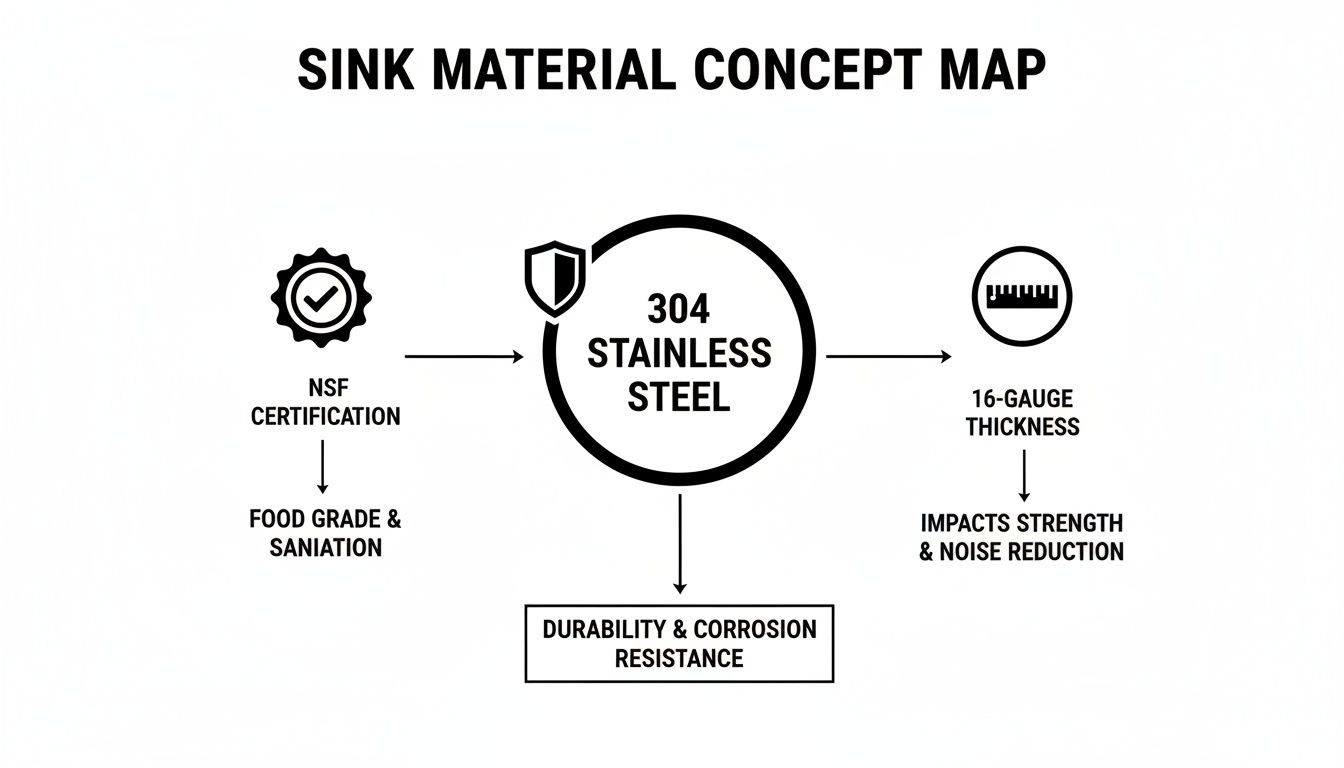
This just reinforces what experienced operators already know: a combination of tough 304 steel, thick 16-gauge construction, and the NSF seal of approval results in a sink that's built to last and keep the health inspector happy.
Practical Layouts for Pizzeria Kitchens
Your final layout will always depend on your space, but a few configurations consistently prove their worth. For many kitchens, an L-shaped layout is the most effective way to create that dedicated prep zone. In this setup, the pizza prep table makes up one leg of the "L," and the commercial prep sink with its drainboard forms the other.
This creates a self-contained workstation where an employee can simply pivot between washing and prepping with almost no extra steps. It keeps the entire prep process tucked into one corner, safely out of the high-traffic lanes leading to the oven or the walk-in cooler.
A well-placed sink creates a "triangle of efficiency" between storage (refrigerator), preparation (sink), and assembly (pizza prep table). The closer these three points are, the faster your team can work.
For smaller or galley-style kitchens, a linear layout can work just as well. Simply place the sink directly beside the pizza prep table along the same wall. The key here is maintaining that clear, uninterrupted flow: ingredients come out of the cooler, get washed at the sink, and move straight onto the prep table for assembly. This logical sequence is what maintains both speed and food safety, turning your sink from a simple basin into the true engine of your kitchen's productivity.
Getting Your Sink Installed and Keeping It Clean
Once you've picked out the perfect prep sink, you're only halfway there. Getting it installed correctly and setting up a solid cleaning routine are just as important. Think of it this way: proper installation is like building a strong foundation for your kitchen's workflow, while a good maintenance schedule is your best defense against cross-contamination and equipment breakdown. Let's make sure your sink runs safely and efficiently for years to come.
Getting the installation right from the get-go saves you from a world of future headaches. It's about more than just hooking up water lines and a drain. To make sure your commercial prep sink works flawlessly and meets all the local codes, it's always a smart move to bring in the pros. Investing in professional plumbing and sink installation services ensures every connection is tight, the water pressure is just right, and your whole setup is compliant, setting your kitchen up for success from day one.
Plumbing and Fixture Must-Haves for a Pizzeria
For a pizza joint, your faucet choice can make or break your prep flow. A high-arc gooseneck faucet is a non-negotiable. You need that vertical clearance to easily fill the huge stockpots for tomato sauce or pasta. Trust me, trying to wrestle a 20-quart pot under a standard faucet is a messy, frustrating waste of time you don't have during a rush.
Just as critical is a pre-rinse sprayer. This thing is a game-changer. It's like a power washer for your dishes, blasting away stubborn, baked-on cheese and dried sauce from pizza pans and dough trays before they even touch soapy water. This one accessory will slash your scrubbing time and make your whole dishwashing process faster and way more effective.
The last piece of the plumbing puzzle is the grease trap. Pizzerias produce a surprising amount of grease from cheese, pepperoni, and other meats. Without a grease trap, all that gunk cools down and solidifies in your pipes, creating nightmare clogs that lead to disgusting backups and expensive emergency plumber calls.
A grease trap isn't just a good idea—it's almost certainly the law in your area. Health departments and water authorities require them to protect the public sewer system. Skimping on this can lead to hefty fines or even get your business shut down.
A Simple Maintenance and Cleaning Schedule
A clean sink is a safe sink. A consistent routine keeps your stainless steel looking sharp and, more importantly, stops harmful bacteria from building up. It doesn't have to be complicated, just something you stick to. The commercial kitchen sinks market is projected to grow from USD 4,480 million in 2025 to USD 6,800 million by 2035, and a big driver for that is the increasing focus on hygiene regulations that demand well-maintained gear.
Here’s a practical cleaning schedule you can actually follow:
1. After Every Shift:
- Give all basins a good rinse to get rid of any food scraps.
- Wash the sink down with a mild detergent and a soft cloth or sponge.
- Sanitize all the basins based on your local health code—this usually means filling the third basin with a sanitizing solution and wiping down every surface.
- Wipe the whole sink dry with a clean cloth. This prevents those annoying water spots and mineral buildup.
2. Weekly Deep Clean:
- Use a non-abrasive stainless steel cleaner to polish the sink. Pro tip: always scrub in the direction of the steel's grain to avoid scratches.
- Take a look at your faucets and sprayers for any leaks or drips. Check the drain stoppers to make sure they're creating a tight seal. Catching these small issues early saves you from big problems later on.
A Few Common Questions About Pizzeria Sinks
Picking out kitchen equipment can feel overwhelming, especially for something as fundamental as a prep sink. Getting it right from the start is key to running a smooth, compliant, and profitable pizzeria. Let's tackle some of the most common questions we hear from owners just like you.
What's the Best Stainless Steel Gauge for My Sink?
For nearly every pizzeria out there, 16-gauge stainless steel is the sweet spot. It perfectly balances rugged durability with a reasonable price tag. It's crucial to remember that with steel gauge, the numbers work backward—a lower number means thicker, tougher steel.
Think about the daily beatings your sink is going to take. Heavy dough bowls getting dropped in, big sauce pots banging against the sides, and metal pizza pans sliding around. A flimsy 18-gauge sink, which might be fine for a simple handwashing station, will quickly start to look like it's been in a prize fight. It'll dent, ding, and warp under that kind of constant abuse.
Those dents aren't just ugly; they create tiny crevices where bacteria can hide, making proper sanitation a real headache. By investing in 16-gauge, you're buying a piece of equipment that can handle the relentless pace of a busy service, night after night. For massive commissary kitchens, 14-gauge is the top dog, but for a typical pizzeria, it's usually overkill. And always, always make sure it's 304-series stainless steel. That specific alloy has the right stuff to fight off corrosion from acidic tomato sauce and harsh sanitizers.
Do I Really Need a Three-Compartment Sink for My Small Pizzeria?
In almost every single case, the answer is a hard yes. This is one of the first and most critical hurdles for new pizzeria owners, and the decision is almost always made for you by the local health department, not your personal preference.
Most health codes across the country mandate a three-compartment sink for manual warewashing, unless you have a commercial dishwasher that hits legally required sanitizing temperatures. Those three basins are non-negotiable for the Wash, Rinse, and Sanitize process.
Even in the tiniest shop, you'll be hand-washing utensils, dough trays, mixing bowls, and pizza pans. Trying to juggle that critical three-step process in a sink with fewer compartments is a fast track to a failed health inspection.
Before you buy anything, double-check your local health code. But trust me on this: planning your layout around a three-compartment sink is the smartest and safest bet for any professional kitchen, no matter how small.
How Much Space Should I Leave Between My Prep Sink and Pizza Prep Table?
There’s no single magic number here, because it all comes down to your kitchen's layout and workflow. The goal is always the same, though: create a safe and efficient prep zone by minimizing how many steps your crew has to take.
The absolute best setup places the sink immediately adjacent to your pizza prep table. If that's not possible in your space, aim for a small landing zone of about 12 to 24 inches between the two. This little gap gives you a dedicated spot to place washed veggies or wet containers before they move over to the prep table. It might seem minor, but it drastically cuts down on staff carrying dripping items across the floor—a huge slip hazard.
A layout that works incredibly well is the L-shape. Imagine the sink and its drainboard forming one leg of the "L," with the pizza prep table forming the other. This creates a self-contained "prep zone" where a cook can simply pivot between washing ingredients and building pizzas. It’s a beautiful thing to watch in terms of pure efficiency.
What's the Best Faucet for a Pizzeria Prep Sink?
For a multi-purpose sink that’s going to see both food prep and dishwashing action, you want a combination of features. The most versatile and highly recommended setup is a wall-mounted faucet with a high-arc gooseneck spout and a separate pre-rinse sprayer.
Here’s why that combo is a winner in a pizza kitchen:
- High-Arc Gooseneck Spout: The high arch gives you plenty of vertical clearance, which is a lifesaver when you're trying to fill a massive stockpot for sauce or a deep dough mixing bowl. Wrestling bulky equipment under a low-profile faucet is just frustrating and wastes time.
- Pre-Rinse Sprayer: This thing is a total game-changer. The high-pressure spray is your best friend for blasting away stubborn, baked-on cheese and dried tomato sauce from pans before they even hit the wash basin. It cuts scrubbing time way down and makes the whole cleaning process more effective.
When you’re picking one out, look for a model with at least an 8-inch spout to make sure it can reach all the corners of each basin. And just like the sink itself, make sure the faucet is NSF-certified and built with heavy-duty brass components. It needs to be tough enough for the daily grind of a commercial kitchen.
Ready to build the efficient and compliant pizzeria kitchen of your dreams? At Pizza Prep Table, we offer a curated selection of commercial prep sinks, pizza prep tables, and all the essential equipment you need to succeed. Our experts can help you choose the perfect gear to match your space, workflow, and budget.
Explore our full range of commercial kitchen equipment today!