

Finding the Best Commercial Refrigerators for Your Pizzeria
The best commercial refrigerators for a pizzeria are the ones that are built for the chaos of a Friday night rush. Your most critical piece of equipment? The pizza prep table. Think of your refrigeration setup as your kitchen's central nervous system—every part has to communicate and work together flawlessly, or the whole system crashes.
Choosing the Right Refrigerator for Your Pizzeria
The real heart of any great pizzeria isn't just the oven—it's the cold line that keeps the entire operation from melting down. Picking the right equipment is so much more than just finding a brand you like; it’s about creating a strategic blueprint for your kitchen. This plan is what will protect your thousands of dollars in ingredients, streamline your make-line during the busiest dinner service, and ultimately, fatten up your bottom line.
A well-thought-out refrigeration strategy looks at how each unit fits into your pizzeria's unique ecosystem. You have to factor in your menu's complexity, how many pizzas you're slinging on an average day, and the physical footprint you're working with. A little bit of planning upfront is essential for any major kitchen upgrade, and you can find solid general advice on planning your kitchen remodel, including new appliances like refrigerators that covers the foundational concepts.
To get you started, here is a quick look at the core refrigeration units every pizzeria depends on and the specific job each one does to keep the dough—and the profits—rolling in.
Essential Pizzeria Refrigeration at a Glance
| Refrigerator Type | Primary Role in a Pizzeria | Main Workflow Benefit |
|---|---|---|
| Pizza Prep Table | The command center for pizza assembly. | Keeps all toppings chilled and within arm's reach for lightning-fast prep. |
| Reach-In Refrigerator | The daily-use vault for backup ingredients. | Stores prepped dough, cheese, and sauce right behind the line for quick restocks. |
| Walk-In Cooler | The bulk storage pantry. | Holds cases of produce, meats, and overflow inventory to reduce daily deliveries. |
This table shows how each piece of equipment plays a distinct and vital role. When you combine them correctly, you create a powerful system that makes your pizzeria hum.
Core Components of Pizzeria Refrigeration
For a pizzeria, refrigeration is never a one-size-fits-all deal. Different units have very specific jobs:
- Pizza Prep Tables: This is the command center for your assembly line. It keeps pepperoni, mushrooms, and cheese perfectly chilled and right at your fingertips for rapid-fire pizza making.
- Reach-In Refrigerators: These are the workhorses, acting as the primary vault for your daily-use items like extra blocks of cheese, buckets of sauce, and trays of pre-portioned dough balls.
- Walk-In Coolers: This is the big one. A walk-in is your bulk pantry, the place you store entire cases of produce, boxes of meat, and all your backup ingredients. Getting the size right is absolutely critical, and our guide on choosing the right walk-in cooler dimensions can save you from some very expensive mistakes.
The real goal here is to create a seamless flow where ingredients move logically from the walk-in, to the reach-in, to the prep table, and finally to the oven. A clunky layout creates wasted steps, slows down ticket times, and leads to frustrated staff—all of which hit your profitability and service quality right where it hurts. This is why you have to stop seeing your refrigeration as just a bunch of cold boxes and start seeing them as integral parts of your pizza production line.
Decoding Different Commercial Refrigerator Types
Picking out the best commercial refrigerators for your pizzeria is about more than just checking boxes on an equipment list. Think of it like building a championship team—every unit has a specialized role to play. The ultimate goal is to create a seamless system where ingredients flow effortlessly from bulk storage to the pizza oven, especially during the beautiful chaos of a dinner rush.
At the heart of this system is the pizza prep table. This isn't just a place to keep things cold; it's the command center for your entire assembly line. It keeps all your toppings—from pepperoni and mushrooms to onions and peppers—perfectly chilled and literally within arm's reach. A well-oiled pizza prep table lets your crew build pizzas with speed and precision, which has a direct line to your ticket times and customer happiness.
The Support System Your Prep Table Needs
While the pizza prep table is definitely the star of the show, it can't do its job without a solid supporting cast. Think of a reach-in refrigerator as the immediate backup, the central vault for your most frequently used bulk items. This is where you'll stage extra cheese, backup sauce containers, and fresh trays of proofed dough balls.
By placing a reach-in just a few steps from the prep table, you empower your staff to restock on the fly without ever disrupting the workflow. This simple, strategic placement is your best defense against bottlenecks and keeps the assembly line humming. You can get a better feel for how these units fit into the bigger picture by checking out this comprehensive guide to reach-in coolers.
Finally, walk-in coolers are the large-scale pantries for your entire pizzeria. These are the heavy lifters designed to hold pallets of flour, cases of produce, and huge quantities of meat and cheese. This bulk storage muscle lets you take advantage of wholesale pricing and cuts down on how often you need deliveries, which ultimately lowers your food costs.
The infographic below really drives home how the type of fridge you choose, your kitchen workflow, and your overall costs are all tied together.
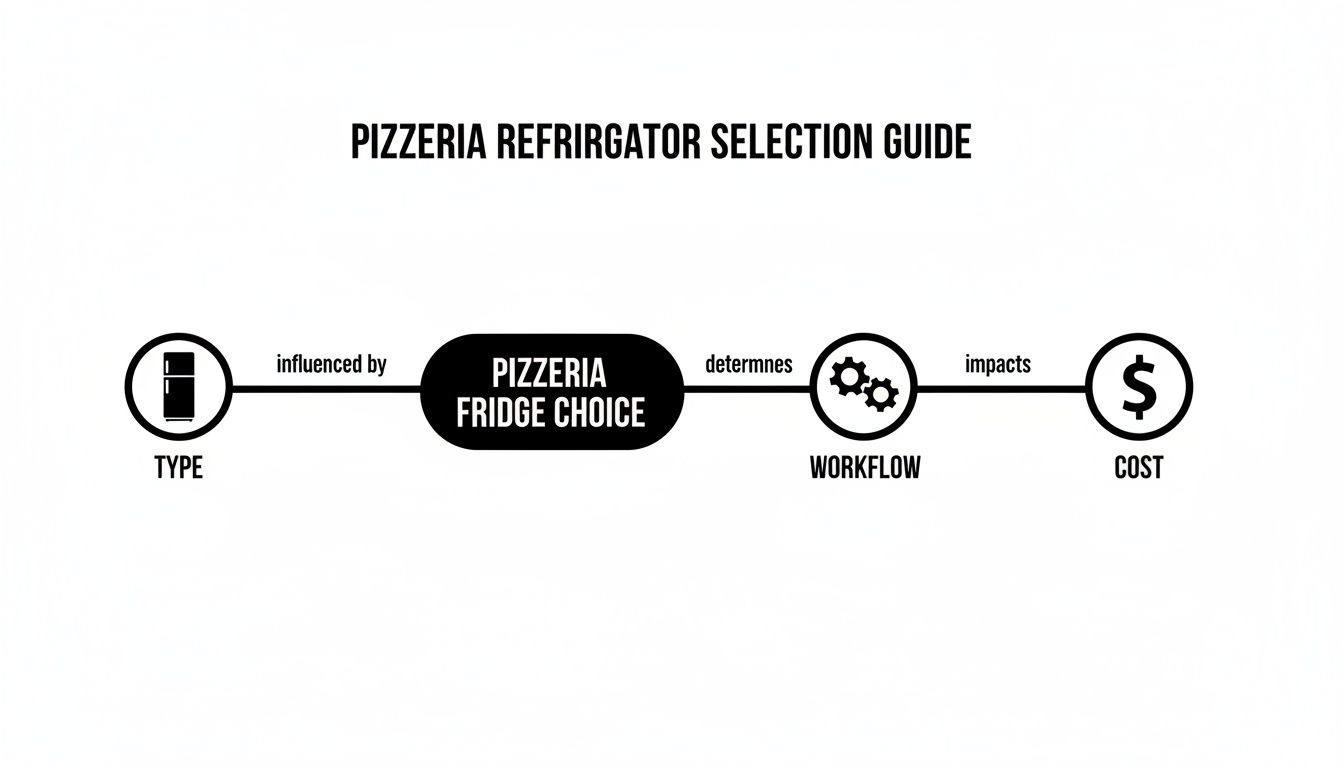
As you can see, your equipment choice isn't just about cold storage; it directly impacts how efficiently your team can work, which in turn affects your operational costs day in and day out.
Creating a Cohesive Kitchen Ecosystem
The real secret to an effective pizzeria kitchen is how these different refrigerators work together. A well-thought-out layout ensures every ingredient travels along a logical, efficient path from storage to service.
- Bulk Storage to Prep: Ingredients start their journey in the walk-in cooler.
- Daily Stocking: Smaller, manageable amounts are moved to the reach-in refrigerator for quick access during service.
- Final Assembly: Toppings and dough make their final move to the pizza prep table for immediate use.
This organized flow cuts out wasted steps and prevents staff from bumping into each other in the kitchen. When every unit has a clear purpose and is positioned correctly, you don't just have a collection of appliances; you have a high-performance system designed to produce great pizza, fast.
Essential Features of a High-Performance Pizza Prep Table
The pizza prep table is the undisputed workhorse of your pizzeria kitchen. It's the central hub where speed and quality collide, but let's be honest—not all models are created equal. Choosing the right one goes way beyond its size or price tag. You have to understand the core features that drive performance to find the perfect match for your pizzeria's unique demands.
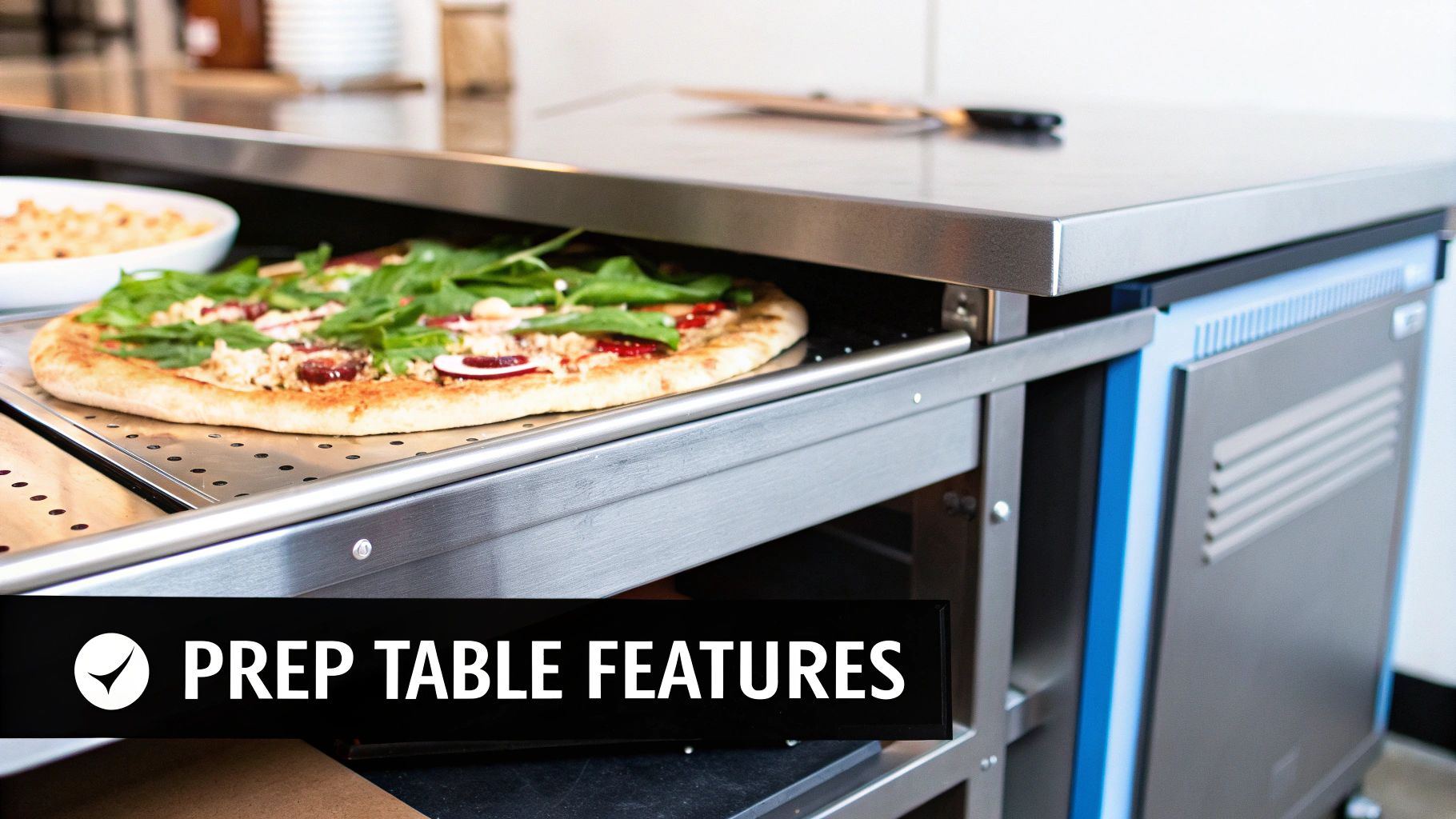
The components hidden beneath that stainless steel surface are what truly separate a reliable unit from a constant headache. These features directly impact food safety, your energy bill, and how smoothly your pizzeria operates when the dinner rush hits.
Compressor Placement Matters
Think of the compressor as the heart of your pizza prep table. Where it's located—top-mount or bottom-mount—has real-world consequences for your kitchen. Each design has its own clear advantages depending on your setup.
- Top-Mount Compressors: These are perfect for pizzerias where flour and dust are always in the air. Placing the compressor up high keeps it away from floor debris, which means you'll clean the coils less often and drastically reduce the risk of clogs.
- Bottom-Mount Compressors: In a hot kitchen, a bottom-mount unit is often the smarter play. Heat rises, so placing the compressor near the cooler floor helps it run more efficiently with less strain. As a bonus, it gives you a slightly higher, more ergonomic work surface for your pizza makers.
Ultimately, the choice comes down to your pizzeria's specific conditions. You're balancing the need for cleaner operation against the benefits of cooler air for the compressor.
Keeping Every Topping Perfectly Chilled
Consistent temperature is completely non-negotiable, especially in the ingredient rail where your toppings are exposed. A powerful cold-wall refrigeration system is essential for maintaining food safety and quality across every single pan.
This kind of system circulates refrigerant through the actual walls of the pan rail, making sure the toppings at the edges stay just as cold as those in the middle. This is what prevents ingredients from creeping into the temperature "danger zone" (anything above 41°F). It's crucial for passing health inspections and keeping your products fresh.
A pizza prep table's number one job is holding a consistent, food-safe temperature under the stress of constant use. A robust refrigeration system isn't a luxury; it's the foundation of a safe and efficient make-line, protecting both your customers and your inventory.
A Practical Checklist for Durability and Compliance
Beyond the cooling system, a few other features are non-negotiable for a high-performance pizza prep table. These are the details that ensure your investment is built to last and meets all the right industry standards.
Always look for a unit with an NSF certification. This is your guarantee that it's designed for safe food handling and is easy to clean. The construction should be a durable grade of stainless steel that can withstand the daily abuse of a commercial pizzeria.
Finally, heavily insulated lids are crucial. They trap cold air, forcing the compressor to work less, which helps maintain ingredient integrity overnight and lowers your utility bills.
How to Size Your Refrigeration for a Flawless Workflow
Picking the right size for your pizza prep table is about so much more than just the numbers on a spec sheet. It’s really about designing an efficient kitchen workflow. Think of it as the difference between a smooth, multi-lane highway for your staff and a one-lane road riddled with traffic jams. The right size prevents bottlenecks, cuts down on wasted steps, and keeps your pizza line moving at full tilt.
Go too small, and you’ll be forced into costly, frantic restocks right in the middle of a dinner rush. Go too big, and you're just wasting precious kitchen real estate and burning money on electricity to cool empty space. Nailing that sweet spot is all about calculating your pizzeria's needs based on a few key factors.
Calculating Your Refrigeration Needs
Your sales volume, delivery schedule, and how complex your menu is—these are the three pillars of sizing. A high-volume pizzeria that gets deliveries twice a week is going to need a heck of a lot more storage than a small shop with a simple menu and daily drop-offs.
Start by looking at your peak demand. How many pizzas fly out the door on your busiest night? That number tells you exactly how much dough, cheese, sauce, and toppings you need ready to go at a moment's notice.
The goal is to hold enough product to crush your busiest periods without running out, but not so much that you're paying to chill empty shelves. This balancing act is what separates a chaotic pizzeria from a profitable one.
A small startup pizzeria just getting its sea legs might find that a 44-inch pizza prep table is the perfect blend of workspace and cold storage. It’s compact enough to fit into a tight kitchen but still gives you plenty of room for a solid menu of toppings.
On the flip side, a high-volume shop churning out hundreds of pies a day needs a much bigger command center. A 93-inch model is absolutely essential in this scenario. It provides enough refrigerated rail space for a huge variety of toppings and a massive under-counter area for all your backup ingredients. This is the kind of scale that allows a busy pizzeria to function without constant, disruptive trips to the walk-in cooler.
Beyond the Footprint: Crucial Pre-Delivery Checks
Okay, so you’ve landed on the perfect size. Before you hit "buy," there are a few critical details that are painfully easy to miss but can lead to disastrous, costly mistakes. Grab a tape measure and check every single doorway, hallway, and tight corner that prep table will have to pass through to get to its final spot in your kitchen. Seriously.
You also have to plan for proper ventilation. The compressor is the heart of the unit, and it needs room to breathe. Make sure you leave at least a few inches of clearance around the unit, especially at the back. Cramming it into a tight space is a surefire way to make the compressor overheat and fail years before it should. Taking the time to explore different layouts is a key step, and you can get a better sense of your options by reviewing different under-counter refrigerator sizes to see how they might fit into your plan.
By thinking through these logistical details before delivery day, you’re setting yourself up for a smooth installation and ensuring your new pizza prep table will perform flawlessly from day one.
Understanding the True Cost of Your Commercial Refrigerator
The initial price tag on a commercial refrigerator is just the down payment. The real cost of ownership shows up over its entire lifecycle, measured in monthly utility bills. An inefficient pizza prep table acts like a silent partner, quietly draining your profits year after year, while a smart investment pays you back through lower operating costs and rock-solid reliability.
Think of it this way: choosing between two pizza prep tables is like picking between two delivery vehicles. One has terrible gas mileage but a lower sticker price, while the other costs more upfront but sips fuel. Over thousands of deliveries, the fuel-efficient vehicle always wins, and the same logic applies directly to your pizzeria equipment.
The Power of an ENERGY STAR Rating
An ENERGY STAR certification is way more than just a sticker; it's a guarantee of efficiency. For a high-use appliance like a pizza prep table that runs 24/7, this certification translates directly into real savings. These units are engineered with superior components designed to slash energy waste.
- High-Efficiency Compressors: These are the engines of your refrigerator, built to deliver the same cooling power with less electricity.
- Advanced Insulation: Better insulation in the walls and lids means the cold air stays locked inside, forcing the compressor to run less often.
- Electronically Commutated (EC) Motors: These smart fan motors use significantly less energy than older models, further chipping away at your daily power consumption.
Upgrading to an ENERGY STAR model can cut your refrigeration energy costs by up to 40%, turning a hefty monthly expense into a source of savings.
Your pizza prep table isn't just an expense; it's a long-term investment. The smartest choice is the one that delivers consistent returns through lower utility bills, reduced food spoilage, and greater operational reliability day in and day out.
Greener Refrigerants and a Healthier Bottom Line
Beyond energy ratings, the type of refrigerant a unit uses has a major impact. Modern pizza prep tables are increasingly running on R290 hydrocarbon refrigerant. This natural, non-toxic refrigerant isn't just better for the environment—it's also more efficient at transferring heat. That means the compressor doesn't have to work as hard, which saves energy and extends the life of the unit.
The push for efficiency is industry-wide. Commercial refrigeration can gobble up a staggering portion of a food business's energy budget, pushing smart operators to replace older, power-hungry equipment.
For pizzeria owners, this shift means modern pizza prep tables are strategic investments that can cut energy bills by 30-40% compared to legacy models. That ensures your toppings stay perfectly chilled without blowing up your operating costs. You can explore more data on how efficient equipment is reshaping the industry by reading these commercial refrigeration market insights.
Smart Financing and Service Options for Your Equipment
Investing in the best commercial refrigeration, especially a high-performance pizza prep table, shouldn't mean draining your startup capital. For a new pizzeria, keeping cash on hand for critical things like inventory, marketing, and payroll is everything. This is where smart financing options become a total game-changer, turning what looks like a massive capital expense into a predictable, manageable monthly payment.
Lease-to-own programs are a super popular route, making top-tier pizza prep tables accessible without that huge upfront hit to your bank account. It’s a strategy that lets you get the gear you need right now while protecting your all-important cash flow. Before you jump in, it's worth exploring the different types of business loans out there to find the absolute best fit for your financial picture.
Beyond the Purchase Price
A solid relationship with your supplier goes way beyond the initial sale. What happens after you buy is just as vital as the equipment itself. Think of a robust warranty and a clear service agreement as your safety net against unexpected downtime—which, as any pizzeria owner knows, can be devastating during a busy service.
When you're weighing your options, look for a partner who seems truly invested in your long-term success. A comprehensive service agreement isn't just a piece of paper—it's their promise to keep your pizzeria humming, ensuring that if your prep table dies on a Friday night, help is actually on the way.
Look for these key things in any service plan:
- Parts and Labor Coverage: Make sure both are included to sidestep any surprise bills down the road.
- Nationwide Service Network: This is your guarantee that you can get a qualified technician, no matter where your pizzeria is located.
- Clear Response Times: You need to know exactly how quickly you can expect support when things go sideways.
Questions We Hear All the Time
When you're running a pizzeria, you've got a million things on your mind. Refrigeration shouldn't be one of them, but let's be honest—it often is. Getting straight answers to common questions is the first step toward running a safer, more efficient pizzeria. Knowing the ins and outs of your pizza prep table, from maintenance to health codes, gives you the confidence to focus on the pizza.
How Often Should I Clean My Coils?
This is probably the number one question we get, and for good reason. In a pizzeria, flour is everywhere. It’s in the air, on the floor, and it loves to clog up the condenser coils on your prep table.
For peak performance, you absolutely need to plan on cleaning the condenser coils monthly. When those coils get caked with flour and dust, your compressor has to work overtime just to keep up. That means higher energy bills and a much greater risk of a breakdown right in the middle of a Friday night rush. A few minutes with a stiff brush isn't just cleaning—it's cheap insurance.
What's the Deal with NSF Certifications?
Another area that trips people up is the alphabet soup of certifications. You’ll see NSF-7 and NSF-41 on spec sheets, but what’s the difference, and why should a pizzeria owner care?
NSF-7 is the general stamp of approval for commercial refrigerators. It means the main cabinet is proven to hold a food-safe temperature below 41°F. But for a pizza prep table, that's only half the story. NSF-41 is the specific certification for the top rail, guaranteeing that your pans of pepperoni and mozzarella also stay safely chilled.
For a pizza prep table, you must have a unit certified for both. No exceptions. This isn't just about passing your health inspection; it's about protecting your ingredients and your customers from day one.
Can't I Just Use a Fridge from a Big Box Store?
We hear this from new pizzeria owners trying to save a buck, and the answer is always a hard no. A residential refrigerator is built for a family of four, not a busy pizzeria. It simply can't recover its temperature after the door has been opened dozens of times an hour.
More importantly, it doesn't have the required NSF certification. The second a health inspector sees that, you've failed. It's an instant violation. Always, always invest in proper commercial-grade equipment. It's the foundation of a safe and successful pizzeria.
Ready to choose the perfect pizza prep table for your kitchen? The experts at Pizza Prep Table offer a wide selection of NSF-certified models from top brands, complete with financing and nationwide service. Find your ideal unit today.