

The Ultimate Guide to Under Counter Refrigerator Sizes for Pizzerias and Pizza Prep Tables
When you're outfitting a pizzeria, under-counter refrigerators aren't just boxes that keep things cold—they're the backbone of your pizza prep table. These units come in a range of sizes, from a slim 24-inch model perfect for a tight spot to massive 93-inch workhorses designed for high-volume pizza production.
Choosing the right size is one of the most important gear decisions you'll make. A 27-inch unit might be perfect for a small slice shop, while a bustling restaurant will need the capacity of a 48-inch or 72-inch model to keep the prep line moving. This single choice affects everything from how fresh your toppings are to whether your team can handle a Friday night pizza rush without breaking a sweat.
Matching Refrigerator Size to Your Pizzeria's Workflow
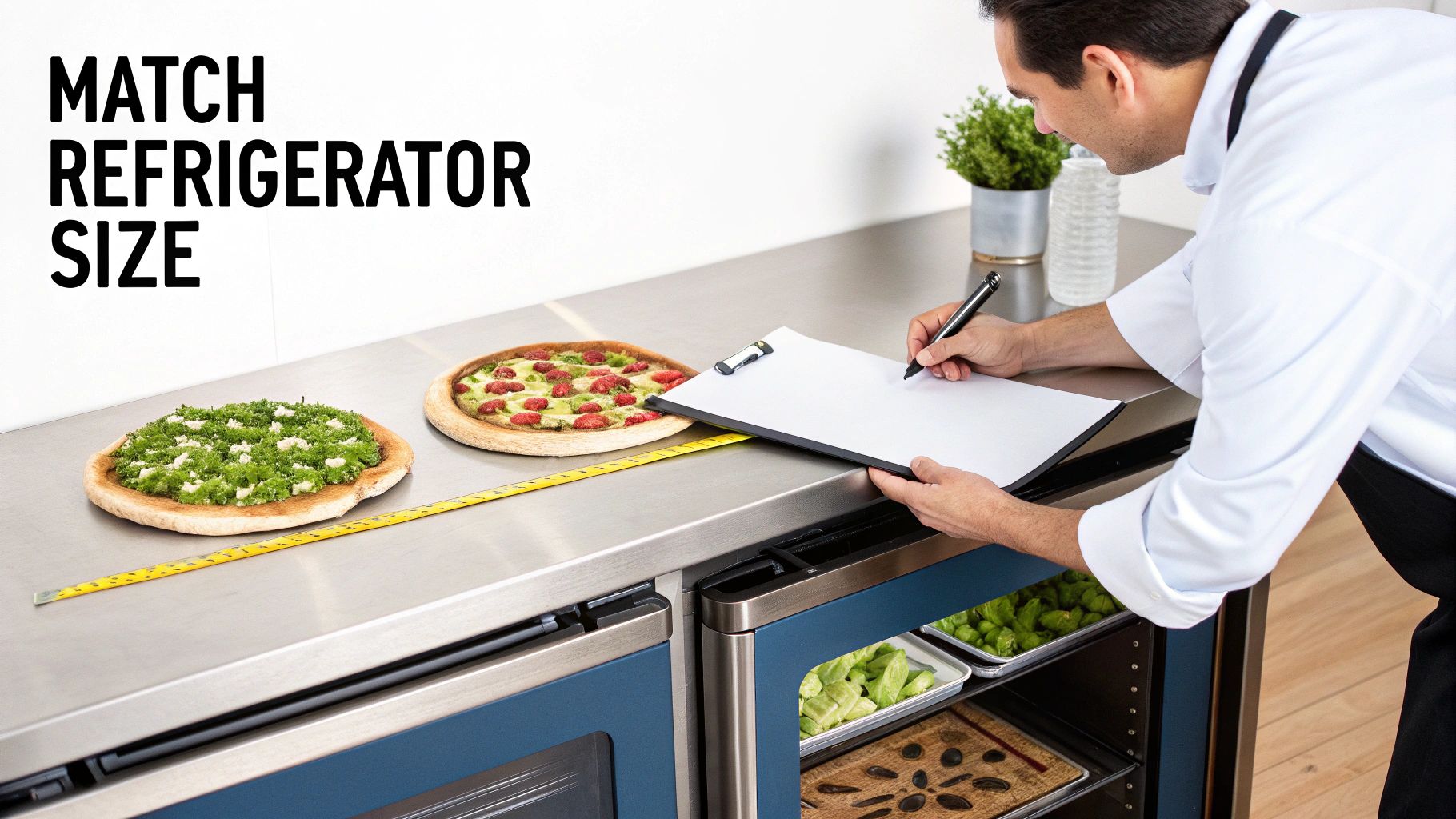
Think of your under-counter refrigerator like a pizza oven: too small, and you'll bottleneck your entire operation during a dinner rush. Too big, and you're just wasting precious floor space and electricity. The perfect unit becomes a seamless extension of your pizza prep table, holding toppings, dough, and sauce exactly where your team needs them, when they need them.
Aligning Width with Pizzeria Output
For a tiny slice shop, a food truck, or a cafe with a limited pizza menu, a compact 27-inch model is a smart, space-saving choice. It gives you just enough cold storage for the day's essentials without crowding your kitchen.
On the other hand, a high-volume pizzeria absolutely needs the muscle of a 48-inch or even a 72-inch pizza prep refrigerator to keep up. These larger models can hold dozens of food pans in the topping rail, which means your pizza makers aren't constantly making trips to the walk-in cooler in the middle of service. This kind of strategic placement is a fundamental part of a smart commercial kitchen layout design.
The goal is to create a seamless flow from refrigeration to preparation on your pizza prep table. The right under-counter refrigerator size eliminates bottlenecks and keeps your pizza line moving, even when orders are piling up.
To make things easier, I've put together a quick-reference table to help you match a refrigerator's size to your pizzeria's needs. Use this as a starting point before we dive deeper into measuring your space and understanding real-world capacity.
Quick Guide to Pizza Prep Refrigerator Sizes
| Refrigerator Width | Typical Capacity (Cu. Ft.) | Best For | Example Use Case |
|---|---|---|---|
| 27-36 inches | 7-9 cu. ft. | Small slice shops, cafes, or food trucks | Storing daily essentials for a limited pizza menu. |
| 44-60 inches | 12-16 cu. ft. | Mid-sized independent pizzerias | Balancing prep space and ingredient storage under a pizza prep table. |
| 72-93 inches | 18-30+ cu. ft. | High-volume pizzerias and chains | Maximum capacity for extensive pizza menus and high output. |
This table gives you a great snapshot, but the real secret is translating these numbers into what they mean for your kitchen. Let's get into the specifics of measuring, ventilation, and how to calculate the capacity you truly need for your pizza prep station.
How to Measure Your Space for a Perfect Fit
Before you even think about which under-counter refrigerator to buy for your pizza prep table, grabbing a tape measure is the single most important thing you can do. One bad measurement can lead to a unit that won’t slide in, blocks your workflow, or burns itself out in six months. Getting this right from the start ensures your new equipment slots into your pizzeria’s rhythm like it was always meant to be there.
And this is about more than just the simple width, height, and depth of the opening. While those three numbers are your foundation, the one thing everyone seems to forget is ventilation—the “breathing room” your fridge’s compressor desperately needs to stay cool and do its job. Skipping this step is a classic, and very expensive, rookie mistake for any pizzeria owner.
Measure the Big Three Dimensions
Let’s start with the basics. Grab a good, sturdy tape measure and get the raw numbers for the space where your new unit will live.
- Width: Measure the opening from left to right. Do it at the top, the middle, and the bottom. Walls and cabinets are rarely perfectly square, so take the smallest of those three numbers. That’s your true maximum width.
- Height: Now measure from the floor to the bottom lip of the countertop. Get a measurement on the left side and the right side. Again, use the smallest number.
- Depth: Measure from the back wall to the very front edge of your cabinetry. Take a few measurements here too and use the shallowest one to make sure the unit doesn't jut out and trip someone during a busy pizza service.
These numbers give you the absolute maximum size of the box you can fit, but don't go shopping just yet. Now for the really crucial part: accounting for the space it needs to breathe. If you want to dig deeper into the numbers, you can learn more about general under counter refrigerator dimensions and how they vary.
Quick pro tip: Always measure the opening itself, not your old fridge. Never assume a new "48-inch model" has the exact same footprint as the one you're replacing. A quarter-inch difference is all it takes for a perfect fit to become a massive headache for your pizza line.
Don't Forget Ventilation and Compliance
Proper airflow is non-negotiable for the health of your refrigerator. Think of it like this: if you can't breathe, you can't work—and neither can your compressor. Thankfully, most commercial under-counter units, especially those used in pizza prep tables, are front-breathing. This means they pull in cool air and push out hot air through a grille right at the front, near the floor. This design is perfect for pizzerias because it allows the unit to be installed nearly flush with the back wall.
But even with a front-breathing model, you absolutely must leave 1-2 inches of clearance at the back and on the sides. This isn't optional. That little bit of space allows heat to escape properly and prevents the compressor from overheating, which is the number one killer of commercial refrigerators and leads to brutal repair bills.
While you're planning, keep these other must-haves in mind:
- NSF Standards: Your health department will demand it. Make sure any pizza prep table you consider is NSF-certified. This is your guarantee that the refrigerator is built for safe food storage in a real commercial kitchen.
- ADA Compliance: If accessibility is a priority in your pizzeria, look for ADA-compliant models. These units are designed with a counter height of 34 inches or less, making them easily accessible for all your employees.
To get a broader perspective on fitting appliances correctly, you can check out this fantastic appliance sizing guide for the right fit. By taking a few extra minutes to measure precisely and plan for these critical clearances, you'll make sure your new pizza prep refrigerator not only fits perfectly but runs like a champ for years to come.
Translating Cubic Feet into Pizza Toppings and Dough Trays
That spec sheet staring back at you can be a real liar. Seeing "12 cubic feet" doesn't tell you a thing about how many bins of shredded mozzarella or trays of proofed pizza dough you can actually cram in there. To understand a pizza prep refrigerator's true value, you have to translate that abstract number into the real language of a pizzeria workflow.
Think of it like this: total cubic feet is the overall size of a walk-in cooler. But what really matters is the usable storage—how many speed racks and ingredient bins you can efficiently organize inside. The real measure of an under-counter refrigerator’s size isn't its volume; it's how well it holds the specific items you use to make pizza every single day.
From Spec Sheets to Topping Rails
Let's take a standard 48-inch pizza prep refrigerator, which typically clocks in around 12 cubic feet. That unit is specifically designed to hold a certain number of 1/3-size food pans along its refrigerated topping rail. This is where the magic happens, giving your pizza makers instant access to pepperoni, mushrooms, and onions without ever taking a step.
Below, in the main cabinet, that same 48-inch unit can usually hold several full-size sheet pans stacked with prepped dough balls. The internal layout is everything. Shelving setups and door styles—drawers versus doors—dramatically change how you can use that space. For a deeper dive on getting your dough trays organized, check out our advice on choosing the right rack for your trays.
This is why just looking at the outside dimensions isn't enough. You have to think in layers.
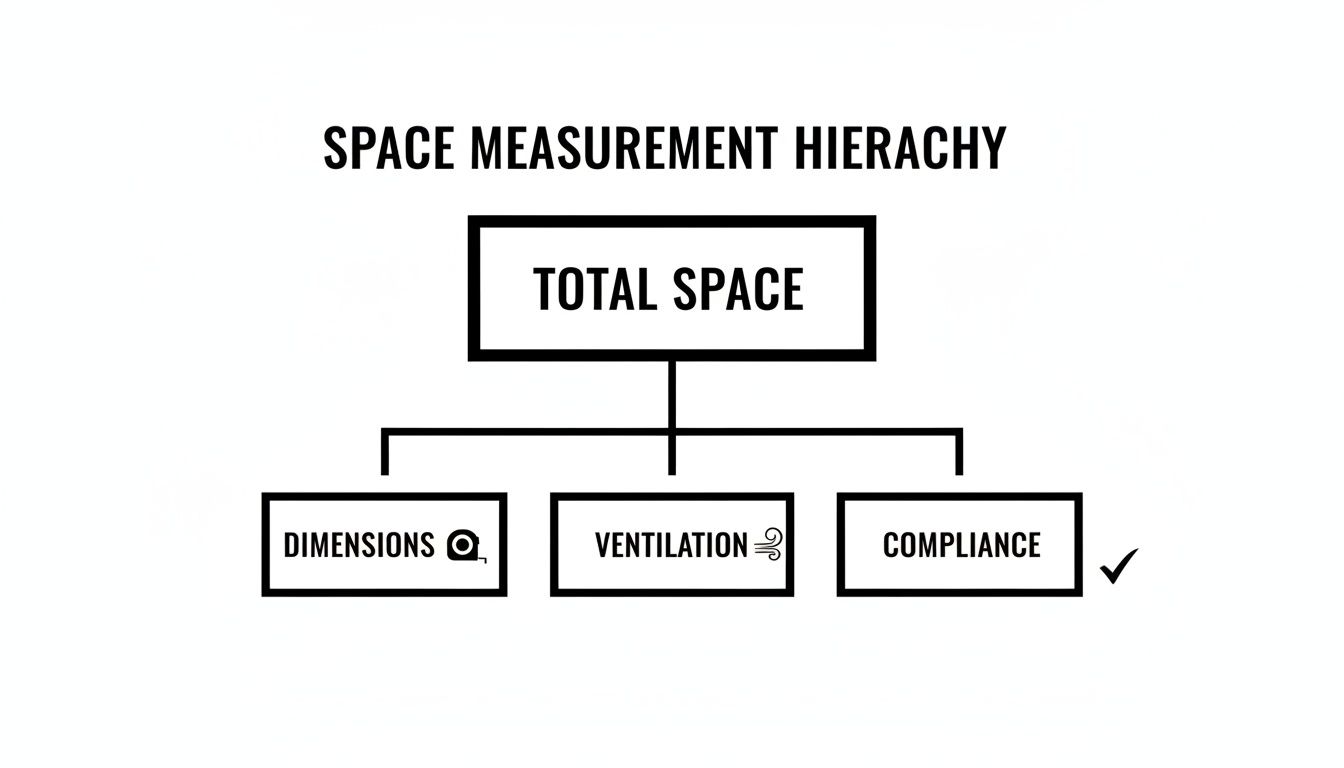
As you can see, picking the right unit involves a hierarchy of needs: the physical footprint, the essential ventilation clearance it requires, and critical safety compliance.
Visualizing Your Daily Pizza Inventory
So, how do you make a smart choice that fits your menu? It's time for a little mental mapping. Start by visualizing your daily pizza inventory inside a potential unit.
- Count Your Topping Pans: How many different toppings are on your menu? Make sure the prep rail can hold a dedicated pan for each one.
- Calculate Dough Storage: Figure out exactly how many pizza dough trays you need chilled and ready to go during a peak Friday night rush.
- Factor in Bulk Items: Don't forget about the backup bags of cheese and buckets of sauce that need a cold home within the main cabinet.
By mentally placing your pizza ingredients inside the unit, you move past abstract numbers and start thinking about practical workflow. The goal is to choose a refrigerator size that actually supports your menu without wasting an inch of precious kitchen real estate.
Industry data shows there's a definite sweet spot for most pizzerias. The most popular pizza prep tables are often between 27 to 48 inches wide. They fit into standard 30-inch counter depths while giving you 12-18 cubic feet of storage—enough to hold 50-100 lbs of cheese and veggies for a busy service. This practical approach ensures you pick a size that truly works for your operation, not just one that looks good on paper.
Finding the Right Fit for Your Pizzeria
A high-volume Italian restaurant and a slice-slinging food truck are two completely different beasts, and their equipment needs to match. Picking the right under-counter refrigerator isn't about grabbing the biggest unit you can find; it's about choosing the perfect tool for your specific pizza kitchen. You wouldn't try to run a 500-pie-a-night operation with a small deck oven, and the same logic applies here—mismatching your refrigeration with your workflow is a recipe for chaos.
When you line up your refrigerator's size with your order volume and how complex your pizza menu is, you're building a smarter, more profitable kitchen. This one decision has a huge impact on how smoothly your pizza prep line runs when you're slammed.
Small-Scale Operations: Food Trucks and Slice Shops
For kitchens where every inch is prime real estate—think food trucks, tiny cafes, or slice shops—the 24 to 27-inch under-counter refrigerators are the undisputed champs. Their smaller footprint saves precious floor space but still gives you enough cold storage to get through the day.
These nimble units are perfect for holding a tight, high-turnover inventory of cheese, sauce, and key pizza toppings right where you need them. They keep the line from getting cluttered and create a more comfortable workspace, which is absolutely critical when you have multiple people working in a tight spot.
The name of the game for smaller pizzerias is getting the most out of a minimal footprint. A compact under-counter fridge ensures your most-used pizza ingredients are always an arm's length away, cutting out wasted steps and speeding up service.
The market data backs this up. The 24-inch segment, for instance, holds the largest market share at over 50%. It strikes that perfect balance, offering 5-8 cubic feet of capacity while fitting neatly into standard counter cutouts. This size is ideal for storing 30-50 lbs of pepperoni and olives without eating up your whole prep area. You can see the full breakdown and learn more about refrigeration market trends from the research published by Datahorizzon Research.
Mid to High-Volume Pizzerias
For a bustling independent pizzeria or a full-service restaurant, the game changes. Here, you're trying to balance having plenty of prep space with some serious ingredient storage. This is where the larger 44 to 72-inch pizza prep tables really shine. These models have enough refrigerated space to power you through a hectic Friday night without someone constantly running back to the walk-in.
When your pizzeria is pumping out hundreds of orders a night, investing in a beast like a 93-inch model can be a smart financial move. These things become the central hub of the pizza prep line, capable of holding dozens of food pans and multiple dough trays at once. They’re built for the long haul and high output, making sure your team has everything they need to keep quality and speed high, even when the pressure is on.
Common Installation Mistakes and How to Avoid Them
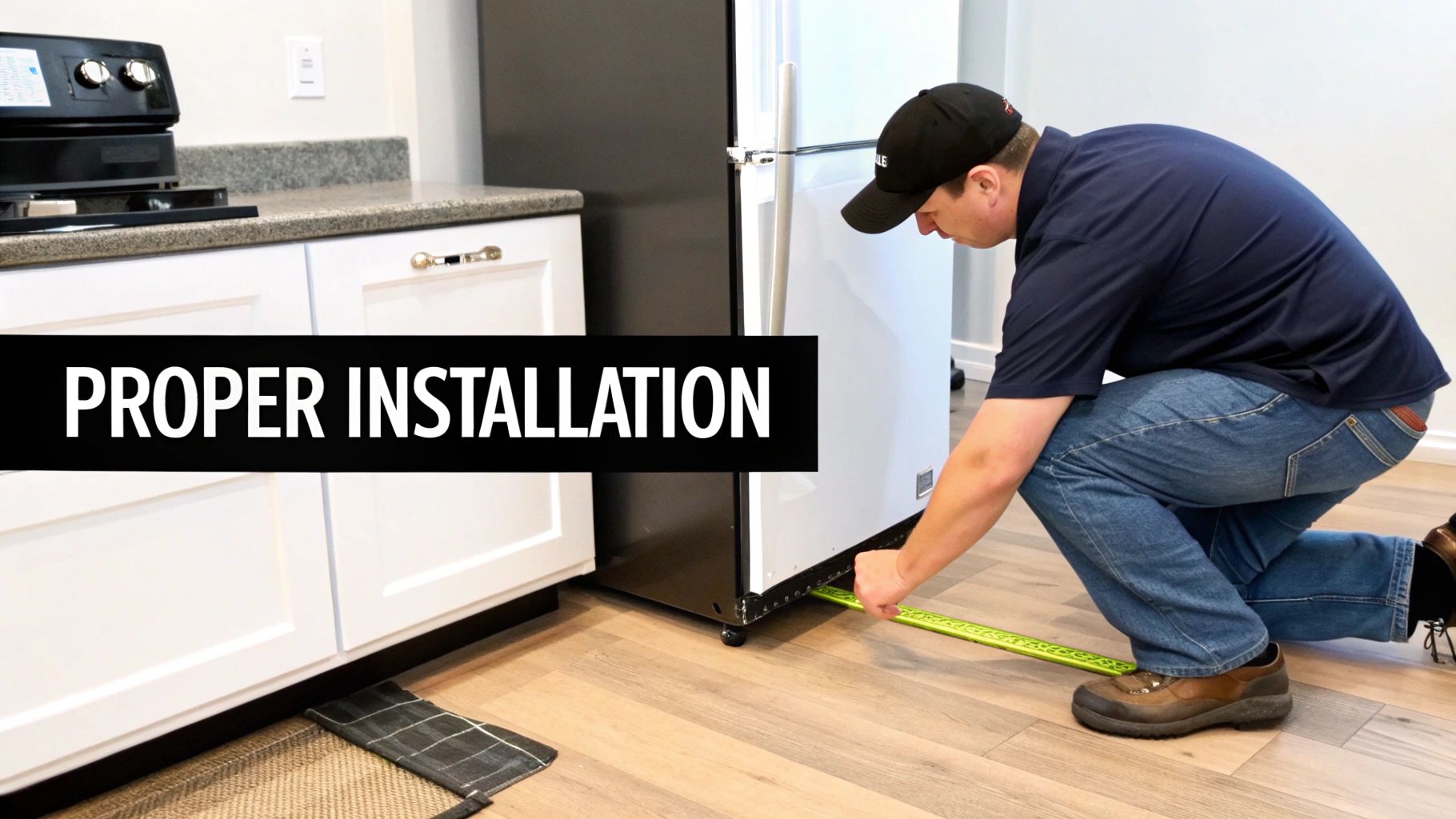
You’ve done the hard work of picking the perfect under-counter refrigerator for your pizza prep station. Now comes the part that can make or break your investment: the installation. A sloppy setup can turn a top-tier unit into an energy-guzzling headache that wears out years before its time and might even void your warranty.
Getting it right from day one is easier than you think. One of the most common—and damaging—mistakes we see is forgetting about ventilation. Think of your refrigerator's compressor like its engine; it has to breathe. Blocking the ventilation grilles is like trying to run a marathon while holding your breath. It's going to overheat and fail, fast.
Location and Leveling
Where you place your unit is just as important as how you install it, especially in a sweltering pizzeria kitchen. A classic rookie mistake is sliding the fridge right next to a pizza oven or deep fryer. This forces the compressor into a constant battle against the heat just to keep your ingredients safe, sending your energy bills through the roof and drastically shortening the unit's lifespan.
A perfectly level refrigerator isn't just a suggestion—it's non-negotiable. If the unit is off-kilter, the doors won't seal properly. That tiny gap becomes a gateway for cold air to escape and warm air to creep in, making temperature control a nightmare for your pizza ingredients.
Grab a level and check the unit from front-to-back and side-to-side. Tweak the adjustable legs until it’s rock solid. This simple five-minute task protects the door hinges, ensures an airtight seal, and saves you a fortune in wasted energy and spoiled toppings.
Power and Airflow Essentials
Another critical detail that often gets missed is the electrical supply. Commercial refrigerators are power-hungry beasts and need their own dedicated circuit. Plugging one into a shared, overloaded outlet isn't just bad for performance; it's a genuine fire hazard.
Most importantly, you have to know how your specific unit breathes:
- Front-Breathing Models: These are the industry standard for pizza prep tables and are designed to be built right into your line. All the air intake and exhaust happens through the front grille, which means it must never, ever be blocked.
- Rear-Breathing Models: These units are different. They need several inches of open space at the back and on the sides for air to circulate, which makes them a poor choice for a snug under-counter spot in a pizza line.
Getting the installation right is crucial, especially since the commercial undercounter market is booming. Most pizzerias opt for popular 44-72 inch widths that fit perfectly into standard pizza prep stations. Ensuring these workhorses are installed correctly is the key to keeping up with demand. You can learn more about the growth of the commercial undercounter market from Credence Research.
Even seasoned pros can miss a step during a hectic installation. We've put together a quick guide to the most frequent slip-ups and how to get them right.
Common Pizza Prep Table Installation Mistakes and How to Fix Them
This table outlines frequent installation errors for undercounter refrigerators and provides simple, actionable solutions to ensure optimal performance and longevity.
| Common Pitfall | Why It's a Problem | The Correct Approach |
|---|---|---|
| Blocking Ventilation Grilles | The compressor can't dissipate heat, causing it to overheat, work harder, and fail prematurely. Energy costs skyrocket. | Ensure nothing obstructs the front, back, or side grilles (depending on model). Treat this space as a "no-go" zone for boxes or other equipment. |
| Placing Near Pizza Ovens | Ovens, fryers, or even direct sunlight force the unit to run constantly to maintain temperature, leading to high energy bills and component wear. | Install the refrigerator as far away from high-heat equipment as your kitchen layout allows. |
| Skipping the Leveling Step | An unleveled unit causes doors to sag and gaskets to seal improperly. Cold air escapes, and the compressor runs overtime to compensate. | Use a carpenter's level to check the unit side-to-side and front-to-back. Adjust the feet until the bubble is perfectly centered. |
| Using an Extension Cord | Extension cords can't handle the high, continuous power draw of a commercial fridge, creating a fire risk and causing voltage drops that harm the compressor. | Always plug the unit directly into a dedicated wall outlet that matches the NEMA plug type specified by the manufacturer. |
| Ignoring Airflow Type | Installing a rear-breathing unit flush against a wall will suffocate the compressor. Installing a front-breathing unit with a blocked grille does the same. | Check the spec sheet before installation to confirm if the unit is front- or rear-breathing and provide the required clearance. |
Taking a few extra minutes to avoid these pitfalls during setup will pay you back with years of reliable, efficient service from your under-counter refrigerator.
Alright, we’ve covered a lot of ground together, from breaking out the tape measure in your pizzeria to figuring out what "cubic feet" actually means in terms of mozzarella and pepperoni. Now it's time to put it all together and pick the right under-counter refrigerator for your shop.
It really all boils down to one simple idea.
The best under counter refrigerator size is the one that fits into your pizzeria’s daily rhythm like a missing puzzle piece. It has to support your menu and handle your busiest nights without breaking a sweat.
Don't think of this as just buying another box that keeps things cold. This is a strategic move for your pizzeria's future.
This Isn't Just a Fridge, It's Your Pizza Prep Workflow
Choosing a unit that puts all your essential pizza ingredients right where your team needs them is a total game-changer. Imagine your pizza makers grabbing dough trays, sauce, and toppings without ever taking more than a step or two, even when the dinner rush hits hard. That kind of smooth operation is what separates the pros from the amateurs.
A well-chosen under-counter unit directly helps your bottom line by:
- Slashing pizza prep times because everything is right there, within arm's reach.
- Guaranteeing food safety and freshness with rock-solid, consistent cooling for your toppings.
- Cutting down on staff burnout by eliminating dozens of unnecessary trips to the walk-in cooler every shift.
Here’s the bottom line: The right refrigerator isn’t just about storage. It’s about creating a smart, ergonomic pizza prep station that helps your crew make amazing pizza, shift after shift, even on those nights when the tickets just don’t stop coming.
You're Ready to Make the Right Call
By taking a hard look at your menu, your order volume, and your kitchen’s layout, you can find a model that will feel less like a piece of equipment and more like a trusted member of your team. You’ve got the knowledge now to see past the basic dimensions on a spec sheet.
You're ready to choose an under-counter refrigerator that will be the workhorse of your pizza prep table and support your pizzeria's growth for years to come.
Final Questions Answered
When you get down to the final details of picking an under-counter refrigerator, a few last-minute questions always pop up. I've heard them all from pizzeria owners over the years, so let's get you some straight answers to clear up any confusion and help you buy with total confidence.
What Is the Best Starter Size for a New Pizzeria?
If you're just starting out, the 48-inch under-counter refrigerator is almost always the right call. Think of it as the perfect middle ground—big enough to handle your daily prep but not so large that it eats up precious floor space.
Most new pizzerias find that a 48-inch model, which gives you about 12-15 cubic feet of storage, is the sweet spot. It's plenty of room for your day's worth of cheese, sauce, and toppings. Better yet, it slides perfectly under a matching 48-inch pizza prep table, creating a single, hyper-efficient workstation. It's a smart, versatile choice that lets you grow without the bigger energy bill of a 60-inch or 72-inch unit.
Do Pizza Prep Refrigerators Need Special Ventilation?
Yes, and this is non-negotiable. Ventilation is absolutely critical. The good news is that most commercial under-counter refrigerators designed for pizza prep tables are front-breathing, which means all the air intake and exhaust happens through the grille at the bottom front of the unit.
Because of this design, you can install them snug against a back wall and right next to other equipment. But here's the golden rule: you can never, ever block that front grille. Make sure there is always clear space in front of it for air to move. For the less common rear-breathing models, you'll need to leave a few inches of breathing room at the back and sides.
Blocked vents force the compressor to work overtime, fighting to stay cool. This is a fast track to higher energy bills, poor performance, and eventually, a total system failure. It's one of the costliest—and most preventable—mistakes you can make with your pizza prep table.
If you ever find your unit isn't cooling right after installation, check out this guide on how to fix refrigerator not cooling for some great troubleshooting tips.
How Many Food Pans Can a 60-Inch Unit Hold?
A 60-inch pizza prep refrigerator is a true workhorse, built for busy pizzerias. With a typical capacity of 15-20 cubic feet, it holds a serious amount of ingredients.
While the exact internal layout will vary by manufacturer, here's what you can generally expect. The pizza prep table that sits on top of it will usually hold 16 to 20 standard 1/6-size food pans in the refrigerated rail—perfect for a wide variety of toppings. Inside the cabinet itself, you can typically fit 8-10 full-size (18"x26") sheet pans or a mix of 1/3, 1/2, and full-size hotel pans. Always double-check the spec sheet for the exact pan capacity before you buy.
At Pizza Prep Table, we know that the right equipment isn't just a purchase—it's the foundation of a great pizzeria. We've helped countless owners find the perfect gear to streamline their kitchens. Explore our collection of under-counter refrigerators and pizza prep tables designed for real-world workflows at https://pizzapreptable.com.