

A Pizzeria Owner's Guide to Commercial Deep Freezers
Every great pizza starts with top-notch ingredients, and a commercial deep freezer is the unsung hero that keeps them that way. Think of it as your kitchen’s time capsule, locking in the peak flavor of your cheese, the zesty bite of pepperoni, and the perfect texture of your dough balls.
Why Your Freezer Is the Heart of Your Pizzeria
It’s easy to see your commercial freezer as just a cold box, but it's so much more. It's the central hub of your kitchen's workflow, the engine that pumps life into your daily operations and ensures every pizza you serve is consistently delicious. A well-chosen freezer, working in sync with your pizza prep table, becomes a cornerstone of efficiency, profitability, and food safety.
This guide is all about showing you how the right freezer directly impacts your bottom line by slashing food waste and empowering your team. With a solid cold storage strategy, you can stare down the busiest dinner rush with total confidence.
The Foundation of an Efficient Workflow
The relationship between your freezer and your pizza prep table is everything. A smart kitchen layout minimizes the steps your team takes between grabbing frozen ingredients and assembling pies. When you place your freezer strategically, you create a smooth, logical flow that shaves precious seconds off every single order.
This is the kind of synergy that separates a chaotic pizzeria from a high-performing one. When your team can quickly access perfectly preserved ingredients, ticket times drop, and customer satisfaction soars. Your freezer isn't just passive storage; it's an active player in your production line.
Protecting Flavor and Ensuring Safety
At its core, a commercial freezer has two main jobs: locking in flavor and guaranteeing food safety. For a pizzeria, this means keeping ingredients like mozzarella, pepperoni, and fresh dough at their absolute best, day in and day out.
A high-quality freezer is a vault for your inventory. It locks in the texture and taste of your ingredients, preventing the dreaded crystallization and freezer burn that can ruin an otherwise perfect pizza. This commitment to quality is what builds a loyal customer base that keeps coming back.
This incredible reliability has made these units a dominant force in the food service industry. In fact, commercial deep freezers pull in over 60% of total revenue in the global refrigeration market, which tells you just how critical they are for businesses like yours. For independent pizzeria owners, this just reinforces how important it is to invest in trusted units that integrate perfectly with your pizza prep tables. To get a better handle on this trend, you can find more insights on the commercial refrigeration market from International Coolers.
This guide will help you sort through the options and pick the ideal model, ensuring your freezer becomes the most valuable player in your kitchen's lineup.
Choosing Your Pizzeria's Freezer Champion
Let's be honest, not every commercial deep freezer is built to survive the relentless pace of a busy pizzeria. Picking the right one isn't about finding a single "perfect" unit; it's about building a strategic team of cold storage champs. Each type of freezer plays a specific role, and getting the mix right creates a seamless workflow that feeds directly to your pizza prep table.
Think of your freezer setup as the internal supply chain for your entire pizzeria. Nail this, and you’ll see faster ticket times, less food waste, and a much calmer team when the dinner rush hits.
The Filing Cabinet: Upright Freezers
Upright freezers are the undisputed kings of organization. With their vertical shelves and front-opening doors, they function just like a well-organized filing cabinet for your ingredients. This design is perfect for categorized items that your pizza crew needs to find and grab in a hurry.
Imagine your toppings—pepperoni, mushrooms, olives, and bags of shredded mozzarella—all neatly lined up on their own easy-to-see shelves. That immediate visibility is a game-changer for quick inventory checks and cuts down on the time your staff spends hunting for something, keeping the pizza prep line moving without a single hiccup.
- Best For: Storing categorized, frequently used items like cheese, toppings, and sauces.
- Workflow Synergy: Place it near your pizza prep table so your team can quickly grab specific ingredients during assembly.
- Key Advantage: Fantastic organization and visibility. Inventory checks become simple and fast.
The Treasure Chest: Chest Freezers
While uprights are all about organization, chest freezers are your workhorses for bulk storage. Picture a treasure chest packed with your most valuable, long-term pizza ingredients. Their deep, open design is tailor-made for storing large, awkwardly shaped items you don't need to access every five minutes.
This is where you stash your bulk inventory—cases of frozen dough balls, big bags of flour, or boxes of chicken wings. Because cold air is dense and sinks, chest freezers lose very little chill when you open the lid. This makes them incredibly energy-efficient for long-term storage. In fact, research shows chest freezers are often 40-45% more energy-efficient than their upright cousins, a significant saving for any pizzeria.
The following diagram really drives home how the right freezer choice supports the core of a successful pizzeria.
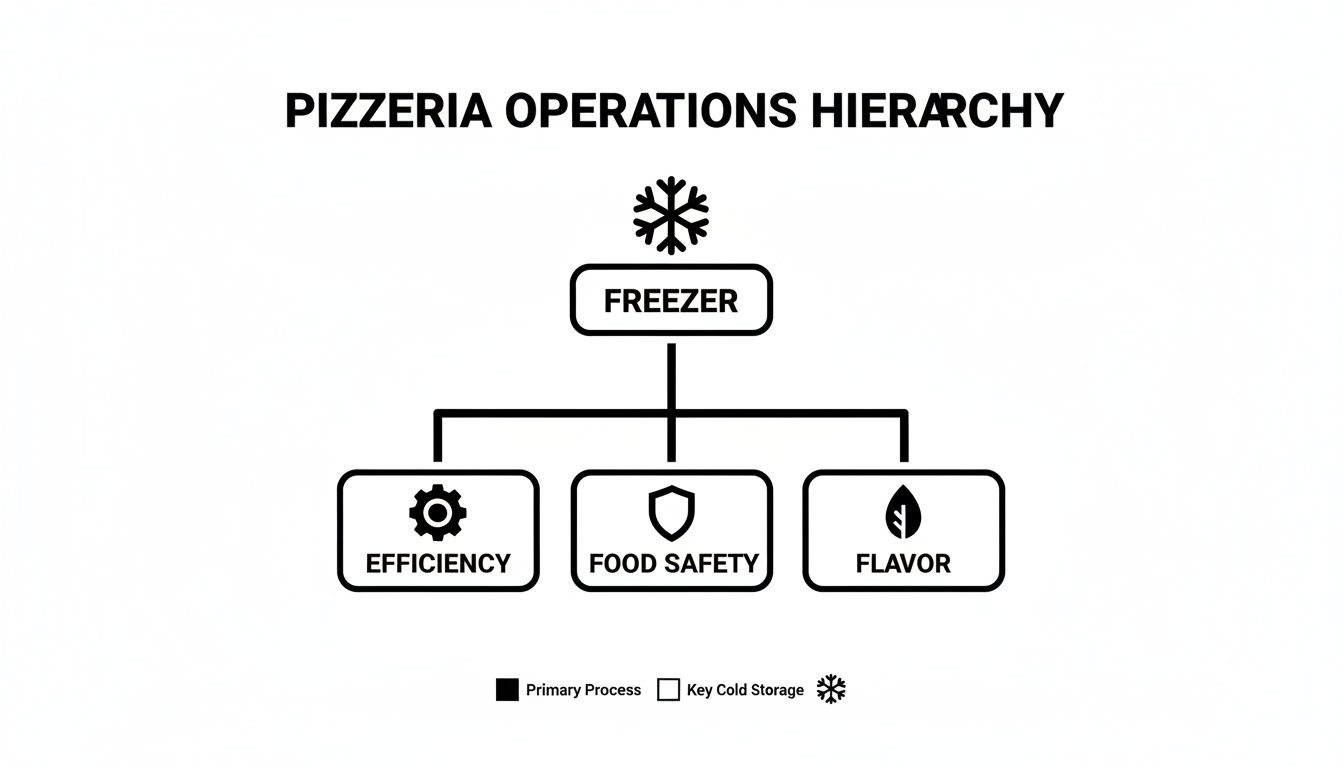
This hierarchy shows your freezer isn't just a cold box; it's the foundation for kitchen efficiency, rock-solid food safety, and ultimately, the amazing flavor your customers keep coming back for.
The Prep Line Pantry: Reach-In Freezers
Finally, let's talk about the reach-in freezer. This is the immediate pantry for your active pizza prep line. Usually designed as undercounter or countertop units, these commercial deep freezers are built for pure, instant access. They're the final link in your cold chain, holding just the ingredients you'll be using in the next few hours.
A reach-in freezer tucked directly into or beside a pizza prep table creates a powerful, self-contained workstation. It completely eliminates wasted steps, letting a pizza maker turn, grab, and assemble without ever leaving their post.
This model is all about maximizing ergonomic efficiency. By keeping a curated selection of your most-used pizza ingredients perfectly chilled and within arm's reach, you empower your team to work faster and smarter. We dive deeper into this concept of strategic freezer use in our guide to commercial kitchen freezers, which has more detail on optimizing your layout. And don't feel limited to traditional models; exploring different options like refrigerated food lockers can open up new ways to organize and store specialized items.
At the end of the day, the most effective pizzerias don't just pick one type; they build a hybrid system. They might use a massive chest freezer in the back for bulk dough and meats, a well-organized upright for weekly toppings, and a few compact reach-in units right on the pizza prep table for the Friday night rush. This multi-freezer strategy ensures every ingredient is stored exactly right for its role in your pizzeria's success.
Sizing Your Freezer for Dough and Future Growth
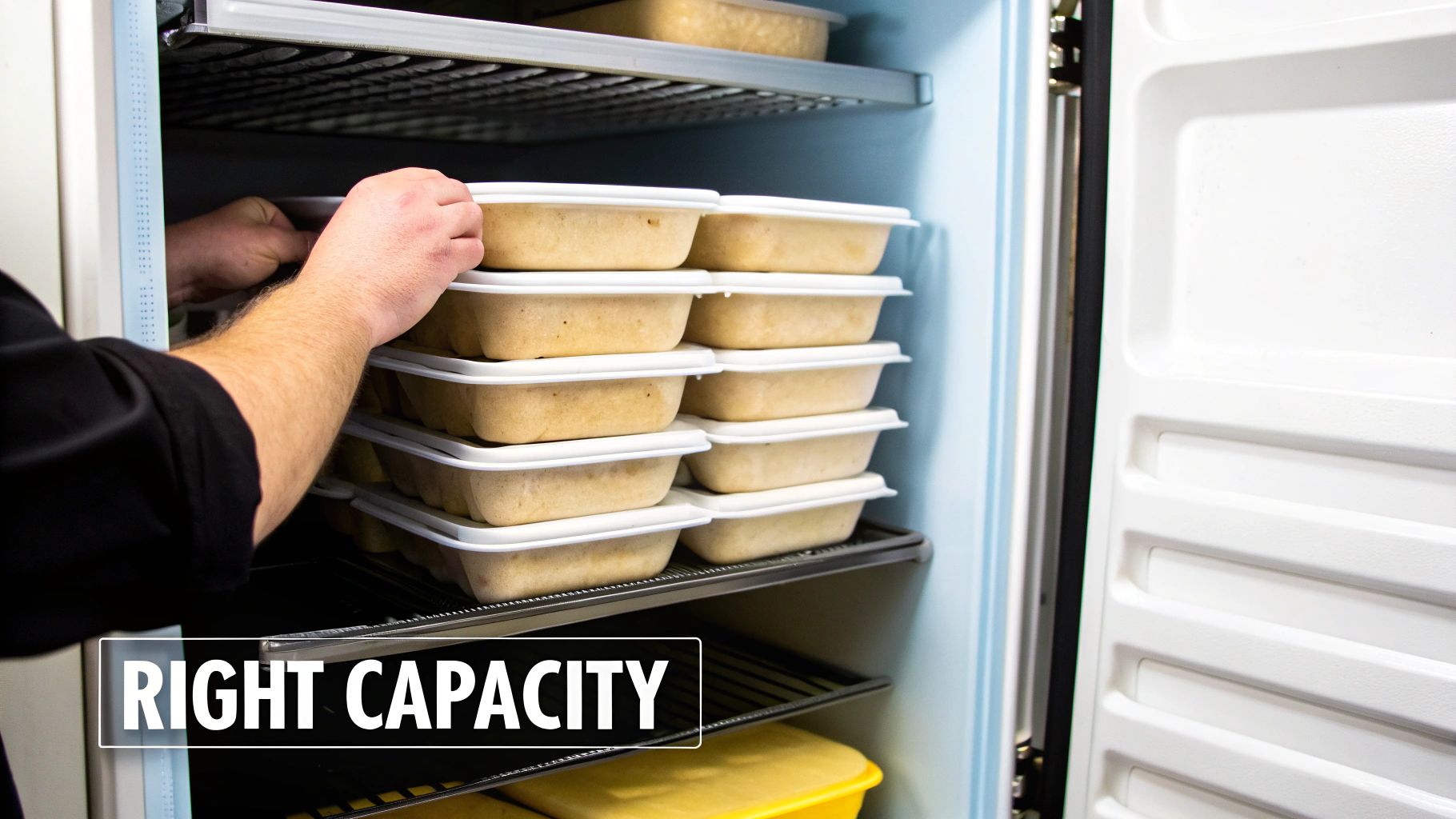
Picking the right size for your commercial deep freezer is one of the most critical decisions you’ll make for your pizzeria. This isn't just about finding a unit that fits into a corner of your kitchen; it's a strategic investment that has to balance what you need today with where you want to be tomorrow. Think of it less like buying an appliance and more like mapping out your pizzeria's capacity for success.
A freezer that’s too small will have you placing frequent, expensive ingredient orders and will create absolute chaos during your busy season. On the flip side, a unit that’s way too big is a waste of precious floor space and will quietly drive up your energy bills for no good reason. The goal is to find that sweet spot—a freezer that easily handles your current volume but gives you enough breathing room to scale up.
Translate Cubic Feet into Pizza Reality
Forget about abstract specs like "cubic feet." For a pizzeria owner, that number means nothing until you translate it into the real world. You need to ask practical questions that matter to your daily grind:
- Dough Trays: How many of my full-size dough trays can this thing actually hold without crushing them?
- Cheese Blocks: How many 20-pound cases of mozzarella can I stack in there?
- Topping Cases: Will this fit a full week's worth of pepperoni, sausage, and vegetable cases?
This simple shift in thinking takes you from a generic spec sheet to your actual operational needs. It directly connects the freezer's capacity to your menu and sales volume, making sure your equipment is a tool that helps your pizza prep table workflow, not a roadblock.
Calculating Your Ideal Freezer Capacity
To nail down your ideal size, you need a simple framework built around your pizzeria’s unique rhythm. Start by looking at your weekly ingredient orders, paying close attention to your high-volume frozen goods like dough and cheese. Then, build in a buffer for those peak seasons—think holidays or big game nights—when sales can easily jump by 20-30%.
Your goal is to find a capacity that allows you to buy ingredients in economical bulk quantities without overstuffing your unit. A well-sized freezer lets you take advantage of supplier discounts, reducing your cost per pizza and boosting your profit margins.
Think about how your freezer will work with your pizza prep table, too. A small undercounter freezer might be perfect for holding a day's worth of toppings right on the line, but it’s not going to handle your main inventory. For that, you’ll need a larger upright or chest freezer in your primary storage area. And for high-volume shops, a walk-in freezer is often the most logical next step.
The market for these larger units is blowing up as pizzerias expand. Walk-in deep freezers and coolers are seeing massive investment, with the global market expected to rocket from USD 12.67 billion in 2021 to a projected USD 20.22 billion by 2028. For ambitious pizzeria owners, these huge units are lifesavers, offering incredible capacity for bulk ingredients. You can dig into the numbers yourself in the walk-in coolers and freezers market report from Fortune Business Insights.
At the end of the day, your commercial deep freezer is an investment in your future. By choosing a size that supports both your current needs and your plans for growth, you're building a foundation for long-term success. You're making sure your equipment fuels your vision instead of holding it back.
Mastering Food Safety and NSF Standards
For any pizzeria owner, your commercial deep freezer is more than just a box that keeps things cold. It’s the gatekeeper of your food safety, the guardian of your ingredient quality, and the first line of defense against spoilage and waste. Get this part right, and every pizza that comes out of your oven starts with a foundation of perfectly preserved, safe ingredients.
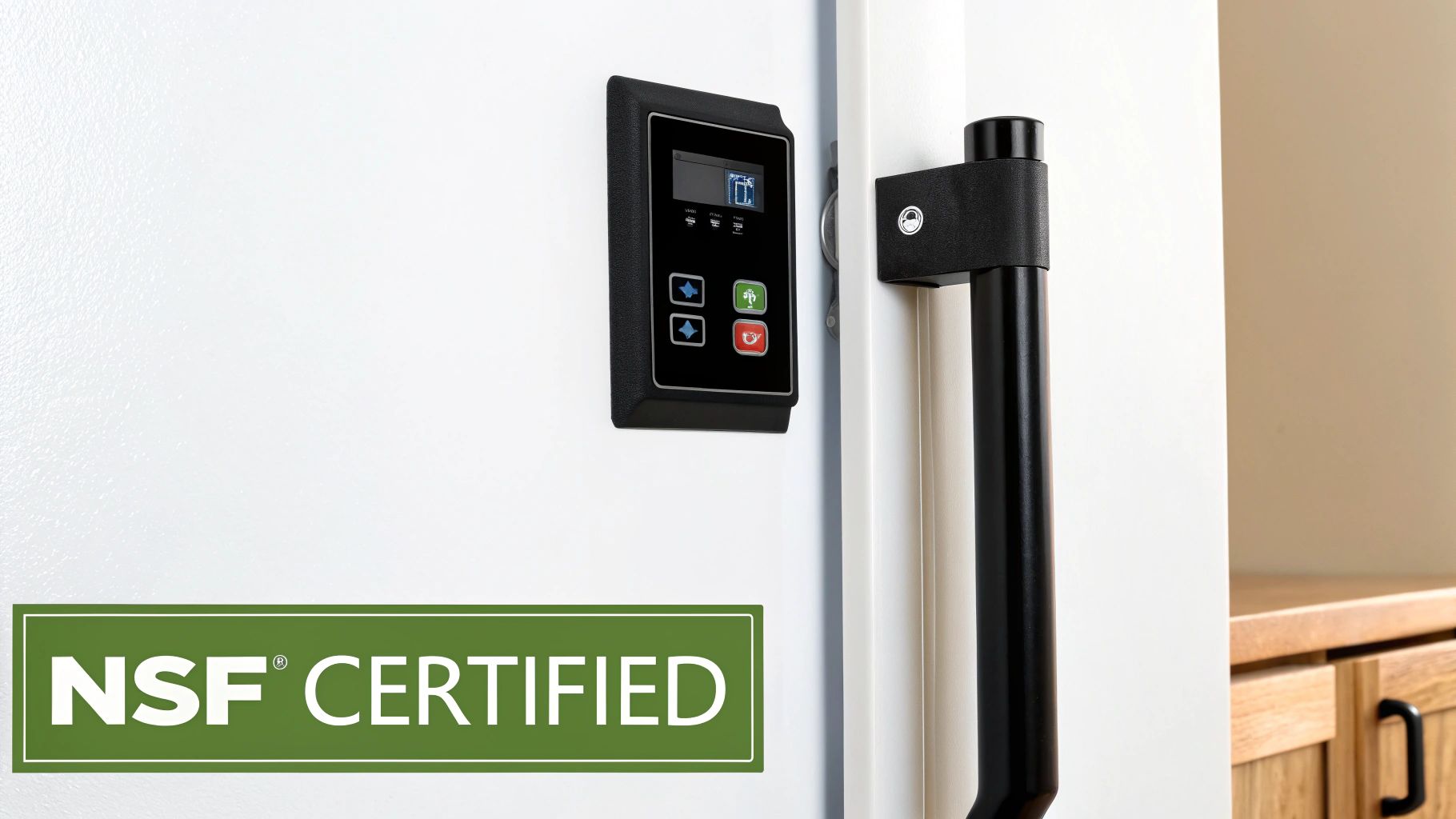
The first thing to look for is the NSF (National Sanitation Foundation) seal. Don't mistake this for just another sticker. This seal is your guarantee that the freezer was built for the grind of a professional kitchen. An NSF-certified unit means it's made from materials that are a breeze to clean, tough against corrosion, and designed to stop harmful bacteria from finding a place to hide. Simply put, it's built to pass a health inspection right out of the box.
Why Consistent Temperature Is Everything
Holding a steady, correct temperature is your freezer's number one job. A minor swing can ruin the texture of your dough, cause nasty ice crystals to form on your cheese, and turn your toppings into a breeding ground for bacteria. We all know about the food "danger zone"—that dreaded range between 40°F and 140°F where bacteria throw a party.
Your freezer’s mission is to keep your ingredients far, far away from that party, ideally at a rock-solid 0°F (-18°C) or even colder. At that temperature, bacterial growth screeches to a halt, protecting both your pizza inventory and your customers. Thankfully, modern freezers come packed with features to make this happen without you losing sleep.
- Digital Thermostats: These give you pinpoint accuracy. You can set and monitor the temperature with a precision that old-school analog dials just can't touch.
- High-Temperature Alarms: If the internal temperature ever creeps up into unsafe territory, a loud alarm will let your team know. This single feature can save you from losing thousands of dollars in spoiled pizza ingredients.
- Auto-Defrost Cycles: This isn't a luxury; it's a necessity. It prevents thick ice from building up, which can mess with temperature consistency by making the compressor work overtime.
These features are your core tools for delivering quality. For a deeper look into the science behind it, our guide on temperature control for food safety lays out more best practices for your entire pizzeria.
Pizza Ingredient Freezer Storage Guide
Knowing the right temperature is one thing, but understanding how long your key pizza ingredients can be stored is just as crucial for maintaining that fresh-made taste. This table is a quick cheat sheet for your walk-in.
| Ingredient | Ideal Temperature (°F/°C) | Maximum Storage Time | Critical Safety Note |
|---|---|---|---|
| Pizza Dough Balls | 0°F (-18°C) or below | 2-3 months | Thaw under refrigeration, never at room temperature, to prevent bacteria growth. |
| Shredded Cheese | 0°F (-18°C) | 4-6 months | Keep tightly sealed to prevent freezer burn and absorbing odors. |
| Pepperoni/Sausage | 0°F (-18°C) or below | 2-3 months | Vacuum sealing extends life and preserves flavor. |
| Tomato Sauce | 0°F (-18°C) | 6 months | Freeze in flat bags or small batches for faster thawing and portion control. |
| Vegetables (Prepped) | 0°F (-18°C) | 8-12 months | Blanch high-water content vegetables (e.g., peppers) before freezing to maintain texture. |
Using these guidelines helps you rotate stock effectively, reduce waste, and ensure every pizza tastes as good as the last one.
The Rise of Specialized Freezing Technology
Beyond just storing frozen goods, some incredible technology is changing how pizzerias handle high-volume prep. I’m talking about blast freezers—specialized units designed to cool ingredients at lightning speed. This isn't a small trend; the market is set to jump from USD 857.2 million in 2025 to USD 1,305.9 million by 2035.
These machines are true game-changers. They can flash-freeze dozens of dough balls, batches of sauce, or prepped toppings in a matter of minutes. This rapid process preserves texture and flavor in a way that slow, traditional freezing just can't match. As detailed in a market analysis from Future Market Insights, these freezers are becoming essential for meeting modern food safety standards like HACCP.
Think of it this way: a standard freezer is great at keeping things frozen. A blast freezer is designed to create perfectly frozen products from fresh ingredients. This lets you prep massive batches of dough during a slow Tuesday afternoon, locking in that just-made freshness for the insane weekend rush.
Ultimately, mastering food safety is about having the right gear and the right habits. When you invest in an NSF-certified freezer with modern temperature controls, you're not just buying an appliance. You're buying consistency, quality, and the confidence that every ingredient you pull for your pizza prep table is safe, delicious, and ready to go.
Understanding the True Cost of Ownership
The sticker price on a commercial deep freezer is just the opening act. It’s easy to get fixated on that number, but to really understand the financial impact on your pizzeria, you have to look at the total cost of ownership. This is a much bigger picture that includes long-term expenses like your monthly energy bill and routine maintenance.
Ignoring these factors is like buying a car without thinking about its gas mileage or oil changes. Any savings you score upfront can get completely wiped out by high running costs down the road. An inefficient freezer becomes a silent partner that just quietly drains your pizzeria's profits, month after month.
Decoding Energy Efficiency for Your Pizzeria
When it comes to your utility bills, the ENERGY STAR rating is your best friend. That little blue label is a straightforward signal that a commercial freezer meets strict energy performance standards set by the U.S. Environmental Protection Agency.
Choosing an ENERGY STAR certified model is one of the easiest wins you can get for lowering your pizzeria's operational costs from day one. These units are built smarter, with better insulation, more efficient compressors, and advanced parts that cut down on energy waste. On average, an ENERGY STAR certified commercial freezer is about 20% more efficient than a standard model, which translates directly into real savings on your electricity bill. For a deeper dive, check out our article on energy-efficient commercial refrigeration.
The principle of smart, long-term savings applies to all your kitchen gear. Other business owners are constantly thinking about reducing energy costs with efficient equipment choices, and it’s a mindset that pays off big time.
The Hidden Costs of Poor Maintenance
Let's be clear: proactive maintenance isn't an expense. It's an investment in keeping your pizzeria running. A neglected freezer is a ticking time bomb that’s just waiting to go off during your Friday night rush, leading to spoiled pizza ingredients and lost sales. A simple, consistent maintenance routine is what keeps that from happening.
A well-maintained freezer uses less energy and is far less likely to fail. Think of it as insurance for your inventory and your peace of mind—a small time commitment that protects you from a much larger financial headache down the road.
Your Pizzeria Freezer Maintenance Checklist
Here is a straightforward, no-fluff checklist designed for busy pizzeria owners. Spending a few minutes on these tasks will keep your freezer running like a champ.
-
Clean Condenser Coils (Monthly): The condenser coils are like the radiator in a car; they get rid of heat. When they get clogged with dust, grease, and flour, the compressor has to work way harder, jacking up your energy bill. A quick brush or vacuum once a month is all it takes.
-
Inspect Door Gaskets (Monthly): Check the rubber seals around the freezer door for cracks or tears. A leaky gasket lets cold air escape, forcing the unit to run constantly to keep up. Here's a quick test: close the door on a dollar bill. If it slides out easily, it’s time for a new gasket.
-
Check and Clear Vents (Weekly): Make sure interior air vents aren't blocked by boxes of cheese or trays of dough. Good airflow is critical for keeping the temperature even throughout the freezer and preventing warm spots.
-
Monitor for Ice Buildup (Weekly): If you have a manual-defrost model, don't let ice build up more than a quarter-inch thick. Too much ice acts like an insulator, making the freezer work harder than it needs to.
By building these simple steps into your routine, you turn your freezer from a potential liability into a reliable, cost-effective workhorse that supports your pizzeria’s success.
Making a Smart Freezer Investment
Outfitting your pizzeria is a serious financial commitment, and your commercial deep freezer is a cornerstone of that investment. The initial price tag is just the start of the story. The real goal is to lock in a reliable, cost-effective unit that will be a workhorse for your business for years. This means looking beyond the sticker price to make a strategic decision, balancing what you pay today with the value you get tomorrow.
Whether you're building a pizzeria from scratch or upgrading what you've got, you're looking at two main paths: buying a new freezer or going with a used one. Each has its own set of pros and cons, and the right call really boils down to your budget, how much risk you're comfortable with, and your day-to-day operational needs.
New vs. Used Commercial Deep Freezers
Let's be honest, a brand-new freezer offers the ultimate peace of mind. It arrives with a full manufacturer's warranty, the latest energy-efficiency tech, and the simple assurance that you're its first and only owner. This is hands-down the safest, most reliable route, protecting you from surprise repair bills right when you can least afford them.
On the flip side, a used commercial deep freezer can mean serious upfront savings, freeing up cash for other critical gear like your pizza prep table. This path, however, requires you to put on your detective hat. A pre-owned unit comes with a history, and it’s your job to uncover it.
When you're inspecting a used freezer, get meticulous. Check the door gaskets for cracks or wear. Listen for any weird noises from the compressor. Look for excessive ice buildup—that’s often a red flag for a hidden issue. Always ask for the unit's age and service history; a freezer that's over 10-15 years old might gobble up more in energy bills than a new model, completely wiping out those initial savings.
Understanding Warranties and Coverage
If you decide to buy new, the warranty is your single most important safety net. Don't just glance at how long it lasts; get into the fine print to see exactly what’s covered. A solid warranty will have separate coverage for different components.
- Parts and Labor: This is the big one. It covers the cost of replacement parts and the technician's time to install them, usually for 1-3 years.
- Compressor: The compressor is the heart of your freezer, and it's the most expensive part to replace. Good manufacturers often offer a longer, separate warranty on it, typically for 5 years or more.
A comprehensive warranty that covers both parts and labor, with that extra protection for the compressor, is a great sign. It tells you the brand stands behind its product and builds it to last.
Financing and Leasing Your Equipment
The high cost of a top-tier commercial deep freezer shouldn't lock new pizzerias out of the market. Smart financing options make premium equipment more accessible than you might think, letting you get the quality you need without torching your startup capital.
Lease-to-own programs are incredibly popular for pizzerias. These plans let you make manageable monthly payments over a set period, with the option to own the equipment when the term is up. This approach keeps your cash flow healthy for things like inventory and marketing, while ensuring you have a reliable, energy-efficient freezer that won’t quit on you during a Friday night rush. By exploring these options, you can equip your pizzeria intelligently, making sure your financial strategy is as solid as your pizza recipe.
Answering Your Pizzeria Freezer Questions
When you're running a pizzeria, your freezer isn't just a cold box—it's the bank vault for your most valuable ingredients. Getting the details right on choosing and maintaining it can make a huge difference in your kitchen's flow, from the pizza prep table all the way to the oven. Let's tackle some of the most common questions I hear from owners to help you master your cold storage.
How Often Should I Defrost My Freezer?
This really comes down to the model you own. Thankfully, many modern commercial freezers have an auto-defrost cycle that handles ice buildup on its own. It's a lifesaver in a busy pizzeria because you never have to think about it.
If you have a manual defrost unit, the rule of thumb is simple: act when the ice gets to be about a quarter-inch thick. Any more than that, and you're just throwing money away. The compressor has to work overtime to fight through that layer of ice, which skyrockets your energy bill and can even risk the consistent temperatures you need for food safety. Always pull out the manufacturer's manual for their specific advice—it’s the best way to keep your freezer running like a champ.
What Is the Best Way to Organize a Freezer for a Pizza Prep Line?
Smart organization is the secret ingredient for speed and efficiency. The absolute non-negotiable here is the "First-In, First-Out" (FIFO) system. It sounds simple, but you'd be surprised how many pizzerias don't do it. New stuff goes to the back, and your team always pulls from the front. This one habit alone will dramatically cut down on food waste.
To really get your pizza prep line humming, use clear, labeled, and stackable containers for everything—toppings, blocks of cheese, sauces. It makes taking inventory a quick glance instead of a treasure hunt.
For an upright freezer, think like a librarian. Give every ingredient category its own shelf. Maybe cheese goes on top, meats in the middle, and dough boxes on the bottom. A system like this means your team can open the door, grab what they need in seconds, and get back to making pizzas. Less open-door time means more stable temps and a happier compressor.
Can I Place My Freezer Right Next to My Pizza Oven?
Please, don't do this. Placing a commercial freezer next to a major heat source like a pizza oven is a recipe for a very expensive disaster. The constant heat from the oven forces the freezer's compressor to run nonstop just to keep things cold.
That constant cycle doesn't just send your energy bill through the roof; it puts a tremendous amount of strain on the compressor, leading to breakdowns and a much shorter lifespan for your equipment. Always leave plenty of breathing room and ventilation around the unit, especially near the condenser coils. Sticking to the manufacturer’s clearance guidelines isn't just a suggestion—it’s critical for keeping your investment running smoothly for years to come.
Ready to create the perfect cold storage workflow for your pizzeria? At Pizza Prep Table, we offer a wide range of commercial deep freezers and pizza prep tables designed to boost efficiency and food safety. Explore our collection and find the ideal equipment for your kitchen today!