

Cutting Edge: Everything You Need to Know About Pizza Scissors
Why Pizza Scissors Are Changing the Game
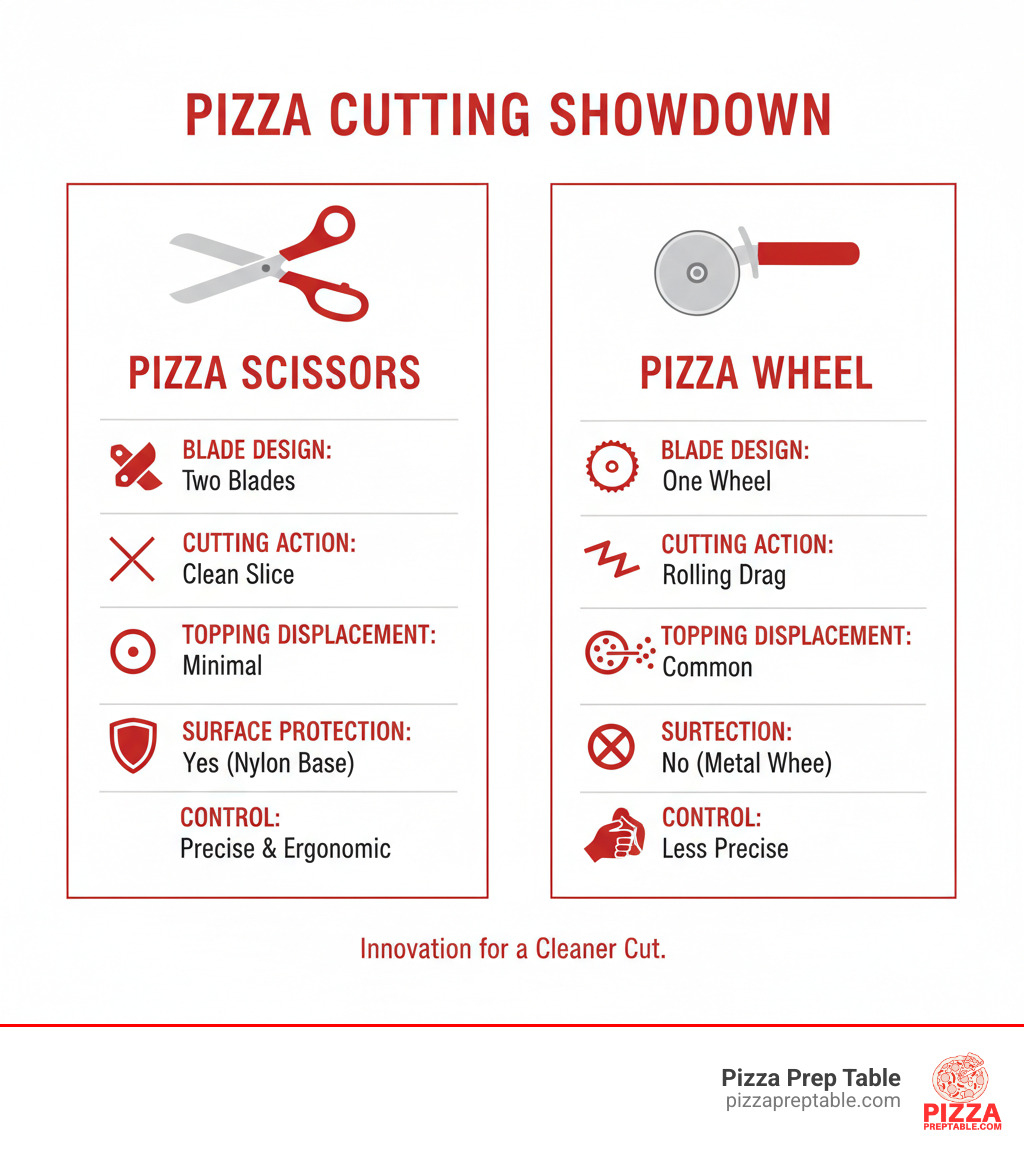
Pizza scissors are specialized kitchen shears designed specifically for cutting pizza, offering a cleaner, more controlled alternative to traditional pizza wheels. Here's what makes them different:
Key Differences Between Pizza Scissors and Pizza Wheels:
- Control: Scissors provide better precision and slice size control
- Topping Protection: No dragging cheese or toppings across the pizza
- Surface Safety: Nylon base protects pans, stones, and non-stick surfaces from scratches
- Cutting Power: Two blades cut through thick crusts and toppings more effectively than a single wheel
- Versatility: Can cut various flatbreads, naan, and even herbs or vegetables
Most of you probably remember wrestling with a pizza wheel, rolling it back and forth through gooey cheese and toppings, creating a mess of displaced ingredients. Pizza scissors solve this problem by using a cutting action that slices cleanly through the pizza in one motion, keeping toppings exactly where they belong.
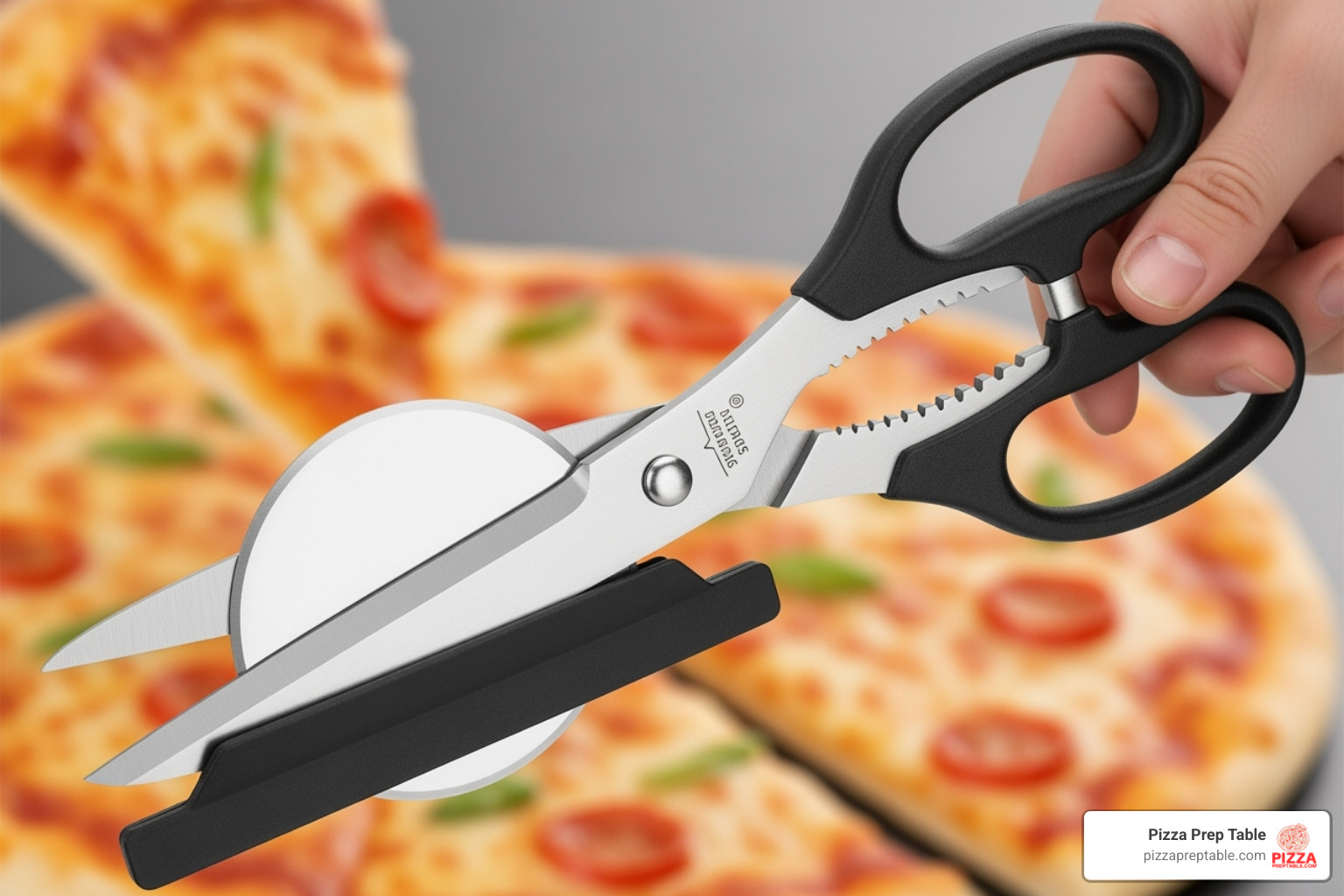
These specialized tools feature stainless steel blades ranging from 4 to 5.5 inches long, often with offset or cranked handles for better ergonomics. Many modern designs include detachable blades for easy cleaning, heat-resistant nylon bases to protect your cookware, and some even come with built-in spatulas for serving.
As Sean Kearney, my experience in the restaurant equipment industry has shown me how the right tools dramatically improve kitchen efficiency—and pizza scissors are one of those game-changing tools that many new pizzeria owners overlook. After years of helping restaurants optimize their prep stations, I've seen how switching from wheels to scissors can reduce mess and speed up service.
The Great Debate: Pizza Scissors vs. Traditional Cutters
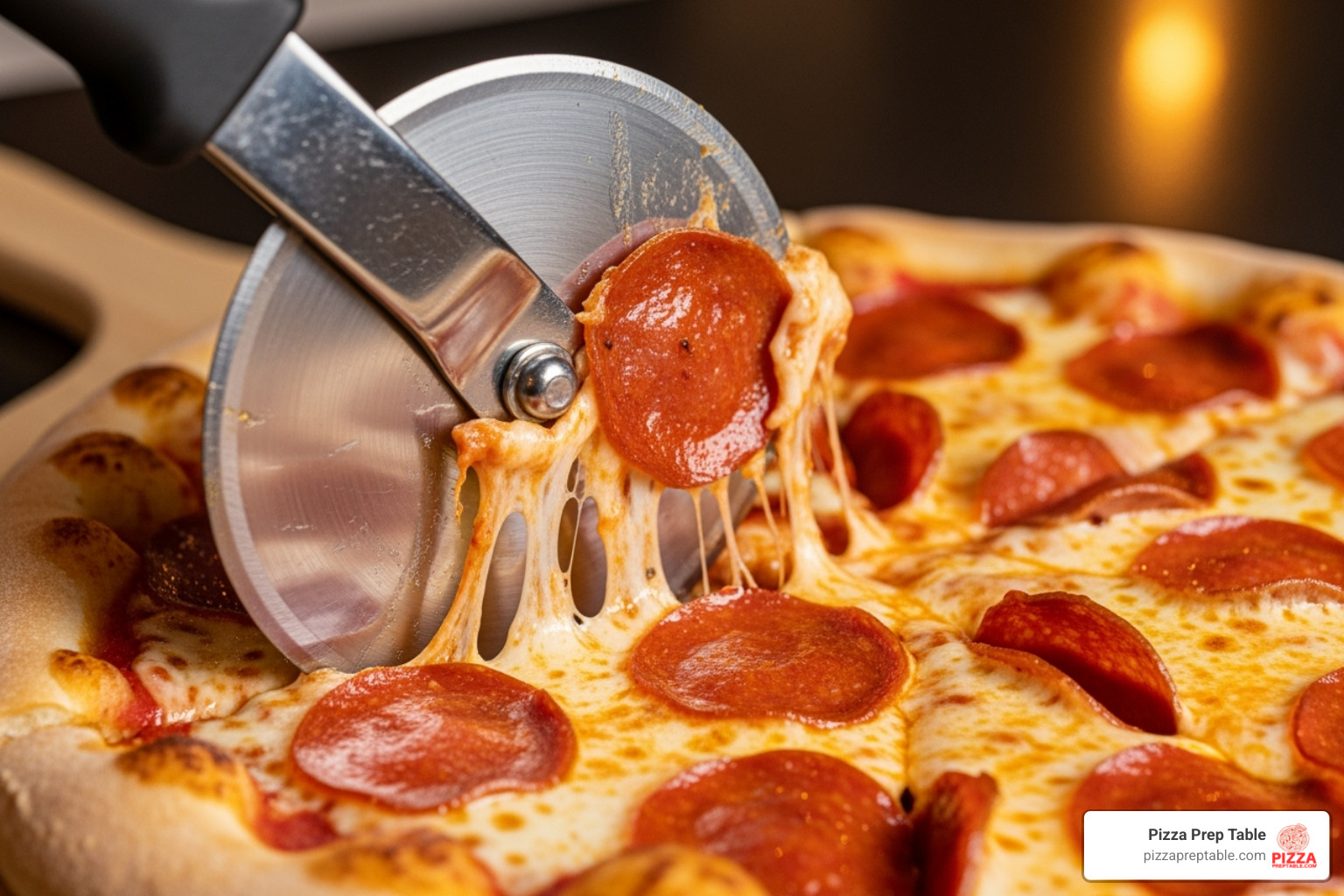
The classic pizza wheel isn't perfect—it often drags cheese and toppings across the pizza, leaving a messy trail. This common frustration is why pizza scissors are gaining traction in home and professional kitchens. The difference is in the cutting action. A traditional wheel rolls and pushes, displacing ingredients. Pizza scissors use a clean shearing motion with two blades, which has a big impact on the final result.
Advantages Over Pizza Wheels
The topping integrity alone makes them worth considering. With pizza scissors, cheese and carefully arranged toppings stay put. The simultaneous cutting action of both blades means nothing gets pushed around.
Thick cheese and deep crusts don't stand a chance. While a pizza wheel struggles with extra-cheesy or deep-dish crusts, pizza scissors slice cleanly through in one smooth motion. This makes them brilliant for thick, airy Roman-style rectangular pizzas or heavily loaded pies.
Your pans and pizza stones will thank you too. Most quality pizza scissors have a heat-resistant nylon base on the lower blade, so you can cut directly on a non-stick pan or pizza stone without scratches.
Control and precision get a major upgrade. Pizza scissors allow for on-the-fly adjustments, whether you're portioning squares from a rectangular pizza or cutting equal slices. This precision is great for cutting pizza by weight. Ergonomic handles on offset or cranked models make it easy to reach into deep-dish pizzas without wrist strain.
Everything stays cleaner. Expect fewer stray toppings, less cheese stuck to the tool, and a tidier experience. In a busy kitchen, that efficiency adds up.
Want to dive deeper into why scissors might revolutionize your pizza game? Check out this great article: Why You Should Be Cutting Your Pizza With Scissors.
Potential Drawbacks to Consider
However, pizza scissors aren't perfect for every situation and have a few considerations.
Some designs can feel awkward at first. Basic models without specialized offset or cranked handles can be uncomfortable and cause wrist strain when cutting a flat pizza.
Hand strength matters more than you'd think. Less expensive models may require significant squeezing power for thick crusts, and you could risk damaging them under heavy use.
Cleaning can be tricky with certain models. Scissors without detachable blades are challenging to clean thoroughly, which is a food safety concern.
Speed isn't their strongest suit. In a high-volume commercial setting, a practiced hand with a pizza wheel might still be faster. Pizza scissors prioritize precision over pure speed.
You still need to watch your surfaces. While specialized pizza scissors protect pans, regular kitchen shears can still damage a pizza stone or countertop. Having the right cutting boards at your prep station protects equipment and maintains hygiene. Learn more about selecting the best options here: More on choosing the right cutting boards for your prep station.
Anatomy of the Perfect Pair of Pizza Scissors
When you're shopping for pizza scissors, you'll quickly realize there's more to consider than just "two blades that cut." The best models incorporate thoughtful design elements that make a real difference in how well they perform and how comfortable they are to use. Let's break down what separates a great pair from a mediocre one.
Blade Construction and Materials
The blades are where the magic happens. If your pizza scissors can't cut cleanly through crust and cheese, nothing else matters. That's why blade material and construction should be your first consideration.
Most quality pizza scissors feature stainless steel blades, and for good reason. This material resists corrosion, maintains a sharp edge through repeated use, and holds up well to washing. You'll typically find blade lengths ranging from 4 to 5.5 inches, which gives you enough reach to cut across most pizzas without multiple snips.
If you want to step up your game, look for hardened German steel. These blades are noticeably sharper and keep their edge longer than standard stainless steel. They're built to withstand the rigors of a busy kitchen, whether you're slicing a few pizzas at home or dozens in a commercial setting. Most German steel blades are also dishwasher safe, which is a huge time-saver.
At the top end, you'll find titanium bonded blades. These offer three times the strength of regular stainless steel and provide exceptional corrosion resistance. If you're running a pizzeria and cutting hundreds of pizzas weekly, this durability pays for itself over time.
The blade length matters more than you might think. Extra-long blades around 5.5 to 6 inches let you slice completely across a pizza in one smooth motion, reducing the chance of jagged edges or torn crust. This is especially helpful with thick-crust or heavily topped pizzas that require a bit more cutting power.
Handle Design and Ergonomics
Here's something I've learned from years in the restaurant equipment business: the best tool in the world is useless if it's uncomfortable to use. Handle design might seem like a minor detail, but it makes all the difference when you're cutting pizza after pizza.
Offset handles are one of the smartest design features you'll find on pizza scissors. Instead of sitting in line with the blades, these handles are raised up, giving you clearance above the pizza. This means your knuckles don't drag through hot cheese or bump against the pan. It's a small detail that makes using the scissors feel natural and effortless.
Cranked handles take this concept even further. The angled design lets you easily slide the bottom blade under the pizza while keeping your wrist in a comfortable position. If you've ever spent an afternoon cutting pizzas with a traditional wheel, you know how much wrist strain that can cause. Cranked handles practically eliminate that problem.
Most modern pizza scissors come with rubberized or ABS plastic handles that provide a comfortable, non-slip grip. This is crucial when you're working in a hot kitchen with greasy hands. The last thing you want is your cutting tool slipping mid-slice.
And here's a nice touch: many quality brands design their scissors for both right and left-handed users. Some models are truly ambidextrous, while others offer specific versions for lefties. It's a thoughtful feature that ensures everyone on your team can work comfortably.
Special Features of Modern Pizza Scissors
Today's pizza scissors go beyond basic cutting functionality. Manufacturers have added clever features that address real kitchen challenges and make these tools even more versatile.
Detachable blades are a game-changer for hygiene. With this feature, you can separate the blades completely (usually without any tools) for thorough cleaning. There's no hidden crevice where cheese or sauce can lurk and grow bacteria. This feature also makes sharpening much easier when the time comes.
Many models are dishwasher safe, which is essential for busy commercial kitchens where every minute counts. After a long shift, being able to toss your scissors in the dishwasher rather than hand-washing them is a real blessing.
Some innovative designs include a built-in spatula or serving base on the lower blade. This clever addition lets you cut a slice and immediately lift it onto a plate without grabbing another tool. Some versions have permanently attached spatulas, while others are detachable for added flexibility.
The nylon base for pan protection deserves special mention. This heat-resistant pad (typically good up to 400°F) sits on the bottom blade and protects your expensive non-stick pans and pizza stones from scratches. You can cut directly on your cooking surface without worry, which speeds up service and protects your equipment investment.
Finally, some pizza scissors accept true multi-functionality. Beyond slicing pizza, they're designed to handle flatbreads, naan, herbs, and vegetables. We've even seen models with integrated bottle openers—because why not have one more trick up your sleeve?
When you're setting up a pizzeria or upgrading your kitchen tools, these features aren't just nice-to-haves. They directly impact efficiency, hygiene, and durability, which ultimately affects your bottom line.
How to Use and Clean Your Shears
Once you get the hang of using pizza scissors, you'll find yourself reaching for them every time. The technique is straightforward, and with a little practice, you'll be cutting perfect slices faster than you ever did with a wheel. Taking care of your scissors is just as important as learning to use them—proper maintenance ensures they'll serve you well for years to come.

Mastering the Cutting Technique
The secret to great cuts with pizza scissors is all about control and positioning. Unlike a wheel that requires downward pressure and rolling motion, scissors work with a simple squeezing action that feels natural and intuitive.
For round pizzas, we start by gripping the crust firmly near where we'll make our first cut. This keeps the pizza steady and prevents it from sliding around. With offset or cranked handles, we can easily slide the bottom blade underneath the pizza base. Then it's just a matter of cutting straight across the center to create two halves. From there, we rotate the pizza 90 degrees and cut across the middle again, forming quarters. Keep rotating and cutting until you've got the number of slices you want. The key is making clean, decisive cuts rather than sawing back and forth.
Roman-style and rectangular pizzas are where pizza scissors really show off their strengths. Instead of trying to create triangular wedges, we can cut these beauties like a sheet cake. Start by cutting long strips from one side to the other, then cross-cut those strips into individual squares or rectangles. This gives us perfect control over portion sizes, which is especially useful if you're selling pizza by weight. For larger pizzas, making two or three smaller cuts works better than trying to force one long cut through the entire length.
You can watch this technique in action and see how smooth the cuts can be: See the technique in action. And if you're running a professional operation, having a stable, clean surface makes all the difference. A proper commercial pizza prep table provides exactly that—a hygienic, sturdy workspace that makes every task easier.
Cleaning and Maintenance for Hygiene
Keeping your pizza scissors clean isn't complicated, but it does require attention to detail. Food safety matters, whether you're running a pizzeria or cooking at home.
The easiest models to maintain are those with detachable blades. Being able to separate the blades means we can wash every surface thoroughly, getting into all those spots where cheese and sauce like to hide. No food particles left behind means no bacteria growth—it's that simple.
Many modern pizza scissors are dishwasher safe, which is a huge time-saver in busy kitchens. Just pop them in with your other dishes and let the machine do the work. Always check the manufacturer's instructions first to make sure your particular model can handle the heat and detergent.
For hand washing, warm water and mild dish soap do the trick. Open the scissors fully so you can clean the entire blade length and around the pivot point where the two blades meet. A regular kitchen sponge works fine, though a scratch pad helps with any stubborn bits of crust or cheese. The important part is getting into all the nooks and crannies.
Drying your scissors completely is crucial. Even high-quality stainless steel can develop rust spots if left damp. After washing, give them a quick towel dry, then let them air dry completely before storing them away. This extra minute of care prevents corrosion and keeps your blades in top condition.
Over time, even the sharpest blades will dull from regular use. Models with detachable blades make sharpening much easier since you can work on each blade individually. Regular sharpening—maybe once every few months depending on how often you use them—keeps your pizza scissors cutting cleanly without requiring extra force. Sharp scissors mean better cuts and less strain on your hands.
Top Models and Other Kitchen Uses
Once you've decided that pizza scissors are worth adding to your kitchen arsenal, the next question is: which ones should you choose? The market has responded to growing demand with some truly impressive options, each bringing something unique to the table. And here's a bonus—these specialized shears aren't just for pizza.
Notable Brands and Models
After years in the restaurant equipment business, I've seen plenty of tools come and go. The pizza scissors that stick around are the ones that combine thoughtful design with real durability. Let me walk you through some standout models that consistently earn praise from both home cooks and professional kitchens.
The Dreamfarm Scizza has become something of a celebrity in the pizza scissors world, and for good reason. What sets it apart is that clever heat-resistant nylon spatula shoe on the bottom blade. This ingenious addition slides right underneath your pizza, protecting your expensive non-stick pans and pizza stones from any damage. The curved, hardened German stainless steel blades are specifically designed to keep your toppings exactly where they belong—no cheese avalanches here! Plus, these scissors pull double duty: pinch the handles together and they become a serving tool. The blades detach easily for sharpening and cleaning, and yes, they're dishwasher safe. You can see the innovative design for yourself here: The innovative Scizza by Dreamfarm.
Fiskars Non-scratch Kitchen Shears bring the reliability you'd expect from a brand known for cutting tools. Their pizza scissors feature that same protective nylon base we love, along with an ergonomic design that feels natural in your hand even after cutting multiple pizzas. The comfortable grip and robust construction make them a solid choice for regular use.
From Europe comes Triangle Germany Pizza Scissors, a brand that takes its kitchen tools seriously. Their pizza scissors boast long, sturdy stainless steel blades—often around 5½ inches—that can tackle even the most challenging deep-dish creations. The real standout feature? Detachable blades that make thorough cleaning a breeze, ensuring maximum hygiene between uses.
For those running commercial operations, American Metalcraft PSD10 Pizza Scissors offer no-nonsense performance. With 4¾-inch stainless steel blades and a rubber handle for comfortable grip, they deliver the control you need during busy service. The detachable blades simplify cleaning, and they work beautifully on flatbreads too.
Paderno World Cuisine brings European craftsmanship to their offset pizza scissors design. That offset handle construction is particularly thoughtful—it gives you plenty of clearance above the pizza so your knuckles never touch hot food or surfaces. It's one of those small details that makes a big difference when you're cutting pizza after pizza.
Are Pizza Scissors a One-Trick Pony?
Not even close! While pizza scissors excel at their namesake task, calling them a one-trick pony would be selling them seriously short. I've watched kitchen staff find all sorts of clever uses for these versatile shears.
Cutting flatbreads and slicing naan might be the most obvious secondary use—these scissors handle them just as beautifully as pizza, giving you those same clean, precise cuts. But the versatility doesn't stop there. Need to dice fresh herbs quickly? The sharp blades and precise control make quick work of basil, parsley, or cilantro, and you can snip them directly over your dish.
For prepping vegetables, these shears can be surprisingly handy. Trimming asparagus, snipping green beans into bite-sized pieces, or even shredding lettuce for salads—all become easier with a good pair of pizza scissors. The comfortable handles and sharp blades often make them more efficient than dragging out a cutting board and knife for quick prep tasks.
If you're making fresh pasta at home, these scissors are perfect for cutting uncooked pasta into specific shapes or lengths. The control they offer means clean, even cuts every time. Some cooks even use them for shredding cooked chicken or other meats for tacos and salads—those powerful blades make short work of the task.
While features like the protective nylon base are specifically designed for pizza duties, the fundamental design—sharp, strong, ergonomic blades—translates beautifully to many other kitchen tasks. In my experience outfitting commercial kitchens, I've learned that the best tools are the ones that earn their keep in multiple ways. A quality pair of pizza scissors quickly becomes one of those indispensable multi-taskers that you reach for more often than you'd expect.
Frequently Asked Questions
You've learned a lot about pizza scissors by now, but we know some practical questions might still be on your mind. Let's tackle the most common ones we hear from both home cooks and pizzeria owners.
Are pizza scissors really better than a wheel cutter?
For most situations, we genuinely believe they are. Pizza scissors offer cleaner cuts that keep your toppings exactly where they should be—on the pizza, not dragged across it or stuck to your cutting tool. They protect your expensive pans and pizza stones from scratches, which is something every pizzeria owner appreciates. The control you get with pizza scissors is simply superior, especially when you're dealing with thick crusts or pizzas loaded with toppings.
The dual-blade action slices cleanly through ingredients rather than pushing them around like a wheel does. While a traditional pizza wheel might edge ahead in speed for very thin, simple pizzas in a high-volume setting, anything with a substantial crust or generous toppings benefits from the precision of pizza scissors. The result? A better-looking pizza and a less messy cutting experience.
Can pizza scissors cut through thick, deep-dish crusts?
They absolutely can! High-quality pizza scissors with long, sharp blades actually handle deep-dish and thick crusts more effectively than many wheel cutters. We've all seen what happens when a pizza wheel meets a Chicago-style deep dish—it requires multiple passes, excessive pressure, and often results in torn crust and displaced toppings.
The shear action of pizza scissors allows you to cut cleanly through even the densest crusts and multiple layers of ingredients with precision and surprisingly less effort. The key is choosing a pair made with hardened stainless steel or titanium-bonded blades. These materials provide the strength and sharpness needed to power through those hearty pies without struggle.
What is the typical price for a good pair of pizza scissors?
The price range for quality pizza scissors varies based on brand, materials, and special features. You can find basic, functional models starting around $15, while premium designs with advanced features can run over $30. For example, a well-regarded brand like Triangle Germany typically costs around $32, while more straightforward commercial models might be available for $7 to $10.
What drives the price up? Features like titanium-bonded blades for extra durability, detachable components that make cleaning easier, integrated spatulas for serving, and ergonomic handle designs that reduce wrist strain. We recommend investing in a pair that balances your budget with the features most important to you. A mid-range pair around $20 to $25 often hits the sweet spot for durability and performance, whether you're outfitting a home kitchen or a busy pizzeria.
A Cut Above the Rest for Your Pizzeria or Home
After exploring pizza scissors, it's clear these specialized tools offer something traditional cutters simply can't match. The precision, the clean cuts, the way they protect your cookware while keeping every topping exactly where it belongs—these aren't just nice-to-have features. They're the difference between a frustrating pizza-cutting experience and one that feels effortless.
Whether you're slicing pizzas at home for family dinner or running a busy pizzeria where every second counts, choosing a pair of pizza scissors with durable materials and an ergonomic design transforms how you work. We've seen how the right tools don't just make tasks easier—they make them enjoyable. There's something satisfying about watching those blades glide through a thick crust without displacing a single mushroom or pepperoni slice.
For professionals, the conversation extends beyond just the cutting tool. Having the right equipment throughout your entire operation is what separates a struggling kitchen from one that runs like a well-oiled machine. From the slicer you use to the surface you prep on, every piece matters. That's where we come in.
At Pizza Prep Table, we've spent years understanding what pizzerias and foodservice businesses actually need. We provide a wide range of commercial stainless steel tables and equipment designed to keep your kitchen efficient, organized, and ready for whatever the dinner rush throws at you. Whether you're opening your first pizza shop or upgrading an established operation, we offer the selection and financing options that make sense for your business.
Think about it: if you're upgrading to pizza scissors for better cuts, why stop there? Your entire prep station deserves the same level of attention. Ready to take your pizza-making operation to the next level? Explore our complete guide to restaurant and pizza equipment and find how we can help you achieve peak performance in your kitchen, one smart upgrade at a time.