
Pizza Prep Table Display Ideas to Boost Sales
A great pizza prep table display is more than just cold storage—it’s the bridge between your kitchen and your customer. When it works in perfect harmony with your pizza prep table, you create a powerful, profit-driving workstation. For pizzerias, this means arranging fresh bell peppers, cured meats, and cheeses so they not only catch the eye but also make the pizza-making process faster and smoother. The best displays are a direct extension of your kitchen's rhythm.
Building Your Foundation for a High-Impact Display
Before you even think about arranging a single topping, you need to lay the groundwork for a display that's both smart and profitable. In a pizzeria, an effective pizza prep table isn't just a refrigerator; it’s the operational heart of your entire prep workflow. The connection between your prep table and the display case is what turns two separate pieces of equipment into a single, cohesive, money-making hub.
This isn't just a nice idea—it's big business. The refrigerated display case market, a cornerstone for pizzerias, was valued at a whopping $2.4 billion in 2024 and is on track to hit $4.1 billion by 2033. This explosion in growth shows just how much customers crave fresh, visually appealing food. Thanks to modern, energy-efficient refrigeration, we can now hold precise temperatures, keeping everything safe, fresh, and up to code.
Aligning Equipment with Your Workflow
First things first: you have to choose the right gear. Take a hard look at your pizzeria's layout and menu. A small shop with a focused menu might find a compact countertop unit is all it needs, keeping essentials like pepperoni and mozzarella right within arm's reach. On the other hand, larger floor models give you the real estate to showcase a wider array of gourmet toppings, fresh salads, and profitable sides.
This whole process follows a logical path, from your menu to your final setup.
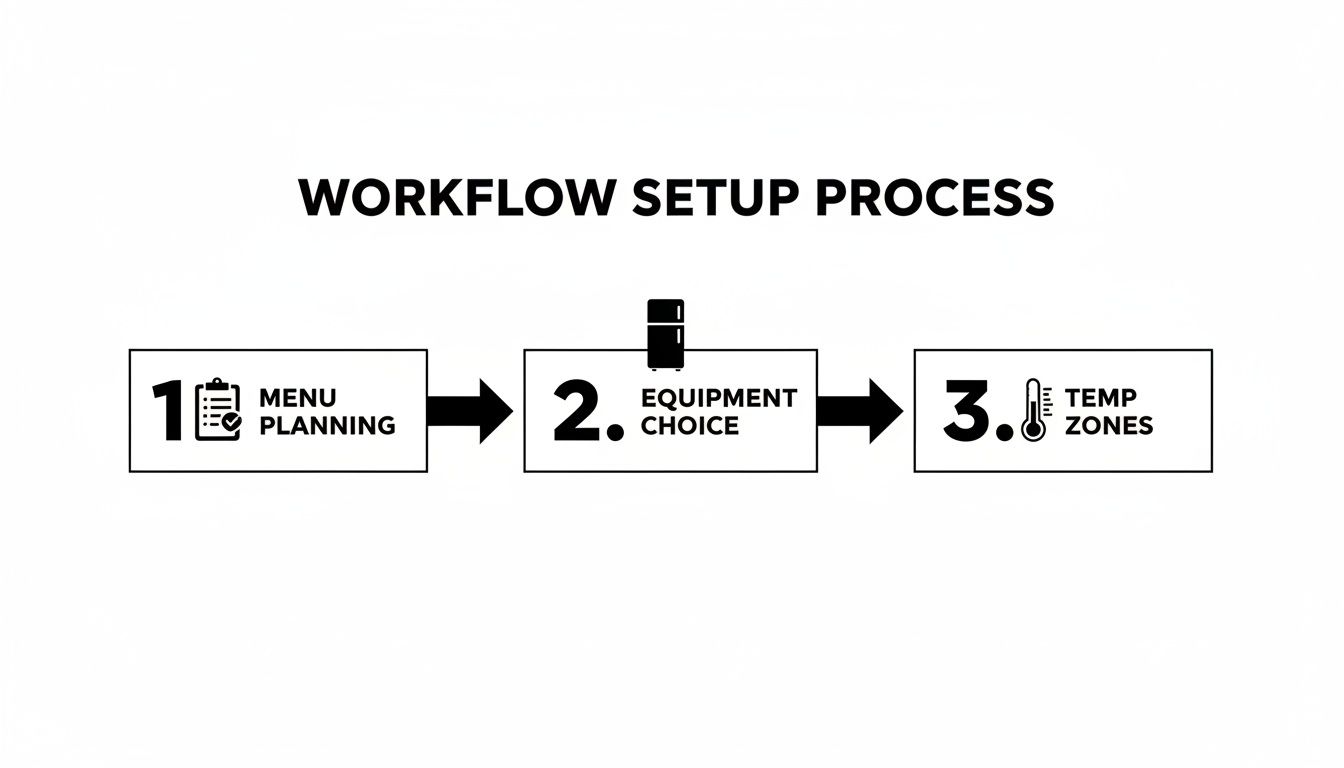
As you can see, it all starts with smart menu planning. That dictates the equipment you need, which in turn defines how you manage your temperature zones for peak freshness and safety.
Mastering Food Safety and Temperature Zones
Let's be clear: food safety is non-negotiable. An organized prep table display must also be a safe one. That means setting up specific temperature zones for different ingredients—a core principle I've seen separate the pros from the amateurs.
A well-zoned pizza prep table acts like a specialized filing system for your ingredients. Each item has its designated spot, held at the perfect temperature to preserve texture, flavor, and safety, ensuring every pizza you craft starts with the best possible components.
Here’s how to break it down for your pizzeria:
- Coldest Zone (32°F - 36°F): This is prime real estate for your most perishable items. Think fresh mozzarella, ricotta, and sliced meats like prosciutto. Keeping them in this range is critical for slowing bacterial growth.
- Standard Chill Zone (37°F - 41°F): This section is perfect for hard cheeses, cured sausages like salami and pepperoni, and prepped vegetables like onions and peppers that need to stay crisp but not ice-cold.
This kind of careful organization is your best defense against cross-contamination and ensures every single ingredient looks, tastes, and is safe to eat.
To help you put this all together, I've created a simple blueprint. Use this table to connect your display goals directly to your equipment features and kitchen workflow.
Pizza Prep and Display Synergy Blueprint
| Display Goal | Pizza Prep Table Feature | Workflow Integration | Example Menu Items |
|---|---|---|---|
| Speed Up Service | Angled, multi-pan rail | Place most-used toppings (pepperoni, cheese) directly in front of the pizza maker. | Classic Pepperoni, Four Cheese |
| Showcase Freshness | Bright, LED lighting | Rotate fresh-cut veggies to the front of the display multiple times per shift. | Veggie Supreme, Garden Salad |
| Promote High-Margin Items | Dedicated gourmet section | Position specialty meats and cheeses near the end of the prep line for easy add-ons. | Prosciutto & Arugula Pizza |
| Drive Side Sales | Lower refrigerated shelf | Stock grab-and-go salads and drinks in customer eyeline, near the POS. | Caprese Salad, Bottled Sodas |
By thinking through these connections, you're not just stocking a fridge; you're engineering a more efficient and profitable pizza-making operation from the ground up.
Merchandising Secrets That Drive Impulse Buys
Your pizza prep display isn't just a refrigerator; it’s a silent salesperson telling a visual story that actively sells your menu. That pizza prep station is prime real estate for swaying customer decisions, and smart merchandising is how you unlock its full power. Just like online stores meticulously arrange their layouts to improve conversion rates, a well-thought-out prep table display can seriously boost impulse buys and add-ons.
The real goal here is to turn a customer who's just browsing into one who's actively buying. A few proven merchandising tricks can guide their eyes toward higher-margin items and premium upgrades. You’ll make your display work smarter, not just harder.
Create Visual Appeal with Color and Texture
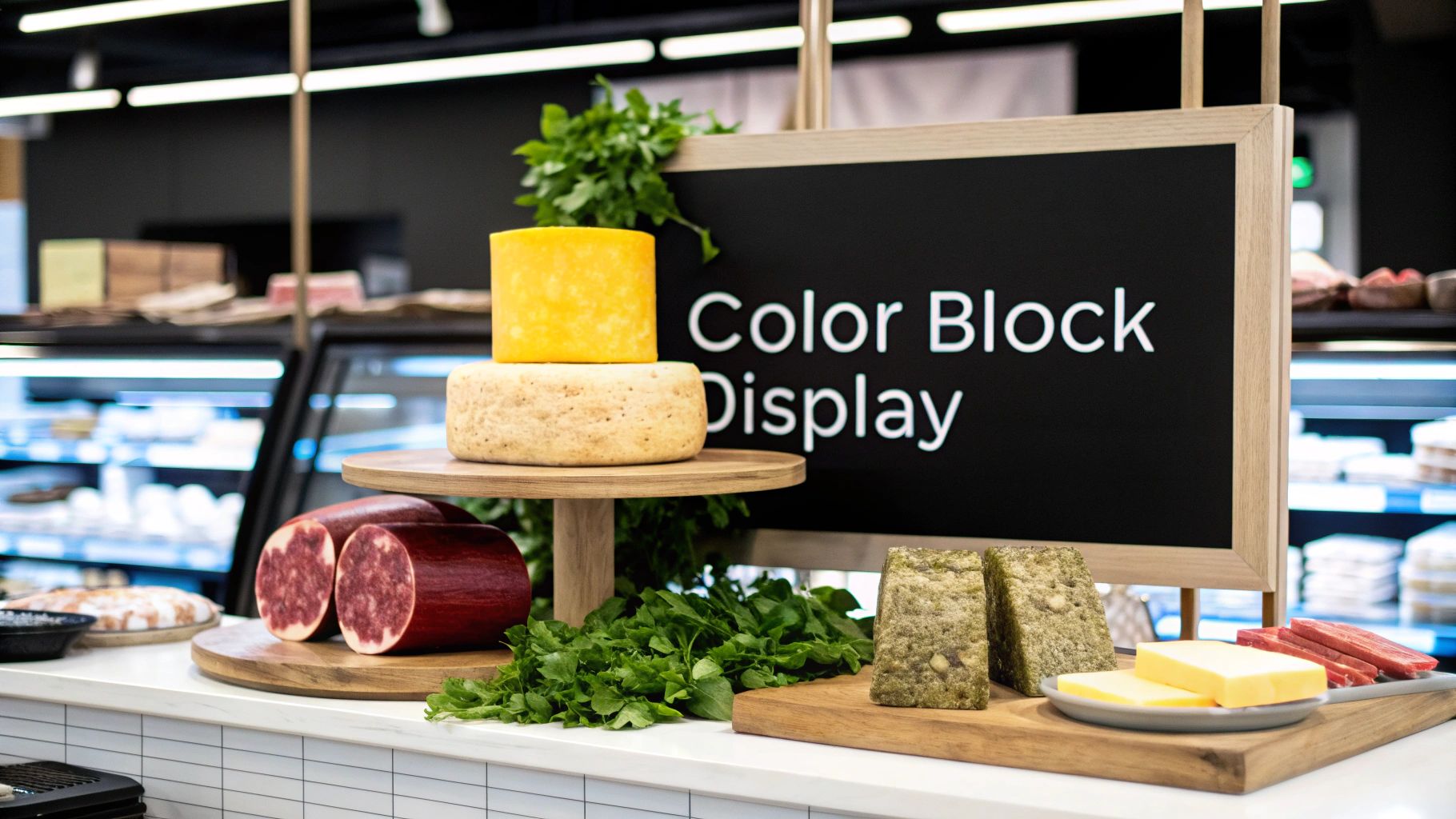
We're all naturally drawn to vibrant colors and interesting contrasts. You can use this to your advantage with a technique called color blocking. Ditch the random placement of topping pans and start grouping items to create an irresistible visual feast.
Imagine it: a container of bright red roasted peppers right next to creamy white fresh mozzarella, with a pop of deep green basil nearby. That simple arrangement does more than just look pretty. It screams freshness and quality, making those toppings far more tempting at a glance.
Your pizza prep table is your pizzeria's silent salesperson. A visually stunning display of fresh ingredients builds trust and excitement, making customers more likely to say "yes" to that extra topping or premium cheese.
And don't sleep on texture. Place smooth, glistening olives next to the rough, rustic texture of a hard salami or the delicate leaves of fresh arugula. This interplay makes the ingredients pop, adding a depth that makes everything look more dynamic and appetizing.
Use Vertical Space to Add Depth
A flat, one-level display is a boring display. One of the easiest and most effective ways to liven things up is by creating different heights. You don't need fancy, expensive equipment—simple food-safe risers, inverted bowls, or tiered shelving can completely transform the look of your topping rail.
This trick does two important things for you:
- It breaks up the monotony. Varying heights create visual interest, stopping a customer's eyes from just scanning across a uniform line of pans.
- It highlights key items. You can elevate your high-margin or specialty ingredients, literally putting them on a pedestal to draw more attention.
Modern pizza prep tables are built for these kinds of dynamic setups. The refrigerated display case market is projected to grow from an estimated $5 billion in 2025 to $8 billion by 2033. The forced-air units, which make up 70% of the market, are perfect for this, providing the even cooling needed to keep items fresh on every level of your display. They can even extend the shelf life of your ingredients by 20-40%.
Suggest Upgrades Through Strategic Grouping
You can guide your customers toward spending more just by being clever with how you group items. Place a bowl of creamy burrata right next to your standard mozzarella. This simple placement plants a seed, visually suggesting a premium—and more profitable—upgrade for their pizza.
Try the same thing with meats. Position a container of spicy soppressata next to your regular pepperoni. You’re encouraging customers to consider a more flavorful, higher-priced option without saying a word. By putting complementary items together, you make upselling a natural part of the ordering process, which directly boosts your average ticket size.
Using Lighting and Signage to Make Ingredients Shine
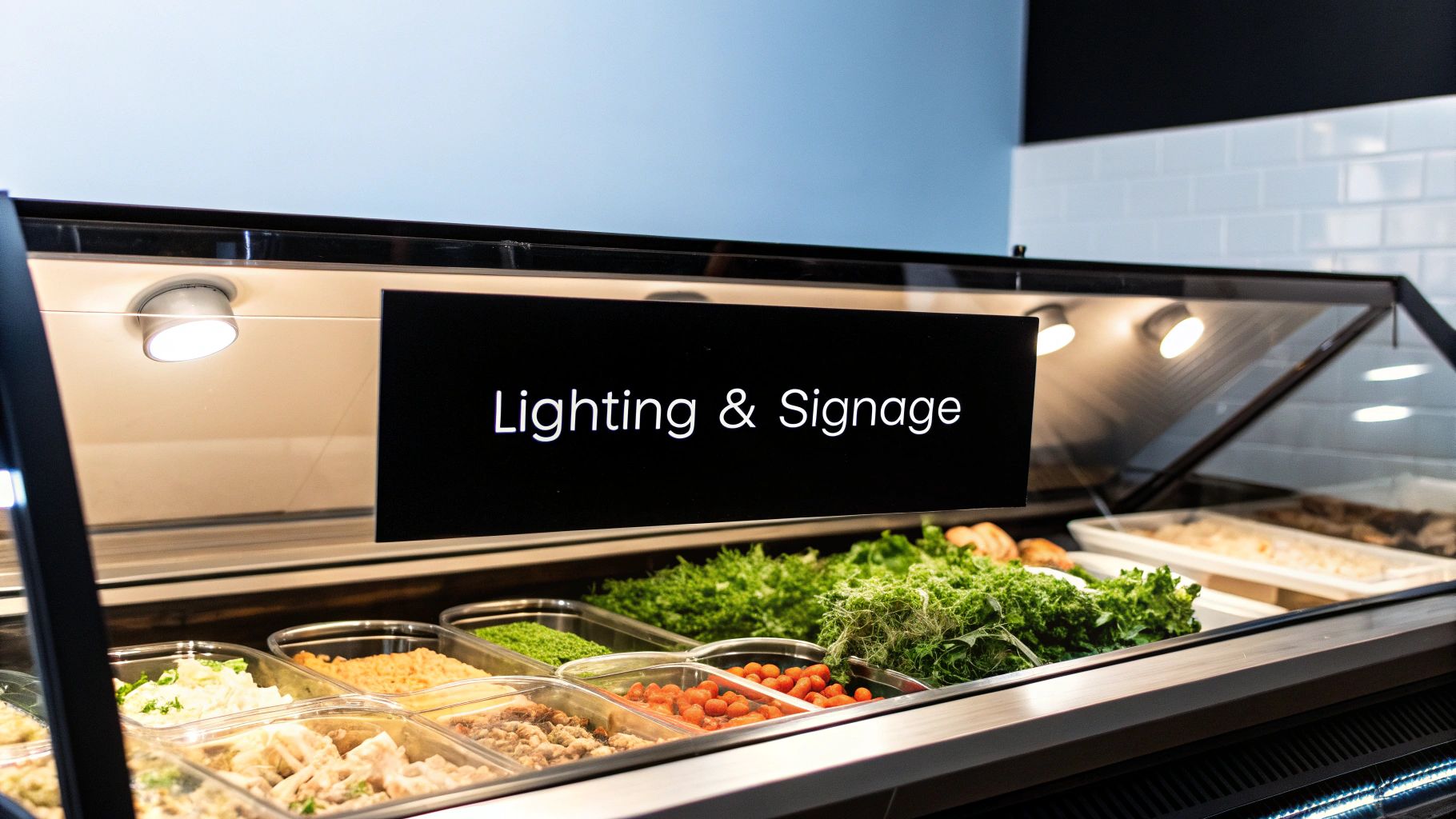
The right lighting and signage can take your prep area from a simple ingredient station and turn it into a showstopper. Think of it as setting the stage—great lighting makes fresh toppings look absolutely irresistible, transforming them from just another option into something customers have to try. This is how you create pizza prep table displays that truly grab attention and drive sales.
Modern LED solutions are the only way to go here. Forget those old halogen bulbs that throw off enough heat to wilt your basil. LEDs keep your prep table cool, which is critical for protecting delicate cheeses and fresh vegetables. It's a simple switch that protects food quality and keeps every ingredient looking its best from open to close.
Choosing the Right Light Temperature
The color of your light is just as important as how bright it is. For a pizza prep table, you'll want a cooler, more neutral tone—somewhere in the 4000K-5000K range. This kind of crisp, white light makes the reds in your pepperoni and peppers pop and the whites of fresh mozzarella and ricotta look clean and appealing.
Warmer, yellowish lights can make even the freshest ingredients look old or faded, which is the last thing you want. Good lighting isn't just about helping people see; it’s about making your food look as fresh and delicious as it actually is. It's worth digging into how different commercial lighting solutions can completely change how customers perceive your brand and your pizzas.
Crafting Signage That Sells
Great signage does more than just tell people what something is—it actively sells it for you. Your labels should be simple, clean, and easy to read from a few feet away. But they can also be your secret weapon for telling a story and nudging customers to try something new.
Your signage is a direct line of communication with your customer at the point of decision. Use it to answer questions they haven't even asked yet—about flavor, origin, or a perfect pairing—to build confidence and drive sales.
Consider adding short, enticing descriptions that go beyond a simple name. These small details can make a huge difference. If you're looking for more inspiration, our guide on selecting a bakery refrigerator showcase has some great tips on presentation that apply here, too.
Here are a few practical ideas I’ve seen work wonders in pizzerias:
- Instead of "Mushrooms," try "Garlic & Herb Roasted Mushrooms." It immediately paints a more flavorful picture.
- Instead of "Prosciutto," use "Prosciutto di Parma (Aged 18 Months)." This instantly communicates premium quality.
- Add a "Staff Pick" or "Pairs perfectly with..." tag. This simple suggestion can be the little push a customer needs to try a new combination.
How to Cross-Sell and Upsell Right From Your Prep Station
Your pizza prep station is so much more than a workspace—it’s one of the most powerful sales tools you own, sitting right at the point where customers make their final decisions. Turning this area into a profit center is all about getting strategic with what you place in your customer's line of sight. This is where your prep table ideas stop being about just showing off ingredients and start actively driving bigger sales.
Think about it from their perspective. They're watching you build their pizza, and their eyes are naturally wandering over all the fresh ingredients. This is your golden opportunity to tempt them with high-margin add-ons. A simple container of glistening gourmet olives or some thick-cut artisan pepperoni placed front and center can make it an easy, impulsive choice.
Turning Toppings into Upgrades
The secret to a great upsell is visual suggestion. Don’t just bury your premium toppings in a long list on the menu—show them off. Place a beautiful block of prosciutto di Parma or a bowl of earthy, truffle-infused mushrooms right next to your standard pepperoni. When a customer sees that superior quality firsthand, the small extra cost feels less like a price jump and more like a smart investment in flavor.
This tactic just works. A customer might not know what "prosciutto di Parma" is from reading it, but when they see its deep color and delicate texture, they get it instantly. The visual appeal makes the upsell feel natural and inviting, not like a pushy sales pitch.
A well-organized prep station is the final handshake in the sales process. When customers can see the quality and freshness of your premium ingredients, they are far more likely to upgrade their order on impulse, turning a standard pizza into a gourmet creation.
Creating Bundles and Interactive Deals
Go beyond just selling individual toppings and use your display to create bundled deals. This creates a fun, interactive experience that can really boost your average ticket. Imagine a small sign right on the glass that says, "Build Your Own Calzone Kit" for customers to grab and take home.
The kit could have fresh dough, creamy ricotta, and a choice of three fillings they see right in front of them. You’re not just selling multiple items at once; you’re positioning your shop as a go-to for high-quality ingredients for home cooks. It’s a fantastic way to move more product while adding a unique, engaging offer to your menu. Exploring how different pizza topping stations can be configured will spark even more ideas.
Your setup's efficiency plays a huge part here. For pizzerias, pairing a spacious 93-inch workstation with a well-organized topping rail can actually boost prep speed by as much as 30%. The market for refrigerated display cases is growing fast, which just goes to show how valuable it is to invest in equipment that improves both your workflow and your sales.
Your pizza prep table is prime real estate, but if it looks the same day in and day out, your regulars will stop seeing it. A static display eventually becomes part of the background scenery.
But when you treat it like a dynamic, ever-changing feature, you give customers a reason to pause and look every single time they visit. This is how you keep your pizzeria’s topping display exciting, relevant, and ringing up sales all year long.
Switching up your themes isn't just about aesthetics; it's a savvy sales strategy. Aligning what's in your case with the seasons or a big local event creates a sense of novelty and urgency. A customer is way more likely to try a special "harvest-themed" pizza topping in October because they know, deep down, it won't be there forever.
Tap Into Seasonal Flavors
The easiest and most effective way to start is simply by following the calendar. Every season brings its own distinct flavors, colors, and moods that you can translate directly into your pizza topping display. This feels completely natural to your customers and lets you highlight ingredients when they're at peak freshness—and often at their lowest cost.
Autumn, for example, is a goldmine for an eye-catching display.
- Theme Idea: "Harvest Festival"
- Featured Items: Imagine pans of beautifully roasted butternut squash, earthy sage sausage, deeply caramelized onions, and maybe some smoked gouda to round it all out.
- Visuals: Don't just show the food. Prop it up with small gourds or use rustic wooden bowls. The rich oranges, deep greens, and warm browns create a cozy, inviting vibe that screams comfort food.
Then, when summer rolls around, you can flip the script to something light and vibrant. A "Mediterranean Sun" theme is a perfect fit for any pizzeria. Pack your case with briny Kalamata olives, creamy feta cheese, bright artichoke hearts, and rich sun-dried tomatoes. That fresh, colorful look immediately tells a customer, "this is the perfect light meal for a hot day."
Drive Sales with Event-Based Promotions
Beyond the four seasons, your local calendar is your best friend. Is the big game coming up? A popular town festival? These are fantastic opportunities to create targeted promos that make your pizzeria the spot to grab food.
A "Game Day" special is a classic for a reason. Instead of just suggesting toppings, pre-load your prep table display with ready-to-go trays of wings, mozzarella sticks, and an assortment of dipping sauces. You're not just selling an add-on; you're offering a convenient party solution that can significantly bump up your average ticket with high-margin items.
Think of your pizza prep table as a stage. By changing the 'set' and 'cast' of ingredients with the seasons, you're not just selling toppings; you're creating an experience that keeps customers engaged and excited to see what's next.
To get your creative juices flowing, here’s a sample calendar you can tweak for your own shop.
This table is just a starting point to help you plan out the year. The key is to think ahead so you can source ingredients and plan your marketing to build excitement.
Year-Round Pizzeria Display Calendar
| Season or Holiday | Display Theme Idea | Featured Topping Display Items | Cross-Selling Opportunity |
|---|---|---|---|
| Autumn | Harvest Festival | Roasted butternut squash, spicy Italian sausage, smoked gouda, sage. | Suggest a "Harvest Pizza" special combining these toppings. |
| Winter Holidays | Winter Comfort | Creamy ricotta, prosciutto, figs, balsamic glaze, rosemary sprigs. | Promote take-home antipasto boards for holiday parties. |
| Spring | Garden Fresh | Asparagus ribbons, fresh peas, goat cheese, lemon zest, mint. | Offer a "Spring Salad" side using the featured ingredients. |
| Summer | Mediterranean Sun | Feta, Kalamata olives, artichoke hearts, sun-dried tomatoes, basil. | Bundle with a light, crisp white wine or craft beer special. |
When you consistently rotate your themes, you transform your pizza prep station from a simple ingredient holder into a powerful marketing tool. It keeps your menu feeling fresh, encourages those profitable impulse buys, and gives your most loyal customers a delicious new reason to keep coming back.
Common Questions About Pizza Prep Table Displays
When you're in the weeds planning out your pizzeria, a lot of practical questions come up. I’ve heard them all over the years. Getting these details right from the start saves you a ton of headaches and helps your pizza prep table and display work together like a well-oiled machine.
Let’s tackle some of the most common questions I hear from shop owners.
What Is the Ideal Temperature for a Pizza Prep Table?
This one is non-negotiable. For food safety and to keep your ingredients looking vibrant and fresh, your pizza prep table's refrigerated rail needs to stay between 32°F and 41°F (that’s 0°C to 5°C). This temperature range is the sweet spot for slowing down bacterial growth on all your perishables—meats, cheeses, and fresh veggies.
Get yourself a reliable, calibrated thermometer and make checking it part of your daily opening and closing routine. Most modern pizza prep tables have digital thermostats now, which makes keeping things precise a whole lot easier. A good rule of thumb is to place your most sensitive items, like fresh mozzarella, in the coldest part of the case. Hard cheeses and cured meats can usually handle the slightly warmer end of that range.
How Often Should I Refresh My Topping Display?
Every single day. No exceptions. At the start of each shift, your team needs to pull everything out, toss anything that's not looking perfect, wipe down every surface, and restock. It’s a grind, but it’s critical.
Always, always, always follow the First-In, First-Out (FIFO) method. New product goes in the back, older product gets pushed to the front. This is your best defense against waste. From a visual standpoint, I recommend doing a full reset or introducing a new theme every 4-6 weeks, or whenever your menu gets a seasonal update. It keeps things interesting for your regulars and prevents your display from looking tired.
A clean, well-rotated topping display does more than just look good—it builds customer trust. When patrons see you actively maintaining freshness, they feel more confident in the quality of every pizza you make.
What Are Some Low-Cost Display Ideas for a New Pizzeria?
You don't need a Hollywood budget to make your topping display pop. Honestly, the most important thing you can do costs nothing but effort: keep it spotlessly clean. A gleaming, well-lit topping rail is your best foundation. Once you’ve got that down, you can get creative with cheap props to add some personality.
- Create Height: Use small, food-safe wooden crates or even simple ceramic bowls turned upside down to create different levels.
- Add Personality: You can’t beat hand-drawn chalkboard signs for a rustic, authentic vibe that costs next to nothing.
- Focus on Color: Group ingredients to create blocks of vibrant color. Think bright red peppers next to green olives next to beautiful white cheeses. It draws the eye instantly.
- Signal Freshness: A few sprigs of fresh basil or parsley tucked in here and there can make the whole display look more alive and fresh.
Can a Sandwich Prep Table Work as a Pizzeria Display?
Absolutely. In fact, for a lot of pizzerias, especially if you’re tight on space, a refrigerated sandwich or pizza prep table with a glass sneeze guard is the perfect all-in-one solution. Those refrigerated wells are perfect for showing off all your toppings right where the customer can see them.
This kind of setup is incredibly efficient because it combines your storage, prep surface, and customer display into one piece of equipment. It streamlines your entire workflow. Just make sure you position it where customers can get a good look at all those beautiful, fresh ingredients. That transparency builds trust and often nudges them to add a few more toppings, which is a nice little boost for your average ticket.
Ready to create a pizza prep display that drives sales and speeds up service? The experts at Pizza Prep Table can help you find the perfect refrigerated unit to match your workflow and space. Explore our wide selection of pizza prep tables today!