

A Pizzeria Owner's Guide to the Evaporator for Fridge
An evaporator for fridge units is the unsung hero of your commercial kitchen, especially inside a pizza prep table. It’s the part that actually does the cooling, pulling all the heat out of the cabinet to keep your ingredients fresh and safe. Think of it as the cold heart of your refrigeration system, pumping out the chill needed to get through the busiest service.
The Hidden Component Keeping Your Toppings Fresh
Picture the Friday night rush. Tickets are flying, dough is being tossed, and a line of hungry customers is snaking out the door. The absolute last thing you need is a pizza prep table that can’t keep up, turning your beautiful mozzarella and fresh pepperoni into a food safety nightmare. In the high-stakes game of a commercial kitchen, reliable refrigeration isn't a luxury—it’s the bedrock of your entire operation.
Tucked away inside this critical system is the evaporator. While compressors get most of the attention, the evaporator is where the real magic happens. It’s the component that physically pulls warmth out of the air inside your prep table, ensuring your cheese, sauce, and veggies stay perfectly chilled.
Why Your Evaporator Matters
A healthy evaporator is directly tied to your pizzeria's bottom line. Its performance affects everything from the quality of your ingredients to your monthly utility bills. Here’s why you can’t afford to ignore it:
- Food Safety and Quality: An efficient evaporator is your first line of defense against bacteria, keeping your toppings at a consistent, food-safe temperature below 40°F.
- Reduced Food Waste: When temperatures start creeping up because of a struggling evaporator, ingredients spoil. Fast. That’s perfectly good food—and profit—going straight into the trash.
- Energy Efficiency: A clean, well-maintained evaporator doesn’t have to work as hard. That means your compressor runs less, your energy bills go down, and your equipment lasts longer.
The Real-World Impact on Your Pizzeria
Let’s break it down. The evaporator coil works like a super-chilled magnet for heat. A fan blows the warmer air from inside the prep table across these cold coils, which absorb the heat instantly. The refrigerant flowing through the coils then whisks that heat away to be released outside the unit.
But if that coil is caked in grime or covered in a block of ice, it can’t absorb heat. The result? Your pepperoni gets warm, your cheese gets soft, and your compressor starts running nonstop to pick up the slack, putting it on a fast track to burnout.
For any pizzeria owner, keeping the refrigeration system in top shape is a non-negotiable part of the daily grind. A faulty evaporator doesn't just put your inventory at risk; it threatens customer health and your hard-earned reputation.
Ultimately, this single component plays a massive role in upholding proper food safety. It’s one piece of the larger puzzle, and for pizzeria owners, following comprehensive systems like the HACCP food safety standards is the best way to protect your brand and your customers. It all starts with understanding the hidden parts of your prep table that keep every pizza starting with perfectly chilled, high-quality ingredients.
How Your Evaporator Creates the Perfect Chill
Every pizza prep table in your restaurant is a finely tuned ecosystem, all working to do one thing perfectly: keep your ingredients consistently cold. Deep inside this system, working tirelessly behind the scenes, is the evaporator for fridge units. This is the component that actually pulls the heat out of the air, and understanding how it works is the first step to preventing spoiled ingredients and keeping every pizza safe and fresh.
Think of your evaporator coil as a super-chilled magnet for warmth. It’s placed right inside your prep table, ready to pull in any heat that’s circulating around your cheese, pepperoni, and fresh veggies. This isn't a passive process; it's an active, relentless cycle of heat absorption.
The real action starts when a special substance called refrigerant flows into the evaporator. At this point, the refrigerant is a very cold, low-pressure liquid. As a fan blows the warmer air from inside the prep table across the evaporator's fins and tubes, this liquid refrigerant gets to work.
The Science of Cold Explained
As the refrigerant soaks up the surrounding heat, something fascinating happens. That warmth gives the liquid just enough energy to boil and transform into a low-pressure gas—a process you might remember from science class called evaporation. This phase change is the magic trick; it’s precisely what strips the heat from your refrigerated space, leaving nothing but chilled air behind.
This cycle is the bedrock of how your pizza prep table's evaporator for fridge mechanics create a consistently cold environment.
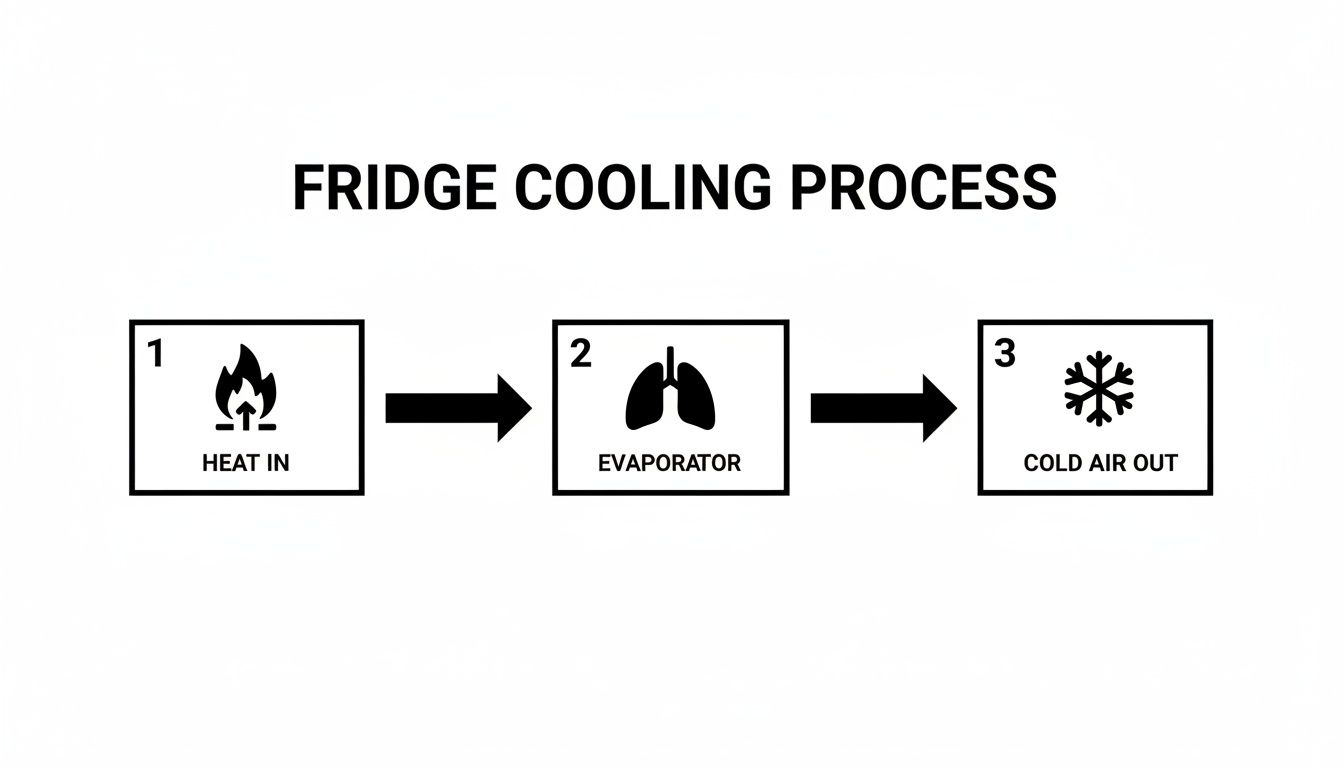
This simple flow shows how warmth is pulled from your prep table, handled by the evaporator, and replaced with cold air to protect your ingredients. After it has absorbed the heat, the now-gaseous refrigerant travels out of the evaporator and heads to the compressor to start the journey all over again.
Why This Cycle Is Crucial for Your Pizzeria
This continuous loop of liquid-to-gas conversion is the engine that drives your entire refrigeration system. When it’s running smoothly, your prep table holds a precise, food-safe temperature, even during a crazy dinner rush when the lid is being opened and closed dozens of times. Any hiccup in this flow, however, can spell disaster.
A blocked or dirty evaporator coil simply cannot absorb heat efficiently. This forces the entire system to work harder, spiking your energy consumption, causing extra wear on components, and—most critically—letting temperatures rise into the danger zone, potentially spoiling thousands of dollars worth of inventory.
For any busy pizzeria, a clean, unobstructed evaporator is non-negotiable. If the coil is caked in grease or dust, it basically acts like an insulator, preventing the refrigerant from doing its job. This is why regular maintenance isn't just a suggestion; it’s a core operational necessity.
Keeping this cycle efficient is also a huge factor in managing your restaurant's overhead. A properly functioning evaporator contributes directly to lower electricity bills. To get a better handle on this, you can learn more about how to select and maintain energy-efficient commercial refrigeration in our detailed guide. An efficient evaporator is your first step toward a more profitable kitchen.
Identifying the Evaporator in Your Pizza Prep Table
When you peek inside your pizza prep table, you might not immediately spot the evaporator. It’s usually tucked away behind a panel, but understanding its design is one of the most important things you can know about your equipment. Not all evaporators are created equal, and the specific type in your unit—whether it's an Atosa, True, or Dukers model—dictates exactly how it cools your ingredients and what kind of maintenance it needs down the line.
Knowing your equipment’s system is crucial. It helps you perform the right upkeep, troubleshoot problems accurately, and make smarter decisions when it's time for a repair or a full replacement. In the world of commercial pizza prep tables, you’ll almost always run into one of two main designs: the finned tube evaporator or the cold plate evaporator.
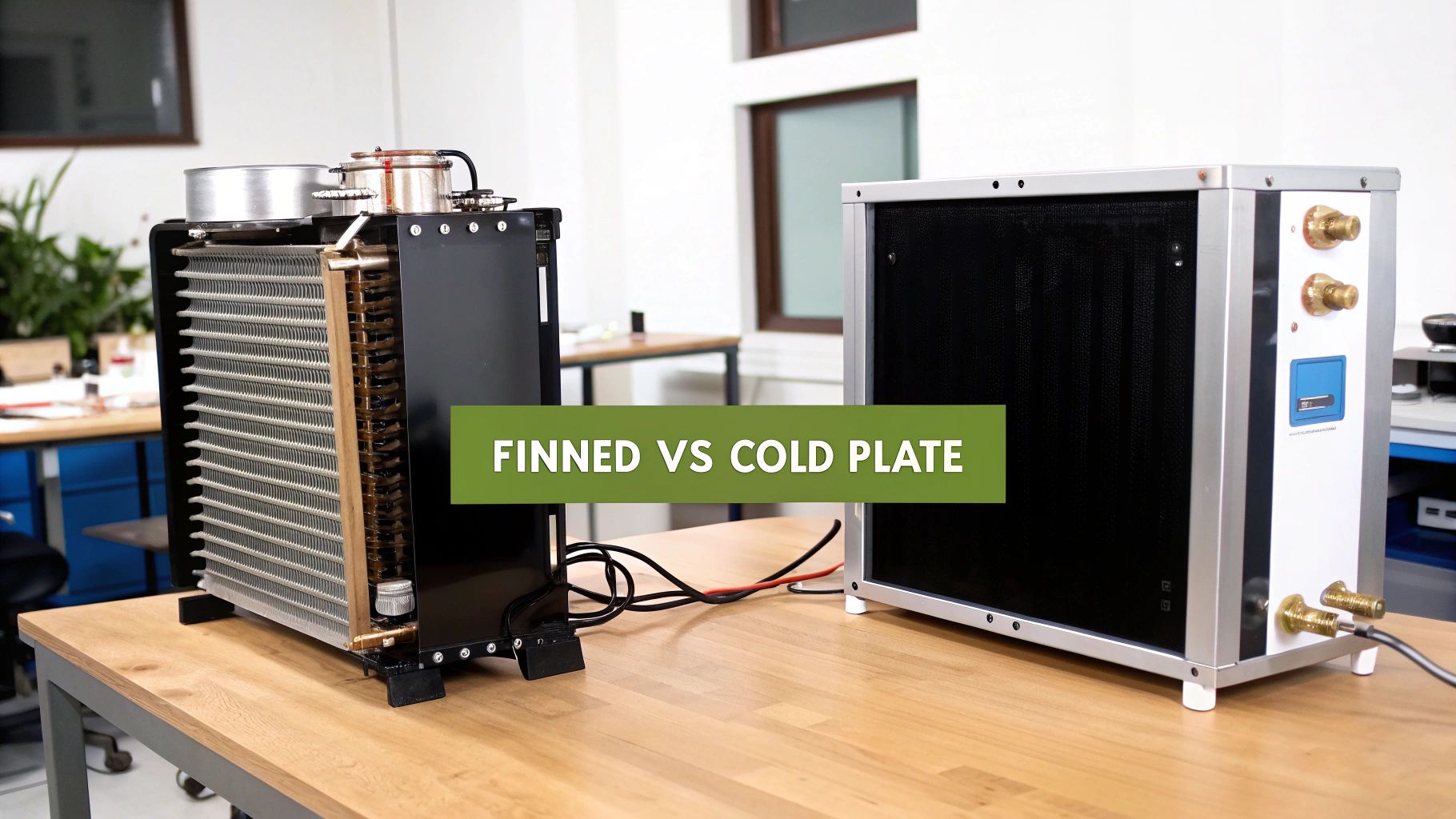
Each type has its own strengths and is chosen by manufacturers for specific reasons tied to the refrigerator's size, intended use, and efficiency goals.
Finned Tube Evaporators: The Workhorse of Pizzerias
The most common design you'll find in larger, high-volume pizza prep tables is the finned tube evaporator. Think of it like a car's radiator, but for cold. It’s a series of tubes carrying frigid refrigerant, surrounded by a dense network of thin metal fins. This design creates a massive surface area for heat exchange.
A powerful fan sits behind this coil, constantly blowing air across the fins. This process rapidly chills the air before it’s circulated throughout the cabinet. This fan-assisted, high-airflow method is perfect for bigger prep stations that are opened constantly during a busy service. It helps the unit recover its temperature in a flash, keeping your toppings consistently cold and safe.
The downside? Those fins are magnets for dust, flour, and grease from the kitchen air. If not cleaned regularly, they can get clogged, restricting airflow and forcing your compressor to work overtime.
Cold Plate Evaporators: The Compact Cooling Solution
On the other hand, cold plate evaporators are typically found in smaller, under-counter units where every inch of space counts. Instead of a fan-and-fin system, this design uses refrigerant-filled tubing bonded directly to a metal plate.
This plate gets intensely cold and cools the air around it through natural convection, with little to no fan assistance. They're simpler, with fewer moving parts, which makes them quite durable and less prone to certain mechanical failures.
However, they don't cool the space as quickly or as evenly as a finned tube system. This makes them a poor choice for large, busy prep tables where the door is constantly opening and closing, letting warm air flood in.
Choosing the right system directly impacts your kitchen’s efficiency and costs. An ENERGY STAR-certified commercial refrigerator, for example, is built with an optimized evaporator for fridge operation in mind. This design choice is a game-changer for pizzeria owners running prep tables non-stop.
Energy efficiency isn't just a buzzword here. These certified refrigerators, powered by efficient evaporators, use just 1.89 kWh per day. That slashes energy usage by nearly 57% compared to standard models that burn through 4.44 kWh daily. You can explore more data on how efficient systems are changing the market and find additional insights on commercial refrigeration systems.
Comparing Evaporator Types in Pizza Prep Refrigerators
To help you figure out which system is powering your prep table and why it matters, here’s a straightforward comparison of the two main evaporator designs you'll encounter.
| Evaporator Type | Best For | How It Works | Pros for Pizzerias | Cons for Pizzerias |
|---|---|---|---|---|
| Finned Tube | High-volume, large prep tables (e.g., 60"+) | A fan blows air over a large, finned coil to rapidly cool and circulate air. | Fast temperature recovery; maintains even cooling during busy rushes. | Fins can clog with dust and grease, requiring regular cleaning. |
| Cold Plate | Smaller, compact, or under-counter units | Refrigerant tubes cool a metal plate, which chills the air via natural convection. | Fewer moving parts (less maintenance); durable and quiet operation. | Slower to cool; less effective in large units or with frequent door openings. |
Understanding this fundamental difference is the first step to mastering your equipment. By identifying the type of evaporator for fridge you have, you're better equipped to maintain its performance, ensuring every pizza you make starts with perfectly chilled, fresh, and safe ingredients.
Simple Maintenance to Prevent Costly Failures
In the thick of a dinner rush, it’s all about the dough, the sauce, and the toppings. But the unsung hero keeping your inventory safe and perfectly chilled is hidden away inside your prep table: the evaporator. Ignoring simple upkeep on your evaporator for fridge units is a recipe for disaster, often leading to frantic emergency repair calls right when you can least afford them.
Think of it this way: a few minutes of preventative maintenance each month is like a small insurance policy for your kitchen's most valuable player. It's a simple, proactive habit that extends the life of your equipment, keeps energy bills down, and saves you from the gut-wrenching stress of a sudden breakdown.
Create a Monthly Maintenance Checklist
Consistency is everything. Catching a small issue before it snowballs into a major failure is the whole game. This routine doesn't need to be a huge production; it just needs to get done. Using an equipment preventive maintenance checklist can be a great way to keep your entire kitchen humming along.
Here are four essential tasks to put on your calendar every month:
- Clean the Evaporator Coils: In a pizza kitchen, a sticky mix of flour, dust, and airborne grease can quickly coat the evaporator's delicate fins. This buildup acts like a thick blanket, strangling the coil and stopping it from absorbing heat. A gentle cleaning with a soft brush and a non-corrosive coil cleaner is all it takes to restore airflow and cooling power.
- Inspect for Frost Buildup: A light dusting of frost is normal, but a solid block of ice is a major red flag. If you see thick ice, it’s a cry for help. It could signal a problem with the defrost system, a leaky door seal letting in moist air, or poor airflow. Your unit is working way too hard and is on the verge of giving up.
- Clear the Drain Lines: Every refrigeration unit has a drain line to get rid of condensation during the defrost cycle. This line is a magnet for food bits and slime, and a clog will cause water to back up and pool inside your prep table. A quick pass with a pipe cleaner or a blast of compressed air keeps it flowing freely.
- Listen for Unusual Fan Noises: The evaporator fan is what circulates all that cold air. If you start hearing rattling, grinding, or buzzing, listen up. The fan motor might be failing or getting choked by ice. A bad fan motor is one of the most common repair calls and can quickly knock out your entire cooling system.
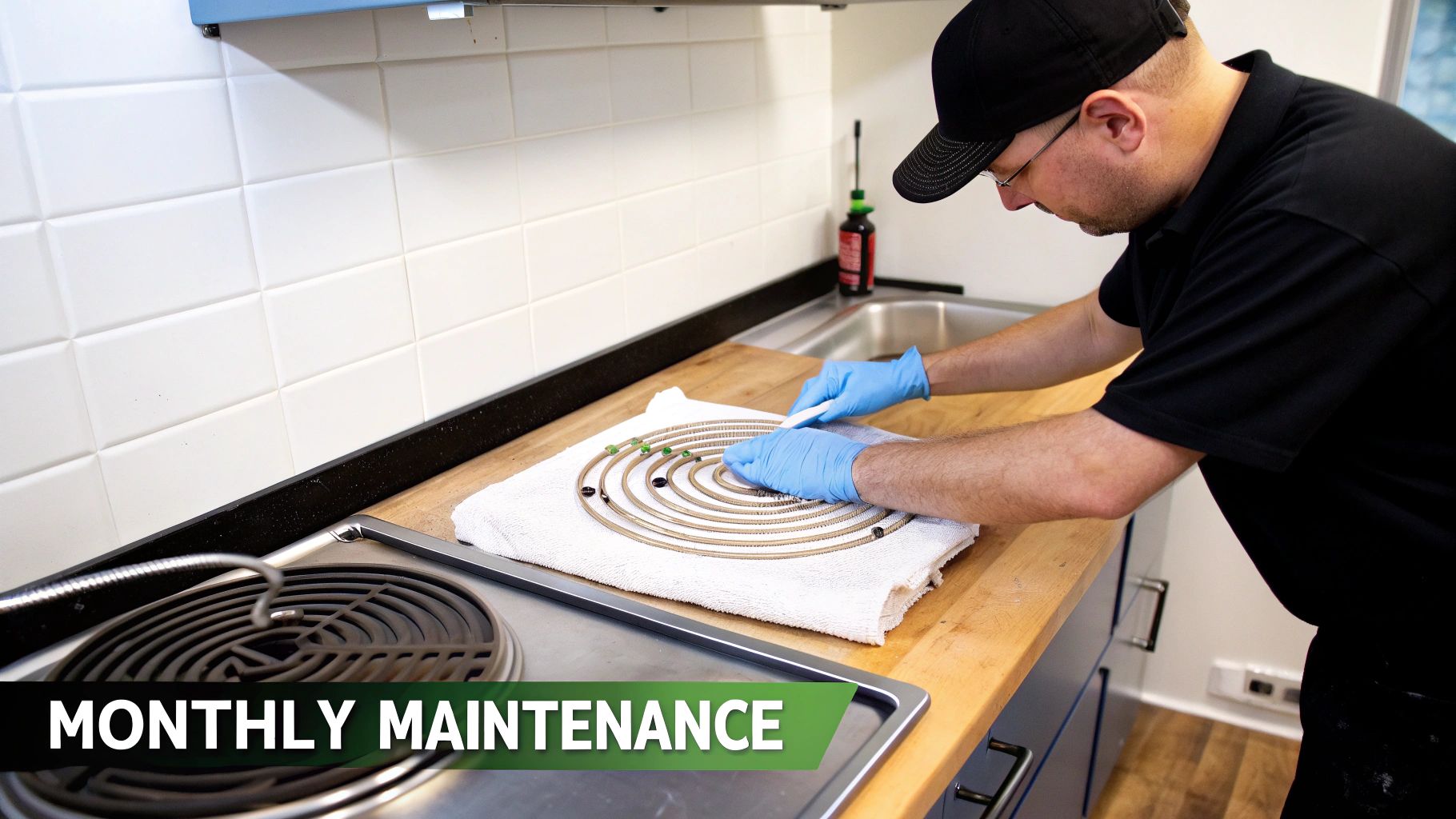
By baking these simple checks into your monthly routine, you empower your team to be the first line of defense. This isn't just about avoiding costly repairs; it's about making sure your pizza prep table remains a reliable workhorse, ready for even the busiest Friday night you can throw at it.
Troubleshooting Common Evaporator Problems
When your pizza prep table gives up the ghost during a Friday night rush, every minute of downtime is costing you money and sanity. A failing evaporator for fridge systems is often the culprit, but the good news is that most problems send up smoke signals before they become a full-blown fire. Learning to read these signs is your best defense for a quick diagnosis.
Is the air inside feeling a little lukewarm? Finding mysterious puddles on the floor? Or is there a solid block of ice where you should only see a light frost? These are the classic calling cards of evaporator trouble. For each of these, there are a few simple checks you can run yourself to figure out what’s really going on.
The Unit Isn't Cold Enough
This is the one that makes every pizzeria owner’s heart skip a beat. You lift the lid, and the air feels warm, pushing your cheese, pepperoni, and veggies right into the temperature danger zone.
Before you hit the panic button, check these two usual suspects:
- A Frozen Coil: Think of a thick layer of ice on the evaporator coil as a winter coat. It’s insulating the very thing that’s supposed to be absorbing heat. Your system will run nonstop, burning electricity, but the prep table never gets cold. This is usually caused by a bad defrost system or a leaky door gasket letting in all that humid kitchen air.
- A Bad Evaporator Fan Motor: You might hear a weird grinding or buzzing sound—or maybe, you hear nothing at all. That fan's job is to push the cold air from the coil out into the cabinet. If it’s dead, all that chill just sits there, trapped, while the rest of your unit slowly warms up.
Water Leaking onto the Floor
Discovering a puddle under your prep table is frustrating, but it’s almost always a straightforward fix. This symptom points directly to a clogged drain line. During the defrost cycle, melted frost and condensation are supposed to drain away through a small tube. When that tube gets jammed with food bits or slime, the water has nowhere to go but out onto your floor.
A backed-up drain line is more than just a slip-and-fall hazard. If you ignore it, that standing water inside the unit can refreeze, creating a much bigger ice block that can wreck the fan motor and other parts.
Excessive Ice Buildup
A light, even coating of frost on the coil is perfectly normal. A solid brick of ice, however, is a huge red flag. This means something has thrown the cooling cycle completely out of whack. The most common culprits are a dead defrost heater, a faulty defrost timer, or a torn door gasket that’s letting in a constant stream of warm, moist air.
This is something you need to jump on immediately. The ice won't just kill your cooling; it can physically bend and damage the delicate aluminum fins on the coil, turning a simple repair into a much more expensive replacement. For a deeper dive into what to do when your equipment fails, check out our ultimate guide to commercial refrigeration repair to get back up and running.
Evaporators are the unsung heroes of the commercial kitchen, a fact reflected in the broader market. The refrigeration coolers market, valued at USD 4.19 billion, is projected to hit USD 5.74 billion by 2029, with evaporators expected to dominate that growth. For pizzerias relying on True or Atosa prep tables, this just confirms what we already know: these components are built for the grind of commercial use, offering low running costs and the pinpoint temperature control you need. Discover more insights on the refrigeration coolers market trends on marketsandmarkets.com.
Knowing the difference between a quick fix and a serious problem is key. Clearing a clogged drain line is something you can likely handle yourself. But if you suspect a refrigerant leak or a compressor failure, it’s time to pick up the phone and call a pro—immediately.
How to Choose the Right Replacement Evaporator
Sooner or later, even the most reliable evaporator coil in a hard-working pizza prep table is going to give up the ghost. When that day comes, picking the right replacement is about more than just getting your refrigeration back online—it’s about protecting your investment and keeping your kitchen running smoothly for years. Just grabbing the cheapest part you can find on the internet is a fast track to future headaches.
A mismatched evaporator for fridge units can lead to weak cooling, sky-high energy bills, and even total system failure. To get it right, you absolutely have to match the Original Equipment Manufacturer (OEM) specifications. This info is your roadmap to the perfect part, and you’ll usually find it stamped on a metal data plate somewhere on your prep table—check the side, back, or inside the cabinet.
Your Essential Replacement Checklist
Before you or your tech orders a new part, you need to run through this critical checklist. Getting even one of these details wrong can cause some serious problems down the road. Arming yourself with this knowledge means you can have a smart, productive conversation with your service provider and make sure you get a component that will last.
- Physical Dimensions: This one is non-negotiable. The new evaporator has to physically fit into the space where the old one lived. Get out the tape measure and carefully note the length, width, and height of the old unit.
- BTU Capacity: The British Thermal Unit (BTU) rating is all about cooling power. An underpowered coil simply won't keep your toppings cold enough, while an overpowered one can cause the system to short cycle, leading to premature wear and tear on the compressor.
- Refrigerant Compatibility: Modern prep tables often run on environmentally friendly refrigerants like R290 (propane). The new evaporator must be rated for the specific type of refrigerant your system uses. This is a huge deal for both safety and performance.
- Coil Material: Most commercial evaporators use either aluminum or copper coils. To maintain the heat transfer efficiency the system was designed for, stick with whatever material your original unit used.
Beyond the Basics: What to Look For
Once you've nailed down the core specs, a few other factors can make a huge difference in the part's longevity and your kitchen's compliance. Don't skip these crucial details when you're sourcing a replacement.
An evaporator isn’t just a random piece of metal; it’s a precisely engineered component designed to work in perfect harmony with the rest of your refrigeration system. Choosing a part that is NSF-compliant and correctly sized is the single best way to prevent future system failures and protect your food inventory.
Look for a part that is NSF (National Sanitation Foundation) compliant. This certification guarantees the component is made from food-safe materials and is designed for easy cleaning—an absolute must in any commercial kitchen. It’s vital for maintaining food safety and sailing through health inspections. If you need a hand sourcing the right components, our guide on where to find pizza prep table parts offers some great insights.
By taking the time to match these specifications precisely, you’re ensuring the new evaporator for fridge installation will be a lasting solution, not just a temporary patch. It’s the smart play to keep your prep table running like a top, your ingredients perfectly chilled, and your pizzeria profitable.
Your Questions, Answered
When you're running a pizzeria, you don't have time for guesswork. You need straight answers to keep your equipment—and your business—running smoothly. Here are some of the most common questions we hear from pizzeria owners about the evaporators inside their prep tables.
How Often Should I Clean My Pizza Prep Table's Evaporator Coil?
For a busy pizzeria, you'll want to give the evaporator coil a quick inspection every month and schedule a proper deep clean every 3-6 months. Think of it like changing the oil in your delivery car; it's preventative maintenance that saves you from a much bigger headache down the road.
If your prep table is sitting next to high-grease equipment like fryers or a griddle, you absolutely need to clean it quarterly. That grease gets everywhere, and a clogged coil is one of the fastest ways to kill your compressor and ruin a dinner rush.
Can I Use a Generic Evaporator for a Repair?
While you might find a generic part that seems to fit, it's always best to stick with an Original Equipment Manufacturer (OEM) replacement. It's a bit like trying to use a dough recipe from a different pizzeria—it might look similar, but the results just won't be the same.
An OEM evaporator is built specifically for your prep table's dimensions, cooling capacity (BTU), and refrigerant type. Slapping in a generic part often leads to poor cooling, higher energy bills, and can even damage the compressor or completely void your warranty.
Think of it like using the wrong size pizza screen for a specialty pie—it might technically work, but the results will be inconsistent and unreliable. Sticking with OEM parts guarantees the performance and efficiency your pizzeria depends on.
What Is the Average Cost to Replace a Pizza Prep Table Evaporator?
The total cost can swing a bit depending on your prep table's brand and size, but you can generally expect the evaporator part itself to cost between $200 and $700.
Then you have the professional labor. This isn't just a simple swap; the job involves properly evacuating and recharging the refrigerant. That typically adds another $300 to $600 to the bill. All in, you're likely looking at a total replacement cost somewhere in the range of $500 to $1,300. Always get a detailed quote from a qualified refrigeration tech before giving the green light.
At Pizza Prep Table, we get that reliable refrigeration is the backbone of any great pizzeria. When you're ready to upgrade or expand, explore our selection of high-quality pizza prep tables designed to keep your ingredients fresh and your kitchen running at peak efficiency. Visit us at https://pizzapreptable.com to see our full range of equipment.