

How to Finance Restaurant Equipment for Your Pizzeria
So, you're ready to get your pizzeria funded. Before you even think about talking to a lender, you need a solid game plan, not just a wish list. The first step is creating a detailed equipment blueprint that shows exactly why every single purchase is necessary. This isn't just for you—it's to show potential financiers that you've done your homework and have a clear path to making money.
The absolute cornerstone of this plan? Your pizza prep table. It's the biggest, most critical investment that will directly shape your kitchen's entire workflow and how many pies you can pump out on a busy night.
Building Your Pizzeria's Equipment Wish List
Forget about financing applications for a minute. First, you need to nail down precisely what your pizzeria needs to not just open its doors, but to actually succeed. A well-thought-out equipment list is your proof to lenders that you're serious. It connects every piece of gear to a specific job in your kitchen that generates revenue.
The heart of any pizzeria is the prep line, and that's where the pizza prep table lives. This is where your team will spend the majority of their time, so getting this choice right is everything. Your decision needs to be based on real numbers and practical factors.
- Projected Sales Volume: A high-volume spot cranking out 300 pizzas a night has completely different needs than a small cafe selling 50. The former needs a beast of a prep table (think a 93-inch model), while the latter might be perfectly fine with a compact 44-inch unit.
- Menu Complexity: Got a menu with a ton of toppings for specialty pizzas? You'll need a pizza prep table with more refrigerated wells to keep everything organized and fresh. If you're sticking to the classics like pepperoni and cheese, you can get by with something much smaller.
- Kitchen Workflow: Step back and visualize how the table fits into your kitchen's dance. Does it create a smooth, logical path from dough to oven? Or is it going to create a traffic jam when you're slammed making pizzas?
Beyond the Pizza Prep Table
While the pizza prep table is the star of the show, it can't do the job alone. You have to budget for its supporting cast. A powerful commercial mixer is non-negotiable for producing consistent dough day in and day out. Similarly, your choice of oven—a classic deck oven for that perfect artisanal char or a conveyor oven for speed and volume—will define your entire product.
Here's a mistake I see all the time: underestimating refrigeration. You absolutely need enough cold storage for what's on the prep line, but also for your bulk items—cheese, sauce, and stacks of dough boxes. Running out of fridge space during a dinner rush is a one-way ticket to chaos.
Putting together this comprehensive blueprint is the first real step toward getting funded. For a deeper dive into everything you might need, our commercial kitchen equipment checklist is a fantastic resource for pizzerias of all sizes. When you've thoroughly mapped out your needs, you can walk into a lender's office with a clear, justifiable plan that frames your request not as a cost, but as a smart investment in your future.
Finding the Right Funding for Your Kitchen
Once you have that perfect equipment list nailed down, it's time to figure out how to pay for it. The world of commercial lending can feel like a maze, but when you want to finance restaurant equipment, it really just comes down to a few core options. Each path has its own pros and cons, especially for a pizzeria owner focused on getting a new pizza prep table without torching their cash reserves.
For a brand-new pizzeria just getting off the ground, an equipment financing agreement can be a fantastic fit. Think of it like a car loan; the loan is secured by the equipment itself—in this case, your pizza prep table. Because the table acts as the collateral, lenders see it as less risky. That often means an easier application and faster funding than a traditional bank loan. You get a top-tier prep table in your kitchen fast, leaving your cash free for crucial things like payroll, inventory, and marketing.
On the flip side, maybe you're an established pizzeria planning a major kitchen overhaul—new ovens, mixers, and a couple of new prep stations. In that case, an SBA loan might be your best bet. These loans are backed by the Small Business Administration, which usually translates to better interest rates and longer repayment terms, making that big investment much more manageable.
Comparing Common Financing Paths
The right financing choice really depends on where your business is at—its age, credit history, and what you need to achieve right now. A traditional bank loan is great for competitive rates, but they’ll want to see a strong financial history and the application process can drag on. It’s a solid option for an established restaurant with a proven track record.
Leasing is another very popular route. Instead of owning the pizza prep table, you're essentially renting it with predictable monthly payments. This is a huge help for managing cash flow and often means lower upfront costs. The trade-off? You won’t be building any equity in the equipment. You can get into the nitty-gritty of how these options stack up in our complete guide to financing restaurant equipment.
This decision tree shows how the complexity of your menu directly influences the kind of pizza prep table you need, which in turn shapes your financing needs.
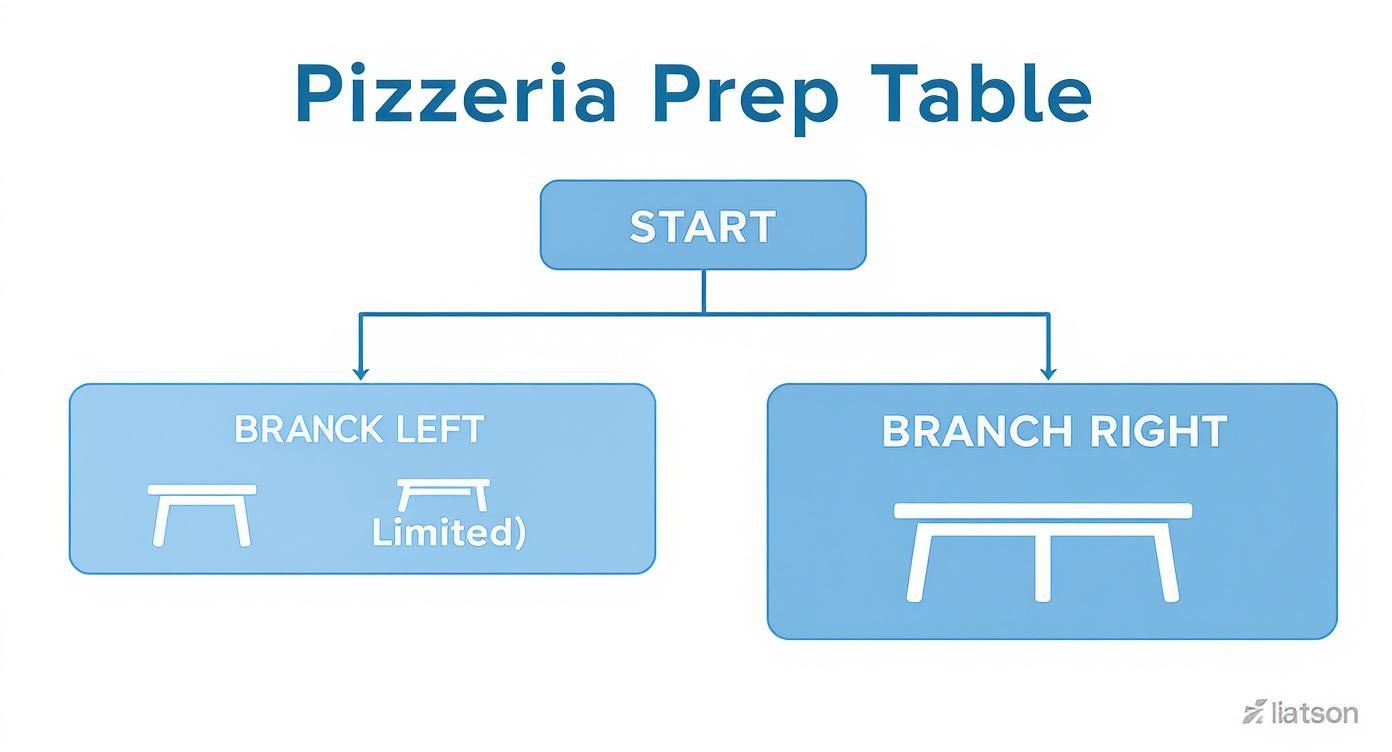
As you can see, a bigger, more complex pizza menu demands a more substantial (and pricier) prep table, naturally pointing you toward financing options built for larger investments.
To make things clearer, let's break down the most common financing methods side-by-side. Each one has a sweet spot depending on your specific situation.
Comparing Financing Methods for Pizza Equipment
| Financing Type | Ownership | Typical Term Length | Best For |
|---|---|---|---|
| Traditional Bank Loan | You own the equipment from day one. | 3-7 years | Established pizzerias with strong credit looking for the lowest rates. |
| Equipment Financing | You own it, but the equipment serves as collateral. | 2-5 years | Startups or businesses needing equipment quickly with less red tape. |
| Lease (Operating) | You never own it; you're just renting. | 1-3 years | Pizzerias wanting low monthly payments and the ability to upgrade often. |
| Lease-to-Own (Capital) | You make payments and own it at the end of the term. | 3-5 years | Shops that want ownership but need to preserve upfront cash. |
| SBA Loan | You own the equipment. | 7-10 years | Major kitchen overhauls or expansions needing favorable long-term rates. |
| Business Line of Credit | N/A (It's a revolving credit line, not a term loan). | Ongoing | Established businesses needing flexible, on-demand cash for various needs. |
Looking at this table, you can see there’s no single "best" option—it's all about what aligns with your business goals.
Here's the key takeaway: financing isn't just about getting a check. It’s about finding a partner and structuring a deal that fuels your growth. The right financing for your pizza prep table today should set you up for success tomorrow, not saddle you with debt you can't manage.
Ultimately, whether you go for a direct loan, a lease, or an SBA-backed program, the goal is the same: getting the essential tools that will make your pizzeria thrive. By weighing the pros and cons of each path against your unique situation, you can make a smart decision that supercharges your kitchen's workflow and protects your bottom line.
Understanding the True Cost of Your Equipment

The price tag on that shiny new pizza prep table? That’s just the opening act. If you want to finance restaurant equipment without getting hit by surprise costs down the road, you have to get real about its total cost of ownership (TCO).
This is the complete financial picture that lenders look at, and it’s what savvy pizzeria owners have absolutely mastered. Ignoring these extra costs is a classic rookie mistake that can choke your cash flow when you least expect it.
Beyond the Sticker Price
When you start comparing financing offers, your eyes will naturally go to the interest rate. But that's only part of the story. You need to be on the lookout for other common fees that get tacked on.
- Origination Fees: This is a one-time charge the lender takes for processing your application, usually between 1% to 5% of the loan amount.
- Prepayment Penalties: Some lenders will actually charge you a fee if you pay off the debt early. Always ask about this—it can lock you in and kill your financial flexibility.
- Late Fees: Get the details on the grace period and exactly what a missed payment will cost you.
While the financing details are critical, the costs tied directly to the equipment are just as important. For a pizzeria, these often-overlooked expenses can pile up fast.
Your financial model has to account for everything. A $5,000 pizza prep table can easily cost over $7,500 in its first year once you factor in delivery, installation, initial maintenance, and financing fees. That’s a 50% jump from the sticker price.
Calculating the Full Investment
Let's walk through a realistic cost model for a mid-range pizza prep table. This isn't just a hypothetical exercise; it's how you build a real-world budget that goes beyond the monthly loan payment.
Example Calculation: Mid-Range Pizza Prep Table
| Cost Item | Estimated Amount | Description |
|---|---|---|
| Purchase Price | $5,000 | The listed price of the unit itself. |
| Delivery & Freight | $400 | Getting that heavy piece of steel from the warehouse to your door. |
| Installation | $350 | Professional setup, including any necessary electrical work and placement. |
| Financing Interest | $600 | A realistic first-year interest estimate on a 3-year loan at 8% APR. |
| Preventive Maintenance | $300 | An annual contract to clean coils and check the compressor is non-negotiable. |
| Total First-Year Cost | $6,650 | A much more accurate number for your budget. |
This breakdown shows exactly why a detailed budget is non-negotiable. These costs aren't extras; they are a core part of your operational expenses.
If you're mapping out all your financial needs, our complete restaurant startup costs breakdown gives you a wider view of where every dollar goes. By planning for the true cost, you make sure your new pizza prep table is a revenue-generating machine, not a financial headache.
Assembling a Loan Application Lenders Will Love

Putting together a loan application isn't just paperwork; it's your shot at convincing a lender that you're a serious pizzeria operator with a solid plan. A clean, well-organized package is your best tool for getting that "yes." It shows you’re not just winging it—you have a clear vision for how this new equipment will make you money.
Think of it this way: your goal is to answer every question a lender might have before they even have to ask. Get this right, and you'll not only speed up the process but also position your pizzeria as a smart, low-risk investment for them.
Laying the Groundwork with Essential Documents
Before you fill out a single application form, get all your ducks in a row. Lenders see dozens of applications, and a complete, organized file immediately signals that you're professional and on top of your game.
Start with the financial bedrock of your application. This is where lenders will focus most of their attention.
- Business Plan: If you're a startup, this is absolutely non-negotiable. It needs to lay out your pizzeria's concept, who you're selling to, and how you'll reach them. Critically, it must connect the dots and explain exactly how that new pizza prep table will boost your output and drive more sales.
- Financial Projections: You need to show realistic revenue and profit forecasts for the next 3-5 years. Tie these numbers directly to the equipment. For instance, show how a bigger pizza prep table lets you serve 30% more customers during your Friday night rush, leading to a specific jump in revenue.
- Tax Returns: Have 2-3 years of both your personal and business tax returns scanned and ready to go. This gives lenders a clear history of your financial track record.
- Bank Statements: Most lenders want to see the last 6-12 months of your business bank statements. This is how they'll verify the cash flow and revenue numbers you're claiming.
Telling Your Pizzeria's Story
Your application is much more than a stack of papers; it's the story of your business. Use that business plan to sell your vision. Talk about your passion for pizza, what makes your shop unique, and why this specific pizza prep table is the key to unlocking your next level of growth.
This is also where you show you've done your homework on the industry. The global restaurant equipment market is on a serious growth trajectory, projected to more than double from USD 4.8 billion in 2025 to USD 10.2 billion by 2035. Dropping a stat like this shows you’re a forward-thinking owner who understands the bigger picture. You can dig into more restaurant equipment market growth data to back up your case.
The most crucial mindset shift is to frame your equipment purchase not as an expense, but as a revenue-generating investment. A new pizza prep table isn't just a stainless steel surface; it's a tool that lets you hire another cook, reduce ticket times, and ultimately boost your bottom line.
By preparing your documents meticulously and weaving them into a compelling story, you elevate your application from a simple request for cash into a persuasive business case. You're not just asking to finance restaurant equipment; you're inviting the lender to partner in your success. That professional approach is exactly what gets a loan officer’s attention.
How to Negotiate the Best Financing Terms
Once your applications are out the door, don't just sit back and wait. This is where the real work begins. Getting the best deal to finance restaurant equipment isn’t about passively accepting the first offer that lands in your inbox; it’s a negotiation. Your goal is to find a financing agreement that acts as a launchpad for your pizzeria, not an anchor holding it back.
The single most powerful tool you have in your corner is competition. Never, ever settle for just one quote. Reach out to multiple sources—your local credit union, a national bank, an online lender, and a company that specializes specifically in pizza equipment financing. Each one will look at your application through a different lens, and their offers will reflect that. This creates the leverage you need to get the best possible terms.
Pinpointing Negotiable Terms
Too many pizzeria owners get tunnel vision and think the interest rate is the only thing they can negotiate. While it's a huge piece of the puzzle, several other terms are often more flexible. A lender might not budge much on the rate, but they could be willing to sweeten other parts of the deal to win your business.
These are the key areas to focus on during your conversations:
- Repayment Schedule: A standard monthly payment might sound simple, but it can be a killer for a seasonal pizzeria. Ask about flexible payment options, like smaller payments during your slow months and larger ones when the summer rush hits.
- Loan Term Length: A slightly longer term can lower your monthly payment, freeing up crucial cash flow for payroll and ingredients. On the flip side, a shorter term saves you a bundle on total interest paid. Run the numbers for both scenarios to see what truly fits your pizzeria's financial projections.
- Origination Fees: These upfront fees can sometimes be reduced or even waived entirely, especially if you have a strong application and another competitive offer in hand. Don't be afraid to ask.
Reading the Fine Print
While you’re negotiating the big-picture items, don’t lose sight of the details buried in the contract. A great offer on paper can be soured by restrictive clauses. Keep a sharp eye out for prepayment penalties, which is a fee for paying off the loan early. This can trap you in a high-interest loan even after your pizzeria takes off and you have the cash to clear the debt.
Your entire negotiation strategy should be built on a rock-solid understanding of your own numbers. Walk into that conversation knowing your ideal monthly payment, your total cost tolerance, and exactly how this new pizza prep table will grow your revenue. When you can confidently say, "This equipment will boost our pizza output by 25%," you're not just asking for money—you're presenting a partnership.
This confident approach is especially powerful right now. The food service equipment sector is on fire, with a market size of USD 39.07 billion in 2024. Knowing your place in this booming industry strengthens your position at the negotiating table. You can dig into the data and explore the growth of the food service equipment market on GrandViewResearch.com to see the trends for yourself. By being prepared and assertive, you can lock in terms that will fuel your pizzeria's success for years to come.
Answering Your Top Questions About Pizzeria Equipment Financing
Jumping into equipment financing can feel like trying to read a menu in a different language. You're an expert in dough, sauce, and cheese—not loan agreements and amortization schedules. To cut through the noise, I’ve put together straight answers to the questions I hear most often from pizzeria owners just like you.
Getting a clear picture of how this all works is the first step. Whether you’re eyeing a shiny new pizza prep table or a seasoned deck oven that’s seen a few Friday night rushes, understanding your options helps you make a smarter investment for your business.
Can I Finance a Used Pizza Oven or Prep Table?
You absolutely can, and it's often a brilliant move to keep your startup or expansion costs in check. Most lenders are perfectly fine with financing used equipment, but you should expect the terms to be a little different from a new purchase.
Since a used pizza prep table has already lived part of its life, the loan term will naturally be shorter—think two or three years instead of the typical five. The interest rate might also be a touch higher to cover the lender's risk. To get the green light, you'll need to have your details in order: the equipment's age, its current condition, and who you're buying it from. Pro tip: getting an independent appraisal is a fantastic idea. It shows the lender you're paying a fair price, which makes them much more comfortable.
What’s the Magic Credit Score I Need?
There’s no single magic number, but a personal credit score of 650 or higher is going to open the most doors and get you the best rates. Lenders look at a solid credit history as a sign that you’re reliable and pay your bills on time.
That said, some specialized equipment financiers will work with scores in the low 600s, especially if you can show strong, consistent cash flow or you're willing to put more money down. If you're aiming for the most competitive financing, like an SBA loan or a traditional bank loan, they'll want to see a stronger score, usually 680 or above. My advice? Always work on building your credit before you start applying. It’s a strategy that always pays off.
The core difference between an equipment loan and a lease boils down to one simple question: Who owns the asset? With a loan, you do. With a lease, the financing company does. This distinction has major impacts on your taxes and balance sheet.
What's the Real Difference Between a Loan and a Lease?
This one is crucial, and it trips a lot of people up. With an equipment loan, you borrow money to buy the pizza prep table outright. Once you’ve paid off the loan, it's 100% yours. You’re building equity in a business asset.
A lease, on the other hand, is basically a long-term rental. You make monthly payments to use the equipment for a set period. When the lease is up, you typically have a few options: you can return it, renew the lease, or buy the equipment for whatever its remaining value is.
So which is better? Loans are fantastic for the long-lasting workhorses of your kitchen, like prep tables and deck ovens that will serve you for years. Leases often come with lower monthly payments and are great for gear that gets outdated fast, like your POS system.
Deciding to finance is part of a much bigger picture. The global restaurant equipment market was valued at USD 92.89 billion in 2024 and is on track to hit USD 206.07 billion by 2035. You're not just buying a table; you're investing in a growing industry. You can explore more insights into the restaurant equipment market on MarketResearchFuture.com.
Ready to equip your pizzeria for success? At Pizza Prep Table, we offer a wide selection of top-quality pizza prep tables and flexible financing options to fit your budget. Find the perfect foundation for your kitchen and start building your dream today at https://pizzapreptable.com.