

Holey Grail or Holey Mess: Unpacking the Perforated Pizza Peel
Why a Pizza Peel with Holes Changes Everything
A pizza peel with holes offers key advantages over traditional solid peels, solving common pizza-making frustrations.
Quick Answer: Main Benefits
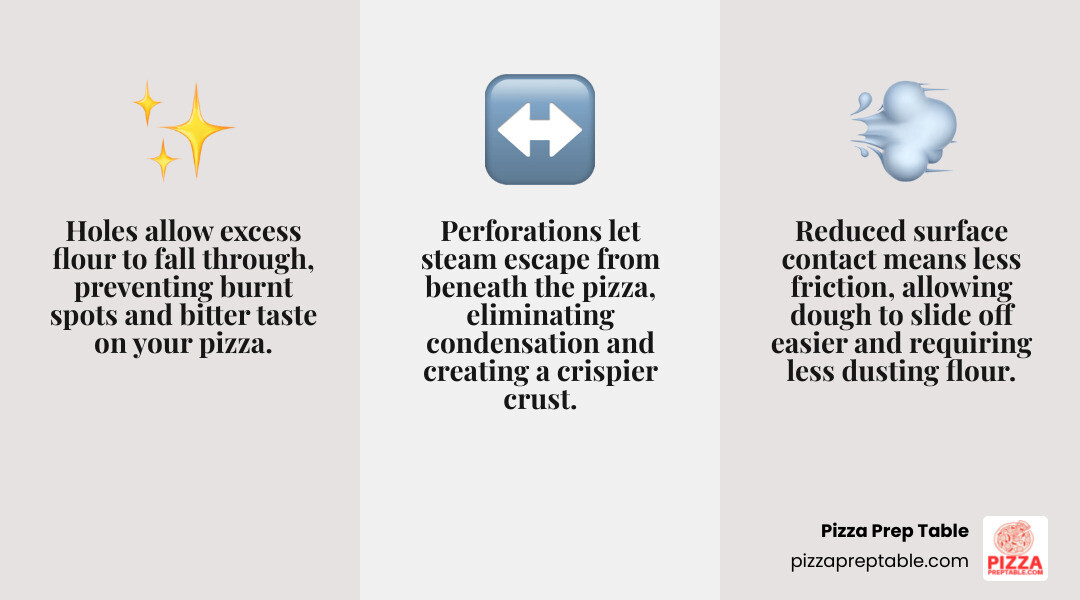
- Removes excess flour: Holes let loose flour fall through, preventing it from burning and creating a bitter taste on your crust.
- Reduces sticking: With less surface area, dough slides off more easily, requiring less flour for dusting.
- Creates crispier crusts: Perforations allow steam to escape, preventing the condensation that leads to soggy pizza bottoms.
If you've ever dealt with a smoke-filled kitchen from burnt flour or a pizza that stubbornly stuck to your peel, you've experienced the exact problems a perforated peel is designed to fix. These tools are practical solutions that deliver a noticeably better pizza.
A perforated peel combines the best features of wood (less sticking) and solid metal (thin, easy-to-slide edge) while being lighter and preventing a soggy crust. The difference is visible in every crisp, evenly browned pizza that comes out of your oven.
I'm Sean Kearney, and with my years in restaurant equipment sales, I've helped countless pizzeria owners choose the right tools. Let me walk you through what makes a pizza peel with holes an essential part of any serious pizza setup.
What is a Perforated Pizza Peel and How Does it Work?
A perforated pizza peel is a flat paddle used to transfer pizzas, but it's dotted with small holes across its surface. These holes are functional, not just cosmetic, and they solve three key problems that solid peels create.
Most perforated peels are made of metal, typically aluminum, which allows for a thin, tapered blade that slides under dough easily. The holes work in three ways:
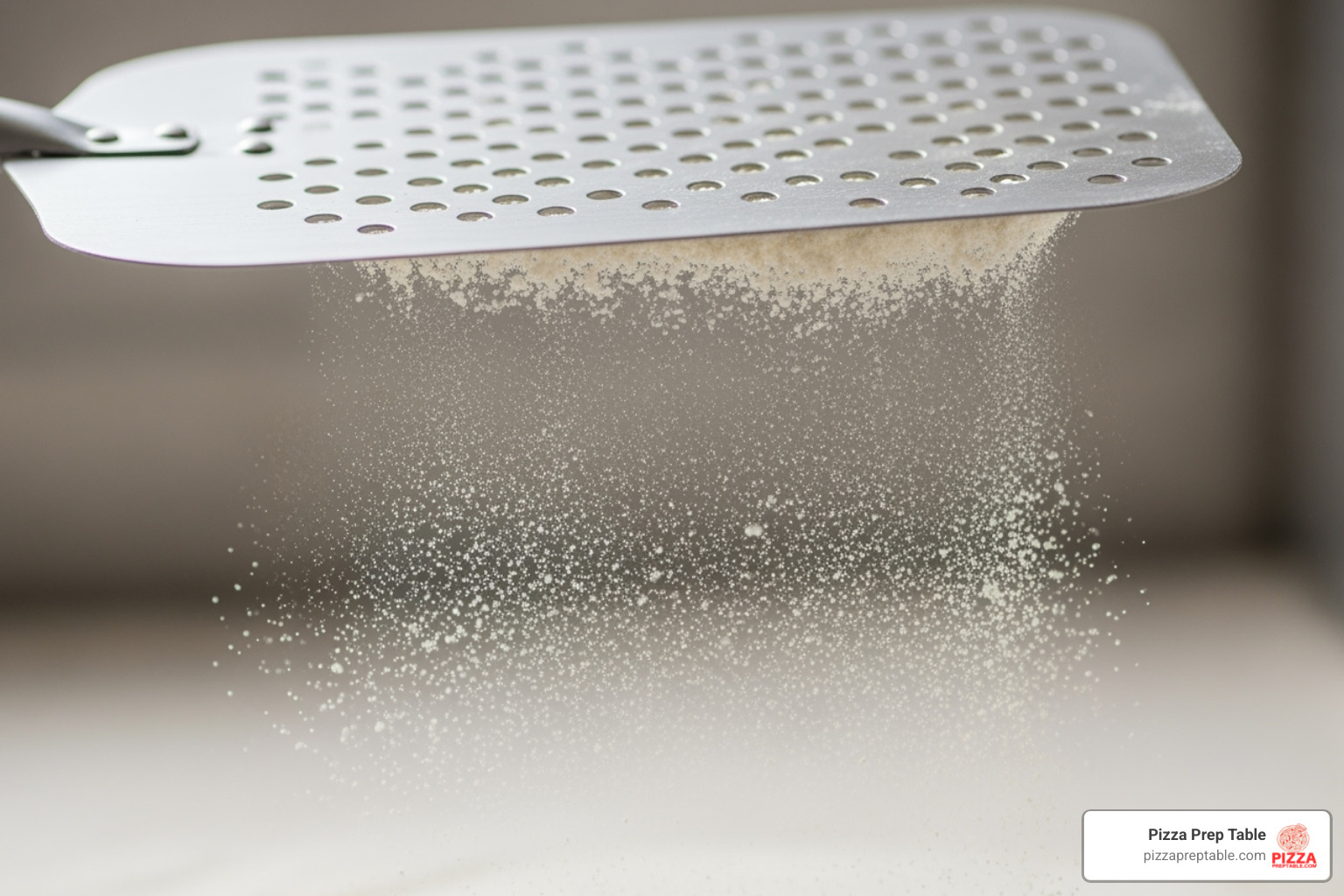
- Flour Release: When you place a topped pizza on a dusted peel, any excess flour falls through the holes. Without them, that flour would burn on your hot pizza stone, creating smoke and a bitter taste.
- Steam Evaporation: The perforations allow moisture from the dough to escape instead of pooling underneath, which helps prevent sticking even before the pizza enters the oven.
- Reduced Surface Area: With up to 30% less surface contact, the dough has fewer points to stick to. This creates less friction, allowing for a smoother launch, especially with wet, high-hydration doughs.
The Science Behind the Holes
The benefits of a perforated peel are rooted in simple physics. The holes significantly reduce friction, meaning your pizza glides instead of grips. This is crucial for delicate doughs that can tear easily.
They also prevent condensation. When warm dough meets a cooler solid peel, moisture condenses, creating a sticky film of water. The perforations break this cycle by promoting airflow, allowing steam to escape rather than getting trapped. This keeps the bottom of the dough drier and makes for an easier launch.
Finally, the holes solve the burnt flour problem. At high pizza oven temperatures (700°F+), excess dusting flour—whether it's fine Tipo 00 flour or coarser semolina—carbonizes almost instantly. This imparts a bitter, acrid flavor and creates a mess on your baking stone. A perforated peel acts as a sieve, ensuring only the necessary amount of flour makes it into the oven. This isn't just about convenience; it's about achieving a cleaner, better taste.
The Core Advantages: Why Pros Prefer a Pizza Peel with Holes
Walk into any serious pizzeria, and you'll likely see a pizza peel with holes. Professionals prefer them because they solve real-world problems that arise during a busy service, leading to better consistency and efficiency.
The most significant benefits include:
- Crispier Crusts: By allowing steam to escape, the perforations keep the pizza bottom dry, which is essential for developing a satisfying crunch. This prevents the dreaded soggy center.
- Lighter Weight: A perforated peel is noticeably lighter than a solid metal or wood peel (e.g., 1.5 lbs vs. 3 lbs). Over a long shift of launching pizzas, this reduces fatigue and helps pizzaiolos work faster.
- Easier Launching: The combination of reduced weight, less surface friction, and excellent flour release creates a nearly frictionless launch. The pizza glides off smoothly without the need for awkward shaking that can displace toppings.
In a professional kitchen, these advantages translate directly to a better bottom line: faster ticket times, happier customers, and cleaner ovens with less maintenance.
How a pizza peel with holes prevents sticking and burning
Sticking and burning are two of the biggest pizza-making headaches, and a perforated peel addresses both head-on.
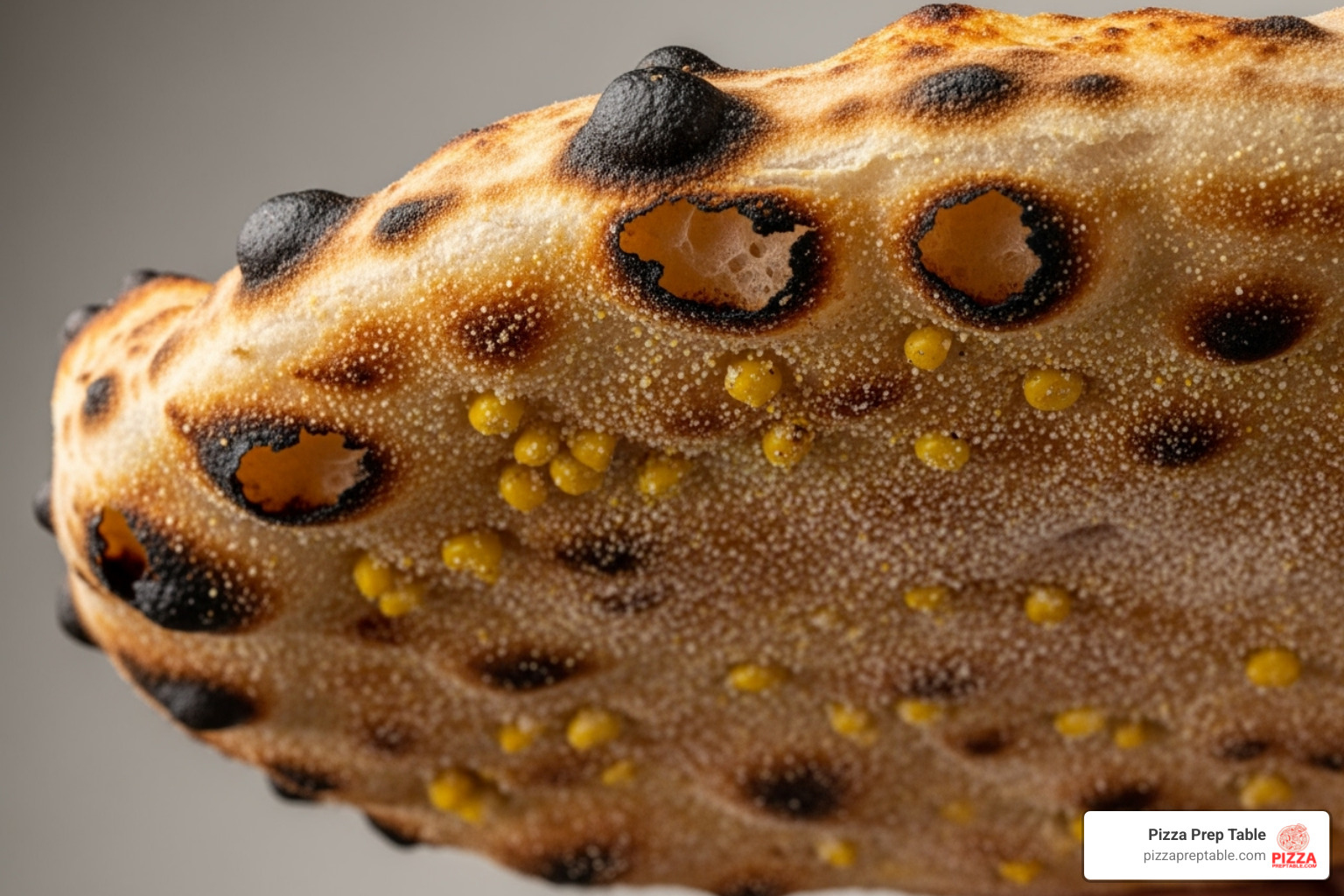
Burning is prevented by excess flour removal. The holes act like a sieve, letting loose flour fall away before it can hit the hot oven floor and turn into smoke and bitter-tasting char.
Sticking is solved by reduced surface contact. With 30-40% less contact area, there's simply less peel for the dough to cling to. Many high-quality peels improve this with an anodized aluminum coating, like those from Ooni or Gi. Metal, which creates an ultra-smooth, durable, non-stick surface. Combined with a thin, tapered edge that slides effortlessly under the dough, these features ensure the smoothest launch possible.
Want to master the complete pizza prep process? Check out our guide on how to prep pizza like a pro.
Achieving a Crispier Crust by Reducing Steam
A soggy bottom is often caused by condensation build-up. As a pizza bakes, it releases steam. On a solid surface, this moisture gets trapped, softening the crust. A pizza peel with holes facilitates air circulation, giving that steam a path to escape. This keeps the underside of the crust dry.
This is fundamental baking science. Dry heat is necessary for the Maillard reaction—the chemical process that creates the delicious browning and complex flavors in a great crust. By enabling moisture escape, a perforated peel creates the ideal environment for a perfectly crisp, evenly browned pizza bottom.
Perforated vs. Solid vs. Wood: Making the Right Choice
Choosing the right pizza peel means understanding the trade-offs between the three main types: perforated metal, solid metal, and wood. Each has its place, but a perforated peel often provides the best all-around performance.
Here’s a quick comparison:
| Feature | Perforated Metal Peel | Solid Metal Peel | Wooden Peel |
|---|---|---|---|
| Material | Anodized aluminum | Aluminum, stainless steel | Basswood, bamboo, acacia |
| Weight | Lightest, easy to maneuver | Moderate to heavy | Heaviest, can be cumbersome |
| Sticking | Least likely to stick | Prone to sticking | Less likely than solid metal |
| Flour Release | Excellent (falls through holes) | None (traps all flour) | None (traps all flour) |
| Crust Result | Crispiest (steam escapes) | Can be soggy (traps steam) | Can be soggy (traps steam) |
| Cleaning | Easy (hand wash) | Easy (hand wash) | Requires careful cleaning/drying |
| Edge Thickness | Very thin, great for launching | Thin, great for retrieving | Thickest, can be hard to launch |
Wooden peels are traditional and naturally less sticky, but they are thick, heavy, and require maintenance to prevent warping. Solid metal peels are thin and durable, making them great for retrieving cooked pizzas, but they trap excess flour and steam, leading to burning and sogginess.
Perforated peels are typically made from anodized aluminum for a durable, lightweight, and smooth surface. Premium brands like Ooni use hard-anodized coatings for improved non-stick properties, while professional-grade Gi. Metal peels feature S.H.A. (Special Hard Anodizing) for extreme smoothness and heat resistance.
When to Choose a Perforated Peel
A pizza peel with holes is the superior choice in several common scenarios:
- For high-hydration doughs: The reduced surface area and non-stick properties prevent delicate, sticky doughs from tearing during launch.
- For high-temperature ovens: A perforated peel is essential for outdoor pizza ovens, as it prevents excess flour from instantly burning and creating smoke.
- For home pizza makers: It offers the best of both worlds—the easy launch of wood and the thin edge of metal—making it the most versatile single tool for achieving professional results at home.
- For professional pizzaiolos: The lightweight design reduces fatigue, while the reliable performance speeds up service and ensures consistent quality, keeping customers happy.
To get the most out of your peel, pair it with the right oven. Explore The Ultimate Guide to Choosing the Best Pizza Oven.
Potential Drawbacks and Considerations
While perforated peels are fantastic, there are a few trade-offs. They typically cost more than basic solid peels due to the more complex manufacturing. Cleaning can sometimes be tricky if cheese or dough gets stuck in the holes, but a quick hand wash after use usually prevents this. With very wet doughs, improperly sized holes can cause the dough to sink in, though this is rare with quality brands that have optimized their hole design. Finally, like any thin metal tool, they can be dented if handled carelessly.

Mastering Your Perforated Peel: Use, Care, and Sizing
Knowing how to properly use and maintain your pizza peel with holes is key to getting consistently great results. With the right technique and care, you'll be launching pizzas like a seasoned pro.
For launching, lightly dust the peel with semolina flour, place your stretched dough on top, and add your toppings quickly. Give the peel a little shake to ensure the pizza moves freely. To launch, position the peel at the back of your hot stone, tilt it slightly, and use a quick forward-and-back motion to slide the pizza off. The reduced friction of a perforated peel makes this move much more forgiving.
For retrieval, the thin, tapered edge slides easily under the cooked pizza. The perforations also help by preventing a vacuum from forming between the hot pizza and the peel.
Some of the top-rated perforated pizza peel brands we recommend include Ooni, Gi. Metal, G.a Homefavor, and American Metalcraft, each offering options for different needs and budgets.
How to Properly Use and Clean Your Peel
Follow these simple care instructions to keep your peel in top condition:
- Hand wash only: Never put your peel in the dishwasher. Harsh detergents can strip its protective anodized coating. Use warm, soapy water and a soft cloth.
- Avoid abrasive cleaners: Scouring pads will scratch the surface, compromising its non-stick quality. Use a soft brush for any stubborn bits in the holes.
- Dry thoroughly: After washing, wipe the peel completely dry with a towel to prevent water spots and corrosion.
- Store properly: Hang your peel or store it flat in a dry place away from extreme heat. If it has a wooden handle, occasionally treat it with food-safe mineral oil to prevent cracking.
Choosing the right size for your pizza peel with holes
Getting the right size peel makes all the difference. Consider these three factors:
- Pizza Diameter: The peel's blade should be slightly wider than the largest pizza you plan to make. A 12-inch or 14-inch peel is perfect for most home use.
- Oven Size: Measure your oven's opening and depth. You need a peel that fits easily inside with room to maneuver. Shorter handles (12-20 inches) work well for standard home ovens, while deeper outdoor or Commercial Pizza Ovens require longer handles for safety and reach.
- Handle Length: The right handle length allows you to reach the back of your oven safely without losing control. Professional brands like Gi. Metal offer various lengths to match different oven depths.
The ideal peel feels balanced, fits your pizzas, and is matched to your oven. When you get these dimensions right, using your pizza peel with holes becomes second nature.
Top-Rated Perforated Pizza Peels on the Market
When you're ready to buy a pizza peel with holes, investing in a quality model pays off. At Pizza Prep Table, we've helped countless pizzeria owners and home chefs find the right tools to lift their craft.

The best perforated peels feature a durable anodized coating for a non-stick surface, comfortable handles, and a blade shape optimized for easy launching. Here are some of our top recommendations.
Professional-Grade Peels
In a commercial kitchen, equipment must be durable and heat-resistant. The Gi. Metal Aluminum Rectangular Perforated Pizza Peel is the gold standard for professionals. Used by top pizzaiolos worldwide, its proprietary S.H.A. (Special Hard Anodizing) coating offers maximum protection against wear and friction, creating an incredibly smooth surface for effortless launching. This treatment also provides three times greater heat resistance than standard anodized aluminum. Gi. Metal offers various head sizes and handle lengths to fit any commercial kitchen setup, from compact countertop ovens to large deck ovens.
Explore our full range of professional pizza tools and restaurant equipment at PizzaPrepTable.com.
Great for Home Pizza Chefs
For home use, the focus is on a lightweight design and great value. You don't need to spend a fortune to get a peel that dramatically improves your pizza.
The G.a Homefavor 12″ Perforated Pizza Peel is a fantastic choice, offering a professional-grade solution at a home-friendly price. It's lightweight, made from durable anodized aluminum, and perfectly sized for most home ovens.
For those with outdoor pizza ovens, the Ooni 14-inch Perforated Pizza Peel is an excellent investment. Its hard-anodized coating provides superior non-stick performance in high-temperature environments. It's incredibly light, and its tapered edge makes sliding under pizzas a breeze. These peels bring the core benefits of perforated designs—less sticking, crispier crusts, and no burnt flour—to any home kitchen.
Find these peels and more to lift your home pizza game at PizzaPrepTable.com.
Frequently Asked Questions about Pizza Peels
Here are answers to the most common questions we get from restaurant owners and home pizza makers about choosing and using a pizza peel.
Is wood or aluminum better for a pizza peel?
Both have their strengths, and many pros use both. The best choice depends on the task:
- Wood is great for launching. Dough naturally sticks less to wood, making it a good surface for building your pizza. However, wooden peels are thick and heavy.
- Aluminum is ideal for turning and retrieving. A thin metal peel slides easily under a cooked pizza. Raw dough, however, can stick to solid metal.
- A perforated aluminum peel acts as a hybrid, offering the non-stick benefits of wood (due to less surface area) and the thinness of metal. For an all-in-one tool, a perforated peel is the best choice for most users.
Regardless of material, always dust your peel with semolina flour for the best non-stick results.
How do you keep pizza from sticking to the peel?
Sticking is preventable with the right technique. Follow these tips:
- Dust with semolina: Its coarse texture creates ball-bearing-like barrier. A perforated peel lets the excess fall away.
- Work quickly: Assemble your pizza on the peel and launch it into the oven without delay. The longer it sits, the more likely it is to stick.
- Don't overload toppings: Heavy or wet ingredients increase the risk of sticking.
- Handle high-hydration dough with care: While these doughs make great crusts, they are inherently stickier. Use a generous amount of semolina and a confident launch.
For more tips, see our guide on how to prep pizza like a pro.
Can you cut pizza on a pizza peel?
No, this is not recommended. Cutting directly on your peel, especially a metal one, will scratch the surface. These grooves ruin the non-stick quality, making the peel harder to use over time. The cutter can also catch on the holes of a perforated peel, causing damage.
Always transfer the cooked pizza to a separate wooden cutting board or serving tray before slicing. Your peel is a launching and retrieving tool, not a cutting board.
Conclusion
After reviewing the evidence, it's clear that a pizza peel with holes is a true game-changer. It's a purpose-built tool that solves the most common frustrations in pizza making, delivering tangible benefits with every pie.
The key takeaways are simple: you get a crispier crust from better steam release, less mess from eliminating burnt flour, and easier handling from reduced friction and a lighter design. These advantages lead to faster service, more consistent results, and better-tasting pizza.
For home chefs, a perforated peel brings professional quality to your kitchen. For commercial operations, it's an investment in efficiency and consistency that strengthens your reputation. At Pizza Prep Table, we know that the right equipment is crucial for success. A quality perforated peel is an essential piece of that puzzle.
Ready to upgrade your kitchen with tools that make a real difference? We're here to help you find the right peels, prep tables, and ovens for your needs.
Find all the must-have commercial pizza oven supplies for perfect pies and take your pizza game to the next level.