

How to Start a Pizza Restaurant From Your First Slice
Before you even start pricing out a refrigerated pizza prep table, you've got to nail down the fundamentals: your concept, your local market, and a business plan that actually works. This isn't just paperwork. Think of it as the blueprint for your entire pizzeria, guiding every decision you'll make, from choosing a pizza prep table to launching your marketing. Getting this right is the first real step in turning a dream of slinging pies into a business that thrives.
Laying the Foundation for Your Pizzeria

Long before the first pizza hits the oven, you need a rock-solid plan. This initial stage is all about defining the soul of your pizzeria. The decisions you make here will shape everything that follows, from your menu to your kitchen layout and your choice of pizza prep tables.
First things first: who are you going to be? Your concept is everything.
- Classic Neapolitan Spot: Are you all about tradition, specific Italian ingredients, and the unmistakable char from a wood-fired oven?
- Fast-Casual Slice Shop: Maybe your game is speed and convenience, targeting high-traffic areas where people grab a quick, quality slice.
- Gourmet Artisan Pizzeria: Or perhaps you want to experiment with funky toppings, locally sourced ingredients, and curated wine or beer pairings.
Picking a niche is critical. Don't try to be everything to everyone. A focused concept is what attracts a loyal crowd that comes back again and again.
Validating Your Pizzeria Concept
Got a great idea? Awesome. Now it's time to see if it holds up in the real world. This is where you put your assumptions to the test with some good old-fashioned market research.
Spend a weekend scoping out the competition. Visit every pizzeria in your target area. What are they nailing? More importantly, where are the gaps? If your town is flooded with family-style pizzerias, maybe that trendy, late-night slice shop you've been dreaming of is exactly what the neighborhood needs.
Understanding who lives and works in the area—and what your competitors are offering them—is non-negotiable. This groundwork will be the bedrock of your business plan.
Building Your Pizzeria Business Plan
A well-crafted business plan does more than just check a box for the bank; it translates your vision into a practical, fundable strategy. It's your operational playbook.
This document needs to clearly outline your mission, menu, and pricing. But the real meat is in the financial projections. You need realistic estimates for your startup costs, including essential equipment like pizza prep tables and ovens, and a clear revenue forecast for the first one to three years. Lenders need to see you've done the homework and have a viable path to making money.
For a little help making sure you've covered all your bases, our comprehensive checklist for opening a restaurant is a great resource.
Your business plan is your pizzeria's story. It should clearly explain what makes your pizza special, who your customers are, and exactly how you plan to make money. A well-researched plan shows you're serious and prepared.
Your startup budget is a huge part of this plan. Here’s a sample breakdown to give you a clearer picture of where the money typically goes for a new pizza restaurant.
Sample Startup Pizzeria Budget Allocation
This table provides a general guideline for allocating your startup capital. Keep in mind that these percentages can shift based on your specific location, concept, and whether you're buying new or used equipment like pizza prep tables.
| Expense Category | Recommended Budget % | Key Considerations |
|---|---|---|
| Kitchen Equipment | 25-35% | Includes ovens, pizza prep tables, refrigeration, and mixers. This is your biggest upfront cost—and your most important. |
| Lease & Renovations | 20-30% | Covers security deposits, initial rent, and build-out costs like plumbing, electrical, and cosmetic updates. |
| Permits & Licensing | 3-5% | Health permits, business licenses, liquor licenses—these small costs add up quickly and are non-negotiable. |
| Initial Inventory | 5-10% | Your first big order of flour, cheese, tomatoes, and other pizza ingredients. Don't forget paper goods and cleaning supplies. |
| Marketing & Grand Opening | 3-5% | Funds for pre-opening buzz, signage, menu printing, and your soft launch or grand opening event. |
| Contingency Fund | 10-15% | This is your "uh-oh" fund for unexpected delays, repairs, or slower-than-expected opening sales. Never skip this. |
| POS System & Tech | 2-5% | Point-of-sale hardware and software, online ordering platform setup, and security systems. |
| Staffing & Training | 2-5% | Covers initial hiring costs and paying staff for training before you open your doors. |
Having a detailed budget like this within your business plan demonstrates to investors—and to yourself—that you have a realistic grasp on the financial realities of opening a pizza restaurant.
The effort you put in here is significant, but it positions you for sustainable success. You're aiming to enter a massive industry—the global pizza market was valued at USD 197.6 billion in 2023 and is only getting bigger. A detailed plan is your ticket to claiming your piece of that pie.
Money, Maps, and Red Tape: Funding, Location, and Licenses
You've got a killer business plan. Now comes the part where the dream meets the pavement: securing the money, the spot, and the mountain of paperwork to make it all real. These three pieces are totally intertwined. The funding you raise dictates the locations you can even consider, and the location you choose determines which permits you'll be chasing. Nailing this trio is a massive step forward.
It really all boils down to capital first. That gleaming commercial pizza oven and the essential refrigerated pizza prep table aren't cheap. While you might think of a traditional bank loan first, they can be tough for new ventures without a long business history. Don't sweat it.
Finding the Right Money for Your Pizzeria
If the bank says no, don't get discouraged. Most of the successful pizzeria owners I know got creative with their funding. There are plenty of other paths that are much more friendly to startups.
- Small Business Administration (SBA) Loans: These are your best friend. The loan still comes from a regular bank, but the government guarantees a chunk of it. This makes banks way more comfortable lending to a new restaurant. The SBA 7(a) loan is a popular go-to for a reason—it's flexible and built for startups like yours.
- Equipment Financing: That $8,000 pizza prep table doesn't have to come out of your pocket all at once. Suppliers will often let you finance it, breaking the cost down into manageable monthly payments. This frees up your precious starting cash for things like rent, your first food order, and getting the word out.
- Lease-to-Own Programs: This is a brilliant move for your big-ticket kitchen gear like pizza prep tables. It’s basically a long-term rental with an option to buy the equipment at the end of the term, usually for a buyout price that's a steal. You get the professional-grade tools you need from day one without a massive upfront investment.
Locking in your funding gives you a hard budget number, which makes the next step—the location hunt—a whole lot more focused.
Choosing and Locking Down Your Location
"Location, location, location" is a cliché because it's dead-on accurate, especially for a pizzeria. A great spot can practically do your marketing for you. When you're scouting, you need to think like a strategist, not just someone looking for a "For Lease" sign.
Foot traffic is great, but who is that traffic? A spot buzzing with college students is perfect for a late-night slice joint. A place in a suburban shopping center, on the other hand, might be better suited for a family-friendly pizzeria. And don't forget visibility. If people can't see your sign from the main road, you're starting at a disadvantage.
Find a spot you think might work? Camp out there for a whole day. Seriously. Watch the flow of people at lunch, when school gets out, and during the evening. Is parking a nightmare? Are the nearby businesses going to help you (like a movie theater) or hurt you (like three other pizzerias)?
Once you've found "the one," it's time to negotiate the lease. This document can be your best friend or your worst enemy. Scrutinize every detail. Negotiate things like rent increases, who pays for major repairs (like the HVAC), and the lease term. And please, have a lawyer who specializes in commercial real estate look it over before you sign anything. It’s money well spent.
Navigating the Maze of Permits and Licenses
This is the final, and often most frustrating, piece of the puzzle. The world of permits can feel designed to confuse you, and missing one can shut you down before you even open. Start this process the second you have a lease in hand, because some of these approvals can take months.
Your non-negotiable checklist is going to look something like this:
- Business License: The basic permit to operate in your city.
- Health Department Permit: This is the big one. An inspector will need to approve your kitchen layout, your equipment (making sure that pizza prep table is NSF-compliant), and your food handling plans.
- Food Handler's Certification: You and every single employee will need this. It's a course on safe food handling.
- Seller's Permit: This allows you to legally collect sales tax.
And if you're planning on serving beer and wine, get ready for the liquor license process. It can be long, expensive, and complicated all on its own. The best advice I can give is to create a master checklist with deadlines for every single permit you need. Staying organized here is the key to a smooth, legal, and on-time grand opening for your pizza restaurant.
Designing Your Pizzeria Kitchen for Maximum Efficiency
An efficient kitchen is the beating heart of any great pizzeria. It's the engine room where speed, safety, and quality all collide. Think of your kitchen design less like placing equipment and more like choreographing a dance—every movement needs to be logical, minimizing steps and maximizing output, especially around your pizza prep table.
The whole process starts by mapping out your workflow. You need to literally visualize the journey of your ingredients, from the moment they hit the receiving door to the second a finished pizza is boxed up for a customer. This logical flow is what prevents those frustrating bottlenecks and keeps your team from tripping over each other during a chaotic Friday night rush.
The Foundation of Flow and Function
Your kitchen's layout should follow a simple, linear path. Raw ingredients come in, move to cold storage, then to the prep station, onto the pizza line centered around the pizza prep table, into the oven, and finally to the cutting and boxing station. This assembly-line approach is the secret sauce for both consistency and speed.
Breaking this flow creates chaos. Imagine placing your dough mixer across the room from your pizza prep table—your team would waste precious seconds hauling heavy dough tubs back and forth. A well-designed kitchen ensures every tool and ingredient is exactly where it needs to be, right when it's needed.
The infographic below outlines the initial, high-level steps you'll take to get your pizzeria off the ground, all of which happen before you even start thinking about kitchen design.
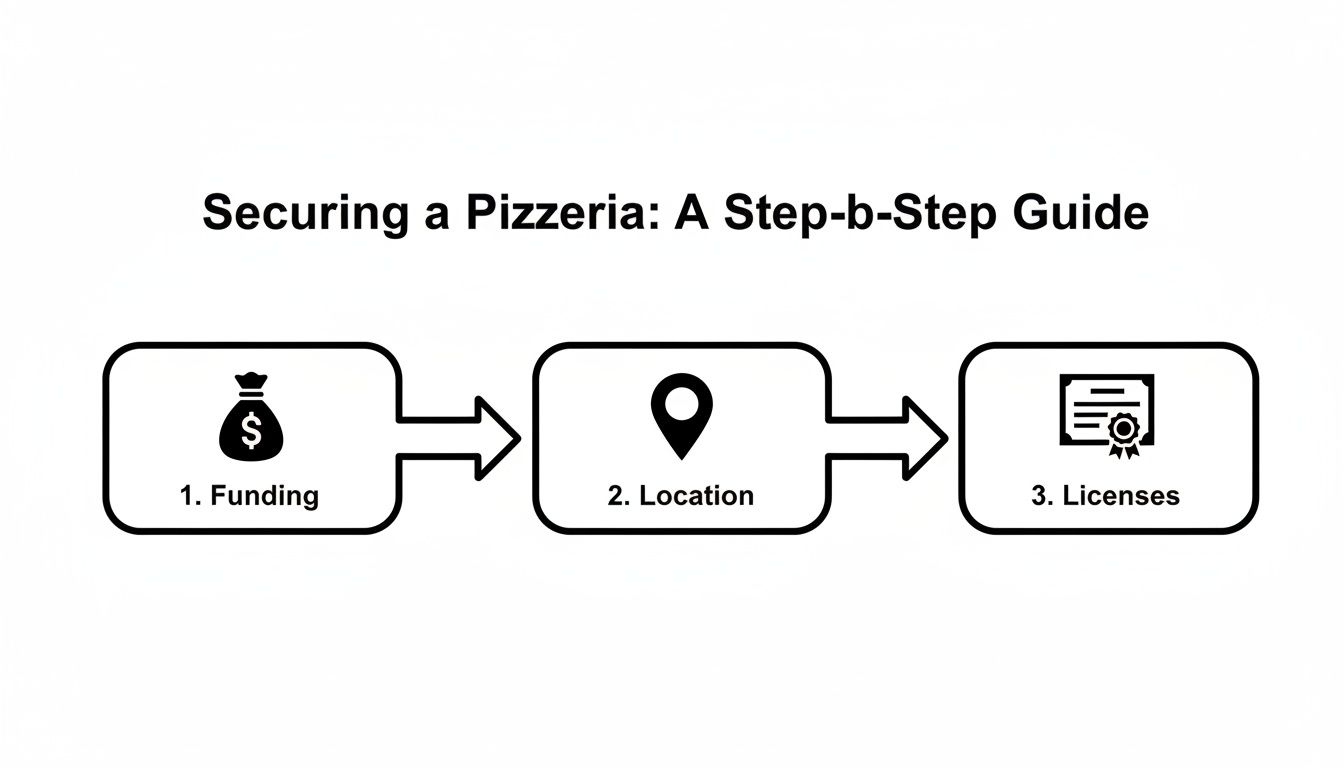
This visual shows how foundational pieces like funding and licensing have to be locked in before you can start shopping for your dream kitchen equipment, like a new pizza prep table.
Choosing Your Pizzeria's Workhorse Equipment
At the center of your kitchen is the equipment. This is where a huge chunk of your startup budget is going to go, and for good reason. The right gear directly impacts your efficiency, food safety, and, ultimately, your bottom line.
Investing in quality equipment is a cornerstone of launching a successful pizzeria. The global pizza restaurant market is projected to grow substantially, driven by consumer demand for both comfort food and gourmet experiences. For a new pizzeria, this means selecting a top-tier refrigerated pizza prep table isn't just an expense; it's a strategic investment in profitability.
Your must-have equipment list will probably include:
- Commercial Dough Mixer: A spiral mixer is non-negotiable for producing large, consistent batches of high-quality pizza dough.
- High-Performance Pizza Oven: Whether you choose a deck, conveyor, or brick oven will depend on your pizza style, volume, and budget.
- Refrigerated Pizza Prep Table: This is arguably the most critical piece of equipment in your entire production line. It’s where the magic happens.
Selecting the Perfect Refrigerated Pizza Prep Table
The pizza prep table is your command center. It’s a combination workstation and cold storage unit that keeps all your toppings fresh, organized, and within arm's reach. Choosing the right one is a decision that will affect your daily operations for years to come, so it’s worth getting right.
The size you need comes down to your projected volume.
- For a small pizzeria or slice shop, a compact 44-inch pizza prep table might be perfect. It offers the essential refrigerated storage and a manageable prep surface without eating up your whole floor plan.
- For a high-volume pizzeria, a sprawling 93-inch workstation is a much better fit. These larger models give you plenty of under-counter storage, a bigger cutting board for stretching dough, and extensive topping rails to hold every last ingredient for your signature pies.
When you're picking a pizza prep table, look beyond just the size. Features like NSF compliance are non-negotiable for passing health inspections. Trust me, you don't want that headache. Energy-efficient models will also save you thousands on utility bills over the life of the unit.
An organized topping rail is a feature you absolutely can't overlook. It keeps cheese, pepperoni, veggies, and sauces chilled and separated, which is vital for food safety and preventing cross-contamination. This setup also lets your pizza makers build pies quickly and accurately, ensuring every customer gets a perfect pizza, every single time.
For a deeper dive into creating the perfect kitchen workflow, check out our guide on commercial kitchen layout design. Your pizza prep table is the central piece of a puzzle that, when assembled correctly, creates a seamless and profitable production line.
Choosing the Right Pizza Prep Tables and Refrigeration
Your pizza is only as good as its ingredients, and the freshness of those ingredients comes down to one thing: your refrigeration. Picking the right pizza prep tables and commercial refrigerators is a decision that hits your workflow, food safety, and your pizzeria's reputation square in the jaw.
This isn't just about buying a stainless steel box. It's about investing in the heart of your entire production line.
Get this right, and your team slings pizzas faster, you waste fewer ingredients, and you sail through health inspections. Get it wrong, and you're signing up for daily frustrations, potential safety nightmares, and lost profits.
Why NSF Compliance Is Non-Negotiable
As you start looking at pizza prep tables and other equipment, you'll see the term NSF-compliant pop up everywhere. That little sticker from the National Sanitation Foundation isn't just for show—it's a hard-and-fast requirement to pass health inspections in most places.
NSF-certified gear is built for the real world of a commercial kitchen. It's designed for easy cleaning, durability, and preventing foodborne illness. That means surfaces are non-porous, corners are coved to stop bacteria from hiding out, and the materials can take a beating. Trying to save a few bucks on a non-compliant pizza prep table is a rookie mistake that could get your opening delayed or even shut you down.
Choosing NSF-compliant refrigeration, especially your pizza prep table, is one of the smartest decisions you can make. It's the baseline standard that protects your customers, your staff, and your investment from day one.
Comparing Top Brands: Atosa, True, and Kelvinator
A few big names dominate the commercial refrigeration scene, and each brings something different to the table. For a new pizzeria owner, the choice usually boils down to a balancing act between budget, durability, and features for their pizza prep tables.
- True Manufacturing: Often called the industry gold standard, True is famous for its bomb-proof durability and reliability. Their units, including pizza prep tables, are built like tanks and are a staple in high-volume kitchens. The only catch? They come with a premium price tag.
- Atosa: Atosa has become a favorite for new restaurant owners by hitting that sweet spot between quality and affordability. Their pizza prep tables are known for being energy-efficient and come with solid warranties, giving you peace of mind without the sticker shock of a brand like True.
- Kelvinator: As a brand that's been around the block, Kelvinator delivers dependable, workhorse refrigeration at a very competitive price. They are a fantastic option for startups on a tighter budget who still need reliable, NSF-compliant equipment like pizza prep tables to get the doors open.
Your startup capital will likely steer your final decision, but all three brands offer solid, compliant options that will serve your pizzeria well.
Key Features to Look for in a Pizza Prep Table
Beyond the brand name and compliance sticker, the specific features of your pizza prep table will shape your day-to-day grind. The right setup can seriously speed up your pizza-making process, while the wrong one creates constant bottlenecks.
If you want to do a really deep dive, you can explore a comprehensive guide on what to look for in a commercial pizza prep table.
To get you started, I've put together a table that breaks down the essential features and explains why each one is so critical for your pizzeria's success.
Pizza Prep Table Feature Comparison
When you're comparing pizza prep table models, it's easy to get lost in the spec sheets. This table cuts through the noise and focuses on what actually matters when you're in the middle of a dinner rush.
| Feature | Why It Matters for Your Pizzeria | Look For |
|---|---|---|
| Size & Workspace | The cutting board has to be deep enough for stretching dough without feeling like you're working in a closet. A small board kills your production speed. | A deep, full-length polyethylene cutting board. Match the unit length (e.g., 44", 67", 93") to your expected volume. |
| Refrigerated Topping Pans | This is the key to food safety and ingredient freshness. It keeps all your toppings held at a safe, consistent temperature right where you need them. | An insulated lid and a rail that can hold multiple pan sizes (1/3, 1/6, 1/9). Make sure it maintains 33-41°F. |
| Under-Counter Storage | This is where you'll stash backup ingredients, dough trays, and prepped items. It's prime real estate in a tight kitchen. | Self-closing doors, adjustable shelving, and enough cubic feet of storage to get you through a busy service. |
| Energy Efficiency | Refrigeration runs 24/7 and is a huge chunk of your utility bill. An efficient pizza prep table will literally save you thousands over its lifespan. | An ENERGY STAR® rating, environmentally friendly refrigerant (like R290), and high-quality insulation. |
Taking the time to really analyze these features ensures you end up with a prep table that’s a true workstation, not just a refrigerator. This single piece of equipment will be the command center for your entire pizza operation, making it one of the most important purchases you'll make.
Building Your Pizzeria Team and Menu
Once your kitchen layout is finalized and the equipment is on its way, it's time to shift gears. You need to focus on the two things that will truly give your pizzeria its soul: your people and your product. A shiny new pizza prep table is just a hunk of metal without skilled hands to work it, and even the best ingredients can’t save a poorly planned menu. These are the details that turn a curious first-timer into a loyal regular.
Learning how to start a pizza business means understanding that your first hires are absolutely critical. You're not just filling slots on a schedule; you're building the entire culture of your restaurant from the ground up.
Assembling Your Opening Crew
When you're looking at applications, search for passion first and a perfect resume second. Of course, an experienced pizza chef is a massive win, but a line cook with a fantastic attitude and a real love for food can always be trained. Remember, your front-of-house staff is the face of your business, so make personality and reliability your top priorities.
As you build your team, focus on these essential roles for a pizzeria:
- Pizza Chef (Pizzaiolo): This person is the heart of your kitchen. Find someone who geeks out over dough hydration, knows how to manage oven temperatures, and can deliver consistent results on the pizza prep table every single time.
- Prep Cooks: They are the unsung heroes who keep the kitchen running. They handle all the chopping, sauce making, and stocking that makes a smooth service possible.
- Servers/Counter Staff: Think of them as your brand ambassadors. They need to be friendly, efficient, and able to talk about the menu with genuine confidence.
- Dishwasher: This role is non-negotiable and keeps the whole operation from grinding to a halt. A fantastic dishwasher is worth their weight in gold.
Once everyone is on board, training is everything. Never assume someone knows your way of doing things. You need structured training that covers it all, from food safety and proper use of the pizza prep table to your specific recipes and service standards.
Engineering a Profitable Pizza Menu
Your menu isn’t just a list of what you sell—it's your single most important marketing tool. A smartly engineered menu subtly guides customers toward your most profitable items while shouting your brand's identity from the rooftops.
First things first: you have to meticulously cost out every single recipe. Know exactly what it costs to make each pizza, down to the last gram of cheese and ounce of sauce. This data is the bedrock of your pricing strategy. A healthy profit margin usually comes from a food cost percentage between 25-35%.
Next, strike the right balance. You need the classic, crowd-pleasing pizzas that everyone expects, but you also need a few unique "signature" pies that make you stand out. These signature items are often where your best profit margins are, and they're what people will remember and talk about.
Your menu's design should be clean, easy to read, and strategic. Use design elements like boxes or bold text to draw the eye to the items you really want to sell—usually your high-margin signature pizzas.
To bring your menu into the modern age and make things easier for your customers, you should explore QR code features for your cafe. This can streamline the whole ordering process and give customers a slick digital experience right at the table.
Finally, price your menu competitively, but whatever you do, don't undervalue your product. Check out what the local competition is doing, but set your prices based on your own costs, the quality you deliver, and the unique experience you've created. A well-trained team serving up delicious, profitable pizzas—that's the core formula for success.
Marketing Your Grand Opening and Beyond
Here’s a hard truth: you can have the most incredible pizza and the best pizza prep table in the world, but your pizzeria will fail if nobody knows it exists. Smart marketing is what gets people in the door and turns a brand-new spot into a beloved neighborhood fixture. This work starts long before you fire up the oven for the first time, building anticipation and creating a community that’s genuinely excited to try your food.
The first move is to claim your digital real estate. Snag your social media handles on platforms like Instagram and Facebook, then start telling your story. People love behind-the-scenes content—share photos of the renovation, sneak peeks of your new pizza prep table being installed, and friendly introductions to your team. It makes the journey feel personal and authentic.
Another powerful tactic is to connect with local food bloggers and influencers. Don't just send a press release; invite them in for a pre-opening tour or a private tasting. A single, honest post from a trusted local voice can create more buzz than a pricey, traditional ad ever could.
Planning Your Soft Opening
Before you throw open the doors to the general public, you absolutely need a dress rehearsal. A "soft opening" is an invite-only event for friends, family, and other supportive folks in your network. The goal isn't to make a profit. It's to stress-test your entire operation from top to bottom.
Think of it as a live-fire drill in a low-pressure environment. This is your chance to find all the little problems before they become big ones.
- Kitchen Workflow: Does your team have enough room to navigate around the pizza prep table during a simulated rush?
- Order System: Is your point-of-sale (POS) system working perfectly, from taking the order to processing the payment?
- Service Speed: How long is it really taking to get a pizza from the oven to a guest's table?
The feedback you get during the soft opening is gold. Use it to make those crucial final adjustments. Fixing these small issues now will prevent them from turning into chaotic disasters during your official grand opening.
The Grand Opening and Keeping the Momentum
Your grand opening is the main event, so make it feel like one. Turn it into a celebration with special promotions, like a free drink with every pizza or a discount for the first 100 customers. A detailed opening-day checklist is non-negotiable here, making sure everything from inventory levels to staff schedules is locked in and ready.
The real measure of success isn't just one busy launch day. It's about building a foundation that keeps people coming back long after the initial excitement has faded.
This is where ongoing marketing kicks in. Keep it simple at first. Launch a loyalty program, even if it's just a classic punch card for a free slice after ten purchases. Start building an email list so you can share weekly specials and news directly with your best customers.
Most importantly, you have to manage your local online reputation from day one. A critical part of marketing your new establishment is implementing strategies for getting reviews for restaurants. Positive reviews on Google and Yelp are the new word-of-mouth, and they're essential for attracting new customers who are searching for the best pizza in town. These sustained efforts are what truly build a successful pizza business, long after the grand-opening balloons have come down.
Common Questions About Starting a Pizzeria
When you're dreaming of opening your own pizzeria, a few big questions always come to mind. I've talked to hundreds of aspiring owners, and they almost always circle back to the same core concerns about money and equipment.
One of the first things people ask is, "What's the single most important piece of gear I'll buy?" The oven gets all the glory, of course, but the real unsung hero of a profitable pizzeria is the refrigerated pizza prep table. It’s the command center for your entire kitchen—get this wrong, and your workflow, food safety, and speed will suffer.
Next up is the big one: startup costs. While the total number can vary wildly depending on your location, a huge chunk of that initial investment—often 25-35%—goes straight into equipping the kitchen. My advice? Don't skimp here. Investing in durable, NSF-compliant equipment like pizza prep tables from day one saves you from the nightmare of costly replacements and failed health inspections down the road.
Finally, everyone wants to know about the bottom line. With a smart menu and a kitchen built for speed (see my point about the pizza prep table!), a well-run pizzeria can see healthy net profit margins, typically in the 5-10% range after you’ve paid all the bills.
For a complete selection of high-quality equipment to build your dream pizzeria, visit Pizza Prep Table at https://pizzapreptable.com.