

Chill Out: Top Commercial and Industrial Freezers for Sale
Why the Right Freezer is a Critical Business Asset
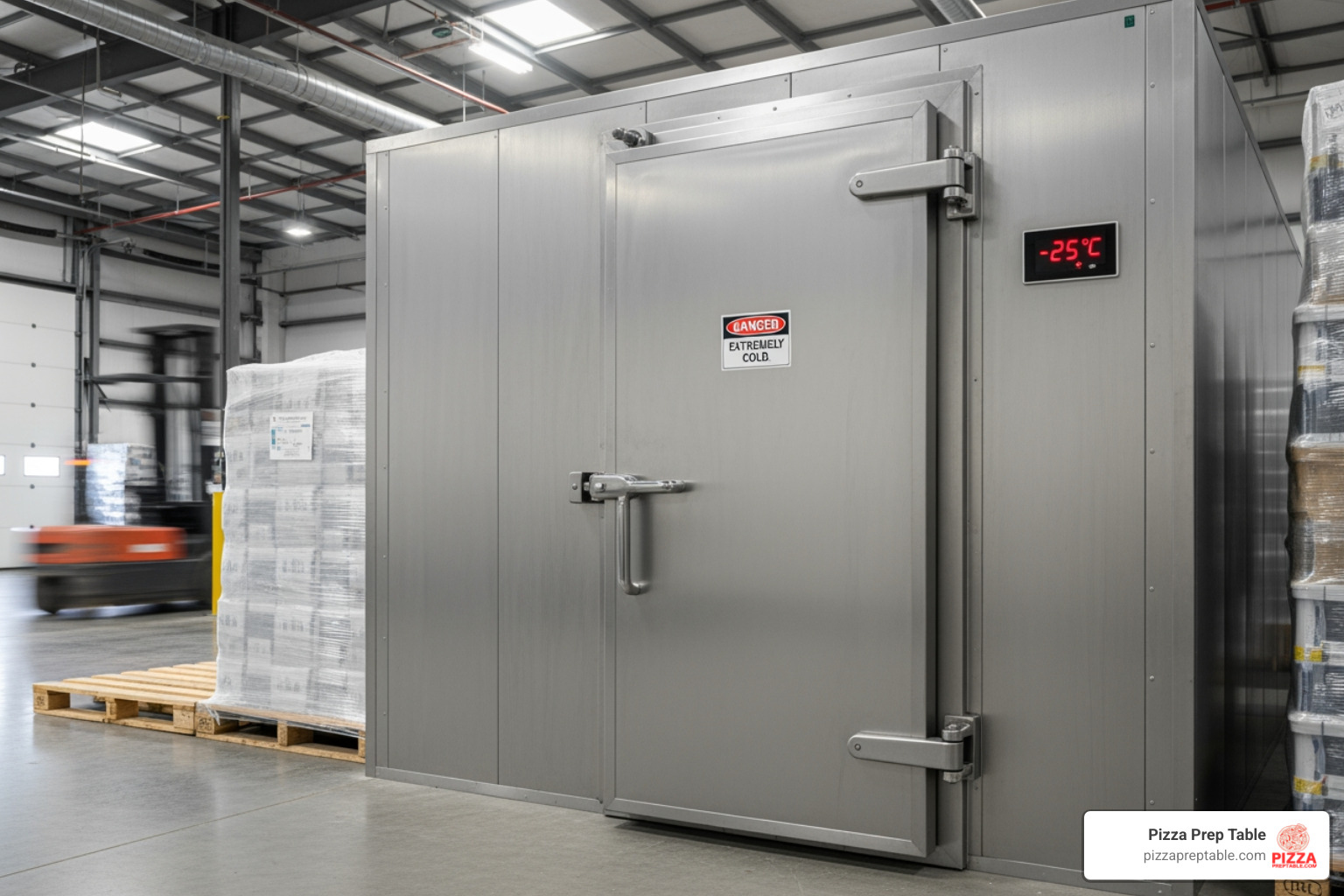
An industrial deep freezer is more than just a box that keeps things cold—it's a critical piece of infrastructure that protects your inventory, ensures food safety compliance, and keeps your operation running smoothly. Whether you're storing bulk ingredients for a busy pizzeria, preserving vaccines in a medical facility, or conducting materials testing in a lab, choosing the right freezer can make or break your business efficiency.
Quick Guide: What You Need to Know About Industrial Deep Freezers
| Type | Temperature Range | Best For |
|---|---|---|
| Commercial Chest Freezers | -10°C to -34°C | Restaurants, bulk food storage |
| Reach-In/Upright Freezers | -10°C to -40°C | Foodservice, easy access needs |
| Walk-In Freezers | -10°C to -40°C | Warehouses, large-scale operations |
| Ultra-Low Temperature (ULT) | -40°C to -86°C | Pharmaceuticals, research labs, biobanks |
The difference between commercial and industrial freezers comes down to durability, temperature capability, and construction. Commercial freezers handle everyday foodservice needs at temperatures around -10°C to -34°C. Industrial freezers are built for harsh environments and specialized applications, with heavy-duty construction and temperature ranges that can plunge to -86°C or lower for scientific and pharmaceutical use.
The principle of reliable cold storage applies to any business, from a small pizza shop to a large distribution center. Selecting the right industrial deep freezer isn't just about price—it's about matching the equipment to your specific workflow, space constraints, and long-term business goals.
From keeping pizza dough perfectly proofed to safeguarding critical biological samples, the right temperature is paramount. For foodservice businesses in cities like New York City or Chicago, maintaining ingredient integrity is key to profitability. Likewise, research facilities in Boston or San Francisco rely on ultra-low temperatures to preserve delicate materials. It all boils down to ensuring product integrity and operational efficiency, which are non-negotiable in today's competitive landscape.
Decoding the Chill: Commercial vs. Industrial Deep Freezers
The terms "commercial" and "industrial deep freezer" are often used interchangeably, but there are distinct differences that impact their suitability for various applications. Understanding these distinctions is crucial for making an informed investment.
A commercial freezer is designed for businesses like restaurants, cafes, and grocery stores. Its main purpose is to store perishable foods at temperatures around -10°C to -34°C, ensuring they remain safe and ready for use. They are built to withstand a busy kitchen, focusing on accessibility, easy cleaning, and consistent temperature. For instance, brands like Hoshizaki engineer their freezers for high-performance freezing, prioritizing durability with stainless steel interiors and exteriors.
An industrial deep freezer, on the other hand, is a more robust and specialized unit designed for demanding environments. They cater to applications beyond food storage, such as pharmaceuticals, research, and manufacturing processes. Built to last for decades, their heavy-duty construction handles extreme conditions and specialized applications like material age-hardening, stress relieving, and production chilling.
The durability comparison is stark. Industrial units are engineered for extreme longevity, often using welded steel with specialized finishes, compared to the stainless steel and aluminum common in commercial models. This heavy-duty construction withstands constant use, temperature fluctuations, and even harsh chemical environments.
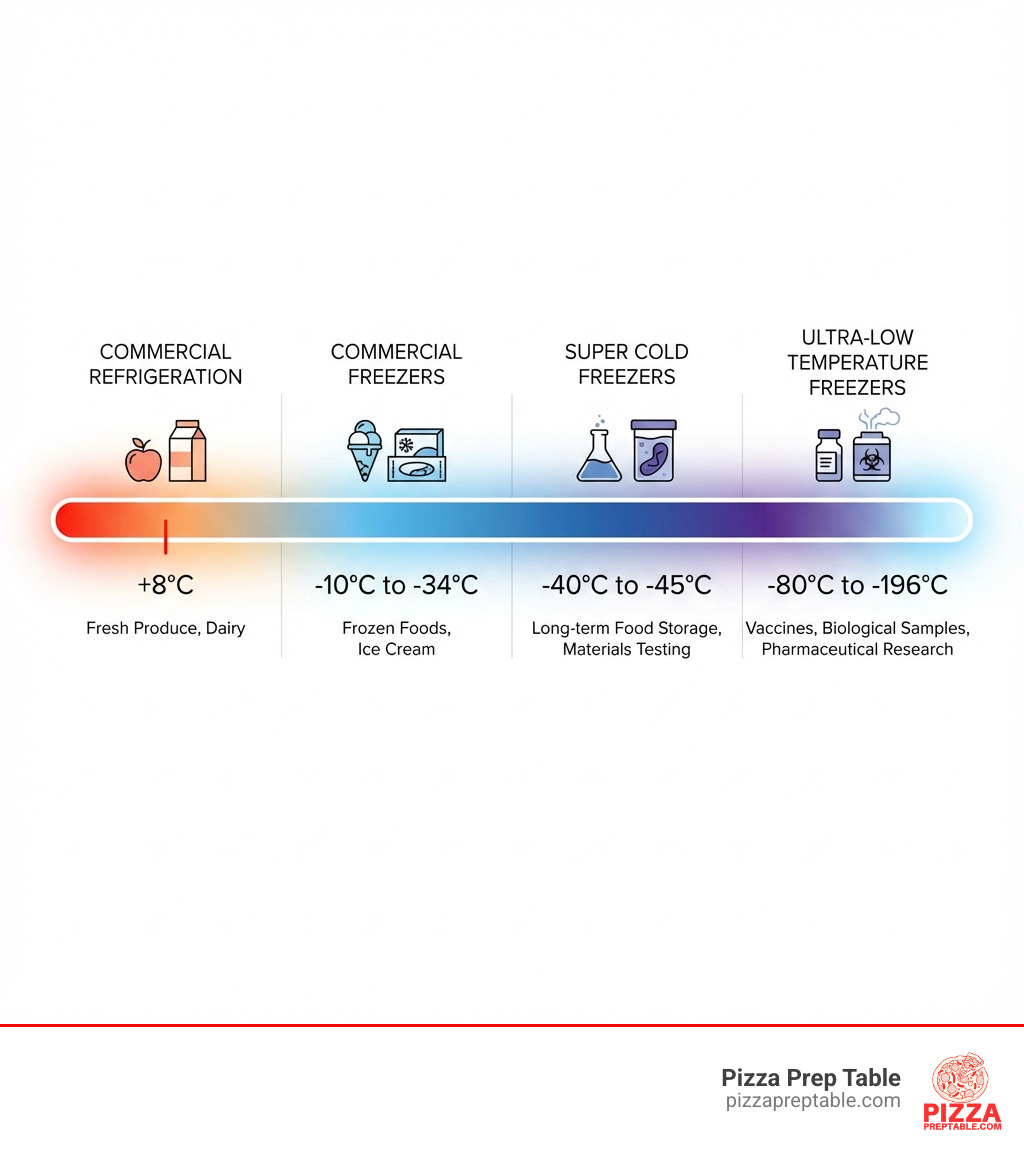
Temperature range differences are also significant. While commercial freezers maintain temperatures suitable for food preservation, industrial deep freezers push the boundaries much further. We're talking about moderate cold (-34°C), super cold (-40°C/-45°C), ultra-cold (-80°C/-85°C), and even cryogenic temperatures down to -196°C for specialized scientific needs. This wider and deeper temperature capability is what truly sets them apart.
In terms of use cases, commercial freezers are the workhorses of the foodservice industry, from a Dallas pizzeria to a San Francisco restaurant. Industrial freezers serve more specialized roles, like storing vaccines in a Washington, D.C. lab, preserving samples in a Boston biobank, or stabilizing components in a Los Angeles manufacturing plant. These applications involve highly sensitive materials requiring precise and much lower temperatures than typical food products.
For those running commercial kitchens, we've got even more insights. You can find More info about commercial kitchen freezers that might be better suited for your everyday needs.
Types of Industrial and Commercial Freezers
Just as there's no one-size-fits-all solution for your business, there isn't a single type of industrial deep freezer that fits every need. From compact units to sprawling cold rooms, the variety is vast, each designed for specific storage requirements and operational workflows.
Reach-In & Upright Freezers
Reach-in and upright freezers are incredibly popular in both commercial and light-duty industrial settings due to their space-saving design and easy organization. These units are ideal for establishments that require quick and frequent access to frozen goods, such as restaurants, cafes, and some laboratories in busy cities like New York City or Chicago. Their vertical orientation maximizes storage in a smaller footprint, making them a smart choice when floor space is at a premium.
Many of these freezers boast robust stainless steel construction for durability and easy cleaning—a must-have in any professional kitchen. For example, Hoshizaki’s Steelheart® series is specifically engineered for high-performance freezing in busy commercial environments. They feature a unique dynamic airflow design that circulates cold air through louvered ducts, ensuring uniform temperatures across every shelf. This attention to detail, including an liftd evaporator design and a Thermal Expansion Valve (TXV) to regulate refrigerant flow, translates into faster recovery times and efficient operation.
If you're looking for versatile cold storage solutions that fit seamlessly into your kitchen, we recommend exploring The ultimate commercial fridge freezer combo guide. You can also Check out the best commercial freezers to find models that perfectly match your operational demands.
Chest Freezers: The Bulk Storage Powerhouse
When it comes to sheer bulk storage and long-term preservation, chest freezers are often the champions. Their top-opening lid design offers superior energy efficiency and temperature stability because less cold air escapes when opened. This makes them ideal for storing large quantities of perishable foods, bulk ingredients, or specialized materials that require stable, sub-zero conditions.
For commercial kitchens in places like Houston or Phoenix, a chest freezer can be a game-changer for buying ingredients in bulk, saving money, and ensuring a consistent supply. These large industrial-sized freezers can hold anywhere from 10 to 1000 cubic feet of food and maintain temperatures as low as -10°C.
Beyond standard commercial use, we also find industrial deep freezer chest models designed for more extreme cold. These include:
- Moderate Cold (-34°C) Chest Freezers: These units are rated for a constant temperature range of +10°C to -34°C and are engineered to meet industrial needs. A 25 Cu. Ft. unit might cost around $4,855.00, providing significant storage capacity.
- Super Cold (-40°C/-45°C) Chest Freezers: Taking it a step further, these freezers are suitable for even longer-term preservation or more sensitive materials.
- Ultra-Low Temperature (-86°C) Chest Freezers: Our research highlights that these specialized chest freezers are designed with stepped door frames and multiple gaskets to minimize air leakage and ice buildup, ensuring critical temperatures for scientific and pharmaceutical uses.
Walk-In Freezers: The Ultimate Capacity Solution
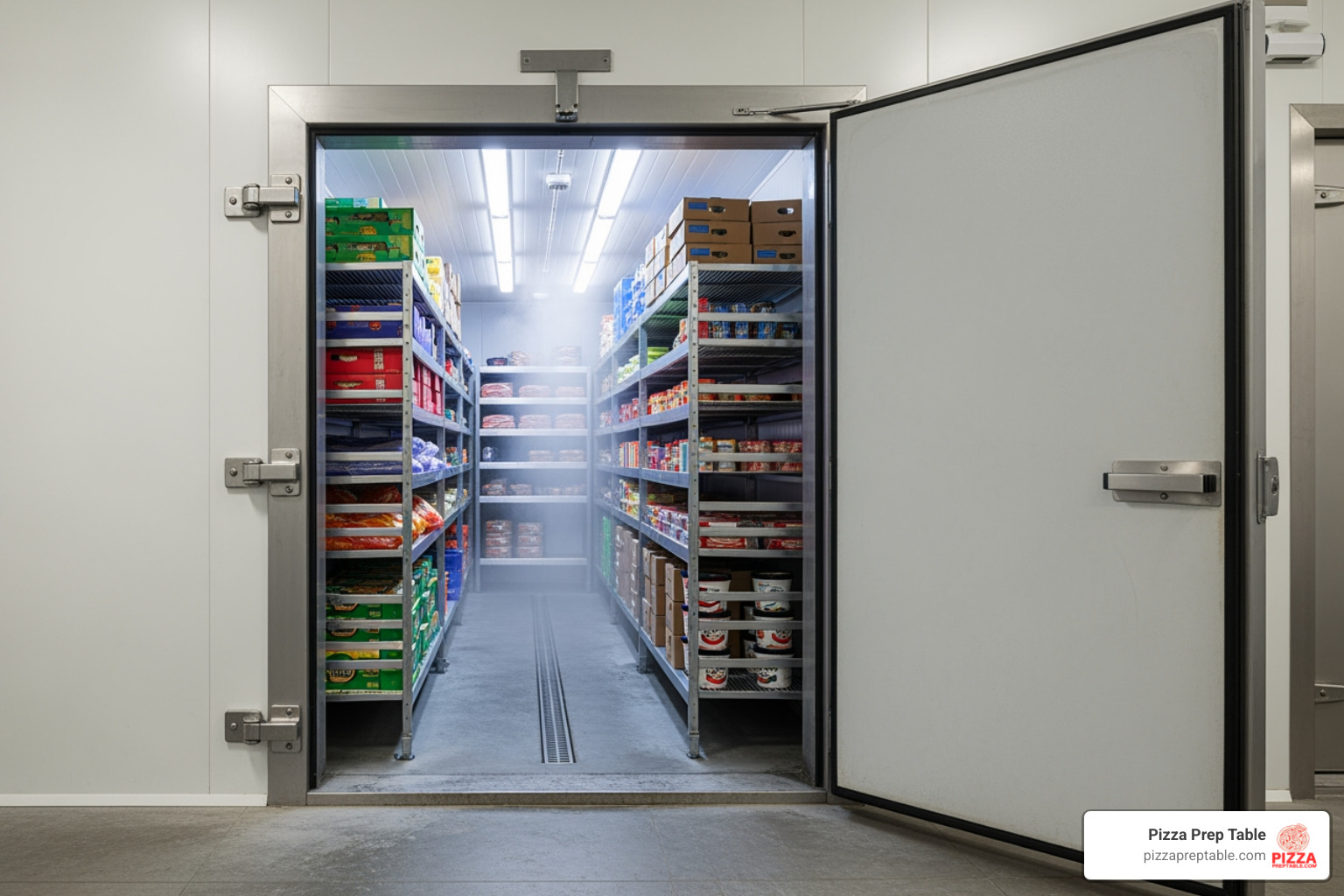
When your storage needs surpass what even the largest chest or upright freezers can offer, it's time to consider walk-in freezers. These room-sized cold storage solutions provide massive capacity and are indispensable for businesses like large grocery stores, warehouses, and distribution centers in major logistical hubs such as Atlanta or Dallas. They allow for an organized and scalable approach to cold storage, accommodating everything from pallets of frozen goods to racks of specialized components.
Walk-in freezers come in various configurations, including standard walk-ins and drive-in units that allow forklifts to enter. These units are highly customizable. Companies like Barr Inc., with over 80 years of experience, specialize in designing unique freezer units to fit specific business needs. Whether you need an 8' x 10' unit or a massive 40' x 40' cold room, they can be customized to fit your exact specifications.
Some smaller walk-in freezer units can even be used residentially, but their true power lies in industrial-scale operations where quick, reliable access to perishable goods is vital. They allow businesses to keep a wider variety of items on hand and enable bulk purchasing, leading to significant cost savings.
For insights into smaller, specialized setups, explore A practical guide to undercounter freezers in outbuildings.
Specialized & Ultra-Low Temperature (ULT) Industrial Deep Freezer Models
For highly sensitive materials and critical scientific or medical applications, standard freezing simply won't cut it. This is where specialized and ultra-low temperature (ULT) industrial deep freezer models come into play. These are the workhorses of pharmaceutical storage, vaccine preservation, and advanced material testing, essential for research institutions in cities like Boston or San Diego.
ULT freezers are designed to maintain extremely low temperatures, typically from -40°C to -86°C, though some research applications require temperatures as low as -196°C. Our research confirms that cold storage applications can indeed range from 8°C down to -196°C.
These freezers are critical for:
- Vaccine and Pharmaceutical Storage: Maintaining the efficacy of temperature-sensitive medications.
- Biobanks: Preserving biological samples (DNA, RNA, cells) for long-term research.
- Material Testing: Performing cold-temperature stress tests on industrial components.
- Specialized Industrial Processes: Applications such as age-hardening, stress relieving, and dimensional stabilization of parts.
The construction of ULT freezers is highly specialized, with advanced insulation and multiple gaskets to prevent ice buildup and ensure precise temperature control. They also include sophisticated alarm systems for temperature deviations, power failures, and sensor errors to protect invaluable contents.
For a deeper dive into scientific cold storage, you can Explore Cold Storage Lab Equipment. We also have resources if you need rapid freezing capabilities, such as Learn about blast chillers.
Key Features to Consider for Your Industrial Deep Freezer
Choosing an industrial deep freezer is a significant investment, and understanding its key features is paramount to ensuring it meets your specific needs. It's not just about how cold it gets; it's about how reliably and efficiently it performs that task.
Temperature Range and Control
A freezer's most fundamental feature is its temperature range, which must match your application. Whether storing frozen pizzas at -10°C or delicate enzymes at -80°C, precise temperature control is non-negotiable.
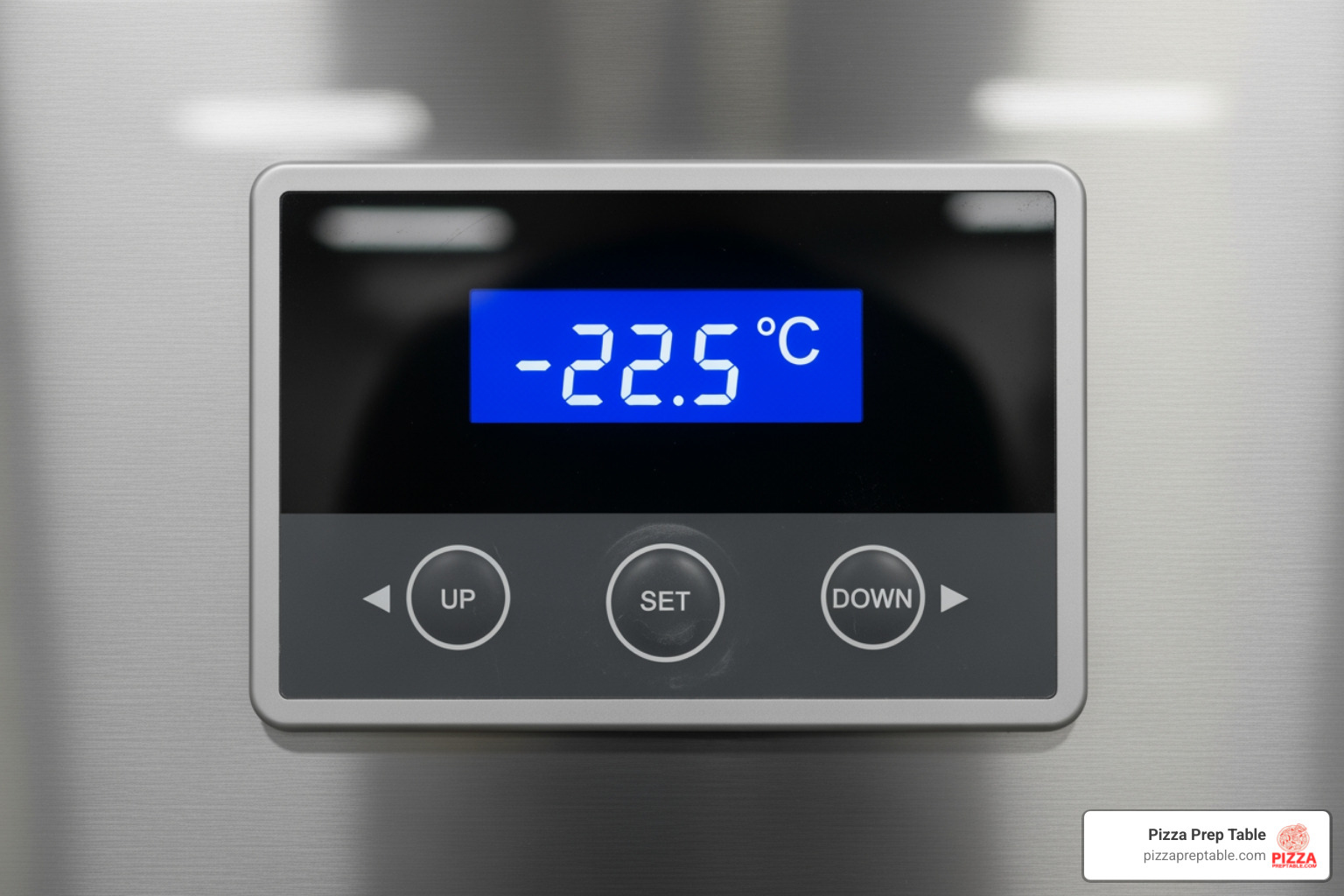
Modern industrial deep freezers are equipped with sophisticated digital controllers that allow for accurate temperature settings and monitoring, often with LED displays. Crucially, many units include audible and visual alarms for high/low temperature deviations, controller failures, and sensor errors. For critical applications, a 12-hour power failure alarm provides an essential safety net, alerting staff to potential breaches during outages. This level of monitoring ensures your valuable inventory remains protected. For more on advanced features, check out Features that make life cooler.
Capacity and Construction of an industrial deep freezer
After temperature, consider capacity. Evaluate your inventory volume, growth, and delivery frequency. Sizes range from compact 5 Cu. Ft. units to massive walk-ins, and choosing the right capacity is key for efficient operations in a Denver pizza prep station or a Las Vegas restaurant. You can find more insights on this in Your guide to under counter freezer capacity.
The construction of an industrial deep freezer speaks to its durability. For commercial use, stainless steel is common, offering corrosion resistance and easy cleaning. For true industrial applications, look for heavy-duty welded steel with specialized finishes, such as high-impact powder coat for the exterior and epoxy enamel for the interior. This robust build is designed to withstand decades of use.
Insulation is another critical component. High-quality units often feature CFC-free PURF (polyurethane foam) insulation. Furthermore, features like stepped door frames and multiple gaskets are engineered to minimize air leakage and ice buildup, improving energy efficiency. Key locks are also standard on many industrial units, providing added security.
Performance Tech: Compressors, Airflow, and Energy Efficiency
A freezer's refrigeration system—its compressor, airflow, and energy efficiency—directly impacts performance and operating costs.
Most industrial deep freezers use permanently lubricated and hermetically sealed compressors designed for long-term reliability. Beyond the compressor, how cold air is distributed is crucial for temperature uniformity. Dynamic airflow systems, like those with louvered ducts, ensure that cold air circulates evenly, preventing hot spots. This is especially vital for large upright or walk-in freezers.
Energy efficiency is a growing concern for businesses. While many specialized industrial freezers don't have Energy Star ratings, manufacturers are incorporating features like Thermal Expansion Valves (TXV) that regulate refrigerant flow for more efficient operation. Using CFC-free refrigerants is also a standard for environmentally responsible units. When comparing options, consider the power consumption (often listed in kWh/24h) to estimate long-term operating expenses.
For a comprehensive comparison of various freezer features, you might find our guide on Comparing under counter freezers helpful.
Top Brands, Customization, and Ownership Considerations
Navigating the market for an industrial deep freezer can be daunting. Understanding leading brands, customization possibilities, and long-term ownership considerations will guide you to the best choice for your business.
Leading Brands and Typical Price Ranges
Several brands are industry leaders in reliable industrial deep freezers, known for quality and performance. We've worked with many of these for decades, serving businesses from Atlanta food service operations to Boston research facilities.
- Hoshizaki: Renowned for their high-performance commercial freezers, particularly the Steelheart® series.
- So-Low: A recognized name in ultra-low temperature and scientific freezers.
- Barr Inc.: A trusted partner for large-scale cold storage, particularly walk-in freezers and custom solutions.
- CSZ Industrial: A leader in heavy-duty industrial freezers for a wide range of applications, including material treatments.
Price points for industrial deep freezers vary dramatically based on type, size, and temperature range. A 5 Cu. Ft. moderate cold chest freezer might be $2,335.00, whereas a 25 Cu. Ft. model is $4,855.00, illustrating how capacity drives pricing. Ultra-low temperature units or large custom walk-ins can run into tens of thousands of dollars. It's essential to consider these initial costs as part of a long-term investment. To learn more about various brands, you can Discover the best commercial freezer brands.
Installation, Maintenance, and Warranty
Proper installation, maintenance, and a good warranty are crucial for your freezer's lifespan and performance.
Installation: Proper placement is key. Ensure a minimum 3-inch clearance from the back and sides of the unit for adequate ventilation. Electrical requirements are also vital; many units require a 115-volt, 15-amp grounded outlet, while larger models may need 220V-240V compressors.
Maintenance: Regular maintenance extends the freezer's life. This includes cleaning condenser coils, checking door gaskets for airtight seals, and proper defrosting. For ULT freezers, minimizing ice buildup around the door is particularly important.
Warranty: A comprehensive warranty protects your investment. Hoshizaki, for instance, offers a strong package: a 5-Year Labor Coverage Warranty, 6-Year Parts Coverage Warranty, and a 7-Year Compressor Coverage Warranty. Other manufacturers might offer 18-month parts and labor warranties. Understanding these terms is crucial. For more on what to expect, read Your guide to undercounter freezer reviews and prices.
Custom and Specialized industrial deep freezer Solutions
When standard units don't fit, custom industrial deep freezer solutions are invaluable. Flexibility is key, as businesses from New York City to Los Angeles often have unique requirements.
Manufacturers like Barr Inc. and CSZ Industrial excel in providing custom-designed freezer units. This means you can acquire freezers with specific dimensions or specialized temperature ranges. Whether you need a walk-in with larger doors for forklift access or a chest freezer with a precise -42°C setting, customization is often an option.
Specialized models can include features like explosion-proof capabilities for handling flammable materials—a critical safety consideration in certain industrial or research environments. Safety features like key locks and lockable buckles are also common, providing secure storage for valuable contents. These custom solutions ensure your industrial deep freezer is an integrated part of your operational success. For more on specialized units, explore Under counter commercial freezers that mean business.
Frequently Asked Questions about Industrial Deep Freezers
We often get asked common questions about industrial deep freezers, especially from businesses looking to make the right investment. Here are some of the most frequent inquiries we address:
What's the main difference between a commercial and an industrial freezer?
The primary distinction lies in their intended use, durability, and temperature capabilities.
- Commercial Freezers: Designed for foodservice, they store food at -10°C to -34°C. They prioritize access and easy cleaning, with robust stainless steel construction for daily use.
- Industrial Deep Freezers: Built for harsh environments and specialized uses like pharmaceuticals or research. They offer a wider temperature range (down to -86°C or lower) and feature heavy-duty construction for extreme durability and longevity.
How do I choose the right size freezer for my business?
To choose the right size, consider the following:
- Inventory Volume: How much product do you need to store at any given time?
- Delivery Frequency: Frequent deliveries may require less space than infrequent bulk stocking.
- Available Space: Measure your available footprint and vertical space. A small walk-in might fit a Brooklyn pizzeria, while a large industrial walk-in suits a distribution center.
- Planning for Growth: It's often more cost-effective to invest in slightly more capacity than you currently need.
What is an ultra-low temperature (ULT) freezer used for?
ULT freezers are specialized industrial deep freezers for critical applications requiring temperatures from -40°C to -86°C. Primary uses include:
- Biological Samples: Long-term preservation of DNA, RNA, proteins, and tissues in biobanks and research labs.
- Vaccines and Pharmaceuticals: Storage of temperature-sensitive vaccines and medications to maintain their efficacy.
- Research: Essential for scientific experiments where sample integrity is paramount.
- Material Science: Used for material testing, age-hardening, and other industrial processes that require extreme cold to stabilize components, such as "martensiting treatments" and "dimensional stabilization of parts."
These freezers are vital for maintaining the integrity of highly valuable or irreplaceable materials in the pharmaceutical, biotechnology, and advanced manufacturing sectors.
Conclusion: Find Your Perfect Cold Storage Solution
Selecting the ideal industrial deep freezer is a strategic decision that impacts everything from operational efficiency and product integrity to long-term cost savings. We've explored the diverse world of commercial and industrial cold storage, from the everyday needs of a busy pizza shop in Austin to the exacting demands of a research facility in Washington, D.C.
The key takeaway is clear: understanding your specific application, required temperature range, capacity needs, and the durability demanded by your environment will guide you to the right solution. Whether you need a robust commercial reach-in, a high-capacity chest freezer, a custom-built walk-in, or a specialized ultra-low temperature unit, there's a freezer out there designed for you.
At Pizza Prep Table, we understand that this is a long-term investment in your business's success. That's why we offer a wide selection of commercial kitchen freezers and financing options, catering to both small independent shops and larger establishments across all our service areas, including New York City, Los Angeles, Chicago, and many more. We're here to help you choose equipment that not only meets your current needs but also supports your growth for years to come.
Ready to chill out and secure the perfect cold storage for your operations? Explore our full range of commercial kitchen freezers and let us help you find the freezer that truly means business.