

The Ultimate Guide to Insulated Food Pan Carriers for Pizzerias
Let's face it—a cold pizza is a reputation killer. An insulated food pan carrier isn't just a box; it’s your portable, high-performance insurance policy, protecting your product quality from the moment it leaves the pizza prep table until it lands in your customer's hands. For any pizzeria that takes delivery and catering seriously, it’s a non-negotiable piece of gear.
Why Your Pizzeria Needs an Insulated Food Pan Carrier
In the pizza game, consistency is king. You’ve spent ages perfecting your dough, sourcing the best pepperoni, and dialing in your ovens for that perfect, crispy crust. So what happens when a big catering order or a delivery route with multiple stops comes in? That journey from your kitchen to the customer is where all your hard work is most at risk.
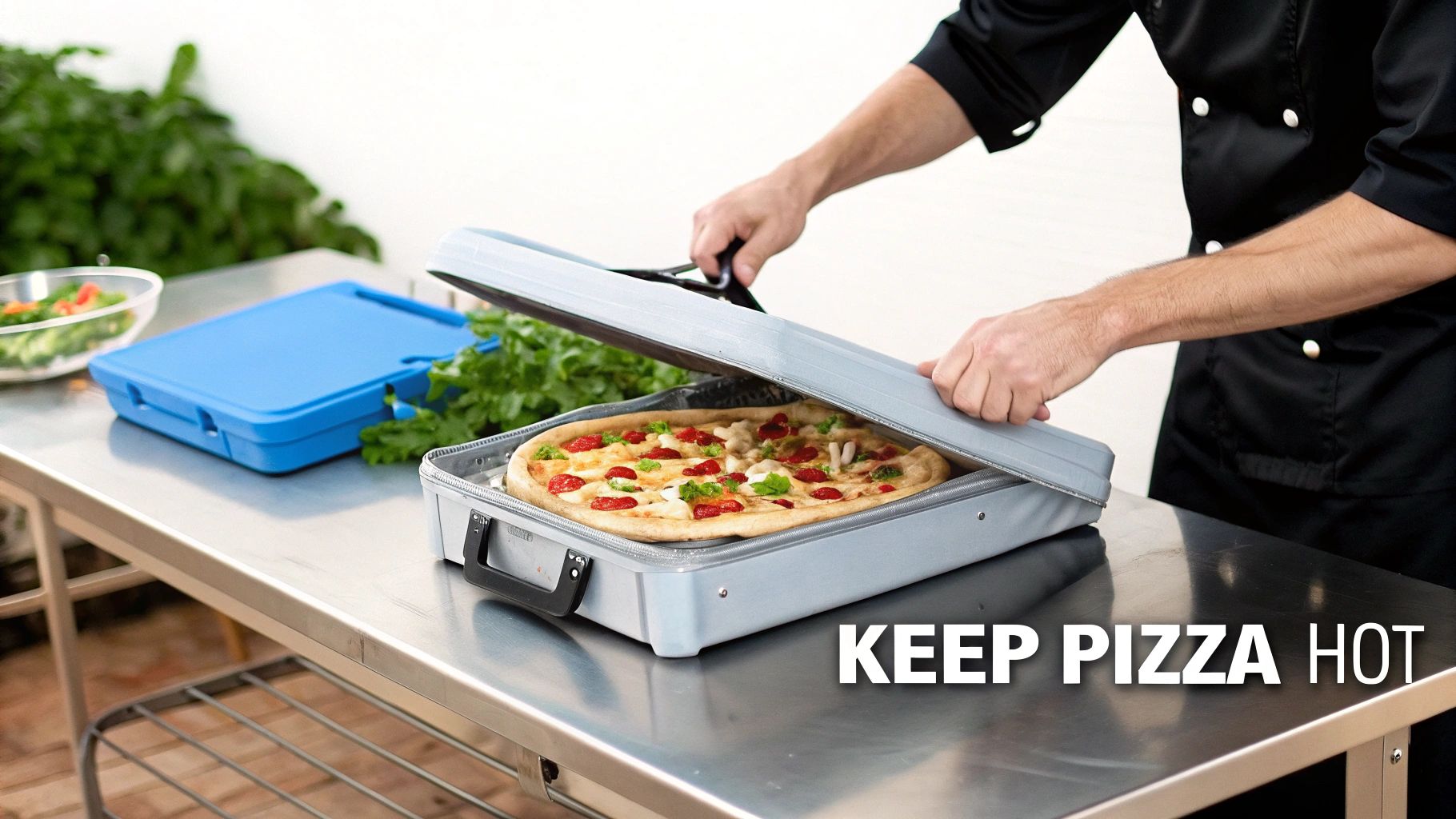
This is where the insulated food pan carrier steps up as the MVP for any off-site order. Think of it as the final, crucial link in your quality control chain—a true partner to your pizza prep table that ensures the heat, texture, and taste you worked so hard to create are perfectly preserved.
Safeguarding Your Revenue and Reputation
Every single time a customer gets a cold pizza or a lukewarm pasta dish, you risk losing them for good and earning a nasty online review. These carriers are your frontline defense against that, keeping food at safe, delicious temperatures for hours. They turn potential disasters into five-star experiences. Plain and simple, it's a direct investment in customer happiness and protecting your brand.
For any pizzeria looking to grow, these carriers also unlock new money-making opportunities. They make large-scale catering and complex deliveries not just possible, but profitable. It's the operational confidence you need to say "yes" to those bigger gigs.
An insulated food pan carrier isn't an expense; it's an insurance policy for your food quality, brand reputation, and future growth. It ensures the last slice served at an event is just as hot and delicious as the first.
This growing need is something we're seeing across the industry. For independent pizzerias, what was once a niche item is now essential equipment. The global market for insulated food containers was valued at around USD 12.13 billion and is expected to hit USD 29.94 billion by 2033. That tells you everything you need to know: these carriers are a core part of modern food service. Learn more about the insulated container market growth.
How Insulated Food Pan Carriers Actually Work
An insulated food pan carrier is way more than just a plastic box. Think of it as a high-tech, portable extension of your pizza oven, engineered with some pretty impressive thermal science to trap heat and preserve the quality you create at your prep table. It’s designed to fight a constant battle against heat loss, ensuring the last pizza delivered is as hot and crispy as the first.
This remarkable performance isn't magic; it's the result of carefully chosen materials and smart design. Every single component, from the walls to the latches, plays a crucial role in maintaining temperature. To really get why these are so valuable, we need to look under the hood at the core components that make it all possible.
The Science of Insulation Materials
The secret to any carrier's success lies in its insulation. The goal is simple: create a barrier that slows down the transfer of heat from the inside to the outside. In the world of insulated food pan carriers, two primary materials dominate the scene because of their unique properties.
-
Expanded Polypropylene (EPP): Imagine a material that’s incredibly lightweight yet surprisingly tough. EPP is a high-performance foam that looks and feels a bit like styrofoam but is vastly more durable and resilient. It's made of tiny plastic beads fused together, creating millions of microscopic air pockets. These pockets are terrible at conducting heat—which is exactly what you want. Heat trying to escape gets trapped, keeping your pizza boxes hot.
-
Rotomolded Polyethylene: This is the heavyweight champion of durability. Rotomolding is a manufacturing process that creates a thick, seamless, one-piece shell of polyethylene plastic. This shell is then injected with commercial-grade foam insulation. This construction method results in an incredibly strong, almost indestructible carrier that can withstand the daily abuse of a busy pizzeria.
The choice between these two materials often comes down to balancing weight, durability, and cost. Each has its own strengths tailored for different pizzeria operations.
For a pizzeria, the insulation in your carrier is just as important as the firebricks in your oven. One bakes the pizza to perfection; the other ensures it arrives that way.
Comparing Carrier Materials for Your Pizzeria
Deciding which material is right for your operation really depends on what you're putting it through—from the volume of your catering orders to the realities of your delivery routes. Here’s a side-by-side look at the two most common materials, helping you decide which is the right investment for your pizzeria's specific demands.
A lightweight EPP carrier might be perfect for quick, single-stop deliveries where staff are carrying them by hand, while a rugged rotomolded unit is built for the long haul and high-volume events where it's getting banged around in a van.
Comparing Insulated Food Pan Carrier Materials
| Feature | EPP (Expanded Polypropylene) | Rotomolded Polyethylene |
|---|---|---|
| Durability | Good. Resists cracking and chipping but can be punctured by sharp objects. | Excellent. Virtually indestructible, designed for heavy commercial use. |
| Weight | Extremely lightweight and easy for staff to carry. | Significantly heavier, often requiring dollies for transport when fully loaded. |
| Heat Retention | Very good. The foam structure provides excellent insulation for several hours. | Superior. The thick shell and dense foam offer the best thermal performance. |
| Best For | Pizzerias focused on smaller delivery orders, quick-turnaround catering, and staff ease-of-use. | High-volume catering, frequent transport, and operations where durability is paramount. |
Ultimately, your choice reflects your business priorities. If your staff's comfort and speed on smaller jobs are key, EPP is a fantastic choice. But if your carriers are treated like military equipment and need to hold temps on long catering gigs, the investment in a rotomolded box will pay for itself in longevity and performance.
The Unsung Heroes: Gaskets, Latches, and Vents
While insulation forms the core defense, several other features work together to lock in temperature. I call these the unsung heroes of thermal control because without them, even the best insulation fails.
Airtight gaskets create a secure seal around the door, just like the gasket on your walk-in cooler. This prevents hot air from leaking out and cold air from seeping in, which is one of the fastest ways a carrier loses heat.
Secure latches are equally vital. They do more than just keep the door closed; they compress the gasket to ensure that airtight seal is maintained during bumpy car rides. Flimsy latches are a recipe for disaster and can lead to significant temperature drops over a short period.
Finally, some insulated food pan carrier models include vents. These might seem counterintuitive—why on earth would you let heat out? Vents allow you to release steam from foods like fried appetizers or even pizzas, preventing the crust from becoming soggy during transport while still keeping the contents hot. It’s a small feature that makes a huge difference in food quality.
Choosing the Right Carrier for Your Pizzeria Menu
Picking the right insulated food pan carrier isn't a one-size-fits-all deal, especially when your pizzeria's menu is more than just round pies. The carrier you choose should be a direct reflection of what you're delivering and how much of it you're sending out the door. The box that's perfect for a couple of orders of hot wings and garlic knots is totally different from the one you need for a massive catering order of baked ziti and sheet pan pizzas.
Think of it like picking the right tool at your pizza prep table. You wouldn’t use a small paring knife for a big chopping job, right? It’s the same idea here. Matching the carrier style to your menu is absolutely critical for keeping food quality high and your delivery game efficient.
Top-Loading vs. Front-Loading Carriers
Your first big decision is whether to go with a top-loading or a front-loading model. Each style has its own strengths that line up with different parts of a pizzeria's menu.
-
Top-Loading Carriers: These are basically insulated chests with a lid on top. They're fantastic for transporting single, deep food pans. For a pizzeria, that makes them the go-to choice for smaller, non-pizza orders like family-style salads, big trays of chicken wings, or pasta dishes. They're compact and light, making them easy for a single driver to grab and go.
-
Front-Loading Carriers: These are like mini-cabinets with a swing door and built-in rails designed to hold multiple food pans stacked on top of each other. If you're serious about catering, these are non-negotiable. A front-loading carrier lets you haul several stacked sheet pans of Sicilian pizza, multiple trays of lasagna, or a mix of different hot sides for a big event, all in one trip.
This quick visual can help you decide on the right material based on how much of a beating your carriers will take.
It really boils down to this: if your operation is a high-volume machine where carriers get tossed around, rotomolded polyethylene is your workhorse. If you prioritize portability for quick, smaller deliveries, lightweight EPP is the smarter play.
Must-Have Features for Pizzeria Operations
Beyond the basic style, a few features separate a good carrier from a great one. These details have a direct impact on food safety, how happy your staff is, and your bottom line.
Pan Compatibility is Key
Before you buy anything, double-check that the carrier is compatible with the pans you already use at your pizza prep table. Does it fit your full-size, half-size, and third-size steam table pans (also called hotel pans)? Getting a snug, perfect fit is crucial. It stops pans from sliding around during transport, which can wreck food and create a huge mess.
Your insulated food pan carrier should feel like a natural extension of your kitchen. If the pans from your prep line don't slide in securely, you're just creating a bottleneck that costs you time and money.
NSF Certification and Safety
Always look for the NSF (National Sanitation Foundation) certification mark. This is your guarantee that the carrier is made from food-safe materials and is designed to be cleaned easily, helping you stay on the right side of the health department.
Don't forget about your staff's safety, either. Good, ergonomic molded-in handles are a must. They provide a secure grip, which cuts down on the risk of drops and injuries, especially when you're dealing with heavy loads.
The market for prepared foods is blowing up. Ready‑to‑eat foods already make up about 38.39% of value in the food tray market, which is set to grow from USD 16.99 billion to USD 22.90 billion in the next five years. This trend means more of your food will leave the kitchen in pans that need to stay hot and secure—the exact job of a quality insulated carrier. Pairing up NSF‑compliant equipment with tough carriers helps your pizzeria cash in on this growth. You can discover more insights about the prepared food market trends to see where things are headed.
Finally, think about stackability. Carriers designed to interlock when you stack them are a huge space-saver in your delivery vehicles and storage rooms. It lets you use every single square inch you've got.
Weaving Carriers Into Your Daily Pizzeria Workflow
Having the right insulated food pan carrier is one thing; making it a core part of your daily operations is what really separates the pros from the amateurs. A smart workflow transforms this simple box into a critical system that connects your pizza prep table to your customer's front door. It’s what ensures every single order has that fresh-out-of-the-oven quality you work so hard to create.
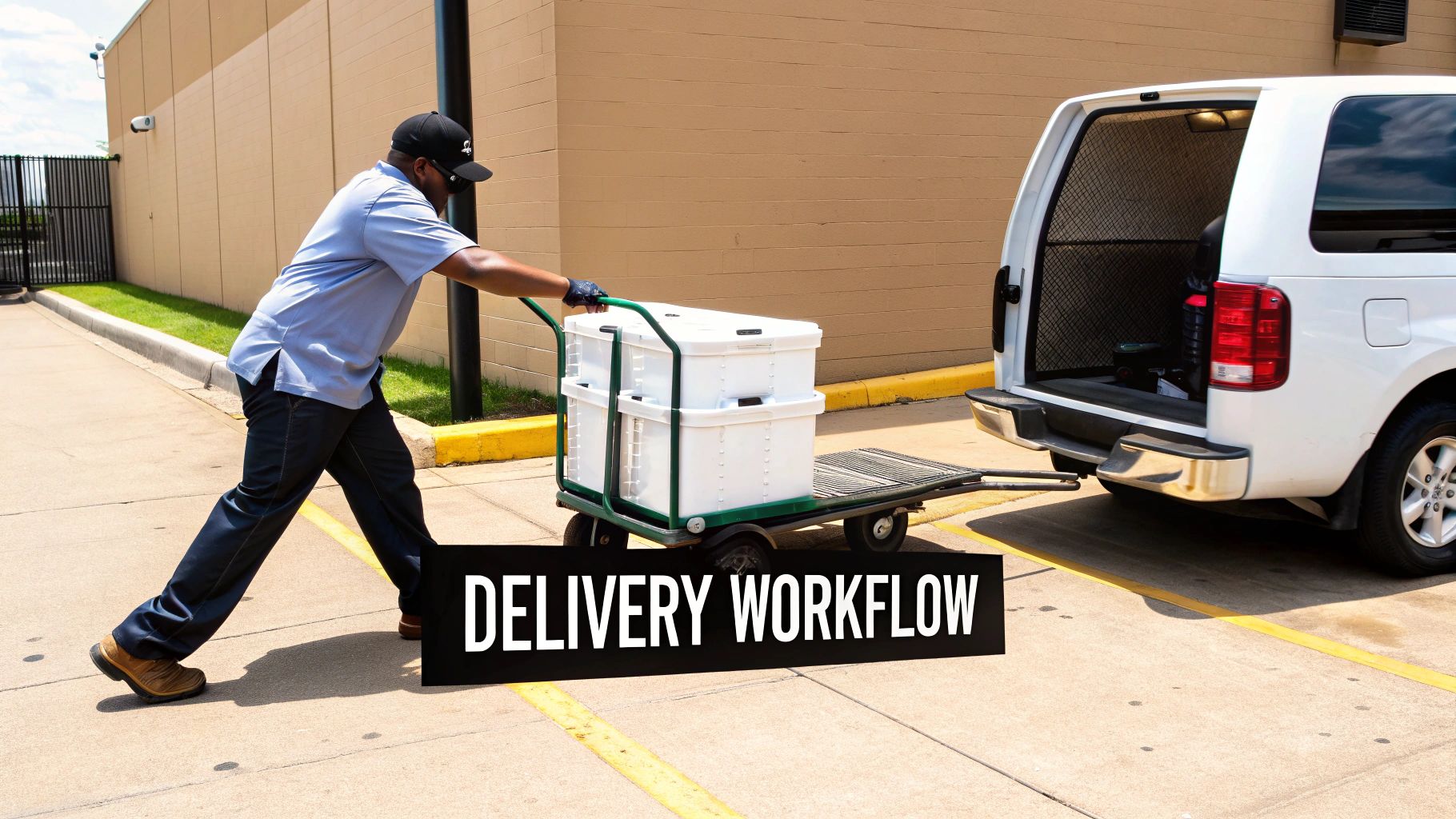
The idea is to create a repeatable process that works every time. Your system needs to be so reliable that the last delivery on a chaotic Friday night arrives with the same heat and texture as the very first order of the day.
Pre-Staging for Peak Performance
The secret to holding heat longer starts way before you load the food. Just like you preheat an oven, you need to pre-condition your carrier. This one simple step can make a massive difference in how long your food stays piping hot.
-
Pre-Heating for Hot Foods: About 15-20 minutes before loading, slide a deep, full-size pan of hot water inside and shut the lid. The steam warms up the interior, preventing the cold plastic walls from instantly sucking the heat out of your pizzas and hot sides.
-
Pre-Chilling for Cold Foods: It's the same idea, just in reverse. For big catering salads or trays of cannolis, stick the carrier in your walk-in cooler for at least 30 minutes before you load it. This gets the insulation nice and cold, giving your dishes a much longer and safer trip.
This little bit of prep time pays off big time in food quality. It’s the first and most important step in a solid workflow.
Smart Loading and Transport Techniques
How you load your carrier is just as critical as pre-heating it. You want to minimize empty space, keep moisture in check, and make sure everything shows up looking as fantastic as it tastes.
A full carrier will always hold its temperature better than one that’s half-empty. If you've got a smaller order, just fill the gaps with a few clean, rolled-up towels to cut down on the air volume. When you're transporting things like fried wings or calzones, crack the vent just a tiny bit for the first 10-15 minutes. This lets the extra steam escape and is the key to preventing a soggy crust.
Think of your delivery workflow as an extension of your assembly line. The efficiency and care you put into organizing orders at the pizza prep table must carry through to the final hand-off. The insulated food pan carrier is the critical link that makes it possible.
For big catering gigs or a string of large deliveries, dollies are absolute game-changers. The right dolly lets a single employee move a whole stack of carriers safely and easily, turning what used to be a tough two-person job into a smooth, one-person task. It’s not just more efficient—it also cuts down on the risk of staff getting hurt lifting heavy loads. For smaller, individual orders, you might also want to check out our guide on thermal bags for food deliveries.
As dining continues to move beyond the four walls of a restaurant, carriers have become essential for catering and delivery. The market for gear like insulated pan carrier dollies was valued at around USD 0.45 billion and is expected to hit nearly USD 0.85 billion in the next decade. This points to a huge shift in the industry: operators are now building out complete hot-and-cold transport systems, connecting their pizza prep tables to a powerful delivery machine.
Keeping Your Carriers Clean and Food-Safe
An insulated food pan carrier is a serious investment in your pizzeria's quality and your reputation. Protecting that investment—while nailing your food safety standards—boils down to a consistent cleaning and maintenance routine. Proper care keeps your carriers running for years and stops bacteria and stubborn food odors from ruining a customer's day.
Think of it this way: just like the stainless steel surfaces of your pizza prep table, these carriers need daily attention. Letting it slide can lead to cross-contamination, a surprise visit from the health inspector that doesn't go well, and a much shorter lifespan for your gear.
Daily Cleaning and Sanitizing Protocols
After a busy shift of deliveries and catering jobs, every single carrier needs a thorough cleaning. This isn't just a quick rinse; it's a critical food safety step. Start by getting rid of any loose crumbs or cheese spills with a soft brush or cloth.
Next, wash the interior and exterior with a mild, non-abrasive detergent and warm water. Stay away from harsh chemicals or abrasive scrubbers—they can damage the polyethylene or EPP material, creating tiny scratches where bacteria love to hide. Get into the details.
- Gaskets and Seals: Carefully wipe down the door gaskets. These are prime spots for crumbs and condensation to collect, and a clean seal is non-negotiable for both hygiene and keeping things hot.
- Latches and Vents: Use a small brush to get around latches, hinges, and any vents. This keeps them operating smoothly and free of grime.
- Rinsing and Drying: Once you've washed it, rinse the carrier completely with clean water. Then, and this is crucial, let it air dry completely with the door wide open. Trapping moisture inside is a fast track to mildew and nasty smells.
Think of your carrier as a portable extension of your kitchen. It has to be cleaned with the same diligence as your food prep surfaces to prevent cross-contamination and ensure every single order is safe.
Tackling Tough Odors and Deep Cleaning
Pizzerias deal with some powerful aromas. Ingredients like garlic, onions, and that rich tomato sauce can leave a lasting impression inside your carriers if you're not careful. When a standard wash just isn't cutting it, you need a deep-cleaning strategy.
A simple and surprisingly effective trick is a paste made from baking soda and water. Slather it on the interior surfaces, let it sit for about an hour, then give it a gentle scrub and rinse it out completely. For really stubborn odors, try placing a pan of activated charcoal or even some crumpled-up newspaper inside the clean, dry carrier overnight. It works wonders to absorb any lingering scents.
You can also explore our comprehensive guide on food safety guidelines for restaurants for more best practices.
When to Repair and When to Replace
Even the toughest insulated food pan carrier will eventually show its age. Knowing how to spot problems early can save you from a complete disaster during a big catering job.
Get in the habit of doing regular inspections of your carriers, keeping an eye out for:
- Damaged Latches: A latch that doesn't click shut tightly is a major problem. It compromises the seal, leading to serious heat loss. The good news is that many manufacturers offer replacement latch kits, which are an easy and affordable fix.
- Worn or Torn Gaskets: If a door gasket is cracked, flattened out, or torn, it can't create that airtight seal you need. This is another part that's often simple to replace.
- Cracks in the Body: While rotomolded carriers are incredibly tough, a hard drop can cause cracks. If you spot a crack in the main body, especially one that goes all the way through to the insulation, it's time to retire that unit. A compromised structure can't hold temperature and becomes a breeding ground for bacteria.
Your Next Move in Mastering Pizza Delivery and Catering
We've covered a lot of ground, but the main takeaway is simple: an insulated food pan carrier isn't just another box in your kitchen. It's the final, crucial step in your promise to the customer—the piece of gear that guarantees the pizza you worked so hard to make arrives hot, fresh, and safe. For any pizzeria serious about its off-premise game, this is a core part of the strategy.
Think about it. The journey starts with a great pizza prep table, letting you build perfect pies efficiently. It ends with a top-notch insulated carrier, ensuring that perfection reaches the customer's door every single time. This one-two punch is what protects your reputation and keeps people ordering again and again.
Invest in Your Off-Premise Growth
Now's the perfect time to take a hard look at your current delivery and catering setup. Are you really equipped to grow? Investing in the right tools isn't an expense; it's what lets you scale your business, delight more people, and become the go-to pizza spot in your area. Having a solid system for off-premise orders is no longer a "nice-to-have"—it's essential.
The insulated food pan carrier is your pizzeria's promise to the customer—a guarantee that the quality crafted in your kitchen will arrive intact at their table, no matter the distance.
Expanding into catering can be a massive revenue booster. If you're ready to make that leap, our detailed guide on how to start a catering business breaks down the exact steps to get there. It shows you how to turn your menu into a profitable catering machine. Getting the right equipment in place today is how you build a more successful, scalable business for tomorrow.
Frequently Asked Questions
When you're running a busy pizzeria, you've got questions, and you need straight answers. Here are some of the most common things we hear from owners about insulated carriers, clearing up the confusion so you can get back to making great pizza.
How Long Can an Insulated Food Pan Carrier Actually Keep Pizza Hot?
A top-notch insulated carrier will hold your pizza at a safe temperature (that’s above 140°F or 60°C) for a solid 4 to 6 hours without any plugs or warmers. This is your insurance policy for making sure that pizza arrives tasting like it just came out of the oven.
Of course, that number isn't set in stone. The carrier's material, how hot the food was when you packed it, and how full the box is all make a difference. A carrier packed to the brim will always stay hotter longer than one that's half-empty.
Here’s a pro tip we share with all our clients: pre-heat the carrier. Just stick a pan of hot water inside for 15-20 minutes before loading it up. This warms the inside walls and can seriously extend how long your pizzas stay piping hot, which is a lifesaver on long delivery routes.
Can I Transport Both Hot and Cold Items in the Same Carrier?
Absolutely not. You should never, ever mix hot and cold food in the same insulated compartment. These carriers are designed to trap whatever temperature is inside. Tossing a hot pizza in with a cold salad is a recipe for disaster—both will quickly end up in the food safety "danger zone" (40°F to 140°F), where bacteria have a party.
If your catering menu features both hot pastas and cold antipasto, you need separate carriers for each. It's a non-negotiable food safety rule. Many brands even sell carriers in different colors to make it foolproof for your staff and prevent a dangerous mix-up.
Food safety is everything for a pizzeria. Using separate carriers for hot and cold food is just as critical as keeping your pizza prep table at the right temperature. It's a fundamental practice that protects your customers and, ultimately, your reputation.
What Is NSF Certification and Why Does It Matter for My Pizzeria?
Think of NSF (National Sanitation Foundation) certification as a seal of approval from the health department before they even walk in your door. It means a piece of equipment has been put through the wringer and meets strict standards for public health and safety.
For your insulated carrier, NSF certification means two things. First, the materials it's made from are non-toxic and totally safe for food. Second, the design is smart—it’s easy to clean thoroughly, with no little cracks or crevices for bacteria to hide.
Using NSF-certified gear is your ticket to passing health inspections with flying colors and showing you're serious about food safety. When you have an NSF-certified carrier and an NSF-compliant pizza prep table, you're building a kitchen that’s safe from start to finish. For any professional pizzeria, it's not just a nice-to-have; it's a must-have.
Ready to perfect your delivery and catering game? Explore our full range of professional-grade equipment at Pizza Prep Table and find the perfect tools to match your ambition. Check out our selection of pizza prep tables and build a more efficient, profitable kitchen today.