

The Pizzeria's Guide to Thermal Bags for Food Deliveries
Think of thermal bags as more than just carriers; they are insulated containers meticulously designed to keep food at the perfect temperature, ensuring that every pizza arrives hot and fresh. For any pizzeria owner, these bags are a non-negotiable part of quality control, starting from the moment a pizza leaves the prep table. They're your last line of defense against the dreaded lukewarm delivery that tanks reviews and loses customers for good.
From Your Oven to Their Doorstep Perfectly Hot Every Time
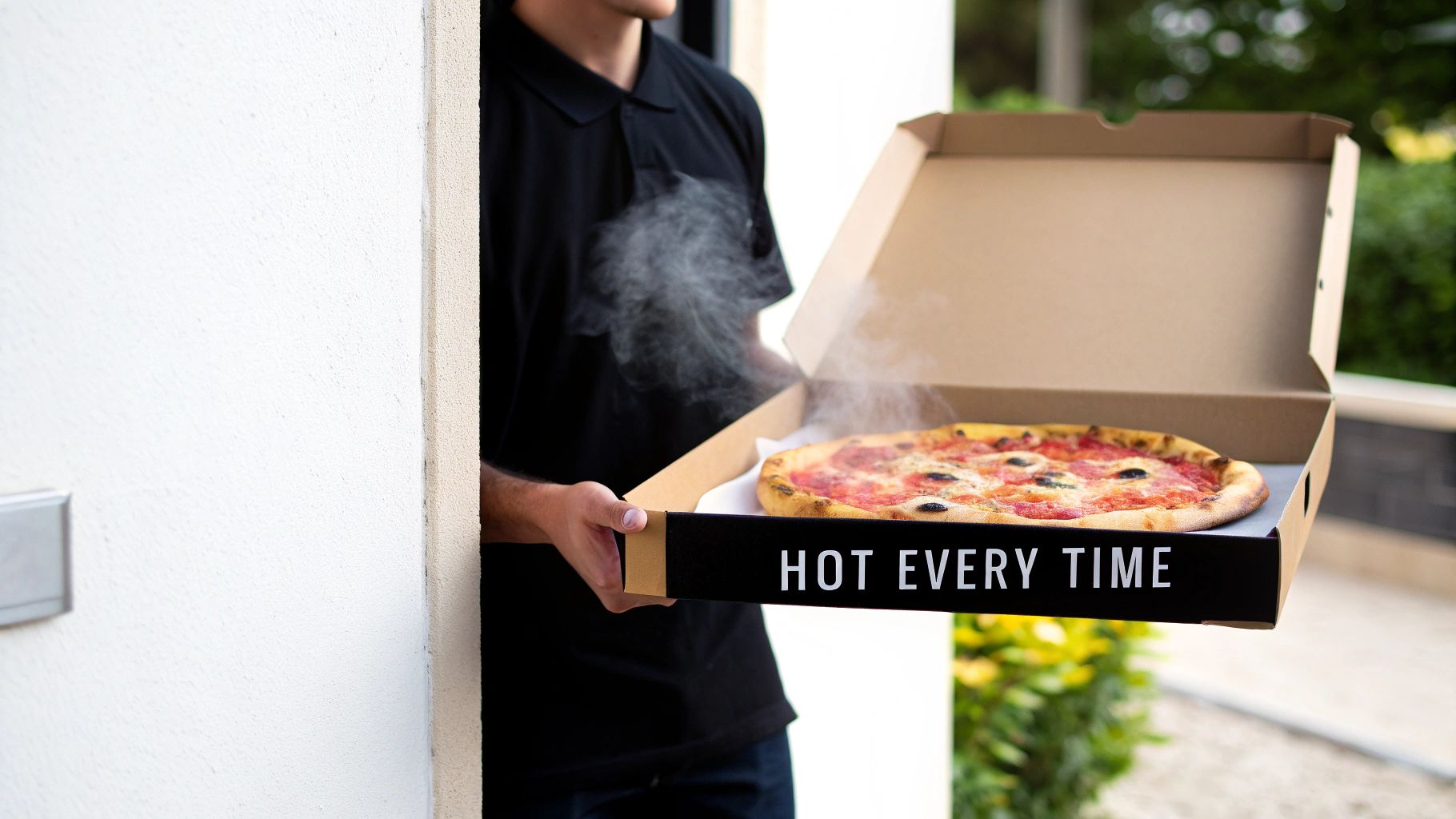
The moment a customer opens that pizza box is the moment of truth. Are they met with a steaming, aromatic pie, or a sad, lukewarm disc of disappointment? The difference almost always comes down to your delivery gear. This makes a top-tier thermal bag just as crucial to your success as the quality of your pizza prep table or your secret sauce recipe.
Don't see it as just a bag. It's a mobile extension of your pizzeria's promise of quality. It's your frontline defense against heat loss, protecting the taste, texture, and overall experience you worked so hard to create. For pizzerias, this is everything. A soggy crust or congealed cheese can ruin a perfect pizza—and your reputation right along with it.
The Growing Demand for Quality Delivery
The food delivery market isn't just growing; it's exploding, and customer expectations have skyrocketed. This shift has turned professional-grade thermal bags from a "nice-to-have" into an operational necessity. The global market for these bags hit USD 16,519 million in 2025 and is on track to nearly double by 2035. That's a clear signal of the intense demand for restaurant-quality food delivered right to the front door.
This boom means the competition is ruthless. Pizzerias that nail the delivery experience gain a massive advantage. It all starts by connecting the dots between the right equipment and a happy, loyal customer. The clock starts ticking the second a pizza leaves the oven and is boxed on the prep table.
A great thermal bag does more than just keep pizza hot; it preserves the integrity of your product. It’s the final handshake with your customer, delivering on the promise of a fresh, delicious meal made just for them.
Why Your Pizzeria Needs a Delivery Strategy
Effectively using thermal bags isn't about just handing one to a driver. It’s about building a system. This system ensures every pizza moves seamlessly from a blistering hot oven to a protective thermal environment. Holding equipment can certainly help, but the bag is what protects that pizza on its final, crucial journey.
If you want to dive deeper into holding temperatures before the handoff, check out our guide on food warming tables for commercial kitchens. Ultimately, investing in the right thermal bags isn't an expense; it's a direct investment in your pizzeria's survival and success.
The Science of Keeping Your Pizza Hot
Ever wondered how a pizza stays piping hot on a cold night, even after a 15-minute drive? It’s not magic. It’s a carefully engineered system packed into every high-quality thermal bag, turning a simple carrier into a portable, soft-sided oven.
Think of it this way: the moment a pizza comes out of the oven and gets boxed up on your pizza prep table, the clock starts ticking. The bag’s one and only job is to fight that clock, battling against the laws of physics to keep the heat locked in. Understanding how it wins that fight helps you see past marketing hype and focus on what really matters for performance.
The Three Pillars of Heat Retention
To really get what’s going on inside that bag, you need to know the three ways heat tries to escape: conduction, convection, and radiation. A great pizza bag is built to shut down all three.
- Conduction (Direct Contact): This is heat transfer through touch. Put a hot pizza box on a cold countertop, and you'll see conduction in action as the heat drains away. A bag’s insulated interior lining creates a buffer, minimizing this direct heat loss.
- Convection (Air Movement): This is heat carried away by moving air—think of the blast of hot air when you open an oven. A bag’s tight seal and heavy-duty zipper are designed to stop that from happening, preventing hot air from sneaking out and cold air from seeping in.
- Radiation (Heat Waves): This is heat traveling as invisible energy waves, like the warmth you feel from the sun. The best bags have a reflective inner lining, like aluminum foil, that acts like a mirror, bouncing that heat right back to the pizza.
By tackling all three of these heat-loss culprits, the bag creates a stable little environment, preserving that fresh-out-of-the-oven quality your customers are paying for.
Anatomy of a High-Performance Pizza Bag
A quality thermal bag is a sandwich of different materials, each with a specific job. The outer shell is the first line of defense, usually made from a tough, weather-resistant fabric like heavy-duty nylon or vinyl to stand up to wind, rain, and cold.
But the real workhorse is the insulation core. This is almost always made from closed-cell foam, like polyethylene. Picture this foam as a super-dense web of tiny, trapped air bubbles. Since air is a terrible conductor of heat, these bubbles form an incredibly powerful thermal barrier that slows heat loss to a crawl. The thicker and denser the foam, the better the insulation.
The final layer is the interior lining. It's typically a food-grade, easy-to-clean material, often with that reflective surface we talked about to fight radiation heat loss. This multi-layer system works together to keep your pizza at the perfect temperature. Of course, the pizza has to be hot when it goes in the bag, so mastering holding temperatures in your kitchen is just as important.
Understanding Thermal Resistance (R-Value)
In simple terms, R-value is a score that measures how well insulation can stop heat from moving through it. A higher R-value means better insulation and, for you, hotter pizzas. While it's not always advertised, a bag built with thick, dense closed-cell foam will always have a higher R-value than one with flimsy, thin padding. It’s that simple.
This isn't just about keeping pizza warm; it's a huge part of food safety. Holding food at the right temperature is what stops harmful bacteria from growing, a non-negotiable for any restaurant. For a closer look at this, check out our guide on temperature control for food safety. Once you understand the science inside the bag, you can make smarter buying decisions that protect your pizza, your customers, and your reputation on every single delivery.
How to Choose the Right Bag for Your Pizzeria
Picking the right thermal bags for your pizzeria isn’t like choosing a new uniform color; it's a critical equipment decision that directly impacts the quality of every pizza that leaves your shop. Think of it as a mobile extension of your kitchen, specifically engineered to protect the unique shape, heat, and texture of your pizza on its final journey from your pizza prep table to a customer's hands.
Let's be honest: not all bags are created equal. A generic, flimsy bag designed for sandwiches will absolutely murder a pizza. It will turn a crispy crust into a soggy mess every single time. You need a solution built to handle the specific demands of heavy, stacked pizza boxes, ensuring they arrive hot, crisp, and uncrushed.
Sizing and Capacity: The Foundation of Pizza Delivery
The first thing to nail down is simple but critical: capacity. Your bags have to comfortably hold your most popular pizza sizes, which typically run from 14 to 18 inches, without cramming them in or bending the box corners. A bag that’s too snug will damage the pizza, but one that’s too big is just as bad—it lets the boxes slide around, risking damage and accelerating heat loss.
As a rule of thumb, aim for a bag that can stack at least four to five large pizza boxes. This capacity is your secret weapon for handling big family orders or batching multiple deliveries during a Friday night rush, which makes your drivers far more efficient.
The right bag isn't just a container; it's a mobile preservation unit. It must maintain the structural integrity of the boxes and the thermal integrity of the pizza inside, ensuring the first slice is just as good as the last.
The global food delivery market has absolutely exploded, projected to more than double from $150 billion in 2021 to $300 billion by 2025. That intense competition means pizzerias lose serious business if their deliveries show up lukewarm. This makes specialized, high-performance insulated bags more critical than ever before.
Top-Loading vs. Side-Loading Bags
How your driver actually gets the pizzas in and out of the bag matters more than you might think. This choice impacts speed at the door, stability in the car, and your overall delivery workflow.
-
Top-Loading Bags: These are the classic style, with a big flap on top. They're perfect for quick handoffs right at the customer's door and are generally easy for drivers to carry. If speed at the doorstep is your top priority, this is your bag.
-
Side-Loading Bags: These bags open from the side, allowing pizza boxes to slide in and out like records on a shelf. This design offers way better stability inside a delivery vehicle since the bags are far less likely to tip over. Many side-loading models even come with rigid internal racks to keep orders separated and prevent crushing.
The construction of a quality thermal bag is key to how well it performs.
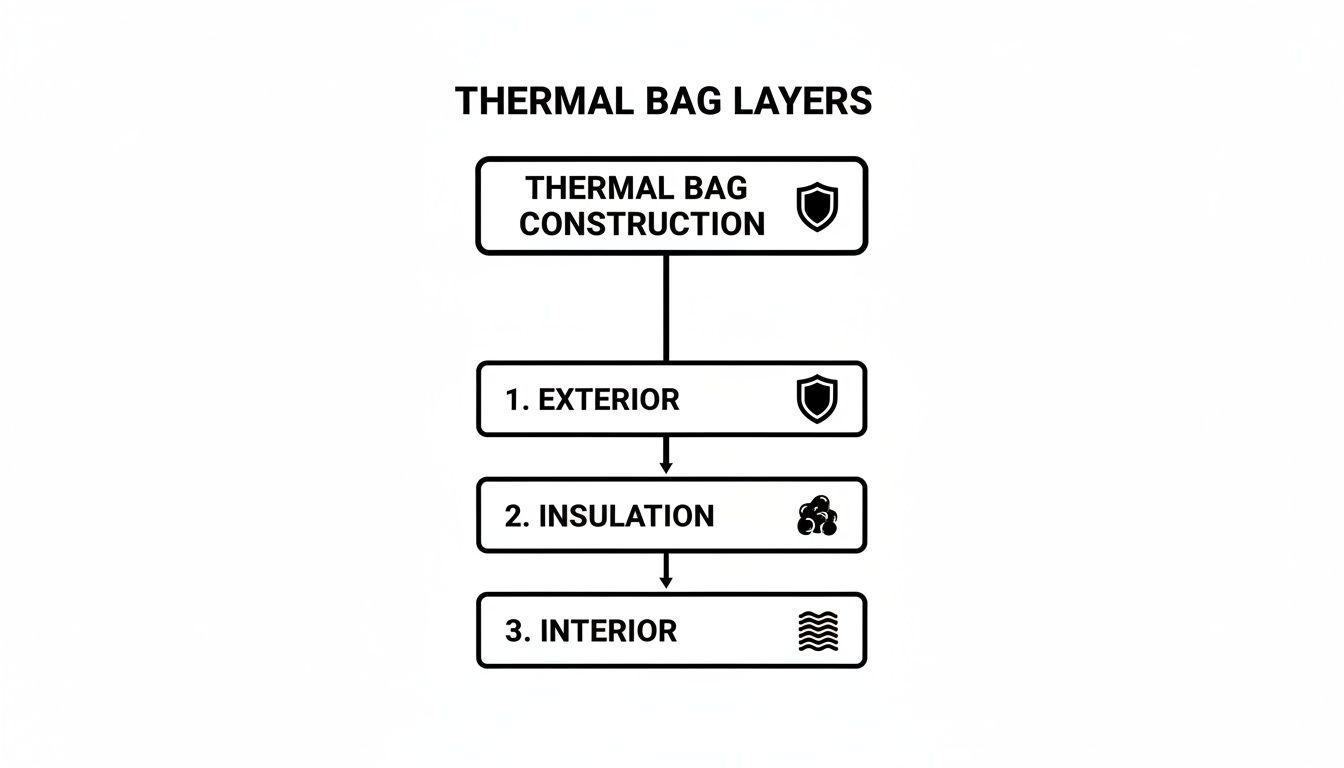
This diagram breaks it down perfectly: the tough exterior, the insulating foam core, and the protective interior lining all work together. Each layer has a specific job in shielding your pizza from the elements and stopping heat from escaping.
Must-Have Features for Every Pizzeria
Beyond size and loading style, a few key features separate a decent bag from an essential tool for your delivery fleet. Look for moisture-wicking linings that allow steam to escape—this is what prevents the dreaded soggy crust. Small metal grommets or vents are a tell-tale sign of a well-designed bag built to keep that crust crispy.
Another feature that is absolutely indispensable is a transparent ticket window. This little plastic sleeve lets drivers see the order slip without ever opening the bag. Why does that matter? It minimizes heat loss and drastically cuts down on mix-ups. This simple detail streamlines the entire handoff process, from your kitchen to the customer's door. As you grow, maybe even expanding into mobile setups, understanding the full scope of your equipment needs is crucial. You can learn more by checking out our comprehensive guide on essential food truck kitchen equipment.
Pizza Delivery Bag Feature Comparison
To help you decide, here’s a look at how different types of bags stack up. Think about your delivery volume, average order size, and budget to find the right fit.
| Feature | Economy Bag (e.g., Nylon) | Mid-Range Bag (e.g., Vinyl) | Premium Bag (e.g., Heavy-Duty Polyester with Racks) |
|---|---|---|---|
| Durability | Basic, prone to tears with heavy use | Good, resistant to stains and moisture | Excellent, designed for high-volume daily use |
| Insulation | Minimal foam, best for short trips | Moderate foam, good for standard delivery times | Thick, multi-layer foam for superior heat retention |
| Moisture Control | Limited, may trap steam | Better, often includes basic vents or grommets | Excellent, with moisture-wicking liners and multiple vents |
| Structural Support | Flimsy, offers little crush protection | Semi-rigid, offers some protection for stacked boxes | Rigid, often includes internal racks to prevent crushing |
| Key Features | Basic handles, simple zipper/velcro closure | Reinforced handles, ticket window, more robust zippers | Padded straps, internal racks, superior hardware |
| Best For | Very low-volume, in-house delivery; tight budgets | Standard pizzeria delivery operations; good balance of cost/performance | High-volume pizzerias, third-party delivery services, long routes |
Ultimately, the bag you choose is a direct reflection of your commitment to quality. While an economy bag might save you money upfront, a premium bag that delivers a hotter, crispier pizza will pay for itself in repeat customers and positive reviews.
Keeping Your Delivery Fleet Clean and Safe
A thermal bag covered in grease and old cheese isn't just an eyesore; it's a direct threat to your food's safety and your pizzeria's hard-earned reputation. You need to think of your thermal bags as essential pieces of kitchen equipment, right up there with your pizza prep table. They demand the same level of care and attention to keep your hygiene standards high and your customers safe.
Treating your bags to a consistent cleaning routine does more than just keep them looking professional. It actually extends their lifespan, makes sure they're performing at their best, and sends a crystal-clear message to customers: you care about every single detail of their order. A clean bag is that final, crucial step in delivering a safe, high-quality pizza.
This equipment isn’t just a nice-to-have anymore; it's a massive part of the food delivery world. The insulated bags market was valued at a whopping USD 15.31 billion in 2024 and is expected to grow by 6.74% every year through 2032, mostly because of the explosion in online ordering. To get a better sense of this industry trend, you can discover more insights about the global insulated bags market.
Building a Simple Daily Cleaning Routine
Consistency is everything when it comes to maintenance. The best defense against grime buildup is a simple, fast daily cleaning process that your staff can knock out in just a few minutes at the end of a shift.
This routine doesn't need to be some complicated, multi-step process. The real goal is to tackle minor spills and crumbs before they turn into major, caked-on problems.
- Empty and Shake Out: At the end of every shift, fully empty each bag and give it a good shake outside to get rid of any loose crumbs and debris.
- Wipe Down Interior: Grab a damp cloth with a mild, food-safe sanitizer and wipe down all the interior surfaces. Make sure to get into the corners and seams where gunk loves to hide.
- Clean the Exterior: Give the outside of the bag a quick wipe to remove any dirt or spills picked up on the delivery route.
- Air It Out: This is the most important step. Leave the bags open overnight to air dry completely. Storing a damp bag is just asking for mold and nasty odors.
Scheduling Deep Cleans for Tough Messes
While those daily wipe-downs are crucial, you'll still need a more thorough deep clean to handle the stubborn grease and sauce stains that build up over time. I recommend scheduling a deep clean for your entire fleet of thermal bags at least once a week—maybe more often if you're in your busy season.
By folding bag maintenance into your regular kitchen cleanup schedule, it stops feeling like a chore and becomes just another part of your standard operating procedure. This ensures it never gets skipped, protecting both your equipment and your brand.
For a deep clean, use a soft brush and a mix of warm water and a non-abrasive, food-safe detergent. Gently scrub the inside and outside, then rinse it all off with a clean, damp cloth. Just be sure you never dunk the entire bag in water, as this can wreck the insulation. After you're done, let it air dry completely.
Maintaining Zippers and Straps for Longevity
The moving parts of your bags need some love, too. A stuck zipper or a frayed strap can easily take a bag out of service right in the middle of a dinner rush.
- Zippers: Keep your zippers running smoothly by cleaning the teeth with a small brush. If a zipper starts to get stiff, a little bit of food-grade silicone spray can work wonders.
- Straps and Seams: Regularly check all the straps, handles, and seams for any signs of wear and tear, like fraying fabric or loose threads. Catching this minor damage early can prevent a complete bag failure on a delivery.
Of course, bag hygiene is just one part of the safety equation. You also have to think about your delivery staff, especially if they're using modern transport like e-bikes. For some great advice on keeping riders safe, check out these electric bike safety tips.
Integrating Thermal Bags into Your Pizzeria Workflow
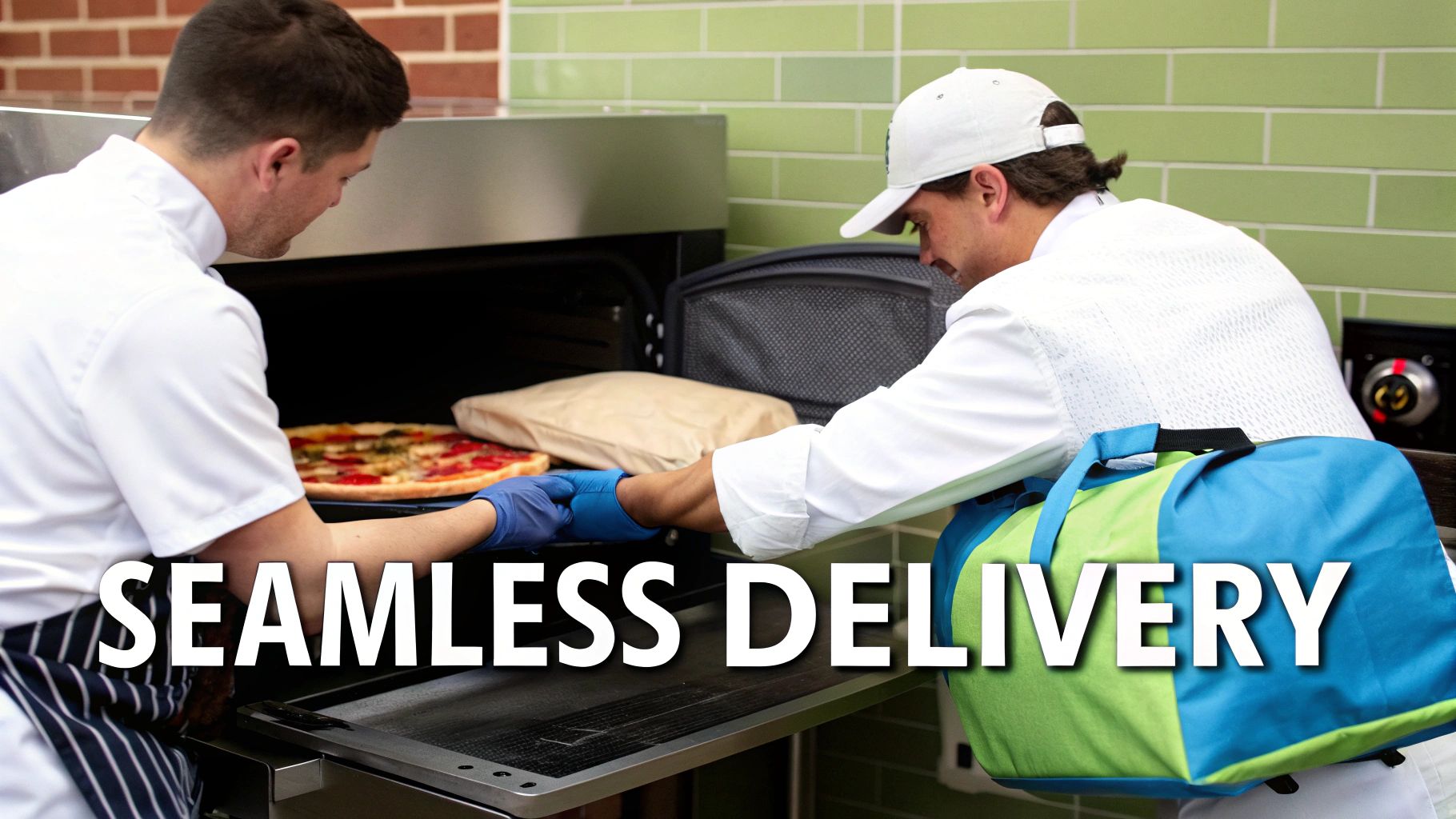
Owning the best thermal bags on the market is only half the battle. If they aren’t woven into the natural rhythm of your kitchen, they quickly become a roadblock instead of an asset. The real magic happens when you build a system that connects every step—from the oven to the customer's front door—into one well-oiled delivery machine.
This process kicks off the second a perfect pizza comes out of the oven and lands on your pizza prep table. This isn't just a handoff point; it's the start of a crucial race against time. A messy system here guarantees cold pizzas, frustrated drivers, and, you guessed it, unhappy customers.
Designing Your Delivery Staging Area
To kill the chaos, you need to designate a specific delivery staging area. This is a dedicated zone, ideally right next to your cutting station or pizza prep table, that acts as the command center for every single outgoing order. It’s the last quality checkpoint and the first stop on the pizza’s journey inside its thermal bag.
Think of this area like an airport gate for your pizzas. It’s where the boxed pie waits for its "flight"—the delivery bag. Keeping this space clean, organized, and stocked with essentials like napkins and parmesan packets prevents those last-minute scrambles that grind everything to a halt. The goal is zero hesitation from the moment a pizza is boxed to the second it’s zipped up.
Your delivery staging area is the critical link between your kitchen's quality control and your delivery fleet's efficiency. A well-designed space minimizes heat loss, reduces driver wait times, and ensures every order is accurate and complete before it ever leaves the building.
By getting this one spot in your workflow right, you prevent the bottlenecks that cause ripples of chaos through your entire operation, especially during the dinner rush.
Mastering the Rush Hour Handoff
Friday night hits. The tickets start flying. This is where your system gets put to the test. A disorganized handoff can spiral into a mess of waiting drivers and cooling pizzas. But with a few smart strategies, you can turn that stressful rush into a smooth, profitable service.
One of the most effective tricks in the book is to pre-heat your thermal bags. Just before the rush starts, toss a hot water bottle or a commercial-grade heating element inside each bag for a few minutes. Why? Because putting a hot pizza into a pre-warmed bag drastically slows down heat loss. It buys your drivers precious extra minutes to guarantee that piping-hot delivery.
Another game-changer is how you organize the bags themselves. A simple system for managing multiple orders can slash mix-ups and get drivers out the door faster.
-
Color-Coded Bags: Assign different colored bags to specific delivery zones or even third-party services (think green for north, blue for south). This gives drivers an instant visual cue, so they can grab the right orders without having to stop and read every ticket.
-
Numbered Bag System: Give each driver a number at the start of their shift. When an order is ready, it goes into the bag with the corresponding number. It’s a dead-simple way to match drivers to their deliveries without any confusion.
These aren't just little time-savers. They reduce the mental load on your staff, cut down on errors, and create a seamless flow from the pizza prep table to the delivery car. When you start treating your thermal bags as part of a larger, intelligent system, you're not just protecting your product—you're optimizing your entire delivery operation.
Calculating the Real Return on Your Bag Investment
It’s easy to look at a high-quality thermal bag and see just another line item on an expense sheet. But we need to flip that thinking on its head. A premium thermal bag isn’t a cost; it’s a profit-generating asset, working tirelessly to protect the pizza you poured so much effort into creating on your prep table. This is the final, critical step where your investment truly pays off.
The real return here isn't just about the bag itself. It’s measured in the problems you avoid, the reputation you build, and the customers who keep coming back. A cheap, useless bag that delivers a single lukewarm pizza can set off a chain reaction of negative outcomes that costs you far more than a quality bag ever would.
The Cost of a Single Bad Delivery
Let's do some quick, back-of-the-napkin math. A customer calls to complain their large specialty pizza arrived cold. To make it right, you have to remake the entire order. That means more ingredients, more labor, and probably the time of a second delivery driver. A single incident like this can easily set you back $20-$30 in direct losses.
Now, what if that customer doesn't call? Even worse. They just go online and leave a one-star review detailing their soggy, disappointing experience. That one review can scare away dozens of potential new customers. The long-term damage from that single bad delivery completely dwarfs the price difference between a basic bag and a high-performance one.
Think of a premium thermal bag as your brand's insurance policy on wheels. For a small upfront investment, it protects you from the costly claims of remade orders and the long-term reputation damage caused by negative online reviews.
By preventing just two or three remade orders a month, a top-tier bag has already paid for itself. Everything after that is pure profit, saved from going down the drain because of a bad delivery experience.
Connecting Hot Pizza to Five-Star Reviews
In the world of online ordering, your digital reputation is everything. Customers who get a perfectly hot pizza aren't just satisfied; they're the ones who become repeat buyers and your most vocal fans. When you nail the delivery every single time, you build a foundation of trust that leads directly to loyalty and powerful word-of-mouth.
Here’s how that investment cycle really works:
- Invest in Quality Bags: You buy durable, well-insulated thermal bags built for the job.
- Deliver Consistently Hot Pizza: Every single order arrives at the customer's door tasting like it just came out of your oven.
- Earn Positive Reviews: Happy customers leave glowing five-star reviews, and they often specifically call out how hot and fresh the pizza was.
- Attract New Customers: Those great reviews act as social proof, convincing new people to choose your pizzeria over the competition.
- Increase Customer Loyalty: That great first experience turns them into regulars, massively increasing their lifetime value to your business.
This is a virtuous cycle that proves thermal bags for food deliveries are much more than just an operational tool—they're a powerful marketing asset. They are a direct investment in the customer experience, which is the ultimate driver of growth for any pizzeria. A premium bag protects the product, secures the review, and earns the repeat customer.
Common Questions About Pizza Delivery Bags
When you're trying to nail down your delivery game, the same questions always come up. It's the little details about handling thermal bags that can trip up even experienced operators. Getting these things right is what separates a decent delivery from one that has customers raving.
Let's cut through the noise and get you some straight answers to the most common challenges pizzeria owners face. These aren't just minor details; they're the practical hurdles that can make or break customer satisfaction. Thinking them through now means your team will be ready for anything.
How Do I Stop Pizza Crusts from Getting Soggy in the Bag?
Sogginess is the number one enemy of a perfect pizza crust, and it’s caused by a single culprit: trapped steam. The second a hot pizza goes into a sealed bag, it lets off a huge blast of moisture. With nowhere to go, that steam condenses and settles right back onto the box, turning your crispy, beautiful crust into a chewy, damp mess.
Your best defense is a thermal bag for food deliveries that's actually designed with ventilation in mind. Look for small metal grommets or specially designed flaps. These features let just enough of that humidity escape without bleeding out all the precious heat. It also helps to make sure your pizza boxes have their own vent holes.
Here's a pro tip for those piping-hot pies fresh from the oven: train your drivers to "burp" the bag. That just means cracking it open for a second or two after the first minute of the drive. It releases that initial, intense burst of steam and can save a crust from certain doom.
How Many Bags Does a New Pizzeria Actually Need?
Figuring out the right number of bags is all about avoiding bottlenecks during a dinner rush. A solid rule of thumb is to have 1.5 to 2 bags for every driver you have on a shift. So, if you've got two drivers on the road, you need at least three bags, but ideally four, ready to roll.
This simple formula ensures there’s always a clean, dry bag waiting at the staging area near your pizza prep table while the others are out making customers happy. It completely eliminates that awkward moment when a driver has to wait for another one to return, keeping your whole delivery workflow humming along during peak hours.
Can I Put Cold Drinks and Salads in the Same Bag as a Hot Pizza?
Absolutely not. Putting cold and hot items together in the same insulated bag is a recipe for disaster—a thermal battle where everything loses.
The heat from the pizza will zap the chill from your drinks and instantly wilt a fresh salad. At the same time, the condensation from those cold items creates a swampy environment inside the bag, making the pizza box damp and contributing to the soggy crust we're trying so hard to avoid.
The only professional solution is to have a few separate, smaller cooler bags just for the cold stuff. It’s a small investment that maintains the integrity of the entire order. More importantly, it shows your customers you care about quality, and that’s what gets them to order from you again and again.
Ready to build a seamless workflow from your kitchen to your customer's door? At Pizza Prep Table, we provide the foundational equipment you need to ensure every pizza starts its journey perfectly. Explore our selection of high-quality, NSF-compliant pizza prep tables today.