

A Winning Pizza Shop Business Plan From Scratch
A solid pizza shop business plan always kicks off with a killer executive summary. Think of it as the "pitch" for your entire vision. It’s the very first thing investors will read, so it has to grab their attention by clearly laying out your pizzeria’s concept, who you're selling to, and the financial highlights.
Crafting Your Pizzeria's First Impression
Your executive summary is the sizzle that sells the slice. It’s your whole business plan, boiled down to one powerful page. And here’s a pro tip: even though it comes first, you should always write it last. That way, you can pull the strongest, most compelling points from every other section you've already finished.
The goal here is simple: make a potential lender or investor need to turn the page. This is your shot to show off the passion you have for your pizza restaurant and prove you’ve thought through every single detail, from the dough to the dollars.
Defining Your Unique Pizzeria Concept
First things first, you need to paint a vivid picture of your pizza restaurant. What makes your pizza shop different in a sea of competitors? This is where you establish your core identity.
Are you opening a fast-casual slice shop to catch the downtown lunch crowd, where speed is everything? Or maybe you're dreaming of a family-style pizza restaurant that specializes in authentic Neapolitan pizza, becoming a go-to spot for dinner. Your concept is the bedrock of your brand.
- Fast-Casual Slice Shop: You'll want to highlight high foot traffic, quick service, and prices that won't break the bank.
- Family-Style Pizza Restaurant: The focus here is on a warm, inviting atmosphere, a menu that goes beyond just pizza, and getting involved in the local community.
- Gourmet Artisan Pizzeria: This concept is all about unique, top-shelf ingredients, maybe some craft beer pairings, and a more polished, upscale vibe.
This initial description really sets the stage for everything else in your plan. It tells the reader exactly what kind of pizza business you're building.
Highlighting Your Competitive Edge
Once you’ve defined your concept, you have to explain why you’re going to succeed. What's your secret sauce—literally or figuratively? This is what will make customers choose your pizzeria over the one down the street.
Maybe your advantage is a secret family dough recipe, a commitment to using only locally sourced, organic toppings, or a slick online ordering system that makes getting a pizza ridiculously convenient.
An effective outdoor restaurant sign is paramount for creating a strong first impression and attracting passersby. Your storefront's visual appeal, which starts with great signage, is a key part of your competitive strategy and should be mentioned in your plan.
For instance, perhaps your location is a prime, underserved corner with no other decent pizza options for two miles. That geographic advantage is a huge selling point. You can dig deeper into how design choices, from signs to your kitchen layout, shape your brand in our guide to pizza shop design ideas.
Presenting Your Financial Snapshot
Finally, your executive summary has to talk numbers. You don’t need to drown them in details here—that comes later—but you do need to provide a clear, confident overview of your financial goals.
Make sure to include these key figures:
- Startup Funding Request: Be specific. State the exact amount of money you're asking for.
- Use of Funds: Briefly explain where the money will go (e.g., "for the purchase of a 93-inch pizza prep table, a double-deck oven, and initial inventory").
- Revenue Projections: Give a high-level forecast for your first one to three years.
- Profitability Timeline: Let them know when you expect the business to be in the black.
This financial snapshot proves your passion is backed by a realistic, well-researched plan to generate a return. It shows you’re not just a dreamer; you’re a serious entrepreneur ready to get to work.
Finding Your Slice of The Local Market

Let's be honest, amazing pizza is just the price of entry. Lasting success comes from finding the right crowd—the people in your neighborhood who are genuinely hungry for what you’re serving. This part of your pizza shop business plan is where you prove you've done your homework and aren't just guessing.
It’s all about replacing gut feelings with hard data. On a global scale, the pizza market is absolutely booming. It was valued at USD 282.91 billion in 2025 and is projected to hit USD 340.91 billion by 2034. North America is the biggest player, grabbing a massive 39.13% market share in 2025. That growth is fantastic, but you need a laser-focused strategy to claim your piece of the pie. You can read the full research on pizza market trends to really grasp the scale of the opportunity.
A solid market analysis shows investors you’re not just a pizza lover; you’re a savvy business owner who understands the competitive landscape and has a real plan to stand out.
Identifying Your Ideal Customer
Before you can win anyone over, you need to know exactly who you're talking to. Are you going after college students who need a cheap, late-night slice? Or are you the new go-to for families who want a reliable Friday night dinner? Defining this "customer persona" shapes every single decision you'll make, from menu pricing to your marketing.
Dig into the details of who these people are:
- Age and Income Level: This has a direct line to your pricing strategy and how fancy your pizza menu can get.
- Family Status: Families are looking for different things—like kid-friendly options and a casual vibe—than a group of young professionals.
- Dining Habits: Are they grab-and-go takeout people, delivery fanatics, or do they want a place to sit down and relax?
- Values: Do they care about organic ingredients, gluten-free crusts, or supporting a local pizza restaurant?
When you know this, you can build a pizzeria that feels like it was made just for them.
Analyzing Your Local Competitors
Alright, time to do some recon. Who else is slinging pies in your target area? Your goal isn’t just to make a list; it’s to understand their business inside and out.
Fire up a simple spreadsheet and start tracking the key details for each competing pizza restaurant:
- Concept: Is it a national chain like Domino's, a classic slice shop, or a fancy sit-down Italian place?
- Menu and Pricing: What are their best-sellers? How do their prices stack up against what you want to charge?
- Hours of Operation: Do they all close at 9 PM, leaving the late-night crowd hungry?
- Customer Reviews: Get on Google, Yelp, and social media. See what customers love, but more importantly, what they complain about. Every complaint is a potential opportunity for you.
This intel will show you where the gaps are. Maybe nobody in town does a proper Detroit-style pizza, or maybe every single competitor has terrible reviews for their delivery service. These are the openings you can drive a truck through.
A thorough competitor analysis isn't about copying what works; it's about finding what's missing. Your unique selling proposition lies in solving a problem or fulfilling a desire that other pizzerias are ignoring.
Conducting a Realistic SWOT Analysis
With a solid picture of your customers and competition, the final step is to look in the mirror. A SWOT analysis (Strengths, Weaknesses, Opportunities, Threats) is a straightforward way to size up your own pizzeria concept.
- Strengths (Internal): What’s your secret weapon? It could be your chef's killer sourdough crust recipe, a killer location with tons of foot traffic, or your deep roots in the local community.
- Weaknesses (Internal): Be brutally honest. Are you short on capital? Do you have zero marketing experience? Knowing your weak spots now lets you build a plan to overcome them.
- Opportunities (External): What market trends can you jump on? This could be the growing demand for plant-based options, the lack of good pizza catering in your area, or a new office park opening down the street.
- Threats (External): What could trip you up? Think about things like rising cheese prices, a new competitor announcing their grand opening, or changing local health regulations.
This analysis is a critical piece of your pizza shop business plan. It shows investors you have a 360-degree view of the market and you're ready to handle whatever comes your way.
Engineering A Menu That Sells Itself
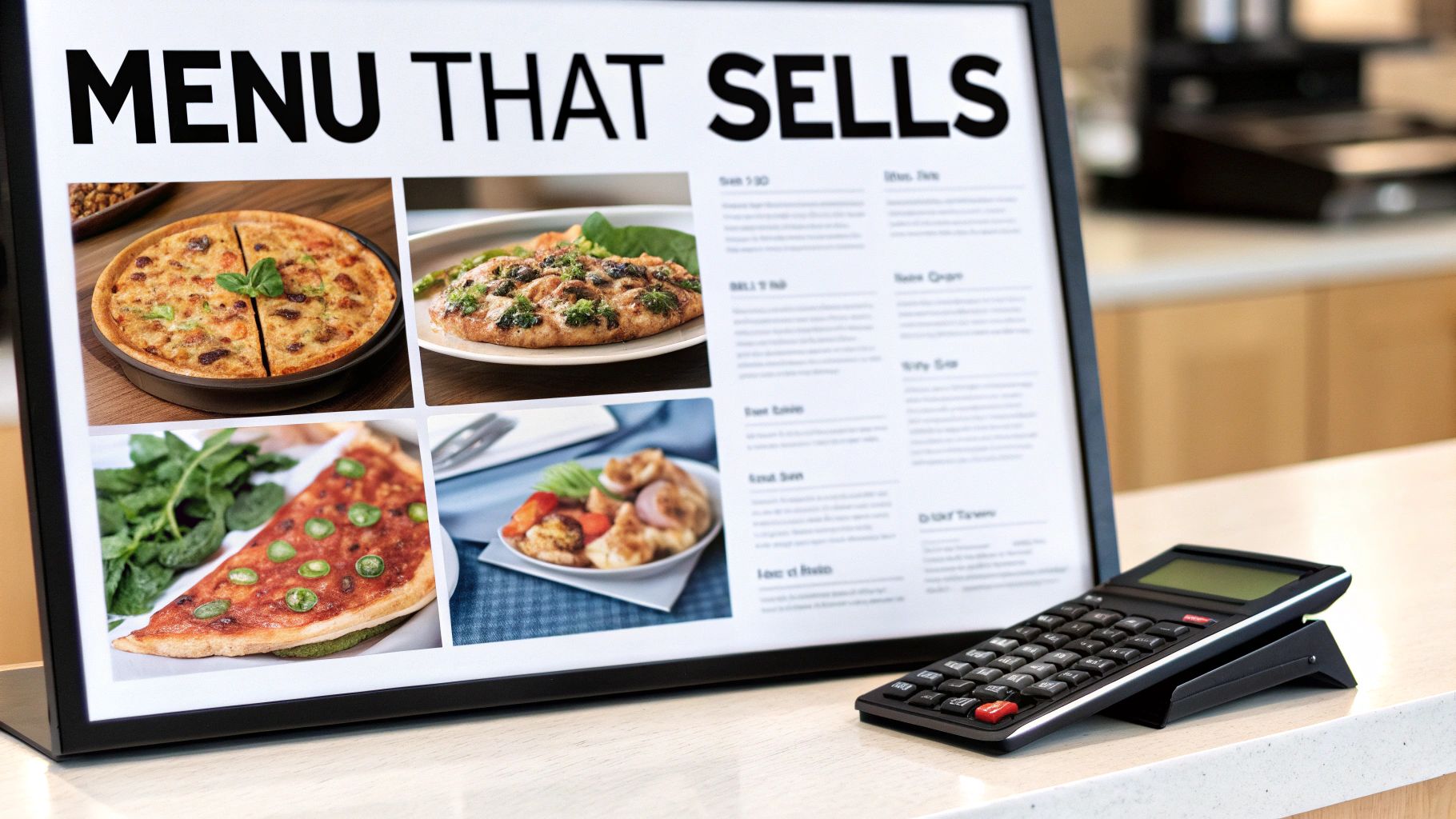
Your menu isn't just a list of what you sell. It’s the single most powerful sales tool you own, period. A well-designed pizza restaurant menu doesn't just show customers their options; it guides their choices, nudges up your average ticket size, and directly pads your bottom line. Getting this right is a cornerstone of a solid pizza shop business plan.
The whole process starts with a serious look at your numbers. You have to cost out every single ingredient, from the fancy "00" flour in your dough to the last basil leaf on that Margherita pizza. This is the only way you can set prices that actually protect your profits and keep you in business for the long haul.
Mastering Your Food Costs
Calculating your Cost of Goods Sold (COGS) for every item on your menu isn't just a suggestion—it's non-negotiable. I know it sounds tedious, but this is the bedrock of a profitable pizzeria. You have to know exactly what that large pepperoni pizza costs you to make before you can dream of putting a price on it.
Start by building a detailed spreadsheet for every single pizza you offer.
- Ingredient Costing: Break down the cost of each ingredient by weight or volume. If a 50 lb bag of flour costs you $30 and you use one pound for a dough ball, that's $0.60 in flour for one pizza. Do this for everything.
- Recipe Portioning: Nail down the exact amount of sauce, cheese, and toppings used on each size of pizza. Consistency here is everything—for your customers' experience and your own predictable costs.
- Total Item Cost: Add it all up. The cost of every component gives you the final cost per pizza.
This simple exercise is incredibly powerful. It shows you which pizzas are your cash cows and which ones are barely breaking even, giving you the power to strategically feature your most profitable items.
The Psychology of Menu Design
Once you have your costs dialed in, you can start playing with menu psychology. The way you present your food can have a massive impact on what people order. It's not about tricking anyone; it's about subtle, smart persuasion.
Think about the "Golden Triangle." It's the natural path a customer's eyes take when they first look at a menu: center, then top right, then top left. This is prime real estate. You should be placing your most profitable, drool-worthy signature pizzas in these spots to grab immediate attention.
Your goal is to make it easy for customers to choose your high-margin items. Use descriptive language like "hearth-baked," "hand-crushed tomato sauce," or "locally sourced mushrooms" to create a sensory experience before they even take a bite.
Here's another trick that works wonders: remove the dollar signs ($) from your prices. Multiple studies have shown that just listing the number (e.g., "15" instead of "$15.00") can make customers feel like they're spending less money.
Building a Balanced and Profitable Offering
A killer pizza menu needs more than just great pizza. To really maximize your average check size, you need a balanced lineup of sides, salads, desserts, and drinks. These add-on items are often where the highest profit margins are hiding.
The U.S. pizza industry is a crowded field, with 75,736 businesses and revenues projected to hit $49.5 billion by 2025. With over 55% of operators planning to add new pizza styles, having a versatile kitchen setup is non-negotiable. You’ll need flexible refrigeration, like a good pizza prep table, to handle a diverse range of toppings, from classic pepperoni to gourmet veggies. You can discover more insights about these pizza industry trends to see where the market is headed. This just highlights why you need to pair your awesome pizzas with a full menu that tempts customers to order more.
Consider rounding out your menu with these high-margin additions:
- Shareable Appetizers: Garlic knots, mozzarella sticks, or a simple Caprese salad are easy for customers to add to an order.
- Signature Drinks: A house-made lemonade or a curated selection of craft sodas can be incredibly profitable.
- Simple Desserts: Items like cannolis or tiramisu require very little extra labor but can add a nice boost to your revenue per table.
Finally, build rock-solid relationships with your suppliers. Consistent, high-quality ingredients are the backbone of a menu that creates loyal customers. Negotiating fair prices and ensuring on-time deliveries will keep your kitchen humming and your food costs under control.
Designing an Efficient Pizzeria Operation
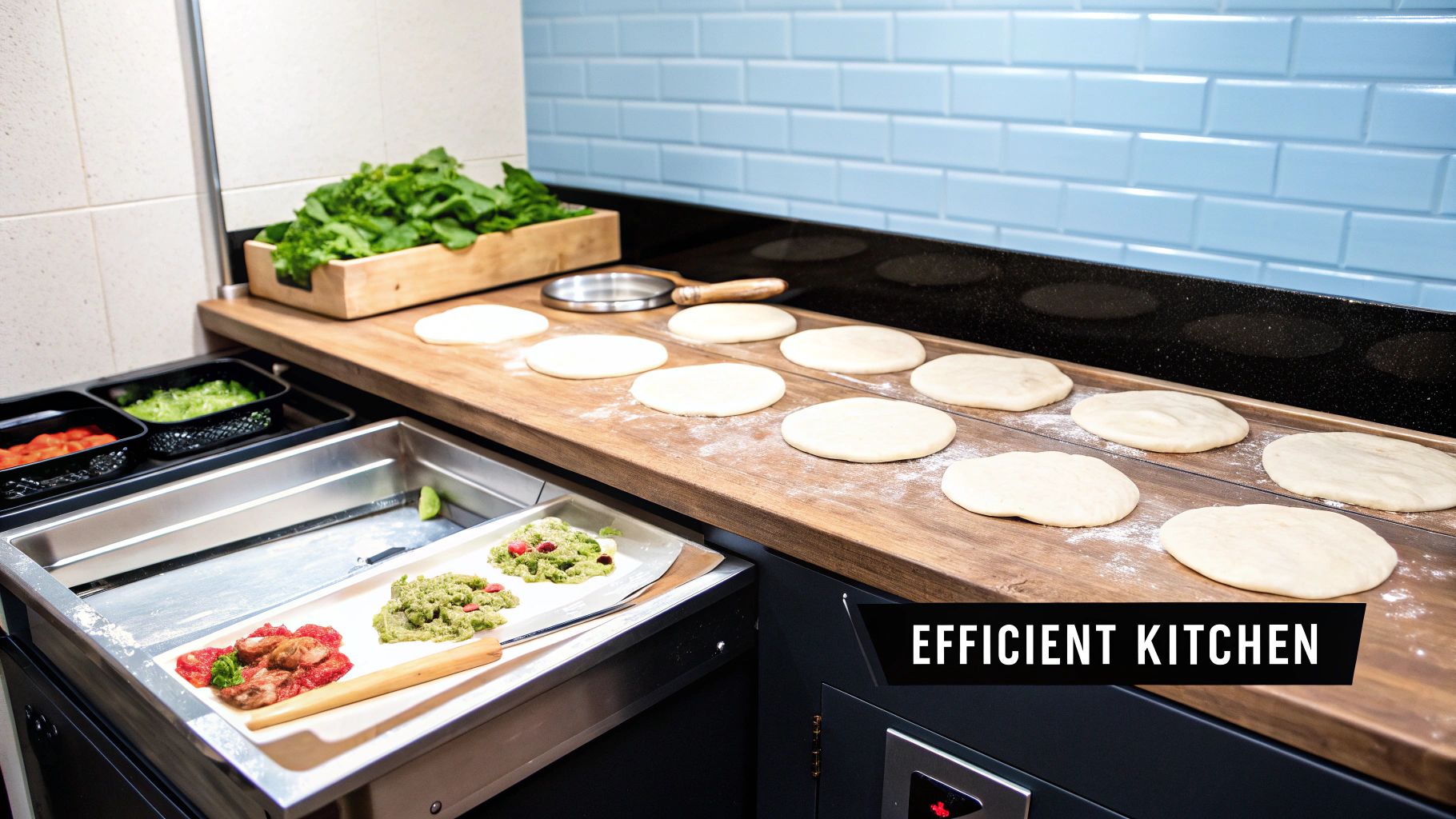
A fantastic menu doesn't mean a thing if your kitchen grinds to a halt during the Friday night rush. This is where your business plan gets real. The operations section is the engine of your pizza restaurant, detailing the day-to-day workflow that turns ingredients into profit. It's how you prove to investors you've thought through the messy, practical details of speed, efficiency, and quality control.
A disorganized kitchen is a profit killer. It leads to slow ticket times, wasted food, and a burned-out crew. A solid operational plan, on the other hand, is your blueprint for consistency, ensuring every pizza comes out perfect, even when orders are flying in. It's all about building a system that thrives under pressure.
Crafting a Smart Kitchen Layout
The physical layout of your kitchen is the foundation of your entire operation. A smart design minimizes the number of steps your team takes, which directly translates to faster service and less chaos. Think of it as choreographing a dance where every single movement is purposeful and efficient.
The goal is to create logical "zones" for each stage of the pizza-making process. A good layout naturally guides the flow from dough prep to topping, baking, cutting, and finally, boxing it up for delivery or plating it for dine-in customers.
- Dough Station: This area needs room for your mixer and proofing boxes. Ideally, it's located right near your walk-in cooler for easy access to prepped dough.
- Assembly Line: This is the heart of your kitchen, built around the pizza prep table. It should flow directly toward the ovens.
- Oven Area: Make sure there's enough landing space for hot pans, with a cutting and finishing station close by.
- Warewashing: Keep the dish pit separate from the food production line. This is crucial for avoiding cross-contamination and preventing traffic jams.
By creating a circular or assembly-line workflow, you stop staff from bumping into each other and guarantee a smooth handoff from one station to the next. For a deeper dive, check out our in-depth guide on commercial kitchen layout design.
Selecting Your Essential Kitchen Equipment
Choosing the right equipment is one of the biggest investments you'll make. Your gear has to be reliable, meet all health codes, and be tough enough to handle your projected volume. The absolute centerpiece of this arsenal is the pizza prep table.
This single piece of equipment is the command center for your entire assembly process. A quality refrigerated pizza prep table keeps all your toppings—sauce, cheese, veggies, and meats—at a safe, consistent temperature and within arm's reach. The size of your prep table, whether it’s a compact 44-inch unit or a spacious 93-inch model, directly impacts how many pizzas your team can build at once. It literally dictates your peak-hour capacity.
A well-chosen pizza prep table isn't just a refrigerator with a cutting board on top. It's a strategic investment in speed, food safety, and product consistency—three pillars of a successful pizzeria.
Beyond the prep table, your equipment list has to be comprehensive.
Essential Pizzeria Kitchen Equipment
Here's a look at the core pieces of equipment that will form the backbone of your pizzeria's operations. Selecting the right gear from the start prevents costly upgrades and operational bottlenecks down the line.
| Equipment Category | Primary Function | Key Considerations | Impact on Operations |
|---|---|---|---|
| Dough Mixer | Prepares large, consistent batches of pizza dough. | Capacity (quarts), horsepower, and mixing action (planetary vs. spiral). | A properly sized mixer saves hours of labor and ensures dough consistency. |
| Pizza Oven | The workhorse that bakes your pizzas to perfection. | Type (deck, conveyor, brick), fuel source (gas/electric), and cooking capacity. | Your oven choice dictates cooking time, pizza style, and overall output. |
| Refrigeration | Provides cold storage for all ingredients and prepped items. | Walk-in cooler for bulk, reach-in units for line access, under-counter for stations. | Proper refrigeration reduces food waste and is critical for food safety. |
| Pizza Prep Table | The central station for assembling pizzas efficiently. | Size (length), pan capacity, refrigeration power, and NSF compliance. | Directly impacts assembly speed, organization, and peak service capacity. |
This table highlights just how interconnected your equipment choices are with the efficiency of your day-to-day business.
The global demand for pizza is absolutely booming, with the market projected to grow by USD 70.1 billion between 2024 and 2029. North America is leading this charge, accounting for roughly 40% of that growth. For the 80,175 independent pizzerias in the U.S., this massive demand means that having a streamlined kitchen with reliable equipment is no longer a luxury—it's a competitive necessity.
Building Your A-Team Staffing Plan
Finally, your operational plan needs people. You can have the best layout and equipment in the world, but without a skilled and organized team, it all falls apart. Your business plan must outline the key roles you need to fill and what each person is responsible for.
Start by clearly defining the positions needed for a typical shift. Even in a small pizza shop, clarity is everything.
- Pizza Maker (Pizzaiolo): This is the artist of the operation, responsible for stretching dough, saucing, topping, and baking the pizzas. They are the masters of the pizza prep table and oven.
- Prep Cook: The unsung hero who makes sure the pizza maker has everything they need. This role involves chopping vegetables, slicing meats, making sauce, and portioning dough.
- Cashier/Front-of-House: The face of your business. This person takes orders, handles payments, and manages customer interactions. In a takeout/delivery model, they also manage the flow of orders.
- Dishwasher/Utility: This role keeps the kitchen clean, safe, and stocked, ensuring a steady supply of clean pans, utensils, and containers for the rest of the team.
Your plan should also specify how many staff members you'll need for opening, peak, and closing shifts. Detailing roles and responsibilities shows potential investors you have a clear strategy for executing your vision and serving customers efficiently from day one.
Forecasting Your Finances and Securing Capital
Alright, let's talk about the numbers. This is where your dream of slinging the perfect pie meets the hard reality of dollars and cents. The financial section of your business plan is, without a doubt, the part that gets the most intense scrutiny. It’s what translates your passion for pizza into the language lenders and investors actually speak: profit, loss, and return on investment.
A solid financial forecast proves you’ve done more than just dream. It shows you’ve moved into practical, boots-on-the-ground planning. You're not just a great pizza maker; you're a serious business owner who understands how to manage payroll, rent, and inventory.
Estimating Your Startup and Operating Costs
Before you can ask for a dime, you need to know exactly how much you need and where every single dollar is going. The best way to do this is to break your costs into two distinct buckets: the money you need to open the doors (startup costs) and the money you need to keep them open (operating costs). Getting granular here is what builds credibility.
One-Time Startup Costs are all the initial investments you have to make just to get started.
- Kitchen Equipment: This will likely be your biggest ticket item. We're talking about everything from your main deck oven and dough mixer to the absolute heart of your operation—the pizza prep table. A quality prep table isn't just a piece of steel; it's an investment in speed, organization, and NSF-compliant food safety.
- Leasehold Improvements: This is the money you'll spend turning an empty space into your vision, from building out the kitchen to designing the dining area.
- Initial Inventory: Your first massive shopping trip for flour, cheese, tomatoes, toppings, and boxes.
- Permits and Licenses: All the fees required to get your business license, health permits, and any other local certifications.
Ongoing Operating Expenses are the bills that will show up every single month.
- Rent or Mortgage: Your monthly nut for the physical location.
- Payroll: Wages and salaries for your whole crew, from the head pizzaiolo to the delivery drivers.
- Utilities: Gas for the ovens, electricity, water, and internet—it all adds up.
- Food Costs (COGS): The constant expense of restocking your ingredients.
- Marketing and Advertising: Your budget for social media ads, local flyers, and running promotions.
Your financial projections are the backbone of your funding request. A classic rookie mistake is underestimating costs, which can sink your business before you even serve your first customer. Be brutally realistic and always add a contingency fund—plan on 10-15% of your total startup costs—for the surprises that will inevitably pop up.
Building Your Financial Projections
Once your costs are mapped out, it's time to build the three core financial statements that every lender will demand to see in your pizza shop business plan. These documents paint a complete picture of your pizzeria's financial health and potential.
Key Financial Statements
- Profit and Loss (P&L) Statement: Often called an income statement, this projects your revenue, subtracts all your costs, and shows your expected profit (or loss) over time. Most plans project this out for the first three years. It answers the most basic question: "Is this business actually going to make money?"
- Cash Flow Projections: This is arguably the most critical statement for a new pizza restaurant. It tracks the actual cash moving in and out of your business bank account each month. A business can look profitable on the P&L statement but still fail if cash flow is managed poorly. This ensures you'll always have enough money on hand to pay your suppliers, staff, and rent.
- Break-Even Analysis: This simple calculation tells you the exact sales volume you need to hit just to cover all your costs. Knowing you need to sell, say, 800 pizzas a month to break even is a powerful tool. It helps you set realistic sales goals and informs your entire pricing strategy.
Before you start pitching investors or walking into a bank, you need a plan that's buttoned up. For a great deep dive, check out this guide on How to Write a Business Plan.
Exploring Funding and Financing Options
Now that you have a clear picture of how much cash you need, you can figure out where to get it. The good news is, there are several paths for aspiring pizzeria owners, each with its own pros and cons.
Traditional bank loans, especially those backed by the Small Business Administration (SBA), are a common route. They can offer great interest rates and terms, but be prepared for a rigorous application process that requires a flawless business plan.
Another smart move, particularly for handling those big equipment purchases, is financing or leasing. This strategy lets you get your hands on essential, top-of-the-line gear like a commercial pizza prep table or a multi-deck oven without wiping out your cash reserves from day one. By spreading the cost over time, you keep more capital free for things like marketing and payroll during those critical first few months.
You can learn more about how restaurant equipment financing for startups makes high-end equipment much more attainable. It's a way to ensure you don't have to compromise on the quality of the tools that directly impact your product and efficiency.
Answering Your Pizzeria Startup Questions
Even with the best roadmap, you're bound to hit some specific questions when you're deep in the weeds of your pizza shop business plan. I get it. This last section tackles the most common hurdles and sticking points I see aspiring pizza restaurant owners grapple with. Let's get you some clear, practical answers so you can finish your plan with confidence.
How Much Does It Really Cost to Open a Pizzeria?
This is the big one, and the honest answer is: it depends. The costs can swing wildly. A lean, takeout-and-delivery-only pizza shop could potentially get off the ground for around $75,000. On the other hand, a full-service pizza restaurant in a high-rent district? That could easily top $500,000.
Your biggest cost drivers will almost always be real estate, the extent of the build-out or renovation required, and your kitchen equipment package.
Speaking of equipment, that’s a huge slice of the pie. Big-ticket items like a high-capacity deck oven, a commercial dough mixer, and walk-in refrigeration are serious investments. Right at the heart of your operation is the pizza prep table—it’s the command center for your entire assembly line. A smart move to manage these upfront costs is to look into equipment leasing or financing. This lets you get top-tier gear without torching all your startup capital before you even sell your first slice.
What Do Investors Look for in a Pizza Shop Business Plan?
Investors want to see a clear, believable path to getting their money back, and then some. They zoom in on three key areas of your pizza shop business plan to see if you’ve got a real shot.
First, they’ll read your Executive Summary. It has to be a sharp, compelling pitch that grabs their attention immediately. Next, they’ll dig into the Market Analysis. They need to see that you've truly identified a hungry customer base and have a smart plan to outmaneuver the local competition. Finally, they live in the Financial Projections.
Lenders and investors need to see more than just your passion for pizza; they need to see a plan backed by solid numbers. Your financials have to be realistic. They need to clearly show how their investment will be used to buy revenue-generating assets—like an efficient pizza prep table—and ultimately deliver a strong return.
Why Is a Refrigerated Pizza Prep Table So Critical?
A refrigerated pizza prep table is the engine of an efficient pizzeria. Don’t think of it as just another piece of stainless steel; it's a productivity machine. By keeping all your toppings, sauces, and dough perfectly chilled and organized right where you need them, it completely transforms how you build pizzas.
This piece of equipment has a massive impact on your day-to-day grind:
- It Boosts Speed: You’ll dramatically cut down the time it takes to assemble a pizza. This is how your team can handle the Friday night rush without getting buried in tickets.
- It Ensures Food Safety: Keeping ingredients below the 41°F danger zone is non-negotiable for passing health inspections. An NSF-certified prep table guarantees that temperature control.
- It Improves Consistency: With everything portioned and in its place, your team can build the exact same high-quality pizza every single time. That consistency is what builds customer loyalty.
Bottom line: the right prep table is a direct investment in your pizzeria’s speed, safety, and quality.
What Are the Must-Have Permits for a Pizza Shop?
Navigating the maze of permits and licenses is a critical step that absolutely must be detailed in your business plan. While the specific requirements will vary by your city and state, a few permits are pretty much universal for any pizza restaurant.
You will almost certainly need to get these squared away:
- Business License: The basic permit to operate legally in your town.
- Food Service License: Your local health department issues this after an inspection confirms your shop meets all safety and sanitation codes.
- Food Handler Permits: These are for you and your staff, proving you’ve all completed the required food safety training.
- Seller's Permit: This allows you to collect sales tax from your customers.
And if you’re thinking about serving beer and wine, a liquor license is a whole other beast. That process can be long and complicated, so start your research early. Including a checklist for compliance in your business plan shows investors you're on top of these crucial regulatory steps.
Ready to build the kitchen that brings your pizza shop business plan to life? At Pizza Prep Table, we provide the high-quality, NSF-compliant refrigerated prep tables and commercial equipment that form the backbone of a successful pizzeria. Explore our selection and find the perfect fit for your operation.