

The Essential Reach In Cooler Guide For Pizzerias
A quality reach-in cooler is the unsung hero of any successful pizzeria. Think of it as a culinary vault, the silent guardian protecting your most valuable ingredients like mozzarella, pepperoni, and fresh dough. It's way more than just a cold box; it’s the heart of your kitchen’s efficiency and the guarantor of freshness behind every single pizza you serve. This guide is packed with practical, real-world advice designed specifically for pizzeria owners like you.
Your Pizzeria's Secret To Freshness And Speed
For any pizzeria, the battle for quality is won or lost in the cooler. The right refrigeration system, especially when it’s part of a pizza prep table, is the absolute backbone of a smooth, profitable operation. It has a direct hand in everything from the quality of your ingredients to how fast you can crank out pies during that Friday night rush.
Think about the daily grind. Keeping cheese perfectly chilled so it melts just right, holding dough at the ideal temperature for proofing, and making sure your fresh toppings like peppers and mushrooms stay vibrant—these things are non-negotiable. A reliable reach-in cooler makes sure you hit these standards every single time, preventing the spoilage that chews a hole in your profits. When your ingredients are stored correctly, your team can work faster and with more confidence, building pizzas without a second thought about food safety.
This is exactly why getting your refrigeration right is so critical. A well-chosen unit does more than just keep things cold; it becomes a strategic tool that helps you:
- Slash Food Waste: By holding precise temperatures for your cheese, sauce, and toppings, you cut down on spoilage and squeeze every bit of value out of the ingredients you buy.
- Accelerate Service: With ingredients perfectly organized and chilled right where you need them on the pizza prep table, your makeline becomes a blur of speed and efficiency.
- Guarantee Consistency: Every customer gets the same high-quality, fresh-tasting pizza, building the kind of loyalty that fuels a business for years.
The importance of this equipment isn't just talk; you can see it in the market trends. The global refrigerated prep equipment market, which includes pizza prep tables, was valued at a cool USD 1.75 billion in 2024 and is expected to rocket to USD 4.92 billion by 2033. That kind of growth tells you just how essential a quality reach-in cooler is for any modern pizzeria. You can check out more insights on the pizza prep table market over on Verified Market Reports.
At the end of the day, your cooler is your first line of defense against foodborne illness and your greatest asset in delivering a delicious, safe product. Proper temperature control for food safety isn't just a rule you have to follow; it's a promise you make to every customer who walks through your door.
Choosing Your Pizzeria's Refrigeration Setup
Getting your refrigeration right isn't just about keeping ingredients cold. It's about designing a workflow that won't buckle under the pressure of a slammed Friday night. For any pizzeria, the whole game revolves around two key pieces of equipment: the standalone reach in cooler and the cooler built into a pizza prep table. The first step to an efficient kitchen is knowing the distinct role each one plays.
Think of the standalone reach-in cooler as your pizzeria's pantry. These are the workhorses for your bulk storage, coming in one, two, or even three-door models. This is where you stash the reserves—the big blocks of mozzarella, cases of tomato sauce, and trays of prepped dough that keep your entire operation running. Its only job is to hold a ton of product safely and at a consistent temperature.
Reach In Cooler Types For Your Pizzeria
Deciding between a standalone unit for bulk storage and an integrated cooler on the makeline is a fundamental choice. The right combination can make your kitchen flow smoothly, while the wrong one creates constant bottlenecks. This table breaks down their core functions to help you see where each one fits.
| Cooler Type | Primary Use Case | Best For | Capacity Range |
|---|---|---|---|
| Standalone Reach In | Bulk ingredient storage, holding reserves | Storing cases of sauce, large cheese blocks, backup dough | 20-70 cubic feet |
| Pizza Prep Table Cooler | Immediate access to toppings on the makeline | Keeping pepperoni, veggies, and shredded cheese chilled | 10-30 cubic feet |
Ultimately, a successful pizzeria almost always needs both. The standalone unit acts as your inventory hub, while the pizza prep table cooler is your high-speed assembly station.
The Makeline Powerhouse
Now, the cooler built into your pizza prep table? That’s your frontline soldier. It’s not built for bulk storage but for lightning-fast access during service. This integrated reach in cooler is designed to keep your immediate toppings—pepperoni, mushrooms, onions, and shredded cheese—perfectly chilled and literally within arm's reach. That proximity is what lets your crew assemble pizzas in minutes, turning tickets into cash.
The secret is recognizing that these two coolers serve different but complementary purposes. One supports your inventory, the other supports your speed.
A classic rookie mistake is trying to get by with just one type of refrigeration. Relying only on a standalone reach-in creates a traffic jam, forcing your team to walk back and forth for ingredients. Using only a prep table cooler means you don't have enough bulk storage, leading to constant, disruptive restocking during a rush.
Finding The Right Combination
So, what’s the right setup for you? It’s almost always a strategic mix of both. A high-volume pizzeria might need a big two or three-door standalone reach-in paired with a long, 93-inch pizza prep table that has its own multi-door storage below. On the other hand, a smaller shop with a tight menu could get by just fine with a single-door reach-in and a compact 44-inch prep table.
This decision tree shows just how central your cooler setup is to your pizzeria's health and efficiency.
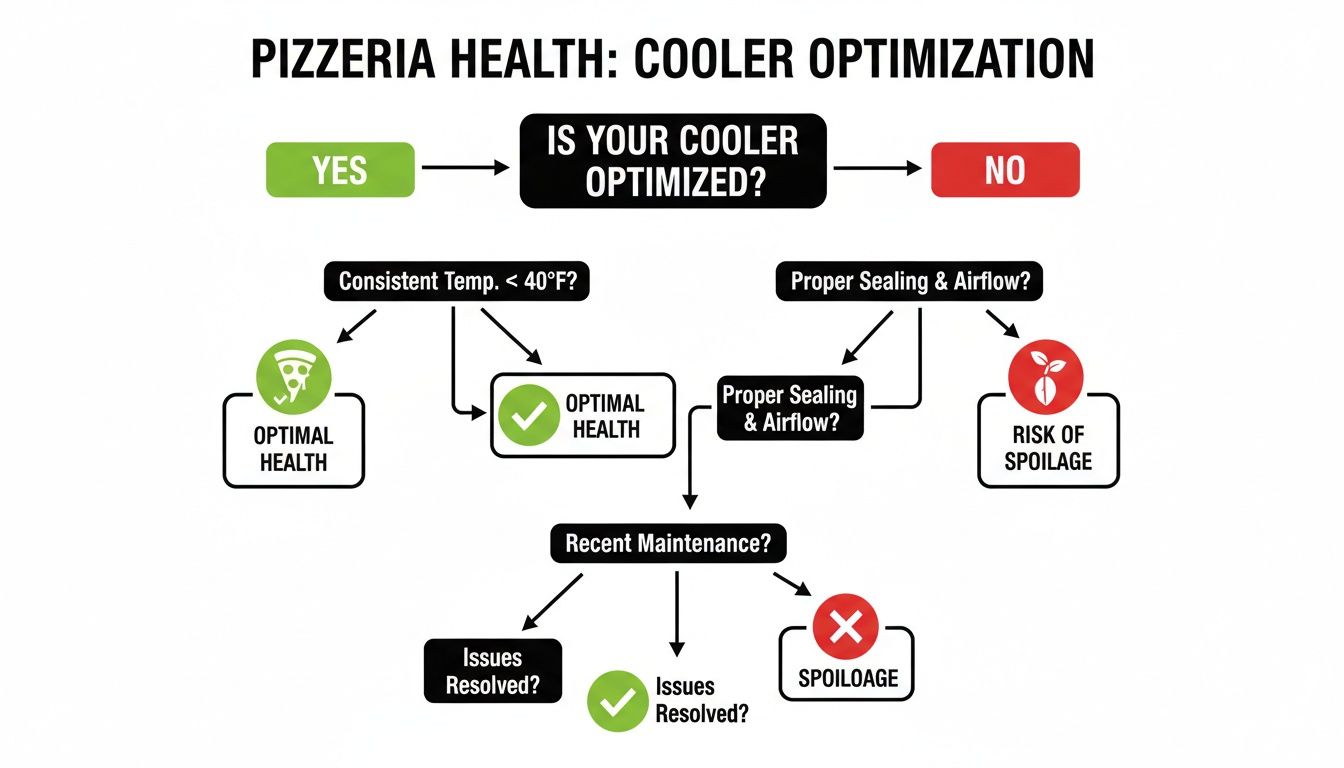
The flowchart makes it crystal clear: a well-chosen and properly maintained cooler is a direct line to food safety and operational success. A poorly optimized one just leads to waste and risk. By taking a hard look at your kitchen layout, menu, and sales projections, you can build a refrigeration system that acts as the engine of your pizzeria—not a roadblock.
Features That Boost Your Bottom Line
When you’re looking at a new reach in cooler or pizza prep table, it’s easy to get bogged down in the technical specs. But let’s cut through the noise. The only features that really matter are the ones that protect your pizza ingredients, make your kitchen run smoother, and ultimately, put more money in your pocket. Think of your cooler as a long-term investment, and suddenly every component starts to look a little different.
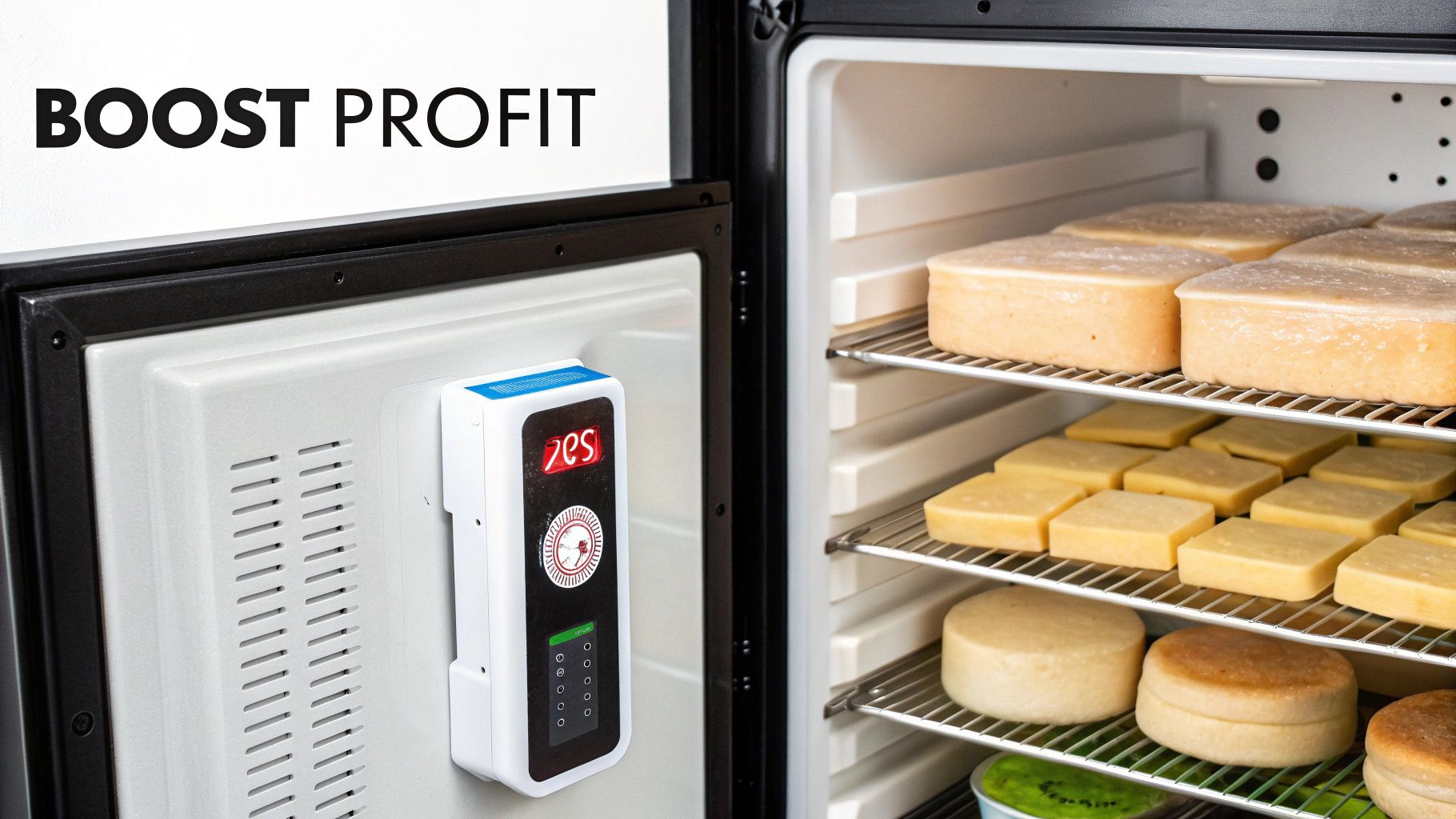
The absolute number one, non-negotiable feature is rock-solid temperature consistency. This machine isn’t just a cold box; it’s a vault for your food safety. It has to hold temperatures at or below 41°F without breaking a sweat, protecting sensitive items like cheese, meats, and sauces from bacterial growth. Modern pizza prep tables with digital thermostats and smart airflow systems are designed to push cold air into every corner, killing those dangerous hot spots that lead to expensive spoilage.
This obsession with reliable cooling isn't new; it’s what allowed the modern pizza industry to explode. During the 1980s, when pizzeria numbers in the U.S. doubled to over 75,000, it was the commercial reach-in cooler and pizza prep table that made it all possible. That growth was fueled by chains pioneering 30-minute delivery, a promise they could only keep with dependable refrigeration. Today, that need is stronger than ever, with 36.8% of pizzeria operators naming prep tables with reach-in features as their top equipment priority. You can find more data about the evolution of pizza prep tables online.
Smart Design Choices For Pizzeria Kitchens
Beyond just staying cold, the physical design of your reach-in cooler can make or break your daily workflow. Here’s what to look for:
- Door Types: Solid doors are the champions of energy efficiency. Their superior insulation locks in the cold and helps keep your utility bills down. On the other hand, glass doors give you instant inventory visibility. Your staff can spot what they need before opening the door, which cuts down on search time and also saves energy.
- Compressor Location: In a pizzeria, flour dust is everywhere. A top-mount compressor is usually the smarter pick because it pulls in cleaner air from above, keeping it from getting clogged with floor debris. A bottom-mount compressor is easier to get to for maintenance but is a magnet for dust and flour in a pizza kitchen.
- Durable Shelving: Always go for epoxy-coated or stainless steel shelves. These materials stand up to rust and corrosion from spills and are a breeze to clean—a huge plus when the health inspector shows up. Adjustable shelving is also a must-have, letting you customize the space for bulky items like dough boxes or giant blocks of cheese.
Features That Prevent Waste And Headaches
Finally, a few smaller features can make a massive difference in a high-pressure pizza kitchen. Self-closing doors are a perfect example. They automatically swing shut when a busy cook forgets, preventing cold air from escaping and slashing energy waste.
The ultimate seal of approval for any reach in cooler is NSF certification. This isn't just some sticker; it’s your guarantee that the unit is built for commercial food safety. It means smooth, easy-to-clean surfaces that won’t harbor bacteria. An NSF-certified cooler is your best friend during a surprise health inspection.
When you prioritize these practical features, you're not just buying another piece of equipment. You're investing in a system that protects your food, supports your team, and strengthens your pizzeria’s bottom line for years to come.
Sizing Your Reach-In Cooler For Perfect Workflow
Picking the right size reach-in cooler is one of the most important calls you’ll make for your pizzeria's kitchen flow. This isn't just about finding a spot to stick a big metal box; it's about designing a workflow that keeps your team moving smoothly when the orders are flying. The right size prevents kitchen traffic jams and makes sure your pizza prep table never runs dry.
Think of your cooler’s capacity like lanes on a highway. Too few lanes (a small cooler) during rush hour creates gridlock. Staff bump into each other, service grinds to a halt, and stress levels go through the roof. On the other hand, too many lanes (a giant, half-empty cooler) is just a waste of prime kitchen real estate and runs up your energy bill for no good reason. We’re aiming for that sweet spot that matches the rhythm of your shop.
Calculating Your Pizzeria's Capacity Needs
To figure this out, you have to look past the physical dimensions of your kitchen. The real drivers of your storage needs are your daily pizza volume, how complex your menu is, and your ingredient delivery schedule. A shop that makes fresh dough every single day has totally different needs than one that gets a big frozen dough delivery once a week.
A good rule of thumb I've seen work for countless pizzerias is to plan for 1.5 to 2.0 cubic feet of refrigerated storage for every pizza you serve during your peak service. So, if your shop cranks out 100 pizzas on a busy Friday night, you should be looking for a reach-in cooler with at least 150-200 cubic feet of combined storage between your standalone unit and pizza prep table.
This simple calculation helps you move from just guessing to making a smart, data-driven decision. It forces you to think not just about today's numbers, but where you want your business to be a year from now.
Matching Size To Your Kitchen Footprint
Once you’ve got a target capacity in mind, it's time to see how that fits into your actual kitchen layout. A massive three-door cooler is useless if it blocks the main path to the dish pit or the back door. This is where different models and their footprints come into play.
- Single-Door Models (20-30 cu. ft.): These are perfect for smaller pizzerias with tight footprints. They also work great as a secondary unit just for drinks, produce, or gluten-free items.
- Two-Door Models (40-50 cu. ft.): This is the workhorse of the pizza industry. It offers a fantastic balance of storage capacity and footprint that fits most mid-volume shops perfectly.
- Three-Door Models (60-70+ cu. ft.): Got a huge menu and the space to match? These are built for high-volume pizzerias that need to keep a massive amount of ingredients chilled and ready to go.
Remember, the capacity listed by the manufacturer is the total internal volume. Your actual, usable space will always be a bit less because of shelving and the need for proper airflow around your products. Always plan for a little extra wiggle room to avoid overstuffing the unit.
For really big operations, a single reach-in might not cut it. If your needs go beyond what even the largest reach-in can handle, it's time to start thinking about a bigger solution. To learn more, check out our guide on walk-in cooler sizing, which breaks down how to plan for maximum capacity. Getting the size right from day one saves you a world of headaches and sets your pizzeria up for success.
How Smart Choices In Refrigeration Save You Money
As a pizzeria owner, you're always keeping an eye on two critical numbers: the bottom line on your monthly utility bill and your score from the health inspector. The right reach-in cooler and pizza prep table have a massive impact on both. Thinking smart about energy efficiency and food safety certification from day one isn't just about ticking boxes; it's a direct investment in your shop's profitability and reputation.
Think of it like choosing the engine for a delivery car. Sure, a gas-guzzler will get the pizza there, but it’ll bleed you dry at the pump. In the same way, an old, clunky cooler might keep things cold, but it could be one of the biggest energy vampires in your kitchen, secretly inflating your electricity costs month after month.
The Power Of The ENERGY STAR Label
When you spot that blue ENERGY STAR® label on a reach-in cooler or pizza prep table, don't just see it as a sticker. It's a guarantee of real, measurable savings in your pocket. These units are built differently, with high-efficiency compressors, superior insulation, and smarter defrost cycles that all work together to slash wasted electricity.
The numbers don't lie. Reach-in coolers inside pizza prep tables are on track to make up 43.6% of full-service restaurant refrigeration needs in 2025. A modern, DOE-certified model can use 40% less power than a unit from before 2010. For a mid-size pizzeria running 12-hour days, that can add up to $1,500 per year in savings.
Why NSF Certification Is Your Best Insurance
Beyond the utility bills, your cooler is your first line of defense when the health inspector walks in. This is where NSF (National Sanitation Foundation) certification is non-negotiable for any equipment in your pizzeria, especially your pizza prep table. An NSF-certified cooler isn't just a regular fridge; it’s been designed from the ground up to be easy to clean and safe for storing food.
An NSF certification means the cooler has features like coved corners to stop bacteria from hiding, gaskets you can actually remove for deep cleaning, and non-porous surfaces. It’s your proof to the inspector that you’ve invested in equipment built to protect your customers and your business.
Choosing an efficient, certified reach-in cooler and pizza prep table is one of the smartest financial moves a pizzeria owner can make. It chips away at your operating costs every single day and shields you from the fines and reputation damage of a failed health inspection. To get deeper into this, you might want to check out our guide on energy-efficient commercial refrigeration.
Maintenance Tips To Protect Your Investment
Think of your reach in cooler and pizza prep table as the unsung heroes of your pizzeria. They're a serious investment, and just like your delivery car, they need a little routine TLC to prevent a catastrophic breakdown—especially during a Friday night rush. Protecting these workhorses starts with smart placement and continues with a few dead-simple maintenance habits.
One of the most common mistakes I see is cramming a cooler into a tiny nook with no room to breathe. The compressor, which is the heart of the unit, has to push out hot air to keep the inside cold. Without proper ventilation, it works overtime, your energy bill skyrockets, and you’re heading for a premature failure. Always leave at least a few inches of clearance around the top, back, and sides.
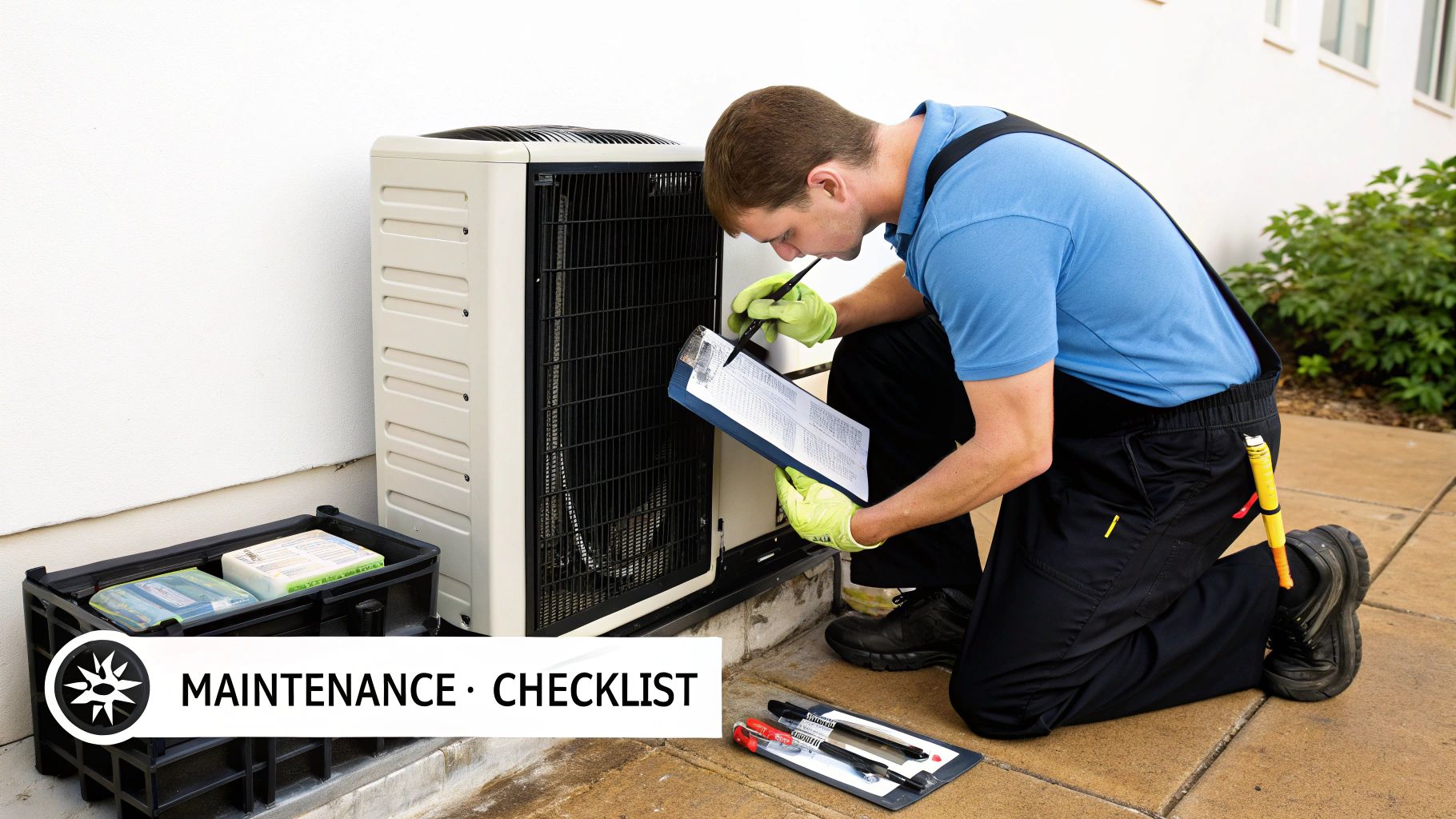
Your Practical Maintenance Checklist
These little habits are like an insurance policy against those soul-crushing, expensive emergency repair calls. They only take a few minutes but can add years to your cooler's life and ensure your pizza ingredients are always safe and sound.
Daily Habits (2 Minutes)
- Wipe Down Gaskets: Grab a damp cloth and give the door seals on your reach-in and prep table a quick wipe. Crumbs and grime can cause tiny tears, which let cold air seep out and force the compressor to run nonstop.
- Check for Obstructions: Glance inside and make sure nothing is blocking the fans. Good airflow is everything when it comes to keeping temperatures even for your cheese and dough.
Weekly Tasks (5 Minutes)
- Review Temperature Logs: Take a quick look at your temperature logs. Spotting a weird fluctuation early can be the difference between a minor tweak and a major repair bill.
- Tidy Up Shelves: A quick organization of the shelves does wonders for airflow. An overstuffed cooler has to fight a constant battle to keep everything chilled.
A well-maintained reach in cooler doesn't just last longer—it performs better. Consistent temperatures mean less food spoilage, which directly protects your bottom line. These small habits are an investment in quality control.
Monthly Job (15 Minutes) Once a month, you absolutely have to clean the condenser coils. In a pizzeria, flour dust and grease are the mortal enemies of these coils, clogging them up fast and forcing the unit to struggle.
Just unplug the cooler, grab a stiff brush, and gently knock off all that buildup. Finish up with a vacuum to suck away any leftover debris. Honestly, this one task is the single most effective thing you can do to prevent a costly compressor failure and keep your energy bills from creeping up.
Common Questions About Reach In Coolers
Choosing the right commercial refrigeration can feel a bit overwhelming with all the specs and options. To clear things up, here are some of the most common questions we get from pizzeria owners about picking and caring for the right reach in cooler and pizza prep table.
Should I Get a Top-Mount or Bottom-Mount Compressor?
For pretty much any pizzeria, a top-mount compressor is the way to go. Kitchens are messy places, filled with flour dust, stray toppings, and other debris that loves to hang out on the floor. A bottom-mount unit acts like a vacuum for all that stuff, sucking it straight into the coils, which can lead to clogs and a burned-out compressor.
A top-mount unit, on the other hand, pulls in cleaner air from up high. This keeps the guts of your cooler protected and seriously cuts down on maintenance headaches. While a bottom-mount unit might seem easier to get to for cleaning, the constant flour in a pizza shop makes the top-mount design a much safer bet for the long haul.
What's the Real Difference Between a Reach In and a Prep Table Cooler?
Think of it as two different players on the same team: one is for deep storage, and the other is for speed on the front line.
- A standard reach in cooler is your big, standalone cabinet for bulk storage. This is where you'll keep backup dough trays, giant bags of shredded cheese, and cases of sauce. It’s your main inventory hub.
- A pizza prep table cooler is the refrigerated base right under your makeline. Its only job is to give you immediate, arm's-length access to toppings while you're slinging pizzas. It's all about efficiency during service.
Any successful pizzeria is going to need both. The big reach-in keeps your inventory fresh and organized, while the prep table’s built-in cooler is your command center for getting pizzas made and out the door fast.
How Often Do I Really Need to Clean the Condenser Coils?
In a busy pizzeria, this is a non-negotiable monthly task. Flour, grease, and dust are the mortal enemies of your refrigeration system, and they will clog up your condenser coils faster than you think. When that happens, the compressor has to work overtime just to keep things cool, which jacks up your energy bill and sets you up for a catastrophic (and expensive) failure.
Seriously, a quick 10-minute cleaning with a stiff brush and a shop vac once a month can save you from a multi-thousand-dollar emergency repair bill down the road.
Ready to find the perfect refrigeration that can handle the heat of your kitchen? Check out our huge selection of high-quality pizza prep tables and reach-in coolers at Pizza Prep Table. We’ve got the gear to keep your ingredients perfectly chilled and your kitchen running like a well-oiled machine.
Find Your Perfect Pizza Prep Table Today