

Choosing the Right Size of Under Counter Fridge for Your Pizzeria
The sweet spot for an under-counter fridge in a pizzeria is one that slides right under a standard-height pizza prep table. We're usually talking about a height of 34-36 inches and a depth of around 24 inches. Width is where you have options, often matching popular prep table lengths like 48, 60, and 72 inches to keep every ingredient just an arm's length away.
Finding the Perfect Fit for Your Pizza Prep Station
Think of your pizzeria's workflow like a well-rehearsed band. Every piece of equipment has to play its part in perfect harmony, from the dough sheeter to the oven. In this setup, your under-counter fridge isn't just a bit player; it's a key member of the rhythm section, and its size sets the tempo for your entire kitchen.
Getting the dimensions right isn't just about cramming a box into an empty space. It’s about creating a seamless flow for your pizza line, protecting your ingredients, and making your team as efficient as possible. When you find your perfect fit, you’re not just buying a fridge; you’re investing in a smoother, faster service.
A well-matched unit means your pizzaiolo isn't taking extra steps or awkward turns to grab cheese or pepperoni, shaving precious seconds off every single order. Those seconds add up fast during a dinner rush.
It's no surprise these compact powerhouses have become such a staple. The global under-counter refrigerator market recently topped USD 3.42 billion, with pizzerias and independent restaurants grabbing a huge slice of that pie. They're engineered from the ground up to slide into tight spaces and support the non-stop rhythm of a busy pizza prep table.
Choosing the right refrigerator size is a foundational decision that directly impacts your kitchen's output. A fridge that is too small creates constant restocking issues, while one that is too large wastes energy and valuable space under the prep line.
You can also create an even more efficient station where everything from dough to toppings is organized, chilled, and ready to go. An under-counter refrigerator with a glass door, for example, allows for quick visual inventory checks without ever opening the door. The goal is to turn your prep table into a high-performance hub for crafting perfect pizzas, and the right fridge is the engine that makes it run.
How to Read Under Counter Fridge Dimensions
Figuring out the size of an under-counter fridge is like learning a simple code: width, depth, and height. Once you understand what each number means for your pizzeria's real-world setup, you can stop staring at spec sheets and start building a kitchen that just works. Getting this code right is the first step toward a flawless pizza prep station.
This map connects the dots between your kitchen's workflow and the fridge size you ultimately choose.
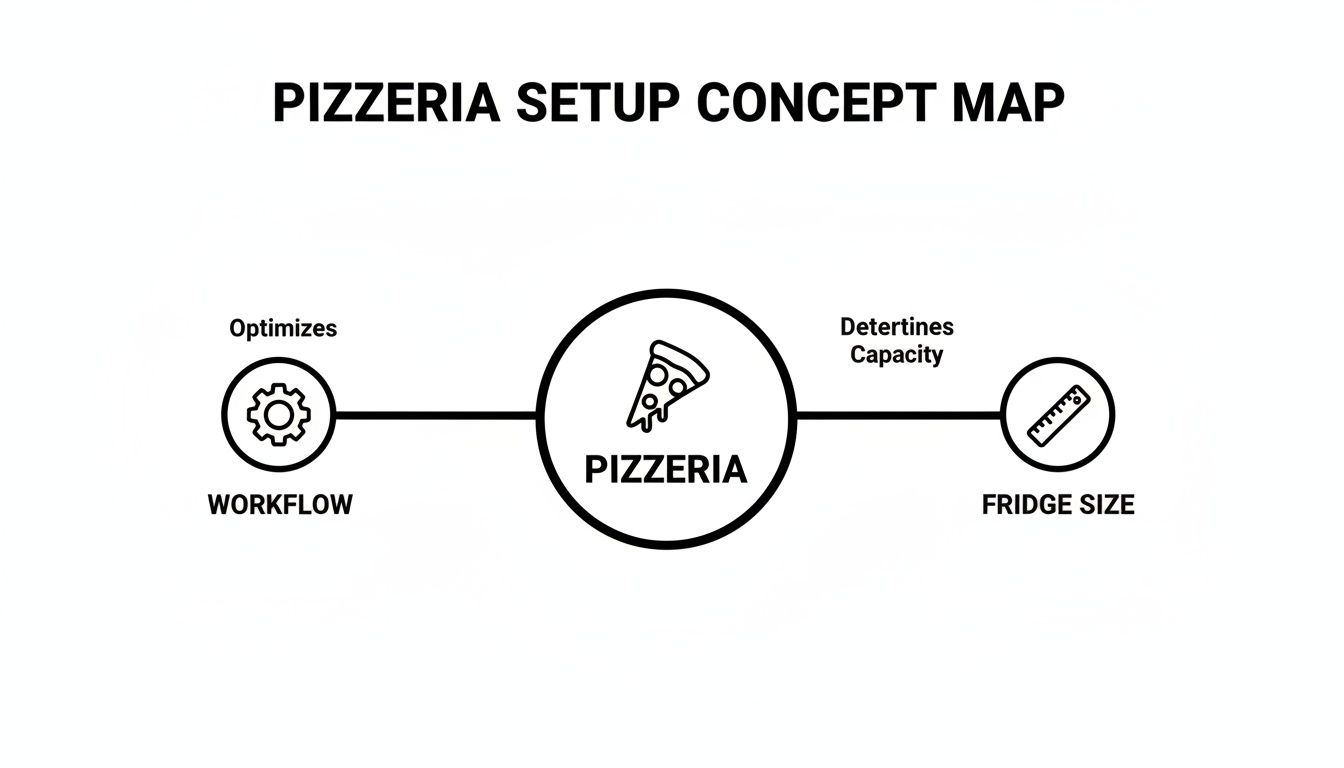
As you can see, a smart choice on fridge dimensions is what supports a smoother, more productive workflow. And that’s the heart of any pizzeria that knows what it's doing.
Decoding Width for Your Pizza Line
Of all the dimensions, width is where you have the most flexibility, and it’s the one that will have the biggest impact on your day-to-day grind. Commercial widths aren’t random; they’re designed to line up perfectly with standard pizza prep tables, creating a seamless and efficient workspace.
- 24-inch Models: Think of these as compact, single-door units. They're perfect for tucking into tight spaces or for dedicating to specific ingredients like your house-made sauce or vegan cheese.
- 48-inch Models: This is the true workhorse for most small to medium-sized pizzerias. A 48-inch, two-door fridge slides right under a 48-inch prep table, putting a ton of toppings directly below the action.
- 60- & 72-inch Models: For the high-volume shops, these bigger two- or three-door models are a must. They align with larger prep stations, giving multiple chefs elbow room to work side-by-side without bumping into each other.
Imagine a 72-inch fridge under a 72-inch prep table. You can dedicate a whole door section to each stage of pizza making—dough, sauces, and toppings. That setup practically eliminates wasted movement and keeps the line pumping during a rush.
Understanding Depth and Height
While width can vary quite a bit, depth and height are much more standardized in commercial pizza kitchens. There's a simple reason for this: they’re built to fit perfectly under your pizza prep tables.
The industry-standard depth of around 24 inches is the magic number. This lets the front of the fridge sit perfectly flush with your other cabinets and prep tables, creating a seamless, integrated look that also gets rid of annoying trip hazards.
Likewise, the height of most under-counter units hovers between 34 and 36 inches. This isn't just a random number; it’s the sweet spot that allows them to slide cleanly under standard-height commercial pizza prep tables.
This smart, ergonomic design ensures your workspace is at a comfortable height for your crew, cutting down on strain and fatigue during those long shifts. It’s all about creating a continuous, uninterrupted counter that’s easy to work on and even easier to clean.
Translating Cubic Feet Into Pizza Toppings
While the outside measurements of a fridge—width, height, and depth—tell you if it will physically fit in your pizza prep station, the inside capacity is what tells you if it will fit your workflow. This number, measured in cubic feet (cu. ft.), is the real money stat. It's a direct measure of how many dough trays, sauce buckets, and topping pans you can keep chilled and ready right on the line.
Think of it like the trunk of a car. A small sedan might get you to the grocery store, but you’ll need a minivan if you’re hauling gear for the whole team. In the same way, the right cubic footage ensures your crew isn't making frantic runs to the walk-in cooler for more cheese during a Friday night rush.
Let’s put this in terms every pizza maker understands: food pans. The abstract number of cubic feet directly translates to how many industry-standard pans a fridge can hold. A small 7 cu. ft. model might hold about 12-15 pans, while a beefier 18 cu. ft. unit could handle over 30. Suddenly, "cubic feet" isn't just a number on a spec sheet—it's a tangible measure of your prep-line horsepower.
Sizing Capacity to Your Daily Pizza Volume
Picking the right capacity isn't a guessing game. The perfect size of an under counter fridge for your shop depends entirely on how many pizzas you're slinging each day. A small slice shop making 100 pies has wildly different needs than a high-volume restaurant pushing out 400.
It's no surprise that units in the 5-10 cu. ft. range are incredibly popular, making up a huge chunk of the market. These are the sweet spot for stocking essentials like deli meats, sauces, and dough without running into issues like frost buildup. If you want to see the data, you can read more about these undercounter refrigerator market trends. This size is often perfect for smaller pizzerias or for a dedicated station in a larger kitchen.
For a pizzeria, capacity is workflow insurance. The right amount of cubic footage means having every topping for your best-selling pizzas prepped and ready for the entire dinner service, eliminating bottlenecks and keeping ticket times low.
A low-volume café with just a few pizzas on the menu might do just fine with a compact 8 cu. ft. unit. But for a bustling pizzeria knocking out 200 pizzas a day, a 12 to 15 cu. ft. model is a much more realistic starting point. This gives you enough breathing room for all your core toppings, cheeses, and sauces needed to survive a peak service without a single "hold on, I need to restock!" moment.
Matching Cubic Feet to Operational Scale
As your pizzeria grows, your storage needs grow right along with it. A high-volume operation cranking out over 300 pizzas a day should be looking at models in the 18 to 20 cu. ft. range—or even setting up multiple smaller units to create specialized stations for different pizza types.
Here’s a quick way to think about how capacity lines up with your daily output:
- 5-10 cu. ft. (Small Shops/Dedicated Stations): Perfect for holding ingredients for one or two specialty pies or for a low-volume lunch service. This size keeps things organized without eating up a ton of floor space.
- 12-15 cu. ft. (Medium-Volume Pizzerias): This is the workhorse size for shops making 150-250 pizzas daily. This capacity can comfortably hold the full arsenal of toppings for a diverse menu right through a busy evening.
- 18+ cu. ft. (High-Volume Operations): An absolute must for kitchens serving 300+ pizzas per day. This larger size allows for bulk storage of high-demand items like mozzarella and pepperoni, drastically cutting down on trips to the main walk-in cooler.
To help visualize this, we've put together a table that connects the dots between a fridge's capacity and a pizzeria's daily output. Think of this as a starting point for figuring out what your pizza prep table really needs to thrive.
Fridge Capacity vs. Daily Pizza Output
| Fridge Capacity (Cubic Feet) | Typical Number of Doors | Estimated Daily Pizza Output | Best For Pizzeria Type |
|---|---|---|---|
| 5-10 cu. ft. | 1 Door | 50 - 150 Pizzas | Small slice shops, cafés, or secondary stations |
| 12-15 cu. ft. | 1-2 Doors | 150 - 250 Pizzas | Medium-volume pizzerias with a full menu |
| 18-20 cu. ft. | 2 Doors | 250 - 400 Pizzas | Busy pizzerias, restaurants with high pizza sales |
| 20+ cu. ft. | 2-3 Doors | 400+ Pizzas | High-volume operations, large restaurant chains |
Ultimately, the goal is to find that perfect balance where your team has everything they need at their fingertips without overcrowding the prep line. Use these numbers as a guide, but always factor in your specific menu and pizza prep table layout when making the final call.
Measuring Your Space to Ensure a Perfect Fit
Ordering an under-counter fridge that doesn't fit your pizza prep station is more than an inconvenience—it’s a costly headache that can grind your entire kitchen workflow to a halt. Think of it like buying a custom suit; getting the measurements right the first time is the only way to guarantee a perfect fit. A few extra minutes with a tape measure now will save you from the nightmare of returns, restocking fees, and operational downtime later.
This isn't just about making space for the box. It’s about creating the perfect environment for your equipment to do its job efficiently. The right fit ensures your unit runs smoothly, saves energy, and serves your pizzeria for years to come.
The Three-Point Measurement Method
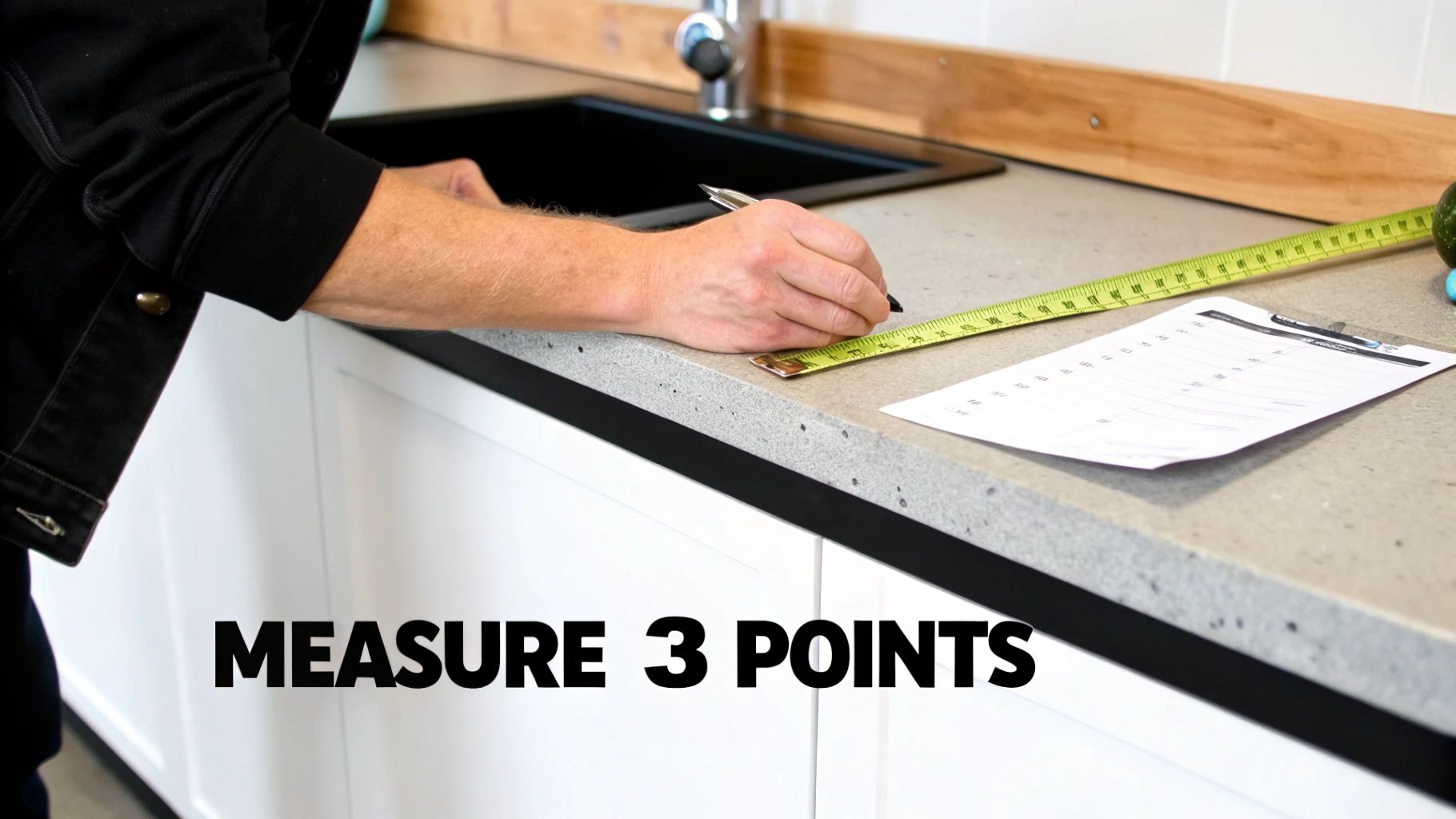
Kitchens, especially in older buildings, are rarely perfect. Floors settle, walls bow, and pizza prep tables aren't always perfectly square. To account for these real-world imperfections, you need to measure your space not once, but three times for each dimension.
- Measure the Height: Grab your tape measure and check the height of the opening on the left, in the middle, and on the right. Always use the smallest of the three numbers. This is your true available height, and it prevents the fridge from getting wedged under a low spot you didn't see.
- Measure the Width: Do the exact same thing for the width. Measure across the top, the middle, and the bottom of the opening. Again, write down the narrowest measurement to make sure the unit will slide in without a fight.
- Measure the Depth: Run your tape from the back wall to the front edge of your prep table. Don't forget to account for any pipes, plumbing, or electrical outlets that might be sticking out and stealing some of your usable depth.
This triple-check process is your best insurance policy. For commercial kitchen designers speccing out gear for pizzerias, this is non-negotiable. Experts find that irregularities affect nearly 30% of installations that aren't carefully measured this way.
Accounting for Critical Ventilation Space
The single most common mistake pizza shop owners make right after measuring is forgetting to leave "breathing room" for the fridge. An under-counter unit is a hard-working machine, and its compressor generates a lot of heat that has to go somewhere. If you trap that heat, the unit will overheat, work harder, guzzle more energy, and ultimately fail years before it should.
Think of ventilation space as an insurance policy for your fridge's lifespan. Blocking the airflow is like forcing an engine to run without coolant—it’s a recipe for a costly breakdown.
For most models, you'll need to leave 1 to 2 inches of clearance space around the back and sides. This buffer creates an airway for proper circulation, allowing the fridge to dissipate heat just like it was designed to. Always, always check the manufacturer's spec sheet for the exact clearance requirements for your specific model. To make sure you're getting the perfect fit, it helps to review a comprehensive kitchen appliance buying guide to cover all your bases before you click "buy."
Matching Fridge Size to Your Pizzeria's Workflow
In a packed pizzeria, every second you save is a dollar in your pocket. Smart kitchen design isn't about playing Tetris with your equipment; it’s about building a seamless workflow where every single movement is deliberate. The relationship between your under-counter fridge and your pizza prep table is the heartbeat of that efficiency, turning your make-line into a finely-tuned engine for cranking out perfect pies.
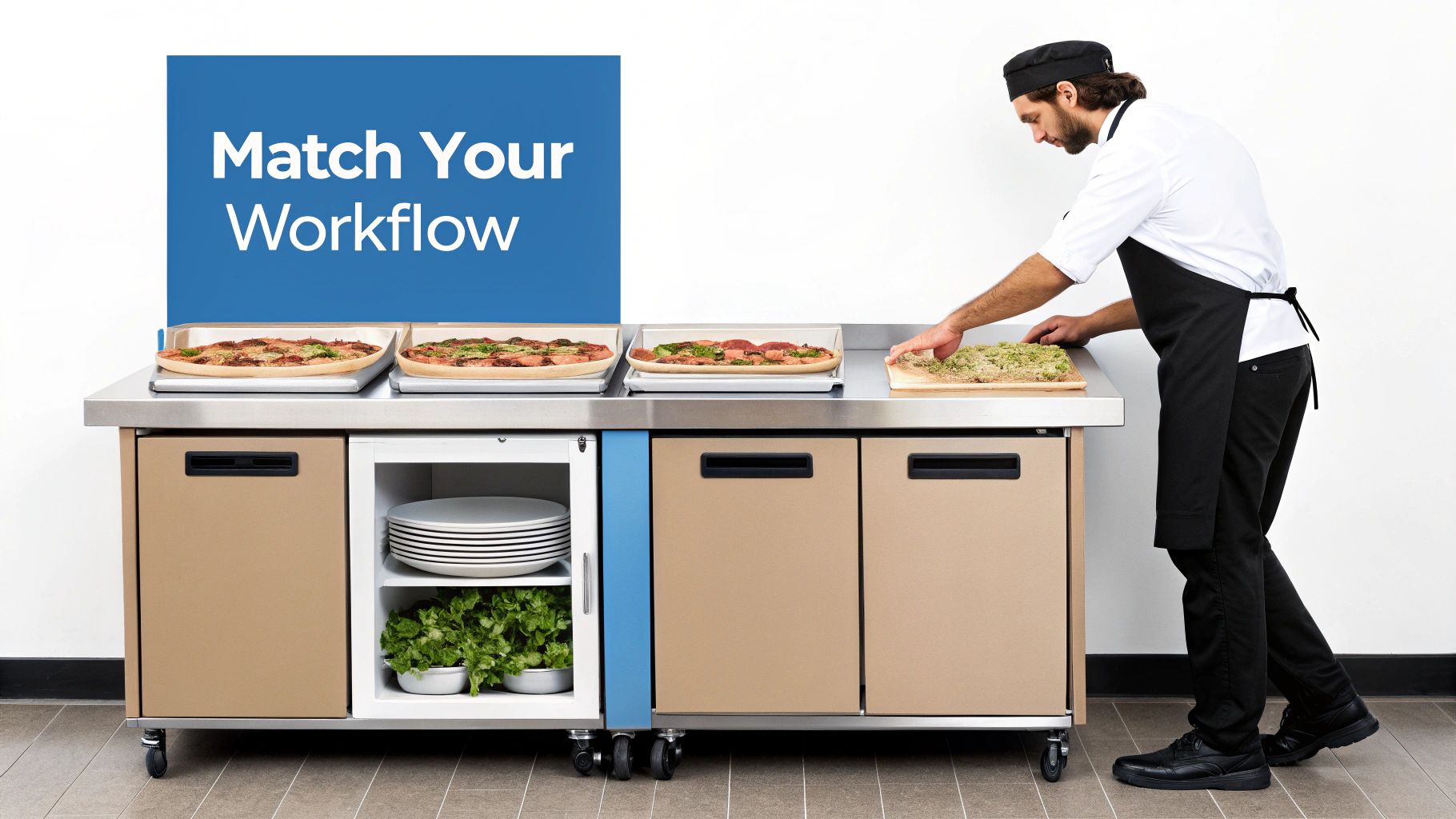
This is about more than just matching up measurements—it's about creating a strategic partnership. A big 72-inch, three-door pizza prep table, for example, is just begging for a matching three-door fridge to slide right underneath it. This setup lets you create dedicated zones, storing your mozzarella directly below where you add the cheese and your pepperoni right under the topping station. Every ingredient is exactly where it needs to be, right when the pizzaiolo reaches for it.
Designing for Your Pizzeria's Pace
Different pizzerias need different game plans. A high-volume spot thrives on that dedicated make-line model I just mentioned, where specific toppings are stored in the fridge section directly below their spot on the prep table. This method cuts down on wasted motion and keeps the line humming during the dinner rush.
On the flip side, a smaller kitchen or a food truck might go with a central storage model. Here, a single, well-organized two-door fridge holds all the core ingredients. This approach makes the most of limited space, ensuring everything is accessible without a massive footprint. You have to look at your menu and your volume to decide which workflow the size of your under counter fridge needs to support.
Doors vs. Drawers: A Critical Workflow Choice
The setup of your fridge—whether it’s all doors, all drawers, or a mix—plays a huge role in your day-to-day pizza-making operations. Neither is flat-out better than the other; they just serve different functions on the pizza prep table.
- Drawers for Topping Organization: Drawers are the hands-down champions for organizing your portioned toppings. They pull all the way out, giving you a perfect top-down view of your ingredients. It’s way easier to grab sliced mushrooms, olives, or bell peppers without digging around.
- Doors for Bulk Storage: Solid doors are what you need for the bigger, bulkier stuff. They easily fit full-size dough boxes, large Cambros of sauce, or backup blocks of cheese—items that just won't work in a standard drawer.
The ultimate setup is often a hybrid. Think about a three-section fridge where two sections have drawers for toppings and one section has a solid door for dough. This approach gives you the best of both worlds, creating a system where every movement is efficient.
In the end, the goal is to build a prep station that acts like a single, cohesive unit. When your refrigerated storage works in perfect harmony with your pizza prep table, you shave seconds off every single pizza you make. Those seconds add up fast, translating directly into higher output, quicker ticket times, and a healthier bottom line. For more ideas on dialing in your setup, exploring different kinds of refrigerated prep tables can offer some valuable insights.
Essential Factors Beyond Basic Dimensions
Choosing the right size of an under counter fridge is a great start, but it's only half the battle. To make a truly smart investment for your pizzeria, you've got to look beyond the basic tape measure stats of width, height, and depth. Several key factors can seriously impact your kitchen's workflow, your utility bills, and even your ability to sail through a health inspection.
Think of these as the final checklist before you pull the trigger. Getting them right ensures your new fridge doesn't just fit into a space—it fits into your entire business plan, supporting your operation for years to come.
Ventilation and Placement
One of the most critical details that pizzeria owners often overlook is how the refrigerator breathes. Commercial units are workhorses with specific ventilation systems, and ignoring them is a surefire recipe for an overworked compressor and a fridge that dies an early death.
There are two main types you'll run into:
- Front-Breathing Models: These units pull in and push out air through a grille on the front, usually right at the bottom. This design is your best friend for tight, built-in installations under a pizza prep table because they require zero clearance on the sides or back.
- Rear-Breathing Models: These fridges need some elbow room. They require several inches of open space at the back and sides for proper airflow. If you box one of these in under a prep table, it’s guaranteed to overheat and fail on you, probably during a Friday night rush.
Energy Efficiency and Future Planning
It might sound counterintuitive, but a slightly larger, more expensive fridge could actually save you a ton of money. Units that are ENERGY STAR certified are engineered to be way more efficient, often using 15-20% less energy than standard models. Over the ten-year life of the fridge, those savings can easily add up to more than the initial price difference. If you want to dive deeper, you can learn more about the benefits of energy-efficient commercial refrigeration and how it pads your bottom line.
NSF (National Sanitation Foundation) certification isn't a friendly suggestion; for most health departments, it's a hard requirement. An NSF-certified fridge is your proof that it's designed for easy cleaning and food safety, protecting both your customers and your business.
Finally, always plan for growth. The fridge that perfectly fits your needs today might be bursting at the seams in a year. Investing in a unit with a little more capacity than you currently need is a savvy way to future-proof your pizzeria and avoid the cost and headache of buying another fridge down the road.
Your Top Questions About Under Counter Fridge Sizes, Answered
Picking the right under-counter fridge usually brings up a few last-minute questions. Getting those details sorted out is what separates a good purchase from a great one—a unit that will slide right into your pizzeria's workflow and support you for years. Here are the straight-up answers to the questions we hear most often from pizzeria owners.
What’s the Go-To Size for a Small Pizzeria?
For most new or smaller pizzerias, the 48-inch wide, two-door under-counter refrigerator is the undisputed champion. It’s the perfect middle ground, giving you about 12 to 15 cubic feet of storage. That’s enough room for your daily prep ingredients without eating up your entire kitchen footprint.
The real magic, though, is how perfectly it lines up with a standard 48-inch pizza prep table. This combo creates an incredibly efficient little workstation. Every topping you need is directly below your prep area, which means less running around and faster ticket times. It’s a simple setup that just works.
How Much Breathing Room Does My Fridge Really Need?
Ventilation is everything for your fridge’s health and longevity. Most manufacturers will tell you to leave at least 1-2 inches of clearance on the sides and back. This space is crucial for air to circulate and keep the compressor from working itself to death.
But what if you need that seamless, built-in look flush under your pizza prep table? For a true zero-clearance install, you absolutely must get a "front-breathing" model. These units are engineered to pull air in and push it out through vents on the front, making them perfect for tight spots. Always, always check the spec sheet before you buy.
Should I Get Drawers or Doors for My Pizza Prep Fridge?
This one comes down entirely to how you work and what you’re storing. There’s no right or wrong answer here; they just serve different roles on a busy pizza line.
- Drawers are fantastic for organizing and grabbing smaller, high-use toppings in a hurry. Think portioned cheese, pepperoni, and prepped veggies.
- Doors are your best bet for bigger, bulkier stuff. They’re perfect for stashing full dough boxes, large sauce containers, or backup bins of ingredients.
Honestly, many high-volume shops end up with a combination unit that has both. It really gives you the best of both worlds—quick access to toppings and bulk storage all in one place.
Ready to build the perfect pizza prep station? At Pizza Prep Table, we have a wide selection of under-counter refrigerators designed to match any workflow. Find the ideal size for your pizzeria today!