

Choosing the Right Stainless Steel Pizza Prep Table for Your Pizzeria
Peek inside any great pizza restaurant on a slammed Saturday night, and you'll find a stainless kitchen prep table right in the middle of the beautiful chaos. This isn't just another piece of kitchen gear; it's the command center where perfect pizzas are born. This guide is for the pizzeria owner who gets it—the right pizza prep table is what separates a smooth, profitable service from a night of pure stress.
The Unsung Hero of Every Pizzeria
The stainless pizza prep table is the engine room of a pizzeria. It's where dough gets stretched, sauce is slung, and toppings are layered with care before they meet the blistering heat of the oven. For any pizza shop, this surface is ground zero for quality, speed, and safety.
A smart table choice streamlines your entire pizza production line. It’s the bridge between your walk-in cooler and the oven, creating a natural assembly line that keeps tickets moving and customers smiling. Without a tough, well-designed surface, your workflow can grind to a halt when you can least afford it.
More Than Just a Countertop
Don't think of your prep table as a passive slab of metal. It's an active player in your pizza-making process. The right pizza prep table does way more than just hold ingredients—it organizes your flow, takes the daily beating of a commercial kitchen without flinching, and helps you nail strict food safety standards.
A great pizzeria is built on consistency. The pizza prep table is the foundation of that consistency, ensuring every pizza starts with the same clean, organized, and efficient process.
This guide goes beyond the basic spec sheet. We're diving into how smart choices in material, size, and layout can completely transform your pizzeria's output. We’ll cover the critical details that turn a simple steel table into your pizzeria's most valuable player.
What You Will Learn
We’re zeroing in on what a busy pizza shop truly needs. Throughout this guide, you’ll pick up real-world advice on how to:
- Select the right materials that won't flinch at acidic tomato sauce or constant wipe-downs.
- Choose the perfect size and layout that fits your pizzeria's footprint and your shop's volume.
- Design an ergonomic pizza production line that cranks up speed and cuts down on staff burnout.
- Navigate food safety compliance with features designed for quick and easy sanitation.
By the end, you'll have a game plan to help your pizzeria crush it, starting with the unsung hero of your kitchen—the stainless steel pizza prep table.
Why Stainless Steel Is the Pizzeria Standard

Think of your pizzeria's prep station as a battlefield. It faces a daily assault from acidic tomato sauce, razor-sharp pizza cutters, heavy dough boxes, and constant scraping from metal peels. In this fight, only one material truly holds the line: stainless steel. A stainless kitchen prep table isn't just a piece of equipment; it's the culinary equivalent of battle armor for pizza making.
This isn't just about having a shiny surface that looks good on day one. It’s about investing in a workhorse that can take a beating and come back for more, shift after shift. The sheer durability, food safety benefits, and long-term value of stainless steel make it the undisputed champ for any serious pizzeria.
The Right Steel for the Right Job
Not all stainless steel is created equal, and knowing the difference is key to making a smart buy. It’s like choosing the right flour for your dough—you need the right type for the best results. In a pizzeria kitchen, you'll mainly see two grades: 304 and 430.
-
304 Grade (The Food-Contact Champion): This is the premium choice for your table's main work surface—the part that actually touches the pizza. Its higher chromium and nickel content gives it superior resistance to corrosion from salts and acids found in tomato sauce, olives, and cured meats. It’s your best defense against rust and pitting.
-
430 Grade (The Supportive Workhorse): This grade is more budget-friendly and is perfectly suited for parts that don't directly handle food, like the legs, frame, and undershelves. While still tough, it's slightly less resistant to corrosion, making it a smart choice for structural components where cost savings matter.
A well-designed pizza prep table often uses a strategic combination—304 for the top where all the pizza action is, and 430 for the base. This gives you the best of both worlds: maximum durability and food safety where it counts, at a more effective price point.
To make it even clearer, here's a quick breakdown of how these steel grades stack up in a real-world pizzeria environment.
Stainless Steel Grade Comparison for Pizzerias
| Steel Grade | Primary Use Case | Corrosion Resistance | Cost Level |
|---|---|---|---|
| 304 | Pizza prep surfaces, food contact areas, splash guards | Excellent | Higher |
| 430 | Table legs, undershelves, structural framework | Good | Lower |
Understanding this table helps you see why a slightly higher upfront cost for a 304-grade top is a long-term win for your pizzeria's hygiene and durability.
A Fortress Against Bacteria
One of the biggest wins for stainless steel is its non-porous surface. Unlike wood, which can soak up germs and flour in its grain, or plastic that develops knife scores where bacteria can hide, stainless steel is a smooth, impenetrable barrier. This makes cleaning faster, sanitation more effective, and health inspections far less stressful.
This resilience translates directly into long-term savings. The durability of stainless steel is backed by hard data. High-quality steel tables resist dents, scratches, and rust even after 10,000+ hours of daily abuse in a busy kitchen. This incredible toughness can reduce how often you need to replace them by 50%, saving operators up to $5,000 per unit over a decade.
In high-traffic pizzerias, stainless models maintain their structural integrity, with annual failure rates under 2%, according to NSF compliance data. For more on the numbers, check out this detailed market analysis report.
Properly maintaining this surface ensures it serves you for years. For a deeper dive into best practices, explore our guide on caring for your stainless steel table prep surfaces right here: https://pizzapreptable.com/blogs/pizza/stainless-steel-table-prep.
Choosing a stainless steel prep table isn't just an equipment purchase; it's a foundational investment in your pizzeria's efficiency, safety, and long-term success. It’s the platform upon which every great pizza is built.
Finding the Perfect Pizza Prep Station
Picking out a stainless kitchen prep table isn't like grabbing a generic appliance off the shelf. Think of it as hiring a critical new member of your pizza team—one that can either make your line fly or grind it to a halt. The right table speeds up your entire pizza assembly process, shores up food safety, and lowers everyone's blood pressure during the dinner rush.
Get this decision wrong, though, and you’ve created a permanent bottleneck. A bad table wastes floor space, slows down service, and adds unnecessary stress to every single shift. It’s a decision that requires a hard look at your space, your menu, and the sheer volume of pizzas you expect to crank out.
Sizing Up Your Pizza Production Needs
First things first: size. It's the most critical decision you'll make. A table that’s too small will have your crew fighting for elbow room, while one that’s too big is just an expensive, oversized obstacle. Let your pizza production volume be your guide.
- For ghost kitchens or small takeout spots: A nimble 48-inch to 60-inch table is usually the sweet spot. It gives one or two pizza makers enough real estate to work efficiently without hogging your limited footprint.
- For medium-volume pizzerias: When you’ve got a steady flow of customers, stepping up to a 67-inch to 72-inch model makes a world of difference. This size comfortably fits multiple staff working side-by-side when things get hectic.
- For high-volume, bustling restaurants: You need a command center. A sprawling 93-inch workstation is built for a true pizza assembly line, with dedicated zones for dough, sauce, cheese, and toppings to maximize your output.
The Refrigeration Decision
Once you’ve got a size in mind, the next question is whether to build refrigeration right into the table. This choice really comes down to your pizzeria's layout and how serious you are about speed and food safety.
A basic, non-refrigerated stainless steel work table is a durable, budget-friendly option. It's perfect for tasks like stretching dough or any prep that doesn't involve perishable toppings, giving you a tough surface and plenty of undershelf storage.
But for most pizzerias, a refrigerated pizza prep table is a total game-changer. These units combine a cooled base cabinet for backup ingredients with a refrigerated prep rail on top for all your topping pans. Pepperoni, peppers, cheese—it’s all right there, perfectly chilled and within arm's reach. This simple change eliminates countless trips to the walk-in cooler.
Let's be clear: if you're serious about speed and maintaining strict temperature control, a refrigerated prep rail isn't a luxury—it's essential for a pizzeria. It guarantees every ingredient stays in the food safety zone (typically 33°F to 41°F) until the moment that pizza hits the oven.
Features That Fuel Faster Pizza Making
Beyond the basics of size and cooling, a few key features separate a good pizza prep table from a great one. These aren’t just bells and whistles; they are smart design choices that directly attack common kitchen frustrations.
Key Features to Look For:
- Integrated Cutting Boards: Look for a full-length, removable cutting board. It gives you a dedicated, food-safe surface for pizza assembly, which saves your stainless top from getting beat up and makes cleanup a breeze.
- Raised Condiment Rails: An angled or raised rail keeps topping pans organized and easy to access. It’s an ergonomic touch that reduces strain on your staff and speeds up the entire topping process.
- Oversized Undershelves: Make sure the undershelf has enough clearance to store bulky items like stacks of dough boxes. Keeping your primary work surface clear is half the battle.
- Casters for Mobility: A table on wheels is a lifesaver. It makes cleaning underneath a simple job and lets you reconfigure your pizza line on the fly. Just make sure they have locks so the table stays put during service.
By thinking through these elements—size, refrigeration, and the small-but-mighty features—you'll end up with a prep table that doesn’t just fit in your kitchen. You'll have a workhorse that actively makes your whole pizzeria run better, paying you back with every pizza that comes out of the oven.
Designing a High-Efficiency Pizza Production Line
A top-tier stainless kitchen prep table is an incredible tool, but its real magic is unlocked when you place it thoughtfully within your pizzeria's ecosystem. Think of it as the star player on a team; it can't win the game alone. Here, we'll dive into workflow and ergonomics to transform your kitchen into a high-efficiency pizza production line, killing wasted motion and cranking up your peak-hour capacity.
The goal is to create a seamless journey for every single pizza. That journey starts the moment a ticket prints and ends when a hot, perfect pie gets boxed up for a hungry customer. A logical flow cuts down on physical strain for your pizza team, slashes errors, and ultimately lets you serve more people, faster. It’s all about making every step count.
Mapping the Pizza Journey
Imagine the path a pizza takes through your kitchen. It's a simple, linear process that your layout should support, not fight against. A well-designed pizzeria guides your staff through this process so intuitively they don't even have to think about it.
The ideal flow is a clear, logical sequence:
- Dough Station: This is where it all begins. Your dough storage—whether it's proofers or refrigerators—needs to be right next to a floured surface where dough gets stretched and prepped.
- Pizza Prep Table: Next, that stretched dough moves to the main event—the stainless prep table. This is where it gets sauced, cheesed, and topped. This station must be the central hub of the pizza operation.
- Pizza Oven: From the prep table, the pizza makes a short, direct trip into the oven. Proximity here is non-negotiable. It prevents toppings from sliding off and keeps the pace lightning-fast.
- Cutting and Boxing Station: Finally, the finished pizza comes out of the oven and lands on a dedicated cutting and boxing surface, ready for service or delivery.
Lining these stations up in a straight or U-shaped line creates a natural pizza assembly line that stops your team from tripping over each other. It’s a core concept you can dig into deeper by reading about how to design a restaurant kitchen for maximum efficiency.
This visual guide breaks down the key decision points for picking a table that will slide right into your production flow.
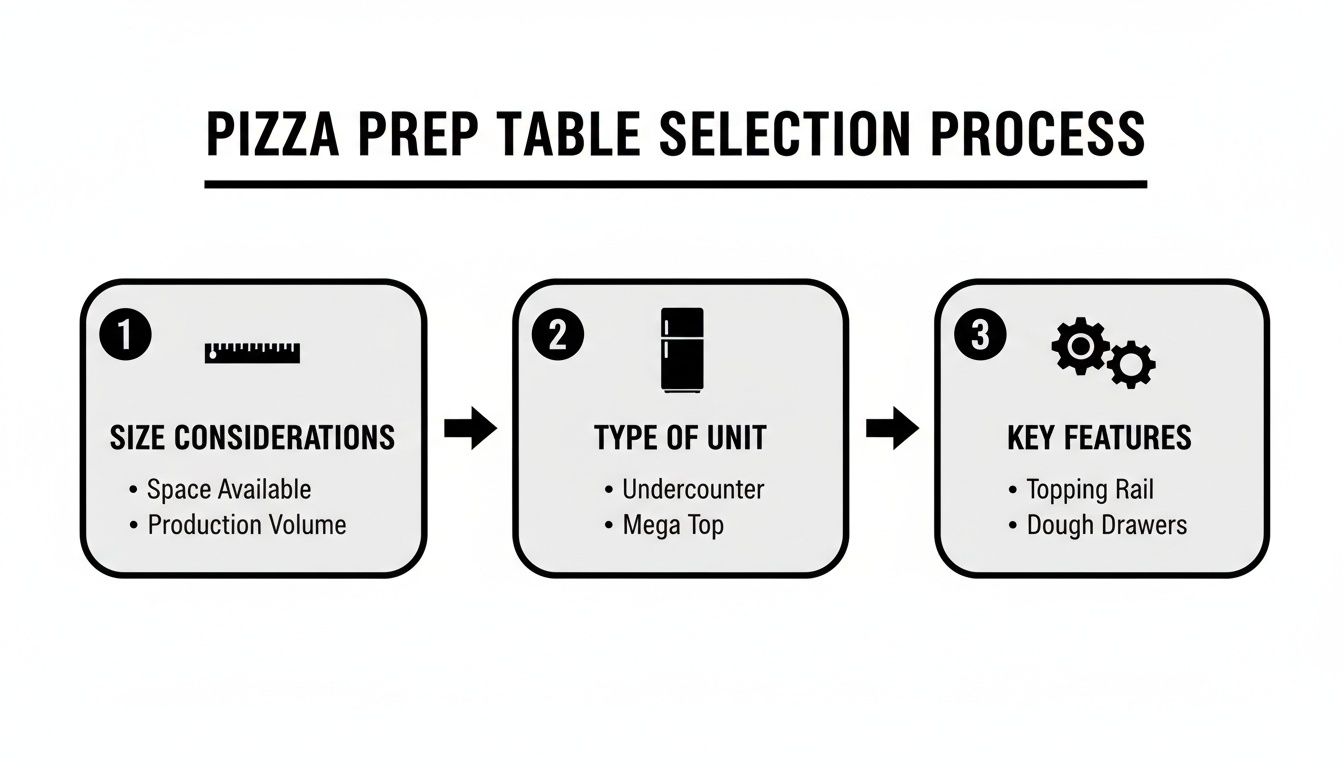
As the chart shows, choosing the right table is all about matching its size, type, and features to your specific pizza workflow needs.
Strategic Placement for Maximum Speed
Where you put your pizza prep table is the single most critical ergonomic decision you'll make. It should be the bridge connecting your cold storage to your pizza oven, shrinking the distance your team has to travel. Place your prep table for dead-simple, direct access to both the walk-in cooler (for topping refills) and the pizza oven.
A great pizzeria layout means a pizza maker can pivot, not walk. If they can grab dough, top a pizza, and slide it into the oven with just a few steps, you've nailed it.
The data backs this up. Stainless prep tables are the undisputed MVPs in pizzerias worldwide. North America alone commands 35% of the global market, with over 100,000 independent pizzerias relying on these tables to slash prep time by as much as 40%. That efficiency boost comes from smart, integrated features like built-in cutting boards and undershelves that keep ingredients and tools organized.
It’s no surprise that market growth for steel outpaces composites by 25%. Much of that is driven by features like the quick-temperature recovery in refrigerated models, which is vital for keeping pizza toppings in that food-safe sweet spot of 33-41°F. By building your layout around a well-chosen table, you create a less stressful, more productive environment where your team can absolutely crush it.
Navigating NSF Compliance and Food Safety
Those health codes and food safety regulations can feel like a tangled web, but they don't have to be. For any pizzeria, that small, round NSF logo on your stainless kitchen prep tables isn't just a sticker—it's your seal of approval. It tells health inspectors, and more importantly your customers, that you take safety seriously. It’s an absolute must-have in a commercial pizzeria.
An NSF-certified table is built from the ground up to fight bacteria. It’s a guarantee that the equipment was designed with public health in mind, made from safe materials, and constructed in a way that’s dead simple to keep clean. This certification is your first line of defense in passing health inspections and protecting your hard-earned reputation.
Why NSF Design Matters for Pizzerias
The little details of an NSF-certified table are what really set it apart. These aren't just cosmetic choices; they're smart design features meant to eliminate hiding spots for bacteria. This is a huge deal in a busy pizza-making environment where flour, cheese, and sauce get everywhere.
Key NSF features include:
- Sealed Welds: The joints and corners of the table are smoothly welded and polished. This stops tiny food particles like flour and cheese from getting trapped in crevices, which are prime real estate for germs.
- Coved Corners: Instead of sharp 90-degree angles where the backsplash meets the tabletop, you’ll find a gentle, curved transition. This makes wiping down the surface a single, smooth motion, making sure no gunk gets left behind.
- Non-Porous Surfaces: As we've mentioned, the stainless steel itself is non-porous. This means it won't absorb pizza sauce or harbor bacteria the way a wooden butcher block could.
These design elements make a massive difference. They simplify your daily cleaning routines and are a core part of a strong food safety plan. To see how these principles fit into the bigger picture, check out our guide on what is HACCP food safety: https://pizzapreptable.com/blogs/pizza/what-is-haccp-food-safety.
A Practical Sanitation Checklist for Your Pizza Prep Table
Keeping your stainless kitchen prep tables in top-notch condition is all about consistency. A simple, repeatable routine ensures you not only meet but blow past health department standards, keeping your surfaces safe and your inspections worry-free.
A clean prep table is the foundation of a safe pizzeria. Think of your sanitation routine as a non-negotiable recipe you follow every single day, just like your signature pizza sauce.
Here’s a straightforward checklist for daily cleaning:
Daily Cleaning Routine (End of Each Shift):
- Clear the Surface: Get all topping pans, cutting boards, and tools off the table.
- Scrape Debris: Use a plastic or rubber scraper to remove any caked-on dough or toppings. Metal can scratch the surface.
- Wash Thoroughly: Wipe down the entire surface, including the backsplash and edges, with a cloth soaked in warm, soapy water.
- Rinse Completely: Use a clean, damp cloth to wipe away all the soap residue. This is key—leftover soap can tarnish the steel over time.
- Sanitize: Apply a food-safe sanitizer according to the manufacturer’s instructions for contact time.
- Air Dry: Let the surface air dry completely. Wiping it dry can reintroduce germs, and air drying prevents water spots.
This simple process, done diligently, will keep your tables ready for action and help you ace every inspection. To ensure proper identification of ingredients and adherence to safety protocols for food prepared on your stainless kitchen prep tables, consider using custom food labels.
Making a Smart Investment in Your Pizzeria
Your stainless prep table isn't just another line item on an invoice; it's a long-term capital investment in your pizzeria's future. Getting the financial side right from the beginning means your equipment will pull its weight without wrecking your budget. It’s all about balancing the upfront hit with long-term value, whether you're just starting out or upgrading a seasoned pizzeria.
The first big question is always the same: new or used?
New Versus Used Equipment
Going with a brand-new pizza prep table gives you that straight-from-the-factory peace of mind. You get a full manufacturer's warranty, the latest energy-efficient refrigeration, and a perfectly clean slate—literally. The only catch, of course, is the higher price tag.
On the flip side, a used table can seriously cut your initial costs, freeing up cash for things like payroll and marketing. But this path demands a sharp eye. You're giving up the warranty and taking on whatever dings, dents, and hidden issues the last pizzeria left behind. A cheap table can turn into an expensive headache fast.
Before you even think about a used unit, you need to go in with a solid inspection plan. Put on your detective hat and look for clues about the table's past life and future reliability.
A cheap pizza prep table that fails during a Friday night rush is the most expensive piece of equipment you can own. The initial savings mean nothing if it compromises your service and food safety.
A Buyer's Checklist for Used Pizza Prep Tables
If you decide to dive into the used market, go in armed with a checklist. This will help you sniff out potential disasters before they become your problem:
- Inspect the Surface for Damage: Run your hand over the entire surface. Are there deep scratches, dents, or signs of pitting and rust? These aren't just ugly; they're breeding grounds for bacteria that are a nightmare to sanitize properly.
- Check Welds and Seams: Look closely at every joint and corner. They should be smooth and totally sealed. Any cracks or gaps are just invitations for flour and sauce to build up.
- Test Refrigeration Thoroughly: If it's a refrigerated unit, plug it in and let it run for a few hours. Does it actually get down to a food-safe temperature (below 41°F) and stay there? Listen for any weird rattling or grinding from the compressor.
- Examine Gaskets and Doors: Check the rubber seals around the doors. Are they cracked, brittle, or pulling away? A bad seal makes the compressor work overtime, which means higher energy bills and a shorter lifespan for the unit.
Smart Financing for Pizzeria Startups
For most new pizzerias, dropping a huge chunk of startup capital on equipment just isn't realistic. This is where financing and leasing can be incredibly smart moves. Leasing lets you get a top-of-the-line, brand-new stainless kitchen prep table for a predictable monthly payment, keeping your cash free for inventory and payroll.
This approach makes high-quality equipment accessible right from day one. And it’s a solid bet—market analysis projects the pizza prep table segment will grow at a healthy 5.70% annually from 2025 to 2030. That growth is fueled by the simple fact that steel is a workhorse, often lasting 15-20 years in a busy pizzeria, making it a reliable asset for financing. You can find out more about these market findings on HTF Market Insights.
Answering Your Top Pizzeria Prep Table Questions
Even after you've got a game plan, a few questions always seem to pop up right when you’re ready to pull the trigger on a new stainless kitchen prep table. I've put together the most common ones I hear from pizzeria owners to give you quick, straight answers and help you lock in your decision with confidence.
Do I Really Need 304 Grade Stainless Steel for My Pizza Table?
For the worksurface, absolutely. Think about what a pizza prep table goes through every single day: acidic tomato sauce, salty pepperoni, briny olives. 304 grade stainless steel is packed with more nickel and chromium, which is your best defense against the corrosion these pizza ingredients will inevitably cause.
You might save a few bucks upfront on a table made entirely from 430 grade steel, but you're just inviting rust and pitting on the one surface that truly matters. The smartest move? Find a table with a tough-as-nails 304 top and a 430 grade base and undershelf. You get the protection where it counts and the savings where it doesn't.
How Often Should I Sanitize My Pizza Prep Table?
At the end of every single shift, no exceptions. But even more critically, you need to clean and sanitize the table any time you switch tasks—especially if you're going from raw ingredients to ready-to-eat items. This is your frontline defense against cross-contamination in your pizzeria.
A consistent sanitation routine is non-negotiable. It's the simplest and most effective way to protect your customers, pass health inspections, and maintain the integrity of your equipment.
Can I Put Hot Pizza Pans Directly On the Table?
I'd strongly advise against it. While stainless steel is tough, slamming a screaming-hot pan straight from the oven onto the cool metal can cause it to warp from the sudden temperature change. This is called thermal shock. Do it enough times, and that temporary buckle can become a permanent, uneven work surface.
It’s much better to get in the habit of using trivets or dedicated heat-resistant landing pads next to your oven. This simple step will preserve the flat, smooth workspace you paid for and keep it that way for years.
What’s the Best Way to Remove Stubborn, Caked-On Dough?
Step away from the steel wool. Never, ever use abrasive scrapers or steel wool on your stainless table. They will permanently gouge the protective surface, creating tiny scratches that become an open invitation for rust to move in. Instead, a little patience and the right technique work wonders.
Here’s how to do it right:
- Soften the mess: Make a paste by sprinkling baking soda over the spot and adding a bit of warm water.
- Let it sit: Give the paste 15-20 minutes to work its magic and break down the grime.
- Scrub gently: Use a nylon scrub brush or a non-abrasive pad and scrub with the grain of the steel, not against it.
- Rinse and dry: Wipe it all down with a damp cloth, then dry it completely to avoid water spots. This method lifts the mess without damaging your investment.
Ready to find the prep station that will become the anchor of your pizzeria's production line? The team at Pizza Prep Table can help you find the perfect model for your space, workflow, and budget. Check out our huge selection of NSF-certified stainless steel tables and find your kitchen's next MVP.