

Choosing Stainless Steel Kitchen Prep Tables for Your Pizzeria
A good prep table is more than just a surface—it's the heart of your operation. It’s the command center where your pizzeria's speed, consistency, and quality all come together. For any serious pizza shop, stainless steel kitchen prep tables are the undisputed champs, handling everything from dough work to the final sprinkle of cheese. Their impact on how smoothly your kitchen runs is huge, and you'll feel it right away.
The Command Center of Your Pizzeria
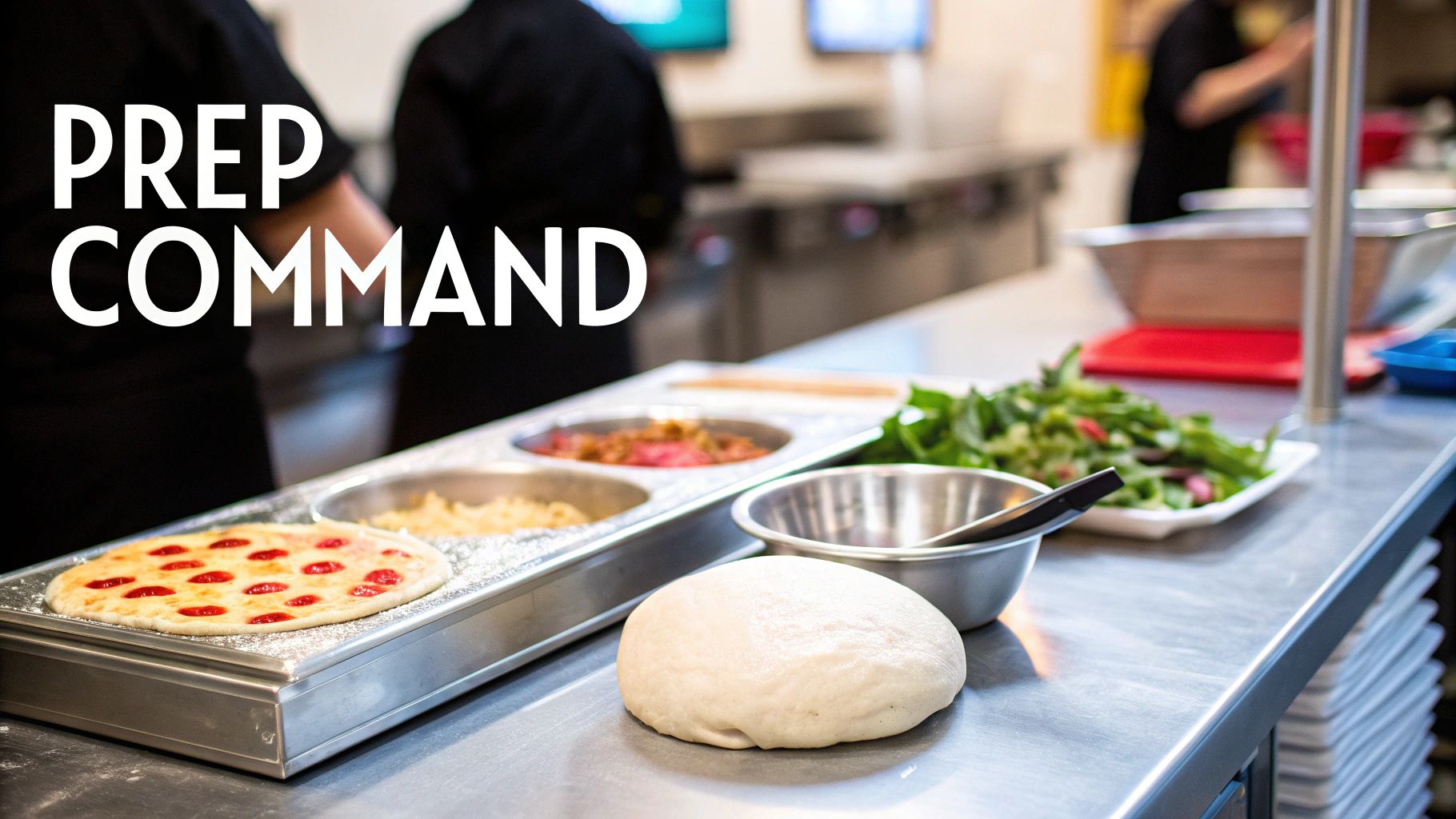
Think of your prep table as the cockpit of an airplane. It's where the most critical work happens, where every tool and ingredient is exactly where it needs to be, and where precision makes or breaks the final product. During a chaotic Friday night rush, this command center has to perform flawlessly. This is exactly why stainless steel became a non-negotiable asset for any real pizza joint.
The material became the backbone of modern commercial kitchens for a good reason. Back in the 1950s, when U.S. manufacturers started churning these tables out, the industry saw a massive shift. By the 1970s, high-volume kitchens reported a 40% reduction in food contamination incidents. More recently, during the 2020-2022 pandemic recovery, sales for stainless steel pizza prep tables shot up by 25% as owners upgraded to nail down their workflow and food safety. You can explore more about these market trends and how they’ve shaped the foodservice world.
The Core Benefits for Pizzerias
So, why is stainless steel the undisputed industry standard? It all boils down to a few key advantages that perfectly solve the unique headaches of a pizza kitchen. These tables aren't just furniture; they're purpose-built tools designed to take a beating.
- Unmatched Hygiene: The surface of stainless steel is non-porous. That means bacteria, tiny food particles, and moisture have nowhere to hide. This makes it incredibly easy to clean and sanitize—a must-have for passing health inspections and keeping your food safe.
- Exceptional Durability: Let's be honest, pizzeria work is tough. Your table has to put up with the constant scraping of pizza cutters, the acidic bite of tomato sauce, and the weight of heavy dough boxes. Stainless steel resists rust, stains, and dents, meaning it will last for years.
- Streamlined Workflow: A well-designed stainless table creates a logical, efficient workspace. Its smooth, cool surface is perfect for stretching dough, while add-ons like refrigerated topping rails keep your pepperoni and mushrooms just an arm’s length away, slashing assembly time.
Built for the Art of Pizza Making
That cool-to-the-touch surface of a stainless steel table is a game-changer for handling pizza dough. Unlike wood or laminate, it doesn't hold onto heat, which helps keep the dough from getting sticky or proofing too fast while you're stretching and topping it. This simple thermal property helps your pizzaiolos work faster and more consistently, which always leads to a better pizza.
A great pizza starts with a great foundation, and that includes the surface it's built on. A stainless steel prep table provides the clean, reliable, and efficient workspace needed to turn simple ingredients into a masterpiece, pie after pie.
Ultimately, putting your money into the right stainless steel kitchen prep tables is an investment in your pizzeria's productivity and its reputation. It’s the central hub that supports every single pizza that goes out your door, making sure each one is up to the high standards your customers crave.
Refrigerated vs. Non-Refrigerated Pizza Prep Tables
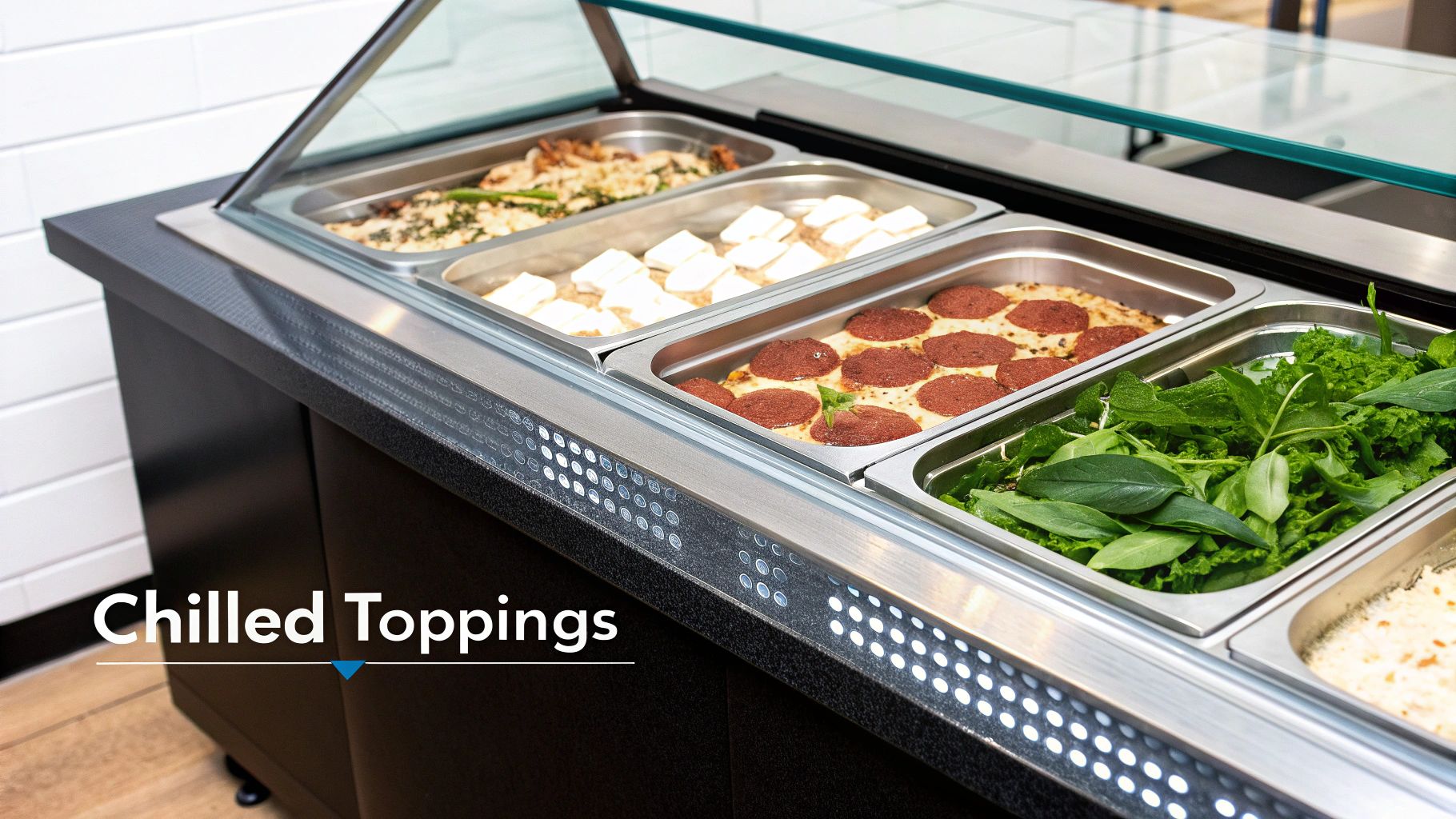
Picking between a refrigerated and a non-refrigerated prep table is one of those foundational decisions that will shape your pizzeria's entire workflow. This isn't just about buying a piece of steel; it's about designing the very rhythm of how a pizza gets from a ball of dough into a customer's box.
One table is your all-in-one pizza assembly line, built for speed and food safety. The other is a specialist's workstation, dedicated to the craft of dough. Your choice here directly impacts how fast you can crank out orders, how you manage your kitchen real estate, and how you keep your ingredients perfectly fresh. Getting this right is the first step toward building a truly efficient pizza-making machine.
Refrigerated Pizza Prep Tables: The All-In-One Assembly Line
Think of a refrigerated pizza prep table as your command center. It’s a complete, self-contained assembly line designed for one thing: turning a stretched piece of dough into a fully topped pizza, fast. This is where the magic of assembly happens, keeping all your perishable toppings perfectly chilled and literally at your fingertips.
Its main job is to hold ingredients like mozzarella, pepperoni, and fresh veggies in a cold, food-safe environment. The toppings sit in stainless steel pans in a refrigerated rail up top, while the cabinet below provides bulk cold storage for backups. This setup is all about eliminating wasted motion—your pizzaiolos aren't walking back to a separate fridge, which shaves precious seconds off every single order.
The performance of these units is non-negotiable. In fact, within the pizza prep table market, 70% of units feature stainless steel exteriors and lids specifically to hold temperatures below 41°F, which is critical for meeting health codes. These designs have been shown to slash spoilage by as much as 35% in busy pizzerias. Better yet, a quality stainless steel model can recover its internal temperature in under five minutes after you open the lid—that's three times faster than aluminum alternatives, a huge deal for keeping cheese and meats fresh during a hectic service.
Non-Refrigerated Tables: The Pizza Dough Workstation
While the refrigerated table is the hub for assembly, the non-refrigerated stainless steel kitchen prep table is where the art of pizza begins. This is your dedicated workstation for dough. Its simple, flat, and durable surface provides the perfect canvas for kneading, stretching, and portioning.
The naturally cool-to-the-touch surface of stainless steel is a huge plus here. It helps keep the dough from getting too warm and sticky, which makes it much easier to handle consistently. And since there are no refrigeration components taking up space, these tables offer maximum open storage underneath for big dough boxes, flour bins, and other essential dry goods.
The non-refrigerated table is where craftsmanship begins. It’s a clean, uncluttered space dedicated to perfecting the foundation of every great pizza—the crust.
To really dial in your kitchen's efficiency, let's look at how these two tables work together.
Refrigerated vs Non-Refrigerated Prep Tables for Pizzerias
For most pizzerias, the question isn't which one to buy, but how to use both strategically. A smart layout uses a non-refrigerated table for all dough work, creating a dedicated "dough zone." Once stretched, the base moves to the adjacent refrigerated prep table for saucing and topping. This linear flow—from dough prep to assembly to the oven—is the secret to a high-volume, low-stress kitchen.
This table breaks down where each one shines:
| Feature | Refrigerated Pizza Prep Table | Non-Refrigerated Work Table |
|---|---|---|
| Primary Use | Assembly: Saucing, cheesing, and topping pizzas. | Dough Prep: Kneading, stretching, and portioning dough. |
| Key Advantage | Keeps perishable toppings chilled and within arm's reach. | Provides a large, cool, and durable surface for dough work. |
| Food Safety | Essential for holding ingredients like cheese and meat below 41°F. | Ideal for temporary work with non-perishable items like flour. |
| Workflow Role | The central hub of your pizza assembly line. | The starting point where the pizza base is created. |
| Storage | Refrigerated cabinet below for backup cold ingredients. | Open shelving below for dough boxes, flour, and dry goods. |
| Best For | Speed, consistency, and food safety during final pizza assembly. | Craftsmanship and creating a dedicated, clean dough station. |
This strategic separation of tasks is a game-changer. It prevents cross-contamination (no flour getting into your pepperoni pans) and keeps the entire production line moving smoothly, even when you're slammed.
If you're also building out a line for other menu items, our guide on refrigerated sandwich prep tables offers more ideas for optimizing your entire cold prep area: https://pizzapreptable.com/blogs/pizza/refrigerated-sandwich-prep-tables.
Matching Table Size and Gauge to Your Pizzeria's Volume
Choosing the right stainless steel pizza prep table isn't just about filling an empty spot in your kitchen. It's a strategic decision that directly impacts how many pizzas you can pump out on a busy Friday night. The right size determines how many pizzaiolos can work at once, while the right thickness—or gauge—ensures your table can withstand the nightly grind of dough slapping and heavy ingredient bins.
This isn't just about picking a table; it's about matching your equipment to your ambition. A small pizzeria just starting out has completely different needs than a high-volume shop that's a neighborhood institution. Let's break down these technical details into practical choices that will set you up for success.
Finding the Perfect Size for Your Production Line
The length of your pizza prep table is your production capacity. It's the physical space that defines how much work can happen at the same time. Think of it as adding more lanes to a highway—a wider table allows more traffic, or in this case, more pizzas to be prepped at once.
-
Small Pizzerias (48-inch to 60-inch tables): For a small shop or a food truck, a compact 48-inch unit is the perfect starting point. It gives a single pizzaiolo enough room to stretch dough and top a pizza without feeling cramped. Stepping up to a 60-inch pizza prep table offers more elbow room for a solo chef or even lets a second person jump in to help during mini-rushes. These smaller tables are fantastic for getting the most out of tight spaces.
-
High-Volume Operations (72-inch to 93-inch tables): For bustling pizzerias, a bigger table is non-negotiable. A 72-inch table comfortably fits two pizzaiolos working side-by-side, each with their own dedicated workspace. The largest models, stretching all the way to 93 inches, are true command centers. These massive workstations allow a full team—one person saucing, another cheesing, and a third adding toppings—to work in a fluid, assembly-line rhythm.
The real goal is to pick a size that doesn't just fit your current volume but also gives you room to grow. A table that feels spacious today could become a frustrating bottleneck tomorrow if you underestimate your future success.
Demystifying Stainless Steel Gauge
Beyond just the size, the gauge of the stainless steel is a critical detail that many pizzeria owners overlook. Think of the gauge as the "armor" for your table. It’s a measure of the steel's thickness, and here's the counterintuitive part: a lower gauge number means thicker, stronger steel. A low-gauge table can take a beating, while a higher-gauge one is better suited for lighter work.
This choice directly affects how long your table will last, especially in the demanding, high-impact world of a pizza kitchen.
Comparing Common Steel Gauges for Pizza Prep
| Gauge Number | Thickness (Approx.) | Best Use Case for Pizzerias | Durability Level |
|---|---|---|---|
| 14-Gauge | 1.90 mm | Heavy-duty dough prep stations where staff are kneading, pounding, and dropping heavy dough boxes. | Maximum |
| 16-Gauge | 1.52 mm | All-purpose pizza prep tables for both dough work and assembly. A great, balanced choice. | High |
| 18-Gauge | 1.21 mm | Lighter-duty topping stations or areas used for cutting and boxing finished pizzas. | Standard |
Matching Gauge to Your Pizzeria's Workflow
The key here is to match the gauge to the job at hand. You don't need a tank for a job that just requires precision, and you definitely don't want flimsy armor in a heavy-duty battle.
For the station where your team is constantly working with heavy dough, a 14-gauge stainless steel kitchen prep table is an investment that pays for itself. It won't dent or warp from the constant pressure and impact. On the other hand, for a station dedicated solely to adding lightweight toppings like pepperoni and mushrooms, an 18-gauge table is more than tough enough and is a much more cost-effective choice.
Many pizzerias find that 16-gauge offers the perfect middle ground. It's strong enough for moderate dough work but not overly expensive, making it a versatile workhorse for most pizza-making jobs. By strategically mixing and matching different gauges for different stations, you can build a kitchen that is both incredibly durable and budget-conscious.
The Health Inspector's Best Friend: Understanding NSF Certification and Sanitation
In a bustling pizzeria, food safety isn't just a box to check—it's the very foundation of your business. When you spot that NSF (National Sanitation Foundation) seal on a pizza prep table, think of it as a seal of approval from the pros. It’s your guarantee that the table is designed to be cleaned thoroughly, with no secret cracks or impossible-to-reach corners where bacteria love to throw a party.
This certification tells you the equipment was built for the tough reality of a commercial kitchen. It ensures the steel is non-porous, so it won’t soak up tomato sauce or olive oil spills. It also means the table has smart design features, like coved corners (think rounded edges instead of sharp 90-degree angles), making it dead simple to wipe down and sanitize properly.
Key Design Features for a Spotless Pizzeria
An NSF-certified table is engineered from the ground up to shut down contamination before it starts. This goes way beyond just the type of steel used; it’s about the thoughtful construction that eliminates headaches before your health inspector ever walks through the door.
- Non-Porous Surfaces: High-quality stainless steel gives you a smooth, solid surface that won’t harbor germs. It’s the perfect stage for everything from raw dough to fresh basil.
- Sealed Welds and Joints: Every seam and connection is completely sealed off. This prevents tiny food particles and moisture from getting trapped inside, which is a five-star resort for bacteria.
- Coved Corners: Instead of a sharp angle where the backsplash meets the tabletop, NSF tables feature a smooth, curved transition. This simple design makes cleaning far more effective because a single wipe can clear out the entire corner.
To keep your kitchen compliant and safe, it's crucial to address any pest problems immediately. For more information, you can learn about effective strategies for eliminating German cockroaches.
Keeping Your Stainless Steel Pizza Table in Top Shape
Maintaining a hygienic and compliant pizza prep table is a daily job. The great thing is, stainless steel is incredibly easy to care for when you know the right moves. A solid cleaning routine will not only guarantee food safety but also protect your investment for years.
For pizzerias, the right gear is a game-changer. Studies show that the right stainless steel tables can slice pizza prep time by 22% and help you handle up to 30% more orders during peak hours. Today’s NSF-certified tables are built for the foodservice industry’s 7% annual expansion, with features that prevent 90% of cross-contamination risks—a stat every pizzeria owner should care about.
A clean workspace is a productive workspace. Your daily sanitation process is just as important as your pizza recipe—it guarantees quality and safety in every single order.
To keep your table looking and performing its best, stick to a simple daily and weekly routine.
Daily Cleaning Checklist:
- Clear the Deck: Remove all tools, ingredient pans, and leftover food scraps.
- Wash It Down: Use warm water, a mild detergent, and a soft cloth. Always wipe in the direction of the steel's grain to prevent tiny scratches.
- Rinse Completely: Use a clean, damp cloth to wipe away any and all soap residue.
- Sanitize: Apply a food-safe sanitizer, following the product’s instructions to the letter.
- Dry Thoroughly: Grab a dry, soft cloth and wipe the surface completely dry. This is key to preventing water spots and protecting the steel’s natural, corrosion-resistant layer.
Got a stubborn spot like dried-on tomato sauce? Mix up a paste of baking soda and water. Apply it, let it sit for a few minutes, then gently scrub with a non-abrasive pad before rinsing it clean.
For more in-depth tips, check out our guide on the best way to clean stainless steel refrigerators and other kitchen equipment: https://pizzapreptable.com/blogs/pizza/best-to-clean-stainless-steel-refrigerator
Designing Your Pizzeria Workflow for Peak Efficiency
A world-class stainless steel pizza prep table is only as good as its placement within your kitchen. Think of your pizzeria not as a room with equipment, but as a finely tuned production line. Every step, every pivot, and every reach your pizzaiolos make either adds precious seconds to an order or shaves them off.
This is where smart kitchen design and ergonomics become the secret ingredients to maximizing your speed and output.
An inefficient layout forces your staff to take wasted steps, creating frustrating bottlenecks during the dinner rush. A well-designed workflow, however, creates a seamless rhythm where each task flows logically into the next. This careful planning transforms a chaotic space into a high-performance engine for crafting perfect pizzas.
Mapping the Classic Pizzeria Production Line
The most successful pizzerias follow a clear, linear path from raw ingredients to a boxed, ready-to-go pizza. This assembly line approach minimizes movement and maximizes efficiency. Your prep tables are the critical stations along this path, and their placement dictates the entire flow.
You can break down the journey of a pizza into four key stages:
- Dough Preparation: This is where it all begins. A dedicated non-refrigerated work table provides the ideal cool, smooth surface for kneading, stretching, and saucing the dough.
- Topping Station: The sauced dough moves to a refrigerated prep table where all the chilled toppings—cheese, pepperoni, veggies—are within immediate reach for quick assembly.
- The Oven: The fully topped pizza is transferred directly from the topping station to the oven. Proximity is everything here.
- Cutting and Boxing: Once baked, the pizza moves to a final station for cutting, boxing, and hand-off. This area needs to be clear of the primary prep flow to avoid congestion.
Here’s a classic, powerful move: place your refrigerated topping table directly next to the oven. This creates an uninterrupted motion where your pizzaiolo can top the pizza and slide it into the oven in one fluid movement. This small detail can save 5-10 seconds per pizza, which adds up to significant time saved over a busy shift.
Adapting the Work Triangle for Pizza Stations
The classic "work triangle" concept—connecting the sink, refrigerator, and stove—gets an update in a modern pizzeria. Instead of a triangle, picture a compact, linear "work zone" that keeps your key areas tightly clustered. The goal is to ensure your most critical zones are arranged for seamless operation, whether you're in a spacious kitchen or a tight food truck.
Your prep line is a dance, and the layout is the choreography. A well-designed workflow ensures every pizzaiolo moves with purpose, turning wasted motion into faster service and happier customers.
For practical examples of how to implement standardized processes that optimize kitchen functions and staff interactions around your prep tables, see these Restaurant Standard Operating Procedures Examples.
This diagram shows the simple but critical sanitation steps required to maintain a safe prep surface.
This three-step process—clean, rinse, and sanitize—is the foundation of food safety in any pizzeria workflow.
Ergonomics and Staff Comfort
Finally, don't forget the human element. An efficient workflow also considers ergonomics to reduce staff fatigue and prevent injuries. Table height, under-counter clearance for comfortable standing, and the placement of frequently used tools all play a role. A comfortable pizzaiolo is a faster, more focused, and more productive employee.
By thoughtfully designing your layout around a logical production line and ergonomic principles, you turn your stainless steel kitchen prep tables from simple furniture into powerful tools for peak performance.
Your Smart Buying Checklist for Pizza Prep Tables
Picking the right stainless steel pizza prep table is one of those big decisions you make for your pizzeria. Get it right, and you’ve got a workhorse that makes every shift smoother. Get it wrong, and it becomes a daily headache that costs you time and money.
This isn’t just another piece of equipment; think of it as hiring a permanent member of your kitchen crew. To make sure you hire the right one, I've boiled down everything you need to know into a simple, no-nonsense checklist.
Start With the Big Picture: Your Pizzeria's Needs
Before you even glance at a single model online, you need to answer a few honest questions about your operation. Your answers will cut through the noise and point you directly to the kind of table that will actually work for you.
- What's your real peak volume? Don't guess. Think about your busiest Friday night. How many pizzas are flying out the door per hour? That number is your north star for figuring out the size you need to prevent a production jam.
- What does your menu actually demand? If you're a classic cheese-and-pepperoni joint, your needs are simple. But if you’re slinging pies with two dozen fresh toppings, you're going to need a whole lot more refrigerated real estate to keep everything fresh and organized.
- How's your kitchen flow? Grab a tape measure. Seriously. Will that beautiful 72-inch table actually fit, or will it create a traffic jam near the oven? Sometimes a more compact 60-inch model is the smarter play to keep everything moving smoothly.
Treat this purchase like you're adding a key player to your team. The right prep table should work for you, not against you, making every shift more profitable. It’s a direct investment in your pizzeria's future.
Get Into the Weeds: Key Specs to Check
Once you know what you need from a workflow perspective, it's time to look at the technical details. This is what separates a table that lasts a decade from one that starts falling apart in a year.
Your Must-Have Features Checklist:
- The Right Size: Match the table length (think 48-inch, 72-inch, or even 93-inch) to your pizza volume and the physical space you have. No exceptions.
- The Right Gauge: For heavy-duty dough work, you need a lower, thicker gauge like 14 or 16-gauge steel that won't bow or dent. For a lighter-duty topping station, a higher 18-gauge will do just fine.
- NSF Certification: This is non-negotiable. See that NSF seal? It means the table is designed for easy cleaning and will keep your health inspector happy. Don't even consider a pizza prep table without it.
- Helpful Add-Ons: Do you need a backsplash to keep your walls clean from sauce splatters? What about caster wheels? They make deep cleaning underneath the table a thousand times easier.
Making the Final Call: Brands and a Smart Purchase
You've narrowed it down. Now it's time to compare your top contenders and think about the long game. A reliable brand isn't just a name; it's peace of mind.
Look at brands that have earned their stripes in busy pizzerias, like Atosa and True. They're known for building equipment that can take a beating. Always check the warranty—a manufacturer that offers a longer warranty believes in their product's quality.
Don't let the sticker price scare you off a better table. Look into financing options like lease-to-own plans. They can make a top-tier pizza prep table surprisingly affordable by breaking the cost into manageable payments. Follow this checklist, and you’ll confidently pick a prep table that becomes the command center of a pizzeria that's built to last.
Frequently Asked Questions
When you're in the thick of choosing a new pizza prep table, a few questions always seem to pop up. Getting straight answers is key to picking the right gear and keeping it in top shape. Here are some of the most common queries I hear from pizzeria owners just like you.
What Is the Best Gauge for a Pizza Prep Table?
This really boils down to what the table's main job will be. If you're looking for a workhorse for heavy-duty dough prep—think kneading, slamming, and handling serious weight—you'll want to go with 14 or 16-gauge steel. It’s thicker, tougher, and won’t start to bow or dent when you lean into it.
But for a station that’s just for lighter work, like saucing and adding toppings, an 18-gauge table is more than enough. It's a bit more budget-friendly and will hold up just fine. The smartest move is to match the gauge to the job.
How Do I Prevent Rust on My Stainless Steel Table?
The secret to keeping your stainless steel looking new is a simple daily routine. Clean it down with mild soap and water, always wiping in the direction of the grain. Rust spots usually show up because of contact with other metals or harsh chemicals, so never, ever use steel wool or other abrasive scrubbers—they'll scratch the surface and practically invite corrosion.
If you do spot a little rust, don't sweat it. You can gently buff it out with a non-abrasive cleaner specifically made for stainless steel, usually one with oxalic acid.
Think of your daily wipe-down not as a chore, but as essential maintenance. You're protecting the steel's natural chromium layer, which is what keeps it hygienic and rust-free for the long haul.
Is a Refrigerated Prep Table Worth It for a Small Pizzeria?
Absolutely. I'd argue it’s one of the most vital investments for any pizzeria, no matter how small. It’s your cold storage and your main workspace all in one, and that combination is a game-changer for your workflow.
Instead of running back and forth to a separate fridge, everything is right there. This keeps your toppings held at a safe temperature (below 41°F), speeds up pizza assembly, and improves food safety. The time you save and the peace of mind you get almost always deliver a fantastic return on investment, even for a one-person shop.
Can I Use a Standard Work Table for Pizza Dough?
Yes, and you absolutely should. A non-refrigerated stainless steel kitchen prep table is the perfect surface for working with dough. It's smooth, cool to the touch, and makes kneading, stretching, and portioning dough a breeze without it sticking everywhere.
In fact, the most efficient pizzerias I've seen often have a two-table system: one dedicated work table for all the dough prep and a separate refrigerated table for final assembly. This setup creates a clean, logical production line and helps prevent any cross-contamination between raw dough and ready-to-eat toppings.
Ready to build the command center for your pizzeria? Pizza Prep Table offers a curated selection of high-quality stainless steel kitchen prep tables designed to boost efficiency and stand up to the busiest kitchens. Explore our collection and find the perfect fit for your restaurant today!