

A Guide to Under Cabinet Fridge Dimensions for Pizza Prep
Getting the under cabinet fridge dimensions right is the first—and most important—step in designing a pizza production line that actually works. Most commercial units are built to industry standards, typically falling between 34-36 inches in height, 24-72 inches in width, and 24-32 inches in depth. These numbers aren't random; they’re designed to slot perfectly under pizza prep tables and keep your workflow humming.
Your Essential Guide to Pizza Prep Refrigeration
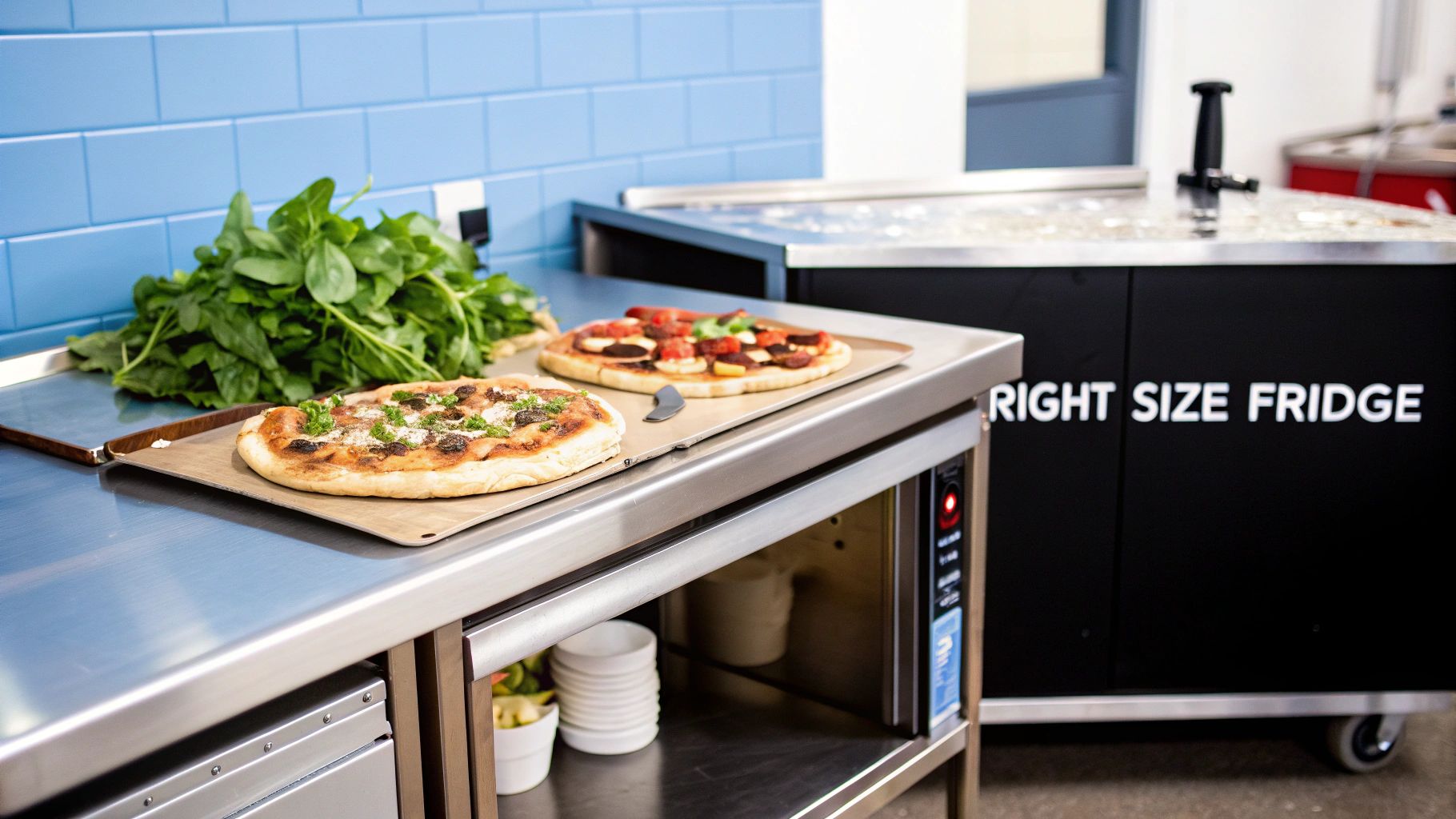
For any pizzeria owner, the space under the pizza prep table is prime real estate. It's the engine room where speed, freshness, and efficiency all come together. Picking the wrong fridge doesn't just waste space—it creates bottlenecks, slows down service, and can even put food safety at risk.
Think of your under-counter fridge not as a separate appliance, but as a core part of your pizza assembly line. Its size dictates how smoothly your team can move from stretching dough to saucing, topping, and sliding pies into the oven. Get the measurements right, and every ingredient is an easy reach away, cutting out wasted steps and pushing out more pizzas during the dinner rush.
Before you start shopping, it helps to have a quick reference. These are the common dimensions you’ll run into for commercial under-counter units designed for pizza prep stations.
Standard Undercounter Fridge Dimensions at a Glance
| Dimension | Standard Range | Typical Pizza Prep Table Fit |
|---|---|---|
| Height | 34 to 36 inches | Fits snugly under a standard 36-inch commercial pizza prep table. |
| Width | 24 to 72 inches | Ranges from a single-door unit to a three-door workhorse. |
| Depth | 24 to 32 inches | Aligns flush with countertops to avoid blocking kitchen traffic. |
These figures give you a solid baseline, ensuring the models you look at will likely be compatible with other standard pizza kitchen equipment.
Why Standard Dimensions Matter
The commercial kitchen equipment world runs on standards for a reason: it ensures everything fits together. This is especially true for undercounter refrigerators, a market that has exploded in recent years. Most models hover around that 34-36 inch height to slide right under a 36-inch counter on a pizza prep table, with widths usually starting at 24 inches.
This isn't a coincidence. It's smart design that supports ergonomic workspaces and even helps with things like ADA compliance. For a deeper dive into market trends, you can explore more data on the undercounter refrigerator market.
Choosing the right dimensions is about more than just fitting a box into a hole. It's about building a system where every piece of equipment works in harmony, turning your pizza prep station into a model of efficiency.
Key Considerations for Pizzerias
When you’re eyeing a fridge for your pizza prep table, three measurements are king. Each one plays a distinct role in your kitchen’s layout and flow.
-
Height: This is the make-or-break number. Too tall, and it simply won’t fit under your pizza prep table. Too short, and you’ve created an awkward, inefficient gap. The goal is a snug fit that still leaves just enough room for proper ventilation.
-
Width: Your width determines storage capacity for pizza ingredients. A slim 24-inch unit might be perfect for a small topping station, while a massive 72-inch model can anchor a high-volume line, holding everything from bulk cheese to pepperoni.
-
Depth: Standard depths of 24-32 inches are designed to sit flush with your pizza prep table. This is crucial for preventing the unit from sticking out and obstructing the tight walkways in a busy pizzeria.
Ultimately, locking down these core under cabinet fridge dimensions is the foundation for a pizza kitchen that’s not just functional, but built for speed, safety, and profit.
Getting to Know the Common Undercounter Fridge Sizes
Picking the right under cabinet fridge is a lot like casting the lead actor for your pizzeria's daily show. The size you choose has a direct line to your team's speed, how organized they are, and whether they can handle the dinner rush without breaking a sweat. In a pizza joint, the gap between a little single-door unit and a huge triple-door beast defines the entire rhythm of your prep line.
It all boils down to knowing the different size classes and how they actually fit into the real world of making pizzas. Not every pizzeria needs a monster fridge; sometimes, a smaller unit placed just right is way more effective. Let's break down the common sizes and see where each one really shines.
The Compact Workhorse: Single-Door Units
Single-door undercounter fridges are the ultimate utility players in the pizza game. They’re small, they’re efficient, and you can stick them just about anywhere under a prep table.
- Typical Width: 24 to 30 inches
- Best For: Small topping stations, dedicated spots for sauce and cheese, or as a secondary prep area in a larger pizzeria.
Picture a small pizzeria with a tight, focused menu. A 24-inch unit fits perfectly under the main prep counter, holding all the essentials you're constantly reaching for—pepperoni, mushrooms, onions, and peppers. Its tiny footprint keeps everything in arm's reach, letting one person assemble pizzas in a flash. These are the go-to choice when space is precious but efficiency is everything.
The All-Rounder: Double-Door Models
Once your pizza orders start piling up, that single-door unit just can't hang. That’s where double-door models step in, giving you a serious boost in storage without eating up a ton of floor space under your pizza prep table.
- Typical Width: 48 to 60 inches
- Best For: Busy pizzerias that need to keep a wider variety of toppings, dough trays, and bulk ingredients right on the prep line.
Think of this as the command center for a bustling pizza assembly line. A 48-inch fridge lets you dedicate one side to meats and the other to veggies, which helps prevent cross-contamination and keeps the workflow clean and organized. For a high-volume shop, this is the size that gets you through a Friday night without constantly sending someone on a run to the walk-in cooler.
The High-Volume Powerhouse: Triple-Door Giants
For the big-league pizzerias and ghost kitchens pumping out hundreds of pies a day, only a triple-door workhorse will cut it. These are the undisputed champs of cold storage capacity right on the pizza line.
- Typical Width: 72 inches and beyond
- Best For: High-volume assembly lines where several chefs are working at once and a massive array of pizza ingredients needs to be on deck.
Imagine a kitchen with a dedicated station for every single step of the pizza-making process. A 72-inch refrigerator is the backbone that supplies multiple prep zones at the same time. You could have one section holding dough, another for cheeses and sauces, and the third packed with every topping under the sun. This kind of setup kills unnecessary movement and cranks up the output, turning the pizza prep table into a finely tuned pizza factory.
The width you choose is a direct statement about your pizzeria's ambition. A 24-inch model is perfect for a neighborhood spot, but a 72-inch unit is built for city-wide domination. Match the fridge to the mission.
A Smarter Choice: Refrigerated Drawers
Beyond the classic doors, refrigerated drawers are a huge ergonomic win for pizza makers. Instead of bending down and fishing around in a dark cabinet, chefs can just pull out a drawer for a top-down view of neatly organized ingredient pans. This design is catching on fast in pizzerias because it's simply quicker and more efficient.
You can see this user-focused shift in the history of appliance design. By 2010, 90% of undercounter units had settled on a 34-inch height to meet ADA accessibility guidelines, making workspaces better for everyone. Today, drawer-style models are growing at 12% a year, often with a shallower 24-inch depth that slots perfectly into modern prep tables. You can discover more insights about household undercounter refrigerator market trends to see how these changes are shaping kitchen design.
In a pizza kitchen, drawers are absolute game-changers. Stick a two-drawer unit right under the dough stretching area, and suddenly your cheese, sauce, and pepperoni are just a quick pull away. This simple tweak can shave precious seconds off every single pizza order, which adds up to huge gains in a fast-paced kitchen.
How to Perfectly Measure Your Kitchen Space
A simple measurement mistake is more than just an oops. In a busy pizzeria, it's a direct hit to your bottom line, leading to costly returns, frustrating installation delays, and worst of all, kitchen downtime when you should be slinging pies. To get it right the first time, you have to measure for the real world, not just the numbers on a spec sheet.
Think of it this way: you’re not just finding a parking spot for your fridge; you're building its custom garage under your pizza prep table. It needs room to breathe, space for its doors to swing wide, and a clear path to get there. That means we need to go beyond the basic height, width, and depth to account for the hidden variables that can completely derail an installation.
Beyond the Tape Measure Basics
Before you even think about buying a fridge, grab your tape measure and get to know the space under your pizza prep table intimately. Don't just take one measurement and call it a day. Pizzeria floors and walls are almost never perfectly level or straight.
Measure the height, width, and depth at multiple points—left, center, and right for width; front and back for depth. Always, always use the smallest measurement as your guide. This is your insurance policy, guaranteeing that even if the space is a little wonky, your new unit will slide in without a fight.
To really nail this, you need to understand what you're working with. Getting a handle on your kitchen's structure, especially the cabinetry, is a critical first step. This is covered well in a detailed guide on kitchen cabinets and can help you spot potential install snags before they happen.
The Hidden Dimensions You Can't Ignore
Getting the basic numbers is just the starting line. A successful installation is all about accounting for the less obvious spatial needs of a commercial refrigerator. These are the details that separate a smooth, professional setup from a costly, amateur mistake.
-
Ventilation Clearance: This is the big one, the most critical and most often forgotten measurement. Think of the space around your fridge as its lungs. A compressor generates a ton of heat and needs airflow to get rid of it. Choke it, and the unit works harder, burns more energy, and will eventually burn out. While front-venting models are more forgiving, you should always plan for at least 1-2 inches of clearance on the sides and back unless the manufacturer's guide explicitly says zero-clearance. This "room to breathe" is non-negotiable for any fridge under a pizza prep table.
-
Door Swing Radius: In a tight pizzeria, a refrigerator door can become a weapon, a traffic jam, and a major safety hazard. Measure how far the door will stick out when it's fully open. Will it block a main walkway? Will it smash into your dough mixer or another chef? This measurement is absolutely vital for keeping your kitchen workflow safe and efficient.
-
Delivery Pathway: So you bought the perfect fridge. How are you getting it into the pizzeria? Measure every single doorway, hallway, and tight corner it has to pass through. And don't forget to account for the packaging, which always adds a few inches to the unit's actual dimensions.
This guide shows a simple way to think about sizing based on your pizzeria's needs, scaling from a small single-door to a high-capacity triple-door unit.
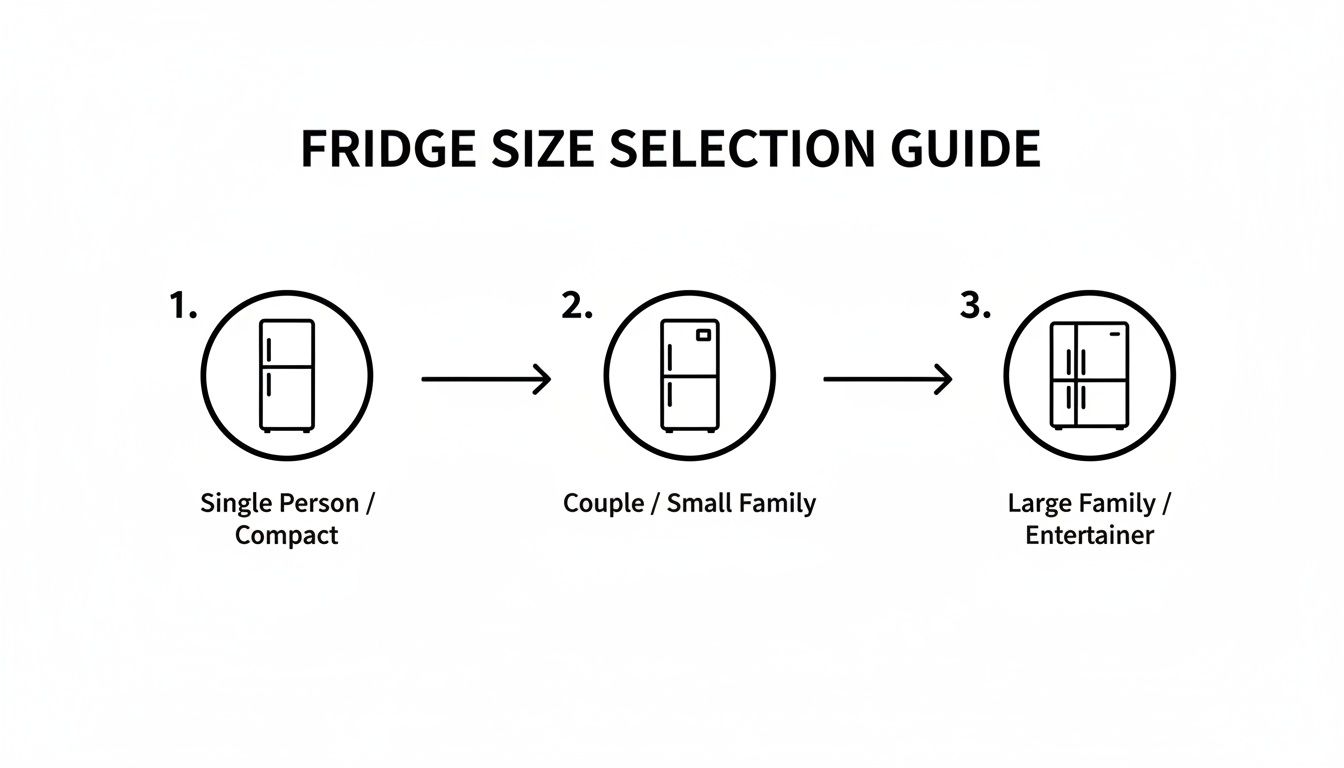
The flow from single to triple-door models is a great visual for how your storage capacity should grow right alongside your pizzeria's output and menu complexity.
Avoiding Common Measurement Pitfalls
A few small details can completely throw off your measurements. Knowing what to look for ahead of time will save you a world of hurt later on.
The most expensive mistake is the one you could have avoided with five extra minutes of careful measuring. Double-check everything, then check it again.
Keep an eye out for these common culprits:
- Baseboards and Molding: These sneaky trim pieces can steal an inch or more of your available width and depth right at floor level.
- Uneven Floors: Use a level to check your pizzeria floor. A significant slope isn't just an annoyance; it can affect how the fridge operates and may require a unit with adjustable legs to compensate.
- Electrical Outlets and Plumbing: Map out the location of outlets, water lines, and floor drains. Make sure the fridge's power cord can reach without needing a dangerous extension cord and that any plumbing connections are accessible.
By taking a thoughtful, detailed approach to measuring, you ensure your new refrigeration becomes a seamless part of your kitchen's ecosystem, not a problem you have to solve. A well-planned kitchen is the foundation of any successful restaurant; you can explore more on that in our guide to commercial kitchen layout design. Taking these extra steps guarantees you get the right under cabinet fridge dimensions for a perfect, hassle-free fit.
Tying Refrigeration into Your Pizza Prep Line
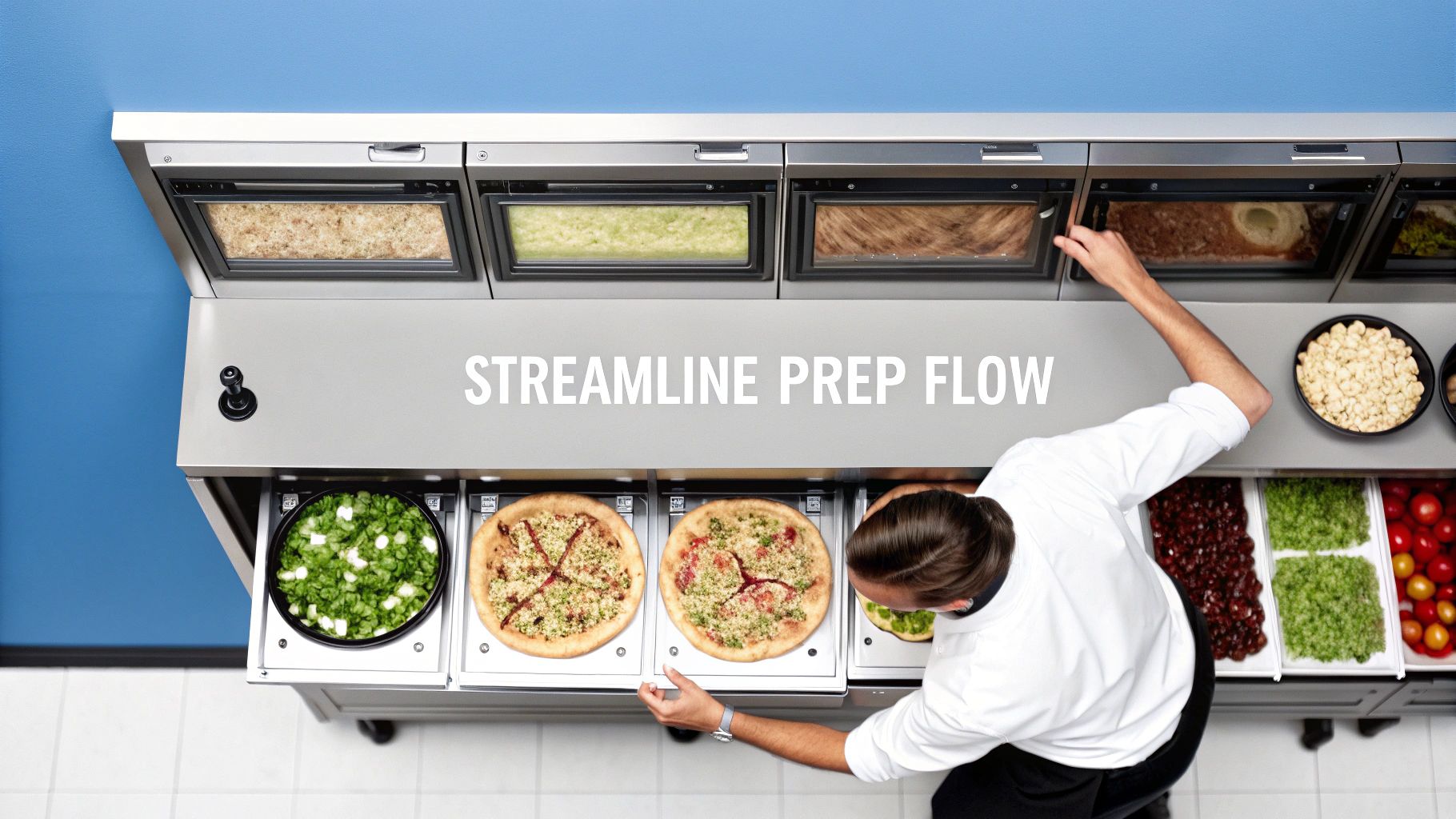
Let's be honest, choosing the right under cabinet fridge dimensions isn't just about making sure an appliance fits. It's about engineering a smarter, faster, and more profitable pizza-making operation. The right fridge, in the right place, turns a simple prep counter into a high-octane command center. Every second you save by not walking across the kitchen for cheese is a second you gain during the Friday night rush.
This is where the rubber meets the road. Think about it: refrigerated drawers directly under your dough-stretching station, giving you instant access to your core ingredients. Now contrast that with a long, multi-door unit designed for bulk toppings at the end of the line. The configuration you pick for your pizza prep table sets the entire rhythm for your kitchen.
Modular Setups vs. Integrated Prep Tables
One of the first big decisions you'll make is whether to build a custom prep line (modular) or buy an all-in-one integrated pizza prep table. Each path has its pros and cons, and your choice is directly tied to the under cabinet fridge dimensions you can work with.
-
Modular Setups: This route gives you ultimate flexibility. You can pair a standalone stainless steel worktable with separate undercounter fridge units of different widths. This lets you play Tetris with your equipment—maybe a 24-inch drawer unit for cheese and a 48-inch door unit for bulkier items—creating a custom line that perfectly matches how you make pizza.
-
Integrated Prep Tables: These are the all-in-one workhorses. They combine a refrigerated base, a countertop, and a cooled ingredient rail on top. The refrigeration is built right in, so the dimensions are fixed from the start. While you lose some flexibility, you gain a compact, NSF-compliant solution that’s ready to plug in and go. For new pizzerias, exploring a good commercial pizza prep table is often the best first step.
The right choice really boils down to your space and your pizza-making style. A modular setup lets you pivot and grow, while an integrated table offers a streamlined, turnkey solution.
Choosing the right fridge isn't just about storage—it's about motion. How your staff moves, what they can reach, and where bottlenecks form are all dictated by your refrigeration layout on the pizza line. The table below breaks down how different fridge types can either supercharge or slow down your pizza kitchen's workflow.
Fridge Configuration vs Pizza Kitchen Workflow
| Fridge Type | Best For | Pros | Cons |
|---|---|---|---|
| Drawer Units | High-use ingredients like cheese, pepperoni, dough. | Fastest access; minimal bending; great for organization on the pizza line. | Less flexible for bulky items; can be pricier. |
| Door Units | Bulk storage, backup ingredients, sauce containers. | Maximum storage space for the width; fits large dough boxes. | Slower access; requires bending and reaching. |
| Integrated Tables | All-in-one stations for small to mid-size pizzerias. | Compact footprint; every topping is within reach; NSF compliant. | Fixed dimensions; less customizable workflow. |
| Modular Line | High-volume or specialized pizza assembly lines. | Infinitely customizable; can scale up or down easily. | Requires more space; can be more expensive to build out. |
By thinking through these trade-offs, you can start to see how the physical dimensions of your equipment directly shape the efficiency of your team. A well-designed pizza prep line feels intuitive and fast, while a poorly planned one creates friction and wasted steps.
Visualizing Your Pizzeria's Workflow
To really grasp how refrigeration impacts efficiency, let's walk through two common pizzeria models. Each one thrives with a completely different approach to under-counter cold storage, proving how dimensions and design must serve the mission.
Scenario 1: The Compact Corner Pizzeria
This shop is tight on space and focuses on a core menu of classic pizzas. Here, efficiency is all about minimizing steps and using every single square inch to its fullest.
A single 48-inch two-door under cabinet fridge is the heart of this operation. It sits neatly under the main pizza prep table. One side is dedicated to dough trays and sauce buckets, while the other holds perfectly organized pans of their top eight toppings. Every single ingredient needed to make 90% of their pizzas is within the chef's immediate reach. No walking, no wasted motion.
Scenario 2: The High-Volume Assembly Line
This place is built for speed, with multiple chefs working shoulder-to-shoulder during peak hours. The workflow is a true pizza assembly line: one person stretches dough, another sauces and cheeses, and a third adds the toppings.
A modular approach is non-negotiable here.
- The dough station gets its own dedicated 27-inch single-door fridge just for dough balls.
- The saucing station has a 36-inch two-drawer unit holding cheese, sauce, and pepperoni.
- The topping station is anchored by a massive 72-inch three-door refrigerator packed with dozens of prepped ingredients.
This separation prevents cooks from tripping over each other and allows each station to run at full throttle without creating a bottleneck on the pizza line.
The dimensions of your under-cabinet fridge don't just define how much you can store; they define the physical movements of your team. A smart layout cuts down on steps, minimizes bending, and turns a chaotic kitchen into a calmer, more productive machine.
When you thoughtfully match your under cabinet fridge dimensions to your kitchen's unique demands, you’re not just buying equipment. You’re building a foundation for consistency, speed, and success.
Getting the Technical Details and Safety Codes Right
Picking an under-cabinet fridge with the right dimensions is only half the battle. For your pizzeria to run safely and smoothly, the unit also has to meet some specific technical and safety standards. Think of it this way: getting the fridge to fit in the space is step one, but hooking it up correctly is what actually brings your pizza prep station to life.
These requirements might look complicated on paper, but they really just cover a few key areas: electrical power, plumbing, and health codes. Nailing these details from the get-go protects your investment, keeps your team safe, and saves you from any nasty surprises during a health inspection.
Powering Your Refrigeration Safely
A commercial under-cabinet fridge is a serious piece of equipment, and it pulls a lot of electricity. Just plugging it into any old outlet is asking for trouble—you could end up with tripped breakers during your Friday night pizza rush or, even worse, an electrical fire.
To avoid that nightmare scenario, most commercial refrigerators demand a dedicated circuit. This just means the outlet powering your fridge is on its own breaker and isn't sharing electricity with anything else, like your dough mixer or microwave. This ensures the fridge gets the steady, consistent power it needs for its compressor to run efficiently and last for years. You'll also want to pay close attention to the plug, known as the NEMA plug. The shape and pin layout tell you its voltage and amperage needs, and it absolutely has to match the outlet your electrician installs.
Managing Condensation and Plumbing
Modern under-cabinet refrigerators are designed to be incredibly smart, even when it comes to handling moisture. The vast majority of commercial units come with a condensate evaporator. This slick little system catches any excess water from the cooling cycle and uses heat from the compressor to turn it into vapor.
For a pizzeria owner, this is a massive win. In most situations, it means you don’t have to worry about running a separate drain line, which simplifies the installation and cuts down on potential plumbing costs. Still, you should always double-check the manufacturer's specs. Some specialized models or units in extremely humid kitchens might still need a floor drain. Our guide on the under counter glass door refrigerator dives deeper into the features you'll find on different models.
“Understanding your unit's technical needs isn't just about following rules. It’s about creating a stable, reliable environment where your equipment can perform at its peak, day in and day out, without unexpected failures.”
When you're setting up your pizza prep area, following safety standards is non-negotiable. This includes critical practices for preventing cross-contamination, which is a huge part of local health codes. These codes dictate everything from food storage temps to how easy your equipment is to clean. Always look for refrigerators that are NSF Certified—that seal is your guarantee the unit was built for commercial use and meets strict public health standards.
Ensuring ADA Compliance and Accessibility
A well-designed pizzeria is one that’s accessible to every employee. The Americans with Disabilities Act (ADA) sets the standards for workplace design to make this a reality, and it directly affects your under-cabinet fridge dimensions and placement.
Here are the key ADA points to keep in mind for your pizza prep station:
- Counter Height: Standard commercial pizza prep tables are 36 inches high. Most under-cabinet fridges are designed with a height of 34-35 inches to slide right underneath, which lines up perfectly with ADA guidelines for accessible work surfaces.
- Clear Floor Space: You need to leave enough open floor space in front of the refrigerator for wheelchair access. The general rule is a clear area of at least 30 by 48 inches.
- Reach and Operation: Door handles and controls need to be usable with one hand, without requiring any tight grasping or twisting motions to operate.
By planning your pizza kitchen layout with these codes in mind from the start, you’re building a safer, more inclusive, and legally sound workspace. Having these conversations with your contractor early on will ensure your pizzeria is set up for success from day one.
Common Questions About Fridge Dimensions
When you're in the thick of planning your pizzeria, the details matter. Specific questions about under cabinet fridge dimensions always pop up, and getting straight answers is the key to designing a prep line that just works.
Think of this section as your cheat sheet for those final, nagging questions. We’ll tackle the practical concerns that come up right before you’re ready to buy, making sure your new fridge fits perfectly into your pizza prep table, runs efficiently, and keeps the health inspector happy from day one.
What Is the Most Common Height for a Pizza Prep Fridge?
The magic number for the height of an under cabinet fridge is between 34 and 35.5 inches. This isn't just a random industry standard; it's designed with purpose. That height allows the unit to slide perfectly under a standard 36-inch commercial countertop, which is the go-to height for most pizza prep tables.
This ensures a clean, built-in look and, more importantly, creates an ergonomic workspace for your pizza makers. It also happens to align perfectly with ADA (Americans with Disabilities Act) guidelines, helping you build a more accessible and compliant kitchen for everyone.
Just remember to account for the casters or adjustable legs. They can easily add or subtract an inch, so always double-check the final height after you've leveled the unit on your pizzeria floor.
How Much Clearance Does My Undercounter Fridge Need?
This is one of the most important questions you can ask. Getting this wrong is the number one reason we see compressors fail way too soon in hot pizzerias. As a solid rule of thumb, plan for at least 1 to 2 inches of clearance on the sides and at the back of the unit.
Think of clearance as breathing room for your fridge's engine. Without it, the compressor suffocates from its own heat, leading to higher energy bills and an eventual breakdown right in the middle of a dinner rush.
But the type of ventilation system your fridge has makes a huge difference:
- Front-Venting Models: These are the heroes of tight kitchen spaces. They pull air in and push it out through a grille on the front, so side and back clearance isn't as critical. The only rule is to never, ever block that front grille on your pizza prep table.
- Rear-Venting Models: These units breathe from the back. For these, you’ll want to give them more space—often 3 to 4 inches behind the unit—so air can circulate properly and prevent overheating.
Before you install anything, your single source of truth is the manufacturer's spec sheet. Follow those guidelines to the letter. It’s the best way to protect your warranty and your investment.
Can I Use a Residential Fridge in My Pizza Restaurant?
Let's make this simple: no. We strongly, unequivocally advise against putting a residential-grade fridge in a commercial pizzeria. It might look like a tempting way to save a few bucks upfront, but it's a decision that will almost certainly cost you far more in the long run.
Here’s why it’s such a bad idea:
- Durability: Commercial units are built like tanks, with heavy-duty parts made to survive the heat, grease, and constant door-slamming of a busy pizzeria. A residential fridge simply isn't engineered for that kind of abuse.
- Performance: Commercial compressors are powerful. They have to be, so they can get back down to a safe temperature quickly after the door has been opened dozens of times during a rush. This is critical for keeping pizza ingredients safe.
- Certifications: To pass a health inspection, your equipment needs an NSF International certification. This stamp of approval guarantees the unit meets strict standards for sanitation. Residential fridges don't have it.
- Liability: Using non-commercial equipment could void your business insurance and open you up to health code violations and hefty fines.
Putting a residential fridge in a pro kitchen is just a recipe for spoiled ingredients, failed inspections, and expensive equipment breakdowns.
Should I Choose Drawers or Doors for My Pizza Prep Fridge?
This isn't about which is better, but which is better for your pizza-making workflow. The choice between drawers and doors can make a huge difference in the speed and efficiency of your pizza line.
Drawers are a game-changer for ergonomics and organization. They let your cooks pull out entire pans of toppings for a quick, top-down view. Grabbing cheese, pepperoni, or veggies becomes incredibly fast, which can shave precious seconds off your ticket times.
Doors, on the other hand, are the champions of bulk storage. They offer more flexible vertical space, making them perfect for holding big dough boxes, gallon jugs of sauce, or other tall containers.
Honestly, the most efficient pizzerias we see use a hybrid approach. They'll put a drawer unit right under the main prep area for the high-velocity items and a door unit nearby for bulk storage and backups. It gives you the best of both worlds: the lightning-fast access of drawers and the high-capacity storage of doors.
At Pizza Prep Table, we know that the right equipment is the foundation of a great pizzeria. We specialize in providing high-quality, NSF-compliant refrigeration solutions that meet the real-world demands of your kitchen. From compact drawer units to massive workstations, we have the perfect fit to optimize your workflow and ensure food safety. Explore our extensive selection of commercial pizza prep tables and under-counter refrigerators at https://pizzapreptable.com and build the kitchen your pizza deserves.