

Undercounter Refrigerator Size: A Guide for Pizza Restaurants
Picture this: it's Friday night, the pizzeria is slammed, and every single second is precious. The right undercounter refrigerator size isn't just a minor detail—it's the secret ingredient that keeps your pizza prep line from spiraling into chaos. When a unit fits perfectly under your pizza prep table, it means your crew always has chilled toppings right where they need them.
Why Size Is the Secret Ingredient for Pizza Prep Tables
In any high-volume pizzeria, the prep line is the absolute heart of the kitchen. That space under your pizza prep table? It’s some of the most valuable real estate you own. Squeezing in the wrong-sized refrigerator creates instant bottlenecks that mess up the flow of every single order.
Think about what happens with a unit that’s too small. Your pizza makers are constantly ducking out of the line to grab more cheese, pepperoni, or veggies from the walk-in. Each one of those trips wastes time, breaks their rhythm, and opens the door for mistakes. This is where the idea of dimensional efficiency becomes a game-changer for pizzerias.
The Power of Dimensional Efficiency
Dimensional efficiency is all about getting the most productivity out of every square inch you have. It’s not just about asking, "Will it fit?" It's about asking, "How will this size make my pizza line faster and better?" A perfectly sized undercounter unit can turn a basic pizza prep table into a high-octane production line.
A well-integrated undercounter refrigerator eliminates wasted motion. By keeping a full shift's worth of high-use pizza toppings directly at the point of use, you can reduce prep time per pizza, allowing your team to handle higher order volumes during peak hours.
This kind of smart integration brings a few huge benefits to any pizzeria:
- Eliminates Bottlenecks: Staff stay put, building pizzas one after another without breaking their stride.
- Reduces Staff Movement: Fewer steps mean less fatigue and more focus on making a great pizza.
- Protects Food Quality: Pizza toppings and dough stay at a consistent, safe temperature, which means less spoilage and waste.
- Boosts Profitability: Faster service leads to more sales, while cutting down on food waste saves money. Pizzeria owners looking to stack their savings should also explore options for energy-efficient commercial refrigeration.
When it comes down to it, choosing the right undercounter refrigerator size is a strategic move that directly impacts your kitchen's speed, your food's quality, and your pizzeria's bottom line. It's not just another appliance; it’s a cornerstone of your operational success.
Figuring Out Standard Undercounter Refrigerator Dimensions
Think of your pizzeria's kitchen like a high-stakes game of Tetris. Every piece of equipment, from the pizza oven to the prep table, has to fit just right. Your undercounter refrigerator’s dimensions are some of the most important pieces in that puzzle, setting the stage for how smoothly your entire pizza line operates. Nailing these measurements isn't just about squeezing a unit into a space; it's about building a workflow that helps your team craft pizzas faster.
To get this right, you have to master the three key numbers that define every undercounter refrigerator: width, depth, and height. Each one plays a critical role in how the unit fits under your pizza prep table and into the kitchen as a whole.
Width: The Blueprint for Topping Capacity
For a pizzeria, width is king. It directly controls how many ingredient pans you can keep chilled and ready to go, which in turn dictates how complex your pizzas can be without your crew having to leave their station. Most commercial widths are designed to line up perfectly with standard pizza prep tables.
- 27-Inch Models: These are the compact single-door units. They’re perfect for small, dedicated stations, like one just for cheese and sauce right next to the pizza oven.
- 48-Inch Models: This is the go-to size for most small to medium-sized pizzerias. You’ll typically find them with two doors or a door/drawer combo, offering a great mix of storage space for key toppings and dough.
- 60-Inch and 72-Inch Models: These are the heavy lifters for high-volume pizzerias. With two or three sections, they give you all the room you need for a full spread of toppings, from meats to every vegetable you can think of.
The width you pick also determines your door and drawer options—a crucial decision for your pizza-making workflow. Doors are fantastic for bulky items like dough boxes, but drawers offer unbeatable organization and quick access to smaller topping pans.
Standard Undercounter Refrigerator Sizes and Pizzeria Applications
| Standard Width | Typical Configuration | Best For | Example Pizzeria Use Case |
|---|---|---|---|
| 27 inches | 1 Door | Low-volume or specialized stations | Holding just sauce and cheese next to a deck oven. |
| 48 inches | 2 Doors or 1 Door/Drawer | Small to mid-size pizzerias | A primary pizza prep station holding the most popular 6-8 toppings. |
| 60 inches | 2 Doors and Drawers | Busy pizzerias with a varied menu | A main line unit holding all standard toppings plus specialty items. |
| 72 inches | 3 Doors or Door/Drawer Combos | High-volume kitchens with multiple pizza makers | A powerhouse station for a double pizza assembly line. |
This table helps visualize how a simple measurement like width can completely define a pizza prep station's purpose and efficiency.
Depth: Protecting Your Kitchen Workflow
While width handles capacity, depth is all about how your refrigerator affects foot traffic. A few extra inches of depth can turn a smooth-flowing kitchen into a cramped nightmare. Standard undercounter refrigerator depth usually falls between 30 and 32 inches.
But for pizzerias with tight walkways, shallow-depth or "slim-line" models are a lifesaver. These units might only be 24 to 28 inches deep. You sacrifice a little internal space, but you gain back precious inches in your aisle. In a busy pizzeria, that extra room for movement is a huge win for both safety and speed.
Height: Getting That Perfect Pizza Prep Table Fit
Last but not least, height ensures your refrigerator slides perfectly under your pizza prep table, creating a seamless, clean, and ergonomic work surface. The industry standard height for these units is between 34 and 36 inches, which lines up perfectly with most commercial prep counters.
Getting this flush fit is about more than just looks. It stops toppings and dough scraps from falling into annoying gaps, which makes cleaning way easier and boosts your overall sanitation. It also gives your pizza makers an uninterrupted surface to work on.
The infographic below shows how these dimensional choices connect directly to your pizzeria's workflow, speed, and bottom line.
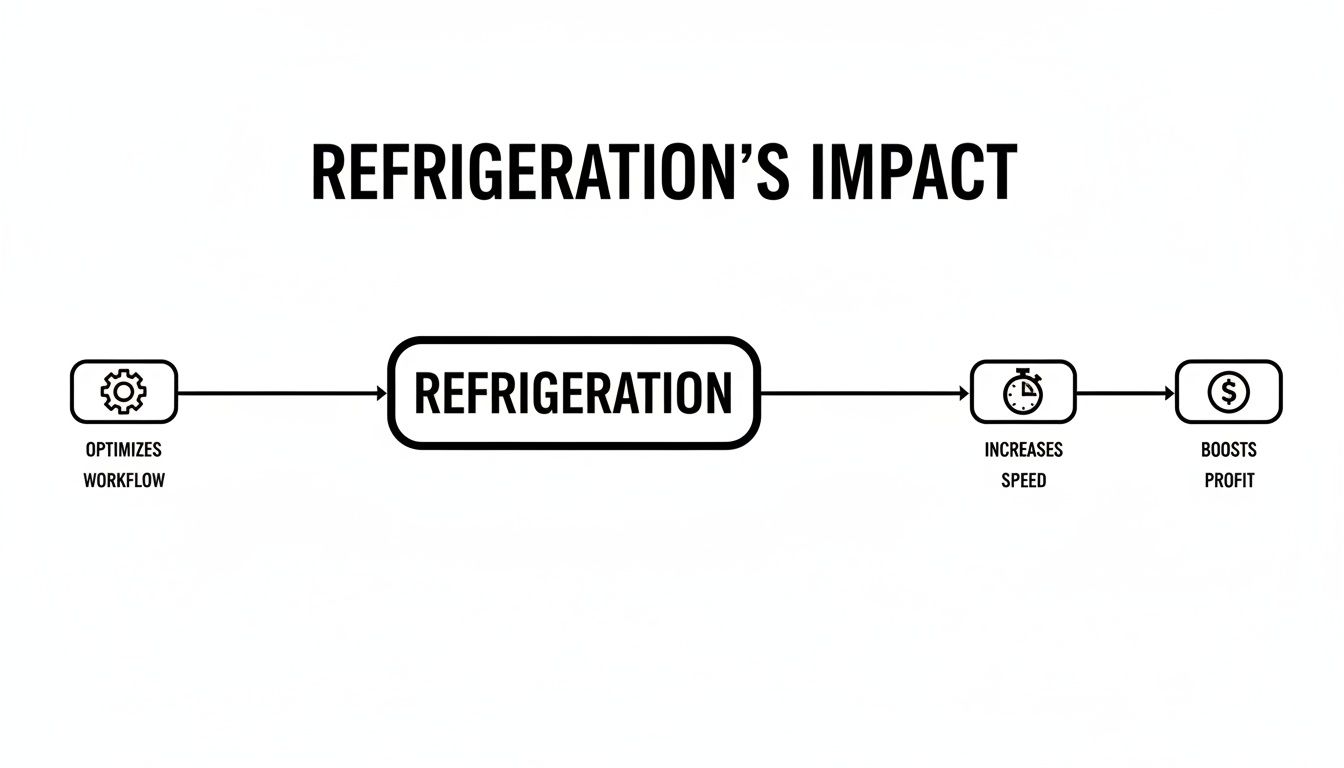
This visual drives home the point: a well-chosen refrigerator isn't just a box that keeps things cold. It’s a strategic tool that makes your whole pizza operation run better. This concept of matching an appliance's size to its environment is universal; it's just as important as matching fan size to room dimensions. By carefully planning your width, depth, and height, you're not just buying a fridge—you're building the foundation for a more profitable pizzeria.
From Cubic Feet to Pizza Toppings: A Practical Capacity Guide
When you're staring at a spec sheet for an undercounter refrigerator, the first number you’ll see is its capacity in cubic feet. But let’s be honest: no pizzeria owner has ever said, "I just need a few more cubic feet for this pepperoni." The real question is, "How many topping pans and dough boxes can I fit in this thing before the dinner rush?"
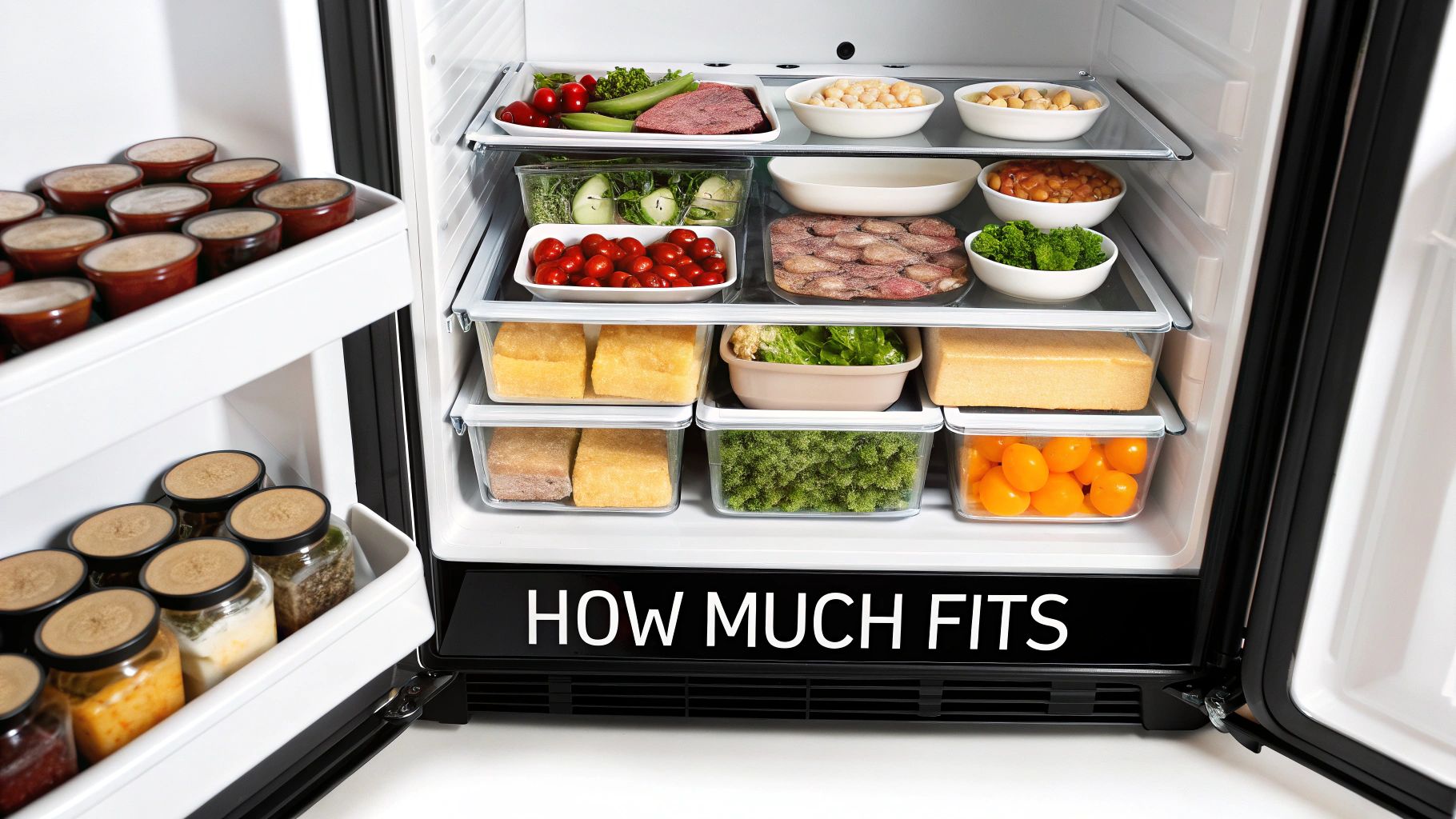
This is where we need to translate that abstract number into something that actually matters in your pizzeria. Cubic feet tells you the total empty volume, but it's the usable space—the area you can actually fill with cheese, sauce, toppings, and dough—that makes all the difference.
Thinking in Pans and Dough Boxes, Not Just Volume
A unit's internal layout has a huge impact on its real-world capacity. Some models have bulky compressor parts or poorly placed shelves that steal precious inches, making a chunk of that advertised cubic footage completely useless for your pizzeria's needs.
To get a better feel for this, let's walk through a few common pizzeria scenarios:
- A 7 cu. ft. model: This is likely a compact 27-inch unit. In practical terms, it can probably hold the day's supply of mozzarella and sauce for a smaller, specialized shop. It's great for a dedicated station but won't support a full menu of toppings.
- A 12 cu. ft. model: Often found in 48-inch refrigerators, this size is a real workhorse. You could reasonably store pans for your top 6-8 pizza toppings, making it a solid choice for a small to mid-sized pizzeria’s main prep line.
- A 17 cu. ft. model or larger: Common in 60-inch or 72-inch units, this capacity is what high-volume pizza operations need. It provides enough room to store a complete array of vegetable, meat, and specialty toppings, keeping your entire menu within arm's reach.
The best way to gauge capacity is to think in terms of standard food pans (like 1/6 or 1/3 size pans) and dough boxes. Ask your supplier for the internal dimensions and map out how many pans you can realistically fit, leaving enough room for air to circulate properly.
This pan-based approach shifts the focus from an abstract number to a practical inventory system for your pizza toppings. It ensures the undercounter refrigerator size you pick directly supports your menu and workflow.
Balancing Size and Internal Layout
When you're checking out an undercounter refrigerator, always look beyond the external dimensions. A slightly wider unit with a smart, unobstructed interior is far more valuable than a deeper one where half the space is eaten up by the cooling system.
Watch out for models with a large "hump" on the interior floor, which is where the compressor often lives. While it's unavoidable in some designs, a bigger hump can prevent you from storing bulky items like dough boxes or large sauce containers. Also, check the placement of the shelf brackets; inflexible, fixed shelving can seriously limit how you organize your topping pans.
While a commercial undercounter refrigerator is a must for chilled toppings, many pizzerias also need frozen storage. For things like frozen dough balls or bulk meats, you'll need a dedicated unit. You can explore options and learn more by checking out our guide on the commercial undercounter freezer to complement your refrigerated setup.
Planning Capacity for Peak Performance
Finally, the right capacity isn't just about what you can fit—it's about keeping things cool when it matters most. Over-stuffing a refrigerator is one of the quickest ways to kill its performance.
When pizza ingredients are packed in too tightly, it blocks airflow from the evaporator fan. This creates warm spots, compromises food safety, and forces the compressor to work overtime. Your capacity planning should always account for:
- Peak Hour Demand: Make sure your unit can hold enough toppings to get you through your busiest Friday night without needing someone to run to the walk-in mid-rush.
- Delivery Schedules: Your capacity should be large enough to hold new inventory from deliveries while still accommodating existing stock—all without overcrowding.
- Breathing Room: Always try to leave about 20% of the space free for air to circulate. This is what ensures every single pan of toppings stays at a consistent, food-safe temperature.
By translating cubic feet into a practical pan count and planning for your busiest moments, you can choose an undercounter refrigerator size that truly works for your pizzeria.
Matching Your Refrigerator to Your Pizza Prep Table
In a pizzeria, the bond between your undercounter refrigerator and your pizza prep table is the most critical partnership on the line. Get it right, and you’ve got a seamless, ergonomic, and clean workspace. Get it wrong, and you create a prep station that’s nothing but inefficient and frustrating for your pizza makers.
This isn’t just about pushing two pieces of equipment together; it's about creating a single, integrated pizza-making machine.
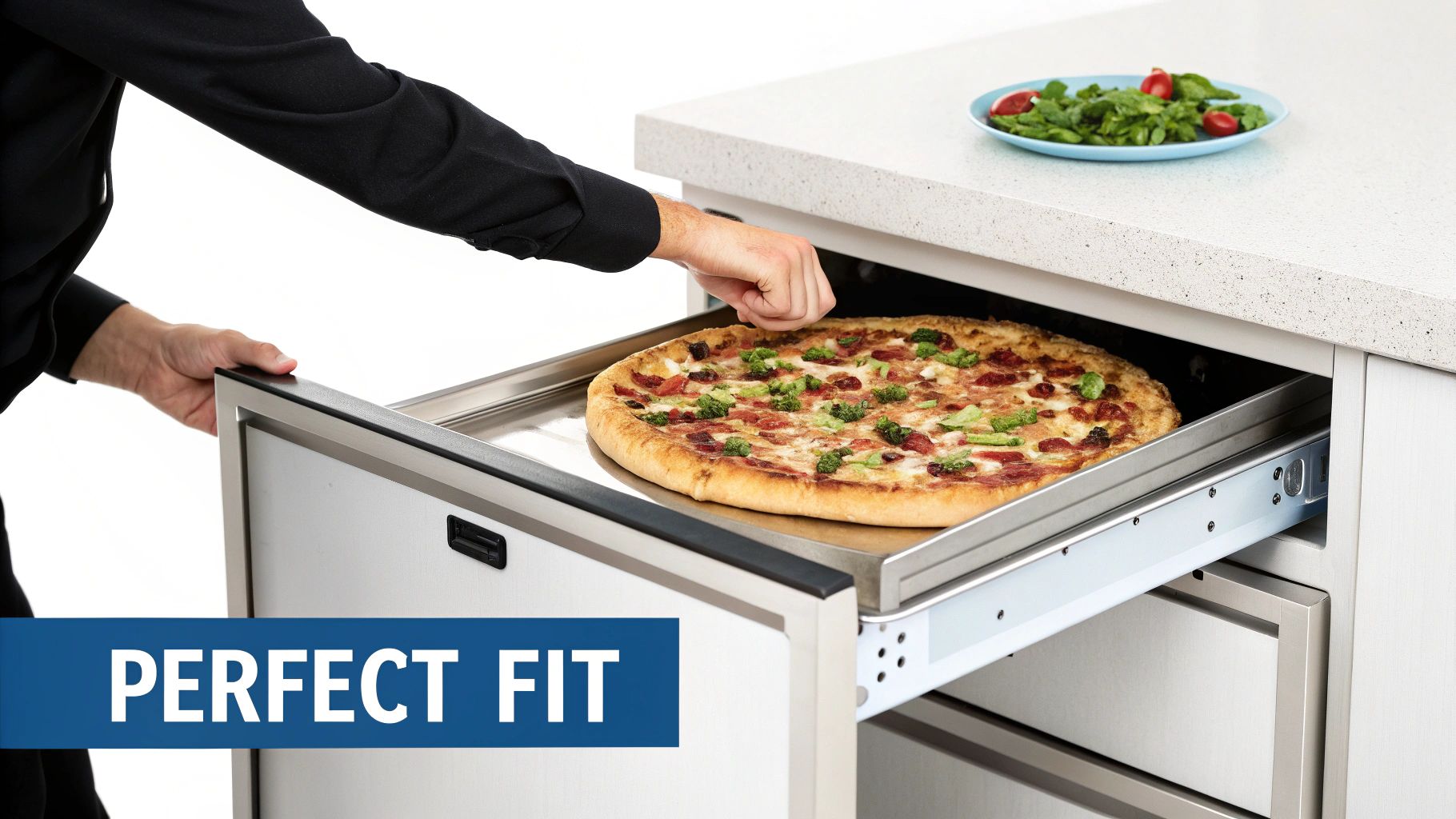
The main goal is a perfect, flush fit where the top of the refrigerator meets the underside of the prep table. This gives you a smooth, continuous work surface that makes sliding tools and ingredients effortless and stops food from falling into those impossible-to-clean gaps. This integration is so vital that many operators find their ideal commercial pizza prep table first, then pick an undercounter unit that fits its specs like a glove.
The Non-Negotiable Rules of Ventilation
Before you even think about sliding a refrigerator under a pizza prep table, you have to understand how it breathes. An overheating compressor is the number one cause of premature equipment failure, and nine times out of ten, improper ventilation is the culprit.
Failing to provide enough clearance is like asking a marathon runner to hold their breath. Sooner or later, they’re going to collapse.
There are two main types of ventilation systems you’ll run into:
- Front-Breathing Models: These units are the heroes of tight pizzeria kitchens. They pull in cool air and push out hot air through vents on the front grille. This means they can typically be installed with zero clearance on the sides and back, making them perfect for building directly into a pizza prep line.
- Rear-Breathing Models: These are more traditional and often a bit cheaper, but they need room to work. Air circulates at the back of the unit, so you absolutely must leave at least 2-4 inches of open space behind it. Push it flush against a wall, and you’re basically guaranteeing an overheating compressor and a costly service call.
Always, always consult the manufacturer's spec sheet before installation. Ignoring the required clearance for your specific model won't just lead to equipment failure; it will also void the warranty.
Measuring Twice for a Perfect Fit
Accurate measurement is the foundation of a successful installation under your pizza prep table. A quick tape measure reading of the open space just isn't enough; you need to account for the realities of a commercial kitchen.
Start by measuring the width, depth, and height of the intended space. Then, do it again. This time, look for all the little obstructions that could ruin your perfect fit.
Common Measurement Pitfalls to Avoid:
- Ignoring Utility Lines: Check for plumbing, gas lines, or electrical conduits running along the floor or wall that could stop the refrigerator from sliding all the way back.
- Forgetting Baseboards: A thick baseboard or molding can easily rob you of a crucial half-inch, preventing the unit from sitting flush.
- Overlooking Uneven Floors: Pizzeria floors are rarely perfectly level. Use a level to check the floor and be ready to adjust the refrigerator’s leveling feet to ensure a stable, even placement.
In today's kitchens, undercounter refrigerator size has evolved in direct response to shrinking back-of-house footprints. For pizzerias that often operate with only 36–42 inches of aisle clearance, the difference between a 27-inch and a 32-inch-deep unit can free up 10–15% more maneuvering room for staff.
Strategic Placement for Maximum Workflow
The final piece of the puzzle is putting the right-sized unit in the right spot on the pizza line. Not all undercounter refrigerators serve the same purpose. By thinking strategically, you can create specialized zones that boost speed and organization.
For instance, place a compact 27-inch drawer unit directly next to the oven. This becomes your "finishing station," holding just cheese and sauce—the last things that go on the pizza before it hits the heat.
Further down the line, under the main prep area, install a larger 60-inch or 72-inch unit. This is your workhorse, holding all the bulk toppings like pepperoni, mushrooms, onions, and peppers. By matching the undercounter refrigerator size to its specific function, you create a pizza prep line that flows logically and efficiently from start to finish.
Choosing the Right Size for Your Pizzeria's Volume
Your undercounter refrigerator isn't just a box that keeps things cold; it's a direct reflection of your pizzeria's ambition. The size you choose has to line up with your daily output and your business model. Get it wrong, and you've either created an instant bottleneck on your pizza line or bought an expensive, oversized paperweight.
The key is to stop thinking in inches and start thinking in pizzas. You have to connect the dots between the refrigerator's capacity and the number of pies flying out of your kitchen on a slammed Friday night.
Matching Size to Your Business Model
Every pizzeria has its own rhythm, and a one-size-fits-all approach to refrigeration just doesn't cut it. The right size for a ghost kitchen would cripple a busy dine-in spot. Let’s break down a few real-world pizzeria scenarios.
-
The Ghost Kitchen or Startup: For a lean operation focused on delivery, a single, versatile 48-inch unit is often the perfect starting point. It gives you enough room for your core ingredients without hogging precious floor space—a smart choice when you're just getting off the ground.
-
The Bustling Neighborhood Pizzeria: If your joint is slinging 200+ pies on a Friday night, you need a 60-inch or even a 72-inch model. This larger undercounter ensures your main pizza prep line is fully stocked, killing those momentum-destroying mid-rush trips to the walk-in.
-
The High-Volume Chain or Franchise: For the big players with multiple pizza prep lines, the strategy shifts to a powerful, uninterrupted workflow. You might see a 72-inch unit for toppings right next to a 48-inch drawer unit dedicated solely to cheese and dough. It's all about creating a seamless, scalable assembly line.
This link isn't just anecdotal. Industry data shows that for pizzerias, the sweet spot is often in that 5–11 cubic foot range. This capacity perfectly balances storage for cheese, toppings, and sauces without eating up your whole kitchen. In the real world, this translates to the one, two, and three-door undercounter models between 27 and 72 inches wide that slide perfectly under most pizza prep tables. You can dig into more market trends about undercounter refrigerator models on dataintelo.com.
Future-Proofing Your Investment
A common mistake new pizzeria owners make is buying for today instead of for tomorrow. It’s tempting to grab that smaller, cheaper unit upfront, but it's a short-sighted move that almost always costs more in the long run. A fridge that feels roomy on day one can become a cramped, chaotic mess six months later when your sales have doubled.
Think of your undercounter refrigerator as an investment in your pizzeria's potential. Picking a size that can handle a 25-30% jump in volume is the smartest way to prepare for success. It saves you from a costly and disruptive equipment swap-out just when things are getting good.
If you're stuck between two sizes, go with the bigger one. That extra internal space is a crucial buffer that gives you the flexibility to add a new specialty pizza, take on a big catering order, or just survive a busier-than-expected weekend. The right undercounter refrigerator doesn't just hold ingredients—it fuels your growth.
What Else to Look for Before You Buy
Getting the size right is a huge first step, but a few other key features will tell you if a unit is truly a good long-term investment for your pizzeria. Thinking through these details now ensures the model you choose is a workhorse, not a constant headache. The first big decision is how you'll access your ingredients.
For a fast-paced pizza prep line, drawers are almost always better than doors. Drawers let you neatly organize toppings in individual pans, which cuts down on search time and keeps everything exactly where it should be. Plus, every time a drawer slides open, only a small puff of cold air escapes, which helps maintain consistent temperatures and trim down your energy waste.
Core Features for Any Pizzeria
While doors are definitely better for bulky items like dough boxes, a drawer-focused unit is the secret to a streamlined topping station. Beyond that, a few non-negotiable features should be on every pizzeria owner's checklist.
- NSF Certification: This is non-negotiable for passing health inspections. An NSF-certified refrigerator meets strict public health and safety standards.
- Stainless Steel Construction: The pizzeria environment is tough on equipment. Stainless steel is the industry standard because it's durable, resists corrosion from things like tomato sauce, and is a breeze to sanitize.
- Energy Efficiency: Keep an eye out for ENERGY STAR® certified models. An efficient compressor doesn't just lower your monthly utility bill; it also runs quieter and kicks out less heat, keeping your kitchen cooler.
Choosing the right features is just as important as getting the dimensions right. A unit with drawers, proper NSF certification, and an efficient motor is purpose-built for the real-world demands of a high-volume pizza kitchen.
These features guarantee your refrigerator can handle the daily grind of a commercial pizzeria while supporting a safe, efficient workflow. For a typical pizzeria making 150–250 pies a day, swapping a single tall refrigerator for two 48-inch undercounter units can reclaim valuable wall space for other gear, like adding another oven deck. You can learn more about where the industry is heading by reviewing insights from the commercial refrigeration market.
Got Questions? We've Got Answers
When you're deep in the planning stages for a new pizza line, the details matter. Undercounter fridges seem simple, but the right choice can make a huge difference in your workflow. Here are the questions we hear most often from pizzeria owners just like you.
What's the Go-To Undercounter Fridge Size for a New Pizzeria?
For most startups, the sweet spot is a 48-inch or 60-inch two-section model. It's the perfect middle ground—big enough to handle the rush without eating up your entire kitchen footprint.
This size fits neatly under most pizza prep tables and gives you flexible storage for your high-turnover items like cheese, sauce, and your top-selling toppings. It's enough room to grow into, but not so massive that it feels empty when you're just starting out.
For a Pizza Station, Are Drawers or Doors Better?
Nine times out of ten, drawers are the winner for a busy pizza prep line. They're just built for speed and organization. You can drop ingredient pans right in, see everything at a glance, and only pull out the section you need, which keeps the cold air locked in.
Doors, on the other hand, are better for bulky stuff. Think dough boxes, big tubs of sauce, or backup supplies.
A pro tip from seasoned operators: get a combo unit. Many pizzerias find a setup with drawers for quick-grab toppings and a door section for bulk storage is the ultimate setup. You get the best of both worlds.
How Much Space Do I Really Need Around the Fridge for Airflow?
This is one of those details you absolutely can't ignore, and it all comes down to where the unit breathes.
Front-breathing units are your best friend in a tight pizzeria kitchen. They pull in and push out air from the front grille, so you can often install them with zero clearance on the back and sides. They're designed to be built-in under a pizza prep table.
If your model breathes from the rear or sides, you have to give it room. Plan on at least 2-4 inches of open space for air to circulate properly. Always check the manufacturer's spec sheet. Choking off the airflow is the fastest way to kill a compressor, void your warranty, and turn a simple installation mistake into a very expensive problem.
Ready to build the perfect prep line for your pizzeria? At Pizza Prep Table, we specialize in high-quality refrigerated solutions that boost workflow and protect ingredient freshness. Find the ideal undercounter refrigerator size for your kitchen by exploring our collection at https://pizzapreptable.com.