

The Ideal Walk In Cooler Temperature for Your Pizzeria
You've poured your heart into sourcing the best ingredients, but the real secret weapon in your pizzeria is hiding in plain sight: the walk-in cooler. The magic number for your walk-in cooler temperature is between 35°F and 38°F (1.7°C and 3.3°C). This isn't just a random guideline; it's the gold standard for keeping your mozzarella perfectly textured, your veggies crisp, and your pizza dough slowly developing those incredible flavors.
The Secret Ingredient to Perfect Pizza: Your Walk-In Cooler
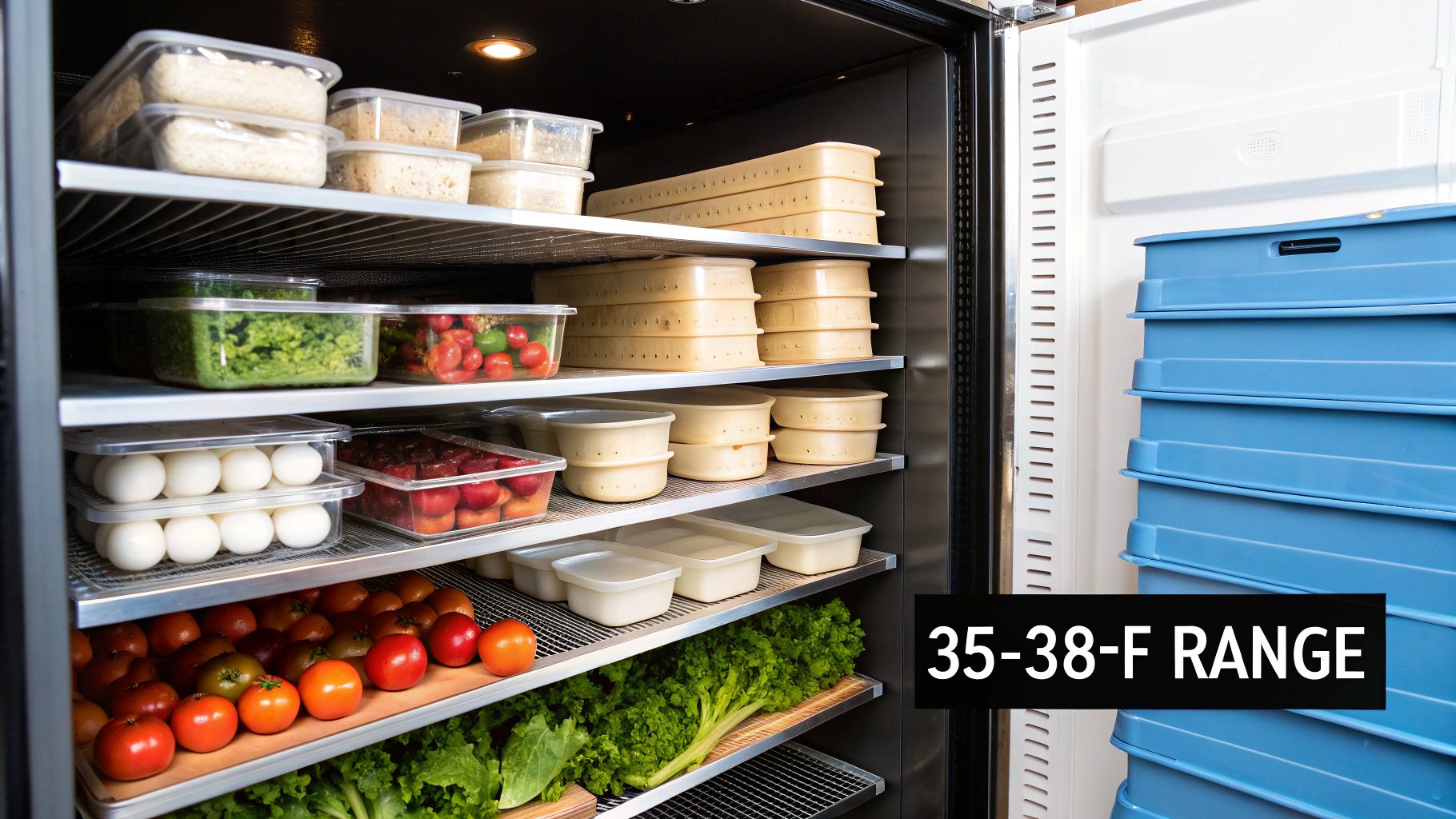
Stop thinking of your walk-in as just a big, cold box. It's the vault protecting your pizzeria's most valuable assets. This is where the magic starts, long before a single topping hits a pizza prep table. Nail the temperature, and you're protecting your food safety, extending ingredient life, and directly boosting your bottom line.
That narrow temperature window is everything for pizza making. It’s what keeps your cheese from turning into a greasy mess and makes it easy to shred. It stops delicate toppings from wilting under pressure. Most importantly, it's the key to a controlled, slow fermentation for your pizza dough, which is how you develop the complex, airy crust that sets you apart from the competition.
Why Precision Matters
In the chaos of a busy pizzeria, consistency is king. If your walk-in cooler's temperature is all over the place, you're headed for trouble that goes way beyond a few spoiled ingredients.
- Ingredient Quality: Temperature swings can destroy the texture of your mozzarella, make fresh basil spoil in a day, and cause your dough to over-proof, killing that perfect crust you worked so hard on.
- Operational Efficiency: A well-managed cooler, with everything held at the right temp, is the first step to a smooth-running kitchen. It makes the journey from storage to the pizza prep table seamless.
- Financial Stability: Wasted ingredients are cash in the trash. Unstable temperatures can lead to massive food waste, but holding a steady temperature right around 35°F can save a shop thousands. In fact, maintaining this range can prevent 10-15% spoilage of key toppings, which can be worth $2,000-$5,000 a year for many pizzerias.
For any pizzeria, the walk-in cooler is more than just storage; it’s an active partner in crafting the perfect pie. Getting the temperature right is the first step to consistently amazing results, every single time.
This guide is packed with real-world advice for mastering your cooler's climate. If you're in the market for a new unit, you can also learn more about how to select the right commercial walk-in refrigerators for your pizzeria's specific needs.
To make things even clearer, here’s a quick rundown of why that 35°F-38°F range is so critical for your key pizza ingredients.
Quick Guide to Ideal Pizzeria Ingredient Temperatures
| Ingredient | Optimal Temperature Range (°F) | Reason for This Range |
|---|---|---|
| Pizza Dough | 35°F - 38°F | Slows yeast activity for a controlled, long fermentation, developing complex flavor and a tender crust without over-proofing. |
| Shredded Mozzarella | 36°F - 38°F | Keeps the cheese from clumping or becoming oily, ensuring it remains easy to spread and melts perfectly. |
| Fresh Produce (Peppers, Onions, Mushrooms) | 35°F - 38°F | Preserves crispness, color, and flavor. Prevents wilting and slows down the natural decay process. |
| Cured Meats (Pepperoni, Salami) | 35°F - 38°F | Maintains texture and flavor integrity while preventing the fats from separating, which can happen at warmer temperatures. |
| Pizza Sauce | 36°F - 38°F | Inhibits bacterial growth and preserves the bright, fresh flavor of the tomatoes and herbs. |
As you can see, that tight temperature window isn't just a suggestion—it's the sweet spot where all your most important pizza ingredients thrive. Keeping your walk-in dialed in is one of the easiest ways to ensure quality across your entire menu.
Why 35°F to 38°F Is the Pizzeria Gold Standard
That walk in cooler temperature range of 35°F to 38°F isn't just a number someone pulled out of a hat—it's the sweet spot, dialed in through years of hard-won pizzeria experience and backed by solid food science. Think of it as creating the perfect climate where every single ingredient, from the dough to the pepperoni, can be at its absolute best.
This range is especially critical for your most expensive inventory, like cheese. Keep your mozzarella in this zone, and you strike the perfect balance. It's cold enough to slow down mold and keep moisture locked in, but not so cold that it becomes a brittle, hard-to-shred brick on the prep table. It protects both the texture and your bottom line.
The Science Behind the Perfect Slice
The magic of a great pizza starts long before it ever sees an oven, and your walk-in cooler is where that first act takes place. For your dough, this specific temperature range is the ideal stage for a slow, controlled fermentation. It's this patient process that coaxes out the deep, complex flavors that a quick, warm proof just can't touch.
- Too Cold (Below 35°F): Your yeast basically goes to sleep. Fermentation grinds to a halt, and you can kiss that signature airy, flavorful crust goodbye.
- Too Warm (Above 40°F): The yeast goes wild, accelerating fermentation way too fast. You end up with over-proofed, gassy dough that collapses, giving you a dense, sad pizza crust.
And it’s not just about the dough. For toppings like fresh bell peppers, mushrooms, and pepperoni, this temperature range is a powerful preservative. It dramatically slows down the growth of nasty bacteria, keeping your ingredients safer and fresher for much longer.
Keeping your cooler dialed in between 35°F and 38°F isn't just a suggestion for quality; it's a non-negotiable for food safety. This is the zone that keeps your ingredients clear of the FDA's "temperature danger zone," where bacteria throw a party and multiply like crazy.
From Cooler to Pizza Prep Table: A Chain of Quality
The benefits of that perfect chill go way beyond just keeping things from spoiling. A properly chilled ingredient simply performs better when it's time to build the pizza on the prep table.
Vegetables stored in this sweet spot hold onto their cellular structure, which means they stay crisp and vibrant instead of turning limp and soggy. Cured meats like salami and pepperoni keep their intended texture and don't get overly greasy before they even hit the heat of the oven.
Every step matters, and the temperature of your walk-in is the very first one. It has a direct, measurable impact on the final slice you hand over the counter. Sticking to this gold standard is one of the most fundamental things any serious pizzeria can do to guarantee every pizza is not just delicious, but consistently safe.
How to Master Temperature Control and Monitoring
Just setting your walk-in cooler's thermostat and walking away is a rookie mistake. It's a gamble that can cost you thousands in spoiled dough and cheese. Real control over your walk in cooler temperature comes from building simple, consistent checks that guarantee your ingredients are always safe and ready for the pizza prep table.
It starts with a hard truth: the built-in temperature display on your cooler can lie. To get the real story, you need to stop trusting that single thermostat and start verifying. Place at least two calibrated, independent thermometers inside. One should go near the door—the warmest spot—and another in a back corner. This gives you a true picture of your cooler's climate, not just what the machine thinks it's doing.
Establishing a Reliable Monitoring Routine
Next up is accountability. The best way to create it is with a simple temperature log that every pizza maker on your team uses. A clipboard hanging on the cooler door is a classic for a reason—it works.
Think of your temperature log as your pizzeria's quality control diary. It's more than just a piece of paper; it’s a historical record that helps you spot a struggling compressor or a bad door seal long before it leads to a catastrophic failure during a Friday night rush.
This log needs to be checked and signed at least three times per shift: once at opening, again mid-day, and finally at closing. This constant vigilance ensures that any drift outside that critical 35°F to 38°F range gets caught and fixed immediately, protecting your inventory 24/7.
This isn't just busywork. There’s a direct line connecting these temperatures to the quality of your finished pizza, from the cheese to the dough to the fresh toppings.
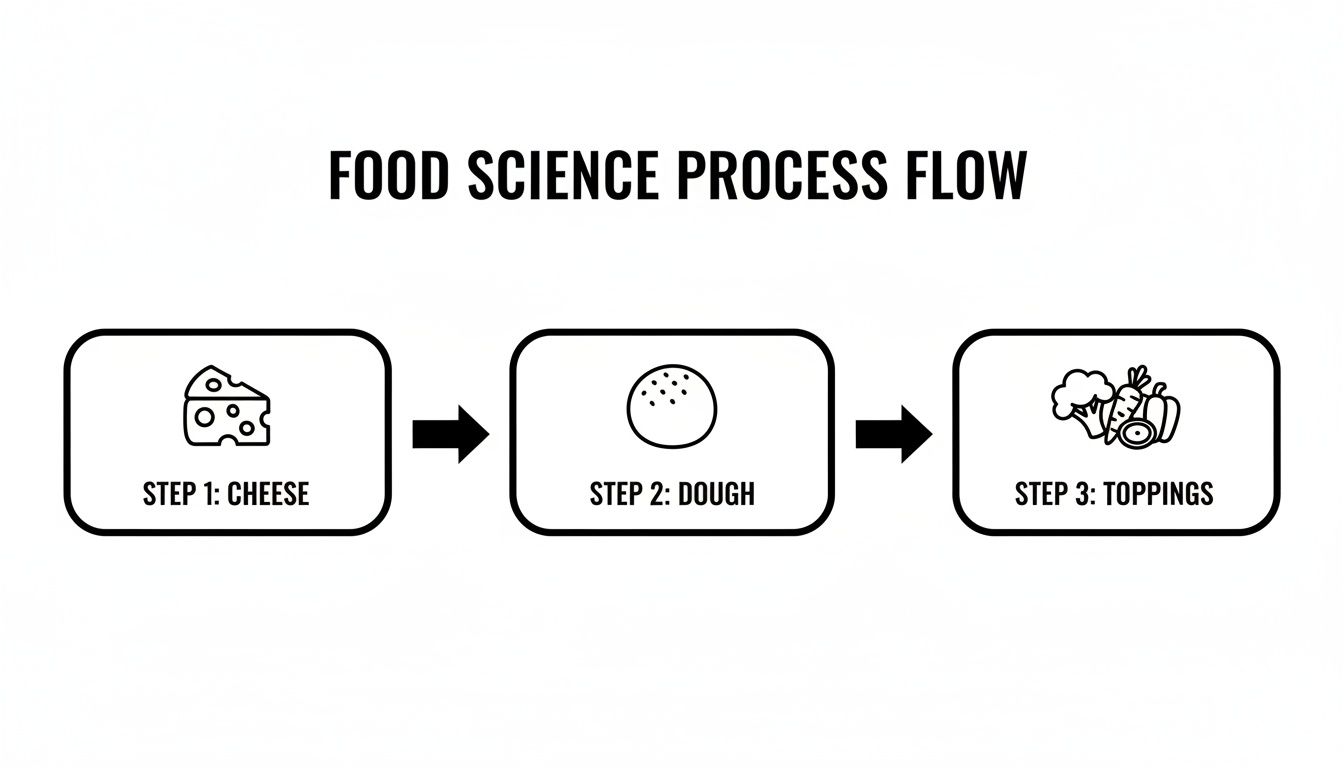
As you can see, holding the right temperature is the very first step in the journey to a perfect pizza. It's the foundation everything else is built on.
Adopting Modern Monitoring Solutions
For pizzeria owners who want an affordable insurance policy, digital monitoring systems are a game-changer. These smart sensors give you real-time data and can shoot an alert straight to your phone if the temperature ever enters the danger zone—whether you're in the shop or not.
To truly get a handle on temperature control, it's worth exploring advanced systems. Tools like IoT Monitoring and Predictive Maintenance Solutions offer an incredible amount of data and foresight. These systems are your digital safety net, safeguarding your pizza ingredients and your reputation, shift after shift.
Weaving Your Cooler and Pizza Prep Table into a Seamless Workflow
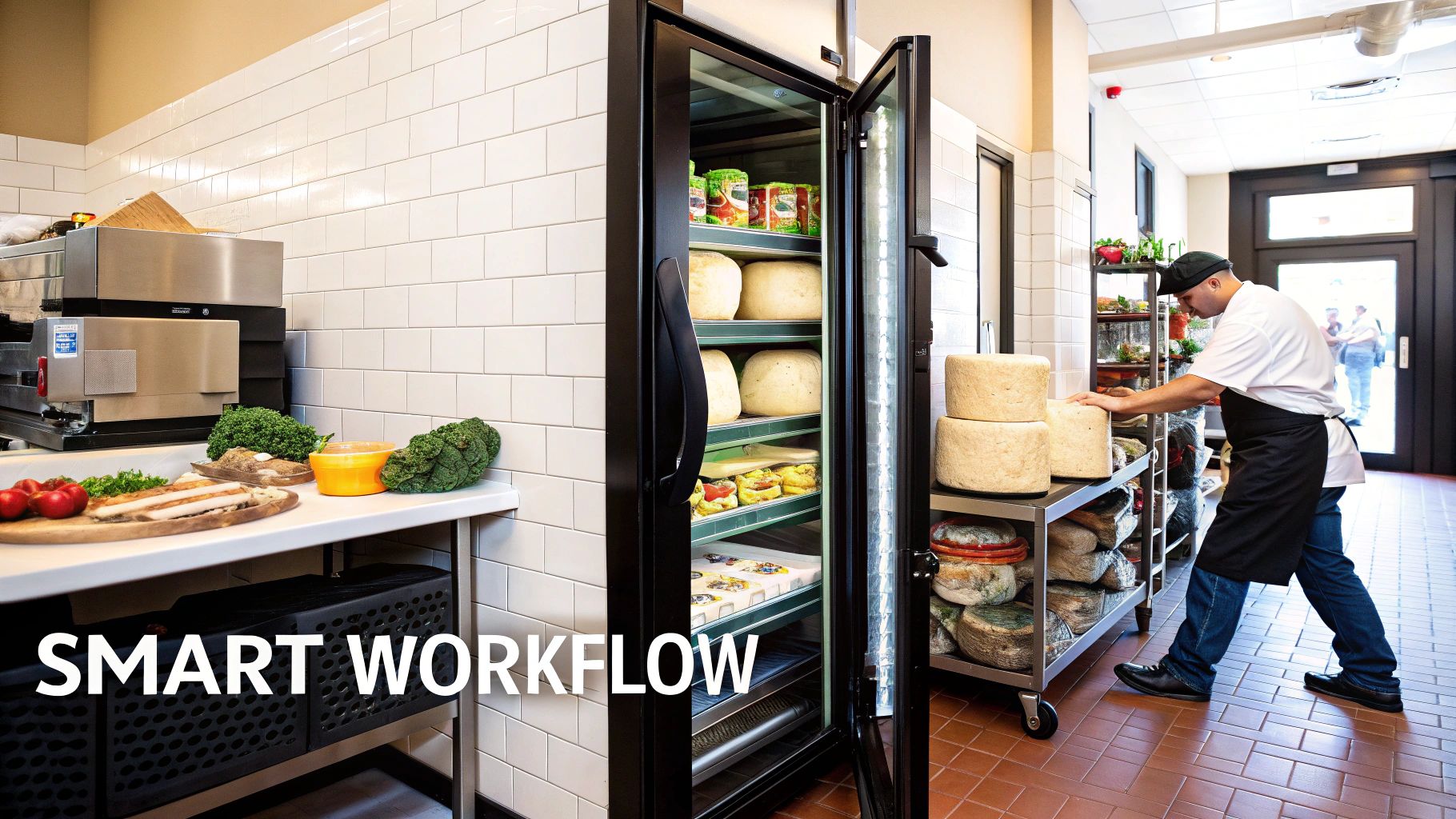
A great pizzeria moves like a well-choreographed dance, and the most important steps are the ones between your walk-in cooler and the pizza prep table. Getting this flow right isn't just about moving faster; it's about protecting the quality of your pizza ingredients and slashing waste. When your cooler is a mess, staff spend precious seconds hunting for what they need, leaving the door wide open while the walk in cooler temperature creeps up.
Your first line of defense is a smart, strategic layout. Think of your cooler as mission control for the pizza line. Your high-volume items—shredded mozzarella, pepperoni, dough balls, and the most popular veggies—belong on shelves right inside the door. This grab-and-go setup means less searching, less warm air getting in, and ingredients hitting the make-line that much quicker.
The FIFO Method and Smart Staging
For any serious pizzeria, a strict First-In, First-Out (FIFO) system isn't just a suggestion; it's the law of the land for food safety and quality. When a new delivery hits your dock, the old product moves to the front and the new stuff gets stocked behind it. This simple habit guarantees you’re using ingredients in the right order, which is the easiest way to cut down on spoilage. A well-organized cooler makes practicing FIFO second nature.
Here’s a practical way to map out your cooler for maximum pizza-making efficiency:
- High-Traffic Zone: Dedicate clearly labeled shelves or bins right at the entrance for your top five to ten pizza ingredients. This is your prime real estate.
- Mid-Usage Zone: Items you use consistently but not constantly, like specialty meats or less common vegetables, can live just past the entrance.
- Bulk/Long-Term Zone: The back of the cooler is perfect for bulk dough boxes, backup sauce buckets, and unopened cases of cheese that you won't need to grab in a hurry.
An organized walk-in acts like a well-stocked library for your pizza makers. Everything has its place, making it easy for your team to find exactly what they need without wasting a single second—or a single degree of cold air.
Bridging the Gap to the Pizza Prep Table
Your pizza prep table's refrigerated rail is the last stop before the oven, and it’s built for short-term action. This rail, which should hold a steady temperature between 33°F and 41°F, is the perfect partner to the deep storage of your walk-in. The secret is to treat it like a temporary workspace, not a mini-fridge.
The best practice is to restock the prep table in small, targeted batches, especially during slower periods. Dragging out a giant bus tub of cheese and letting it sit on the counter for an hour is a recipe for temperature abuse and potential disaster. Instead, your team should refill the ingredient bins with just enough to power through the next rush.
This approach minimizes the time your ingredients spend in the temperature danger zone and reduces the workload on both your walk-in and prep table compressors. If you want to dive deeper into how much storage your operation really needs, check out our guide on selecting the proper walk-in cooler sizing. This kind of smart, seamless workflow saves time, cuts energy bills, and ensures every single pizza starts with ingredients at their absolute best.
Troubleshooting Common Walk-In Cooler Temperature Issues
Nothing strikes fear into a pizzeria owner’s heart quite like a walk-in cooler on the fritz. A wavering walk in cooler temperature can turn thousands of dollars worth of cheese, dough, and toppings into a total loss. But before you make that expensive call to a technician, a little detective work can often solve the problem.
Think of it as a simple process of elimination, starting with the most obvious suspects. More often than not, the issue is something you can fix yourself in just a few minutes.
Diagnosing Common Problems
One of the biggest culprits is a blocked condenser coil. If it's caked in dust and kitchen grime, it simply can't push heat out effectively, forcing your whole system to struggle. Another easy-to-spot issue is worn-out door gaskets.
These seals are your front line of defense against warm kitchen air. Even a tiny tear forces your compressor to work overtime, fighting a battle it can't win. Checking for brittle or torn refrigerated shipping container door gasket seals is one of the first and smartest things you can do when you notice temperatures creeping up.
Wild temperature swings are another all-too-common headache. If your logs show chaotic peaks and valleys, it could point to a faulty thermostat. But it's just as likely to be caused by pizza makers propping the door open during a mad dinner rush.
Likewise, if you see significant ice buildup on the evaporator coils, it’s a red flag for either poor airflow or a problem with the defrost cycle.
Here's a quick look at some common issues and what you can do about them right now.
Common Cooler Temperature Issues and Fixes
When your walk-in starts acting up, don't panic. This quick reference chart can help you diagnose the most frequent problems and figure out your first move before calling in the pros.
| Symptom | Potential Cause | What to Do First |
|---|---|---|
| Not Getting Cold Enough | Blocked condenser coils or evaporator fan. | Check and clean all coils and fans. Make sure nothing inside is blocking airflow. |
| Wild Temperature Swings | Faulty thermostat or frequent door openings. | Double-check temps with a calibrated handheld thermometer. Review door discipline with your pizza team. |
| Ice Buildup on Coils | Obstructed airflow or failing defrost cycle. | Make sure boxes aren't stacked against walls or blocking the evaporator unit. Check the defrost timer. |
| Cooler Runs Constantly | Worn door gaskets or a refrigerant leak. | Inspect door seals for tears or gaps. If seals are good, it's time to call a technician. |
Most of these fixes are simple, but they make a huge difference in the cooler's performance and lifespan.
A regular preventative maintenance schedule is like an oil change for your pizza delivery car—a small, consistent investment that prevents catastrophic breakdowns. It’s the cheapest insurance policy you can buy for your most critical piece of equipment.
The Financial Case for Maintenance and Upgrades
Keeping your cooler in top shape isn't just about avoiding spoilage; it's a direct investment in your pizzeria's financial health. An inefficient unit quietly drains your bank account through sky-high energy bills month after month.
The numbers don't lie. An older walk-in might chew through around 20,000 kWh of electricity a year. A modern, well-maintained unit can drop that number to just 14,000 kWh.
At an average rate of $0.12 per kWh, that simple efficiency gain translates to $720 in yearly savings. Suddenly, that new door gasket or a professional tune-up doesn't seem so expensive, does it? An efficient cooler pays for itself. For a deeper dive, check out this cost-benefit analysis of upgrading walk-in coolers.
The Real Price of a Poorly Cooled Walk-In
When your walk-in cooler temperature creeps up, it costs you a lot more than just a box of spoiled pepperoni. The real damage is silent and sneaky, showing up as hidden drains on your profitability. It’s the kind of loss that slowly eats away at your bottom line through food waste, jacked-up energy bills, and a massive hit to your pizzeria's reputation.
Think about it. When your cooler can't hold that critical 35°F to 38°F range, your most valuable ingredients are the first to go. A few degrees too warm can over-proof an entire batch of dough, turning your hard work into a useless, sticky mess. That expensive block of Grande mozzarella you just bought? It can turn into an oily, separated disaster. This isn't just waste; it's cash walking right out the door.
The Hidden Costs in Your Utility Bill
Beyond the obvious food spoilage, an inefficient cooler is an absolute energy hog. A unit constantly fighting a bad door seal or a filthy condenser has to run its compressor nonstop. That’s when your electricity bill starts to look scary.
Walk-in coolers are already one of your biggest energy users, typically pulling between 5 to 30 kilowatt-hours (kWh) a day. For a standard 6x6 cooler, that can easily add up to $848.88 a year. Now, imagine warm air flooding in every time the door opens or through a worn-out seal. Your energy needs can spike by up to 30%, tacking on hundreds of extra dollars to your yearly operating costs. You can get more insights on how walk-in cooler electricity usage adds up on americanwalkinfreezers.com.
The money an inefficient cooler wastes on electricity each year could be invested back into your business—funding a new pizza oven, a local marketing campaign, or staff bonuses. Precise temperature management is a direct investment in your pizzeria's growth.
But the biggest cost is the one you can’t put a number on: your reputation. A single case of foodborne illness traced back to your kitchen can shatter the trust you’ve built with your community overnight. Keeping the right temperature isn't just about making great pizza; it's about protecting your customers and your business's future. If you're serious about trimming costs, check out our guide on energy-efficient commercial refrigeration.
Your Top Pizzeria Cooler Questions, Answered
Let’s wrap things up by tackling some of the most common questions I hear from pizzeria owners about keeping that walk-in cooler temperature exactly where it needs to be. These are the real-world issues that come up day-to-day.
How Often Should I Really Be Checking My Cooler's Temperature?
I can't stress this enough: check and log the temperature at least three times a day. A quick check when you open, another during the mid-day rush, and one last look at closing is the gold standard for any pizzeria.
This simple habit creates a powerful record. It keeps your whole team on the same page and, more importantly, helps you spot a struggling compressor or a bad door seal long before you walk into a full-blown emergency.
A consistent temperature log is your pizzeria's first line of defense. It's not just about compliance; it's about proactively protecting thousands of dollars in cheese, dough, and toppings from spoilage.
Can I Actually Store Dough, Cheese, and Veggies Together?
Absolutely, as long as your cooler is holding steady in that sweet spot of 35°F to 38°F and you follow one simple rule of organization. Always store ready-to-eat items above raw ingredients.
Think of it this way: cheese, pepperoni, and prepped veggies go on the high shelves. Any raw meats get stored safely on the bottom shelves. This simple top-down approach completely removes the risk of cross-contamination and is a non-negotiable for a safe pizzeria kitchen.
What's the Biggest Mistake Pizzerias Make with Their Walk-In?
By far, the most damaging mistake I see is overloading the cooler and blocking the airflow. It’s so tempting to just cram everything in after a big delivery, but that’s a recipe for disaster.
When you block the evaporator fans or stack boxes too tightly, you create warm spots where cold air can't reach. Proper spacing is everything. It ensures a consistent temperature throughout the cooler and prevents you from putting a ton of unnecessary strain on your refrigeration unit.
How Does a Heatwave Affect My Walk-In Cooler?
During those hot summer months, your cooler’s condenser is working overtime to pump heat out of the box and keep the inside cool. You can give it a fighting chance with a couple of simple tricks.
First, make sure the area around the exterior unit is clean and totally clear of debris so it can breathe. Second, be a stickler with your pizza team about keeping the cooler door shut. Every second it’s open, hot, humid air rushes in, and your cooler has to work that much harder to recover.
Ready to create the perfect workflow between your walk-in and your prep line? Pizza Prep Table offers a wide selection of high-quality, NSF-compliant refrigerated pizza prep tables to keep your ingredients perfectly chilled and ready for action. Explore our collection at https://pizzapreptable.com and build a more efficient and profitable pizzeria today.